

Room Visualiser
Try our floors in your home
0
0















Yes, laminate flooring for stairs can be safe when installed with the right stair nosing, trim, and secure profiles. Stairs need more edge protection than flat floors because each step takes direct pressure every day.
It depends on the product’s finish. Textured surfaces, rounded nosings, and non-slip laminate flooring for stairs can help improve underfoot grip and make each step feel more secure.
Stair nosing is the profile fitted to the front edge of each step. It helps protect the edge, creates a cleaner finish, and improves safety when using laminate flooring on stairs.
Laminate can be a durable option for stairs because it is designed to resist daily wear, scuffs, and foot traffic. Compared with carpet, it is easier to clean; compared with wood, it usually needs less maintenance.
Yes, a laminate floor on stairs usually needs stair nosing, trims, and suitable profiles to keep the edges secure and finished properly. These details help reduce movement, lifting, and visible wear over time.
Laminate stairs are usually easy to maintain with regular sweeping and light cleaning. Avoid soaking the surface with water, and clean dust or grit quickly to help protect the finish on each step.
Yes, laminate flooring on steps can work well when each step is finished with the right stair nosing, trims, and secure profiles. This helps protect the edges, reduce movement, and create a safer, cleaner finish across the staircases.
In most cases, laminate flooring for stairs is simply a laminate that has been adapted to meet the specific requirements of staircases. To ensure the staircase is securely held in place, it is essential to recognise that stairs require more finishing than flat floors. This includes stair noses for the edges, transition trims to cover the transitions, and special profiles to ensure everything is securely in place. Why is this important? It is no secret that stairs are not only a stylish feature, but also one of the areas of any home that receives the most traffic. Every step here is constantly pressing on the floor, which, if not designed correctly, can cause it to chip, lift, or deteriorate over time, creating a trip hazard.
Let us imagine this: it would be annoying if you had a crack in the floor of your hallway because it would be difficult to walk through. A cracked staircase edge can be hazardous. This is where the difference between standard laminate and laminate flooring on stairs becomes really noticeable. A plank designed for stair use needs the right edge protection, fitting profile, and support, so the finished staircase feels secure with every step.
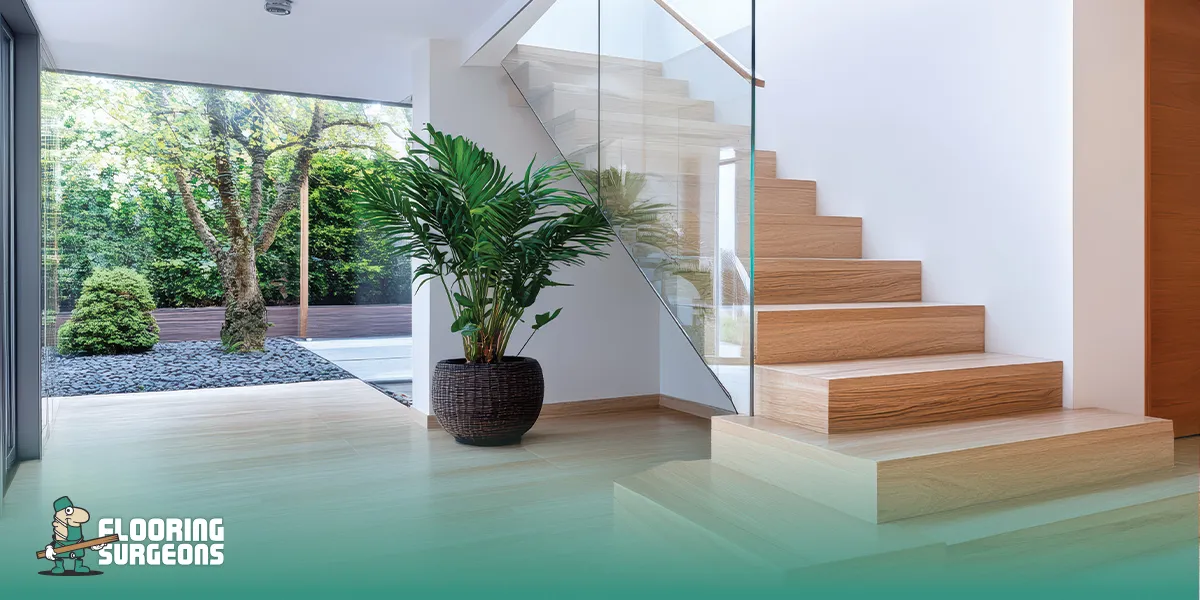
There is a wide selection of flooring options available for stairs, but not all of them can meet the challenge of a stairwell. To achieve the best flooring for your home, a good balance must be struck between durability, safety, and style, with your floors complementing the rest of your home. That’s where laminate really comes into its own.
In addition to being practical, laminate flooring for stairs offers three benefits that most homeowners seek in stair flooring: durability and strength, safety around the edges, and a design choice that can transform an ordinary staircase into a feature that lasts for a long time. When choosing laminate for stairs, these details matter because each step needs to look good, feel secure, and withstand daily use. Let’s have a closer look at these benefits to better understand how they work and why so many homeowners trust Flooring Surgeons for expert advice and high-quality laminate options ideally suited for stair installations.
With shoes pounding up and down, kids dragging toys all over, or pets running to the landing, stairs are the most abused part of a house. The laminate flooring on stairs should be constructed with a powerful wear layer and reinforced edges to make the flooring more resistant to wear and tear. In addition, many homeowners test their strength by dragging furniture across a sample step to see if it will hold up, and it does.
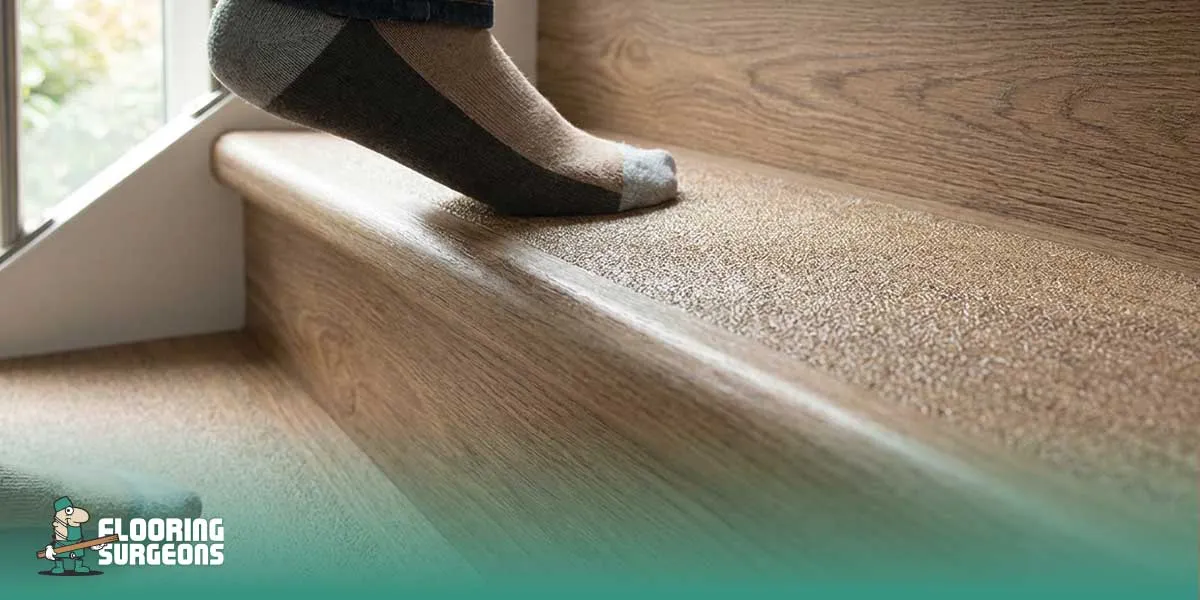
One of the most common concerns about laminate stairs is whether they are slippery. The answer depends on the product’s finish, which determines the outcome. Several factors contribute to a safe surface for your foot, including textured finishes, non-slip coatings, and rounded stair nosings. Choosing non-slip laminate flooring for stairs can help give you more confidence in every step you take, whether you are carrying groceries up the stairs or running down in socks. Maintaining your confidence on the stairs is about more than just beauty.
Most people view stairs as just another part of the home that serves a functional purpose; however, they are actually among the first things guests notice when entering a home. With stairs with laminate flooring, you can carry the same feel and look throughout the rest of the house, even up to the stairwell, creating a seamless appearance. It makes a pleasing visual rhythm when the light oak laminate floor in your hallway flows continuously up the staircase. This doesn’t break the visual rhythm; instead, it elevates it by creating a pleasing visual flow. There is more to this than just flooring for design enthusiasts. It is an opportunity for those passionate about decor to incorporate stairs into the story rather than make them an afterthought.
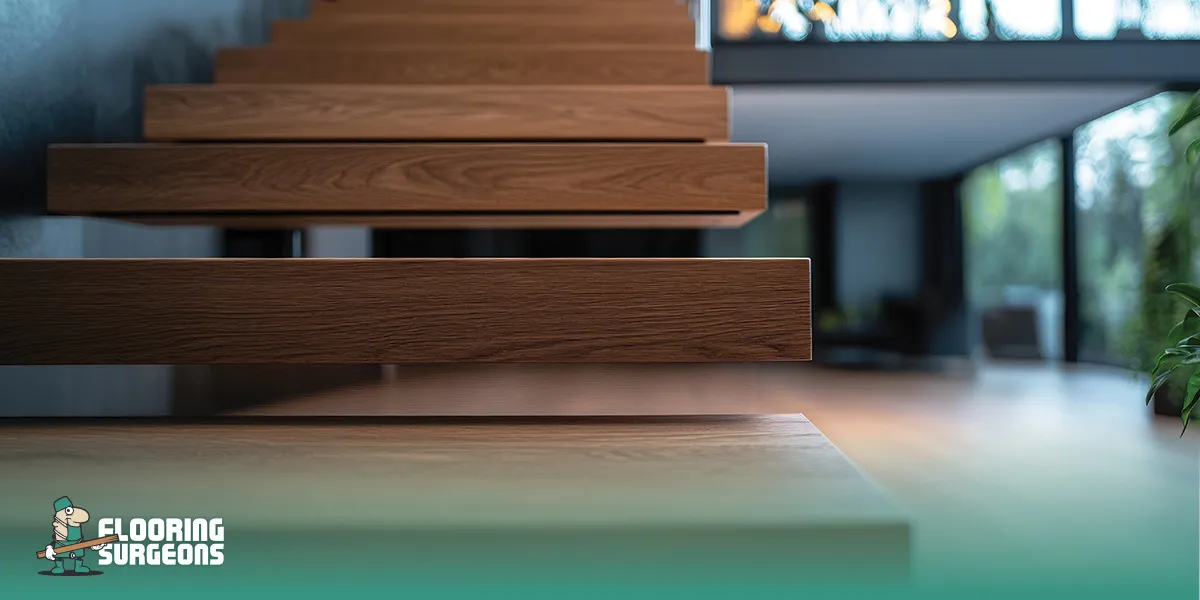
If you’re already considering stair flooring, it’s important to know that it’s durable, affordable, and aesthetically pleasing. On a busy staircase, is it actually safe for my family to use? Does this product help reduce the noise from footsteps in the middle of the night? Can my staircase look like more than just a way to get upstairs? How can I make this choice more environmentally responsible?
It’s in this regard that laminate flooring for stairs stands out from the crowd in a way many homeowners don’t consider. For each product, you can view details and compare finishes on the main laminate flooring page, ensuring you choose the right style and safety features for your staircase.
Slipping is the number one concern on stairs. Poorly finished steps can cause trips or twisted ankles. Non-slip laminate flooring for stairs ensures a secure surface with textured finishes, non-slip coatings, and rounded stair nosings, giving confidence with every step.
Noise from footsteps can be disruptive, especially in multi-floor homes. Using a sound-dampening underlay with laminate on stairs can soften footsteps, reduce echo, and improve overall comfort.
Stairs can be a design feature. With stairs featuring laminate flooring, LED lighting strips, or contrasting nosings, you can create a seamless, stylish effect that enhances your home’s aesthetic both day and night.
Many laminate stair products use responsibly sourced wood fibres, recyclable cores, and non-VOC finishes. Choosing the right stairway ensures sustainability without compromising style or safety.
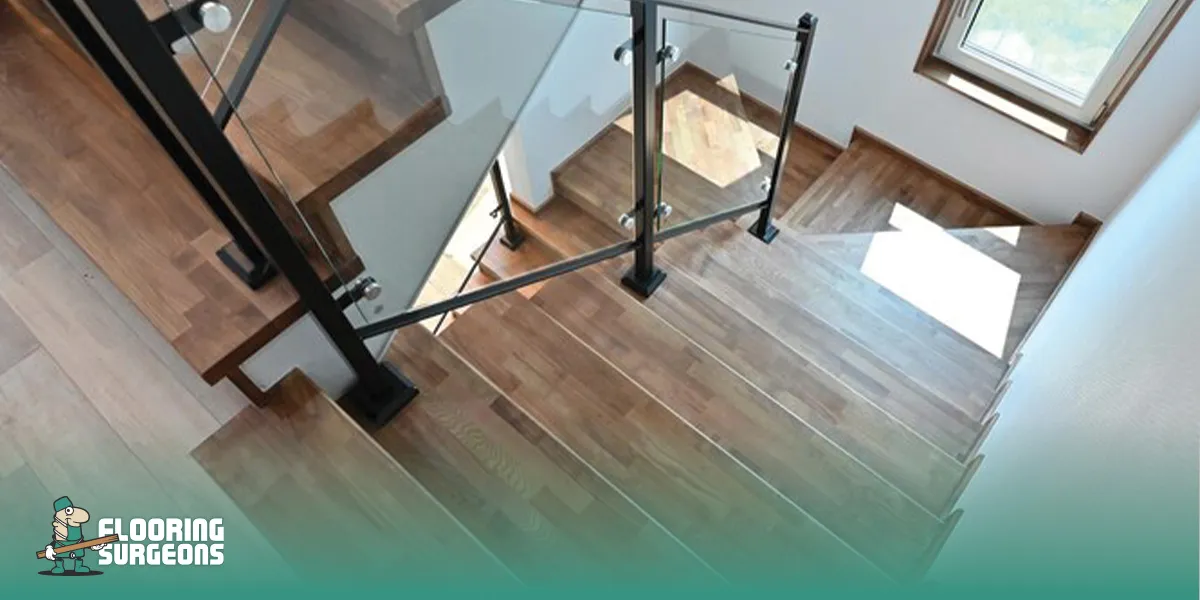
When choosing laminate flooring for stairs, focus on more than colour alone. The right product should have a suitable wear layer, secure stair nosing, a stable fitting profile, and a finish that feels safe underfoot. Whether you are using laminate flooring on stairs, landings, or individual steps, the final result should look consistent with the rest of your home while still feeling practical for everyday use. This is especially important for busy homes where stairs are used throughout the day by children, pets, guests, and family members.