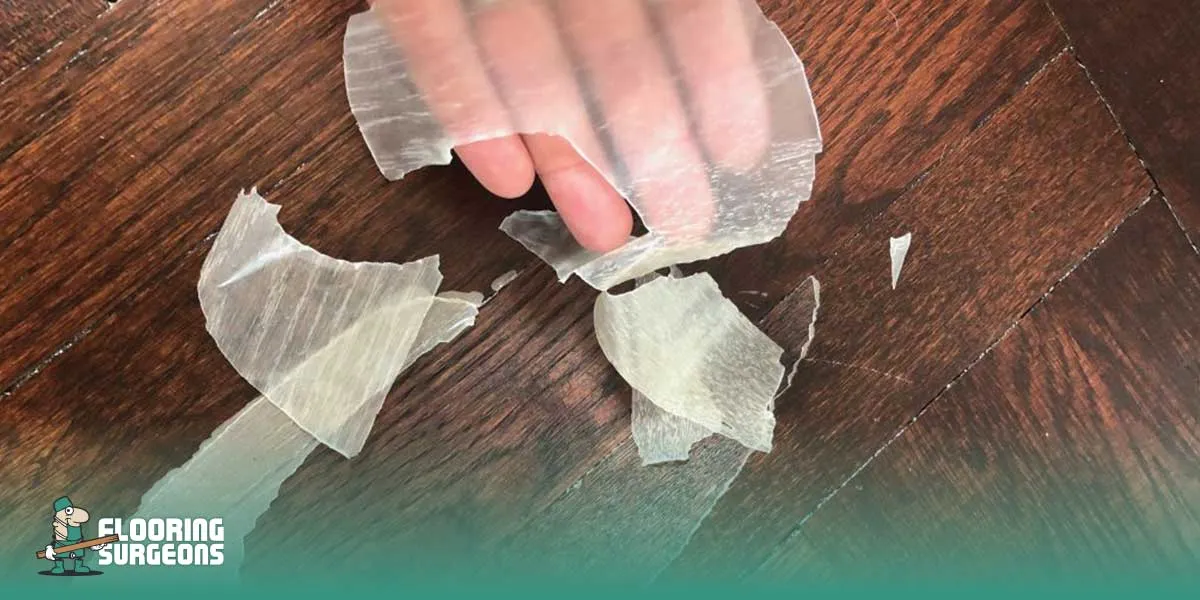
If you’re dealing with peeling laminate flooring or a chipped laminate floor, don’t worry – fixing a laminate floor is easier than you think. Whether it’s from moisture, wear, or heat, you can quickly fix chipped laminate floors or repair peeling laminate flooring without replacing the entire surface. In this guide, we’ll show you how to fix laminate floor peeling step by step and offer tips on preventing it from happening again, ensuring your floor stays smooth and beautiful for years to come.
Table of contents
Reasons for Peeling Laminate Flooring
If you’re dealing with peeling laminate flooring, you may be wondering how to repair peeling laminate and restore your floors to their former glory. The issue of peeling or chipping laminate often arises when the top layer loses its bond with the core beneath. Understanding why this happens is key before learning how to fix peeling laminate. Whether you need to repair a chipped laminate wood floor or are simply asking, “Why is my laminate floor peeling?”, the good news is that this issue is fixable with the right approach. Let’s explore the common reasons for laminate peeling and how to address them.
Moisture Damage
Water is the biggest enemy of laminate flooring. Even small leaks, spills, or long-term humidity can cause the boards to swell, leading to bubbling or peeling at the edges. Kitchens, bathrooms, and entryways are the most affected areas. To prevent it, always wipe spills immediately and use moisture barriers or waterproof laminate in high-risk rooms.
Poor Surface Preparation Before Installation
If the subfloor wasn’t properly cleaned, levelled, or dried before laying laminate, the adhesive can fail over time. Dust, grease, or uneven spots stop the planks from bonding correctly, causing the top layer to lift. A well-prepared, smooth subfloor and correct underlay installation are key to preventing future peeling.
Bad or Incompatible Finishing Products on Laminate Flooring
Using finishing products that don’t mix, such as water-based varnish over an oil-based stain, can trigger chemical reactions that weaken the bond and cause peeling. Even the wrong cleaning agent can strip the coating. Always follow the manufacturer’s guidelines and test a small area before applying any finish to your floor.
Dirty or Contaminated Surface Blocking Adhesion
If old wax, oils, or household residues remain on the laminate before sealing, the finish can’t stick properly. Over time, this weak bond leads to flaking and peeling. Before refinishing or repairing, deep-clean the surface with a degreasing laminate cleaner or isopropyl alcohol to ensure perfect adhesion.
Cheap Laminate Materials and Thin Wear Layers
Budget laminate flooring often uses thin decorative layers that wear away quickly. Once the surface coating fails, moisture and dirt can penetrate the core, leading to visible peeling. Investing in higher-quality laminate with a thicker wear layer or an AC3–AC5 rating prevents this kind of premature delamination.
Sunlight and Heat Exposure Causing Laminate Peeling
Direct sunlight or heat from radiators can dry out laminate coatings, fade the colour, and make the top layer brittle enough to lift. You’ll often notice it near windows or patio doors. Use UV-protective blinds, sheer curtains, or heat-resistant laminate varieties to protect your floor from excessive exposure.
Improper Laminate Installation Techniques
Incorrect spacing, over-tight joints, or skipping expansion gaps can cause the boards to buckle as they expand. That tension pushes the laminate edges up, eventually leading to peeling. Professional installation and allowing the planks to acclimate for at least 48 hours before fitting can prevent these issues.
Inconsistent Temperature and Humidity Levels Indoors
Laminate floors expand and contract with changes in environmental conditions. Frequent shifts between heating and cooling or poor ventilation cause stress on the surface layer, making it separate from the core. Keeping your indoor temperature steady (18–24°C) and using a dehumidifier in damp seasons helps maintain stability and prevent peeling.
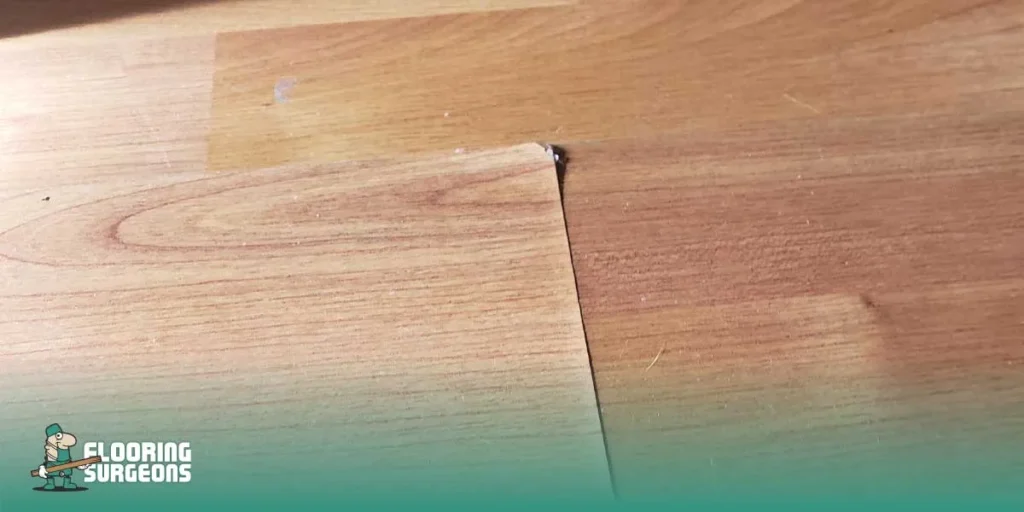
Is Peeling Laminate Flooring Worth Repairing or Should You Replace It?
In most cases, peeling laminate flooring is worth repairing, especially if the damage is minor or limited to the surface. Peeling doesn’t always mean your floor has failed; it often signals a localised problem, such as moisture exposure, a lifted seam, or a worn finish. If the core beneath is still solid and dry, simple surface repairs can restore your floor’s look and strength without replacing entire boards.
However, when the peeling covers large sections or the laminate core has swelled due to water damage, repair may only offer a short-term fix. If planks have warped, bubbled, or feel soft underfoot, it’s better to replace those sections completely. Prolonged moisture or mould beneath the surface can continue spreading even after you patch the surface, making replacement the safer option in the long term.
Here’s a quick rule of thumb:
- Repair it if less than 25–30% of the area is peeling, the subfloor is dry, and only the top layer is affected.
- Replace it if more than a third of the floor shows lifting, cracking, or swelling, or if there’s visible warping near seams and edges.
For UK homeowners, repairing is often the smarter first step. It’s faster, cheaper, and blends seamlessly when done properly. Once repaired, applying a moisture-resistant seal or topcoat can extend your floor’s lifespan for years. If you’re unsure whether your laminate floor is worth saving, Flooring Surgeons’ experts can assess it and recommend whether spot-repair or replacement offers better long-term value.
How to Fix Peeling Laminate Flooring (DIY Laminate Floor Peeling Repair)
Is your laminate floor peeling and in need of a fix? Wondering how to fix peeling laminate floors without calling in a professional? Don’t worry, you can easily tackle this common issue yourself! Whether you’re looking to fix peeling laminate floors or simply want to know how to fix peeling laminate floors, this DIY guide will walk you through the process, helping you restore your floor to its original beauty. With just a few tools, some patience, and the right materials, you’ll have your laminate flooring looking brand new again in no time. Let’s get started on this simple and effective repair!
| Step | Task | Details |
|---|---|---|
| 1 | Gather Tools and Materials | Wood epoxy, painter’s tape, sandpaper, putty knife, microfibre cloth, wood stain, polyurethane. |
| 2 | Tape Around the Damaged Area | Use painter’s tape to protect surrounding areas from epoxy and stain. |
| 3 | Mix the Epoxy for Fixing Peeling | Mix resin and hardener, work quickly before it hardens. |
| 4 | Fill the Gouge or Chipped Section | Spread epoxy with a putty knife, slightly overfill for easier sanding. |
| 5 | Let the Repaired Area Dry Completely | Let the filled area cure for 12-24 hours. |
| 6 | Sand the Surface for a Seamless Finish | Sand with 80-grit and 120-grit sandpaper for a smooth finish. |
| 7 | Carefully Remove Tape Without Damaging the Laminate | Peel tape slowly at an angle, use a craft knife if needed. |
| 8 | Wipe Clean and Stain to Match the Original Colour | Wipe off dust, apply stain in layers, then wipe off excess. |
| 9 | Add a Protective Finish to Seal the Repair | Apply polyurethane or laminate sealant for protection and shine. |
Step 1: Tools You’ll Need for Laminate Floor Peeling Repair
Before starting, gather everything you’ll need:
- Wood epoxy or laminate repair compound – to fill peeling or chipped sections.
- Painter’s tape – to protect the surrounding area while you work.
- Sandpaper (80 and 120 grit) – for shaping and smoothing.
- Putty knife – for applying epoxy neatly.
- Microfibre cloth or rag – for cleaning dust and excess stain.
- Wood stain or laminate colour pen – to match your floor’s shade.
- Wipe-on polyurethane or clear laminate sealant – to protect the repaired area.
- Protective gloves – to keep your hands safe and clean.
Tip: Always work in a well-ventilated area and test the stain or epoxy on a hidden spot first to ensure a perfect colour match.
Step 2: Tape Around the Damaged Laminate Area
Use painter’s tape to create a clean border around the peeling or chipped section. This prevents epoxy or stain from spreading onto the undamaged laminate surface. Press the tape firmly so it doesn’t lift during sanding or staining.
Step 3: Mix the Epoxy for Fixing Peeling Laminate
Open the epoxy pack and mix equal parts of the resin and hardener until the colour is consistent. You’ll have about 30–45 minutes of working time before it begins to harden. Mix only what you can apply immediately.
Step 4: Fill the Gouge or Chipped Section of the Laminate Floor
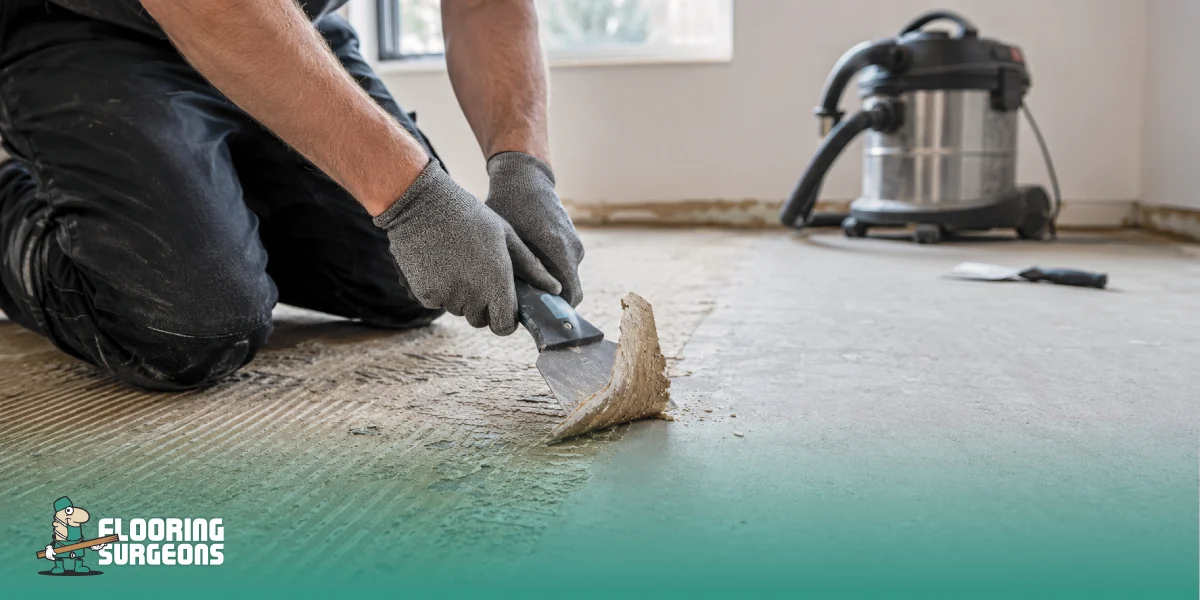
Using a putty knife, spread the epoxy evenly into the peeling area. Press it firmly into the damaged spot to remove any trapped air bubbles. Slightly overfill the surface. This will make sanding easier later and ensure a flush finish with the rest of the board.

Step 5: Let the Repaired Laminate Floor Dry Completely
Allow the filled area to cure fully. Depending on the product, drying can take between 12 and 24 hours. Avoid stepping on or touching the area during this time. Patience is key here; a fully cured repair will last much longer and resist future peeling.
Step 6: Sand the Surface for a Seamless Laminate Floor Finish
Once the epoxy is completely hard, start with 80-grit sandpaper to remove excess filler and shape the patch. Then, switch to 120-grit to smooth and feather the edges so it blends naturally with the rest of the floor.
Tip: Always sand by hand, not with an electric sander, as it gives you more control and prevents damaging nearby laminate boards.
Step 7: Carefully Remove Tape Without Damaging the Laminate
Peel off the painter’s tape slowly and at an angle. If the tape pulls at the surrounding finish, stop immediately and use a craft knife to score along the edge before continuing. This step keeps your repair lines sharp and clean.
Step 8: Wipe Clean and Stain to Match the Original Laminate Colour
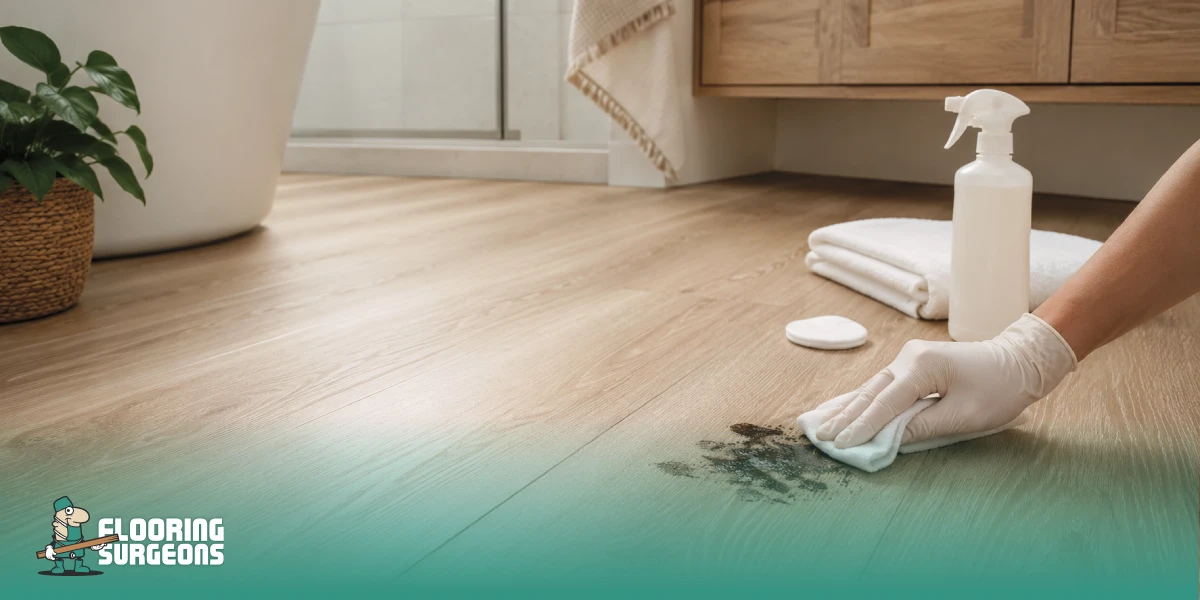
Remove all dust using a clean, dry microfibre cloth. Apply your chosen wood stain or laminate repair pen using light strokes that mimic the wood grain pattern.
For perfect blending, layer the colour gradually rather than applying one thick coat. Wait a few minutes, then wipe off excess stain for a natural tone match.
Step 9: Add a Protective Finish to Seal the Laminate Repair
Once the stain is fully dry, apply a thin coat of wipe-on polyurethane or a clear laminate sealant. This adds shine and protects the repaired area from future wear, moisture, or UV exposure. Let it cure overnight before walking on it.
Your laminate floor should now look smooth, clean, and cohesive with no sign of peeling edges or chips.
How to Maintain Laminate Floors to Avoid Peeling or Chipping
Once your laminate floor looks good again, keeping it that way is all about smart maintenance. Regular cleaning and climate control can make the difference between a floor that lasts five years and one that lasts twenty. Here’s how to care for your laminate flooring and prevent future peeling or chipping.
Regular Cleaning and Maintenance Tips for Laminate Flooring
Laminate floors don’t need constant polishing, but they do need consistency. A few small habits go a long way:
- Sweep or vacuum regularly using a soft-bristle attachment to prevent grit from scratching the surface.
- Use a damp, not wet, microfibre mop; standing water is the fastest way to cause peeling or bubbling.
- Choose a pH-neutral laminate cleaner rather than harsh detergents or wax-based sprays, which can break down the top coating.
- Wipe spills immediately. Even a small puddle from a pet bowl or plant pot can soak into the seams within minutes.
- Add felt pads under furniture legs to prevent dents and chips from movement.
- Place mats at entrances to trap dirt and moisture before it reaches your floor.
Quick tip: Once a year, apply a thin protective topcoat or laminate refresher to high-traffic areas. It restores shine and strengthens the wear layer, helping prevent surface peeling over time.
To keep your laminate floors looking their best, it’s crucial to maintain regular cleaning and care. However, if you’re dealing with stubborn water stains on wood floors, check out our guide to removing them effectively. It could be just the solution you need! Learn how to remove water stains from wood floors here.
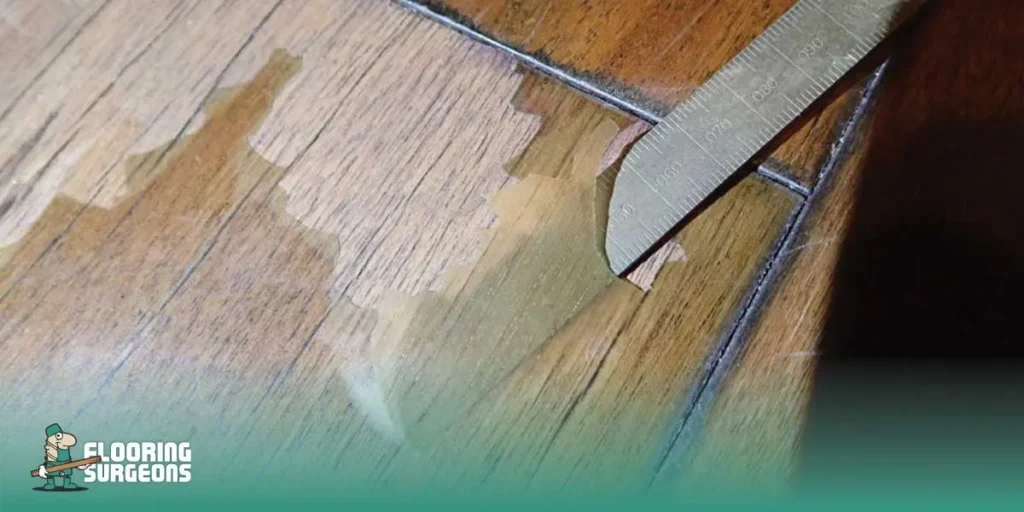
How to Protect Laminate Floors from Moisture and Heat Damage
Moisture and temperature changes are the two biggest threats to laminate flooring durability. The key is prevention, not reaction.
- Control indoor humidity: Keep it between 45–55% using a dehumidifier in damp seasons or a humidifier during dry winters. This stops boards from expanding and contracting.
- Avoid direct sunlight: Use blinds or sheer curtains to protect your floor from UV rays, which can fade colour and weaken the top layer.
- Keep heat sources away: Don’t place portable heaters or radiators directly on the laminate; the heat can dry and warp the surface.
- Seal vulnerable areas: Use waterproof silicone sealant around bathrooms, kitchens, or near doorways where water exposure is common.
- Never use steam mops: They push hot, moist air deep into joints, softening adhesives and causing bubbling or peeling.
If you live in a high-humidity region or have underfloor heating, consider water-resistant or AC4-rated laminate flooring for added protection against both heat and moisture.
With just a little regular care, your laminate floor can stay smooth, stable, and beautiful for years, with no peeling edges, no lifted seams, and no surprise repairs.
By following these tips, you can protect your laminate floors from moisture and heat damage, keeping them in top condition for years to come. If you’re looking for a great solution to maintain and protect your wood flooring, consider using WOCA Maintenance Oil Care for Wood Flooring to enhance its longevity and appearance:
https://www.flooringsurgeons.co.uk/product/woca-oil-care-for-wood-flooring-natural-1ltr/
Expert Tips for Fixing and Maintaining Peeling Laminate Floors
Even the best laminate flooring can develop small chips or lifted edges over time. The key to a long-lasting fix is paying attention to detail, not just patching the surface.
- Test every repair product first: Always test epoxy, stain, or sealant on a hidden corner to ensure colour match and adhesion.
- Work in thin layers: When repairing or sealing, it’s better to apply two thin coats than one thick one. It helps the finish dry evenly and bond more strongly.
- Keep your climate stable: Laminate performs best in a consistent indoor temperature range of 18–24°C. Large fluctuations cause tension that leads to peeling.
- Use a colour-matched repair kit: Many UK suppliers offer laminate touch-up kits for small chips, perfect for spot repairs that blend seamlessly.
- Recoat high-traffic zones yearly: Applying a light laminate refresher or sealant in hallways or kitchens extends the floor’s life dramatically.
- Save leftover planks: If you ever need to replace a section, having spare boards from your original batch guarantees an exact match.
Following these small professional habits can keep your laminate floor looking new for years, saving you both time and money on larger repairs.

fatemexrm
fatemexrm is a contributor at Flooring Surgeons, sharing insights and expertise through published articles.