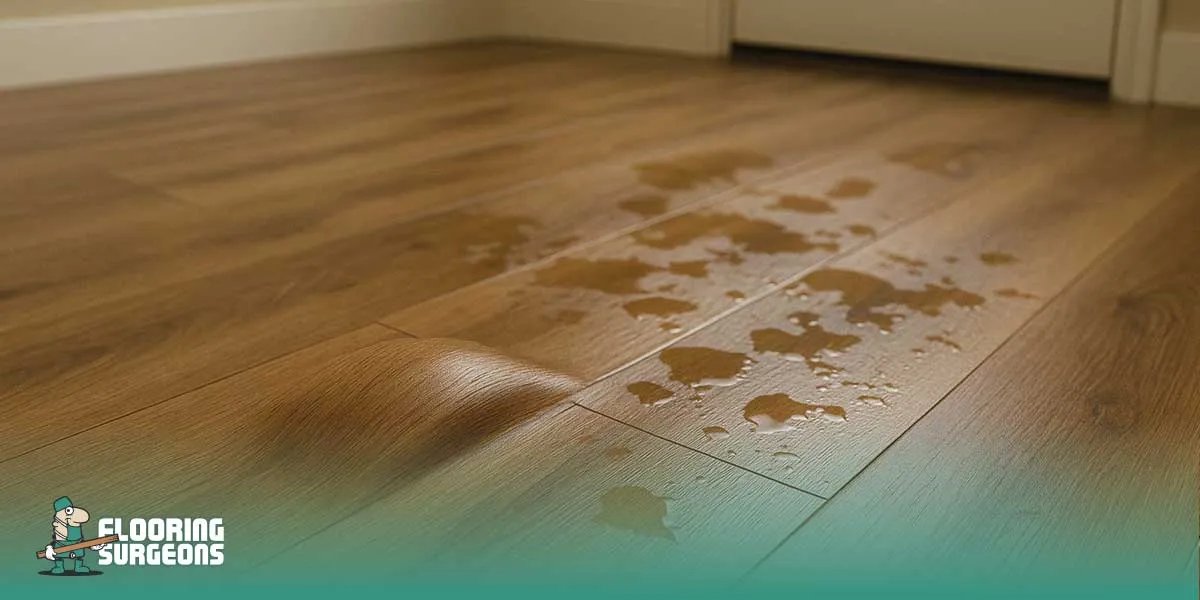
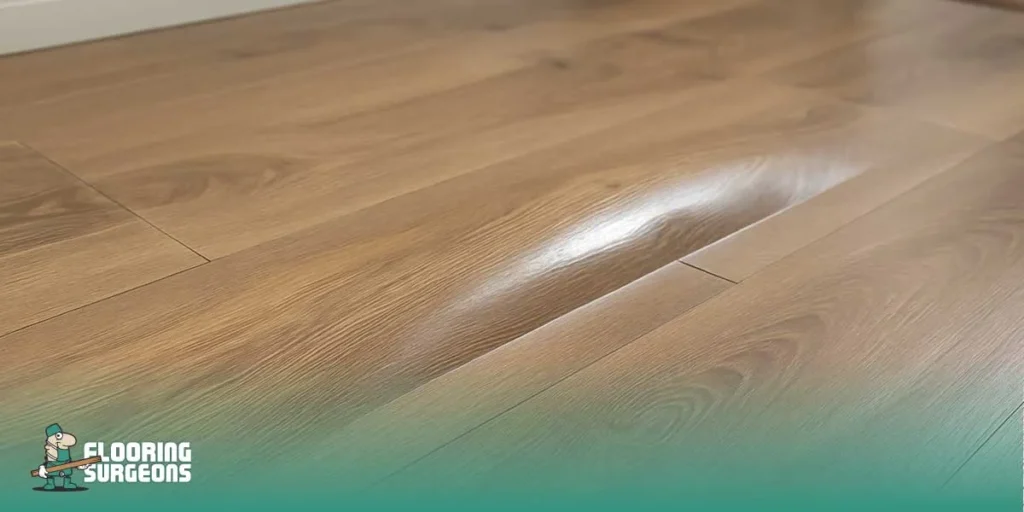
Laminate flooring bubbles when moisture gets into the core, when the subfloor isn’t level, or when the planks can’t expand and contract properly. In most homes, bubbling starts because water has seeped through seams or because the installation didn’t leave enough expansion gaps.
These bubbles look like raised, spongy patches under the surface، something homeowners notice the moment the floor stops lying perfectly flat. The frustration usually begins after a spill that wasn’t dried quickly, a pet accident soaking overnight, steam cleaning, or even humidity trapped beneath the underlay. And for many people, the shock comes when the floor looks perfect one week and suddenly warps the next.
This guide explains exactly why laminate flooring bubbles, how to identify whether the issue is caused by water damage, subfloor problems, or installation mistakes, and, most importantly, how to fix laminate flooring bubbles without replacing the entire floor. If you’re trying to save your floor, understand the damage, or avoid costly repairs, this is the most straightforward explanation you’ll find.
Table of contents
Laminate Floor Bubbling from Water: The Most Common Cause
Laminate floor bubbling from water occurs when moisture seeps into the seams and swells the core, lifting the surface and creating soft, raised bubbles. This is the number-one reason laminate floors warp or show “wood floor bubbling up” patches, even when the damage isn’t immediately visible.
Laminate flooring isn’t fully waterproof, and its weakest point is always the joints. When spills sit too long, when a mop leaves excess water behind, or when a leak goes unnoticed, moisture can penetrate the click system and reach the fibreboard core. Once the core absorbs water, it expands unevenly, pushing the decorative layer upward and creating the classic bubbling effect.
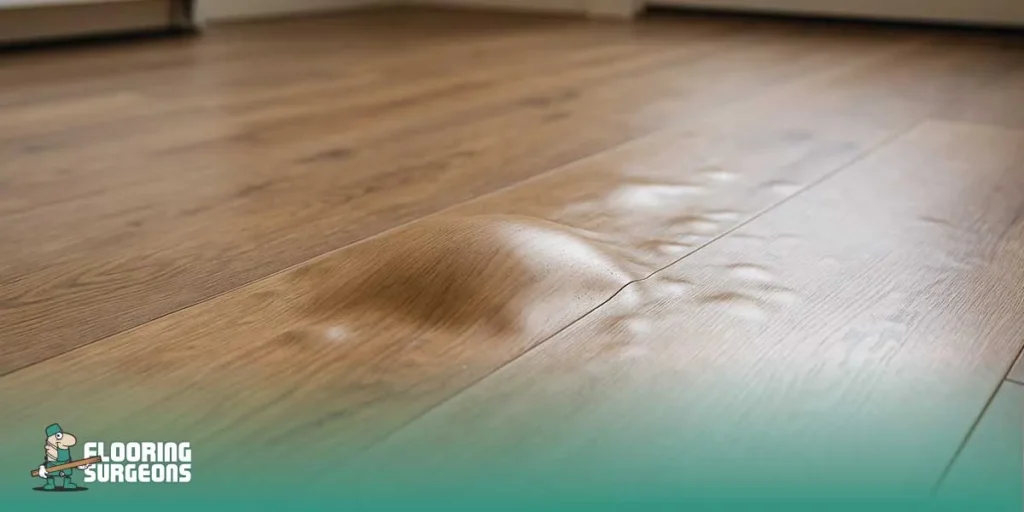
Most homeowners first notice small raised spots around the dishwasher, sink, washing machine, or anywhere pets spill water, but the bubbling often spreads as the swollen boards press against neighbouring planks. Even high humidity or steam cleaning can trigger the same problem, as moisture vapour can work its way beneath the surface and weaken the structure from within.
In short, laminate bubbles when water gets where it shouldn’t, and once the core swells, the damage becomes permanent unless addressed early. Understanding this helps you fix the issue correctly and prevent more serious “wood floor bubbling up” failures across the room.
Other Reasons Laminate Flooring Bubbles (Humidity, Heat, Bad Installation)
Laminate flooring can bubble even without direct water exposure when humidity, trapped heat, poor installation, or a damp subfloor cause the boards to expand with nowhere to go. In simple terms, anything that makes the laminate swell or prevents it from expanding correctly can cause bubbling just as easily as a spill.
One of the most common mistakes is failing to leave a proper expansion gap around the room. Laminate naturally expands with temperature and humidity; if it’s installed too tightly against the walls or skirting, the boards start to push upward, creating raised spots that look just like moisture bubbles. Even a 1–2 mm gap can trigger visible swelling after a few warm days.
Another major cause is a wet or unprepared subfloor. If moisture rises from concrete or an unsealed base, the underside of the laminate absorbs vapour slowly over time. This leads to hidden swelling that becomes visible as soft bubbles in the middle of the room, often mistaken for surface water damage. Many cases of bubbling actually start from below, not above.
High indoor humidity, especially in kitchens and bathrooms, can have the same effect. Steam from cooking, long showers, and poor ventilation raises air moisture levels, which the laminate core absorbs through its joints. When the core swells from humidity, bubbles appear even if the floor has never seen a spill.
Finally, low-quality laminate boards with a weak protective layer bubble far more easily because the surface isn’t strongly bonded to the core. When the plank expands unevenly, even mild heat from sunlight, underfloor heating, or nearby appliances can cause the top layer to lift, forming raised patches. This is also where homeowners often wonder, “Does laminate flooring scratch easily?”, because weaker protective layers not only bubble faster but also mark more easily under everyday wear. Choosing higher-grade materials, the type recommended by Flooring Surgeons, is the best way to avoid these surface weaknesses altogether.
How to Fix Laminate Flooring Bubbles Without Replacing Boards
You can often fix laminate flooring bubbles without replacing the boards if the damage is shallow and caused by surface moisture, trapped air, or minor swelling. The key is helping the plank dry, flatten, and stabilise before the bubble grows. If the core is already fully swollen or the surface has delaminated, repair won’t work, but many early-stage bubbles can be fixed quickly at home.
Quick Fixes for Surface Bubbles (When Replacement Isn’t Needed)
If the bubble is small, soft, or recent, these methods work best:
- Dry the area thoroughly: Use a fan, dehumidifier, or gentle heat to remove moisture from the surface and joints. This works exceptionally well for bubbles caused by mopping or minor spills.
- Use weight to flatten minor swelling: After drying the area, place a heavy, flat object (such as a stack of books) on the bubble for 24–48 hours. This helps the plank return to its original shape if the core hasn’t fully expanded.
- Reduce humidity in the room: High humidity can create “air-like” bubbles. Lowering indoor moisture often makes the bubble shrink on its own.
- Relieve pressure if the floor is installed too tightly: Remove the skirting or trim and increase the expansion gap to 10–12 mm. If the bubble was caused by pressure, it drops immediately once the floor has space to expand.
- Eliminate hidden moisture from below: Use a dehumidifier over the affected area for several days if you suspect a damp subfloor. This stops further swelling and can deflate bubbles caused by rising moisture.
When You Can Fix the Bubble and When You Can’t
You can repair laminate bubbles without replacing boards if:
- The bubble is soft, small and recent.
- The top layer is not cracked or peeling.
- The swelling was caused by moisture that has now been removed.
- The subfloor is not severely wet.
- The plank returns partially to normal after drying or weight.
You cannot repair laminate bubbles if:
- The surface layer has lifted or split.
- The HDF core is permanently swollen or distorted. rted
- There is mould or rising damp under the floor.
- The click-lock edges have lifted or warped.d
- The bubble keeps returning after drying.
If the damage is permanent, spot-replacing individual planks is the only long-term solution, but catching bubbles early usually prevents this.
How to Fix Laminate Bubbles Caused by Water Damage
The quickest way to fix laminate floor bubbling from water is to dry the planks completely, remove any ongoing moisture source, and stabilise the subfloor so the problem doesn’t return. Water-damage bubbles are repairable only if the core hasn’t fully swollen, so act fast to avoid needing to replace the plank. Most bubbling from leaks, spills, or wet mopping comes from moisture trapped under the surface, and proper drying is the only way to reverse it.
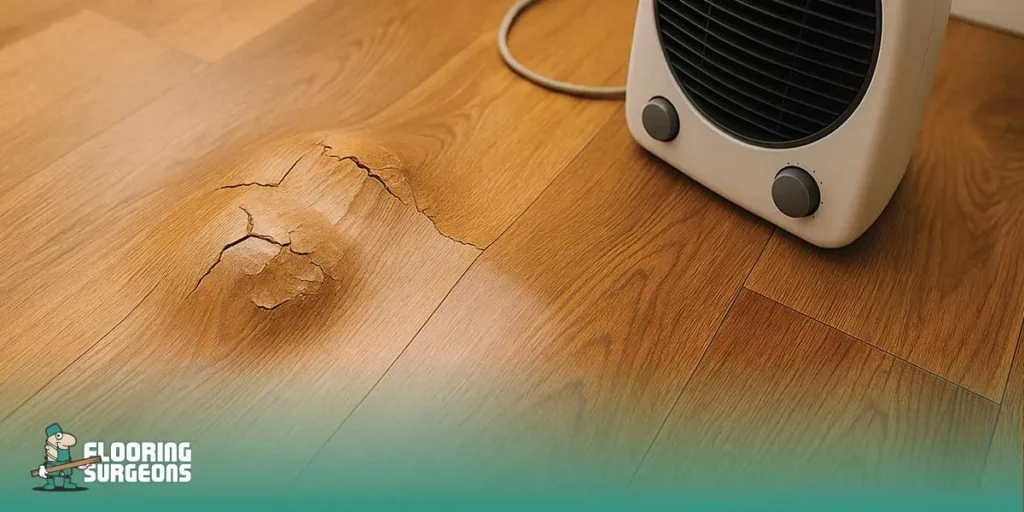
Drying Laminate Floor Bubbling from Water
The first thing you must do is dry the laminate floor that is bubbling from water, because the bubble will not go down until the moisture inside the plank and the joints is gone. Drying needs to be fast and controlled: use fans, heaters on low, or cross-ventilation to pull vapour out of the boards without overheating them. When moisture evaporates early, the HDF core can shrink back to its original shape, giving you the best chance of saving the plank.
Fix Laminate Bubbles by Checking for Leaks
To prevent bubbles from returning, you must identify the cause of the water exposure. Many homeowners fix the surface but ignore the leak, so the bubbling comes back within weeks. Inspect dishwashers, fridges, radiators, washing machines, toilets and sink pipes for slow drips. Even a tiny, unnoticed leak can repeatedly soak the edges and cause the wood floor to bubble up across the room. If the laminate keeps bubbling in the same spot, a hidden leak is almost always the reason.
Using a Dehumidifier to Fix Laminate Floor Bubbling from Water
A dehumidifier is one of the most effective tools for repairing laminate floor bubbling caused by water, especially when the moisture is trapped beneath the surface. Running a strong dehumidifier for 24–72 hours pulls water from the subfloor, underlay, and laminate core. This method works well in kitchens, bathrooms, and basements where humidity lingers even after visible water has dried. In many cases, bubbles shrink significantly once the room’s humidity drops below 55%.
How to Fix Laminate Bubbles by Inspecting the Subfloor
If the subfloor is still wet, no repair will last; the bubbles will keep returning. That’s why checking the subfloor is a crucial step in fixing laminate bubbles caused by water. Lift the edging or one plank near the damaged area and check the underlay for dampness. If the subfloor shows signs of moisture, you must dry and seal it before reinstalling the laminate; otherwise, even brand-new boards will bubble again. This step prevents long-term structural issues that many DIY guides overlook.
Laminate Floor Bubbling Fix: When You Must Replace the Boards
The only reliable fix for severe laminate floor bubbling is replacing the damaged boards, especially when the core has swollen beyond repair. Suppose the bubble feels raised, spongy, or permanently warped. In that case, the HDF core has already absorbed water and expanded, meaning no amount of drying or weighting will return it to its original shape. At this point, the plank loses structural stability, the click system weakens, and any repair attempt will fail again within weeks.
You know you’ve reached the “replacement stage” when the laminate no longer lies flat, the bubble keeps growing, or the surface begins to delaminate. These are signs that the damage is inside the plank, not on its surface and swollen cores cannot be reversed. Replacing the affected boards is the only long-term solution that restores both the look and the structural integrity of the floor.
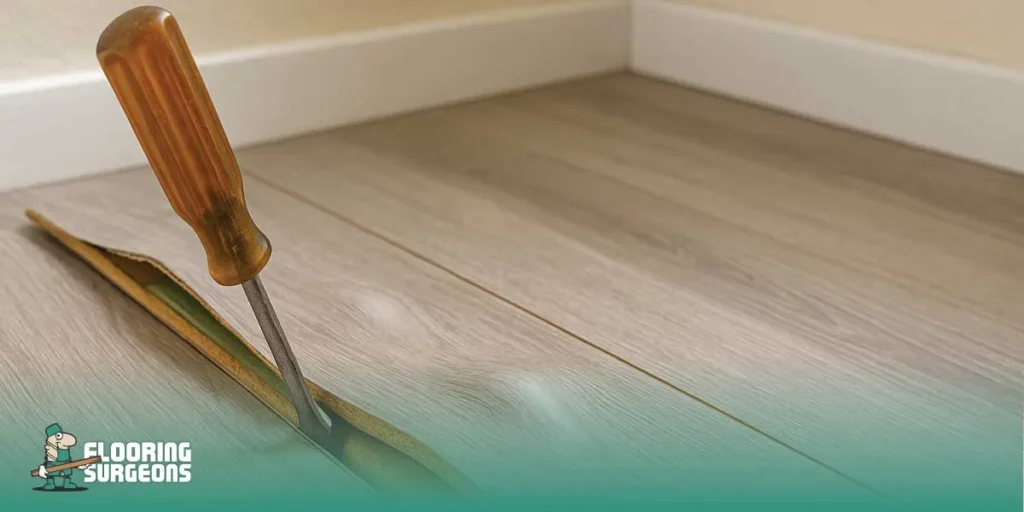
Table: When Laminate Bubbles Can Be Fixed
| Condition | Can You Repair It? | Why / Why Not? | Recommended Laminate Floor Bubbling Fix |
| Small, shallow surface bubble | Yes | Caused by minor moisture or trapped air; core not damaged | Drying, dehumidifier, weight-pressing, sealing edges |
| The bubble disappears when it dries | Yes | HDF core has not swollen; moisture was temporary | Ventilation, moisture control, replace underlay if damp |
| Bubble feels soft/spongy underfoot | No | Indicates swelling of the core, irreversible deformation | Replace affected boards |
| Surface layer peeling or lifting | No | Laminate layer delaminated; cannot be re-bonded cleanly | Replace the damaged area |
| The bubble keeps returning after repair | No | Ongoing leak or subfloor moisture; core repeatedly exposed | Fix the moisture source + replace planks |
| Multiple bubbles across the room | No | Widespread water damage or bad installation | Section replacement or full-floor review |
| Edges curling or raised joints | No | Severe moisture absorption; the click system weakened | Remove affected boards, dry subfloor, and reinstall |
Why Repair Fails When the Core Is Swollen
A swollen laminate core permanently expands, making the plank thicker, softer, and uneven inside. Once this happens, the click-lock edges lose tension, the top layer separates, and the bubble never fully compresses again. Even if you manage to flatten it briefly, it will reappear because the internal structure is damaged, not just the surface. This is why the best laminate floor bubbling fix for fully swollen boards is targeted replacement. It restores a flat, safe walking surface, prevents trip hazards, and protects the surrounding planks from future moisture transfer.
Wood Floor Bubbling Up vs Laminate Bubbling
Wood floor bubbling up happens much faster and more severely than laminate because real wood absorbs moisture deeply, expands aggressively, and warps permanently. Laminate, on the other hand, only bubbles when the HDF core swells or when the surface layer delaminates, meaning the issue is usually closer to the surface and more predictable.
With solid or engineered wood flooring, even small amounts of moisture can penetrate the fibres, causing cupping, crowning, and visible warping across large sections of the floor. Wood reacts naturally to humidity changes, so anything from a minor leak to long-term damp air can cause boards to rise, twist, or separate. This is why wooden floors in kitchens, bathrooms or coastal homes need careful humidity control and regular monitoring.
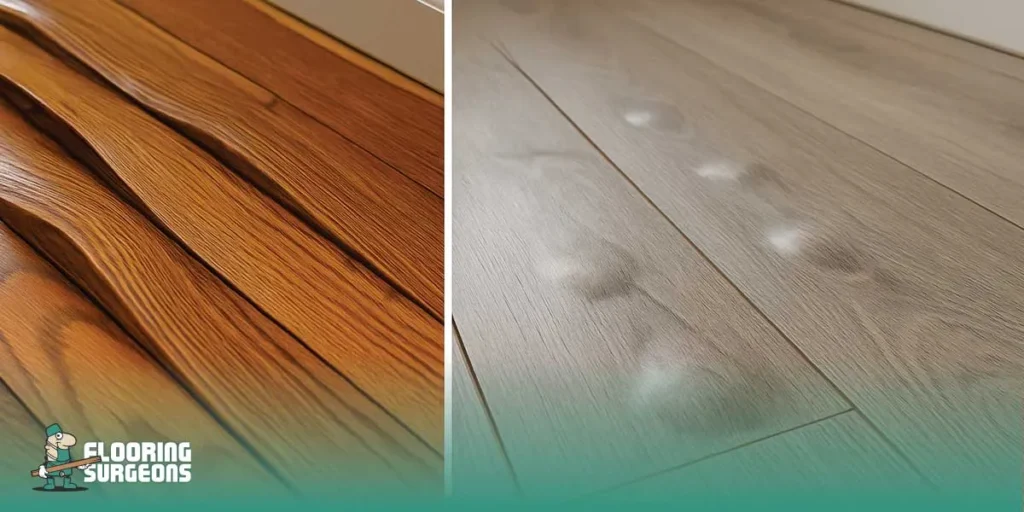
Laminate doesn’t warp in the same organic way it bubbles when water reaches the compressed HDF core or when steam enters through gaps and expansion joints. Because laminate is mostly photograph + wear layer + fibreboard, the swelling is more centralised, often limited to a few planks rather than the entire room.
Fixing “wood floor bubbling up” requires wood-specific solutions: sanding and refinishing for minor cupping, correcting moisture levels, tightening humidity control, or replacing sections of the boards when warping goes beyond repair. Unlike laminate, wood can sometimes be restored because its fibres can be reshaped, but once swelling becomes severe, replacement is the only safe option.
How to Prevent Laminate Floor Bubbles in the Future
The easiest way to prevent laminate floor bubbles is to keep moisture away from the boards, use the correct underlay, and maintain a stable indoor humidity level. Laminate only bubbles when water or vapour reaches the core, so preventing contact is far more effective than any repair method.
Start by avoiding water-based cleaning, use a lightly damp mop only when necessary, and wipe spills immediately so water doesn’t seep into the joints. Homes with dishwashers, washing machines, or pets should place mats in high-risk areas to prevent moisture from pooling. Using the correct underlay is equally essential: a moisture-barrier underlay stops vapour rising from the subfloor, which is a common cause of bubbling in ground-floor installations.
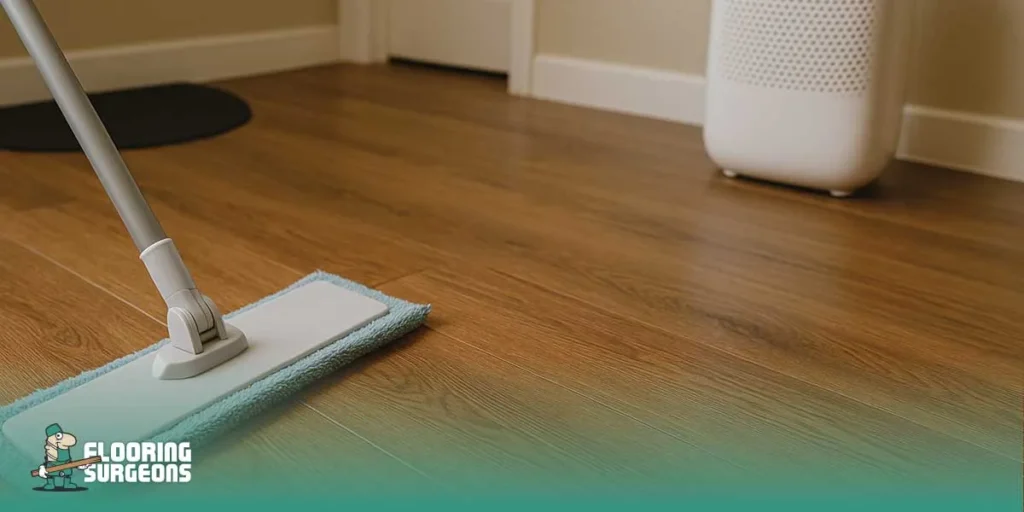
Indoor humidity also plays a significant role. Keeping humidity between 40–60% prevents the HDF core from expanding or softening during warm, humid seasons. In kitchens and bathrooms, good ventilation stops steam from settling around the edges of the floor. If a room feels damp, running a small dehumidifier for a few hours a day can dramatically reduce the risk of bubbling.

Haniye Ayanmanesh
As an expert writer for Flooring Surgeons, I combine technical SEO knowledge with a practical understanding of flooring, producing content that helps users make confident decisions while supporting long-term organic growth.