Gaps in hardwood floors are one of the most common and misunderstood issues homeowners face. In most cases, these gaps are caused by natural changes in humidity and are not a sign that your floor is damaged or poorly installed. When indoor air becomes too dry, wood contracts, creating small spaces between boards. As humidity rises again, those gaps often close on their own. So, how to fix gaps in hardwood floors? The short answer is:
- Small, seasonal gaps usually shouldn’t be filled at all.
- Persistent, vast, or uneven gaps may need targeted repairs, depending on their cause.
Trying to “fix” every gap immediately can actually make the problem worse, leading to cracked fillers, buckling boards, or permanent damage. That’s why the most crucial step isn’t choosing a filler or tool, but understanding which gaps are normal and which aren’t.
In this guide, you’ll learn:
- When hardwood floor gaps are harmless,
- When they require action,
- Which DIY fixes actually work,
- And when it’s smarter to leave the floor alone or call a professional.
If you want to avoid costly mistakes and fix the problem the right way, the sections below break everything down clearly and practically.
Table of contents
Why Do Gaps Appear in Hardwood Floors?
Gaps in hardwood floors don’t appear randomly. In almost every case, they are caused by wood movement, installation errors, or improper indoor humidity. Understanding which factor is responsible is critical because an incorrect diagnosis leads to the wrong fix.
Seasonal Expansion and Contraction Explained
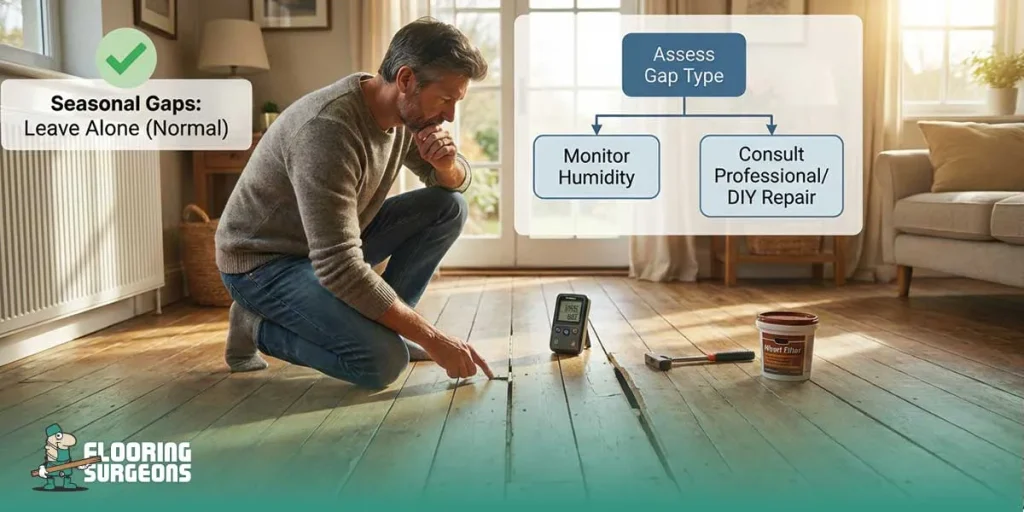
Hardwood is a natural material that expands when it absorbs moisture and contracts when it dries out. During colder months, indoor heating lowers humidity, causing boards to shrink and small gaps to form between them. These are known as seasonal gaps. In many homes, they are completely normal and often close again once humidity rises in spring and summer. Trying to fill these gaps too early is one of the most common and costly mistakes homeowners make.
Installation Mistakes That Cause Floor Gaps
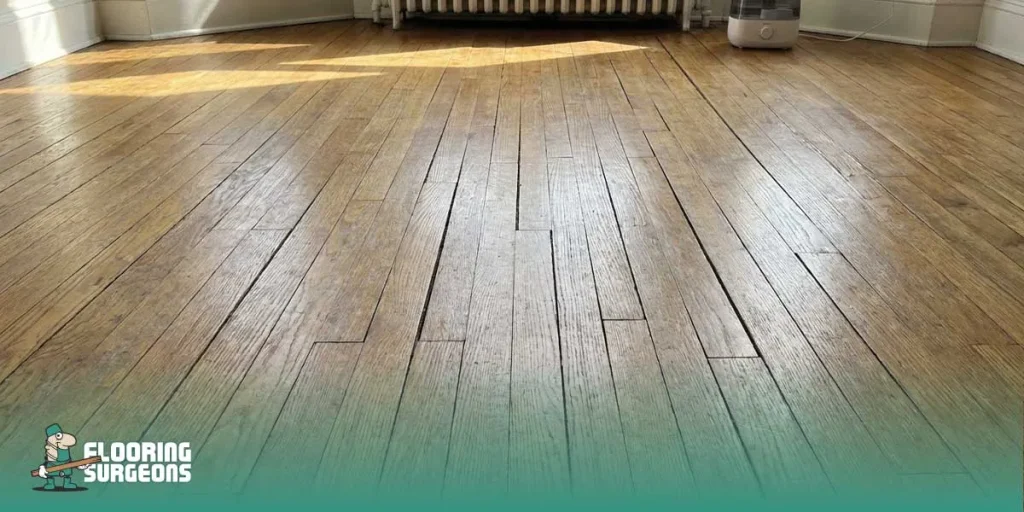
Not all gaps are seasonal. Some are the result of poor installation practices, such as inadequate acclimation before installation, improper fastening, or incorrect spacing. If hardwood boards were installed before fully adjusting to the indoor environment, they may continue to shift long after installation. Loose subfloors, uneven surfaces, or incorrect fixing methods can also cause boards to separate over time, creating gaps that do not close naturally.
Humidity Levels That Are Too Low or Too High
Hardwood floors perform best within a stable indoor humidity range of 40–60%. Prolonged exposure to arid air causes excessive shrinkage, while high humidity can lead to swelling and compression issues. Fluctuations, rather than constant conditions, are especially damaging and often explain recurring or worsening floor gaps.
Are Gaps in Hardwood Floors Normal or a Problem?
Not every gap in a hardwood floor is a defect. In fact, many gaps are a normal response to environmental changes, not a sign of damage. The key is knowing which gaps are harmless and which ones signal a deeper issue.
Small Seasonal Gaps vs Structural Gaps
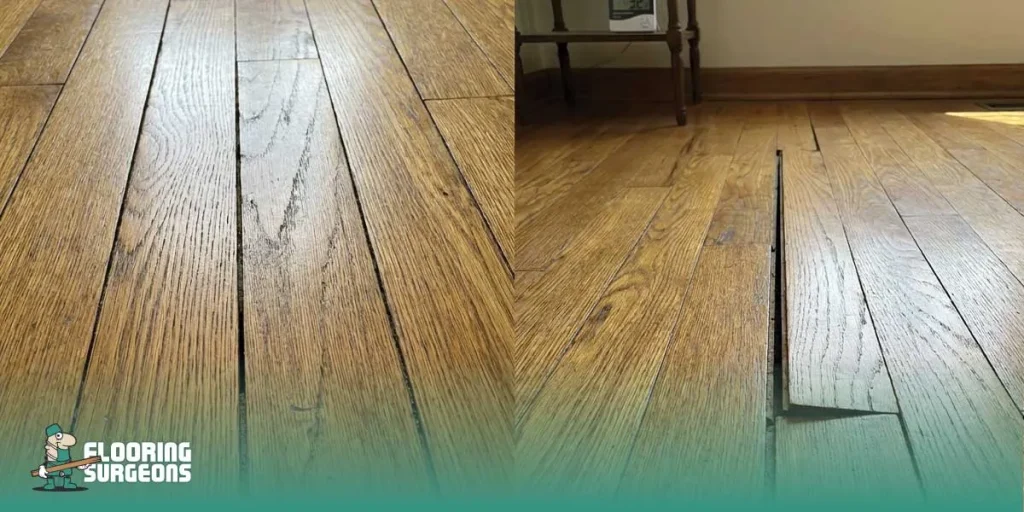
Small, evenly spaced gaps that appear during colder or drier months are usually seasonal. These gaps tend to be narrow, consistent across the floor, and often disappear when humidity levels rise. Structural gaps, on the other hand, are wider, uneven, or localised in specific areas. If gaps remain the same size year-round, continue to widen, or appear alongside loose or creaking boards, they are more likely tied to installation problems or subfloor movement.
When Floor Gaps Fix Themselves Naturally
Seasonal gaps in hardwood floors often close on their own once indoor humidity returns to normal. This is especially common in homes with central heating during winter. If gaps shrink or disappear in warmer months, it’s a strong indication that the floor is behaving as expected. In these cases, attempting a permanent fix can do more harm than good, leading to cracked fillers or stressed boards. Understanding this distinction helps you avoid unnecessary repairs and focus only on gaps that truly need attention.
How to Fix Small Gaps in Hardwood Floors (DIY Solutions)
Small gaps, especially hairline gaps, can often be fixed safely, but only when they’re not seasonal. Before using any DIY solution, make sure the gaps have remained stable for several months and aren’t shrinking or expanding with humidity changes.
Using Wood Filler for Hairline Floor Gaps
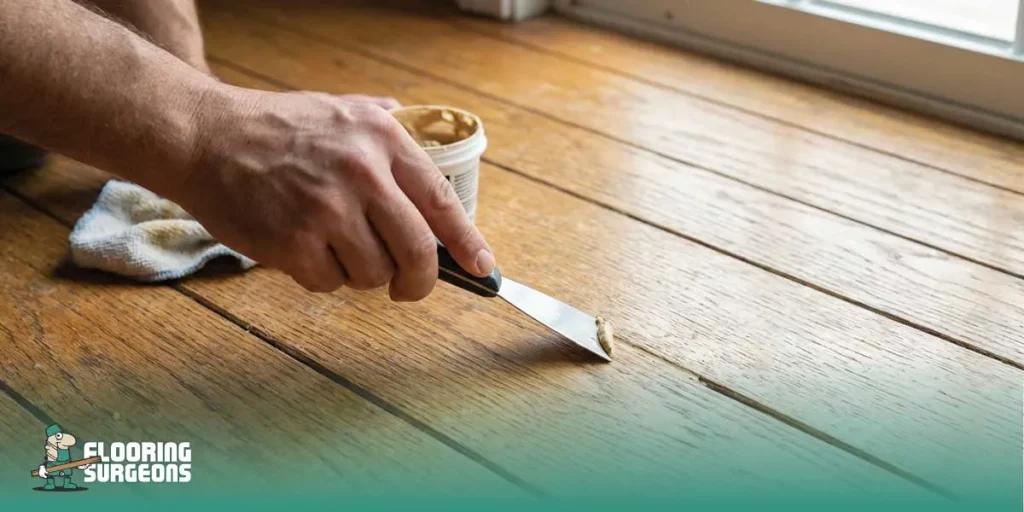
Wood filler for hardwood floors works best for very narrow, shallow gaps that don’t move significantly.
Best practices:
- Use flexible, floor-grade wood filler, not rigid putty.
- Apply only after cleaning the gap of dust and debris.
- Press filler in gently; do not overpack.
- Wipe excess immediately to avoid surface staining.
Avoid wood filler if:
- The gap changes in size seasonally.
- The boards feel loose underfoot.
- The gap runs the full length of multiple boards.
In those cases, filler will likely crack or fall out over time.
The Rope Trick: When It Works and When It Fails
The rope trick on hardwood floors involves pushing cotton rope or twine into gaps and sealing it lightly.
It can work when:
- Gaps are narrow but slightly deeper.
- You want a semi-flexible, reversible f.ix.
- The floor finish is already worn or matte.
It fails when:
- Gaps are structural or uneven.
- The rope is forced too tightly.
- The floor has a glossy or sealed finish (visual mismatch).
This method is cosmetic, not structural, and should be treated as a temporary solution.
Colour-Matching Fillers Without Ruining the Floor Finish
Poor colour matching is one of the fastest ways to make repairs look worse than the gap itself.
Tips for better results:
- Match the filler to the darkest tone in the board, not the average colour.
- Test on an inconspicuous area first.
- Avoid sanding finished floors unless absolutely necessary.
Quick Comparison of DIY Fixes
| Method | Best For | Main Risk |
| Wood filler | Hairline, stable gaps | Cracking if the floor moves |
| Rope trick | Narrow, deeper gaps | Visible texture mismatch |
| Colour-matched filler | Cosmetic fixes | Poor colour blending |
Fixing Gaps Based on Floor Installation Type
Not all hardwood floors are installed the same way, and gap behaviour changes dramatically depending on the installation method. Applying the wrong fix to the wrong floor type is a fast way to cause permanent damage.
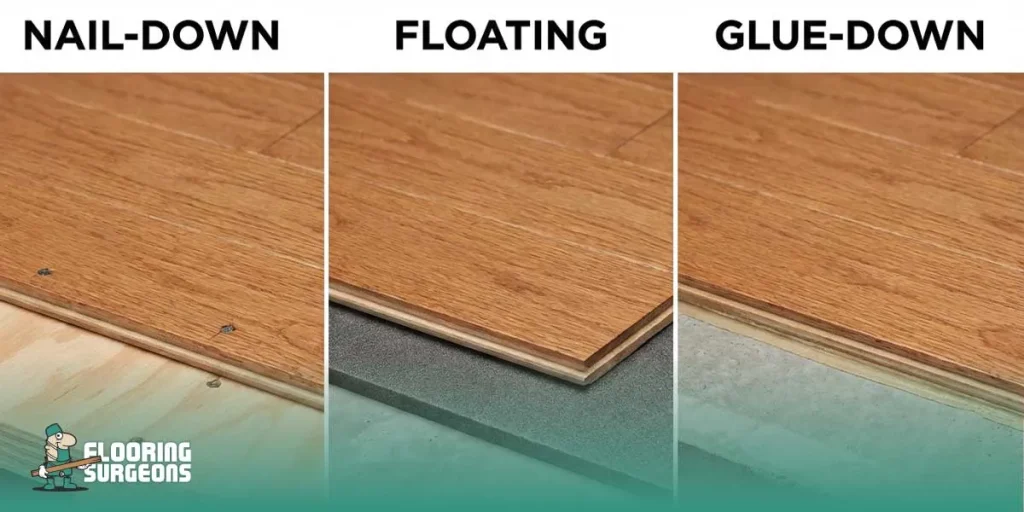
Fixing Gaps in Nail-Down Hardwood Floors
Nail-down hardwood floors are mechanically fixed to the subfloor, which limits movement but doesn’t eliminate it. Small gaps can appear if nails loosen over time or if boards shrink excessively. In some cases, re-fastening loose boards or addressing subfloor movement solves the problem without the need for fillers. However, forcing rigid fillers into nail-down floors that still move slightly can lead to cracking and visible repair lines.
Why Floating Hardwood Floors Behave Differently
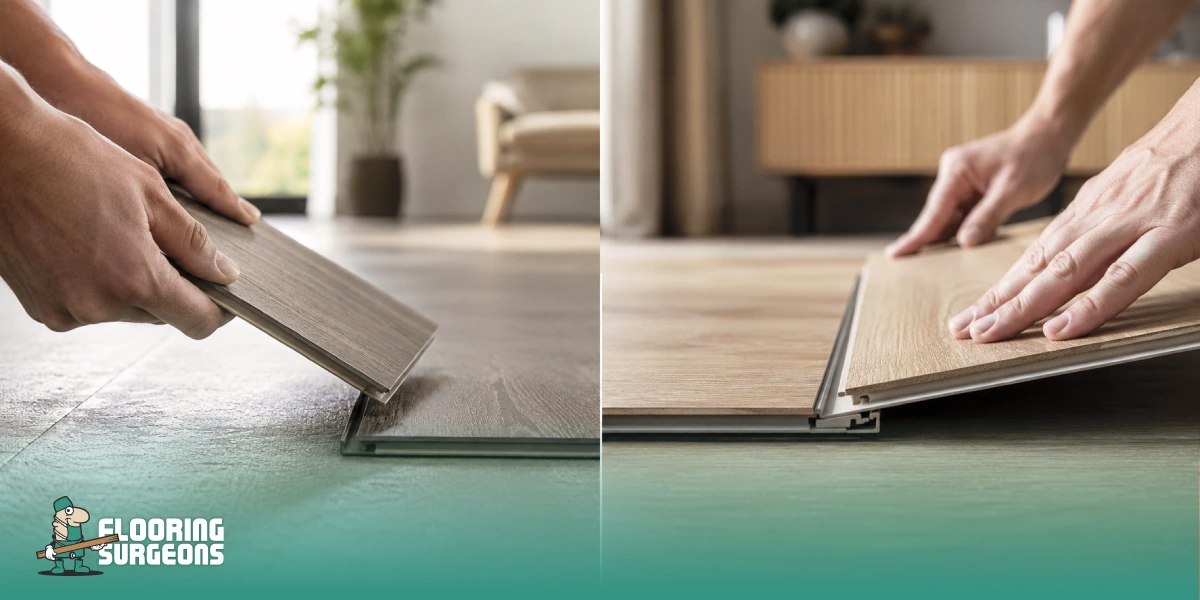
Floating hardwood floors, commonly used with engineered boards, are designed to move as a single unit rather than being fixed directly to the subfloor. Factors such as board construction and engineered flooring thickness can significantly influence the amount of movement over time and the development of gaps.
Floating hardwood floors are designed to move as a single unit. Gaps here are often a sign of restricted expansion space, poor locking systems, or uneven subfloors. Floating hardwood floors, especially engineered flooring, are designed to move as a single unit rather than being fixed directly to the subfloor. Because the boards are not fixed down, filling gaps is rarely effective and often temporary. The correct solution usually involves relieving pressure points, adjusting expansion gaps, or reinstalling affected sections, rather than surface-level repairs.
Glue-Down Hardwood Floors and Gap Issues
Glue-down installations rely on consistent adhesive bonding. In these situations, surface fillers fail to solve the underlying problem, as the issue is often linked to installation limitations and material behaviour. Understanding the problems of engineered hardwood flooring helps explain why some glue-down floors are more prone to long-term gap issues when adhesion is compromised. Gaps typically form when adhesive coverage is uneven or fails over time. In these cases, surface fillers don’t address the root cause. Proper fixes may include re-adhering loose boards or replacing affected sections to restore uniform contact with the subfloor.
How to Prevent Gaps in Hardwood Floors Long-Term
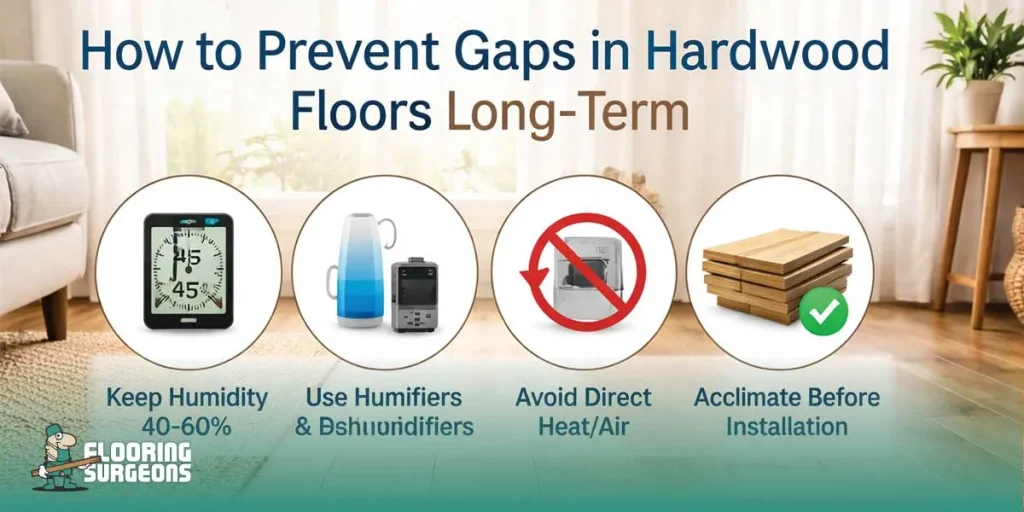
Preventing gaps in hardwood floors is mainly about maintaining stable indoor conditions, not constant repairs. Hardwood naturally reacts to changes in moisture, so long-term gaps usually appear when humidity levels fluctuate too much or when the wood was not properly acclimated before installation. Maintaining a consistent environment is the most effective way to protect your floor.
Key steps to prevent floor gaps:
- Maintain indoor humidity between 40–60% year-round.
- Use humidifiers in dry seasons and dehumidifiers in humid climates, adjusting gradually rather than abruptly.
- Avoid direct heat sources, strong airflow, or vents blowing onto the floor surface.
- Allow hardwood boards to fully acclimate to the room’s conditions for several days before installation.
Following these practices reduces wood movement, helps boards stay properly aligned, and significantly extends the life of hardwood floors.
When to Call a Hardwood Flooring Professional
When deciding when to call a hardwood flooring professional, the key factor is risk, not effort. If there are signs that the floor structure is compromised, such as soft or bouncy areas underfoot, persistent creaking, visible gaps that keep widening, uneven levels, or moisture-related warping, DIY repairs stop being a reasonable option. These issues usually indicate problems beneath the surface, like subfloor damage, weakened joists, or long-term moisture exposure, which cannot be fixed with cosmetic solutions.
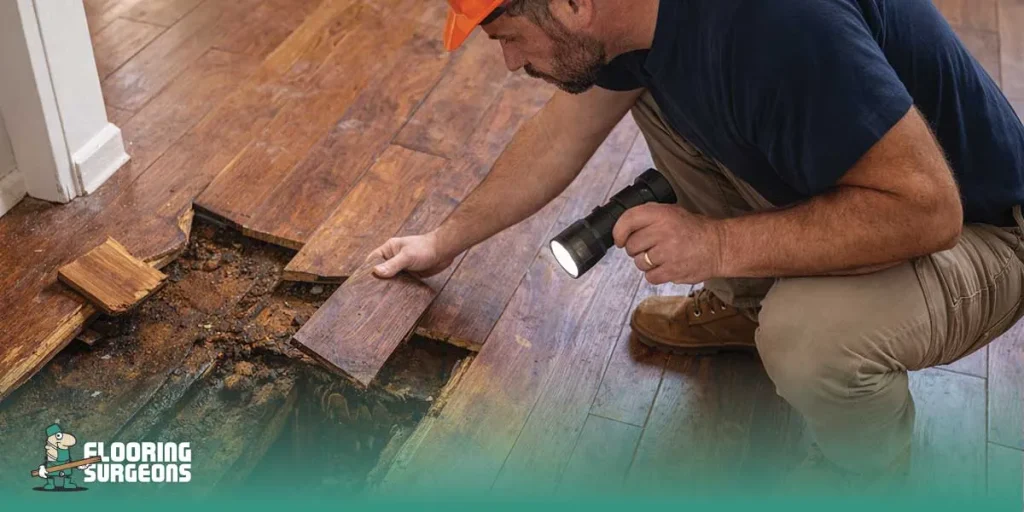
At this stage, the cost vs risk of DIY repairs shifts heavily toward professional intervention: attempting to fix structural issues without the right expertise often leads to temporary results, hidden damage, and significantly higher repair costs later. A qualified professional can correctly diagnose the root cause, prevent further deterioration, and ensure the repair protects both the flooring and the home’s structure, rather than just masking the symptoms.
A qualified professional can correctly diagnose the root cause, prevent further damage, and ensure the repair protects both your flooring and the structure of your home, rather than simply masking the symptoms. If you’re unsure how serious the issue is, the team at Flooring Surgeons can provide a professional assessment and recommend the right solution.

Haniye Ayanmanesh
As an expert writer for Flooring Surgeons, I combine technical SEO knowledge with a practical understanding of flooring, producing content that helps users make confident decisions while supporting long-term organic growth.