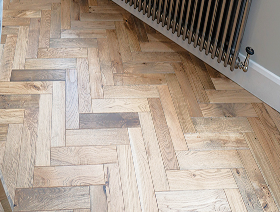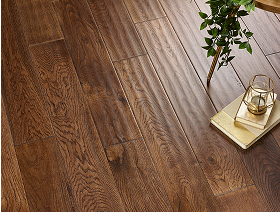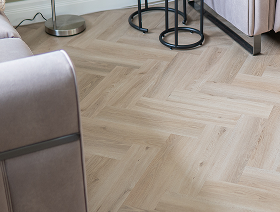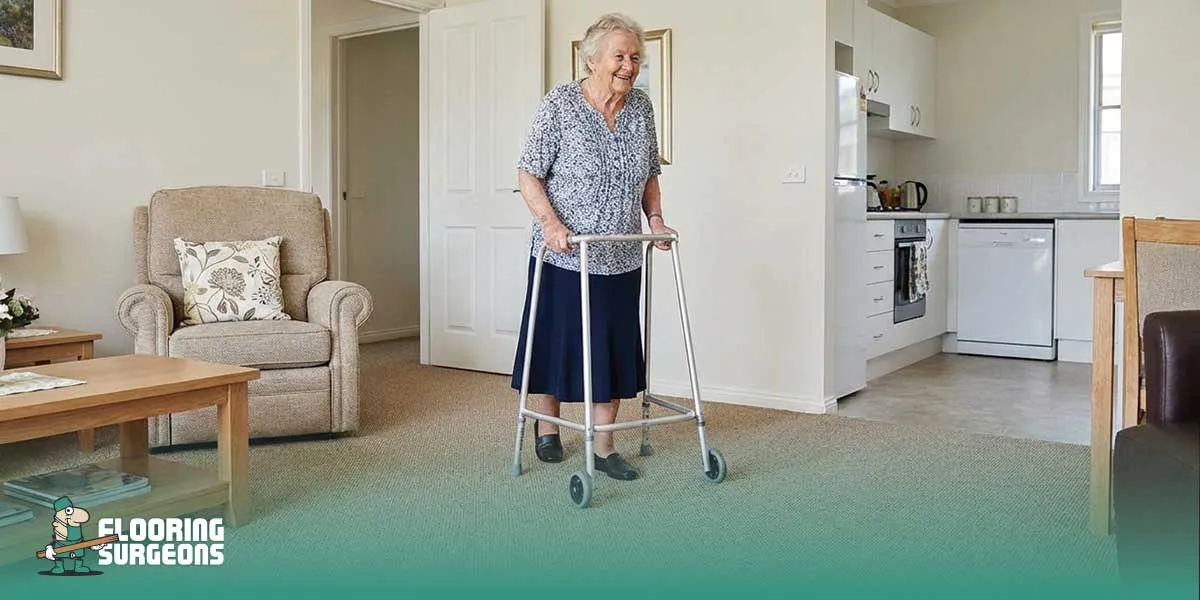
What is the best flooring for the elderly? In short, it is flooring that reduces the risk of slipping, feels stable and comfortable underfoot, and is easy to live with day to day. For most elderly homes, this usually means a non-slip surface, minimal height changes between rooms, good shock absorption for joints, and low maintenance requirements. If a floor feels tricky, noisy, slippery, or challenging to clean, it is rarely the right choice for an ageing household, no matter how good it looks.
However, the best flooring for senior citizens is not the same for everyone. Active seniors often need durable, easy-care flooring that supports confident movement. Seniors who use walkers require smooth, stable surfaces with no raised transitions or loose edges. Those with balance issues need flooring that offers grip, visual clarity, and a secure feeling underfoot, especially in bathrooms and high-traffic living areas. The room itself also matters. A safe bathroom floor has different priorities from a bedroom or living space, and installation details such as underlay, transitions, and edge trims can make a real difference to everyday safety.
This article breaks down the safest and most comfortable flooring options for elderly homes, room by room and person by person. You will learn which materials work best, which ones to avoid, and how installation choices affect long-term comfort, maintenance, and fall risk. By the end, you will be able to choose flooring that genuinely supports independence, confidence, and quality of life, not just appearance.
Table of contents
What Makes Flooring Safe for Seniors? Key Factors to Consider
When choosing the safest flooring for seniors, safety is not about a single feature. It is the combination of grip, comfort, stability, and ease of movement that determines whether a floor truly supports daily life. Flooring safety for the elderly should reduce fall risk without making it harder to move on or maintenance more demanding.
Slip resistance
A safe floor must offer consistent grip, even when dry or slightly damp. High-gloss or smooth finishes increase slip risk, especially in bathrooms and kitchens. Textured or slip-resistant surfaces provide better traction and are essential for seniors with balance issues.
Shock absorption
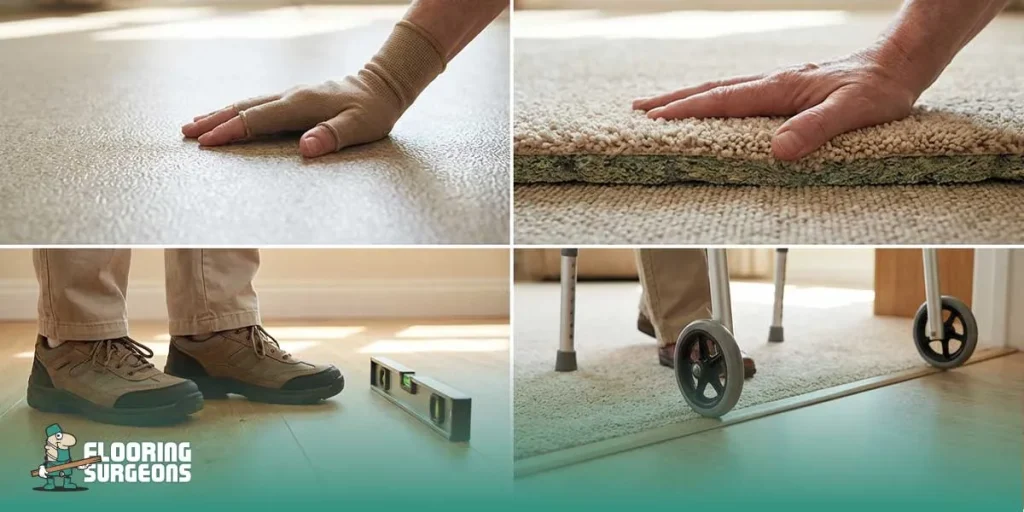
Hard surfaces can increase joint strain and the risk of injury in a fall. Flooring with built-in cushioning or the right underlay helps absorb impact, making it more comfortable for knees, hips, and lower back. This is especially important for elderly users who spend long periods standing or walking indoors.
Stability underfoot
The floor should feel solid and predictable with every step. Any flex, movement, or hollow sound underfoot reduces confidence and increases fall risk. Poor installation, weak underlay, or uneven subfloors can turn even good materials into unsafe surfaces.
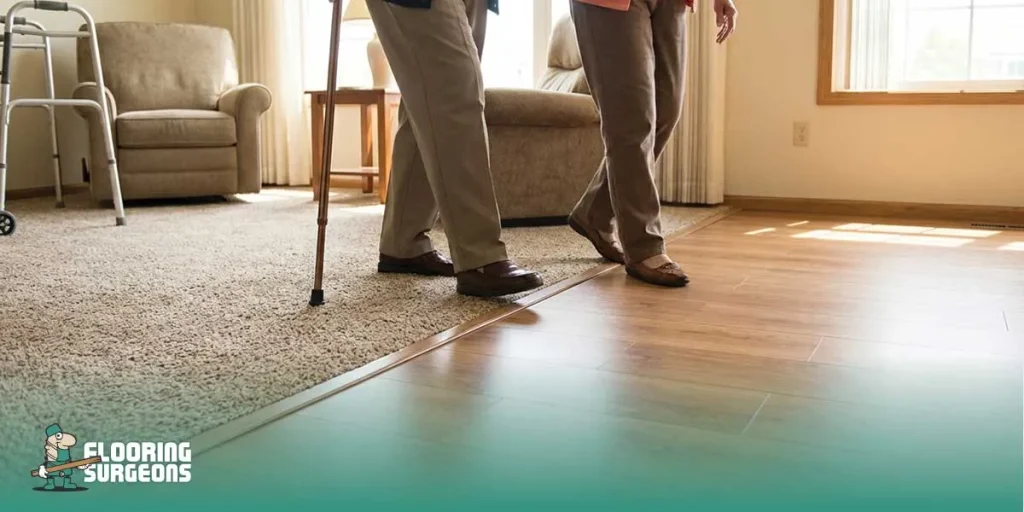
Ease of movement with walkers or canes
Safe flooring must support mobility aids without catching, dragging, or resisting movement. Smooth transitions between rooms, minimal height changes, and properly finished edges are critical. Floors that interfere with walkers or canes quickly become a daily obstacle rather than a support.
Best Non-Slip Flooring Options for Elderly Homes
When safety is the priority, the best non-slip flooring for seniors is flooring that maintains grip without being difficult or increasing maintenance. For most elderly homes, textured LVT flooring offers the safest balance of slip resistance, comfort, and low maintenance across multiple rooms. Truly effective slip-resistant flooring must perform well in real daily conditions, not just look safe on paper. Below are the most reliable non-slip options for elderly homes, with clear strengths and limitations.
LVT with textured surface
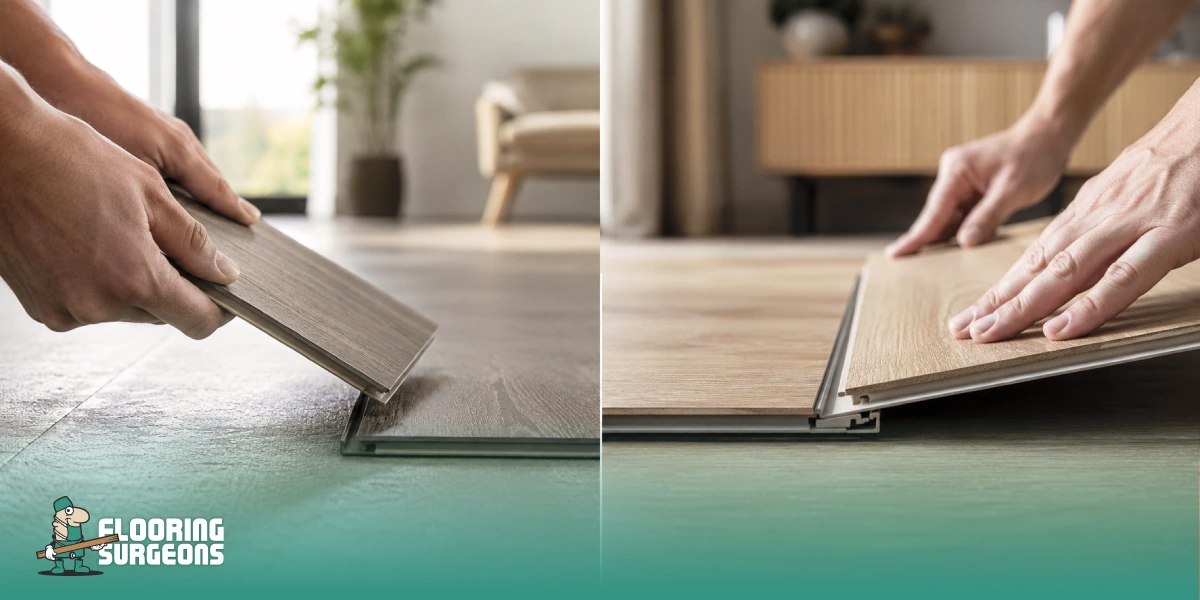
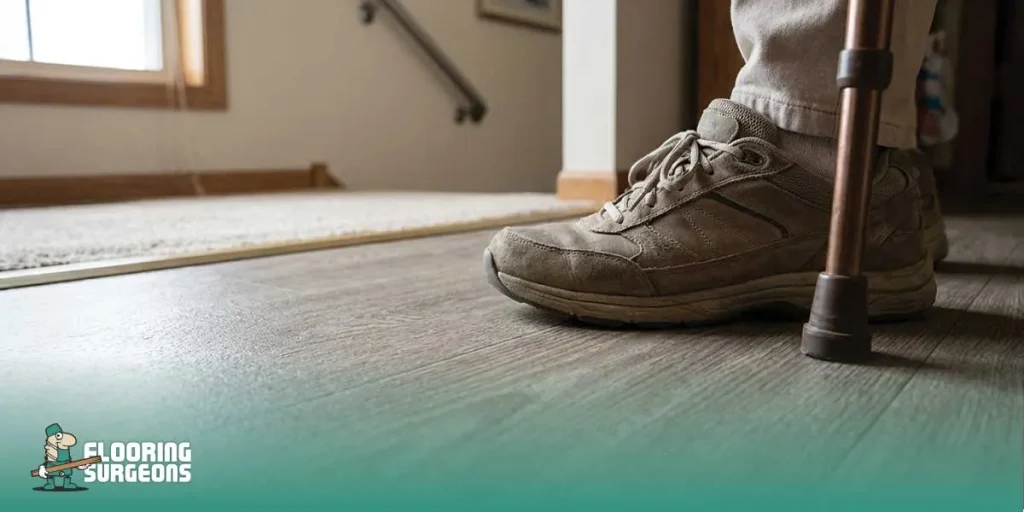
Textured LVT is one of the most balanced choices for elderly homes. It offers consistent slip resistance while remaining easy to clean and comfortable underfoot. The textured finish improves grip without feeling rough, making it suitable for seniors with balance concerns or mobility aids. When installed with proper underlay and smooth transitions, it provides a stable, predictable walking surface across living areas, bedrooms, and even bathrooms.
Best for:
- Active seniors
- Homes using walkers or canes
- Multi-room continuity with minimal transitions
Watch out for:
- Overly smooth or glossy LVT finishes
- Poor installation that creates movement or gaps
Rubber flooring
Rubber flooring provides excellent slip resistance and natural shock absorption, reducing the risk of injury in the event of a fall. It feels secure underfoot and performs well in moisture-prone areas. However, its appearance and limited design options make it less suitable for full-home use in many residential settings.
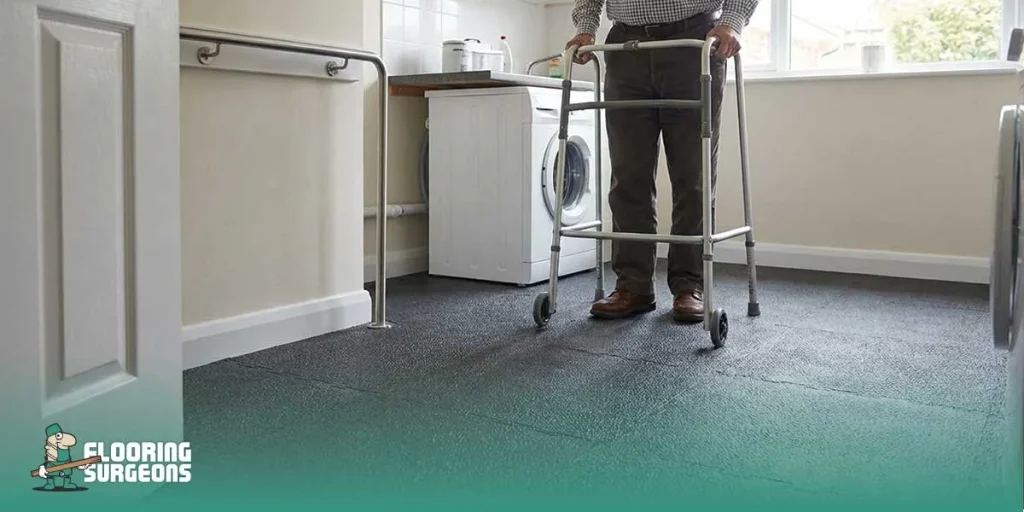
Best for:
- Seniors with balance issues
- Areas where maximum grip is needed
- Utility rooms or select bathroom spaces
Watch out for:
- Limited aesthetic appeal
- Not ideal for traditional living spaces
Low-pile carpet (pros and cons)
Low-pile carpet can improve comfort and reduce the risk of falls, but it is not universally safe for all seniors. While it offers warmth and cushioning, it can interfere with walkers, wheelchairs, and canes if the pile density or underlay is wrong.
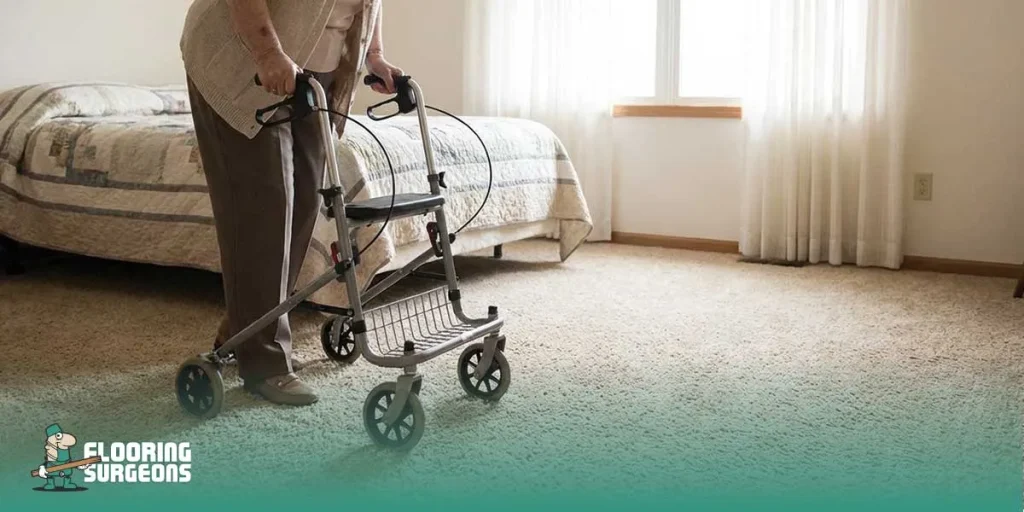
Pros:
- Soft underfoot
- Reduces joint strain and injury severity
Cons:
- Increased resistance to mobility aids
- Harder to clean and maintain
- Can create trip risks if edges or transitions are poorly finished
Best for:
- Bedrooms
- Seniors without mobility aids
Non-slip flooring for elderly homes is not about choosing the grippiest surface possible. It is about finding the right balance between traction, comfort, ease of movement, and maintenance. In most homes, textured LVT offers the safest and most practical all-around solution. At the same time, rubber flooring and low-pile carpet should be used selectively based on the senior’s mobility and the room’s function.
Comparison Table: Non-Slip Flooring Options for Elderly Homes
| Flooring Type | Slip Resistance | Ease of Movement | Comfort Underfoot | Maintenance Level | Best Use Areas |
| Textured LVT | High | Excellent for walkers and canes | Moderate | Very low | Living areas, bedrooms, bathrooms |
| Rubber Flooring | Very high | Good, may feel heavy | High | Low | Bathrooms, utility areas |
| Low-pile Carpet | Moderate | Limited for mobility aids | High | Medium to high | Bedrooms only |
If you need one solution that works across most rooms with minimal effort, textured LVT consistently performs best. Rubber and carpet should be used selectively, not as whole-home solutions.
Best Low-Maintenance Flooring for Seniors
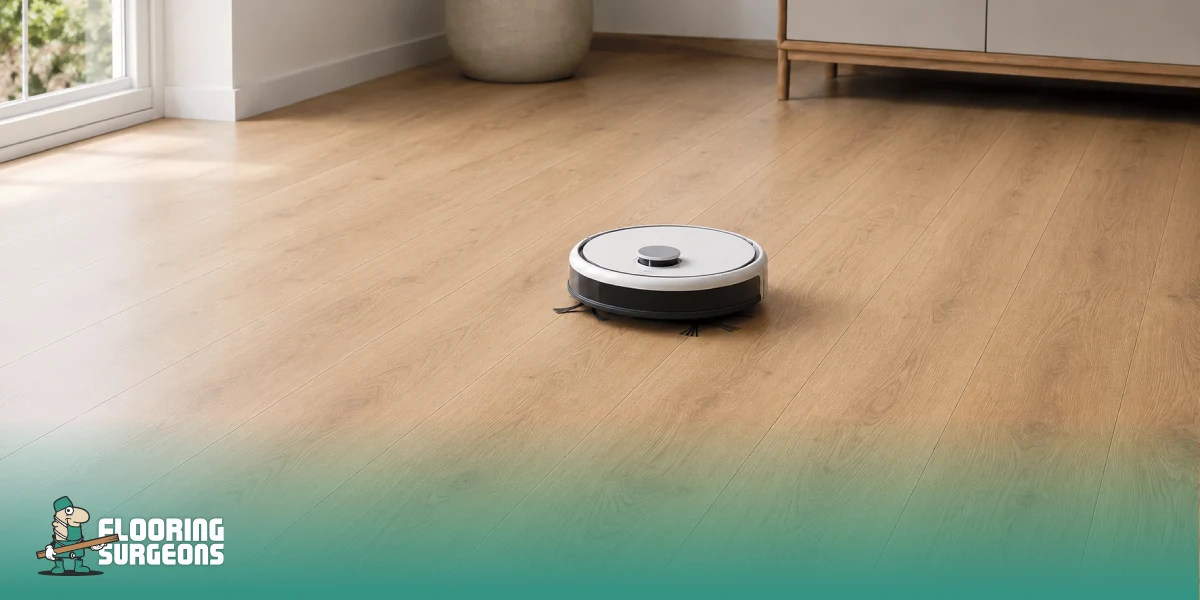
For many households, safety alone is not enough. The best low-maintenance flooring for seniors must be easy to clean, withstand daily use, and remain stable over time. Flooring that requires constant attention, special products, or frequent repairs quickly becomes a burden, especially for elderly users.
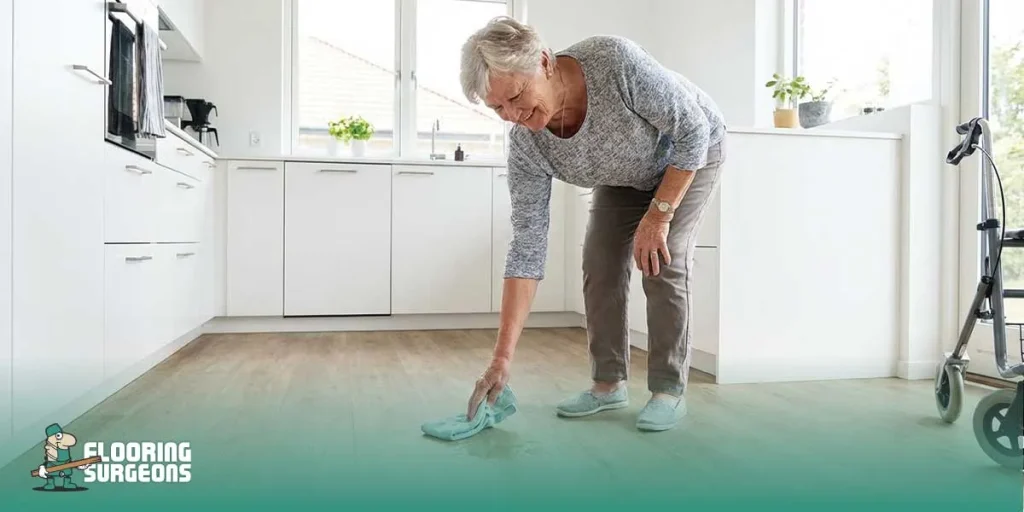
As mobility and energy levels change, routine tasks like cleaning and upkeep should become simpler, not more demanding. Easy-to-clean flooring for the elderly reduces physical strain, lowers fall risk during cleaning, and helps maintain independence. Flooring choices directly affect joint strain, balance, and long-term comfort, reinforcing the health impact of flooring, especially in elderly households.
Luxury Vinyl (LVT)
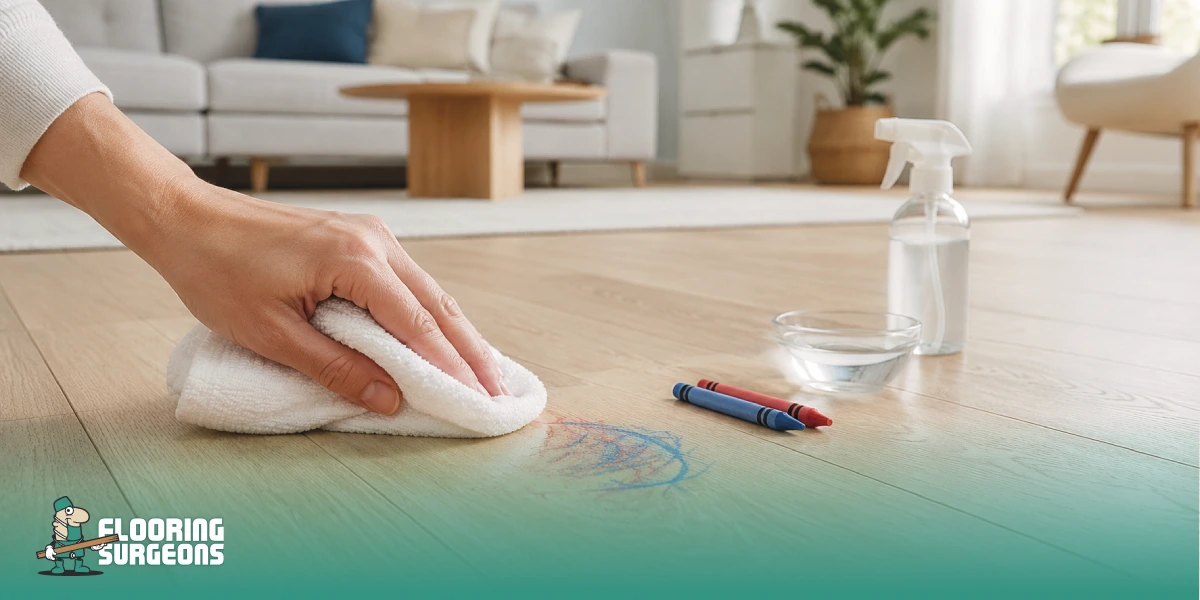
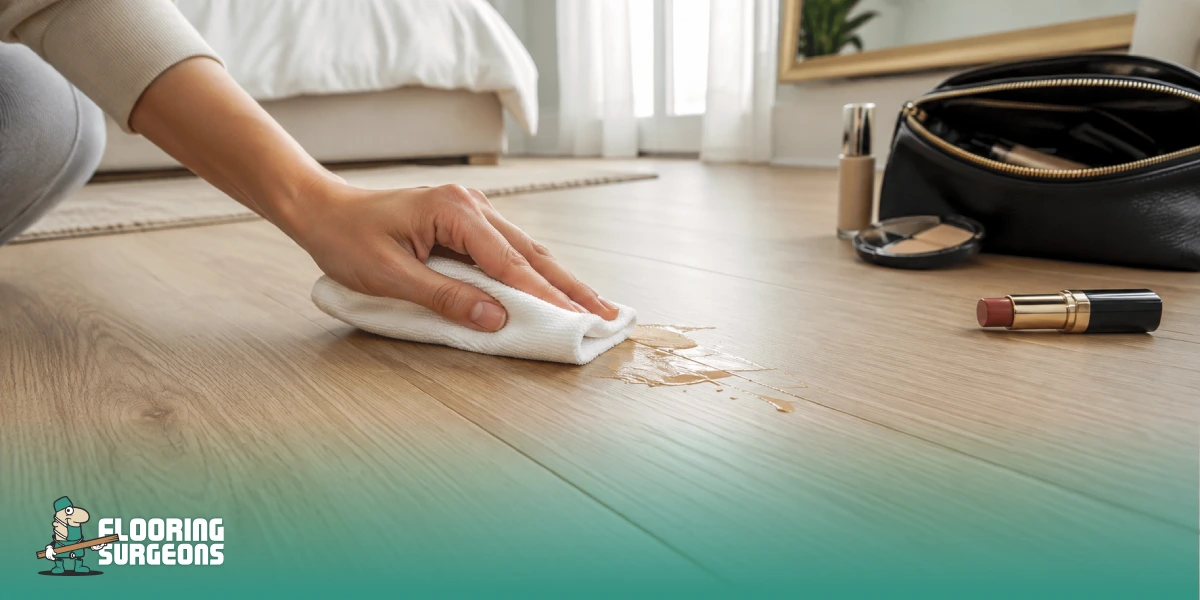
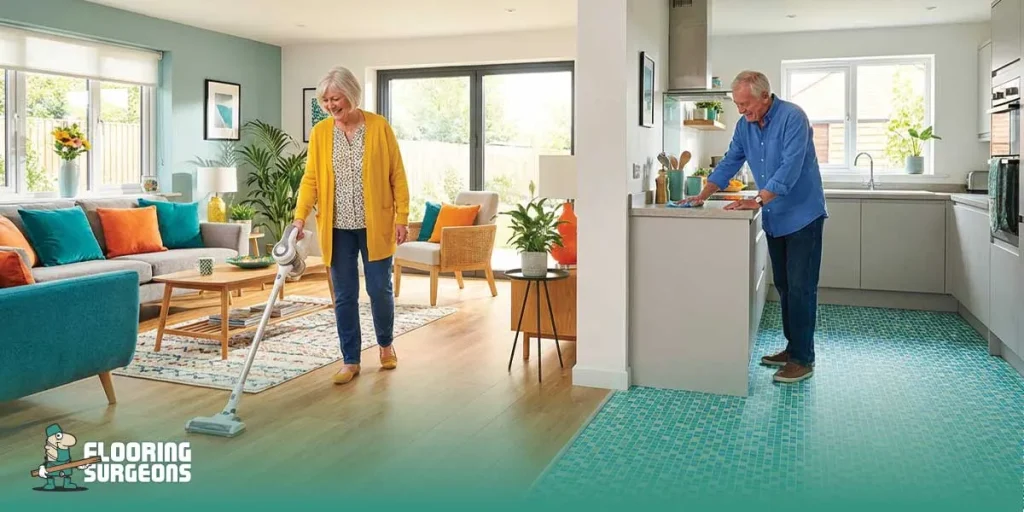
LVT is one of the lowest-maintenance flooring options available. It does not require sealing, polishing, or specialist cleaning products. Spills wipe away easily, and textured finishes maintain grip without trapping dirt. When installed correctly, LVT remains stable for years with minimal upkeep.
Why it works well:
- Simple cleaning with standard household products
- Resistant to moisture and stains
- No refinishing or resealing required
Sheet vinyl
Sheet vinyl offers seamless installation, reducing the number of joints where dirt or moisture can collect. This makes it particularly suitable for kitchens and bathrooms in elderly homes. However, proper installation is critical, as a poor fit can lead to lifting edges or bubbles, which can increase maintenance issues.
Why it works well:
- A one-piece surface is easy to clean.
- Performs well in moisture-prone areas
- No grout lines or seams to manage
Avoid using high-maintenance surfaces for the elderly
Some flooring types look appealing but demand more care than many seniors expect. Natural stone, high-gloss finishes, and untreated wood often require specialist cleaning, frequent attention, or careful moisture control.
Over time, these surfaces add stress rather than convenience. Low-maintenance flooring is not about cutting corners. It is about choosing materials that stay clean, stable, and safe with minimal effort. In most elderly homes, LVT and well-installed sheet vinyl offer the best balance of durability, ease of cleaning, and long-term practicality.
Low-Maintenance Flooring Comparison for Elderly Homes
| Flooring Type | Ease of Cleaning | Long-Term Stability | Moisture Resistance | Ongoing Maintenance |
| Textured LVT | Very easy | High | Excellent | Minimal |
| Sheet Vinyl | Very easy | Moderate to high | Excellent | Minimal |
| Low-pile Carpet | Moderate | Moderate | Low | Regular vacuuming and care |
| Solid Wood | Difficult | Variable | Low | High |
| Natural Stone | Difficult | High | Moderate | High |
For most elderly homes, textured LVT offers the best balance of low maintenance, safety, and durability. Sheet vinyl performs well in moisture-prone spaces when installed correctly. Carpets and natural materials tend to increase maintenance demands and are best used selectively or avoided entirely.
Best Flooring for Older Homes: What Changes with Age
When updating an older home, structural limitations such as uneven subfloors and inconsistent levels must be addressed before focusing on aesthetics. Choosing the best flooring for older homes is less about style and more about working with the building’s limitations. As properties age, the structure beneath the floor often changes, and flooring that ignores these realities tends to fail early or feel uncomfortable over time.
Older homes often have uneven subfloors. Timber joists may settle, concrete slabs may crack, and previous flooring layers usually leave irregular surfaces behind. Flooring systems that require perfect flatness are more likely to move, creak, or wear unevenly in these conditions. More forgiving materials and proper preparation become essential rather than optional.
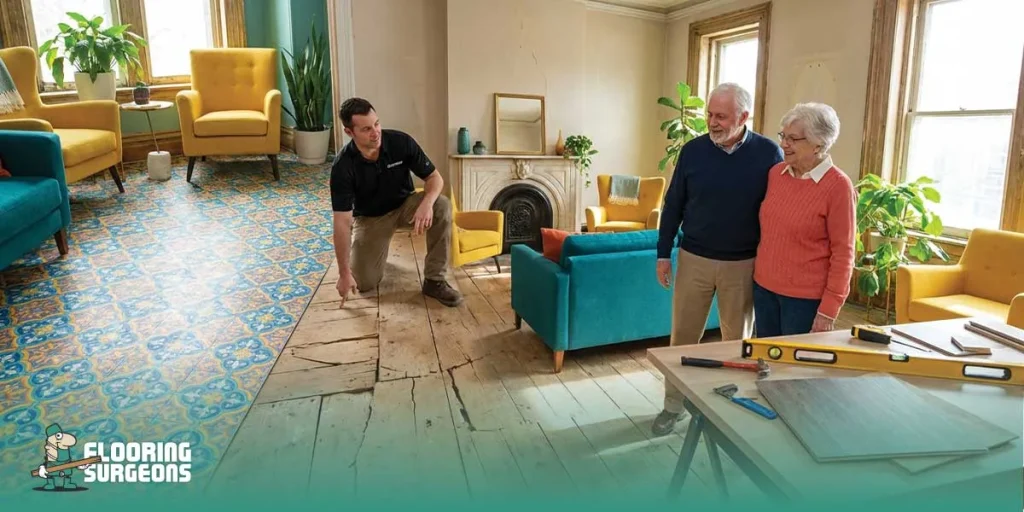
Another critical issue is door thresholds and level changes between rooms. Many older homes were built with inconsistent floor heights, creating small steps or abrupt transitions. These height differences significantly increase the risk of trips for elderly residents. Flooring that allows smooth transitions and minimal build-up from room to room helps maintain safe, continuous movement throughout the home.
Noise and vibration are also more noticeable in ageing properties. Hollow sounds, vibration underfoot, or echoing footsteps can reduce confidence when walking, even if the floor looks visually fine. The right underlay and installation system can dramatically improve how solid and reassuring a floor feels underfoot. Instead of forcing modern flooring onto an ageing structure, the safest approach is to choose flooring that adapts to the home. When the flooring works with the building rather than against it, comfort, safety, and longevity all improve.
Common Older Home Challenges and Flooring Impact
| Age-Related Issue | Why It Matters for Seniors | Flooring Consideration |
| Uneven subfloors | Causes movement and instability | Use flexible systems and proper levelling |
| Door thresholds | Increased trip risk | Minimise height differences and transitions |
| Noise and vibration | Reduces confidence underfoot | Add sound-absorbing underlay |
| Structural settling | Accelerates wear | Avoid rigid, unforgiving materials |
In older homes, flooring success depends less on the surface material and more on how well it handles structural imperfections, transitions, and sound control.
Flooring Types Ranked for Elderly Safety and Comfort
Not all flooring types offer the same level of safety and comfort for elderly users. Some materials perform well in controlled conditions but fail in daily use, while others consistently support balance, mobility, and ease of maintenance.
The ranking below compares the most common flooring types based on real-life performance in elderly homes, not just manufacturer claims. The focus here is on what matters most: reducing slip risk, providing comfort underfoot, minimising upkeep, and supporting safe movement across different rooms and mobility levels.
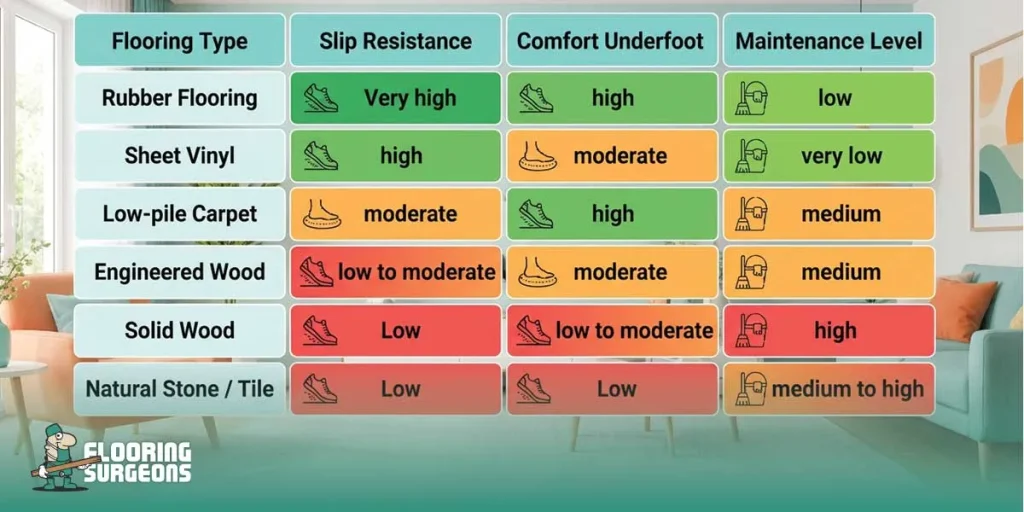
Using the same flooring throughout the house can significantly reduce trip hazards for seniors by minimising transitions and height differences between rooms. A higher ranking does not mean a flooring type is suitable for every room or every senior. Flooring safety depends on the user’s mobility, the room’s function, and installation quality.
- Textured LVT ranks highest overall because it balances grip, stability, and ease of maintenance across most situations.
- Rubber flooring excels in safety, but is better used selectively. Stiff and glossy surfaces consistently rank lowest due to slip risk and joint strain.
The safest flooring for the elderly is rarely the most decorative option. It is the one that quietly supports movement, comfort, and confidence every day, without demanding constant care or adjustment.
Flooring Options Seniors Should Avoid
When choosing flooring for an elderly home, knowing what to avoid is just as important as knowing what to choose. Many unsafe flooring options look appealing at first, but introduce hidden risks that increase instability, joint strain, and the likelihood of falls. Flooring types and features that increase risk for seniors:
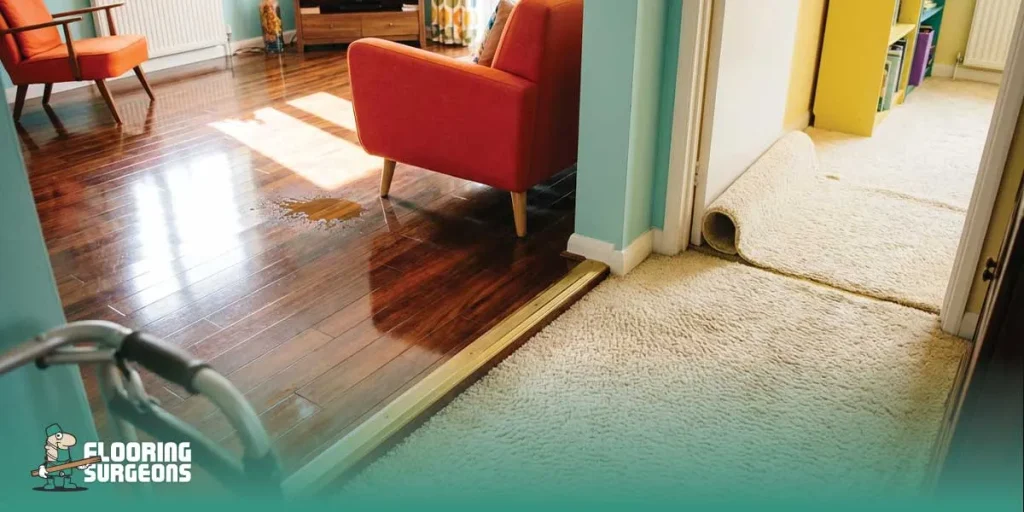
- Highly polished or glossy surfaces: These reduce traction underfoot and become especially dangerous when exposed to moisture from cleaning, spills, or bathrooms.
- Very hard and unforgiving materials: Surfaces without shock absorption increase the risk of injury in the event of a fall and place extra strain on joints during normal walking.
- Thick or plush carpets: While soft, they interfere with walkers and canes, reduce stable foot placement, and often develop ripples that become trip hazards over time.
- Floors with uneven height changes or raised thresholds: Even small differences in floor level between rooms significantly increase fall risk for elderly users.
- Poorly finished edges and transitions: Loose edges or abrupt transitions create obstacles that are easy to catch on to, especially for those with limited mobility.
- High-maintenance surfaces: Flooring that requires special footwear, careful walking, or frequent adjustment is unsuitable for an elderly environment, regardless of appearance.
If a floor demands constant attention or forces behaviour changes to stay safe, it is not appropriate for seniors.
How Installation and Subfloor Preparation Affect Senior Safety
Even the safest flooring material can become hazardous if installed incorrectly. Flooring installation for elderly safety is about creating a stable, predictable surface that supports confident movement every day. Installation and preparation issues that increase fall risk:
- Uneven or unstable subfloors
These cause movement, flex, or hollow sounds underfoot, reducing confidence and increasing the risk of balance disruption. - Poor subfloor preparation
Ignoring levelling, moisture control, or structural issues leads to long-term instability, even with high-quality flooring. - Incorrect underlay selection
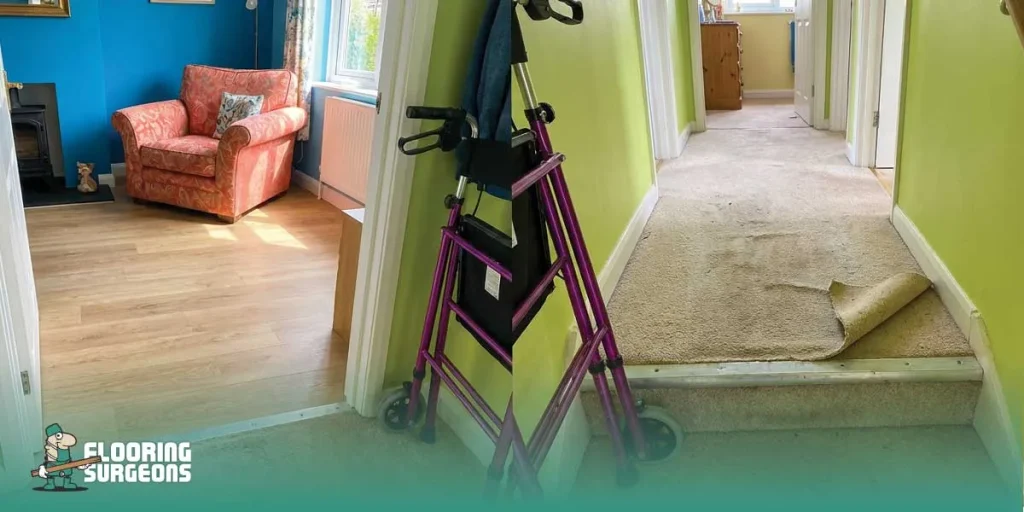
The wrong underlay reduces shock absorption, increases noise, and can make floors feel hollow or unpredictable. - Unsafe transitions between rooms
Abrupt height changes or poorly planned transitions create trip hazards when moving through the home. - Poorly finished edge trims
Insecure or raised edges are especially problematic for walkers, canes, and slower movement. - Installation focused on appearance, not performance
A visually neat floor that lacks stability or consistency underfoot is unsafe for seniors.
In elderly homes, installation quality often matters more than the flooring material itself. A correctly installed, modest surface will always be safer than a premium floor fitted without attention to subfloor condition, transitions, and stability. Choosing the right flooring for an elderly home is not just about the material itself, but also about how it is specified and installed. At Flooring Surgeons, we focus on practical flooring solutions that prioritise safety, comfort, and long-term usability, helping homeowners choose options that genuinely support independent and confident living.

Haniye Ayanmanesh
As an expert writer for Flooring Surgeons, I combine technical SEO knowledge with a practical understanding of flooring, producing content that helps users make confident decisions while supporting long-term organic growth.