Yes, slippery bathroom tiles can usually be fixed without replacing them, but the right solution depends on the tile type, moisture level, and who uses the space. If tiles become slippery only when wet, simple changes like surface treatments or grip-focused solutions may be enough. If the floor stays slippery even when dry, the problem is often the tile finish or cleaning residue. In high-risk situations, such as homes with elderly residents, children, or frequent water exposure, temporary fixes are often not enough. This guide shows exactly what works, what only looks safe, and how to choose the right solution based on your bathroom and real usage, so you can decide quickly whether you need a simple fix or a long-term change.
Table of contents
Why Bathroom Tiles Become Slippery
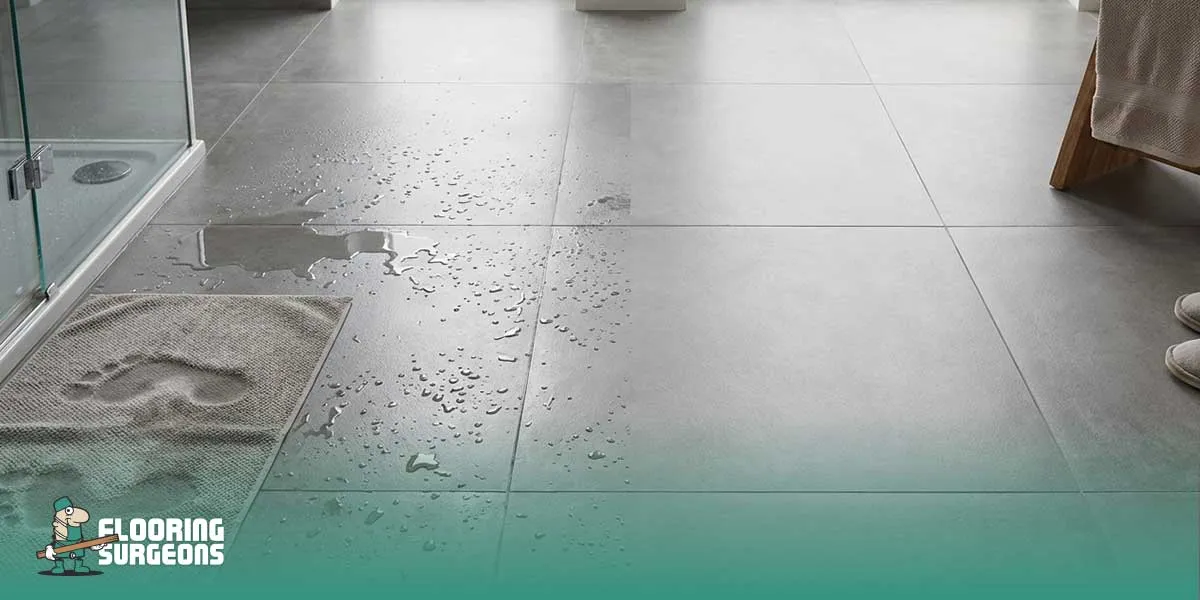
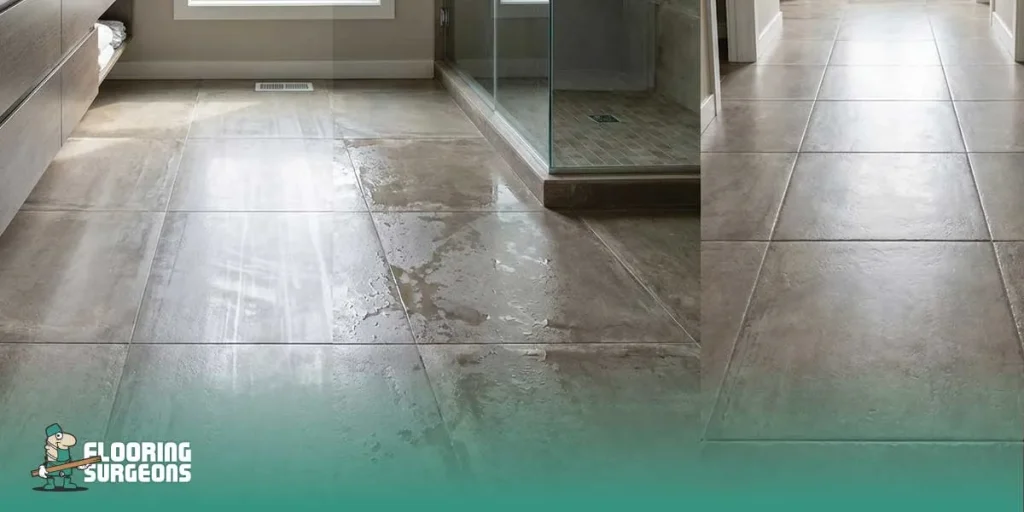
Slippery bathroom tiles are rarely caused by one single issue. In most cases, several factors combine to reduce grip and make the surface unsafe, especially when moisture is present. One common cause of slippery bathroom tiles is the tile finish itself. Polished and glossy tiles are designed to look smooth, not to provide traction. When water spreads across these surfaces, it creates a thin film that reduces friction almost instantly.
Cleaning habits also play a major role. Soap residue, shampoo buildup, and certain floor cleaners leave behind invisible layers that make tiles slicker over time. This is why some floors feel more slippery after cleaning rather than safer. Moisture patterns matter as well. Bathrooms have uneven wet zones. Areas near showers, baths, and sinks stay damp longer, allowing water to pool rather than evaporate. Tiles that perform acceptably in dry conditions can become hazardous in these consistently wet spots.
Finally, wear and age contribute to the problem. As tiles and grout smooth out with use, their original slip resistance can decrease. This gradual change often goes unnoticed until slips begin to occur. Understanding these causes is essential before choosing any solution. Fixing slipperiness effectively depends on knowing whether the problem comes from surface finish, residue, moisture exposure, or long-term wear.
How to Make Bathroom Floor Less Slippery
If you are looking for how to make the bathroom floor less slippery, the key is to choose a solution that addresses why your tiles are slippery in the first place. There is no single fix that works for every bathroom. Here is a clear overview of what actually helps, before deciding on a specific method.
What usually improves grip on bathroom tiles:
- Reduce surface residue: Soap film, shampoo buildup, and cleaner residue are common causes of slipperiness, even on textured tiles.
- Increase surface friction: Grip-focused solutions work by adding traction rather than absorbing water.
- Control moisture zones: Floors near showers and baths require different treatment than those in dry areas.
- Match the solution to the tile finish: Polished tiles require different approaches than matte or textured tiles.
- Consider who uses the bathroom: Homes with elderly users or children need more reliable, long-term grip solutions.
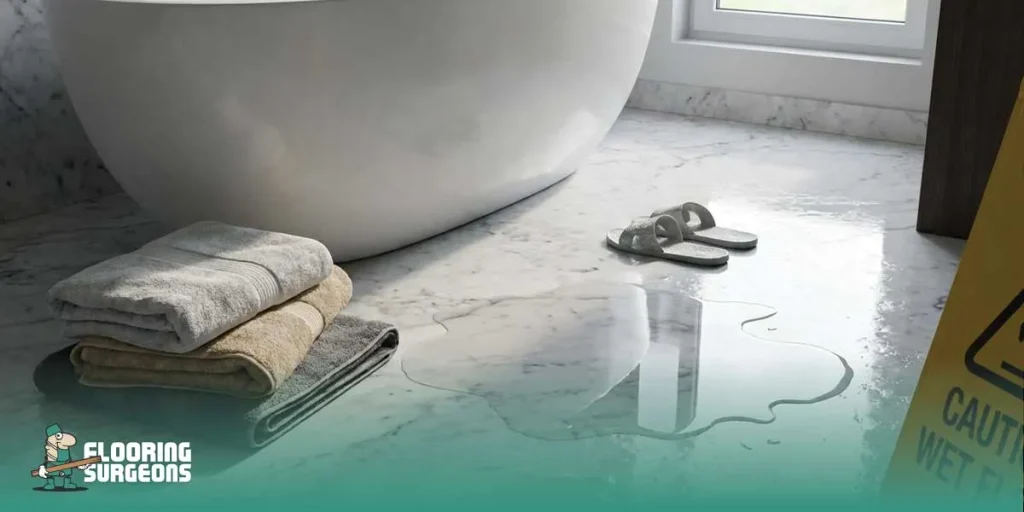
At this stage, the goal is not to pick a product or method yet. It is to identify whether surface finish, cleaning habits, constant moisture, or usage risk causes the issue. Once that is clear, choosing the right solution becomes straightforward rather than a matter of trial and error. The next sections break down which options work, where they fail, and when a more permanent change is the safer choice.
Non-Slip Mats: When They Work and When They Don’t
Non-slip mats are often the first solution people try for bath mats for slippery floors, but they are not universally safe or effective. Their value depends on placement, usage, and who is using the bathroom.
When non-slip mats actually help
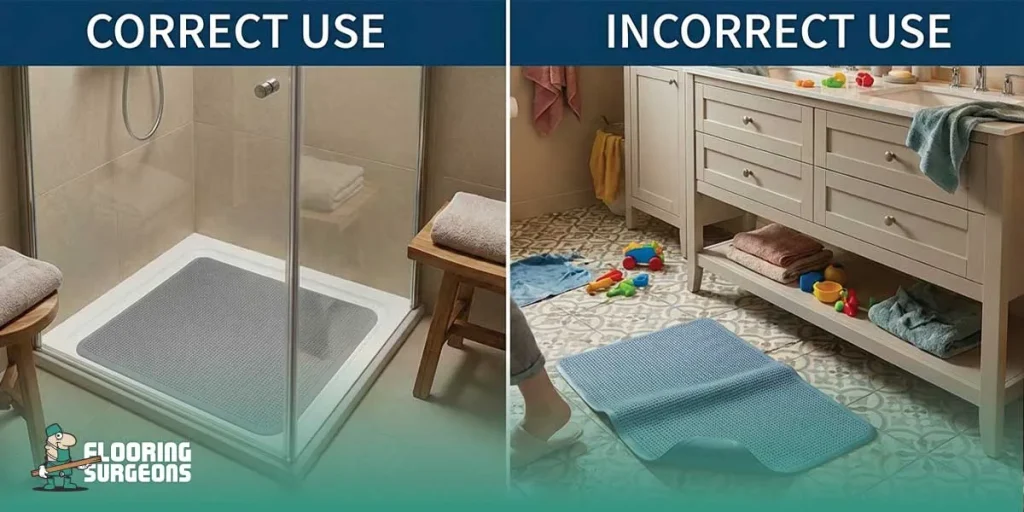
- Localised wet zones: Mats work best in clearly defined areas, such as inside the shower or directly outside the bath.
- Short-term risk reduction: They can quickly reduce slip risk without altering the tile surface.
- Low-traffic bathrooms: Guest bathrooms or spaces with limited daily use benefit more than busy family bathrooms.
Hidden limitations most people overlook
- False sense of safety: Mats only protect the area they cover, leaving surrounding tiles just as slippery.
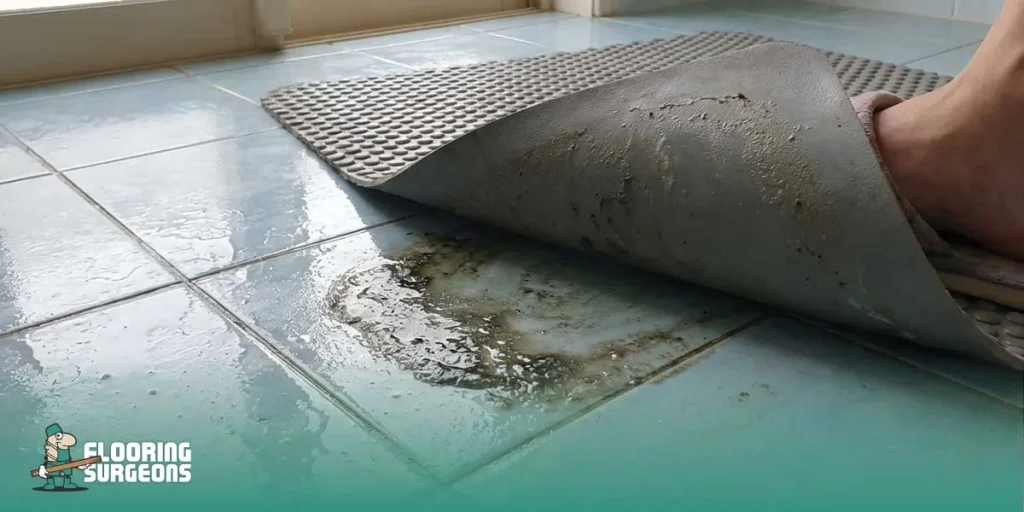
- Movement and curling: Poor-quality mats can shift, fold, or lift at the edges, creating new trip hazards.
- Water trapping: Moisture trapped underneath encourages soap residue buildup and reduces friction over time.
- Maintenance burden: Mats need frequent cleaning; dirty mats can become slippery themselves.
- Not suitable for high-risk users: For elderly users or those with mobility issues, mats alone are often unreliable.
Non-slip mats can reduce risk in specific spots, but they do not fix slippery tiles as a whole. They work as a temporary or supplementary measure, not a long-term safety solution. If slips occur outside mat coverage or the mat requires constant adjustment, a surface-based solution is usually the safer next step.
Anti-Slip Treatments for Bathroom Tiles
Anti-slip treatment for tiles and anti-slip coating bathroom floor solutions are often presented as permanent fixes. Still, their effectiveness depends heavily on tile type, application quality, and long-term maintenance. They work by increasing surface friction, not by absorbing water or changing drainage, which is why results vary.
How the main options compare in real bathrooms
| Factor | Etching Treatments | Anti-Slip Coatings |
| How they work | Microscopically roughen the tile surface | Add a thin grip layer on top of the tile |
| Best for | Porcelain and ceramic tiles | Most tile types, including polished finishes |
| Immediate grip | Moderate | High |
| Visual change | Minimal but can dull shine | Slight sheen change possible |
| Durability | Permanent surface change | Wears over time |
| Maintenance | Regular cleaning, careful product choice | Periodic reapplication needed |
| Risk if misapplied | Uneven traction | Peeling or patchy grip |
What matters before choosing:
- Tile finish: Polished tiles respond differently than matte or textured ones.
- Moisture exposure: Constantly wet zones need higher durability.
- User risk: Homes with elderly users need a consistent grip, not a temporary improvement.
- Cleaning products: Some cleaners reduce traction or shorten coating lifespan.
Anti-slip treatments can be effective when matched to the tile and environment, but they are not one-size-fits-all. Etching offers a permanent change with modest grip. At the same time, coatings deliver more substantial traction with ongoing upkeep if you need reliable safety in high-risk bathrooms, application quality and maintenance planning matter as much as the product itself.
Textured vs Polished Tiles in Bathrooms
Choosing between non-slip bathroom tiles and a slip-resistant tile bathroom finish is one of the most decisive factors in long-term safety. This choice affects grip when wet, cleaning difficulty, and whether future fixes will even work.
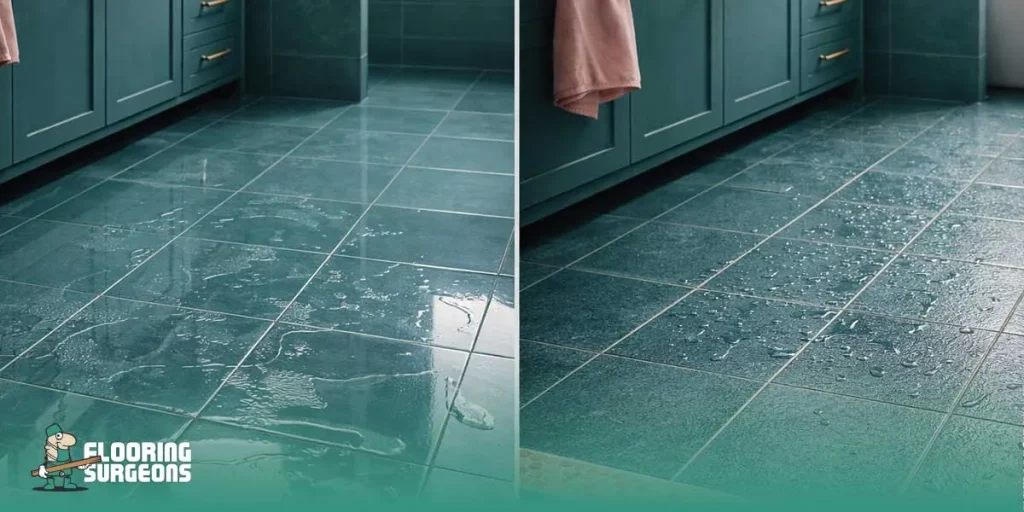
Polished tiles are designed for appearance, not traction. Their smooth surface reflects light well but offers very little resistance when water, soap, or shampoo is present. In bathrooms with frequent splashing or poor drainage, polished tiles become slippery by design. Even anti-slip coatings on polished tiles often require ongoing maintenance to remain effective.
Textured tiles, on the other hand, are built to interrupt water flow and increase friction underfoot. The surface grip is part of the tile itself, not something added later. This makes them more reliable in wet conditions and less dependent on treatments or accessories.
Here is how they compare in real use:
- Grip when wet: Textured tiles consistently outperform polished tiles.
- Maintenance: Polished tiles are easier to wipe clean, but textured tiles stay safer even as residue builds up.
- Long-term safety: Textured tiles provide built-in slip resistance, while polished tiles rely on add-ons.
- Replacement decision: If slips happen repeatedly despite mats and treatments, the tile finish is usually the root problem.
If you are choosing tiles for a new bathroom or planning a renovation, textured tiles are the safer default for wet zones. If you already have polished tiles and slips are occasional, surface treatments may help. If slips are frequent or involve high-risk users, replacing polished tiles with slip-resistant options is often the most reliable long-term solution.
Which Bathroom Areas Are Most Dangerous?
A slippery bathroom floor is rarely a problem across the entire space. Risk concentrates in specific zones where water, movement, and surface wear overlap. Identifying these zones helps prevent slips more effectively than treating the whole floor the same way.
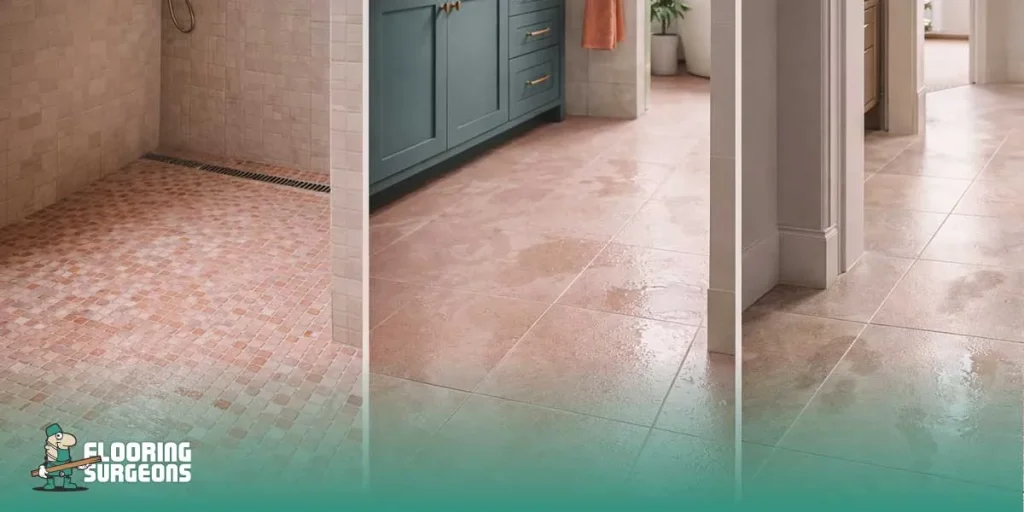
Highest risk zones in most bathrooms:
- Shower and bath area: Constant water exposure creates a persistent moisture film. Soap and shampoo residue build up quickly, making this the most dangerous zone.
- Sink and vanity area: Frequent splashes combine with cleaning product residue. This zone is often underestimated because it looks dry between uses.
- Bathroom entrance: Wet feet carry water onto smoother tiles near doorways. This area dries unevenly and is a common slip point when entering or exiting.
Why zoning matters:
- Different areas stay wet for different lengths of time.
- Grip needs near the shower are higher than in low moisture zones.
- One solution rarely works equally well across all zones.
Treat bathroom safety by zone, not by room. The shower area usually needs the most aggressive slip resistance, the sink area needs residue control, and the entrance benefits from moisture management. Understanding where slips are most likely to happen makes every solution more effective and prevents overcorrecting areas that are not truly risky.
Common Mistakes That Make Bathroom Floors Slippery
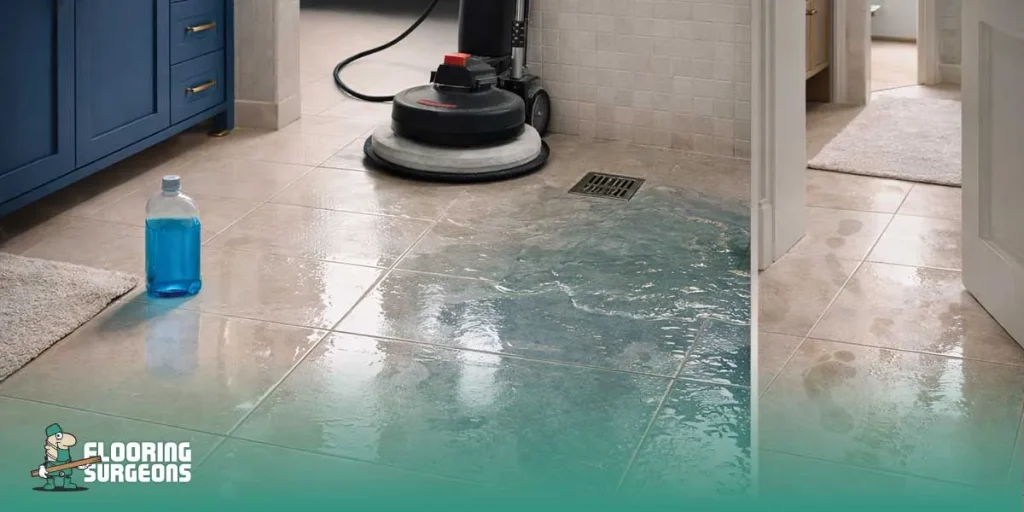
- Using the wrong cleaning products: Many bathroom cleaners leave a shiny residue that reduces traction, especially when tiles are wet.
- Over-polishing or aggressive scrubbing: Repeated polishing gradually smooths the tile surface, removing the micro-texture that provides grip.
- Ignoring drainage and water flow: Poor drainage causes water to pool, keeping tiles wet longer and lowering friction even on slip-resistant surfaces.
- Relying only on temporary fixes: Mats and sprays protect limited areas and often create uneven safety across the floor.
- Treating all bathroom areas the same: Applying one solution everywhere ignores high-risk zones like showers and entrances where a stronger grip is needed.
- Bottom line: Many slip problems get worse not from neglect, but from well-intentioned mistakes that quietly reduce traction over time.
Best Solution for Slippery Bathroom Floors
There is no single answer for slippery bathroom floor solutions. The safest option depends on who uses the bathroom, how long the solution needs to last, and whether changes are permanent or temporary. The table below is designed for quick decision-making, not theory.
| Situation | What Works Best | Why This Makes Sense | What to Avoid |
| Elderly users | Textured or slip-resistant tiles, professional anti-slip treatment | Provides a consistent grip across the entire floor, not just one spot | Relying only on mats or sprays |
| Homes with kids | Anti-slip treatments plus targeted mats in wet zones | Balances safety with easy cleaning and durability | Loose mats that move or curl |
| Rental properties | Removable anti-slip treatments or high-quality mats | Improves safety without permanent changes | Tile replacement or harsh etching |
| Preparing for resale | Subtle anti-slip treatment or textured tile upgrade in wet zones | Improves safety without hurting visual appeal | Temporary fixes that look makeshift |
In bathrooms where slip resistance is a priority, some homeowners choose Luxury vinyl flooring because it offers built-in grip, easy maintenance, and fewer safety compromises than polished tiles. If slips are rare and low risk, simple measures may be enough. If slips are frequent or involve vulnerable users, surface-level fixes usually fall short. The higher the risk, the more important permanent, floor-wide grip becomes.
Do You Need to Replace Slippery Bathroom Tiles?
Not always. Tile replacement is justified only when surface fixes cannot ensure consistent safety. You usually do not need to replace tiles if the slipperiness happens only when wet, the tiles are structurally sound, and anti-slip treatments or zoning solutions noticeably improve grip. In these cases, the problem is surface friction or residue, not the tile itself.
You should consider replacement when slips continue despite proper cleaning and treatments, especially if the tiles are highly polished, worn smooth, or located in permanently wet zones like showers. Replacement also makes sense when high-risk users are involved, and safety depends on built-in traction rather than add-ons. If replacing slippery tiles becomes the safest option, it helps to explore flooring options over existing tiles that improve grip without removing the entire floor.
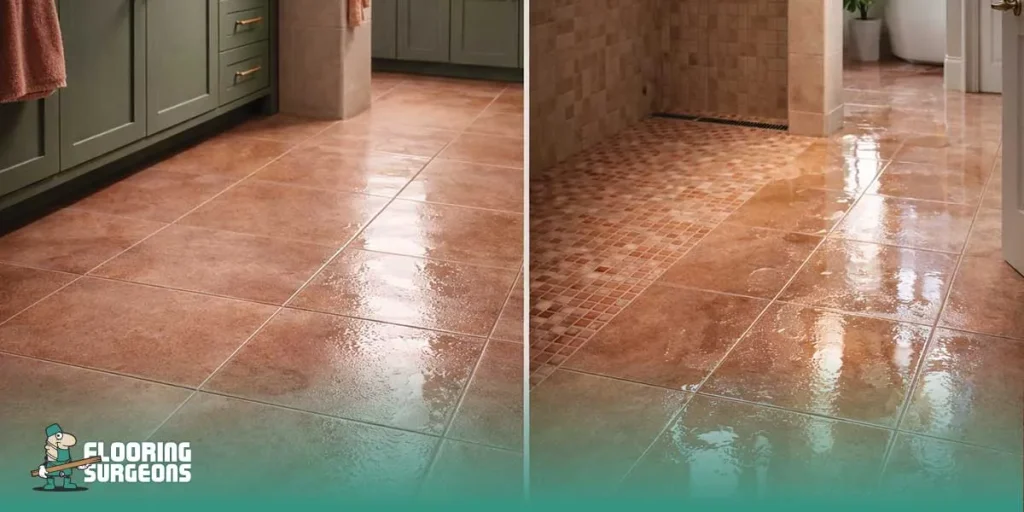
If safety still depends on temporary fixes to prevent falls, the tiles are no longer fit for the space. In those cases, replacing slippery tiles with slip-resistant options is not an upgrade; it is risk control. For bathrooms where safety decisions depend on tile type, moisture zones, and long-term durability, Flooring Surgeons often advise evaluating the surface before jumping straight to replacement.

Haniye Ayanmanesh
As an expert writer for Flooring Surgeons, I combine technical SEO knowledge with a practical understanding of flooring, producing content that helps users make confident decisions while supporting long-term organic growth.