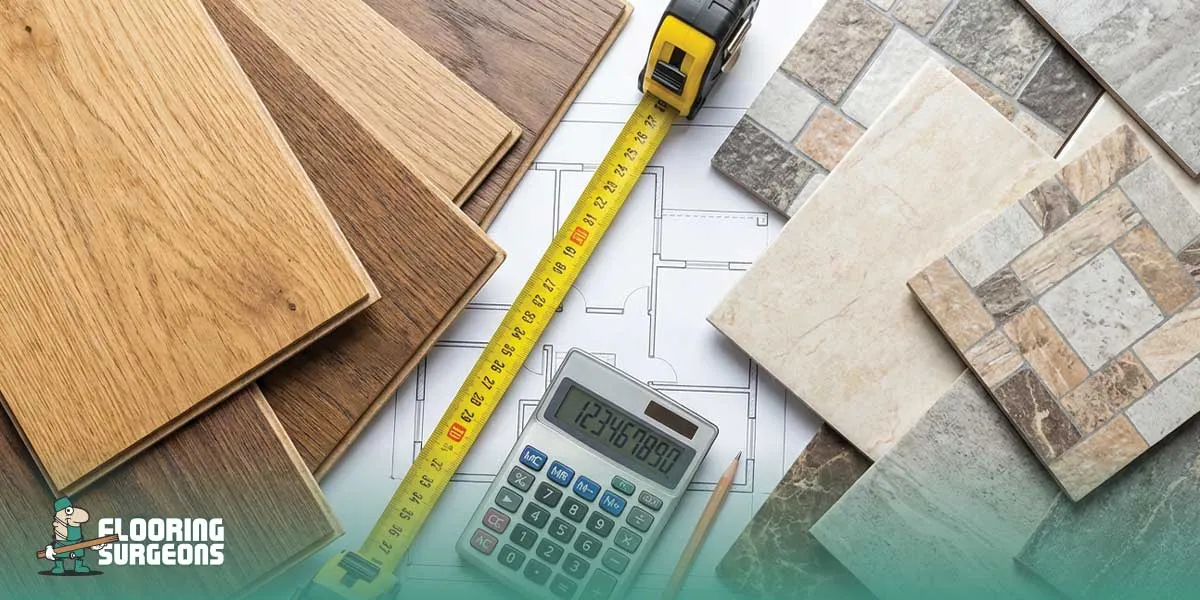
When comparing wood flooring vs tile cost, many homeowners want to know one thing: is wooden flooring cheaper than tiles? While tile often has a lower upfront price, the total cost of wood flooring and tile depends on installation, maintenance, repairs, and long-term durability.
Many homeowners focus on what looks cheaper on paper and overlook where money is actually lost later, such as cracked tiles, complex repairs, cold and uncomfortable surfaces, or early replacement in lived-in spaces. Others assume wood is a luxury choice without understanding when it genuinely costs more, and when it simply costs differently.
This article compares real costs in real homes, not showroom pricing. You will see where tiles are genuinely cheaper, where wooden flooring earns back its higher upfront cost, and, most importantly, where people usually make decisions that end up costing them more over time. If you want a clear answer first and the reasoning second, you’re in the right place.
Table of contents
Wood Flooring vs Tile Cost: Material Price Comparison
If you look only at the material price, tiles are usually cheaper than wood flooring. They offer more low-cost options, which makes them look like the obvious choice at first glance. That comparison only makes sense if we are clear about what “wood flooring” means, because prices vary widely by type.
- Laminate flooring is the lowest-cost wood-look option and can cost about the same as basic tiles.
- Engineered wood flooring is more expensive than laminate and most budget tiles, but cheaper than solid hardwood.
- Solid hardwood flooring is usually the most expensive material and is rarely a fair comparison against entry-level tiles.
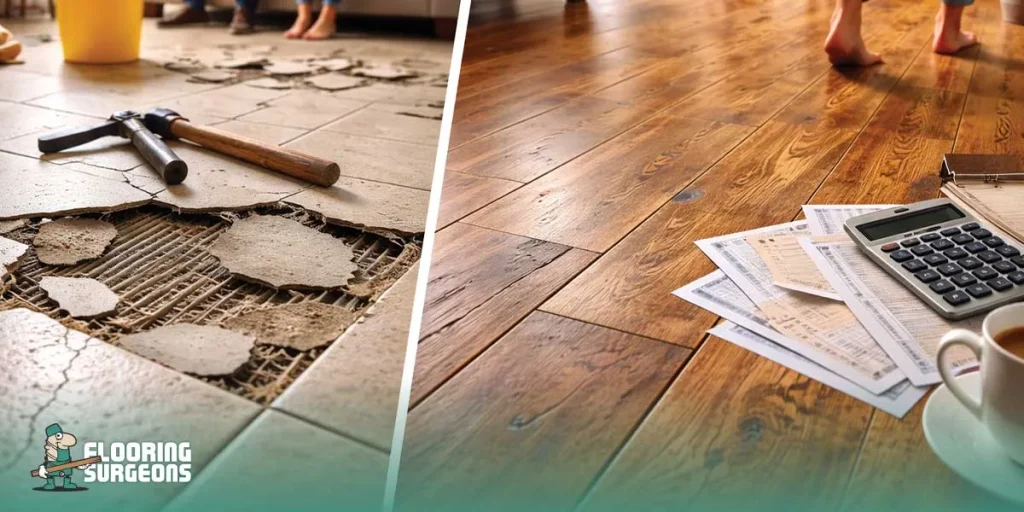
For a clearer breakdown of types of wood flooring and their cost ranges, check our detailed overview of wood options. The common mistake is comparing budget tiles with mid-range engineered wood, then assuming wood is always expensive. When products are matched in quality, the price gap often narrows. If your only goal is the lowest upfront material cost, tiles usually win. But material price alone does not predict total cost. Installation, repairs, and replacement over time often change the outcome, which is where many “cheaper” choices begin to cost more.
Tile vs Wood Flooring Installation Cost
When installation is included, the price difference between tiles and wood becomes far more realistic and measurable. While exact figures vary by region and condition, the gap is usually smaller than most homeowners expect.
Typical installation costs range in real homes.
For standard UK residential projects, the installed labour cost alone often falls into these ranges:
- Tile flooring cost: Typically higher than wood, mainly due to prep and labour time. Commonly ranges from mid to high per square metre, especially once levelling, membranes, and grouting are included.
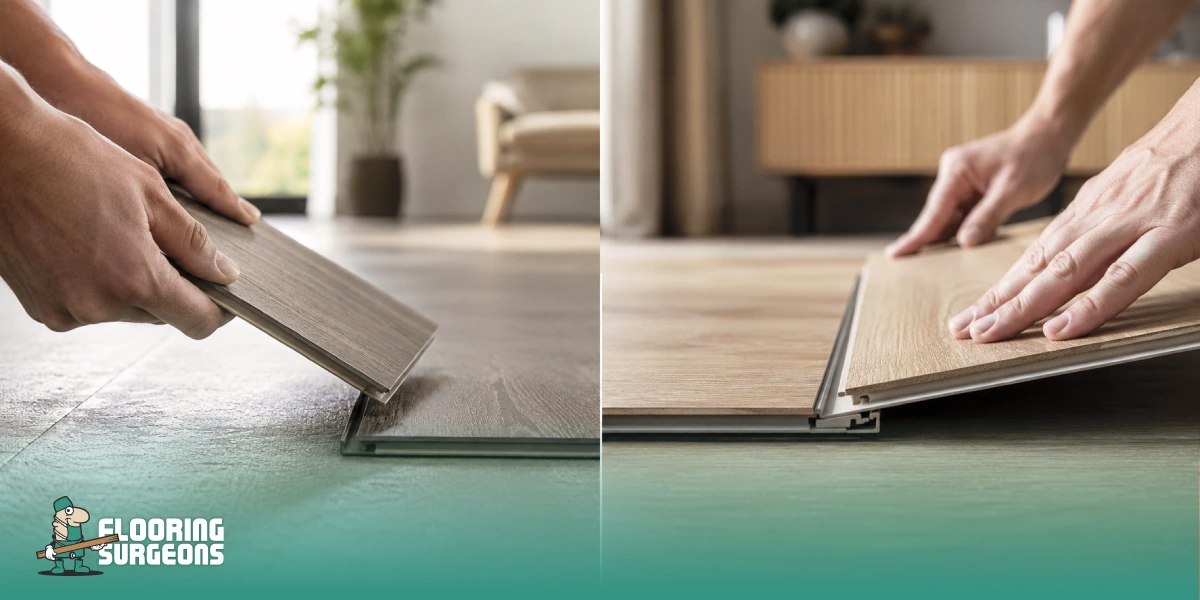
- Engineered wood or laminate installation: Generally lower or mid-range, depending on system type. Floating and click systems often install faster with fewer prep requirements.
In practical terms, tile installation can cost 20 to 40 per cent more than engineered wood installation, even when the tile material itself is cheaper.
Why this difference is real, not theoretical
That cost gap usually comes from three unavoidable factors:
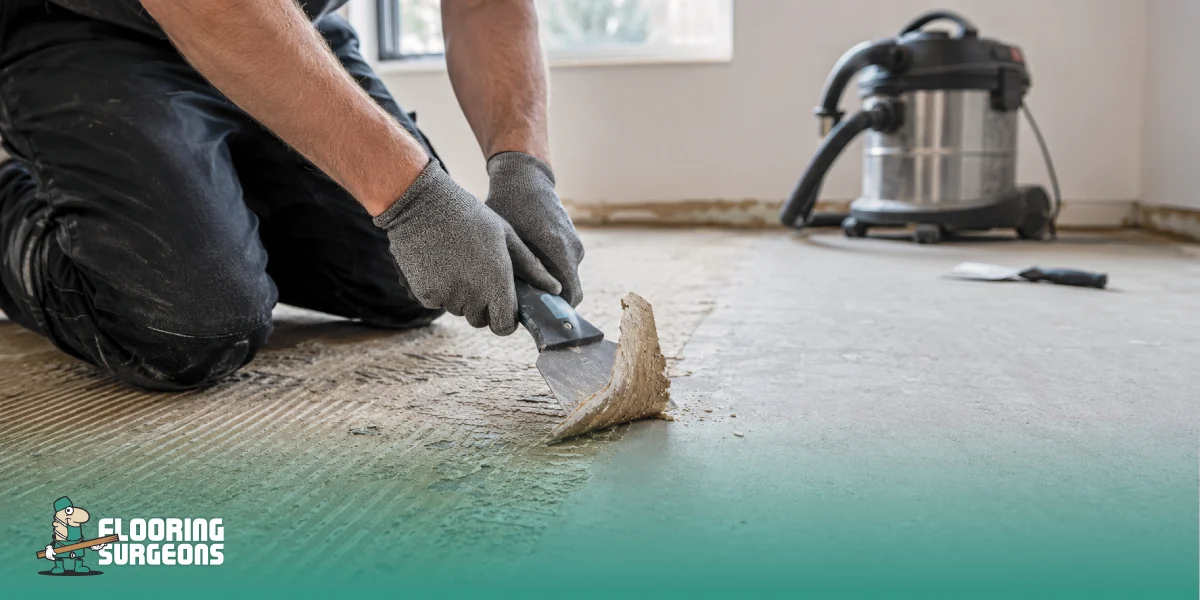
- Subfloor preparation: Tiles require tighter tolerances. Levelling work alone can add a noticeable cost per square metre before a single tile is laid.
- Labour time: Tile installation involves more steps: setting, spacing, grouting, sealing, and curing. Wood systems often complete in fewer visits.
- Risk allowance: Installers’ price includes breakage, waste, and corrective work. Tile failures are more complex and costlier to fix later.
A realistic cost comparison example
In a typical living area:
- Tiles may appear cheaper solely on the basis of material cost.
- Once installation is added, the final installed cost often becomes similar, or tiles end up noticeably more expensive overall.
This is why many homeowners feel surprised at the final invoice. The savings they expected from cheaper tile materials are partially or fully offset by installation costs.
Long-Term Costs of Wooden Flooring vs Tile Flooring
This is where the question “Is wooden flooring more expensive than tiles?” usually gets answered incorrectly. Not because the numbers are hidden, but because they are spread out over time and are easy to ignore at the buying stage. Upfront prices fade quickly.
What matters in real homes is how often the floor needs attention, how expensive it is to fix mistakes, and whether problems can be repaired locally or require complete replacement. Below is a realistic long-term comparison of how flooring behaves over 5 to 10 years in lived-in homes.
Wood Flooring vs Tile: Installation Cost Comparison
| Cost Factor | Tile Flooring | Wooden Flooring (Engineered / Laminate) |
| Routine maintenance | Low day-to-day cleaning cost, but grout requires periodic deep cleaning and resealing | Regular cleaning, minimal specialist products, and no grout maintenance |
| Common failures | Cracked tiles, loose tiles, and grout deterioration | Surface wear, isolated board damage, and finish wear |
| Repair complexity | High. Repairs often require lifting surrounding tiles to access damaged areas | Moderate to low. Individual boards can often be replaced |
| Repair visibility | Repairs are often visible due to tile batch and grout colour differences | Replacement boards usually blend in more naturally |
| Moisture-related issues | Grout lines and subfloor movement increase long-term risk | Engineered wood handles controlled moisture better than solid wood |
| Replacement scope | Partial repairs frequently lead to larger sections being replaced | Localised replacement is more common and less disruptive |
| Typical long-term cost pattern | Costs arrive in fewer but larger spikes | Costs are smaller, more predictable, and spread out |
What this table shows is not that one option is maintenance-free. It shows how risk is distributed over time. Tiles tend to feel economical because they require little attention early on. When issues appear, they are usually expensive and disruptive to fix. Wooden flooring often shows wear sooner, but that wear is generally manageable, repairable, and less costly per incident.
This is why many homeowners who chose tiles for cost reasons end up paying more later, not because tiles are poor quality, but because failure is harder to isolate and fix. The expense comes from scale, not frequency. So when asking whether wooden flooring is more expensive than tiles, the honest long-term answer is this: wood often costs more upfront, but tiles carry a higher risk of costly intervention over time, especially in lived-in spaces where floors are actively used rather than preserved. This difference rarely appears in short comparisons, but it strongly influences the real total cost of ownership.
Is Wood Flooring Cheaper Than Tile Over Time?
In most real homes, engineered flooring or high-quality laminate flooring usually costs less than tiles over a 10–20-year period, even though tiles often look cheaper at the start. Here is the straight answer, without padding:
- Tiles tend to win on upfront material cost, but lose ground over time due to higher installation complexity, more complex repairs, and costly failures when issues occur. Long-term costs occur in fewer, larger spikes.
- Wooden flooring usually costs more initially, but repairs are more localised, maintenance is more predictable, and full replacement is less common within the same time frame.
When total cost of ownership is considered, including installation, repairs, and partial replacement, wooden flooring often ends up costing the same or less than tiles over 10–20 years, especially in lived-in homes rather than low-use spaces. So if the question is whether wooden flooring is more expensive than tiles, the long-term answer is usually no. Not because wood is cheaper, but because tile-related costs are easier to underestimate and harder to control over time.
What Type of Wooden Flooring Is the Most Affordable?
Costs change once the flooring is subjected to real daily use. Not showroom traffic, not ideal conditions. These are the situations that quietly decide which option stays affordable and which one does not. This pattern is something flooring specialists at Flooring Surgeons regularly encounter in real renovation projects, where initial savings from cheaper materials later turn into costly interventions.
Busy households with constant foot traffic
In homes with children, pets, or continuous movement, tiles often appear durable but become expensive when problems occur. Cracked tiles, chipped edges, or grout failure usually require invasive repairs. Wood-based floors show wear sooner, but that wear is gradual and manageable. Boards can be replaced individually, and surface ageing is typically cosmetic rather than structural. Over time, predictability favours wood-look and engineered systems.
Rental properties and frequent turnover
For rentals, downtime equals lost income. Tile repairs are slow and disruptive, often affecting entire rooms. Wooden and laminate floors are faster to repair, faster to replace in sections, and easier to refresh between tenants. While tiles may last visually longer, they are less forgiving when damage happens. In practice, many landlords spend less time maintaining wood-based floors simply because fixes are quicker and more contained.
Homes with underfloor heating
Underfloor heating changes the cost equation. Tiles transfer heat efficiently but require precise installation and a stable subfloor. Any failure beneath the surface is expensive to access. Engineered wood designed for heated systems performs reliably when installed correctly and offers easier surface-level intervention if issues arise. Long-term costs depend less on heat efficiency and more on the complexity of repairs once the system is in use.
Why “Cheaper Flooring” Often Ends Up Costing More
One frequent issue is falling into common flooring decision mistakes that seem inexpensive at first but end up costing more in the long run.
- Focusing only on material price ignores installation, preparation, and downtime, which are often where real costs accumulate.
- Comparing unlike products, such as budget tiles against mid-range wood, creates a false price gap from the start.
- Underestimating subfloor issues can lead to unexpected costs, especially when rigid surfaces require stricter tolerances.
- Assuming durability means low cost overlooks how difficult and expensive it is to repair some materials when problems occur.
- Ignoring the repair scope can turn small failures into significant interventions, particularly when damage cannot be isolated.
- Delaying maintenance decisions allows minor issues to compound into full replacements.
- Valuing short-term savings over predictability increases long-term financial risk in lived-in homes.
These are not rare mistakes. These are the most common reasons a floor that looked affordable on day one becomes the more expensive option over time.
So, Is Wooden Flooring Worth the Extra Cost?
Short answer, without softening it: sometimes yes, sometimes no.
But the deciding factor is not price per square metre. It is how the floor behaves after installation, how expensive mistakes are, and how often real-life use forces you to spend again. If you only compare the upfront material cost, tiles usually look cheaper. Once installation, repair difficulty, downtime, and long-term replacement risk are factored in, wooden flooring often closes the gap or becomes the more cost-controlled option, especially in lived-in homes.
Wooden flooring is worth the extra cost when:
- You want predictable, manageable expenses over time.
- Local repairs matter more than maximum surface hardness.
- The space is actively used, not preserved.
- Downtime and disruption have a real cost.
Tiles tend to be the better financial choice when:
- The space has low traffic and limited movement.
- Long-term access beneath the floor is unlikely.
- Installation conditions are ideal and stable.
So the honest conclusion is this: wooden flooring is not always cheaper, but it is often financially safer over time. Tiles can be more affordable, but only when conditions stay close to perfect. In real homes, they rarely do.

Haniye Ayanmanesh
As an expert writer for Flooring Surgeons, I combine technical SEO knowledge with a practical understanding of flooring, producing content that helps users make confident decisions while supporting long-term organic growth.