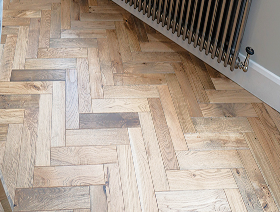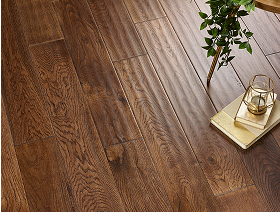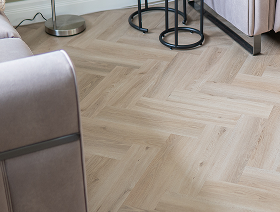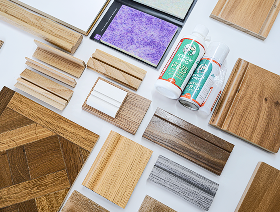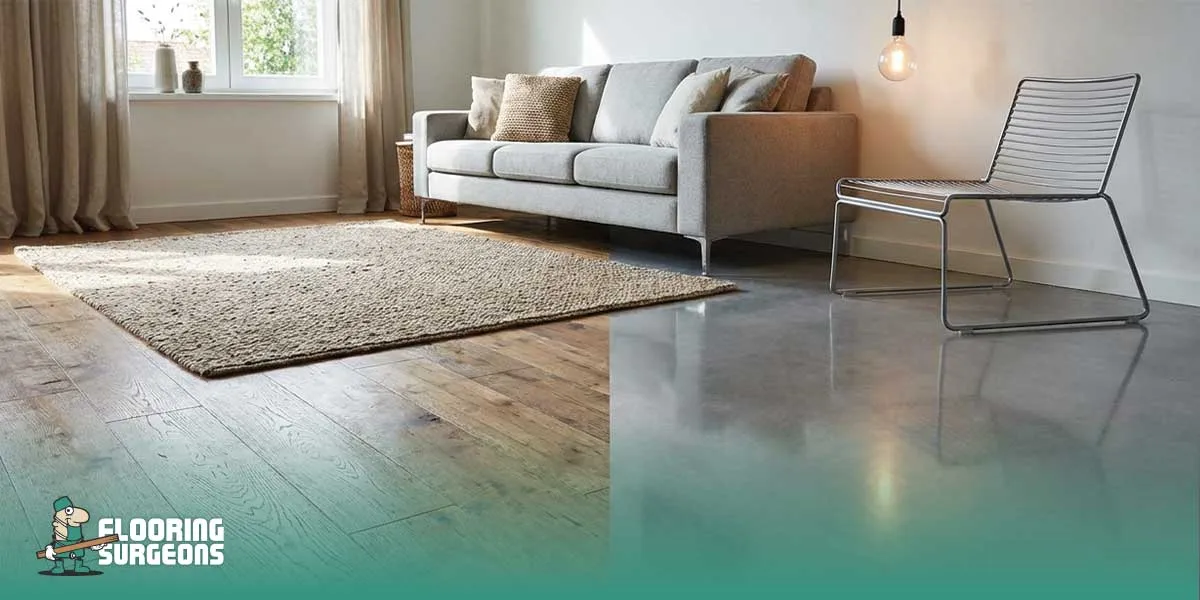
Floor texture plays a key role in how warm and inviting a space feels, often before colour, furniture, or lighting are even fully noticed. Textured floors soften reflections, break up light, and introduce subtle surface variation that the eye naturally reads as warmth and comfort. In contrast, smooth or highly polished floors reflect light evenly, creating a more controlled and visually colder impression, even when the colour palette itself is warm.
This is why two rooms with similar colours can feel completely different. A matte, brushed, or naturally varied floor tends to feel more welcoming than a perfectly smooth surface in the same shade. Texture adds depth and imperfection, which signals ease and familiarity rather than precision or sterility. In modern, minimalist interiors, especially, floor texture often has a stronger impact on perceived warmth than colour alone.
Understanding this makes it easier to see why certain textures feel more comfortable than others, and how intentional choices can change a space’s atmosphere without adding visual clutter. When selected with long-term use in mind, guidance from flooring specialists such as Flooring Surgeons can help ensure that warmth is achieved not just visually, but in a way that lasts over time.
Table of contents
What Is Visual Warmth and Why Floor Texture Matters?
Visual warmth describes how warm, comfortable, and inviting a space feels to the eye and mind, rather than the body. It is a perceptual response shaped by surface qualities such as texture, depth, light absorption, and material variation. A room can feel visually warm even at a neutral temperature, and it can feel visually cold despite being physically comfortable. This matters because emotional responses to space often precede physical comfort.
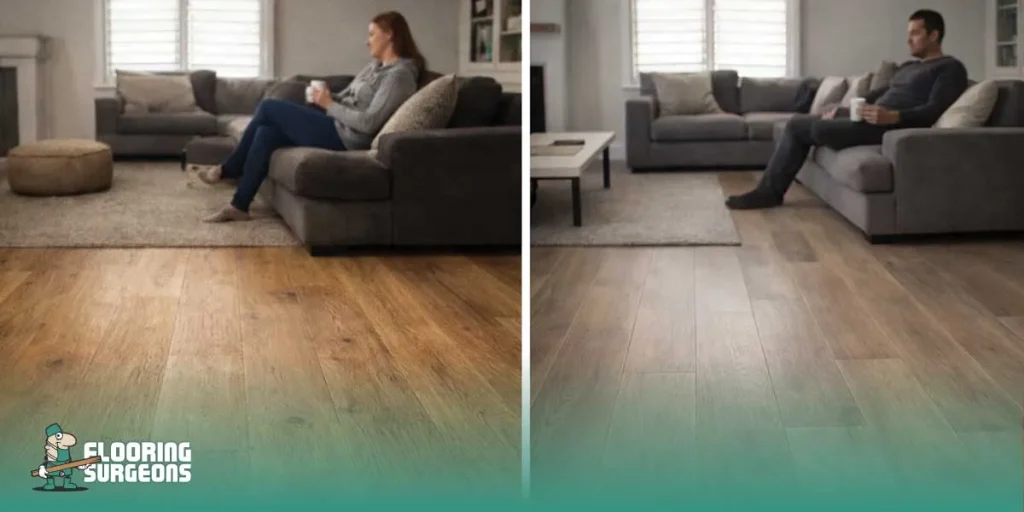
Physical warmth comes from heating and temperature control. Visual warmth, on the other hand, comes from how surfaces interact with light and how natural or tactile they appear. Textured materials reduce glare, soften edges, and introduce subtle irregularities that the brain associates with comfort and familiarity. In contrast, flat, glossy, or highly uniform surfaces reflect light evenly and tend to feel more clinical and distant.
Flooring has a particularly strong influence on visual warmth because it is the largest continuous surface in most interiors and sits within the main field of view. Unlike walls, which are often interrupted by openings and objects, the floor provides a consistent visual base that anchors the room. When this base feels flat or overly smooth, the entire space can feel colder. Even subtle textures help establish a more grounded and inviting atmosphere throughout the room.
How Floor Texture Influences the Way a Space Feels?
Floor texture changes how a space feels by directly affecting visual processing and emotional responses. The brain constantly interprets surface information to assess comfort, safety, and familiarity. Texture provides cues about how a space might sound, feel underfoot, and behave in everyday use. Even without touch, these cues influence whether a room feels inviting or distant.
How the Human Brain Interprets Texture in Interiors?
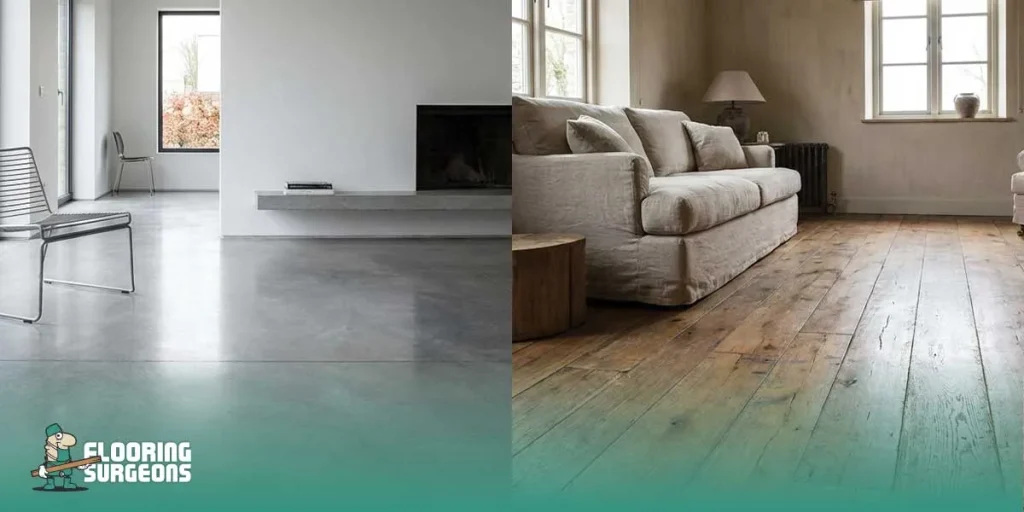
The brain reads smooth and irregular surfaces very differently. Smooth surfaces suggest precision, control, and uniformity, which can feel clean and modern but also emotionally cool. Irregular or varied surfaces suggest natural processes and human involvement, which tend to feel more familiar and comforting. This is why materials with visible grain, variation, or subtle imperfections are often perceived as warmer.
There is also a strong association between texture and natural materials. Wood, stone, and other organic surfaces rarely appear perfectly uniform. When floors show variation in grain, tone, or finish, the brain recognises these cues as natural and less manufactured. This recognition lowers visual tension and makes a space feel more relaxed. Textured surfaces feel more approachable because they imply softness and tactility, even when the material itself is hard. They suggest that the space is meant to be lived in rather than just observed.
Why Flat and Glossy Floors Often Feel Colder?
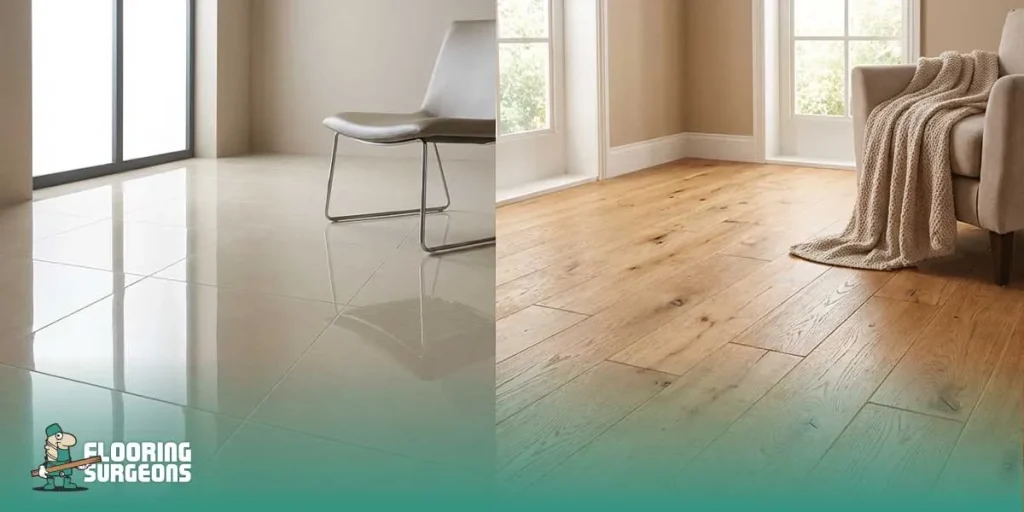
Flat, glossy floors reflect light evenly across their surfaces. This high level of reflection reduces shadow, depth, and visual layering, which can make a room feel sharper and more exposed. While this can look sleek, it also increases visual hardness. The eye has fewer points of rest, and the surface can feel more distant and less grounding.
Uniformity also plays a role. When a floor appears perfectly consistent, it can feel engineered rather than natural. This visual precision creates emotional distance because it lacks the small variations the brain associates with comfort. Glossy finishes further amplify this effect by emphasising cleanliness and reflectivity over texture. The result is a surface that looks controlled and polished but often feels colder and less inviting than a matte or textured alternative with greater sensory depth.
Why Texture Can Matter More Than Colour for Warmth?
Many people assume that warmth in an interior comes primarily from colour, but in practice, texture often has a stronger influence. Colour sets a tone, but texture determines how that tone is experienced. A warm colour applied to a flat, smooth floor can still feel visually cold, while a neutral colour paired with texture can feel inviting and comfortable. This is because texture affects light, depth, and visual complexity in ways colour alone cannot.
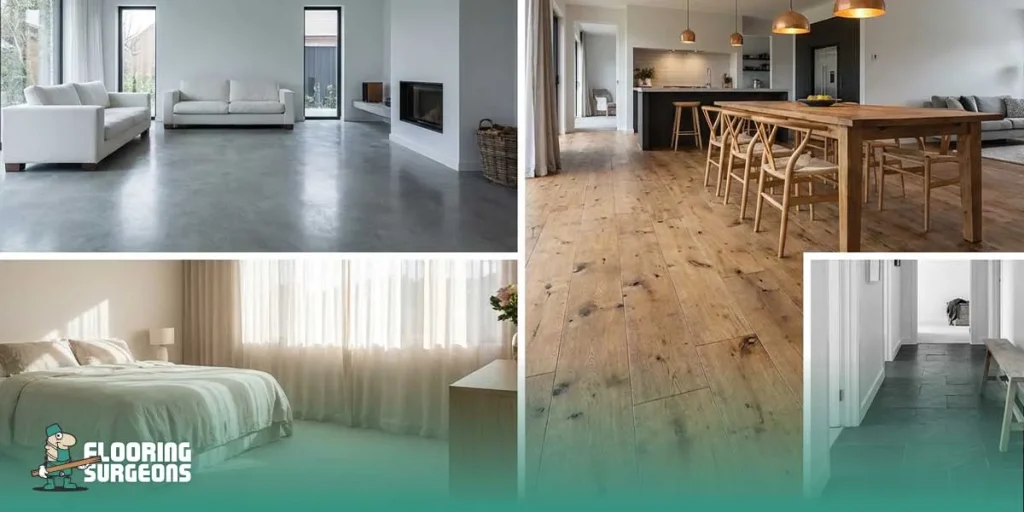
Warm Colours on Smooth Floors vs Neutral Colours on Textured Floors
Warm colours do not automatically create warmth if the surface they sit on lacks depth. A smooth or glossy floor in a warm tone reflects light evenly, which can cancel out the emotional effect of the colour. The surface still reads as flat and hard, so the space feels controlled rather than welcoming. In these cases, colour becomes decorative rather than experiential.
Neutral colours, on the other hand, benefit significantly from texture. When a neutral floor has visible grain, a matte finish, or subtle surface variation, it gains depth and softness. Texture breaks uniformity and introduces shadow, adding visual interest without relying on colour contrast. This allows neutral palettes to feel warm and layered rather than stark. Texture effectively compensates for the absence of intense colour by adding character through surface detail instead.
When Colour Fails but Texture Succeeds?
This effect is most noticeable in minimalist interiors. Minimalist spaces often deliberately limit colour, making surface quality more important. Without texture, these spaces can feel sparse or cold. With texture, they feel calm and intentional rather than empty.
Monochrome spaces also rely heavily on texture to avoid a flat feel. When walls, floors, and furnishings sit within a narrow colour range, texture becomes the primary way to create warmth and variation. Floors with subtle texture help ground these spaces and prevent them from feeling overly uniform.
In open-plan homes, colour alone struggles to create warmth across large, connected areas. Texture performs better because it adds consistency without repetition. A textured floor can unify the space while still providing enough visual depth to make it feel comfortable and lived-in. In these contexts, texture does more of the emotional work than colour ever could.
Floor Textures That Create Visual Warmth
To understand how texture creates visual warmth, it helps to compare flooring surfaces side by side. The table below translates the theory into recognisable, real-world floor textures and explains why they feel warmer, not just what they look like.
| Floor texture type | How it looks | Why does it create visual warmth |
| Brushed or hand-finished wood | Soft surface with light undulation and visible tooling marks | Brushing and hand-finishing reduce sharp reflections and introduce subtle variation. This breaks visual rigidity and signals craftsmanship, which the brain associates with comfort and human presence rather than precision. |
| Visible grain and natural variation | Grain patterns, tonal shifts, and organic inconsistency | Natural variation mimics how materials appear in nature. The brain reads this as familiar and calming, lowering visual tension and making the space feel more relaxed and welcoming. |
| Matte and low-sheen finishes | Non-reflective or softly reflective surfaces | Matte finishes absorb light rather than bouncing it back evenly. This softens the visual field, creates depth through shadow, and avoids the cold, clinical feel associated with high-gloss surfaces. |
| Subtle surface irregularities | Minor texture, micro-variation, or gentle unevenness | Small imperfections add sensory depth. Even when barely noticeable, they prevent the floor from feeling flat or sterile and help the space feel lived-in rather than staged. |
These qualities are most commonly found in solid wood flooring with natural texture, where grain variation and surface finish play a key role in how warm a space feels. What these textures have in common is restraint. None of them rrelieson bold patterns or heavy visual noise. Instead, they introduce warmth through depth, softness, and variation. This makes them particularly effective in modern, neutral, or minimalist interiors, where colour and decoration are deliberately limited, and the floor carries more emotional weight.
When Floor Texture Becomes Essential in Interior Design
Floor texture does not carry the same weight in every interior. Its impact becomes critical in certain design contexts where other elements are intentionally restrained or where scale and light dominate the space. In these situations, texture is not decorative. It is corrective.
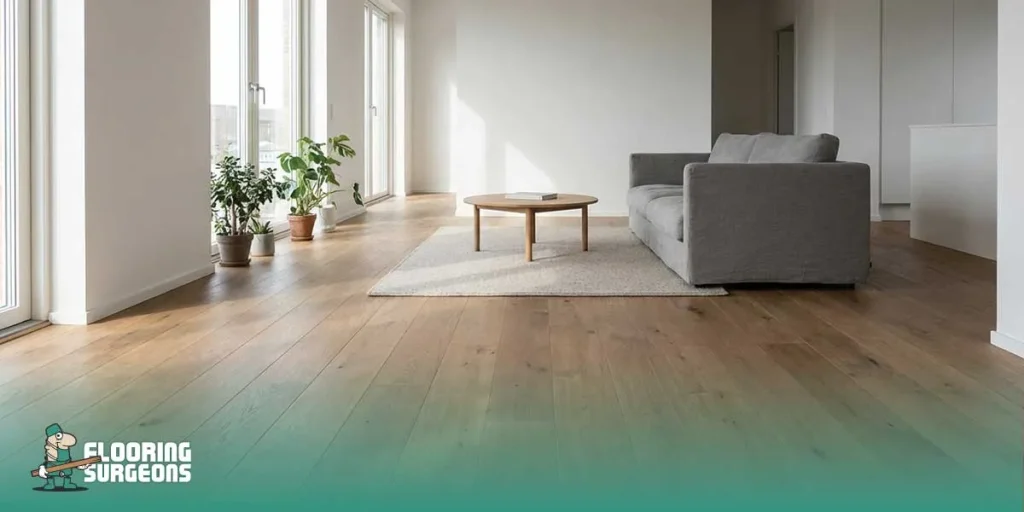
- Minimalist and modern interiors
Minimalist spaces often rely on clean lines, limited colour palettes, and reduced visual clutter. While this creates clarity, it can also introduce a sense of coldness or emotional distance. When walls, furniture, and finishes are visually quiet, the floor becomes one of the few remaining surfaces that can add depth. Textured flooring prevents minimalism from tipping into sterility by introducing subtle variation that softens the space without undermining its simplicity. - Open-plan layouts with limited visual breaks
Significant, open areas can feel expansive but also impersonal if every surface is smooth and uniform. In the absence of partitions, flooring carries the burden of grounding the space. Texture helps break visual monotony at a surface level, making the room feel more human-scaled and less exposed, even without adding physical divisions. - Light-filled rooms with strong natural daylight
Abundant natural light amplifies surface qualities. Smooth, glossy floors reflect light evenly, which can flatten the space and increase glare. Textured floors interact with light unevenly, creating soft shadowing and visual depth. This prevents brightness from feeling harsh and helps the space remain comfortable throughout the day. - Neutral or monochrome colour schemes
When colour variation is deliberately limited, texture becomes the primary source of warmth. In these interiors, flooring texture compensates for the absence of contrast by adding richness through materiality rather than hue. Without it, neutral spaces can feel unfinished or emotionally flat. - Homes prioritising calm over statement design.
Interiors designed for everyday living rather than visual impact benefit more from texture than from bold features. Floor texture supports a sense of ease and familiarity, making the space feel settled and lived-in rather than styled for display.
In all of these contexts, floor texture works quietly but decisively. It shapes how a space is felt rather than how it is noticed, which is why it becomes essential precisely when other design elements step back.
When Floor Texture Does Not Automatically Create Warmth
Floor texture is powerful, but it is not a shortcut. Used without balance or context, it can fail to create warmth and, in some cases, actively work against it. Understanding these limits builds realistic expectations and helps avoid common design mistakes.
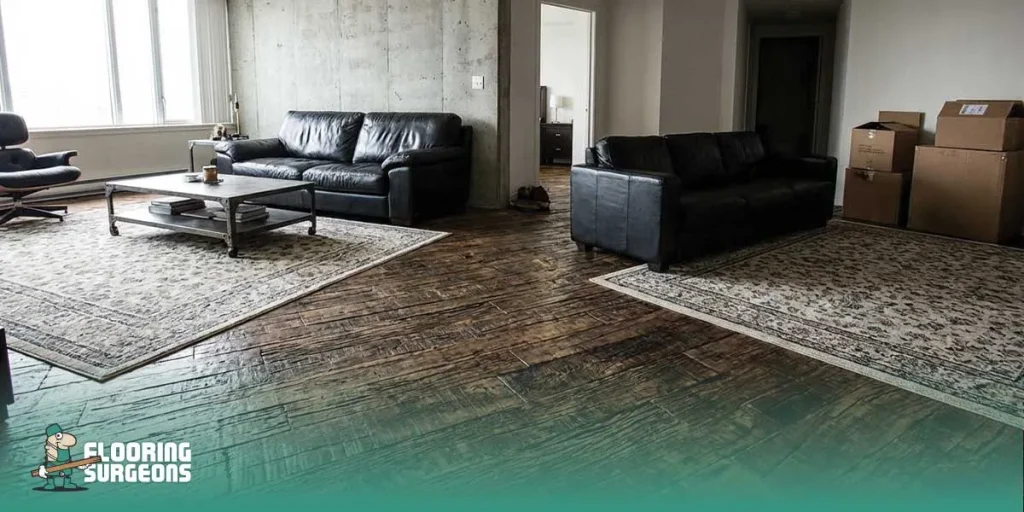
- Over-texturing the floor surface
Too much texture can feel visually heavy rather than warm. Deep distressing, exaggerated grain, or highly irregular surfaces may dominate the room and create visual noise. Instead of comfort, the result can feel busy or tiring, especially in smaller spaces where the floor occupies a large proportion of the visual field. - Conflicting textures across materials
Floor texture does not exist in isolation. If it clashes with wall finishes, furniture surfaces, or architectural details, the space can feel disjointed. Warmth comes from harmony. A richly textured floor paired with overly glossy furniture or harsh industrial elements can cancel out the intended effect. - Texture without overall cohesion
Texture adds warmth only when it supports a clear design direction. Introducing texture randomly, without considering colour palette, material family, or style, often results in confusion rather than comfort. A textured floor needs to feel intentional, not like an afterthought added to compensate for other design gaps. - Poor lighting conditions
Texture relies on light to be perceived. In spaces with insufficient natural light or poorly planned artificial lighting, texture may be flattened or lost entirely. In these cases, flooring alone cannot create warmth, no matter how tactile the surface is. - Layouts that overpower the flooring impact
In rooms with extreme proportions, heavy furniture placement, or cluttered layouts, the influence of floor texture can be diminished. If the floor is largely covered or visually fragmented, its ability to affect how the space feels is reduced. - Expecting the flooring to fix deeper design issues
Flooring texture cannot compensate for uncomfortable layouts, unbalanced proportions, or harsh lighting schemes. Warmth is cumulative. When fundamental design elements work against each other, even the right floor texture will have a limited effect.
Visual warmth emerges from alignment, not from texture alone. Flooring plays a crucial role, but only when it works in balance with light, layout, materials, and intent.
A Simple Checklist for Choosing the Right Floor Texture
Use this checklist to make a confident, practical decision about floor texture. It helps you move beyond aesthetics and assess whether a textured floor will genuinely create visual warmth in your space, both now and over time.
| Decision check | Yes | Not ideal / Needs adjustment |
|---|---|---|
| Does the texture reduce visual flatness and add depth to the space? | ✓ It enhances depth and visual interest | It may feel flat or visually weak |
| Is the level of texture appropriate for the size and scale of the room? | ✓ It suits the proportions of the space | It may feel overpowering or too subtle |
| Does the texture support a neutral or restrained colour palette? | ✓ It works well with the overall palette | It may clash or feel visually busy |
| Will the texture still feel warm and relevant in five years? | ✓ It has a timeless quality | It may feel dated over time |
| Does the texture suit everyday use, cleaning, and maintenance? | ✓ It is practical and easy to maintain | It may require extra care or upkeep |
If most of your answers fall in the first column, the texture choice is likely working in your favour. If several boxes sit in the second column, the issue is not that the texture is wrong, but that the texture type or intensity may need adjustment.
The right floor texture should quietly support how the space feels rather than demand attention. When chosen well, it softens minimal layouts, adds comfort to neutral interiors, and creates warmth that lasts beyond short-term trends. If a textured floor still feels balanced, practical, and visually calm after you step back and reassess it through this checklist, it is likely the right choice for your home. Visual warmth should last beyond first impressions, which is why understanding how long wooden flooring lasts in everyday use matters as much as how it looks on day one.

Haniye Ayanmanesh
As an expert writer for Flooring Surgeons, I combine technical SEO knowledge with a practical understanding of flooring, producing content that helps users make confident decisions while supporting long-term organic growth.