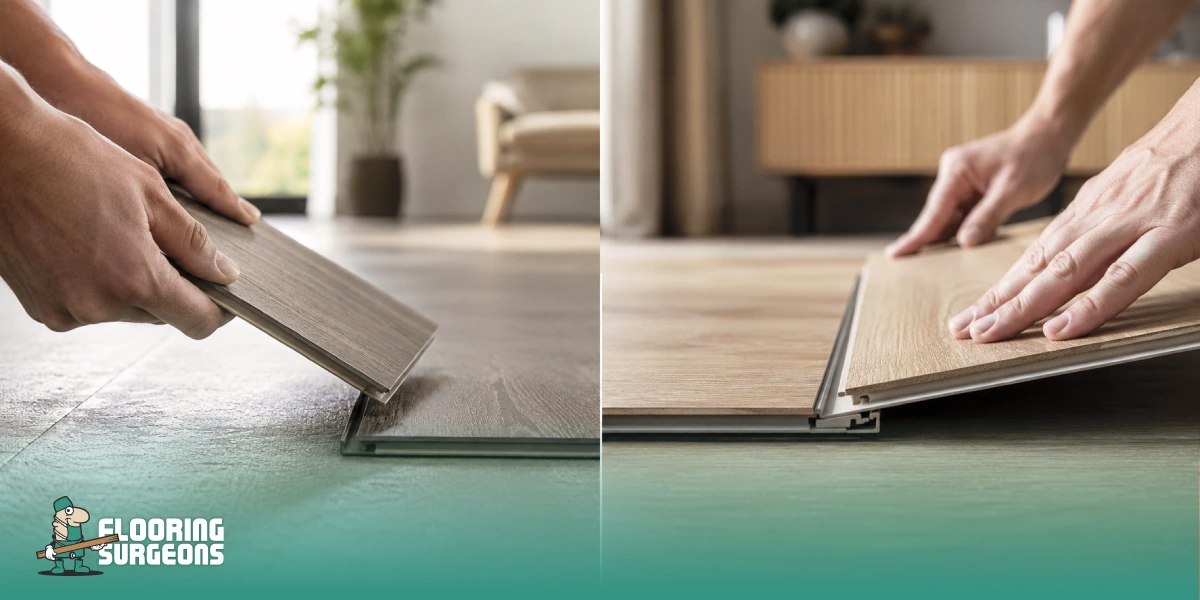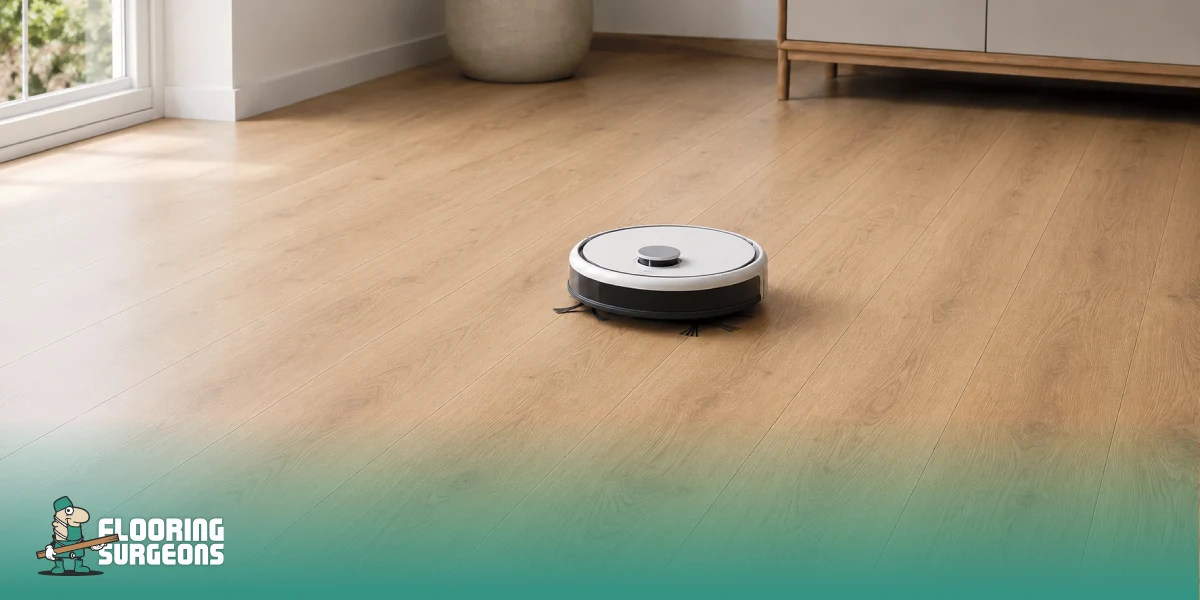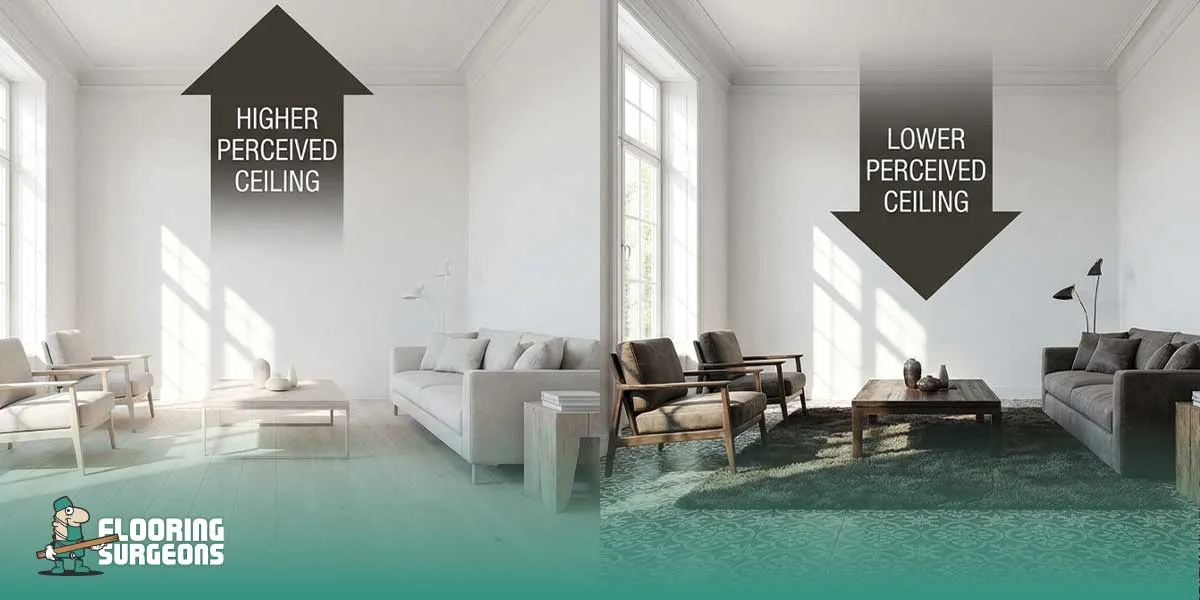
Flooring can influence how high or low a ceiling feels, even when the actual height never changes.
If you want the direct answer:
Light, continuous, and visually calm flooring tends to make ceilings appear higher, while dark, heavily patterned, or visually segmented floors can make a space feel lower and more compressed.
This happens because the floor is one of the largest uninterrupted surfaces in a room. It shapes how the eye travels through the space. When flooring reflects light, reduces visual breaks, and supports upward sightlines, the room feels more open and vertically balanced. When it creates contrast, strong horizontal emphasis, or busy visual detail, attention is drawn downward, which can subtly reduce the perceived height of the ceiling.
Most advice about low ceilings focuses on wall colour or lighting. Flooring is often treated as secondary. In reality, it plays a foundational role in spatial perception. The direction of planks, the size of tiles, the contrast between floor and skirting, and even the finish level all influence how the brain interprets vertical space. The key is not simply choosing a lighter shade. It is understanding how colour, pattern, layout, and surface continuity work together to guide the eye. A room does not feel taller because of one design decision. It feels taller because the visual flow supports vertical expansion rather than horizontal interruption.

If you only need one takeaway, it is this:
flooring that minimises visual breaks and enhances light reflection will generally support a higher perceived ceiling. If you want to understand why this happens, how layout direction changes perception, and which common flooring choices unintentionally make ceilings feel lower, the sections below break it down clearly and practically.
Table of contents
Why Perceived Ceiling Height Matters in Interior Design
Ceiling height is not only a structural measurement. It is a psychological experience.
Two rooms with identical ceiling heights can feel completely different depending on how surfaces guide the eye. One may feel open, breathable and balanced. The other may feel compressed or slightly confined. This difference comes from visual perception rather than physical dimensions. In interior design, perceived height affects how comfortable and spacious a room feels. Higher perceived ceilings are often associated with calmness, freedom of movement and improved light distribution. Lower perceived ceilings can make a space feel intimate, but they can also create a sense of visual pressure if the design does not support vertical flow.
The human eye naturally scans a room in patterns. It follows contrast lines, transitions between surfaces, and areas of brightness. When design elements encourage upward movement, the brain interprets the room as taller. When visual emphasis remains concentrated at floor level or strongly horizontal, the space can feel lower than it actually is. This is why ceiling perception is not controlled by the ceiling alone. It is shaped by the relationship between floor, walls, lighting and layout working together.
How Flooring Affects Visual Height Perception
Flooring plays a foundational role in height perception because it anchors the entire visual field. It is often the first surface the eye registers when entering a room, and it sets the tone for how the rest of the space is interpreted.
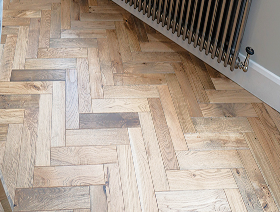
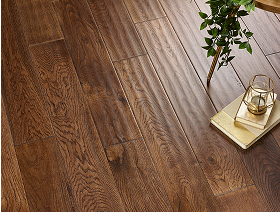
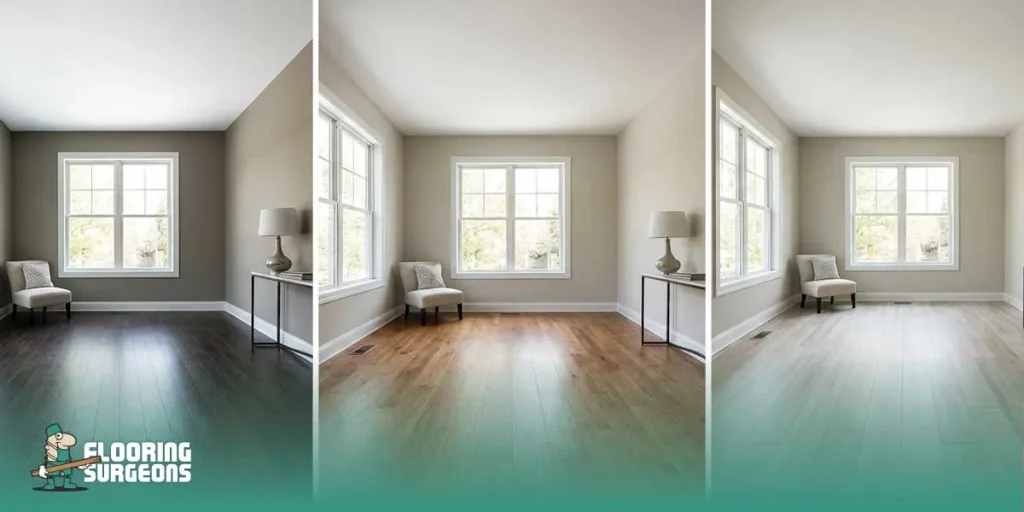
Colour is the most immediate influence. Light-toned flooring reflects more light across the lower half of the room, reducing contrast and allowing walls and ceilings to feel less visually separated. Dark flooring increases contrast, particularly when paired with lighter walls, which can emphasise the horizontal plane and subtly shorten the perceived vertical distance. Pattern and layout are equally important. Long, continuous planks or large-format surfaces reduce visual interruption. Fewer breaks mean fewer horizontal stopping points for the eye. In contrast, small tiles, strong grout lines or busy grain patterns create multiple visual divisions, which can compress the sense of openness.
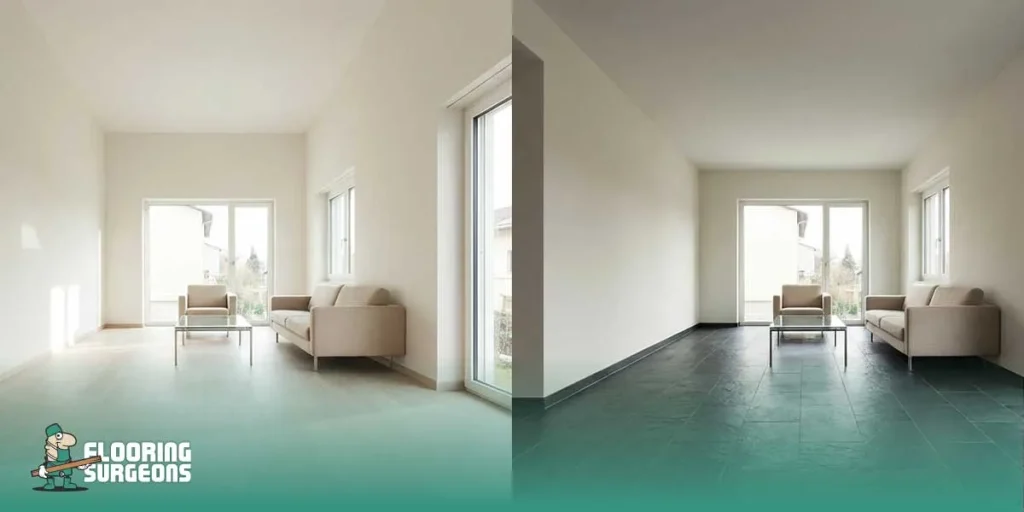
Direction also matters. When the plank direction aligns with the longest sightline in the room, it can encourage the eye to travel further, supporting a feeling of expansion. If the layout emphasises width without balance, the room may feel broader but not taller. Finish and light interaction add another layer. Subtle reflective finishes can enhance brightness without overwhelming glare, while heavily textured or matte finishes may absorb light and slightly reduce the feeling of vertical lift. In short, flooring influences ceiling perception by controlling three key factors: light reflection, visual continuity and eye movement. When these elements work together, ceilings feel higher even though nothing structural has changed.
Practical Flooring Choices That Make Ceilings Feel Higher
Once you understand that perceived ceiling height is shaped by light, continuity and eye movement, flooring decisions become far more intentional. The goal is not simply to “choose something light”, but to reduce visual interruption and support upward flow. Many of the same principles used to visually enlarge compact spaces, such as those outlined in 10 tips to make a small room look bigger through your flooring, also apply when trying to increase perceived ceiling height.
Below are the flooring factors that have the strongest impact.
1. Light Tones and Reflective Balance
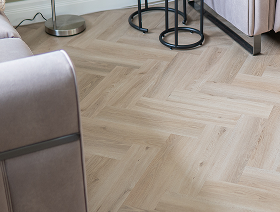
Lighter flooring generally helps ceilings feel higher because it reflects more light into the lower half of the room. This softens the contrast between floor and walls and prevents the room from feeling bottom-heavy. However, the effect is not just about choosing white or pale oak. What matters is balance. Extremely bright flooring paired with dark walls can still create a strong visual division. The most effective combinations tend to:
- Use light to medium tones that distribute light evenly.
- Avoid high contrast between the flooring and the skirting boards.
- Maintain tonal harmony with wall colours.
When the lower half of the room feels visually lighter, the ceiling appears less compressed.
2. Plank Length, Tile Size and Visual Continuity
The size and format of flooring pieces influence how often the eye stops and resets.
Long planks and large-format boards reduce the number of visible joints. Fewer interruptions mean smoother eye movement across the surface. When the eye travels further without visual breaks, the entire space feels more expansive, which supports the perception of height. By contrast, small tiles or short planks introduce frequent segmentation. Grout lines and repeated pattern shifts create horizontal rhythm, which can anchor attention downward.
To support height illusion:
- Choose longer planks over shorter ones
- Opt for wider boards in proportion to the room.
- Minimise high-contrast grout lines
Continuity at floor level subtly enhances vertical spaciousness.
3. Layout Direction and Sightlines
Flooring direction influences how the eye moves through a room. When planks follow the longest visible sightline, they extend the perceived depth of the space. That extended depth can indirectly support a feeling of height because the room feels less confined overall. If the layout strongly emphasises width without balance, the room may feel broader but not taller. Diagonal layouts can add dynamism, but in smaller rooms, they sometimes increase visual activity rather than vertical lift. Flooring layout plays a subtle but powerful role in guiding visual direction. As explored in how floor patterns control eye movement in a room, the way lines and joints are arranged can influence whether the eye moves horizontally or vertically.
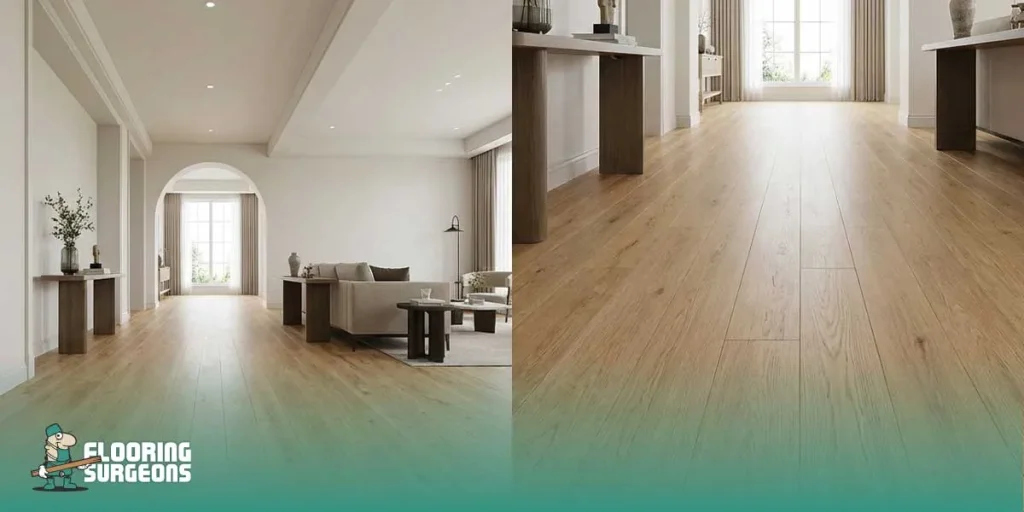
The most height-supportive layouts tend to:
- Align with the dominant line of movement
- Avoid abrupt directional changes.
- Maintain consistency between adjoining spaces.
When direction supports flow rather than fragmentation, ceilings feel less restrictive.
4. Seamless Surfaces vs Small Modular Units
Large-format flooring and seamless surfaces create the clearest visual plane. With minimal joints and fewer tonal shifts, the eye reads the floor as one continuous field rather than a grid. This uninterrupted plane reduces cognitive load. The brain processes the space as open and stable, which makes vertical dimensions feel less constrained. In contrast, small modular tiles with visible grout lines divide the surface into many sections. Each division acts as a subtle horizontal reference point, which can compress the perceived height.
In practical terms:
- Larger formats enhance visual calm
- Seamless transitions between rooms strengthen the effect.
- Excessive segmentation reduces perceived openness.
When the floor feels unified rather than divided, the ceiling naturally feels further away.
Integrating Flooring With Vertical Design to Enhance Ceiling Perception
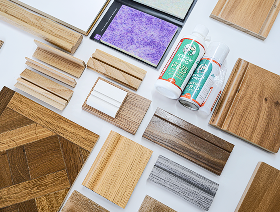
Flooring does not work in isolation. Its influence on perceived ceiling height becomes stronger or weaker depending on how it interacts with vertical elements, furnishings and light. When these elements are aligned, the illusion of height feels natural. When they conflict, even light flooring may fail to improve spatial perception. The key is visual coordination rather than isolated design decisions. For rooms with lower ceilings, selecting wider planks and lighter tones from available engineered wood flooring options can help create a more continuous and height-enhancing surface.
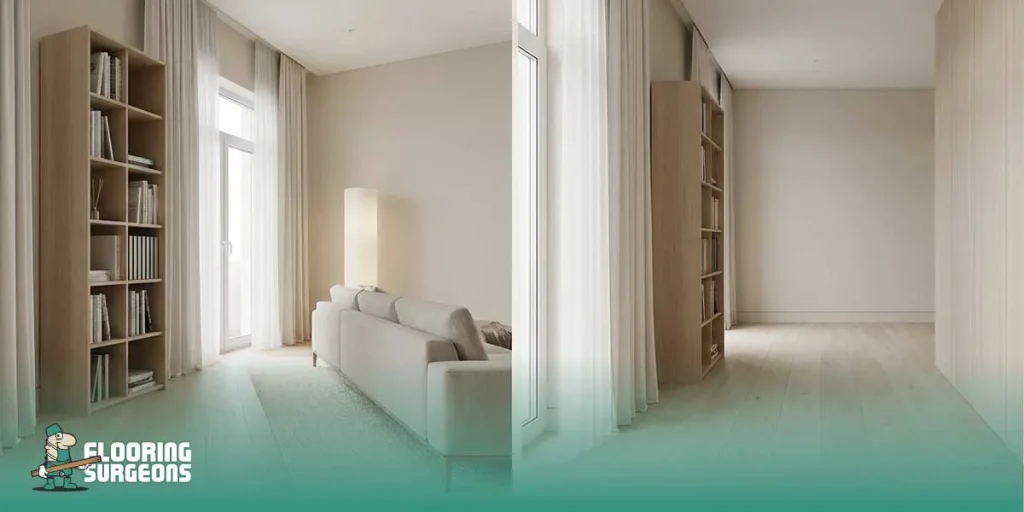
Aligning Flooring With Vertical Elements and Furnishings
Vertical lines guide the eye upward. Flooring can either support that upward movement or interrupt it. When floor tones transition smoothly into wall colours, tall furnishings, or vertical panelling, the eye travels continuously from ground to ceiling. This creates an uninterrupted visual journey that enhances the feeling of height. In contrast, heavy contrast at floor level, thick skirting boards in dark tones, or bulky low furniture can visually anchor the lower half of the room, compressing the space.
To support vertical lift:
- Keep tonal transitions between floor and wall subtle rather than abrupt
- Use tall furnishings that extend visual lines upward.
- Avoid strong horizontal breaks at floor level.
The more seamless the connection between horizontal and vertical surfaces, the more open the ceiling feels.
Lighting and Surface Finish: The Often Overlooked Factor
Lighting interacts directly with the flooring finish. A lightly reflective surface can distribute brightness evenly, softening shadows and reducing the sense of weight at the base of the room. This encourages a balanced visual field where the ceiling does not feel disconnected from the floor.
However, excessive gloss can create glare and strong light pooling, which may draw attention downward rather than upward. Similarly, very dark matte surfaces absorb light and increase contrast, subtly shortening perceived height.
The relationship can be summarised clearly:
| Flooring Choice | Visual Effect | Impact on Perceived Ceiling Height |
| Light satin finish | Soft light reflection, balanced brightness | Supports higher perception |
| High gloss surface | Strong reflections, directional glare | Can distract from vertical flow |
| Dark matte flooring | Light absorption, heavy base | May reduce perceived height |
| Seamless tone with walls | Reduced contrast, unified space | Enhances vertical continuity |
| Strong contrast between the floor and the wall | Clear horizontal division | Can compress vertical perception |
The illusion of height improves when light, surface finish and tonal balance work together rather than competing for attention.
Avoiding Design Choices That Make Ceilings Feel Lower
Some flooring decisions unintentionally work against vertical perception. These are often aesthetic choices that seem attractive individually but create visual compression when combined. Common issues include overly busy floor patterns, high-contrast borders around the room perimeter, and abrupt flooring transitions between connected spaces. Each of these introduces horizontal emphasis, which shifts visual weight downward. Height perception improves not by adding more design elements, but by removing unnecessary visual interruption.
Why Common Advice Isn’t Enough
Much of the advice around low ceilings is simplified to one idea: choose light colours and avoid dark floors. While tone does matter, this explanation is incomplete. Perceived height is not controlled by a single surface. It is shaped by how the brain interprets relationships between brightness, contrast, depth cues and surface boundaries. Flooring is powerful not because it is light or dark, but because it defines the base plane from which vertical perception begins. Design advice often treats each element separately. In reality, spatial perception is relational. The floor does not just sit beneath the walls. It frames them.
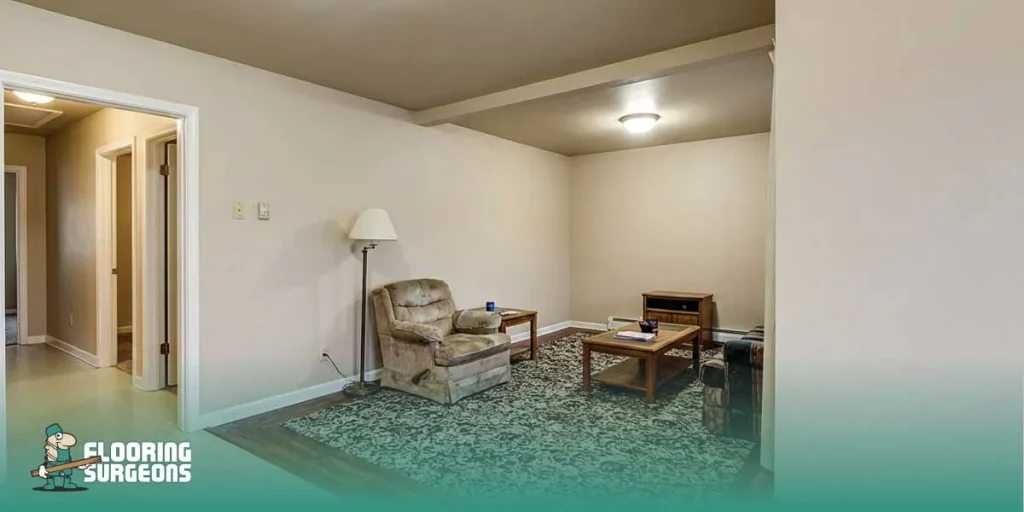
Scientific Findings Behind Height Perception and Flooring
Research in environmental psychology and visual perception shows that surface brightness and contrast influence how spatial dimensions are interpreted. When lower surfaces are brighter, and transitions between planes are subtle, rooms are often perceived as more open and vertically generous.
This effect is linked to how the human visual system processes boundaries. Strong contrast creates a clear separation between planes. Clear separation makes dimensions feel finite. Softer transitions reduce visual stopping points, allowing the eye to travel more freely.
Flooring contributes to this process in three measurable ways:
- It establishes the dominant horizontal reference line in the room
- It controls the amount of light reflected upward.
- It determines how frequently the visual field is segmented.
When flooring reduces segmentation and avoids heavy contrast at the base of the room, the ceiling can feel visually further away, even though its height remains unchanged. This is why two rooms with identical measurements can feel radically different.
How Flooring Works With Walls and Ceilings to Shape Space
Perceived height is strongest when the floor, wall and ceiling are visually coordinated.
If the floor is dark and the ceiling is bright, the room can feel top-heavy. If the floor strongly contrasts with the wall, the boundary between them becomes more pronounced, which may compress vertical perception. When tones move gradually from floor to wall to ceiling, the space feels continuous rather than stacked.
The brain reads a room not as separate surfaces, but as one spatial envelope. Flooring sets the base tone of that envelope. Walls guide vertical movement. Ceilings complete the perception of enclosure. When these three surfaces support each other, the illusion of height becomes subtle and convincing rather than forced.
Summary: Flooring Choices That Help Make Ceilings Appear Higher
Flooring influences perceived ceiling height because it shapes light distribution, visual continuity and eye movement across the largest horizontal surface in a room.
If you want ceilings to feel higher, focus on these principles:
- Use light to medium tones that reflect light without harsh contrast
- Prioritise long planks or large-format surfaces to reduce visual breaks.
- Align the flooring direction with natural sightlines.
- Minimise the strong contrast between the floor, walls and skirting
- Maintain continuity between adjoining spaces.
The most important idea is not to chase a single trick. Height perception improves when flooring supports vertical flow rather than interrupting it. Ceilings do not feel higher because of one design decision. They feel higher when the entire visual system of the room works together. At Flooring Surgeons, design decisions are approached not just from an aesthetic perspective, but with a deeper understanding of how flooring shapes the way a space is experienced.

Haniye Ayanmanesh
As an expert writer for Flooring Surgeons, I combine technical SEO knowledge with a practical understanding of flooring, producing content that helps users make confident decisions while supporting long-term organic growth.