Parquet flooring itself does not usually contain asbestos. However, parquet floors installed before the 1980s may have asbestos in the adhesive (black mastic) or in the subfloor materials. The only way to confirm is through professional asbestos testing.
If you’re looking at an older parquet floor and wondering whether it’s safe to sand, restore, or remove, you’re asking the right question. In most cases, the wooden parquet blocks themselves do not contain asbestos. The real risk, especially in properties built or renovated between the 1950s and 1980s, comes from what’s underneath: bitumen-based black mastic adhesives, old underlayments, or contaminated subfloors.
Many homeowners are misinformed. Online advice often centres on vinyl tiles or 9×9 asbestos tiles, yet parquet flooring presents a distinct risk. Parquet is solid or engineered wood, with asbestos rarely added. Instead, asbestos was sometimes present in:
- The adhesive bonds the parquet to the floor
- The backing layers beneath older installations
- The cementitious or fibre-based subfloor materials
The risk becomes serious when the floor is disturbed during sanding, lifting, renovation, water-damage repair, or full removal. If asbestos-containing adhesive is ground down or broken apart, fibres can become airborne.
So what should you actually do? If your parquet floor was installed before 1985, and especially if you’re planning renovation work, the safest next step is a professional floor inspection and asbestos test before any sanding or removal begins. A controlled inspection can quickly determine whether the adhesive or subfloor poses a risk and whether the floor can be safely restored, encapsulated, or needs full removal and replacement.
If you’re trying to make a safe decision about restoring or replacing an older parquet floor, you’ll find everything you need right here, clearly explained, without guesswork. If you decide replacement is the safest route, exploring herringbone flooring options can help you choose a style that suits your home and installation method.
Table of contents
When Was Asbestos Used in Flooring?
Understanding the installation date of your parquet floor is one of the most important factors in assessing asbestos risk. Asbestos was widely used in construction materials throughout much of the 20th century, particularly in flooring adhesives and subfloor compounds. While solid wood parquet blocks themselves rarely contained asbestos, installations completed during peak asbestos use years may still present a risk due to the bonding materials underneath. If your property was built or renovated before the mid-1980s, extra caution is strongly advised before sanding, lifting, or replacing parquet flooring. If your home dates back to mid-century renovations, it helps to understand common materials from that era. For context, see what flooring was used in the 1960s before you plan to sand or remove it.
Asbestos Use Timeline in Residential Flooring
The timeline below shows how asbestos usage in flooring materials changed over time and where the risk typically exists in parquet installations:
| Period | Asbestos Usage Risk | Common Location |
| Before 1950 | Low in parquet, moderate in adhesives | Subfloor |
| 1950–1985 | High risk in adhesives (black mastic) | Under parquet |
| After 1990 | Very low | Rare cases |
What This Timeline Means for Parquet Floors
For parquet floors installed from 1950 to 1985, the greatest asbestos hazard comes from black bitumen adhesive, also known as black mastic. This tar-like material was favoured for its durability, moisture resistance, and low cost. In some cases, older homes may also have:
- Cement-based levelling compounds containing asbestos
- Fibre-reinforced underlayment boards
- Residual adhesive layers from previous floor coverings beneath the parquet
After 1990, asbestos use in residential flooring materials dropped significantly due to regulations and health awareness. However, properties renovated using leftover older stock materials may still present isolated risks.
Why Installation Date Matters Before Renovation
If you are planning:
- Parquet floor sanding
- Floor refinishing
- Floor removal
- Subfloor repairs
- Full flooring replacement
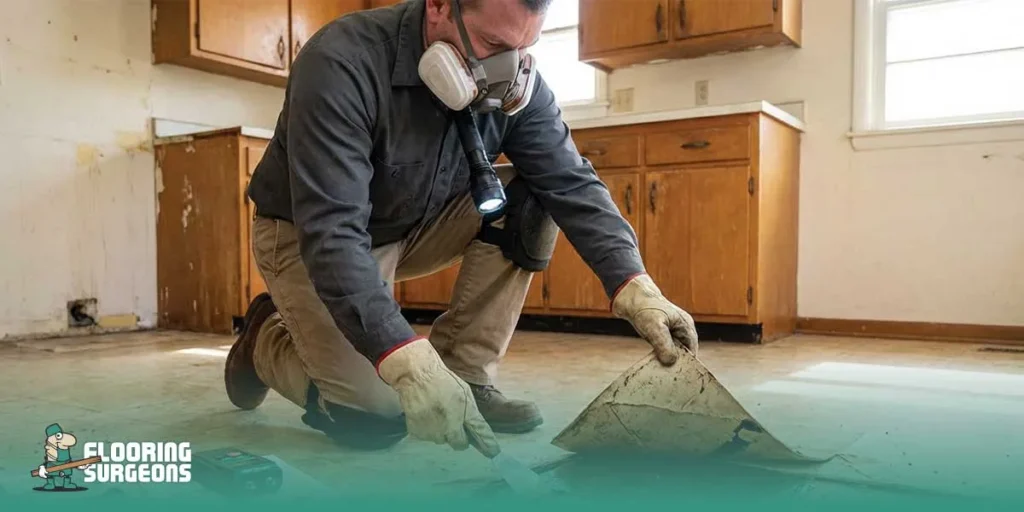
The installation period should always be evaluated first. Disturbing old adhesive layers without proper inspection can release hazardous fibres into the air. This is why a professional floor inspection before renovation is not just precautionary. It is a critical safety step, especially in mid-century homes.
Where Could Asbestos Be Found in Parquet Flooring?
Parquet blocks themselves are typically made from solid or engineered wood and do not usually contain asbestos. The real concern lies beneath the surface. In older installations, especially those completed between 1950 and 1985, asbestos was sometimes used in supporting materials that helped bond or stabilise the flooring. Understanding exactly where asbestos may be present is essential before sanding, lifting, repairing, or replacing parquet flooring.
1. Adhesives Black Mastic
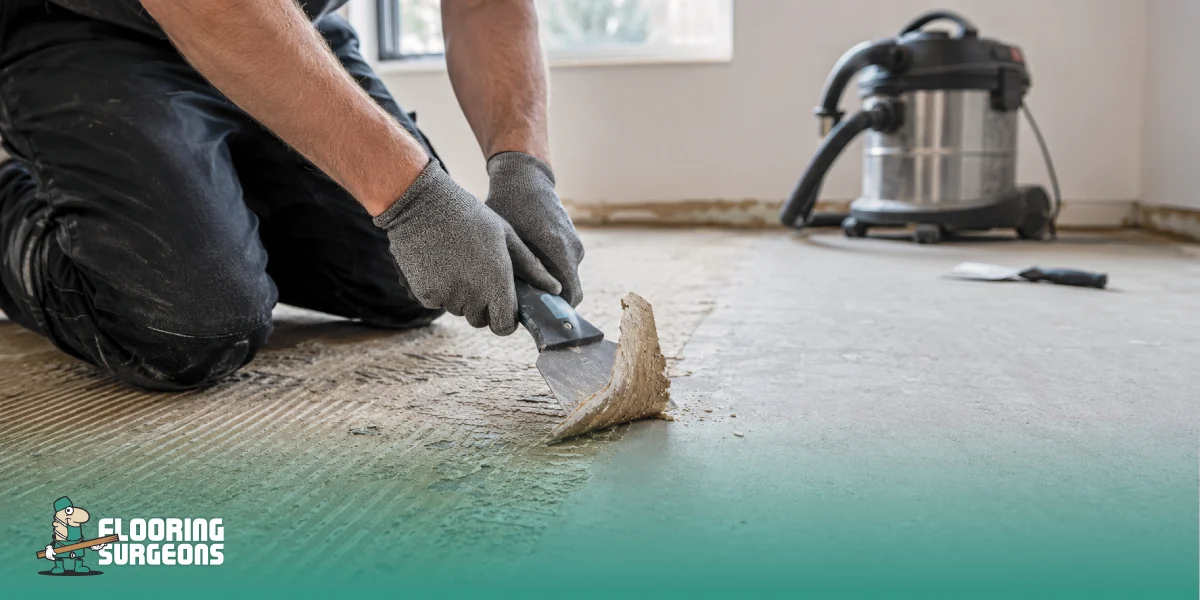
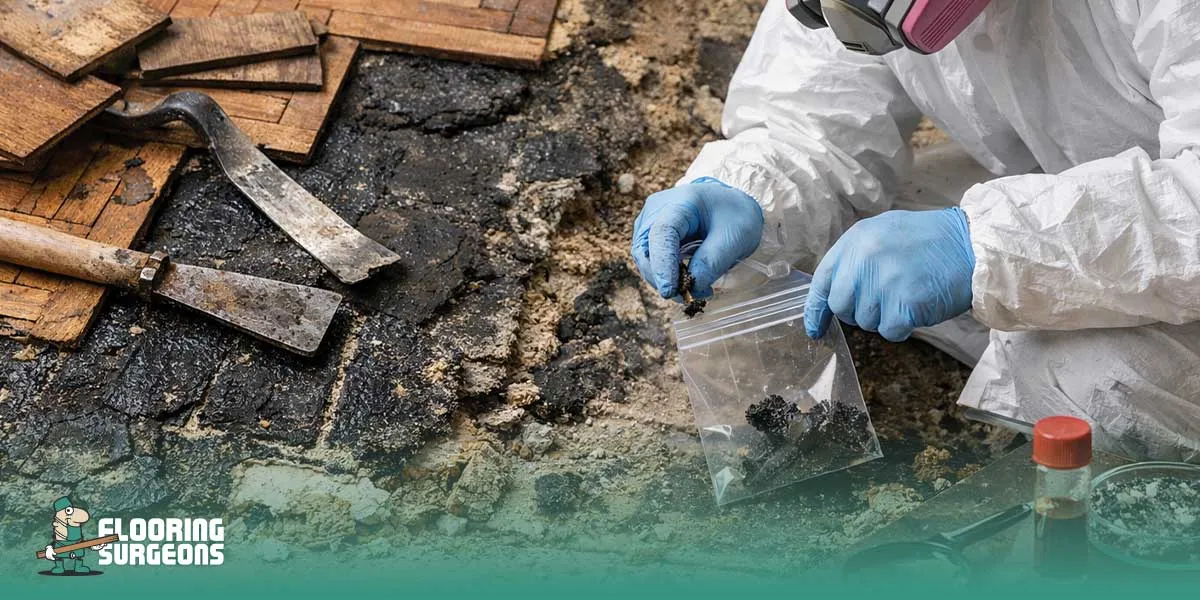
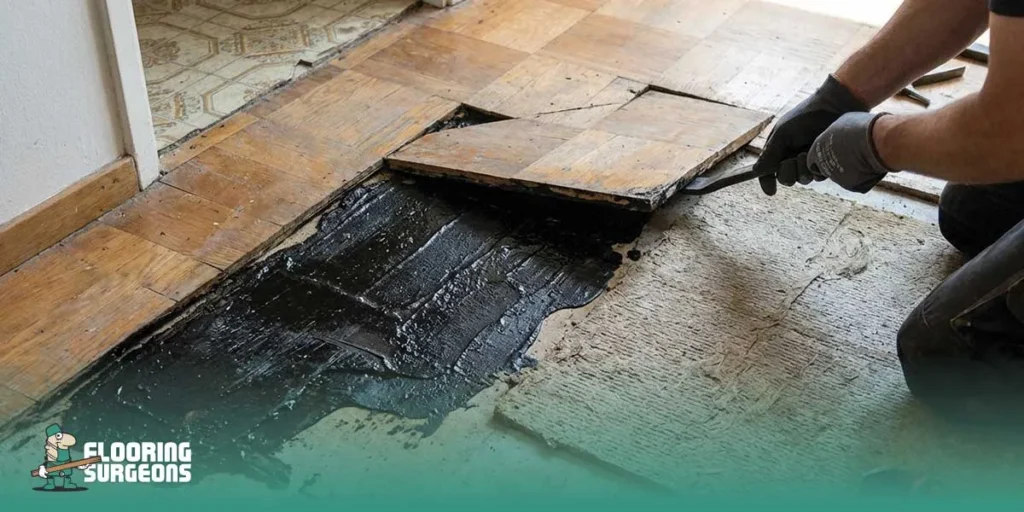
The most common source of asbestos in parquet installations is the adhesive used to bond the wood blocks to the subfloor. Black mastic, a thick bitumen-based adhesive, was widely used in mid-century construction. It appears as a dark, tar-like substance beneath flooring materials. Because it was durable and moisture-resistant, it became a standard solution for securing parquet and other floor coverings.
If disturbed through sanding, scraping, grinding, or mechanical removal, asbestos fibres within this adhesive can become airborne. Possible asbestos locations include:
- Bitumen-based adhesive
- Black tar-like glue
- Residual glue from previous flooring layers
If you lift a parquet block and see a black sticky substance underneath, it should never be sanded or scraped without testing.
2. Subfloor Materials
In some properties, asbestos may be present in the subfloor itself. This is especially true in homes built or renovated during the peak asbestos usage decades. Risk areas beneath parquet flooring may include:
- Cement-based levelling compounds
- Fibre-reinforced subfloor boards
- Contaminated concrete surfaces
Subfloor contamination is often overlooked. Even if the parquet and adhesive appear safe, underlying materials may still contain asbestos fibres. This becomes particularly relevant during full floor removal or structural repairs. Because subfloor issues often surface during removal or water-damage repairs, it helps to know what to do if your subfloor is damaged before committing to replacement.
3. Backing Layers
While parquet does not typically have the same backing materials as vinyl or tile flooring, some installations were placed over older flooring systems. In renovation projects, parquet was sometimes installed over existing materials. Those underlying layers could include asbestos-containing tiles or sheet flooring. In these cases, the risk is not in the wood parquet itself, but in what lies beneath it. Before any restoration, refinishing, or replacement work begins, identifying all layers of the floor system is critical. A professional floor inspection can determine whether adhesives, subfloor materials, or hidden backing layers require controlled removal or safe encapsulation. Taking this step early protects both health and the long-term integrity of your flooring project.
How to Tell If Your Parquet Floor Contains Asbestos
There is no reliable way to visually confirm the presence of asbestos in parquet flooring. The wood blocks themselves usually do not contain asbestos, but adhesives and subfloor materials might. That said, certain warning signs can indicate a higher likelihood of risk, especially in older properties. If your home was built or renovated during the peak asbestos-use decades, extra caution is essential before disturbing the floor.
Visual Signs Not Reliable but Indicative
Visual clues cannot confirm the presence of asbestos, but they can help you assess whether professional testing is necessary. Look for the following indicators:
- Installed before 1985
- Black adhesive underneath lifted parquet blocks
- 9×9-inch tile layers beneath parquet
- Brittle or fibrous backing material under the floor
A black, tar-like adhesive is a common warning sign. Called black mastic, it was used to secure parquet and other flooring. If discovered during renovation, avoid sanding, scraping, or grinding. If parquet rests on older vinyl tiles or cement sheets, those layers may carry asbestos. Homeowners often find this only during removal projects.
Professional Testing Recommended
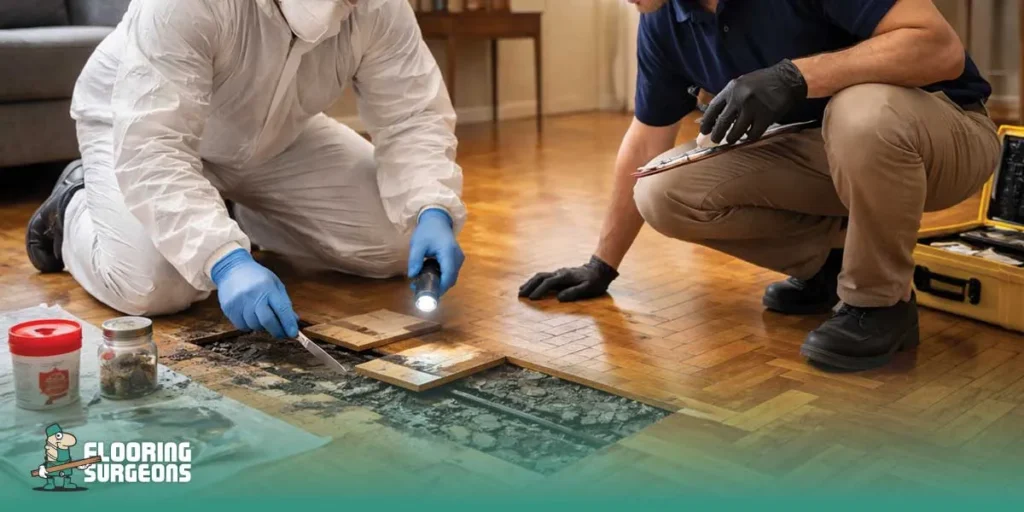
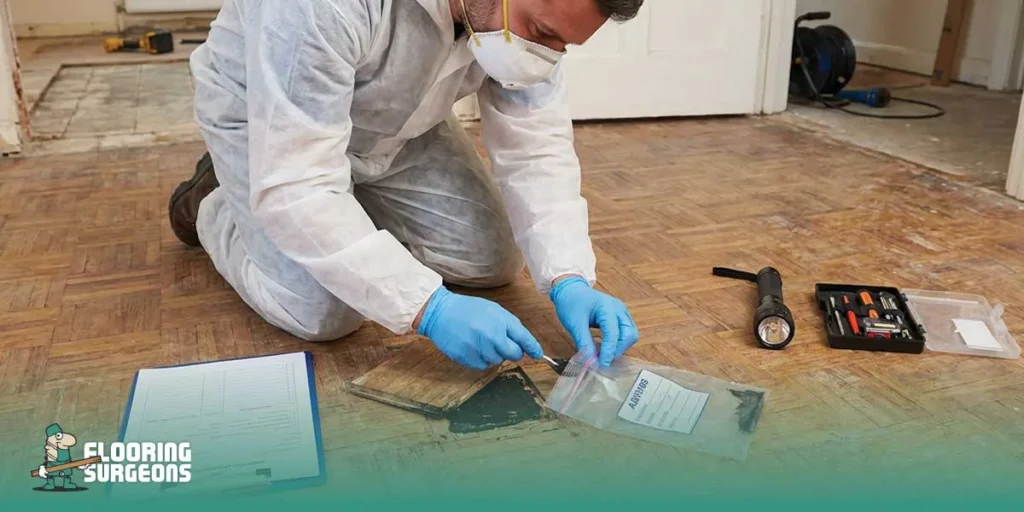
The only way to confirm whether asbestos is present is through controlled laboratory testing. This involves safely collecting a small sample of adhesive or subfloor material and analysing it under regulated conditions. If you’re unsure, professional floor inspection and asbestos testing are the safest options before sanding, repairing, or replacing parquet flooring. A qualified inspection does more than confirm the presence of asbestos. It also helps determine:
- Whether the material is intact and stable
- If it can remain undisturbed
- Whether encapsulation is possible
- Or if full flooring removal is required
For homeowners planning renovations, restorations, or full-floor replacements, arranging a professional assessment first can help prevent costly health risks and project delays. It ensures your parquet flooring project moves forward safely and correctly from the start.
Is Asbestos in Parquet Flooring Dangerous?
Asbestos becomes dangerous when its fibres are released into the air and inhaled. In intact, undisturbed flooring systems, asbestos-containing adhesive or subfloor materials may remain relatively stable. The real risk begins when the material is disturbed during renovation, sanding, demolition, or removal. If you are weighing a refinish job, it is worth checking when floor sanding is not worth it, especially in older properties where adhesives and subfloor layers may be uncertain. With parquet flooring, this risk most commonly arises when:
- Sanding through old adhesive layers
- Scraping or grinding black mastic
- Lifting parquet blocks during floor removal
- Breaking apart contaminated subfloor materials
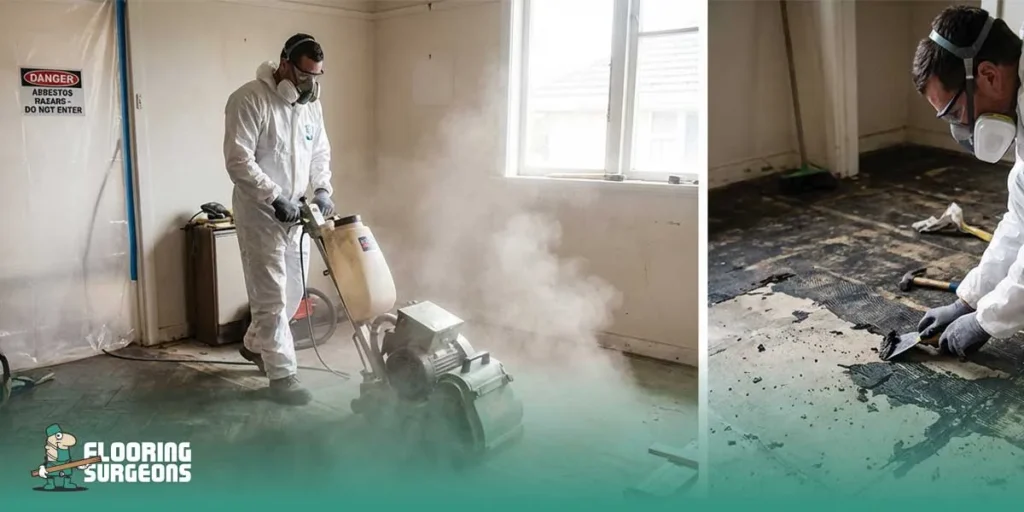
When these materials are cut, sanded, or mechanically disturbed, microscopic fibres can become airborne. These fibres are invisible to the naked eye and can remain suspended in the air for extended periods. Long-term or repeated exposure to airborne asbestos fibres is linked to serious health conditions, including:
- Lung cancer
- Mesothelioma
- Asbestosis
Mesothelioma, in particular, is strongly associated with asbestos exposure and can develop decades after initial contact. It is important to understand that simply having an older parquet floor does not automatically mean you are at immediate risk. If the floor is intact and undisturbed, the likelihood of fibre release is significantly lower. However, the moment renovation, sanding, water damage repair, or full flooring replacement is planned, the risk profile changes.
This is why asbestos assessment is especially important before:
- Parquet floor refinishing
- Floor sanding projects
- Subfloor repairs
- Complete flooring removal
Identifying potential asbestos before starting work protects not only the property’s occupants but also contractors and anyone else in the space. A controlled inspection allows you to make informed decisions about whether the floor can remain in place, requires encapsulation, or needs professional removal. Being proactive at this stage can prevent serious health consequences and costly remediation later.
Should You Remove Old Parquet Flooring?
Not every old parquet floor needs to be removed. In many cases, the safest and most cost-effective option is to leave the flooring intact, especially if it is stable and undisturbed. The decision depends on the condition of the floor, future renovation plans, and whether asbestos-containing adhesive or subfloor materials are present. Before making a decision, it is important to evaluate both safety and long-term performance goals.
When Removal Is Necessary
Removal becomes necessary when the flooring system is compromised or when renovation work will disturb potentially hazardous materials. Consider removal if:
- Renovation planned
- Floor damage
- Adhesive deterioration
- Water damage
If you are planning a full flooring replacement, layout change, or structural upgrade, the parquet will likely need to be lifted. In homes built during peak asbestos-use years, this should always be preceded by professional testing.
Severe water damage is another critical factor. Moisture can weaken adhesive bonds and subfloor layers, increasing the chance that materials will break apart during removal. If contaminated adhesive is present, uncontrolled removal can release hazardous fibres.
When It May Be Safer to Leave It Undisturbed
If testing confirms asbestos in the adhesive or subfloor but the materials are intact and stable, leaving the floor undisturbed may be the safest option. In some cases:
- The parquet is structurally sound.
- The adhesive remains sealed and stable.
- No sanding or demolition is planned.
- The floor can be safely encapsulated or covered.
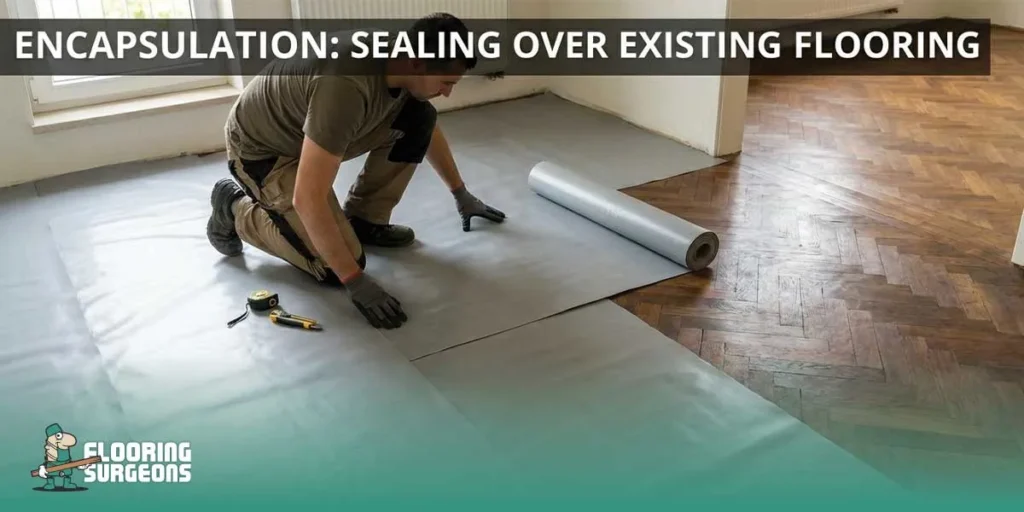
Encapsulation, which involves sealing or covering the existing floor system, can sometimes reduce exposure risk without full removal. However, this decision should only be made after a proper floor inspection. For homeowners unsure whether to restore, encapsulate, or proceed with full flooring removal, a professional assessment provides clarity. Evaluating the condition of the parquet, adhesive, and subfloor together ensures that any decision prioritises both safety and long-term durability. Choosing the right path early helps prevent unnecessary disruption and ensures your flooring project moves forward with confidence.
Asbestos Parquet Removal vs Replacement What’s the Best Option?
If asbestos is suspected or confirmed beneath your parquet flooring, the next decision is critical. Should you attempt removal, encapsulate the material, or hire professionals for controlled removal and full replacement? The safest and most effective choice depends on the condition of the adhesive and subfloor, your renovation goals, and regulatory requirements in your area. Here is a clear comparison of the available options:
| Option | Risk Level | Cost | Recommended? |
| DIY Removal | High | Low | No |
| Encapsulation | Medium | Medium | Case dependent |
| Professional Removal | Low | Higher | Yes |
Why DIY Removal Is High Risk
Removing parquet flooring bonded with asbestos-containing adhesive often requires scraping, grinding, or breaking up the materials. These actions can release microscopic fibres into the air. Even small-scale disturbances can contaminate indoor spaces, HVAC systems, and adjacent rooms. In many regions, improper removal may also violate safety regulations. DIY removal is rarely recommended when asbestos is suspected.
When Encapsulation May Be Considered
Encapsulation involves sealing the existing flooring system or installing new flooring over it without disturbing the underlying materials. This may be suitable when:
- The adhesive is stable and intact.
- No sanding or demolition is planned.
- The subfloor is structurally sound.
However, encapsulation does not eliminate asbestos. It only reduces exposure risk if the material remains undisturbed.
Why Professional Removal Is the Safest Route
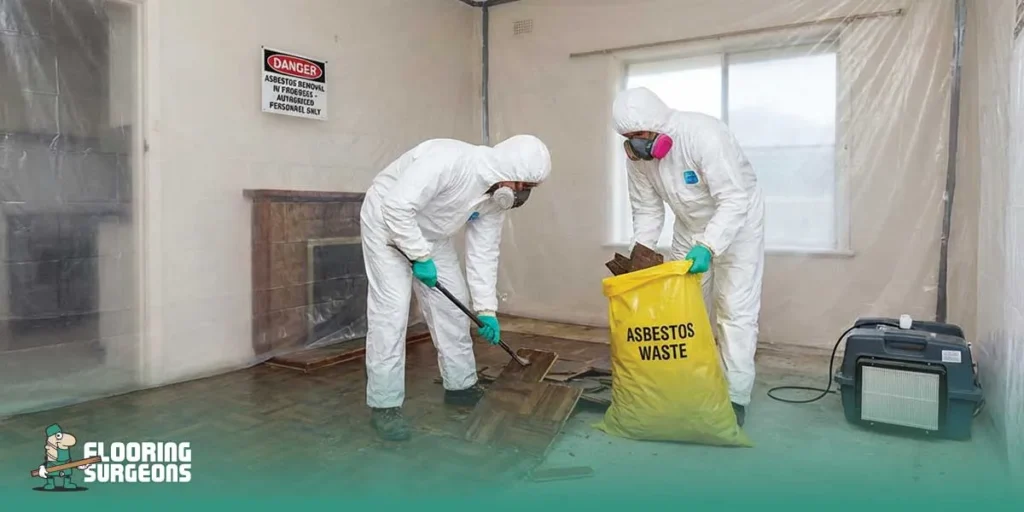
Controlled removal ensures that adhesive, parquet blocks, and contaminated subfloor layers are handled in accordance with proper containment procedures. Professional removal typically includes:
- Sealed work zones
- Controlled material handling
- Safe disposal
- Air quality monitoring is required where required.
For homeowners planning a full flooring upgrade, this approach offers both safety and a clean foundation for long-term durability. Flooring Surgeon specialises in safe floor removal and professional flooring replacement solutions tailored to older properties. If you are restoring, renovating, or modernising an older home, working with experienced flooring specialists ensures the process is handled correctly from inspection through final installation.
Cost of Testing and Removal
Understanding cost helps you plan realistically before beginning any renovation project. Pricing varies based on location, floor size, material condition, and local regulations. Here is a general overview.
Asbestos Testing Cost
The asbestos testing cost typically includes:
- Site visit
- Sample collection
- Laboratory analysis
Testing is relatively affordable compared to remediation and is a critical first step before disturbing older parquet flooring.
Asbestos Floor Removal Cost
Asbestos floor removal cost depends on:
- Total square footage
- Accessibility
- Type of adhesive or subfloor contamination
- Containment requirements
Professional removal is more expensive than standard flooring demolition because of safety protocols and regulated disposal procedures. However, it significantly reduces long-term health and liability risks.
Parquet Floor Replacement Cost
Once removal is complete, the parquet floor replacement cost will vary based on:
- Solid vs engineered parquet
- Subfloor preparation needs
- Installation complexity
- Finish and sealing choices.
In many renovation projects, combining safe removal with professional flooring replacement provides better long-term value than attempting partial repairs on ageing systems. Investing in proper testing and expert removal ensures your new flooring installation begins on a clean, safe, and structurally sound foundation. If you prefer a traditional feel and long-term refinishing potential, solid wood flooring can be a strong option once the subfloor is confirmed safe and stable.
Engineered Parquet vs Solid Parquet: Is There a Difference in Asbestos Risk?
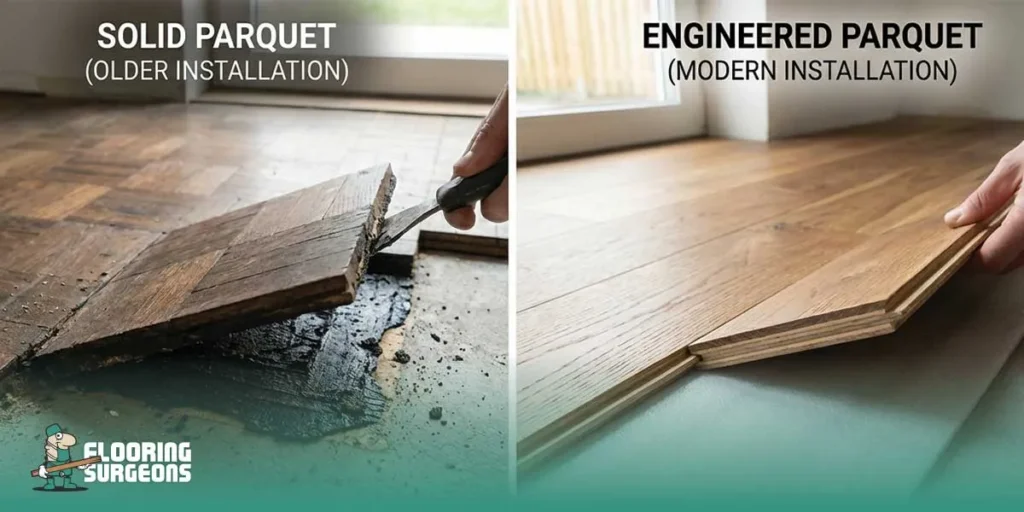
Yes, there can be a difference, but not in the way many people assume. Neither solid nor engineered parquet boards are manufactured with asbestos. The risk is not in the wood construction itself. The difference comes from how and when the flooring was installed.
Solid Parquet
Older solid parquet installations, especially from 1950 to 1985, were commonly bonded using black bitumen adhesive. This is where asbestos risk is most often found. Risk factors include:
- Full glue-down installations
- Thick black adhesive layers
- Installation directly over older subfloors
Engineered Parquet
Engineered parquet became more common later, particularly after stricter asbestos regulations were introduced. Modern engineered parquet systems often use:
- Click-lock floating installation
- Modern low-VOC adhesives
- Underlay systems without asbestos
However, if engineered parquet was installed during renovation over an older floor, asbestos may still exist in the underlying layers. In many modern renovations, engineered wood flooring is chosen because it can be installed as a floating system, reducing the need to disturb older adhesive layers.
The Key Difference Between Engineered and Solid Parquet
The real asbestos risk is tied to:
- Installation date
- Type of adhesive used
- Condition of the subfloor
- Whether older flooring remains underneath
If your parquet flooring, solid or engineered, was installed before the mid-1980s or during renovation of an older property, professional inspection is the safest way to confirm. Understanding this distinction helps homeowners avoid unnecessary panic while still taking appropriate precautions before sanding, removal, or floor replacement.

Haniye Ayanmanesh
As an expert writer for Flooring Surgeons, I combine technical SEO knowledge with a practical understanding of flooring, producing content that helps users make confident decisions while supporting long-term organic growth.