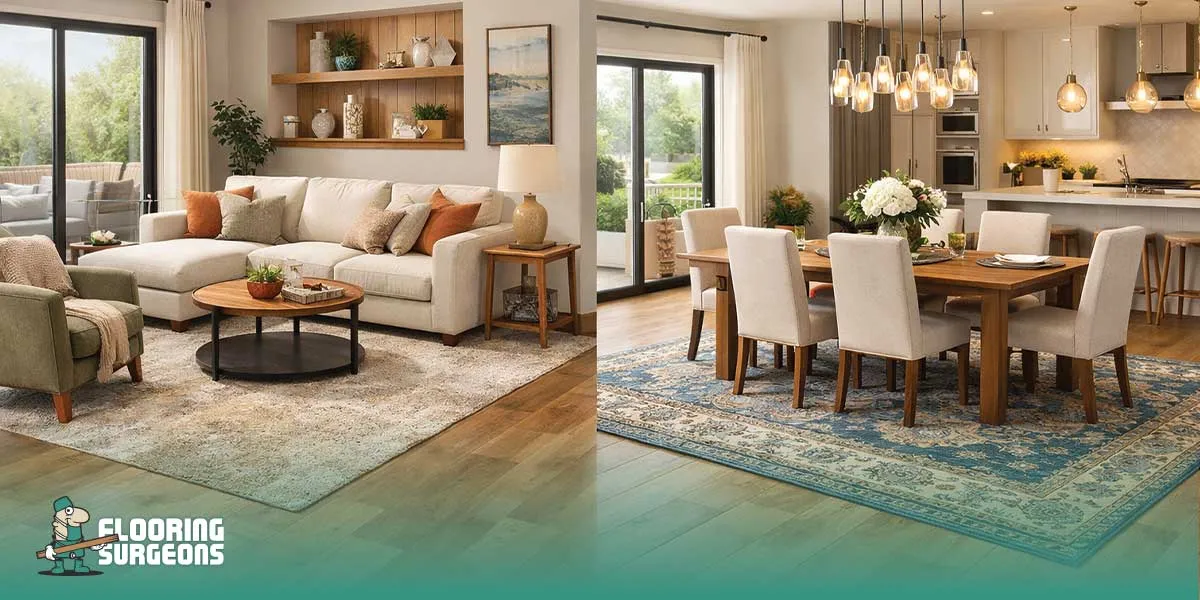
In open-plan homes, the biggest challenge is not choosing furniture or colours. It is making each area feel clearly defined without adding walls or breaking the flow. The most effective way to do this is by using rugs strategically.
A rug can instantly create a visual boundary, anchor furniture, and signal the purpose of a space. For example, placing a rug under your sofa and coffee table defines the living area, while a larger rug beneath a dining table separates it from the rest of the room.
To make this work properly, three principles matter most. Each zone should have its own rug; it should be large enough to sit under key furniture, and its style or pattern should help distinguish one area from another without clashing. When these are applied correctly, the space feels organised, intentional, and easy to navigate.
However, small mistakes can undo this effect. Rugs that are too small, poorly aligned, or visually competing with the flooring can make the entire layout feel fragmented or chaotic rather than cohesive.
In the rest of this guide, you will learn exactly how to position rugs, choose the right sizes, and use patterns to define each zone clearly while keeping the overall design balanced and visually calm.
Table of contents
The 3-Zone Rule: How to Structure an Open-Plan Space Using Rugs
Instead of guessing where rugs should go, it helps to think in terms of structure. Most well-designed open-plan homes follow a simple but effective principle. The space is divided into three types of zones, and each rug supports one of them.
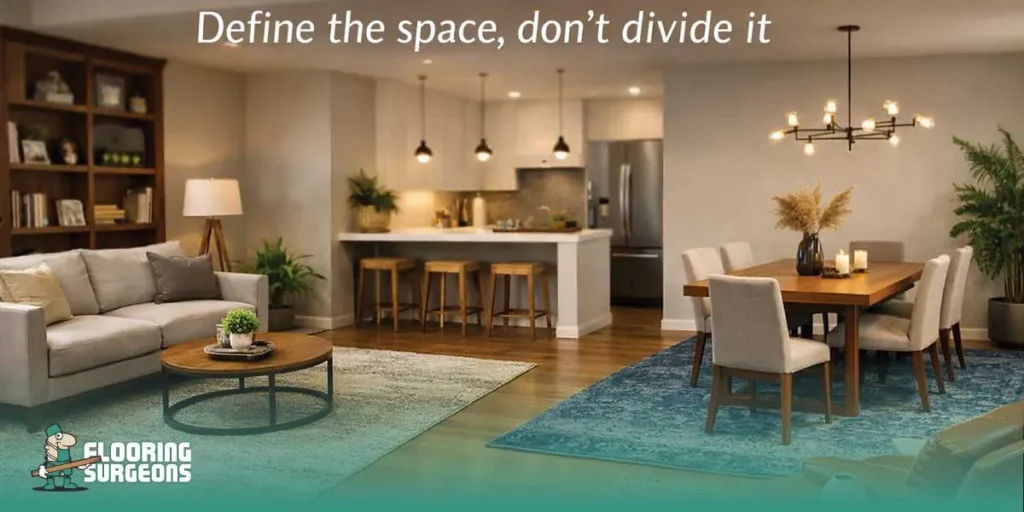
- Anchor the Living Area With a Rug That Visually Holds Everything Together
The living area is almost always the focal point, so this is where your main rug needs to do the heaviest lifting. It should visually “lock” the seating arrangement into place so it reads as one cohesive area rather than separate pieces.
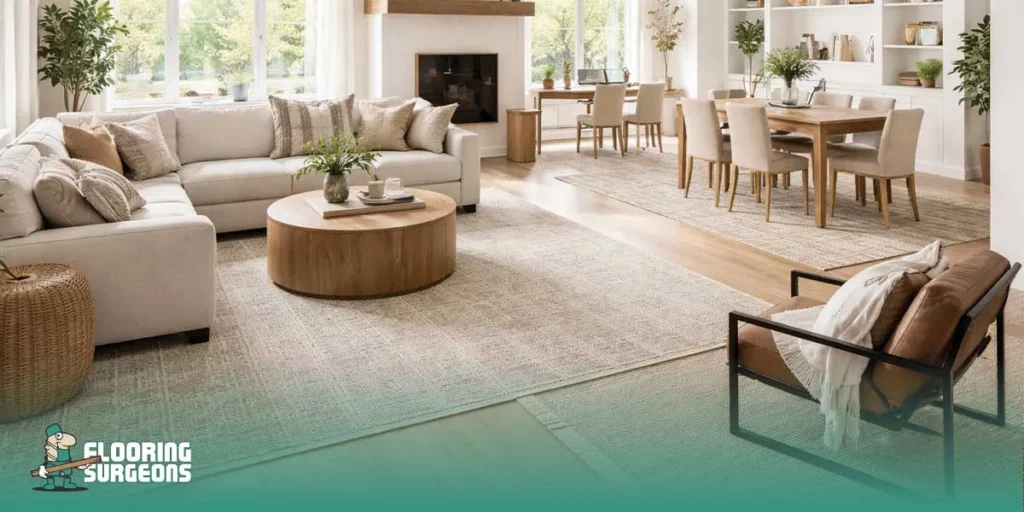
If you removed the rug, would the furniture still feel connected?
To achieve that sense of connection:
- The rug should reach under at least the front legs of sofas and chairs.
- In larger spaces, extending under all furniture creates a stronger anchor.
- The rug should feel proportionate to the seating area, not lost within it.
This is also where flooring and furniture placement starts to matter, because the rug can only define the seating zone properly if the layout beneath it already feels balanced. When this is done well, the eye immediately understands where the living space begins.
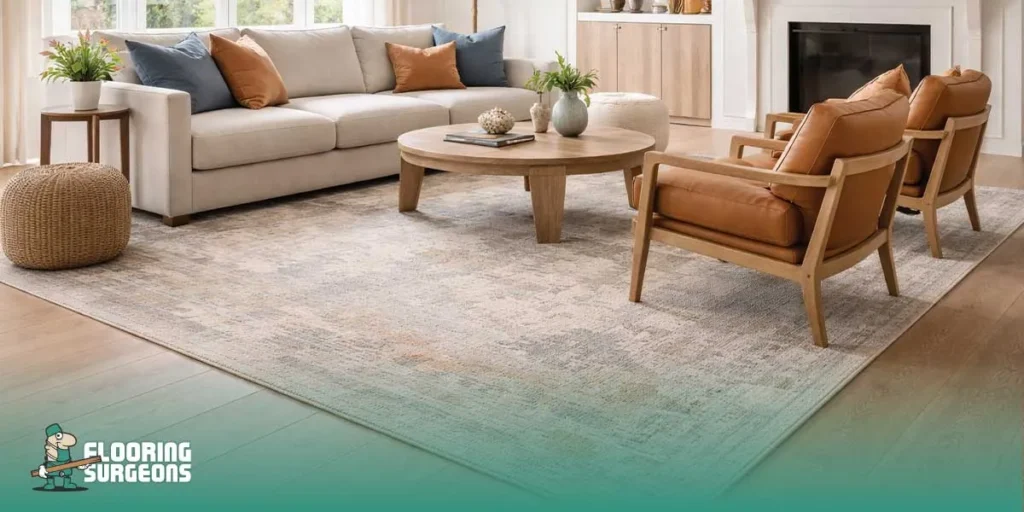
- Define the Dining or Work Area With a Rug That Supports How the Space Is Used
Unlike the living area, this zone is driven by function. The rug here is not just about appearance. It needs to make everyday use feel smooth and logical. If the rug impedes movement, it is working against the space rather than defining it.
For dining areas, the key is clearance:
- The rug should extend far enough so that chairs stay on it when pulled out.
- The edges should not sit too close to the table.
For workspaces:
- The rug should clearly frame the desk area.
- It should not visually merge into nearby zones.
This creates a natural shift in purpose without needing any physical separation.
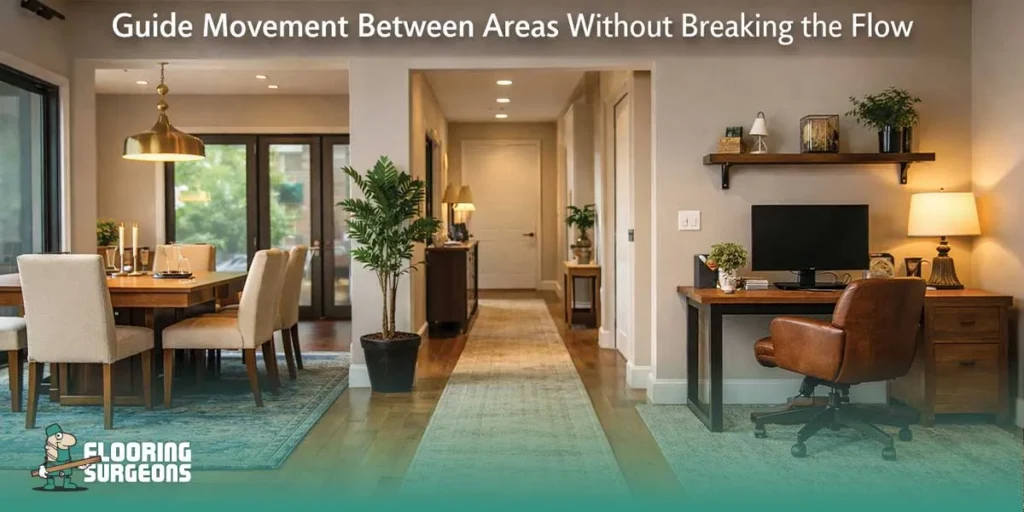
- Guide Movement Between Areas Without Breaking the Flow
The transition areas connect everything, yet they are often ignored. These are the paths people naturally follow as they move through the room. Getting this right matters more than it seems, because even well-defined zones can still feel disconnected when the overall room-to-room flow in layout and flooring has not been properly considered.
Instead of leaving them undefined, a subtle rug can help guide that movement. What works best here is restraint:
- Use runners or smaller rugs only where they make sense.
- Keep patterns or colours more understated than the main zones.
- Align rugs with the direction of movement rather than against it.
If overdone, this area becomes cluttered. If done right, it quietly improves the flow of the entire space.
Rug Placement Rules That Actually Work in Real Open-Plan Layouts
Once the zones are clear, placement becomes the difference between a space that feels designed and one that feels accidental. The goal is not just to place a rug, but to make it interact correctly with the furniture around it.
Living Room Rug Placement That Instantly Makes the Space Feel Cohesive
In living areas, the biggest mistake is choosing a rug that is too small or not well-connected to the furniture. The rug should act as the foundation of the seating area, not as an accessory placed in front of it.
There are two common approaches, but only one works in most cases:
- A rug that holds the front legs of seating is the most practical and widely used solution.
- A rug that floats in the centre often makes the space feel incomplete.
In most open-plan homes, the second option strikes the right balance between proportion and practicality. It connects the furniture clearly without demanding excessive floor coverage.
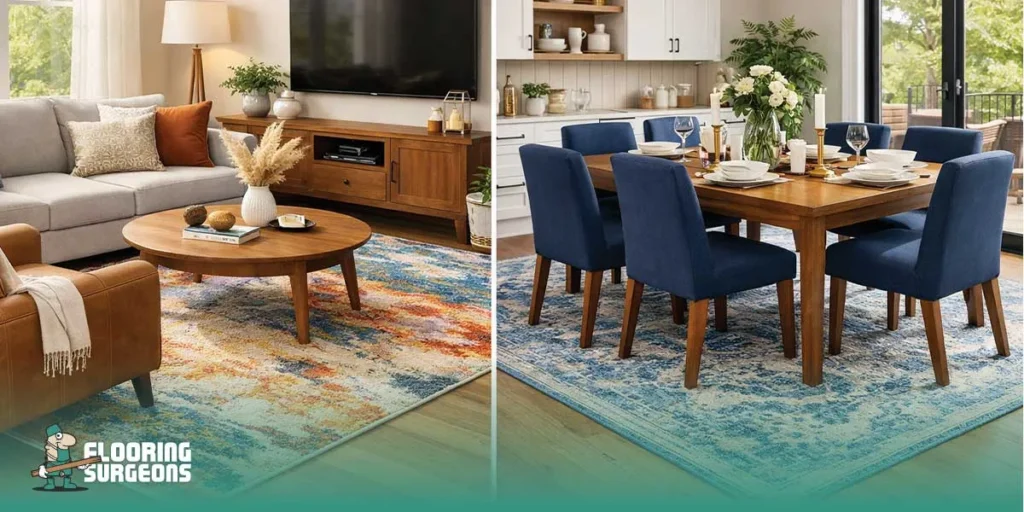
Dining Area Rug Placement That Prevents the Space From Feeling Awkward
Dining areas are where poor rug placement becomes immediately noticeable. Even a well-styled space can feel uncomfortable if the rug does not support how the area is used. The simplest way to get it right is to think beyond the table itself.
The rug should extend at least 60 cm beyond all sides of the table. This ensures that:
- Chairs remain stable when pulled out.
- The dining zone feels properly framed.
- The layout does not appear cramped or restrictive.
If the rug is too close to the table, the entire setup feels off, even if everything else is well-designed.
Using Rugs to Define Sleeping Areas in Open or Studio Layouts
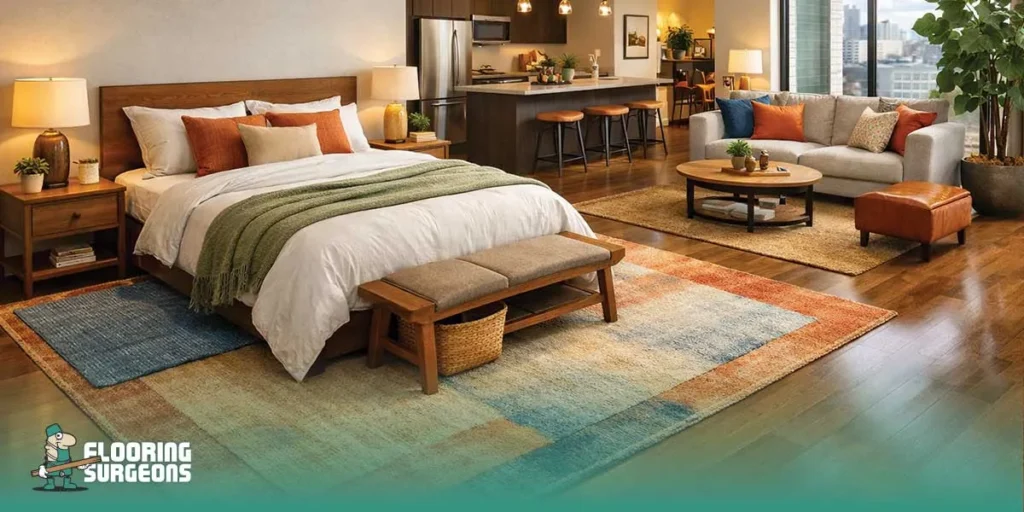
When a sleeping area sits within an open plan layout, the aim is not to fully separate it, but to give it enough presence to feel intentional. The most effective approach is to let the rug extend beyond the bed, rather than trying to place it entirely around it. This creates a base that visually grounds the bed while still allowing the space to feel open.
You can also:
- Use side rugs to subtly frame the bed area.
- Choose softer textures to differentiate this zone from more active areas.
- Avoid small, isolated rugs that do not connect to the bed footprint.
Rug Size and Proportion: Why the Wrong Scale Breaks the Entire Layout
Most open plan spaces do not fail because of furniture or colour. They fail because the rug is the wrong size.
A rug that is too small makes each zone feel disconnected. Proportion is what determines whether a space feels intentional or accidental. A simple way to judge it is this. The rug should feel like it belongs to the furniture, not just the floor.
Rug Size and Placement by Area in Open-Plan Spaces
| Area | Common Mistake | Correct Rug Proportion |
| Living Room | Rug too small, floating in centre | Front legs or all furniture on the rug |
| Dining Area | Rug stops at table edge | At least 60 cm extension on all sides |
| Open Layout | Rugs overlapping or misaligned | One rug per zone, clearly separated |
| Bedroom Zone | Small rugs beside bed only | Large rug partially under bed extending outward |
This is where many open-plan layouts fall short. The rug is treated as a decorative piece, when in reality it should define the space’s structure. If the eye cannot immediately recognise where one zone begins and ends, the proportions are off. Getting this right is not about exact measurements. It is about visual balance.
Using Patterns to Visually Separate Spaces Without Adding Clutter
In open-plan homes, size defines the boundary, but pattern defines the identity. Two rugs can be the same size and still create completely different zones simply through pattern and tone. This is what allows you to separate spaces without making them feel disconnected.
This becomes even more important when you are choosing the right patterned flooring, because the direction, scale, and contrast of the floor itself can either support or completely disrupt how rugs define each zone.
Choosing Between Bold and Neutral Rugs Based on the Role of Each Zone
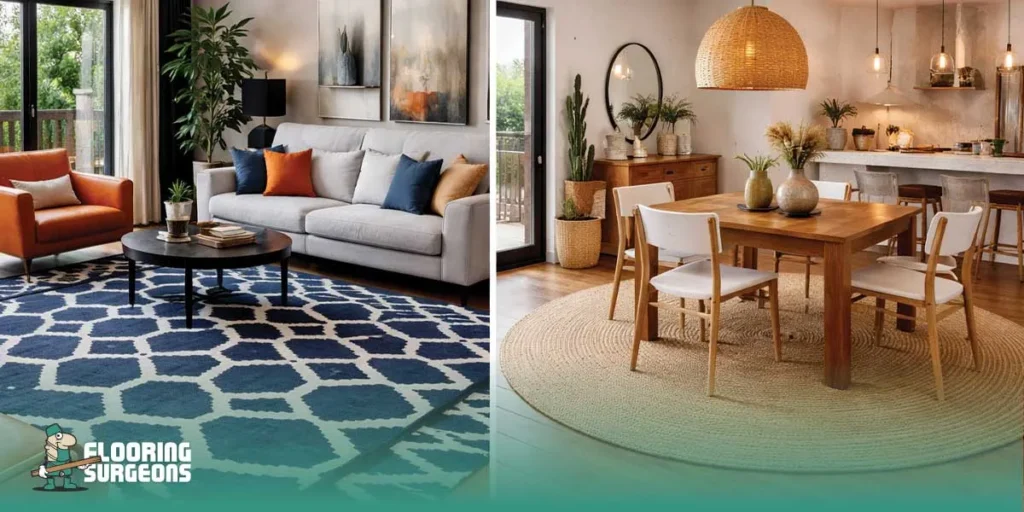
Not every zone should compete for attention. The key is contrast with control. If the living area is your main focal point, a rug with a stronger pattern or deeper tone can anchor it visually. This draws the eye and gives the space a sense of importance. In contrast, the surrounding zones should be quieter, supporting rather than competing with one another.
A useful way to approach this is:
- one dominant rug that leads the space
- supporting rugs that soften the surrounding zones
When everything is bold, nothing stands out. When everything is neutral, nothing is defined. The balance between the two is what creates clarity.
Aligning Rug Patterns With Flooring Direction to Avoid Visual Conflict
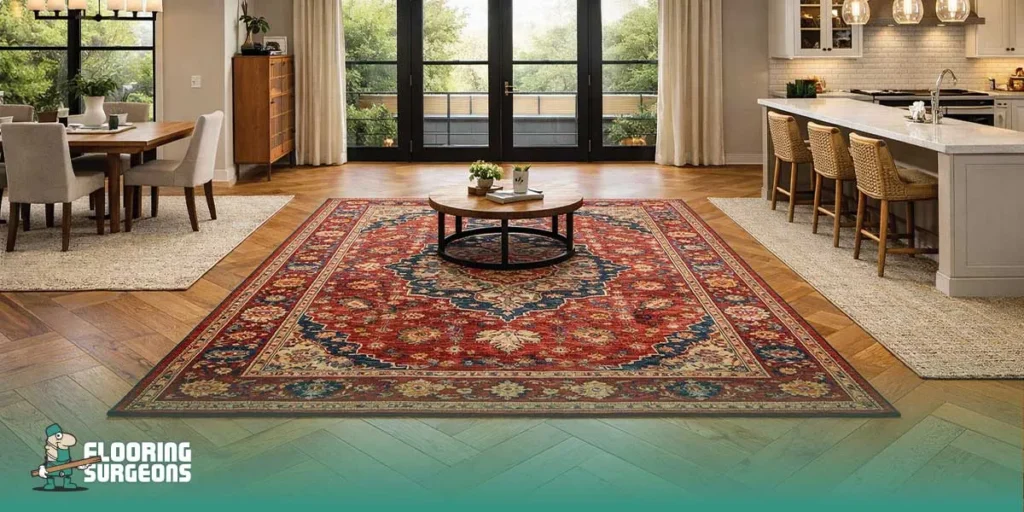
This is where most layouts quietly go wrong. At Flooring Surgeons, this is one of the most common issues we see in open-plan homes where rug selection does not align with the direction or character of the flooring. Flooring already has direction, especially in layouts like planks or patterned installations. When a rug introduces a conflicting direction, the result can feel visually unsettled even if the colours match.
To avoid this:
- If the flooring has a strong direction, use rugs that either complement or deliberately contrast in a controlled way.
- Avoid placing highly directional rugs against complex flooring patterns that already draw attention.
- In patterned floors such as chevron or herringbone, simpler rugs often create better balance
At Flooring Surgeons, we often see that the interaction between rug pattern and floor design is what determines whether a space feels refined or chaotic.
Matching Rugs With Your Flooring Type to Keep the Space Cohesive
The relationship between rugs and flooring is often overlooked, yet it plays a major role in how balanced an open-plan space feels.
Choosing Rugs That Sit Comfortably on Laminate Flooring
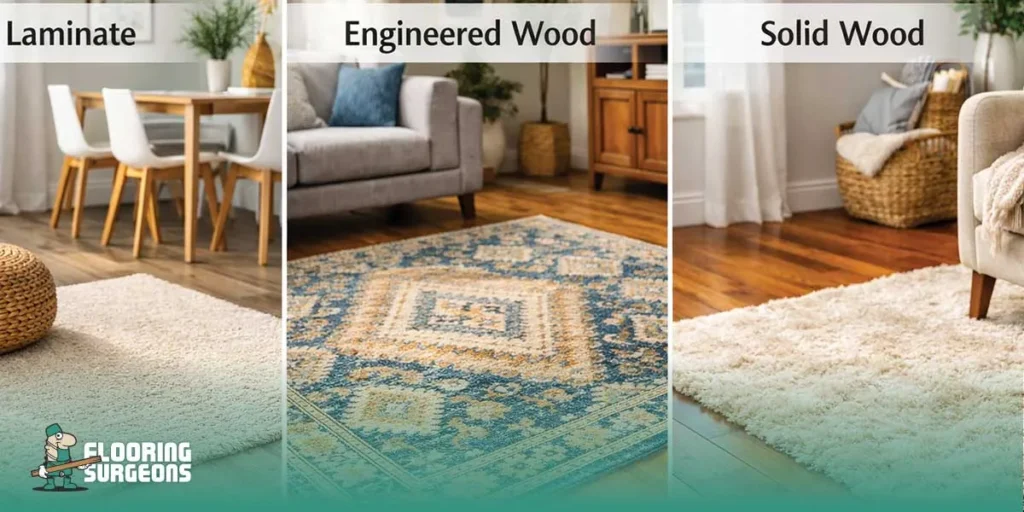
Laminate flooring often has a consistent, uniform appearance. This makes it versatile, but also means rugs need to add character without overwhelming the surface. Neutral or lightly textured rugs tend to work best here, as they introduce variation without clashing with the clean look of laminate flooring options.
Pairing Rugs With Engineered Wood Flooring for a Balanced Finish
Engineered wood flooring usually has more natural variation in tone and grain. Rugs should complement this rather than compete with it. Mid-tone rugs or subtle patterns help maintain balance while still defining zones clearly within the space.
Using Rugs to Soften and Complement Solid Wood Flooring
Solid wood flooring carries a strong, natural presence. Rugs in this setting should soften the space rather than dominate it. Softer textures, muted colours, and less aggressive patterns tend to work better, allowing the floor to remain a key feature while still supporting zoning.
Avoiding Pattern Clash on Chevron and Herringbone Floors
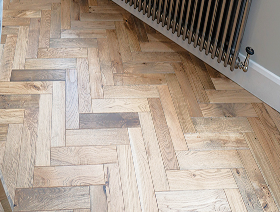
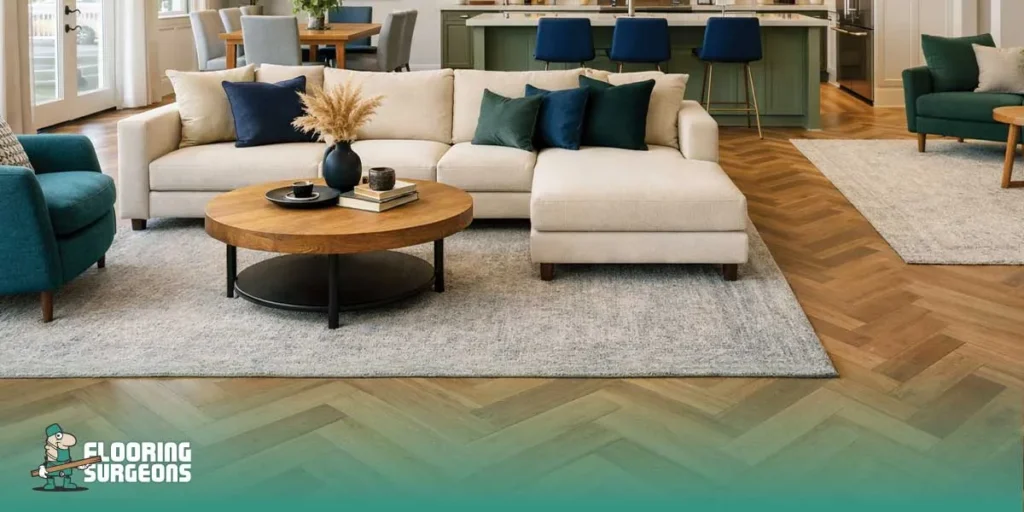
Chevron and herringbone floors already introduce movement and direction into a space. Adding a highly patterned rug on top can easily create visual overload. In most cases, simpler rugs with minimal pattern or softer contrast provide a more balanced result, allowing the flooring to remain a feature rather than a background.
Making Flexible Rug Choices on Luxury Vinyl Flooring
Luxury vinyl flooring, or LVT, offers a wide range of finishes and styles. This flexibility means rugs can be used more creatively without as much risk of conflict. This is why many open-plan layouts are built around more adaptable materials, and why exploring luxury vinyl flooring options often becomes a natural next step when flexibility, durability, and visual balance all need to work together. Both bold and neutral rugs can work here, as long as they still follow the core principles of clearly defining zones and maintaining proportion within the layout.
Final Takeaway: How to Make Open Spaces Feel Intentional and Cohesive
Defining space in an open plan home is not about adding more elements. It is about making each element work harder. When rugs are chosen with the right size, placed in relation to furniture, and balanced against flooring and pattern, they create a structure that the eye can easily understand. Each zone feels distinct, yet connected to the whole.
If there is one principle to remember, it is this. A rug should never feel like an afterthought. It should feel like the foundation of the space it defines.

Haniye Ayanmanesh
As an expert writer for Flooring Surgeons, I combine technical SEO knowledge with a practical understanding of flooring, producing content that helps users make confident decisions while supporting long-term organic growth.