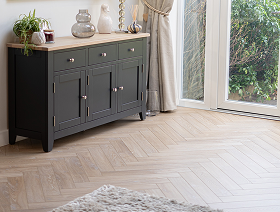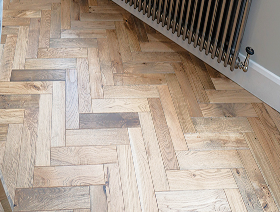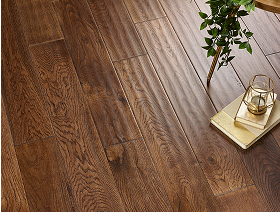
3D printed floors are created using additive manufacturing techniques rather than traditional means of production. Instead of cutting or shaping your floor, your floors are built one layer at a time. This opens up design options that are incredibly detailed and customised allowing unique shapes textures and patterns that may not be possible with traditional flooring types. As more and more people are dipping their toes into the world of 3D printed floors, we begin to see a larger question being asked. Is 3D printed flooring the future of homebuilding or is it just a novelty?
We’ll cover how 3D printed floors are made, where they shine against traditional building materials and where they fall short.
Table of contents
What Is 3D Printing in Home Design and How Does It Work?
3D printed flooring refers to floors made by additive manufacturing process. Instead of cutting, pressing or assembling traditional materials into flooring materials, a printer is used to create layers upon layers of flooring material until the desired thickness is achieved. Guided by a computer model, the printer allows for fine precision and allows curves, texture, and design previously impossible or very difficult with traditional manufacturing processes. Composite materials and polymers can be mixed to achieve strength without adding bulk or excess material, minimizing waste. Floors can be created to the dimensions of your space ensuring a perfect fit every time.

Pros and Cons of 3D Printed Flooring
As is the case with many building materials in their infancy, there are distinct pros and cons to using 3D printed flooring. Check out the table below to see where it shines and where it falls short.
| Advantages | Limitations |
| Allows highly customised patterns, textures and surface designs | Industrial‑scale printers are still expensive to operate |
| Uses material more efficiently, which can reduce production waste | Large floors may need to be printed in multiple sections |
| Digital production enables precise and consistent results | Long‑term durability of some printed materials is still being tested |
| Custom designs can be produced without moulds or complex tooling | Installation methods are not yet widely standardised |
| Offers flexibility in materials and structural design | Limited availability in the current flooring market |
How Does 3D Printed Flooring Compare to Traditional Materials?
3D printed flooring differs from your typical choices in several ways. Established materials are dependable, readily accessible and refined for strength. Then there are digital designs with increased creative potential. It’s not so much a matter of one floor being “better” than another but which floor is right for your needs, budget and schedule.
Here are some of their pros and cons in practice:
- Traditional options like laminate and vinyl are reliable, easy to install, and have stable pricing.
- 3D printed flooring gives you more freedom to customize textures and patterns that aren’t possible with traditional boards.
- Engineered flooring still has the upper hand for overall durability, particularly for high traffic areas.
- 3D printing decreases waste, but hasn’t reached the same price or speed point as traditional flooring made in high volumes.
Whether you should choose 3D printed flooring or traditional materials really depends on your needs. For the average home, traditional flooring is the way to go. 3D printed floors work best in homes that value unique design or for spaces you want to use as a design experiment.
Real‑World Use Cases of 3D Printing in Home Design
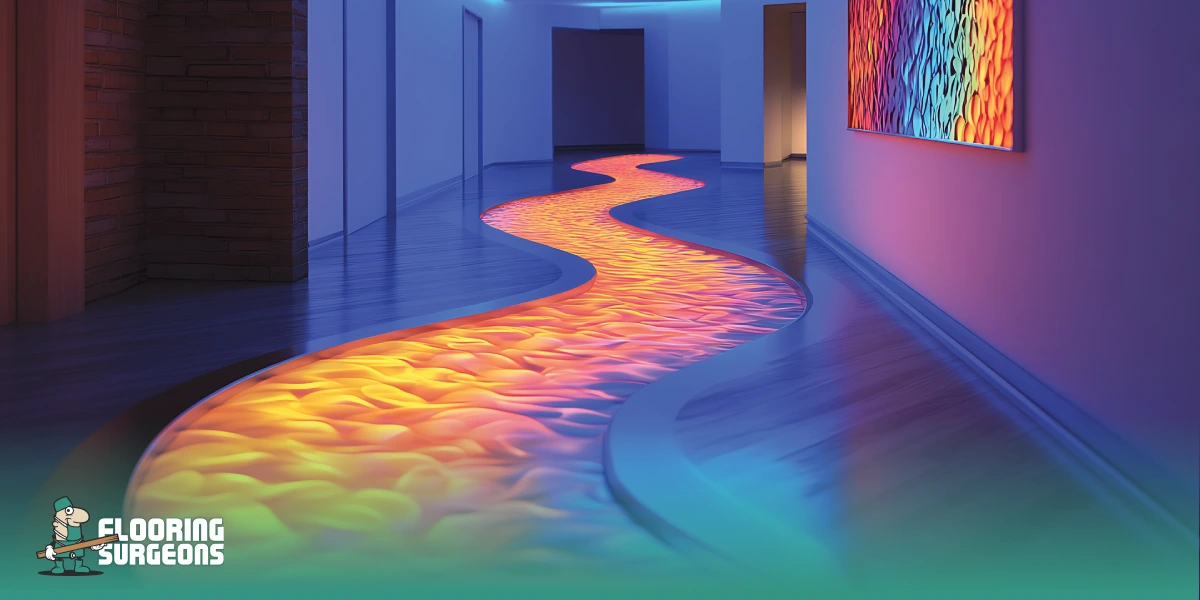
Despite being fairly new to the scene, 3D printed floors are being used on design‑centric projects that require custom geometry, experimental textures or rapid prototyping. Architects and interior designers have adopted it for the most part, playing around with surfaces that can’t be replicated with traditional materials. There’s an allure to shaping the floor to perfectly suit the space, without depending on moulds or pre‑defined patterns or large machinery.
One recent project involved the renovation of a small photography studio space in London. The designer specified a floor with an undulating form that would cast subtle shadows, helping him manage reflections during photo shoots. This texture couldn’t be achieved with laminate, vinyl or even polished concrete. The design was digitally modelled and printed in segments then assembled to create one continuous surface. The effect isn’t just beautiful–it actually alters the lighting conditions in the room, providing an intuitive benefit to the studio space. This is just one example of 3D printed flooring evolving from design experiment into a versatile solution for designers looking to craft unique environments.
How Soon Could 3D Printed Flooring Become Mainstream?
It’s difficult to pinpoint exactly when 3D printed floors will become as commonplace as laminate flooring or luxury vinyl, but the trend is definitely shifting. As it stands, the tech resides in that weird limbo stage – revolutionary enough to pique interest, but too costly and niche for the average household.
Of course, rarely do things stay like that. Large‑format printers become faster and less expensive, manufacturers experiment with stronger composites which bring the cost down… and before you know it, installation is a “click‑and‑fit” affair instead of requiring customization. When that happens, adoption takes off. History repeats itself with things like engineered flooring, which was once niche before quickly becoming ubiquitous.
Some designers reckon we are five-to-seven years away from seeing floors offered as a premium product that can be 3D printed – not necessarily replacing traditional materials, but sitting alongside them proudly. And if home owners keep demanding even greater personalisation… who knows, maybe it’ll happen sooner.

What Should Homeowners Consider Before Choosing 3D Printed Flooring?
Despite its promise, 3D printed flooring isn’t a magic solution. Consumers interested in the process should look past novelty textures and consider the real life applications for their home. All spaces have different needs—from foot traffic and sun exposure to moisture—and 3D printing will perform differently than traditional materials.
Price remains the largest obstacle. While costs will come down, many current implementations require custom printers and made‑to‑order fabrication that inherently drive up prices. Installation is another area worth discussing. Some tiles will interlock together like a grid of floor tiles. Others require more careful installation if your pattern includes odd angles or embossing.
And then there is longevity. With composite decking being relatively new, it doesn’t have the decades of field-testing data that laminate, vinyl and engineered decking can provide. If you want a product that you know for sure how it will age, then consider “playing it safe”.
Put simply, selecting a 3D printed floor isn’t trendy–it’s understanding if customization, performance, or both are important to your space.
Where Could 3D Printed Flooring Fit in the Future of Home Design?
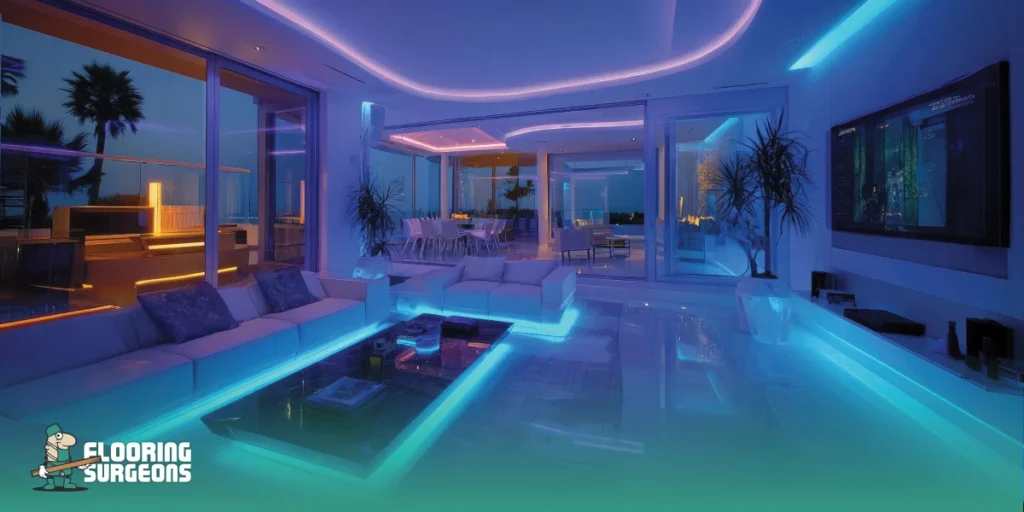
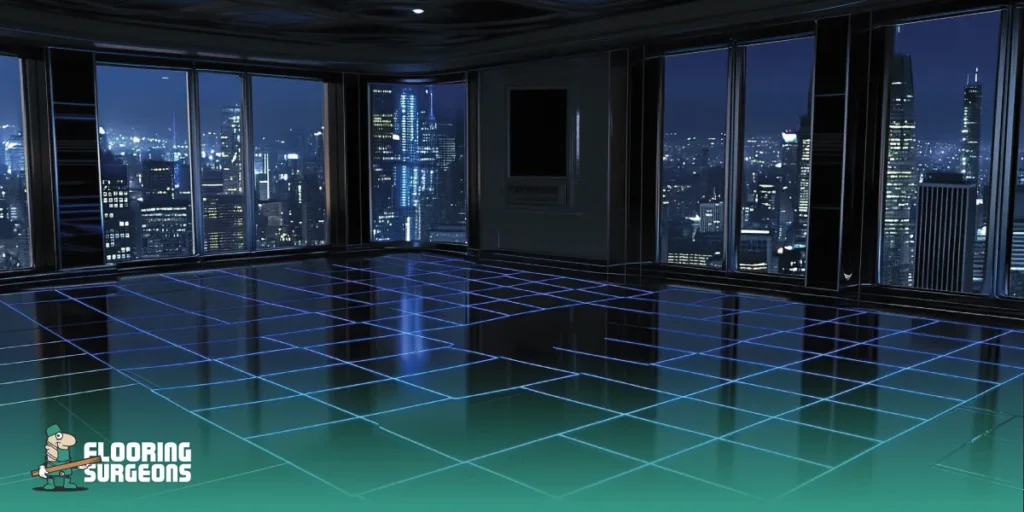
Slowly but surely, 3D printing is beginning to affect designers’ attitudes towards materials. Designers may soon move beyond looking at standard catalogues of preset colours and textures. Instead, homeowners might someday design their floor from scratch, customising the pattern or embossing it with grip textures or barely-there gradients that take room use into account.
Why Traditional Materials Still Lead
Change won’t happen overnight. Traditional materials will continue to win the day due to their established track record, availability, and affordability. Countless homeowners will still opt for the reassurance of materials that offer high‑end looks paired with tried-and-true functionality. Luxury Vinyl Flooring is a prime example—it remains popular for its lifelike design, water resistance, and proven durability that innovative products have yet to replicate.
The Most Likely Early Adopters
Short-term applications of 3D printed flooring will likely be strongest in high‑customisation projects: architect-designed one‑offs, luxury design residences, showrooms or other spaces that demand unique shapes and bespoke surfaces. Printer speed will increase and economies of scale will drive down costs as the technology develops, becoming more affordable for residential use.
Coexistence, Not Replacement
The important question for homeowners may not be if 3D printed floors will become commonplace, but how traditional materials can work in conjunction with them. Planning flexibility – floorplans that can be easily upgraded – will become more important than picking one material and sticking with it for all time. Discover long‑term solutions that won’t limit tomorrow’s possibilities in our guide How to Future-Proof Your Flooring.
Conclusion: Is 3D Printed Flooring the Future?
We can see the potential of 3D printed floors especially when customized solutions and architectural feats are concerned. However, this technology is still far off from being able to service most homes practically.
Old-school materials are tried and true for reason: they’re durable, readily-available, and easy to work with. While better printing tech will help bring 3D printed floors into the mainstream in time; as prices go down, expect this shift to be slow rather than floors suddenly popping up overnight.

Ana.Soltanpoor
I’m an SEO Specialist with a strong background in content management and organic search. I build data-driven content strategies by aligning user intent, search behavior, and SEO best practices to ensure every piece of content delivers clarity, relevance, and measurable organic performance.