


Learning how to make a room look bigger with flooring is one of the smartest ways to transform a tight space without major renovation. Flooring has a powerful visual impact: the right colour, texture, and direction can make a room feel wider, taller, and brighter. Whether you want a more open living room, a more spacious bedroom, or even wonder how to make a small bathroom look bigger with flooring, the techniques below help you create a cleaner, more expansive look with minimal effort.
To make planning easier, this guide brings together practical flooring strategies, quick fixes, and smart colour choices, all designed to help small rooms feel larger and more inviting.
Table of contents
How to Make a Small Room Look Bigger Through Your Flooring
Flooring is one of the largest visual surfaces in any room, so small changes here create big improvements. Choosing long planks, brighter tones, and consistent flooring from room to room helps eliminate visual breaks and makes the space appear more continuous.
If you are comparing materials, understanding the cost of engineered flooring can help you select an option that fits both your design goals and your budget. Engineered wood, laminate, and luxury vinyl all offer long, wide planks that visually stretch small spaces.
Light surfaces, such as White Laminate Flooring, naturally increase brightness, while neutral wood tones work well for both large and small rooms. If you enjoy exploring bold styles, you can also find inspiration in guides like 5 Ideas for Styling Black Flooring in Your Home, which show how dark floors can still feel spacious with the right decor.
No matter your style, consistent flooring across adjoining spaces reduces chopped-up visuals and makes your home feel unified and larger overall.
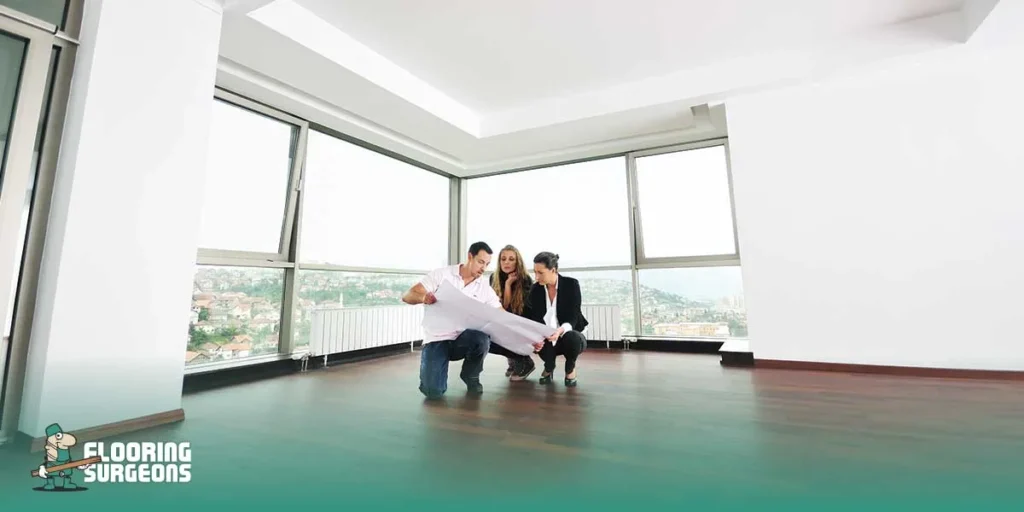
10 Quick Fixes to Make a Small Room Look Bigger
Even without a full renovation, small rooms can feel noticeably larger with a few intentional changes. These quick fixes work together to expand visual space, increase light, and reduce clutter — making your flooring design even more effective.
1. Use Long, Wide Planks
Long and wide planks visually extend the floor, creating a continuous flow that stretches the room. The fewer seams your flooring has, the less “busy” it appears, which reduces visual fragmentation. This technique works exceptionally well in narrow bedrooms and hallways where proportions feel tight.
2. Lay Planks Parallel to the Longest Wall
Orientation is often overlooked, but it makes a dramatic difference. Placing planks parallel to the longest wall draws the eye outward, increasing perceived length. In square rooms, choose the wall with the most natural light to maximize brightness and openness.
3. Choose Light or Neutral Flooring
Light flooring such as pale oak, beige, cream, and soft grey reflects more light and prevents the room from feeling closed in. These tones brighten corners, open up dark edges, and make the walls appear farther apart. Light floors also pair well with minimalist decor to keep the space feeling airy.
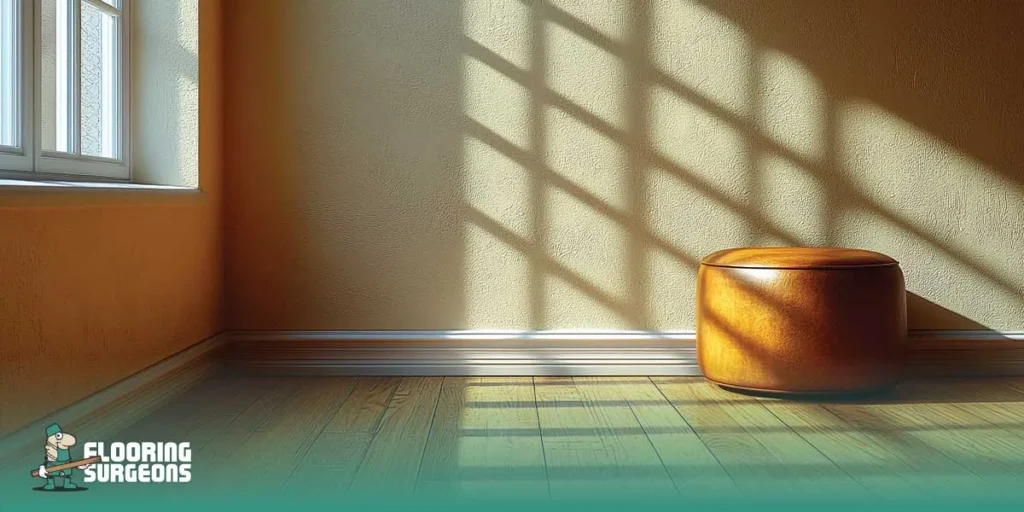
4. Reduce Clutter to Expose More Flooring
The more flooring you can see, the bigger the room looks. Remove unnecessary Furniture, replace bulky pieces with streamlined designs, and use closed storage to hide everyday items. Even small habits like keeping shoes, cables, and baskets off the floor make a noticeable difference. If you’re planning a remodel and want to understand how different materials affect both space and budget, exploring the cost of engineered flooring can also help you choose an option that supports a cleaner, more open layout.
5. Choose Furniture with Legs (Raised Furniture)
Raised Furniture increases the amount of visible floor area, creating openness underneath pieces like sofas, cabinets, and beds. This breathing space makes the room feel lighter and prevents bulky Furniture from overwhelming the floor plan.
6. Use a Low-Contrast or Transparent Rug
A rug that closely matches your flooring tone adds softness without interrupting the flow. Low-contrast or natural woven rugs help blend with the floor, unlike bold, patterned rugs that visually divide the space. This trick is especially effective in living rooms with light wood or laminate.
7. Avoid Busy Patterns on Floors
Bold flooring patterns or heavy wood grain can create visual noise and make small rooms feel chaotic. Instead, select subtle textures with soft, even patterns. Consistency keeps the eye moving calmly across the space, increasing the perception of spaciousness.
8. Use Mirrors to Reflect the Flooring
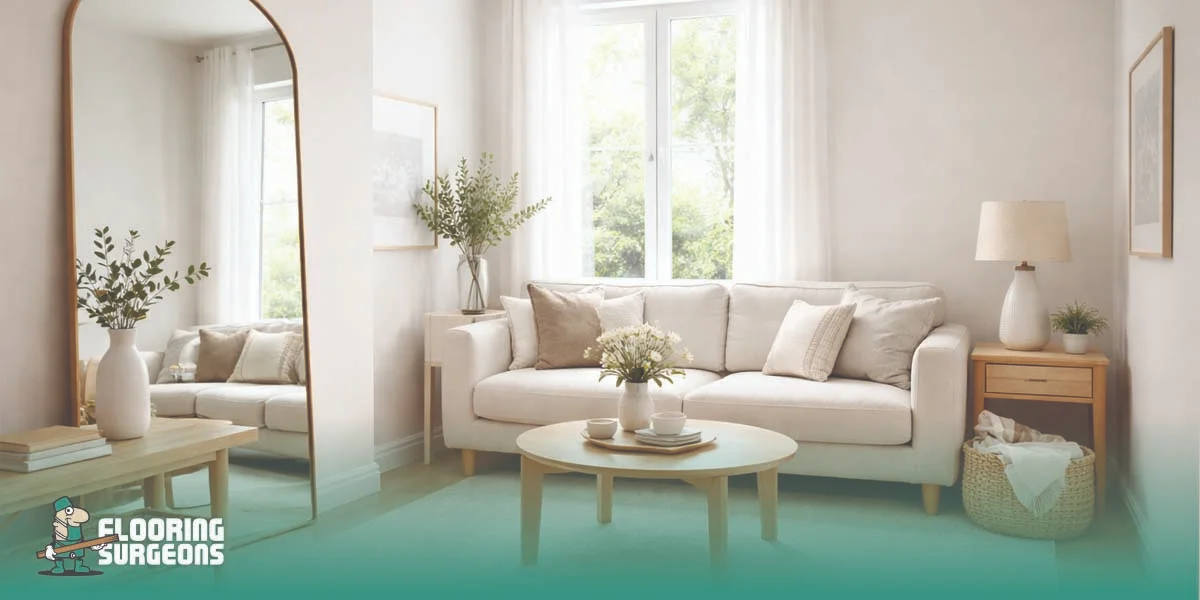
Mirrors double the visible floor area by reflecting your flooring’s surface. When placed opposite windows, they amplify natural light and make the room feel wider and taller. Floor mirrors and oversized wall mirrors have the strongest impact.
9. Extend the Same Flooring Into Adjacent Areas
Using one continuous floor across multiple rooms blurs boundaries and eliminates visual breaks. This creates a “flow effect” where the eye reads several areas as one larger space. It’s one of the most powerful tricks for modern open-concept homes.
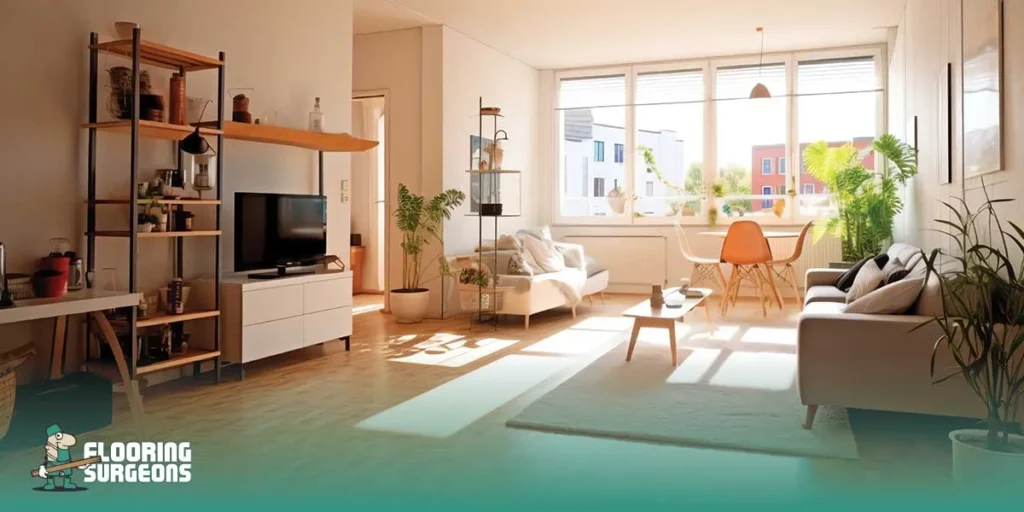
10. Keep Your Colour Palette Minimal
A clean, cohesive palette avoids visual overload. Choose two or three complementary tones and repeat them through flooring, walls, textiles, and decor. Minimal colour variation maintains unity and helps the room feel open rather than divided. Light, low-contrast surfaces such as White Laminate Flooring are especially effective because they blend smoothly with neutral wall colours and enhance the visual openness of the entire room.
Quick Review Table: 10 Ways to Make a Small Room Look Bigger
| Tip | How It Helps | Best For |
| Long, Wide Planks | Reduces seams and expands visual length | Hallways, narrow rooms |
| Plank Layout Parallel to Longest Wall | Draws the eye outward and elongates space | Bedrooms, living rooms |
| Light or Neutral Flooring | Reflects light and opens up dark corners | Small, dim rooms |
| Decluttering | Exposes more floor and reduces visual noise | Any small room |
| Raised Furniture | Shows more floor and adds breathing space | Living rooms, bedrooms |
| Low-Contrast Rug | Creates softness without breaking visual flow | Living rooms, offices |
| Avoiding Busy Patterns | Keeps the eye calm and space unified | Small bedrooms, kitchens |
| Mirrors | Reflect floor and light to double openness | Living rooms, entryways |
| Continuous Flooring | Removes boundaries between rooms | Open floor plans, multi-room layouts |
| Minimal Colour Palette | Maintains unity and prevents division | Any compact space |
What Colours Make a Small Room Look Bigger?
Colour dramatically affects how large or small a room feels. Lighter tones open up space by reflecting more light, while low-contrast combinations prevent the eye from stopping at sharp transitions.
Shades like cream, pale grey, beige, and soft oak help visually stretch a room. Surfaces such as White Engineered Flooring offer a bright, seamless look that enhances openness and keeps the atmosphere clean and modern.
These tones pair well with light wall colours, simple decor, and minimal patterns. If you’re considering flooring to make space look bigger, staying within a soft, neutral palette delivers the most reliable results.
Final Thoughts
Understanding how to make a small room look bigger with flooring, and even how to make a small bathroom look bigger with flooring, comes down to controlling light, colour, flow, and visual simplicity. Long planks, light tones, and consistent flooring across rooms all help create an expanded, open feel.
With the right choices, any compact room can feel bright, balanced, and spacious. This guide has been prepared by flooring surgeons to help you transform small rooms into functional, inviting spaces using smart flooring strategies.

Mina Asgari
I’m an SEO Specialist and Content Strategist focused on sustainable business growth. I design data-driven content strategies by deeply analyzing user intent, search behavior, and SEO best practices, ensuring every piece of content serves a clear purpose for both users and search engines.