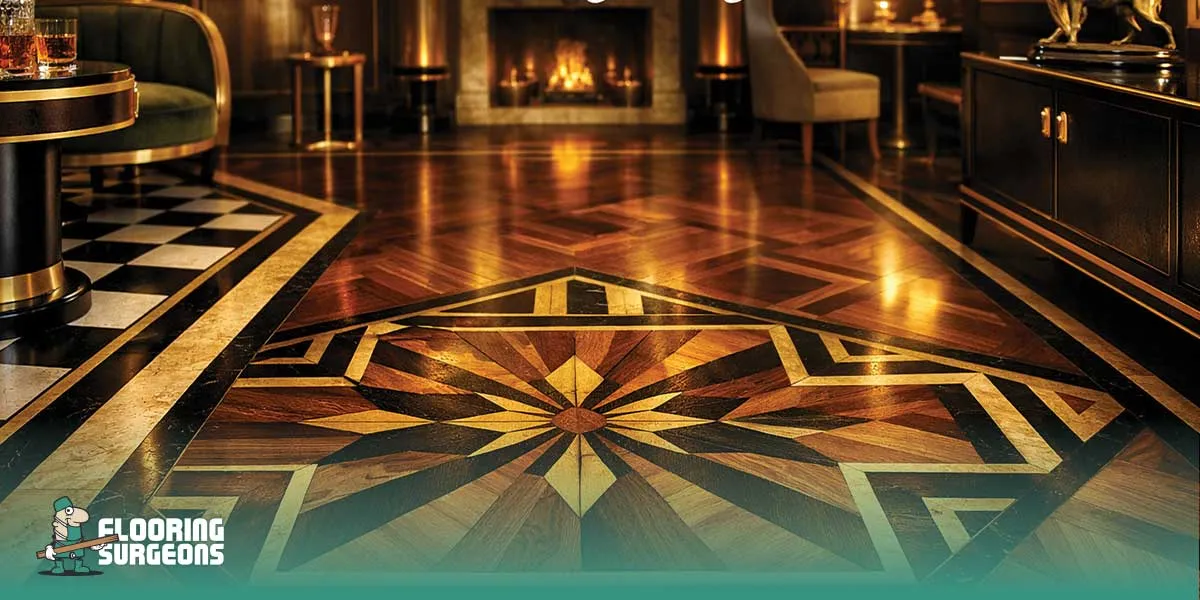
The 1920s were defined by confidence in design. Clean geometry, bold contrasts, and a sense of luxury that felt deliberate rather than excessive. But what often goes unnoticed is where that visual harmony truly began. Not with furniture, nor lighting, but from the ground up. Floors in the 1920s were not just surfaces. They were statements. Parquet patterns, checkerboard tiles, and symmetrical layouts shaped the entire character of a space.
Today, this iconic style is making a strong return. The challenge is not understanding how it looked, but knowing how to recreate it in a way that feels both authentic and practical. This guide breaks it down, focusing on the one element that defines it all: flooring.
Table of contents
What Defines 1920s Interior Design?
1920s interior design is defined by structured elegance, where geometry, symmetry, and material contrast work together to create a sense of order and luxury. Influenced heavily by Art Deco, this style relies on bold visual organisation, often beginning with the floor and extending through every layer of the space.
What Flooring Was Used in 1920s Homes?
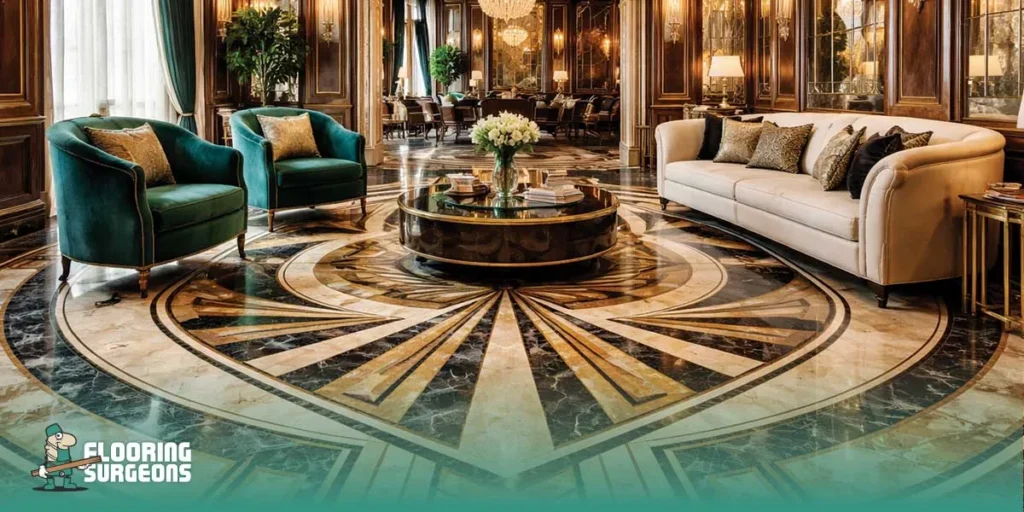
Flooring in 1920s homes was never just a background element. It defined how a space felt, how it was structured, and how every other design choice came together. From patterned wood layouts to bold tiled surfaces, floors were used to guide movement, frame furniture, and reinforce the symmetry that defined the era. Understanding these flooring choices is key if you want to recreate the look today in a way that feels authentic rather than decorative.
Why Flooring Was the Foundation of 1920s Interior Design?
In the 1920s, flooring was not a finish. It was the framework. Unlike modern interiors, where flooring is often chosen last, 1920s design began with it. The layout, symmetry, and even the placement of furniture followed the floor’s logic.
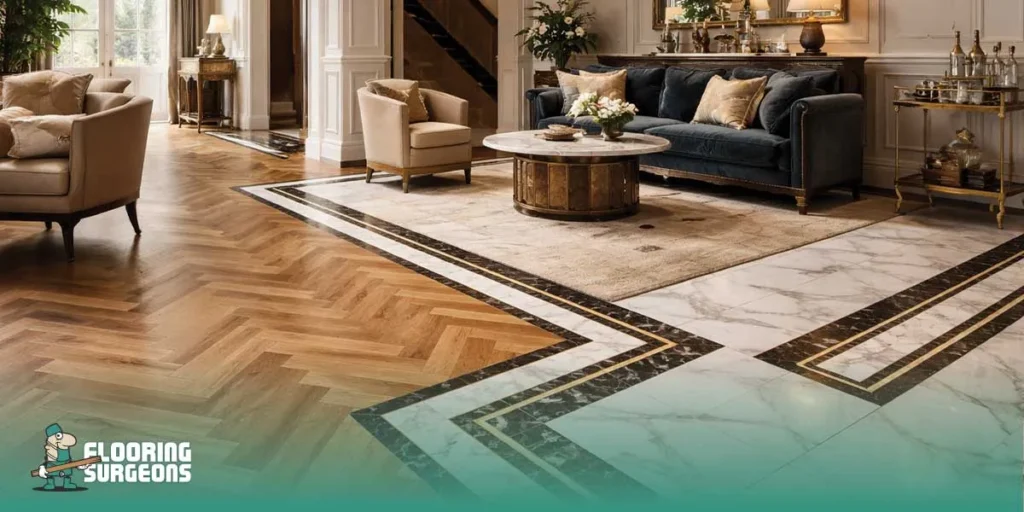
A patterned parquet layout could subtly direct how you moved through a space. A bordered tile design could define where one functional zone ended, and another began, without the need for walls. That principle still matters now, especially when using flooring to define zones in open-plan interiors where layout needs to feel clear without becoming rigid. This is exactly why many modern recreations fail. They copy the colours or furniture, but ignore the structural role of flooring. And without that foundation, the space never feels authentic.
Parquet Wood Flooring and Geometric Layouts
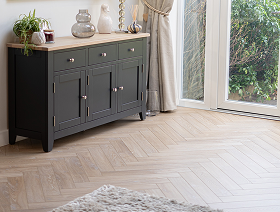
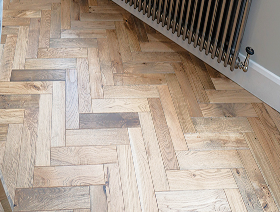
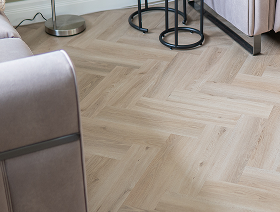
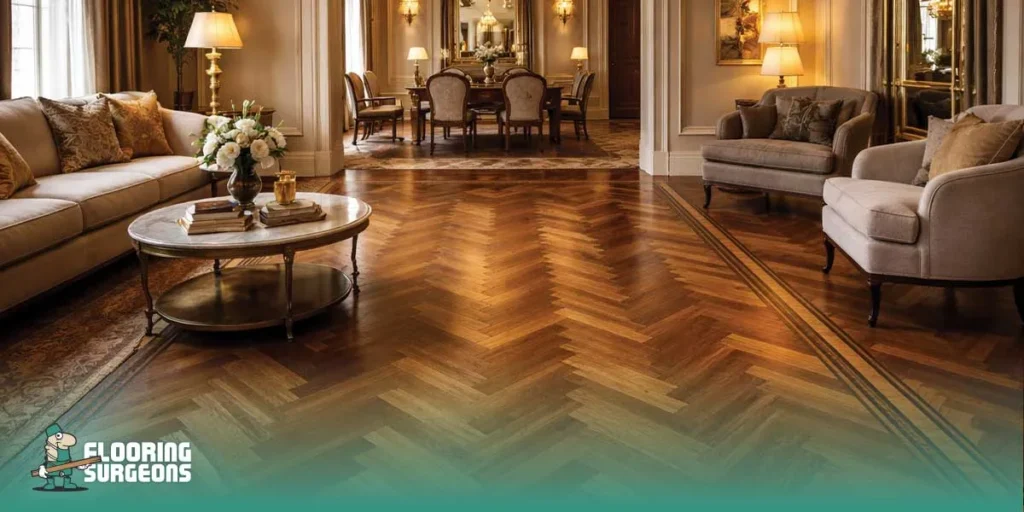
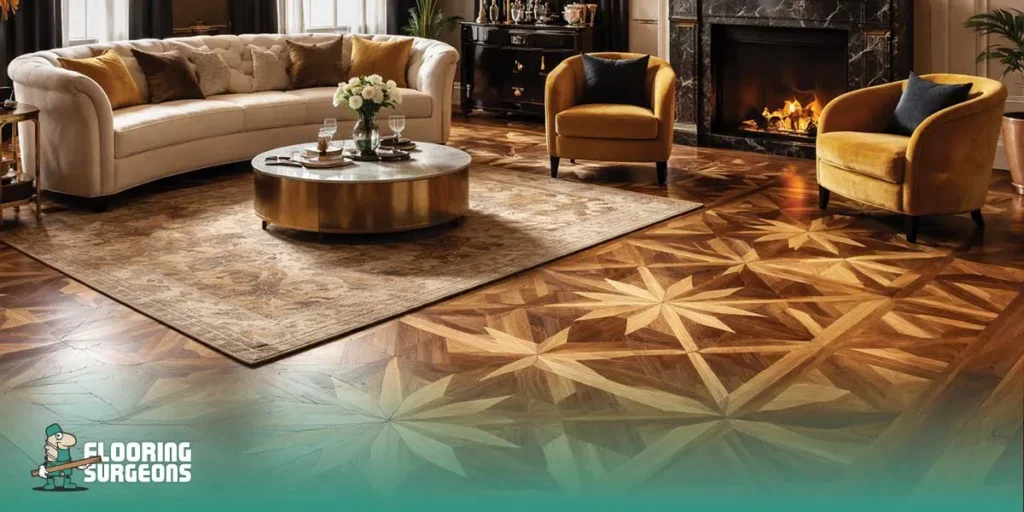
Think of parquet as direction, not decoration! Parquet flooring was one of the clearest expressions of control and precision in 1920s interiors. Instead of flat wooden planks, floors were arranged in geometric patterns such as herringbone and chevron. These patterns did something subtle but powerful. They introduced movement. These patterns did something subtle but powerful. They introduced movement, and how floor patterns guide the eye becomes much easier to notice once you start looking at parquet as part of the room’s structure rather than just its surface.
Walk into a room with herringbone flooring and your eye naturally follows the pattern. It creates flow without needing visual clutter. Where it worked best:
- Living rooms with open layouts
- Formal dining areas
- Transitional spaces connecting rooms
Today, the same effect can be achieved using engineered wood. But the mistake many people make is focusing solely on the material. In the 1920s design, the pattern choice mattered just as much as the wood itself.
Marble Tiles and Polished Stone Surfaces
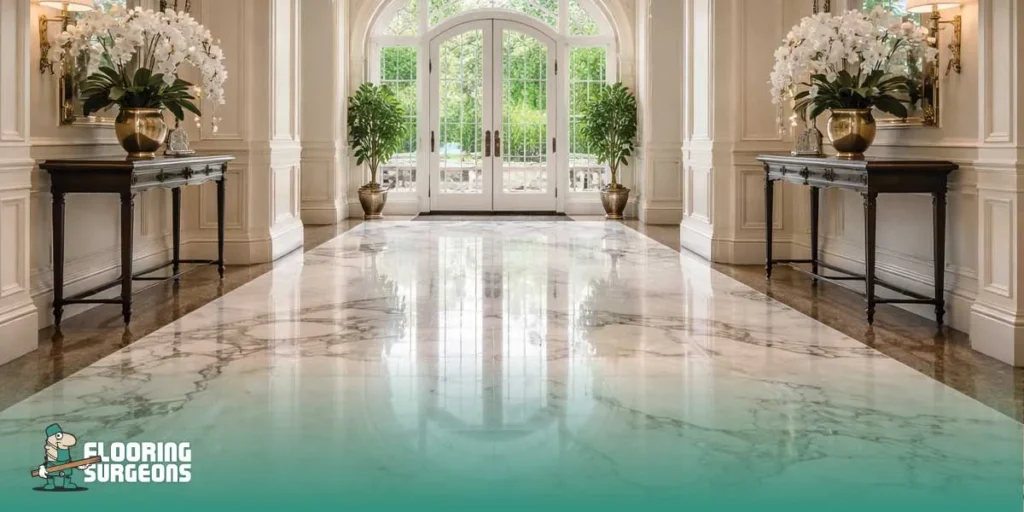
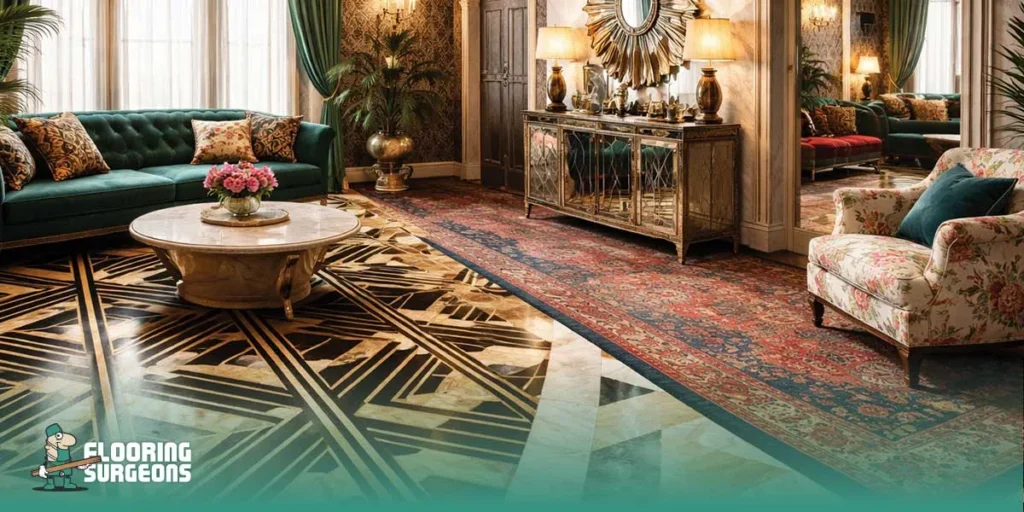
Marble flooring in the 1920s was not subtle. It was used in spaces where impact mattered, especially entrances and reception areas. What made it effective was not just the material, but how it interacted with light and symmetry. Polished surfaces reflected their surroundings, amplifying the sense of order and refinement. Instead of filling a space with decoration, marble allowed the floor itself to carry the visual weight.
Modern interpretation (what actually works today):
- Porcelain tiles with marble effect
- Large-format tiles to maintain visual clarity
- Minimal grout lines for a cleaner look
This is where practicality meets authenticity. You keep the visual language, but upgrade the performance.
Checkerboard Flooring for High Contrast Spaces
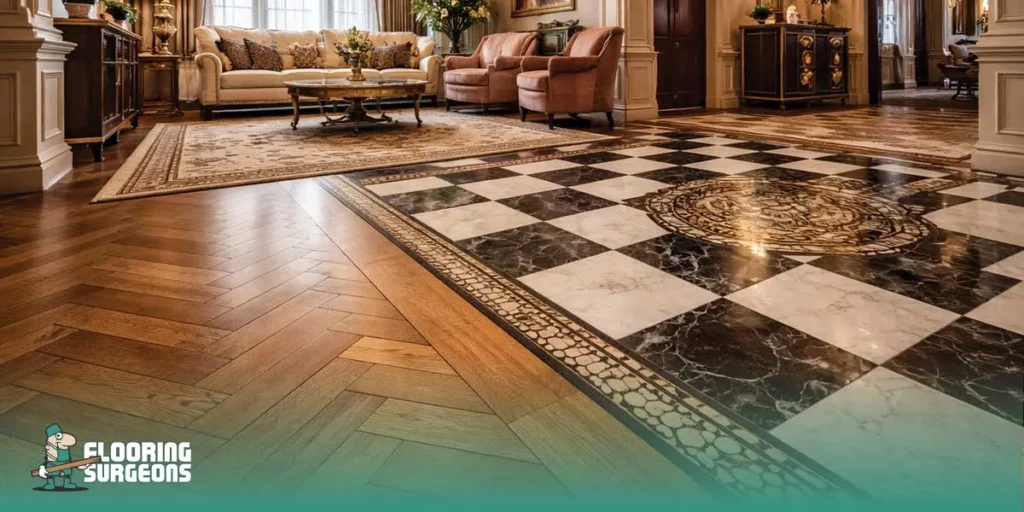
Not every 1920s floor was complex. In fact, some of the most effective designs were the simplest. Checkerboard flooring relied on contrast rather than detail. The sharp alternation between black and white tiles created instant structure and clarity. It was often used in:
- Kitchens
- Hallways
- Transitional zones
Because these were areas that needed definition without distraction. What makes this style powerful even today is how quickly it transforms a space. Without adding texture or complexity, it introduces identity.
Mosaic and Decorative Tile Details
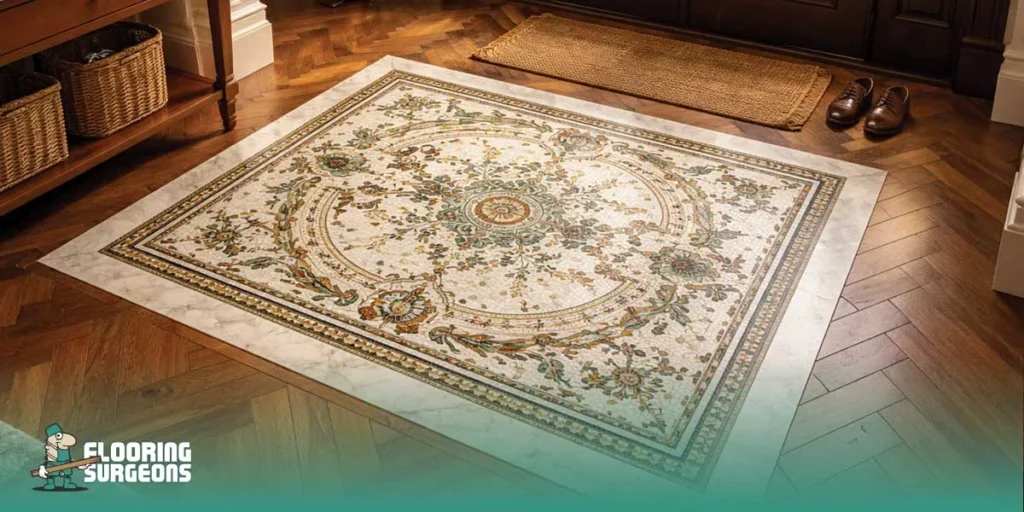
Mosaic flooring was never about covering entire spaces. It was about highlighting specific moments within a room. Entryways, bathrooms, and thresholds often featured intricate tile work that added character without overwhelming the overall design. Instead of competing with the rest of the interior, the mosaic acted as a focal point.
The key principle: Use detail where attention is meant to pause. In modern interiors, this translates well into feature areas. A carefully placed mosaic section can do more than an entire patterned floor if used correctly.
Popular Flooring Styles in the 1920s
While 1920s interior design is often associated with bold aesthetics, its flooring styles followed a clear logic. Each material and pattern served a purpose, whether it was guiding movement, enhancing symmetry, or creating contrast. The key is not just recognising these styles, but understanding where and why they were used.
Parquet and Herringbone Wood Flooring
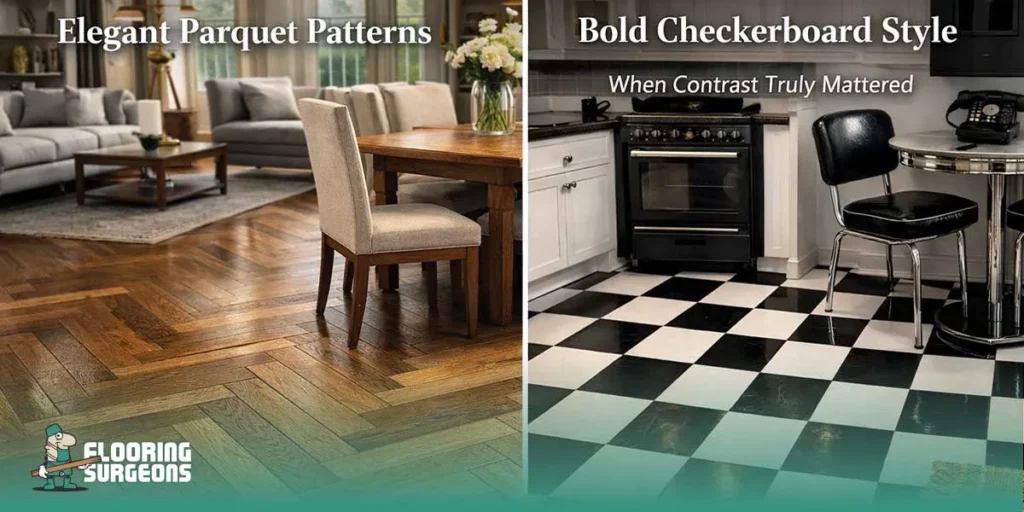
Parquet flooring added movement and structure through geometric wood patterns like herringbone and chevron. Parquet was not chosen simply because it looked refined. It was used because it brought order to a space without making it feel rigid. The repeating geometry creates a natural rhythm. As you walk through the room, your eye follows the pattern, making even large spaces feel intentional rather than empty.
Where parquet made the biggest impact:
- Open-plan living areas
- Dining rooms with formal layouts
- Spaces where direction and flow mattered
Today, engineered wood flooring allows you to achieve the same visual effect with greater stability. The key decision is no longer just the material, but the pattern scale and layout direction.
Black and White Checkerboard Tiles
If parquet was about movement, checkerboard flooring was about clarity. Black-and-white tiles created one of the strongest visual identities of the 1920s. There was no subtlety here. Just contrast, structure, and immediate definition. Instead of guiding the eye gradually, this pattern defined space instantly.
Typical placement:
- Kitchens
- Hallways
- Transitional areas between rooms
Why it still works today:
- Simple to execute
- High visual return
- Works even in small spaces
Mistake to Avoid: Most modern spaces overuse checkerboard patterns. In the 1920s, it was used with intention, not everywhere.
Mosaic and Decorative Tile Work
Not every surface in a 1920s interior was meant to dominate the room. Some were designed to reward attention only when you got closer. That’s where mosaic flooring came in. Unlike parquet or checkerboard patterns, mosaic tiles were about detail rather than structure. They were used in smaller, more intimate spaces where precision mattered more than scale.
Common use cases:
- Entrance thresholds
- Bathrooms
- Feature sections within larger floors
Mosaic was never the main stage. It was the accent. Used correctly, it added character. Used excessively, it broke the balance. Today, mosaic works best when paired with simpler flooring. Think of it as a focal insert rather than a full-floor solution.
How to Recreate 1920s Interior Design with Modern Flooring
Recreating a 1920s interior is not about copying materials. It is about translating the logic behind them into a modern context. What worked a century ago does not always perform well today. But the visual principles can still be applied if you choose the right flooring solutions. The visual principles can still be applied if you choose the right flooring solutions. In practice, choosing the right patterned flooring often matters more than chasing a perfect historical replica, because scale, direction, and finish all influence whether the result feels elegant or overdone.
Use Engineered Parquet Instead of Solid Wood
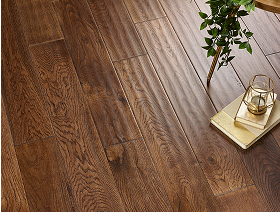
Solid wood flooring was common in the 1920s, but it came with limitations in stability and maintenance. Engineered parquet gives you the same geometric look while handling moisture and temperature changes far better. For readers comparing finishes, board formats, and installation suitability, exploring engineered wood flooring options is usually the most practical next step. What actually matters here is not just choosing wood, but choosing:
- The right pattern scale
- The right direction of installation
Choose Porcelain Tiles Instead of Marble
Marble defined luxury in the 1920s interiors, but it is not always practical in modern homes. Porcelain tiles now replicate marble with impressive accuracy while offering:
- Higher durability
- Lower maintenance
- Better cost control
This allows you to preserve the visual identity without inheriting the drawbacks.
Opt for Pre-Finished Patterns for Precision
One of the biggest differences today is control. Pre-finished flooring systems allow for:
- Consistent patterns
- Faster installation
- Reduced margin for error
This is particularly important when working with geometric layouts, where even small misalignments break the entire look.
Balance Authenticity with Practicality
This is where most people get it wrong. Trying to be too historically accurate often leads to:
- Higher costs
- Harder maintenance
- Lower usability
The goal is not to replicate the past perfectly. The goal is to capture its visual logic in a way that works today.
What Are the Most Common Mistakes in 1920s Interior Design?
Recreating a 1920s interior can easily go wrong, not because the style is complicated, but because its rules are often misunderstood. Most mistakes come from focusing on visual elements in isolation, rather than understanding how they work together, especially when it comes to flooring.
Overusing Patterns Instead of Controlling Them
Patterns were central to 1920s design, but they were never used everywhere at once. When every surface competes for attention, the space loses structure. In original interiors, flooring often carried the strongest pattern, while other elements stayed more restrained.
Takeaway: Let the floor lead. Do not let it compete.
Ignoring Symmetry in Layout and Flooring
Symmetry was not optional. It was the backbone of the entire design language. When flooring patterns do not align with the room’s layout, everything feels slightly off, even if the materials are correct. This is where most modern recreations fail.
Choosing Materials Based on Looks Alone
A marble-look tile is not automatically “1920s style”. What matters is:
- How it is used
- Where it is placed
- How it interacts with light and layout
Materials without context lose their meaning.
Mixing Too Many Eras in One Space
Combining 1920s elements with unrelated styles often creates visual confusion. The problem is not mixing styles. The problem is mixing without a unifying structure, which flooring is supposed to provide.
Why Flooring Is the Most Important Element in 1920s Interior Design
Most people think design starts with what they can see at eye level. In the 1920s, interiors started from the ground. Furniture, lighting, and decoration were layered on a structure already defined by the floor. That is why spaces from that era feel coherent. Nothing looks randomly placed. When the flooring works, everything else falls into place. When it does not, nothing fully connects.
What Flooring Actually Controls
Instead of listing, we guide thinking: Flooring determines how a space is read. It defines:
- Where the eye moves
- How the room is divided
- How balance is perceived
A herringbone layout can introduce direction. A checkerboard pattern can create clarity. A mosaic detail can anchor a focal point. Remove these, and the design loses its foundation. This is why choosing flooring last often leads to disappointing results. The most successful interiors are built around it, not adjusted to it.
How to Bring 1920s Elegance into Modern Homes
Bringing 1920s elegance into a modern home is less about recreating the past and more about understanding its principles. The goal is not to imitate, but to interpret. Instead of copying every detail, focus on the elements that carry the most visual weight. Start with the floor. Once the foundation reflects the right structure, everything else becomes easier to align.
Practical Direction (Soft Guidance)
- Choose patterns that guide the space rather than overwhelm it.
- Use contrast with intention, not excess.
- Select materials that balance visual authenticity with everyday performance
The difference between a space that looks inspired and one that feels authentic often comes down to the decisions made at the floor level. At Flooring Surgeons, that is exactly where period-inspired interiors become easier to get right: when the floor is treated as the starting point rather than the finishing touch.

Haniye Ayanmanesh
As an expert writer for Flooring Surgeons, I combine technical SEO knowledge with a practical understanding of flooring, producing content that helps users make confident decisions while supporting long-term organic growth.