


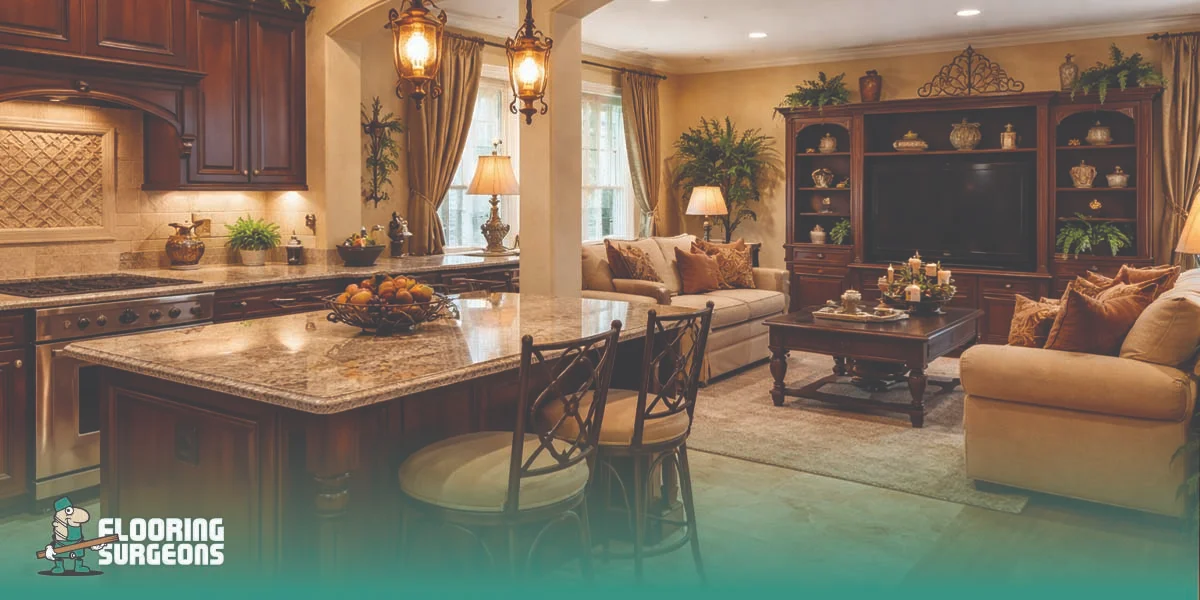
If you still remember the look of homes in the early 2000s, you probably remember more than just the furniture. It was the era of Tuscan kitchens, dark wood finishes, beige-heavy palettes, glossy surfaces, and decor choices that tried to feel warm, polished, and a little aspirational all at once. Some of those ideas now feel dated, while others have quietly found their way back into modern interiors in a more refined form.
In this guide, we’ll look at 25 early 2000s home decor trends that defined the era, from statement colors and busy textures to the finishes and materials that shaped everyday spaces. You’ll also see which 2000s home decor trends still work today, which ones are better left behind, and how to update the look without making your home feel stuck in the past.
Table of contents
What defined early 2000s home decor?
Homes in the early 2000s were rarely understated. Warm wall colours, dark wood finishes, glossy surfaces, and decorative details were everywhere, especially in kitchens and main living areas. Instead of the cleaner, quieter look that became popular later, interiors from this period often felt fuller, heavier, and more styled.
What made the look so recognisable was its mix of comfort and polish. Some spaces leaned warm and traditional, while others brought in metallic accents, shine, and bolder statement pieces. That contrast is a big reason the style still feels familiar today.
25 Early 2000s Home Decor Trends
The early 2000s had a very distinct look. Some trends were warm and traditional, while others felt sleek, glossy, and slightly overdone by today’s standards. Together, they shaped a style that was easy to recognise and hard to ignore.
Below are 25 home decor trends that defined the era and helped shape the early 2000s decorating style, many of which still influence interiors in different ways today.
1) Tuscan-style kitchens
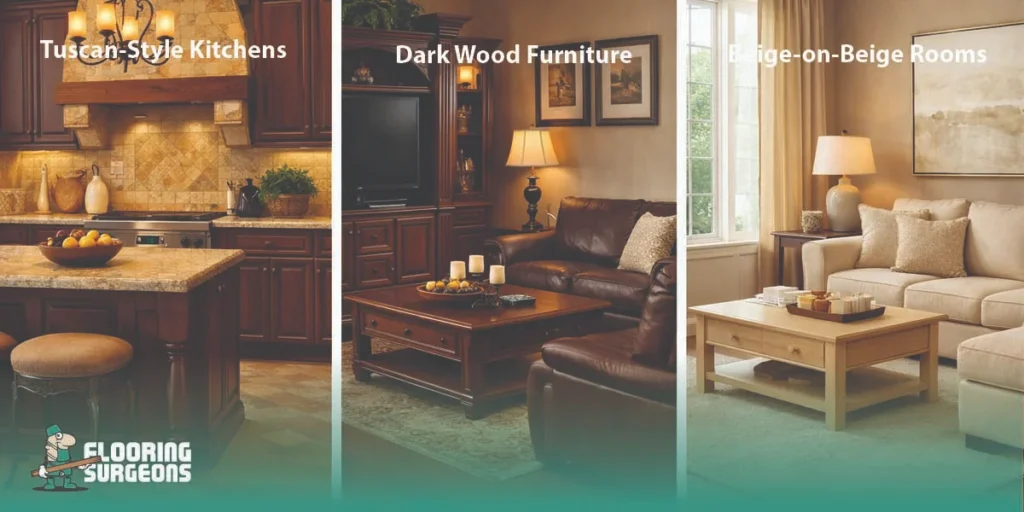
Tuscan kitchens were one of the clearest signs of the era. Warm beige and terracotta tones, dark wood cabinets, stone-look surfaces, and decorative details gave these spaces a rich, traditional feel. Today, the full look can feel heavy, but parts of it still work in a softer, more updated form.
2) Dark wood furniture
Dark wood dining sets, TV units, and bedroom furniture were everywhere in the early 2000s. They helped rooms feel formal and substantial, especially when paired with warm wall colours. While the oversized look has faded, darker wood tones still have a place in interiors when balanced with lighter finishes.
3) Beige-on-beige rooms
Layered beige was a major part of the period’s palette. Walls, carpets, sofas, and curtains often stayed within the same warm neutral range to create a calm and coordinated look. The idea still works, but now it is usually handled with more texture and contrast.
4) Red and terracotta wall colours
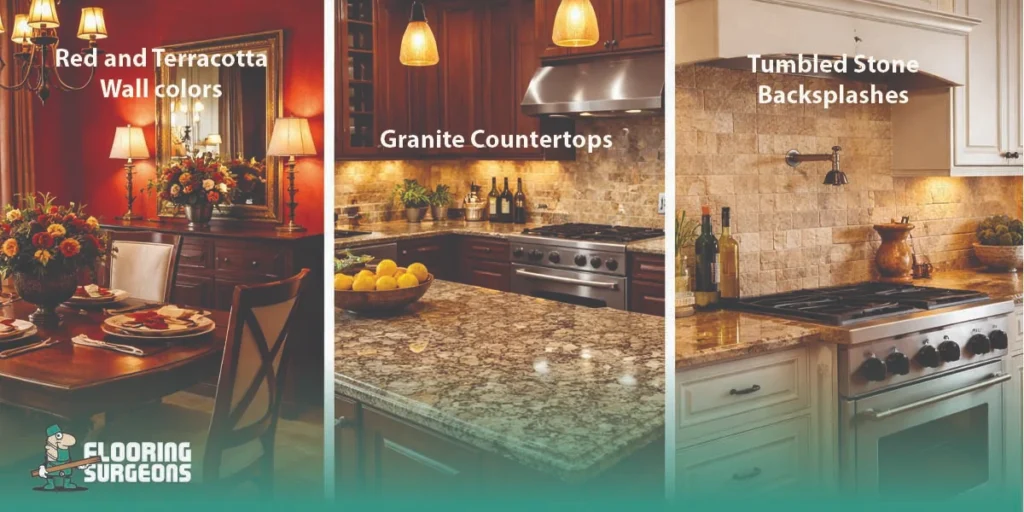
Deep reds, rusty tones, and terracotta shades were common in dining rooms, kitchens, and feature walls. They added warmth and drama, but they could also make a room feel smaller or darker. These colours are less common now, though softer earthy versions still appear in modern homes.
5) Granite countertops
Granite became a go-to choice for kitchens because it looked durable, polished, and high-end. In many homes, it was part of the push toward a more finished and aspirational kitchen style. It is still widely used today, although cleaner and less busy patterns tend to feel more current.
6) Tumbled stone backsplashes
Tumbled stone backsplashes were a common way to add texture and warmth to kitchens. Their soft edges and earthy tones matched the heavier look many homes had at the time. Today, they can still work, but usually in a cleaner and less busy setting.
7) Stainless steel appliances
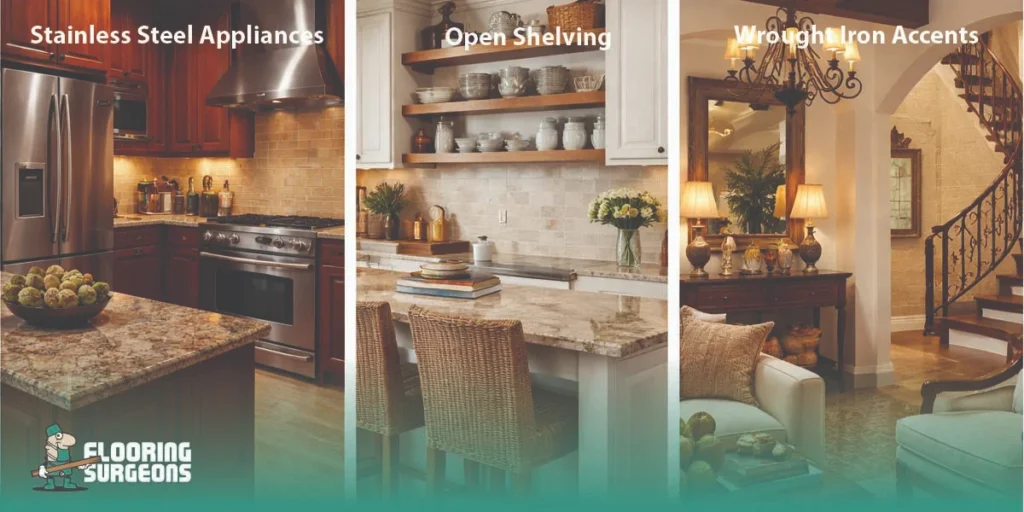
Stainless steel quickly became a sign of a modern kitchen. It brought a cooler, sleeker contrast to all the warm colours and wood tones used elsewhere in the room. That look has lasted better than many other trends from the period.
8) Open shelving
Open shelving started to appear more often in kitchens during the early 2000s. It helped break up rows of cabinets and gave people a place to display dishes, glassware, or decorative pieces. The idea is still popular, although most homes now use it more sparingly.
9) Wrought-iron accents
Wrought-iron details showed up in lighting, stair rails, mirrors, and wall decor. They added a traditional and slightly ornate touch that fit well with Tuscan and old-world inspired interiors. In many homes now, that same look is used in a simpler way.
10) Matching furniture sets
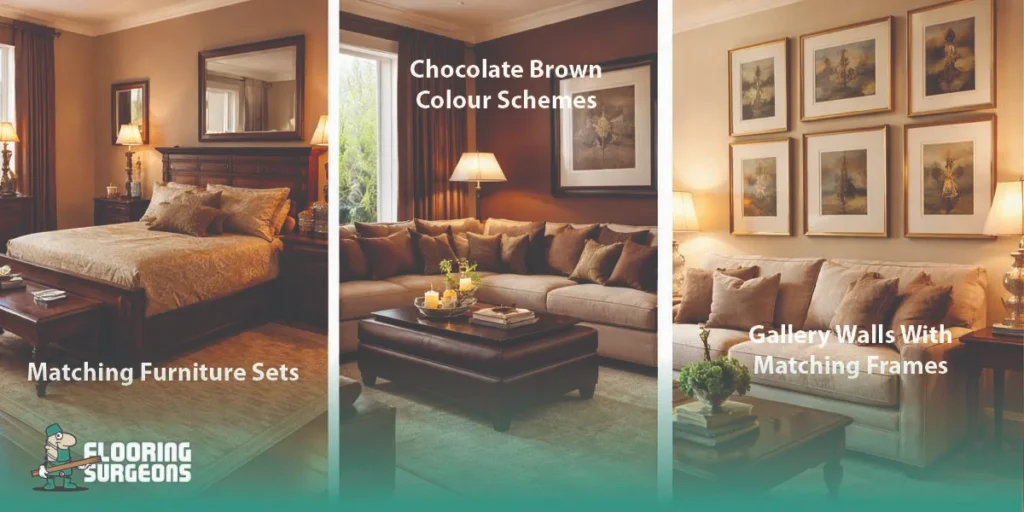
Bedroom and living room furniture was often bought as a full matching set. The goal was a polished, coordinated look, even if the result sometimes felt too uniform. Today, mixed pieces usually give a room more character and flexibility.
11) Chocolate brown colour schemes
Chocolate brown was a major colour trend in the early 2000s, especially in living rooms and bedrooms. It was often used on feature walls, soft furnishings, and furniture to create a cosy but slightly formal look. In smaller spaces, though, it could make the room feel heavier than intended.
12) Gallery walls with matching frames
Gallery walls became a popular way to fill empty wall space and make a room feel more personal. In many homes, the frames matched exactly, which gave the display a neat and coordinated finish. It was one of the more recognisable 2000s home decor trends, even if today people usually prefer a looser, less uniform look.
13) High-gloss surfaces
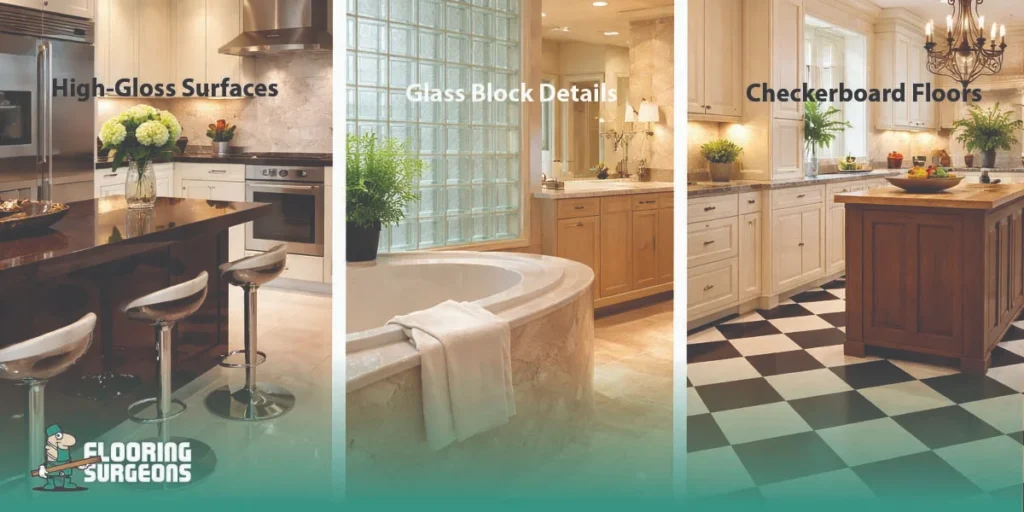
Shiny finishes were a big part of the period’s polished style. Glossy furniture, reflective cabinets, and sleek surfaces helped rooms feel modern at the time, especially when paired with metal accents or clean lines. In updated interiors, that same effect tends to work better when used with more restraint, whether on cabinetry or even high gloss laminate flooring.
14) Glass block details
Glass blocks showed up in bathrooms, kitchens, and room dividers as a way to bring in light while keeping some privacy. They had a slightly futuristic feel, which made them a natural fit for the era. While the full look is less common now, small references to it still appear in more refined spaces.
15) Checkerboard floors
Checkerboard floors gave kitchens, hallways, and breakfast areas a bold visual lift. The pattern felt classic, but in the early 2000s it was often used in a more decorative, statement-led way. It still has appeal today, though the key is scale and balance. If you want to revive the look without overdoing it, it helps to understand how to choose the right patterned flooring first.
16) Wall words and scripted decor
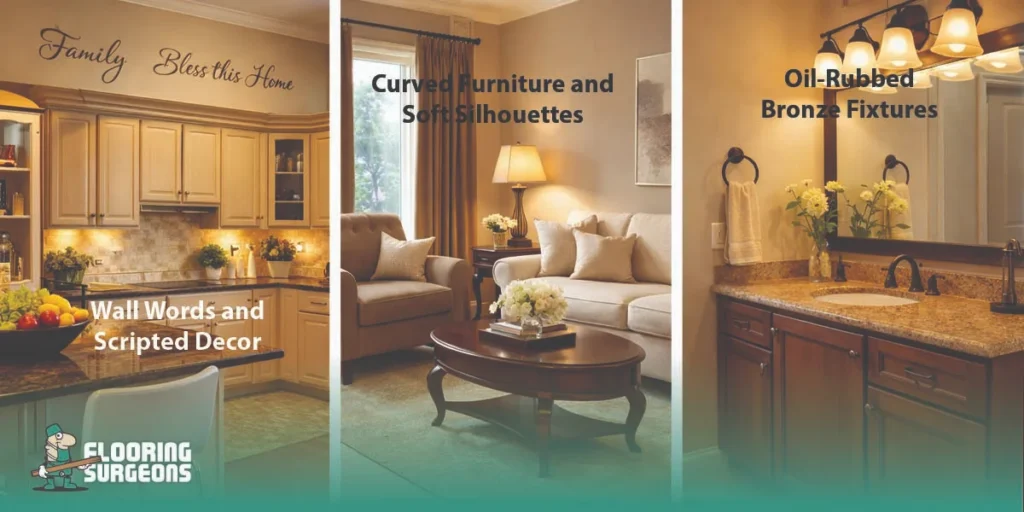
Decorative phrases on walls became a familiar sight in early 2000s homes. They were often used in kitchens, hallways, and family spaces to make rooms feel more personal and welcoming. Over time, this trend started to feel overused, which is why many homes now rely on artwork or texture instead.
17) Curved furniture and soft silhouettes
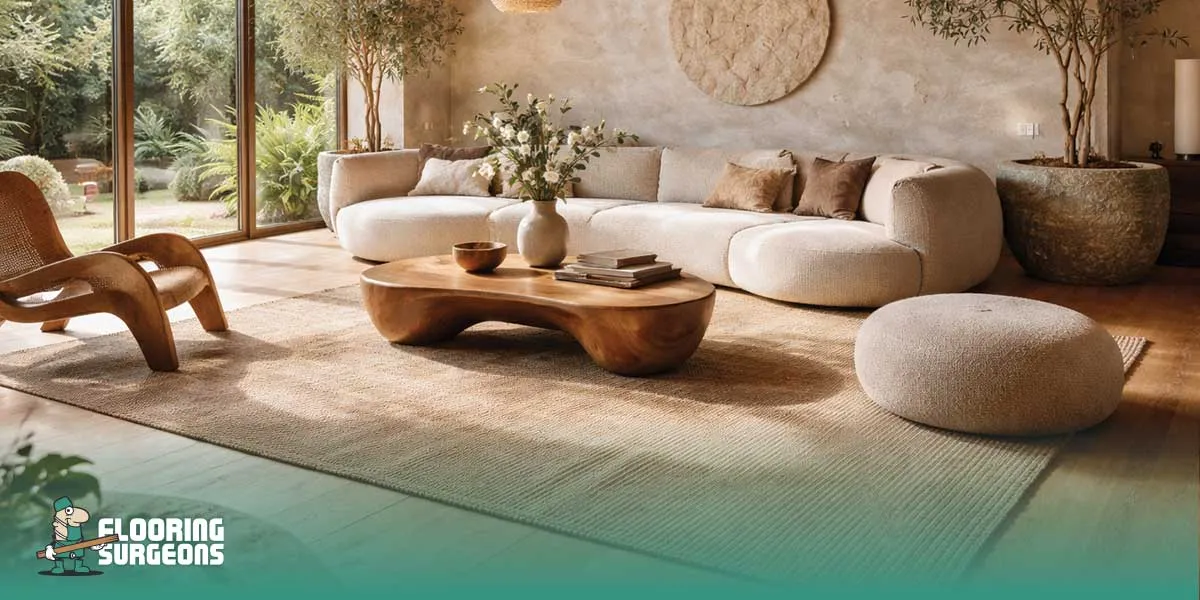
Not everything from the period was heavy or angular. Some interiors brought in curved coffee tables, rounded chairs, and softer shapes to make rooms feel more relaxed. That side of the look has aged better than people expected and still fits well in homes that want a gentler finish.
18) Oil-rubbed bronze fixtures
Warm metal finishes were a strong part of the period, especially in kitchens and bathrooms. Oil-rubbed bronze taps, handles, and light fittings worked well with earthy palettes and darker wood tones. It became a common feature of early 2000s interior design, even if mixed metals feel more current now.
19) Wall-to-wall carpeting
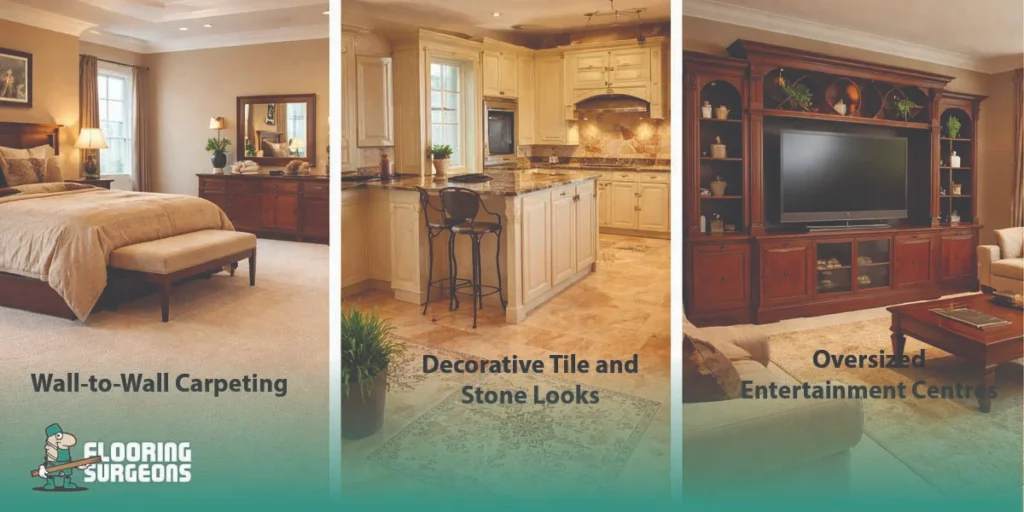
Carpet was still a popular choice in bedrooms and upstairs areas, and in some homes it extended much further. It helped create a softer and more enclosed feel, which suited the fuller decorating style of the time. These days, many homeowners prefer harder surfaces in main living areas, then use rugs to bring back warmth where needed.
20) Decorative tile and stone looks
Kitchens and entryways often used surfaces that looked detailed, textured, or patterned rather than plain. This was part of the era’s wider love of visible finishes and layered design. In updated spaces, the same idea can work with a cleaner approach, especially when using tile effect laminate flooring to keep the look lighter and easier to style.
21) Oversized entertainment centres
Before flat screens became the norm, large entertainment units were a major feature in living rooms. They framed the television and usually came with shelves, cupboards, and display space, which made them feel practical as well as decorative. As screens became slimmer, this look quickly started to feel bulky and dated.
22) Metallic accents
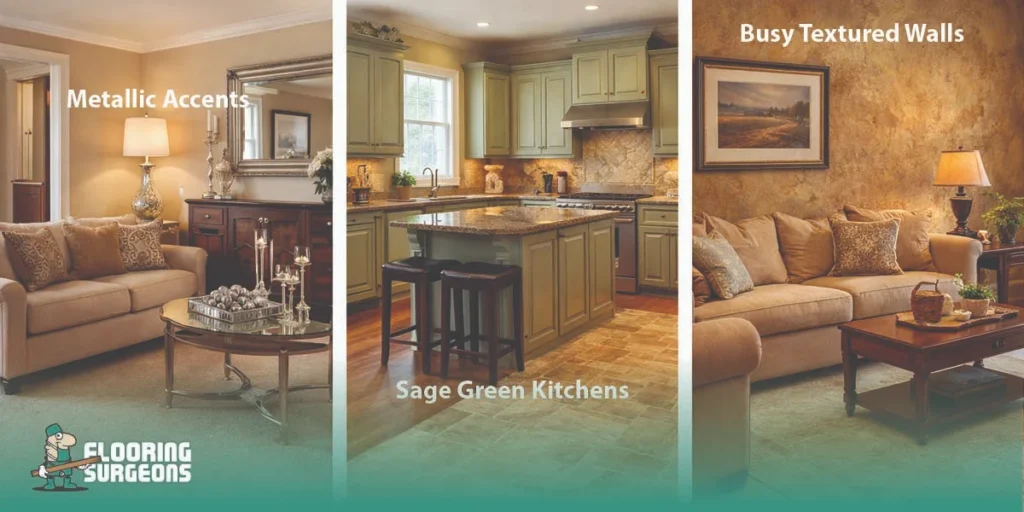
Shiny finishes were not limited to appliances. Lamps, mirrors, side tables, and decorative accessories often brought in silver or chrome to make a room feel more modern. It was one of those details that helped balance warmer colours and heavier furniture, which is why it still appears in updated interiors now.
23) Sage green kitchens
Sage green had a softer presence than the stronger reds and browns used elsewhere in the home. It gave kitchens a calmer feel while still fitting the warm, inviting mood many people wanted at the time. Among older looks from that period, this is one that has returned in a much more refined way.
24) Busy textured walls
Paint effects, sponge finishes, and textured surfaces were used to add depth and character to plain walls. At the time, they helped rooms feel layered and decorative, but they could also make a space look visually crowded. That is one reason many 2000s interior design trends are now being reworked with simpler finishes and cleaner lines.
25) Shabby chic carryover
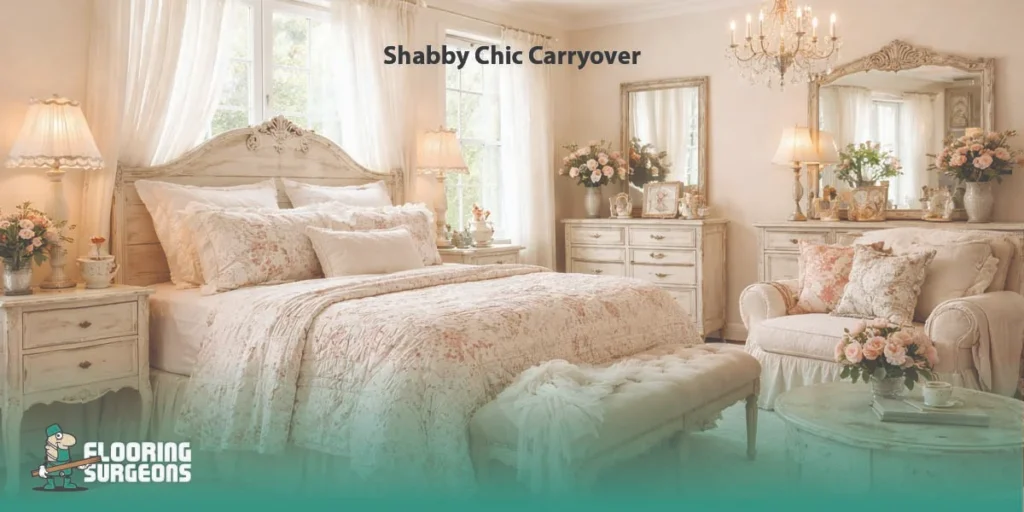
The early 2000s did not leave soft, romantic decorating behind overnight. In many homes, distressed furniture, floral details, and painted pieces still carried over from the shabby chic look that had already become popular. It gradually faded as interiors moved toward a cleaner and less decorative direction, but its influence did not disappear all at once.
Which early 2000s decor trends still work today?
Not every trend from that period feels outdated now. Some have held up well because the core idea was strong, even if the original version was a bit too heavy or overdone. In many cases, the look still works when the colours are softer, the finishes are calmer, and the room has more breathing space.
A few of the most reusable ideas from that era are still easy to spot today. Sage green kitchens, gallery walls, metallic accents, curved furniture, and checkerboard floors have all carried over in one form or another. The difference is that they now tend to appear in a more balanced setting, with less visual clutter and fewer decorative extras.
| Trend | Still working today? | Best way to use it now |
| Sage green kitchens | Yes | Pair it with simpler cabinetry and cleaner finishes |
| Gallery walls | Yes | Use fewer pieces and mix frame styles more naturally |
| Metallic accents | Yes | Add them in small touches rather than across the whole room |
| Curved furniture | Yes | Keep the shapes soft, but the overall styling restrained |
| Checkerboard floors | Yes, in moderation | Use balanced colours and avoid making the whole room too busy |
| Tuscan-style kitchens | Partly | Keep the warmth, but strip back the heavy detailing |
| Busy textured walls | Rarely | Replace them with cleaner paint finishes and texture in fabrics |
How to modernize early 2000s home decor
The easiest way to update this look is to keep the warmth but lose the heaviness. That usually means simplifying the colour palette, reducing decorative extras, and pairing older influences with cleaner shapes. A room can still take inspiration from the early 2000s without repeating every detail that made it feel busy.
Balance matters just as much as style. Dark wood tones, metallic accents, and earthy colours can still work well, but they need more contrast and more space around them. When those elements are used more carefully, the overall look feels calmer and more current.
The same applies in kitchens. Instead of copying the full Tuscan look, it works better to keep the warmth and combine it with simpler surfaces, cleaner lines, and more practical materials such as luxury vinyl flooring for kitchen.
Early 2000s flooring trends that shaped the look
Flooring played a bigger role in this style than people often remember. In many homes, it helped create the warm, polished feel that defined the period. Darker wood tones, wall-to-wall carpet, stone-inspired finishes, and bold patterns all had a place, depending on the room.
Kitchens and entryways often leaned towards harder surfaces with more visible texture, while bedrooms and upstairs spaces stayed softer with carpet. In living areas, deeper timber tones helped furniture and wall colours feel richer and more grounded. That is one reason warmer options such as oak engineered flooring still feel relevant today, even when the overall styling is much simpler.
Patterns also mattered. Checkerboard floors and tile-look surfaces added contrast and made practical areas feel more decorative. Used more carefully, those ideas can still work in modern homes without making the space feel stuck in the past.

Ana.Soltanpoor
I’m an SEO Specialist with a strong background in content management and organic search. I build data-driven content strategies by aligning user intent, search behavior, and SEO best practices to ensure every piece of content delivers clarity, relevance, and measurable organic performance.