



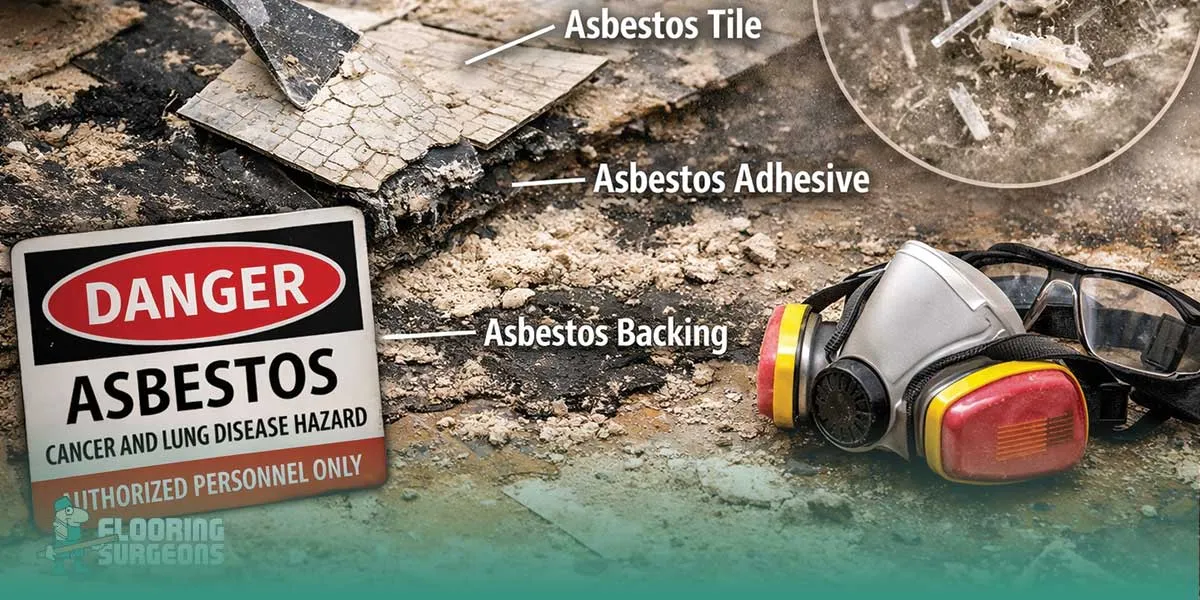
Asbestos in commercial flooring is more common than most building owners realize, and far more dangerous when disturbed. Used extensively in older flooring materials for its durability and fire resistance, asbestos can remain hidden beneath tiles, adhesives, and backing layers for decades.
The real risk begins when flooring is damaged, renovated, or replaced. At that point, microscopic fibers can become airborne, posing serious health risks and potential legal liability for businesses.
This guide breaks down exactly where asbestos exists in commercial flooring, how to identify it safely, and what your next step should be, especially if you’re considering flooring upgrades or renovations.
Table of contents
What Is Asbestos and Why Was It Used in Flooring?
Asbestos is a naturally occurring mineral made up of microscopic fibers that are highly resistant to heat, chemicals, and wear. These properties made it a popular component in commercial flooring materials throughout much of the 20th century. However, what once made asbestos valuable now makes it hazardous—especially when flooring materials are disturbed.
Common Types of Asbestos Flooring Materials
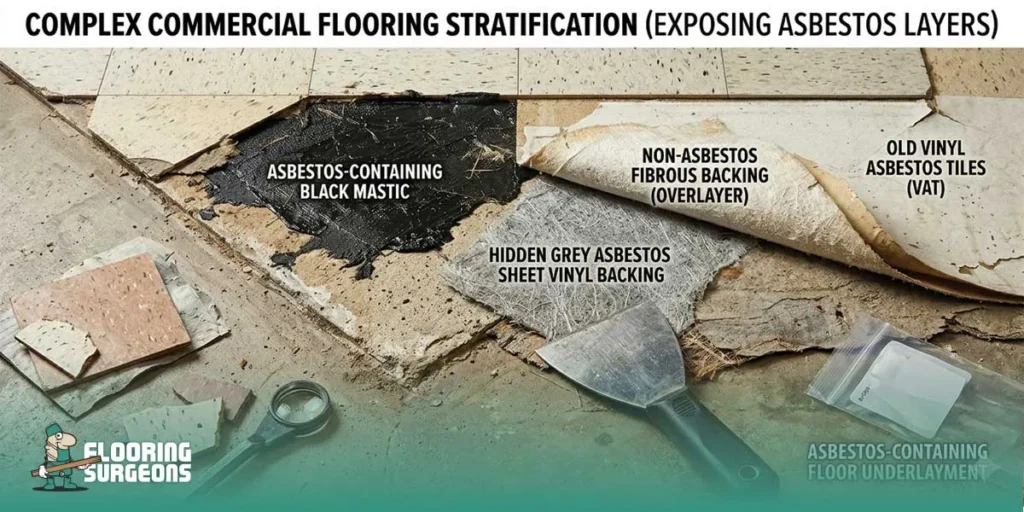
In commercial environments, asbestos is typically found in:
- Vinyl asbestos tiles (VAT) – durable and widely used in offices, schools, and hospitals
- Asbestos-containing adhesives (black mastic) – used to secure tiles to concrete subfloors
- Sheet vinyl flooring – often includes asbestos in backing layers
- Floor underlayment materials – especially in older installations
Topical Authority Tip: Mentioning specific materials like black mastic and underlayment signals expertise beyond generic content.
Why Asbestos Was Popular in Commercial Spaces
Asbestos wasn’t used randomly—it solved real problems in high-traffic environments.
- Fire resistance → critical for commercial safety standards
- Durability → withstands heavy foot traffic
- Cost efficiency → low-cost material for large-scale flooring
- Sound insulation → useful in offices and public buildings
Asbestos was widely used in commercial flooring because it is heat-resistant, durable, and cost-effective, making it ideal for high-traffic environments.
Where Asbestos Is Commonly Found in Commercial Flooring
In commercial buildings, asbestos is rarely visible on the surface. Instead, it’s embedded within multiple flooring layers—making it easy to overlook during inspections or renovations.
Vinyl Asbestos Tiles (VAT)
Vinyl asbestos tiles were one of the most common flooring materials used between the 1950s and 1980s.
- Typically 9×9 or 12×12 inches
- Found in offices, schools, hospitals
- Often installed in repetitive patterns
These tiles may appear harmless; but cutting, drilling, or removing them can release asbestos fibers. This risk becomes even more relevant in older properties where surface materials may have changed over time, especially when owners are unsure whether parquet flooring may contain asbestos.
Adhesives and Black Mastic
Even if tiles are removed, asbestos may still be present underneath.
- Black mastic adhesive is a major hidden source
- Often remains bonded to concrete subfloors
- Difficult to identify without professional assessment
Most articles ignore adhesives, this is where we outperform.
Sheet Flooring and Backing Materials
Asbestos is often hidden beneath the visible layer.
- Used in sheet vinyl backing
- Present in multi-layer flooring systems
- Can remain intact even if top flooring is replaced
This is why superficial inspection is not enough.
How to Identify Asbestos Flooring (Without Risking Exposure)
Identifying asbestos flooring requires caution—disturbing materials can release harmful fibers.
Safe Identification Steps:
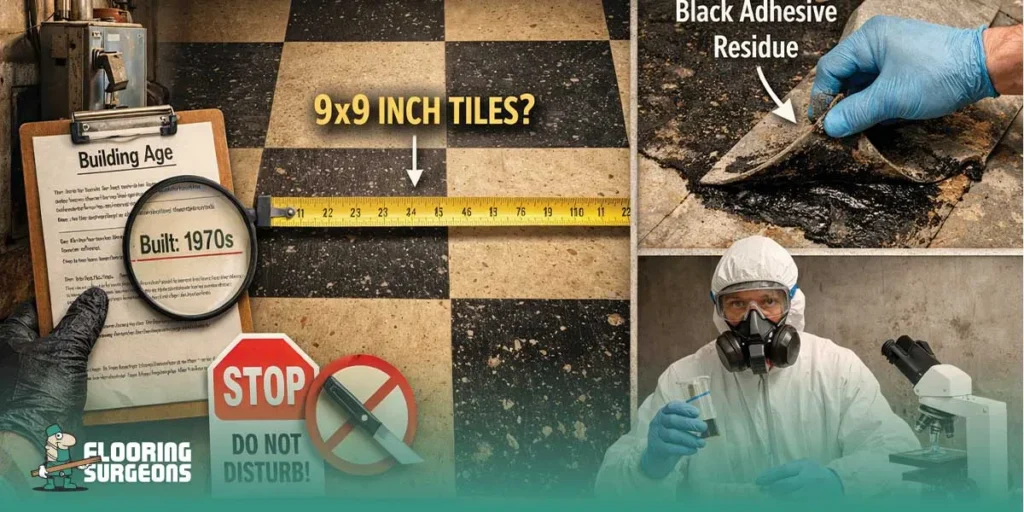
- Check the building age
If constructed before the 1980s, asbestos is more likely present. - Look at tile size and patterns
9×9-inch tiles are a strong indicator of asbestos content. - Examine adhesive residue
Black, tar-like adhesive may contain asbestos. - Avoid physical disturbance
Never cut, sand, or remove flooring to “check.” - Consult a professional inspection
The only reliable way to confirm asbestos is through lab testing.
Asbestos flooring can be identified by checking the building age, tile size (especially 9×9 tiles), adhesive type, and avoiding disturbance while seeking professional testing.
Health Risks of Asbestos Exposure in Commercial Environments
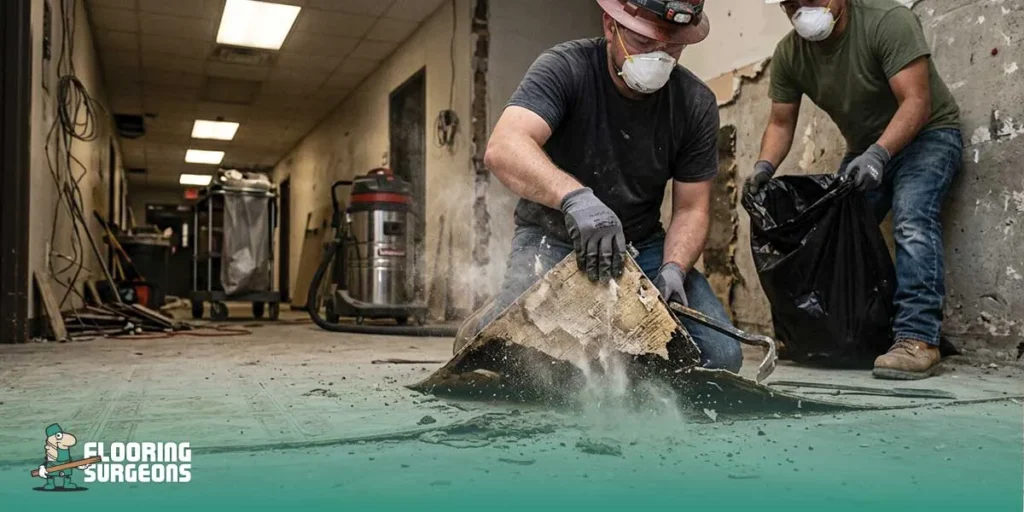
Asbestos becomes dangerous when flooring materials are damaged, cut, or disturbed during maintenance or renovation. In commercial environments, this risk increases due to constant foot traffic and periodic refurbishments. The danger lies in airborne fibres. Once inhaled, they can remain in the lungs for years without immediate symptoms.
Key health risks:
- Lung cancer
Long-term exposure to asbestos fibres significantly increases the risk of lung cancer, particularly in environments where flooring is repeatedly disturbed. The risk is higher for individuals exposed over extended periods in workplaces such as offices, schools, and industrial buildings. - Mesothelioma
A rare but aggressive cancer affecting the lining of the lungs. Mesothelioma is almost exclusively linked to asbestos exposure. Even low levels of exposure in commercial buildings can lead to long-term consequences. - Asbestosis
A chronic lung condition caused by inhaling asbestos fibres, leading to scarring of lung tissue. This results in breathing difficulties and reduced lung function over time.
Asbestos exposure in commercial flooring can cause serious diseases including lung cancer, mesothelioma, and asbestosis, especially when materials are disturbed and fibres become airborne.
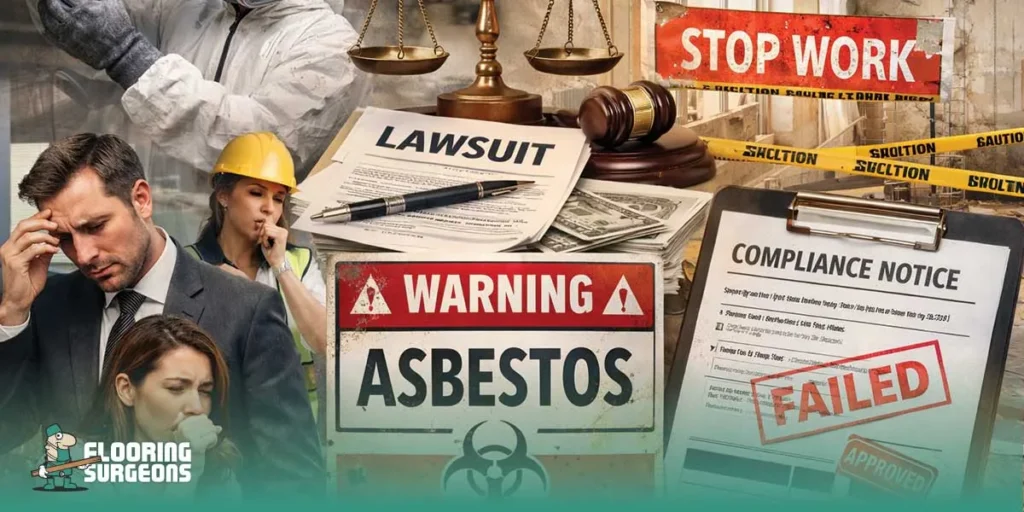
Legal and Compliance Risks for Businesses
For businesses, asbestos is not only a health issue but a legal responsibility. Failure to identify and manage asbestos in flooring can lead to serious financial and reputational consequences.
Asbestos Regulations in Commercial Flooring
Employers are legally required to manage asbestos risks in commercial premises.
This includes:
- Conducting asbestos surveys
- Maintaining an asbestos register
- Ensuring safe handling during renovations
Ignoring these obligations can result in regulatory penalties and forced closures.
Who Is Liable for Asbestos Exposure in Commercial Buildings?
If employees, contractors, or visitors are exposed to asbestos, the business may be held liable.
This can lead to:
- Compensation claims
- Legal action for negligence
- Long-term financial impact
Even minor exposure incidents can escalate into major legal cases.
Asbestos Compliance Requirements Before Renovation or Flooring Replacement
Commercial properties must meet strict compliance standards, especially during refurbishment or sale.
Failure to comply may:
- Delay construction projects
- Reduce property value
- Prevent leasing or occupancy approvals
Risk Overview Table
| Risk Type | Impact on Business | Severity |
| Health exposure | Employee illness, compensation claims | High |
| Regulatory non-compliance | Fines, legal penalties, shutdowns | High |
| Legal liability | Lawsuits and reputational damage | High |
| Project delays | Renovation delays and increased costs | Medium |
| Property devaluation | Reduced asset value and leasing issues | Medium |
Most content ignores the business impact. This section positions Flooring Surgeons as a practical authority, not just informational.
What to Do If Your Flooring Contains Asbestos?
Discovering asbestos in commercial flooring does not always mean immediate removal. The right approach depends on the condition of the material, level of disturbance, and future plans for the space.
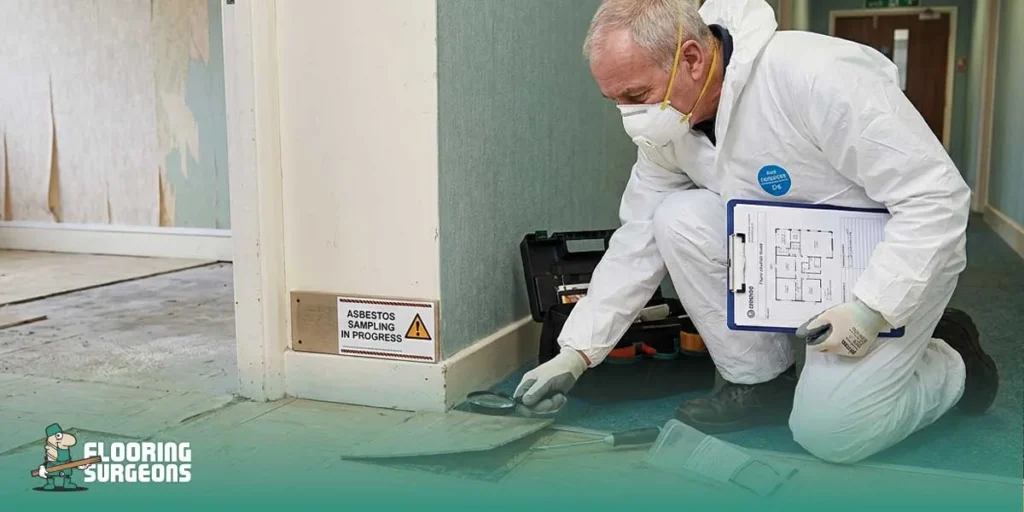
- Leave It Alone (When Safe)
If asbestos-containing flooring is in good condition and undisturbed, it may be safer to leave it in place.
- No visible damage or wear
- No planned renovation work
- Low traffic or sealed environment
This approach requires ongoing monitoring and proper documentation.
- Encapsulation
Encapsulation involves sealing the asbestos material to prevent fibre release.
- Applied through coatings or new flooring layers
- Reduces exposure risk without removal
- Suitable for stable but ageing flooring
This is often a cost-effective short to mid-term solution.
- Professional Removal
Removal is necessary when flooring is damaged or renovation is planned.
- Requires licensed asbestos specialists
- Strict safety procedures must be followed
- Eliminates long-term risk
Improper removal can increase exposure, making professional handling essential. If the flooring includes older resilient materials, understanding what proper vinyl tile removal involves can help clarify why asbestos-related jobs should never be approached casually.
- Full Flooring Replacement
This is where flooring expertise becomes critical.
After safe asbestos removal, the focus shifts to installing a modern, compliant flooring system that suits the commercial environment. This also creates an opportunity to upgrade durability and design, particularly for businesses considering parquet and herringbone flooring styles in reception areas, hospitality spaces, or design-led interiors.
- Opportunity to upgrade durability and design
- Improves safety and compliance
- Aligns with long-term maintenance goals
A professional flooring assessment ensures that removal, preparation, and replacement are handled as a complete system rather than isolated steps.
Perfect, I’ll keep this tight, purposeful, and conversion-aware while still giving it enough depth to outperform competitors. No subheadings, clean UK English, and each section doing a specific job.
Asbestos Flooring Removal vs Replacement: What’s the Best Option?
When asbestos is confirmed in commercial flooring, the key decision is not just removal, but what comes next. Many businesses focus only on removing the risk, without considering long-term performance, compliance, and cost efficiency.
Removal eliminates the immediate hazard, but replacement turns that disruption into an upgrade opportunity. In most commercial settings, the right decision depends on the condition of the flooring, future use of the space, and budget constraints.
| Option | Cost | Risk | Best For |
| Encapsulation | Low to medium | Low (if undisturbed) | Stable flooring with no renovation plans |
| Partial Removal | Medium | Medium | Localised damage or limited refurbishment |
| Full Removal Only | High | Low (after removal) | Compliance-driven projects |
| Removal + Replacement | Higher upfront | Lowest long-term risk | Full renovation, long-term investment |
From a strategic perspective, removal without replacement often leads to additional costs later. Planning both together ensures compliance, safety, and a flooring system that actually supports the commercial environment.
Why Professional Flooring Assessment Matters
Asbestos in flooring is rarely obvious, and that is where many costly mistakes begin. Attempting to assess or manage it without proper expertise can increase exposure risk rather than reduce it. DIY approaches or general inspections often miss critical factors such as underlying adhesives, layered materials, or partial contamination. They also tend to overlook hidden subfloor problems before new flooring is fitted, which can create major issues even after asbestos has been safely dealt with. These hidden elements are exactly what lead to unexpected delays, safety issues, and budget overruns during renovation.
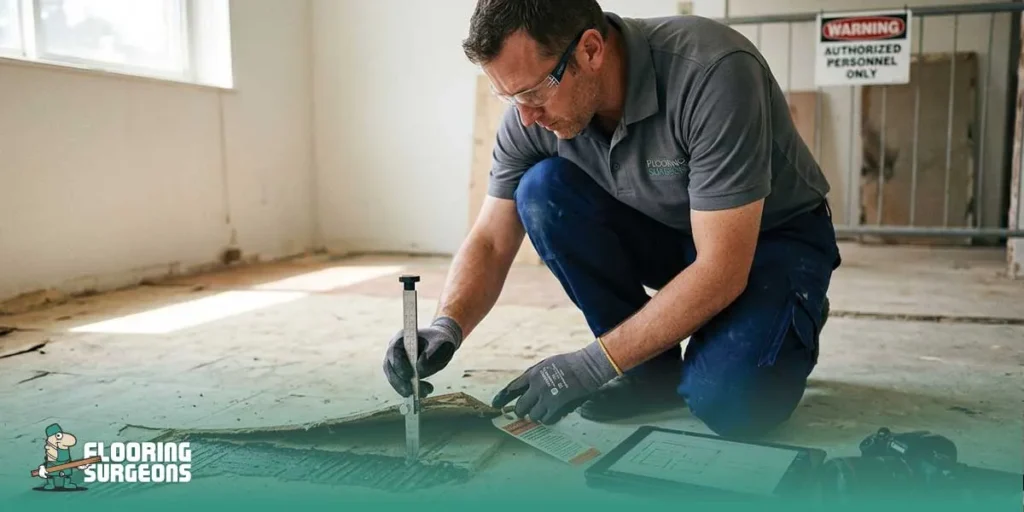
A professional flooring assessment looks at the entire system, not just the visible surface. It identifies where asbestos may be present, evaluates its condition, and aligns the next steps with both safety regulations and the practical needs of the space.
More importantly, it connects risk management with flooring performance. That is where a specialist approach matters. At Flooring Surgeons, the goal is not just to identify risk, but to help businesses plan safe, compliant flooring outcomes that work in practice once the asbestos issue has been properly addressed. Instead of treating asbestos as an isolated issue, it becomes part of a structured plan that leads to safer, more durable, and compliant flooring outcomes.
Modern Flooring Alternatives After Asbestos Removal
Once asbestos is safely removed, the focus shifts from risk to performance. This is where businesses can significantly improve both functionality and long-term value. Modern commercial flooring options are designed to meet higher standards in durability, maintenance, and aesthetics.
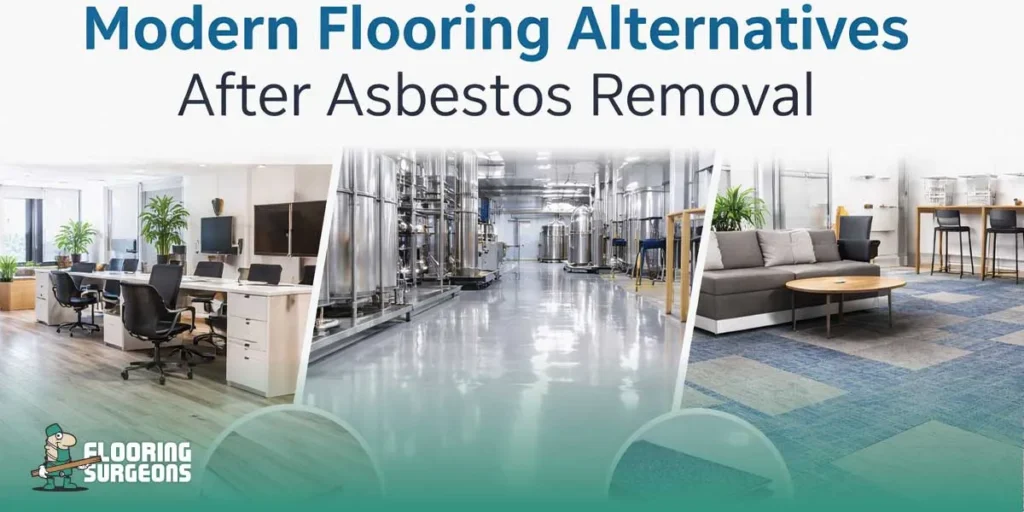
- Luxury vinyl flooring (LVT)
Durable, cost-effective, and visually versatile. Suitable for offices, retail spaces, and high-traffic environments. Durable, cost-effective, and visually versatile. Suitable for offices, retail spaces, and high-traffic environments. For businesses prioritising resilience and design flexibility, modern luxury vinyl flooring is often one of the most practical replacement routes. - Epoxy flooring systems
Seamless, highly resistant to chemicals and wear. Ideal for industrial and healthcare settings where hygiene and durability are critical. - Commercial carpet tiles
Flexible and easy to replace in sections. Works well in office environments where acoustic performance and comfort are important.
Choosing the right material is not just about appearance. It should align with how the space is used, expected foot traffic, and long-term maintenance strategy. For businesses weighing replacement after asbestos removal, comparing the best types of commercial flooring can make the decision far more practical and future-focused.
Final Thoughts: Managing Asbestos Risks the Smart Way
Asbestos in commercial flooring is not just a legacy issue, it is an active risk that requires informed decisions. Whether the flooring is intact or due for replacement, the key is understanding when to act and how to act properly. The most effective approach is not reactive. It combines identification, compliance, and forward planning. Businesses that treat asbestos as part of a wider flooring strategy avoid unnecessary disruption, reduce long-term costs, and maintain a safer environment for everyone using the space.
Making the right decision early, especially before renovation or replacement, can prevent far more complex problems later.

Haniye Ayanmanesh
As an expert writer for Flooring Surgeons, I combine technical SEO knowledge with a practical understanding of flooring, producing content that helps users make confident decisions while supporting long-term organic growth.