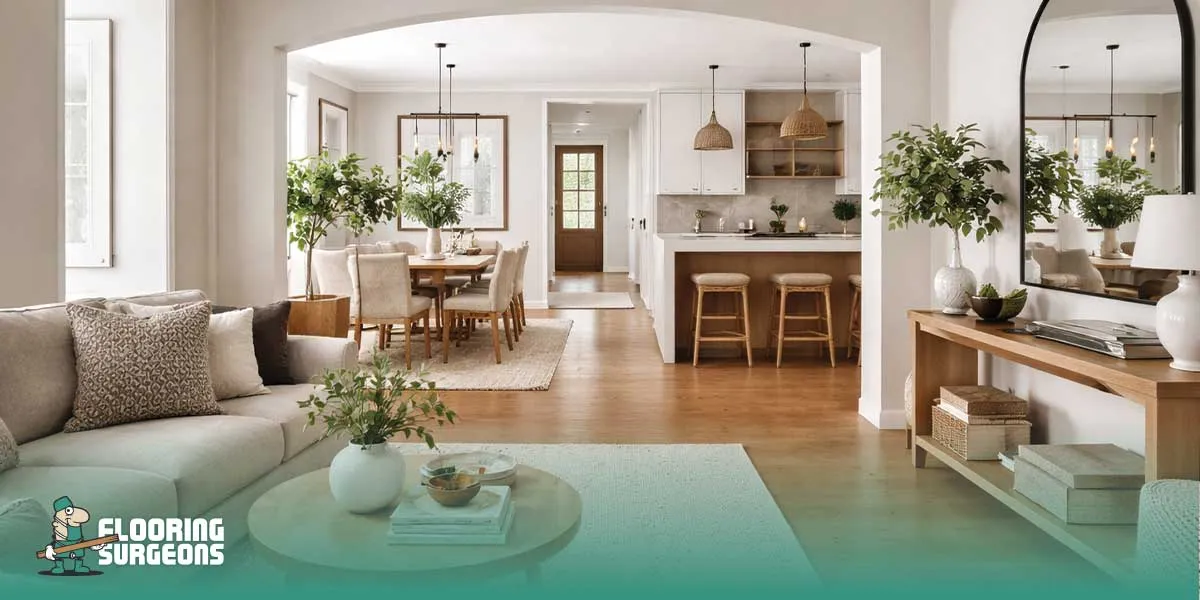


A biophilic design living room reconnects everyday living with nature by using natural materials, balanced light, and calming textures. The most crucial decision in this process is flooring. If you want a clear answer right away, here it is. To create a biophilic living room, choose flooring that looks natural, feels warm underfoot, supports comfort and acoustics, and works with your real lifestyle. Everything else builds on that foundation.
The best biophilic flooring ideas are not limited to visual style. A floor can look natural and still fail if it feels cold, echoes sound, or requires unrealistic maintenance. Actual biophilic flooring supports calm, reduces visual stress, and makes the space feel grounded and comfortable for daily use. This is why flooring plays a bigger role than plants or decor in long-term biophilic interior design. In this article, you will learn which biophilic flooring options actually work in living rooms, how light and texture influence the overall feeling of the space, and which common choices break the biophilic effect instead of enhancing it. If you only needed a quick direction, you already have it. If you want to make a confident and practical decision, the rest of the guide explains it step by step without unnecessary complexity.
Table of contents
What Is Biophilic Design and Why It Matters in Living Room Spaces
Biophilic design is an interior design approach that brings elements of nature into living spaces to improve comfort, well-being, and emotional balance. In a living room, this means using natural materials, organic textures, daylight, and spatial harmony to create a space that feels calm, grounded, and genuinely comfortable to spend time in. Biophilic design matters most in living rooms because this is the space where people relax, socialise, and spend the longest uninterrupted time. Unlike kitchens or bedrooms, the living room must support multiple activities at once, from resting and reading to hosting guests. A poorly designed space increases visual noise and mental fatigue, while a biophilic living room reduces stress and makes the environment feel stable and welcoming.
The key role of biophilic design in living rooms is not decoration, but sensory balance. Natural colours, soft contrasts, and tactile materials help the brain relax without conscious effort. When these elements are missing, even a stylish living room can feel cold or overstimulating. Flooring is central to biophilic design because it is the largest continuous surface in the living room and directly affects how the space feels underfoot, visually, and acoustically. A natural-looking floor that also feels warm, quiet, and comfortable strengthens the connection to nature. A floor that only imitates nature visually can weaken the entire design, no matter how many plants or accessories are added.
In short, biophilic design in living room spaces is about creating a natural rhythm between materials, light, and comfort. When done correctly, the room feels effortless and calm rather than styled or forced.
Key Principles of Biophilic Living Room Design
Biophilic living room design is built on a small number of core principles that shape how the space looks, feels, and functions on a daily basis. When these principles are applied correctly, the room feels calm, balanced, and naturally comfortable rather than decorative or forced. Understanding these foundations makes it easier to choose the right materials, lighting, and flooring without overcomplicating the design.
Connection to Nature Through Materials, Light, and Texture
Biophilic living room design works when nature is felt, not just seen. The strongest spaces rely on a clear set of principles rather than decorative overload.
- Natural materials such as wood, stone, and wool create visual calm and authenticity.
- Balanced natural light supports mood and reduces visual fatigue throughout the day.
- Organic textures add depth and warmth, preventing the space from feeling flat or artificial
- Muted nature-inspired colours help the room feel grounded instead of overstimulating.
When these elements work together, the living room feels effortless rather than styled.
Visual vs Sensory Biophilic Design: What Most Homes Miss
Most homes stop at visual biophilic design, which is where the real problem starts.
- Visual biophilic design focuses on how the space looks in photos.
- plants
- wood tones
- natural colours
- plants
- Sensory biophilic design focuses on how the space feels in real life.
- warmth underfoot
- reduced echo and noise
- Comfortable textures you interact with daily
- warmth underfoot
The mistake many living rooms make is choosing materials that look natural but feel cold, loud, or uncomfortable. Actual biophilic design prioritises sensory comfort first, then visual harmony follows naturally.
Why Flooring Plays a Critical Role in Biophilic Living Room Design
Flooring is the most influential surface in a biophilic living room because it affects comfort, sound, temperature, and emotional balance every single day. While plants and decor add visual cues, the floor shapes how the space feels the moment you walk into it. This is precisely where most competitors stay shallow and miss the real impact.
How Flooring Affects Warmth, Acoustics, and Comfort
The right biophilic flooring improves daily comfort in ways that are easy to feel but often ignored during design decisions.
- Warmth underfoot creates a sense of physical comfort and relaxation, especially in living rooms used for long periods.
- Acoustic softness reduces echo and sharp sound reflection, making conversations and quiet moments more pleasant.
- Surface stability and texture influence how calm and grounded the room feels during everyday movement
- Thermal balance helps the space feel neither cold nor sterile, even with minimal decor.
A floor that looks natural but feels cold or noisy breaks the biophilic experience immediately.
The Psychological Impact of Natural Flooring Underfoot
Natural flooring influences the mind as much as the body.
- Organic textures help reduce subconscious stress and visual tension.
- Natural colour variation prevents the space from feeling rigid or artificial.
- Consistent, grounded surfaces create a sense of safety and spatial stability.
- Tactile connection to nature strengthens emotional comfort without visual distraction.
This is why biophilic living rooms succeed or fail at the floor level. When the flooring supports both sensory comfort and natural aesthetics, the entire space feels calmer, more balanced, and easier to live in without needing excessive styling.
Best Biophilic Flooring Ideas for Living Rooms
The best biophilic flooring for a living room is the option that balances natural appearance, sensory comfort, and real-life usability. Instead of treating all materials as equal, the table below compares the most effective biophilic flooring ideas based on comfort, maintenance, and how well they support a genuine connection to nature.
| Flooring Type | Biophilic Strengths | Limitations to Consider | Best For Living Rooms That |
| Natural Wood Flooring | Warm underfoot, organic texture, strong visual connection to nature, ages beautifully | Sensitive to moisture, requires care, and has a higher cost | Prioritise comfort, warmth, and long-term aesthetic value |
| Stone and Natural Tile Flooring | Strong natural character, visual depth, works well with plants and light | Cold underfoot, reflective acoustics, less comfortable for extended use | Focus on visual impact and climate-controlled spaces |
| Engineered Wood and Sustainable Alternatives | Natural look with improved stability, better moisture resistance, and more consistent performance | Less tactile variation than solid wood | Need a balance between natural feel and practicality |
| Biophilic Vinyl and LVT | Low maintenance, durable, compatible with underfloor heating, and wide natural designs | Weaker tactile connection, relies heavily on visual realism | Require durability, easy upkeep, or family-friendly performance |
There is no single perfect biophilic flooring choice for every living room. The right option depends on how the space is used, how much maintenance is realistic, and whether comfort or visual impact is the main priority. A biophilic living room succeeds when flooring decisions are made based on daily experience, not just appearance.
Choosing the Right Biophilic Flooring Based on Your Lifestyle
Biophilic flooring only works when it fits the way you actually live, not an idealised version of your home. Lifestyle factors such as children, pets, light levels, and daily foot traffic directly affect whether a flooring choice feels calming or becomes a constant source of frustration. This is where most biophilic interiors quietly fail.
Biophilic Flooring for Homes with Pets and Children
In active living rooms, flooring must balance natural aesthetics with resilience.
- Scratch-resistant surfaces help preserve a calm appearance over time.
- Textured or matte finishes hide wear better than perfectly smooth surfaces.
- Engineered wood and high-quality biophilic LVT offer a natural look with better impact resistance.
- Warm and forgiving underfoot materials improve comfort for children playing on the floor.
The key mistake is choosing delicate natural flooring that increases stress instead of reducing it.
Low-Maintenance Biophilic Flooring Options
Biophilic design should simplify daily life, not add constant upkeep.
- Engineered wood provides visual warmth with more stable performance.
- Biophilic vinyl and LVT deliver natural patterns with minimal maintenance.
- Finishes that resist staining and moisture protect the natural look long term
- Consistent surface tones reduce the visibility of dust and daily wear.
Low maintenance does not mean low quality. It means choosing materials that support calm living over time.
Best Flooring Choices for Bright vs Low Light Living Rooms
Light levels change how biophilic flooring is perceived and felt.
- Bright living rooms benefit from subtle grain patterns and softer natural tones.
- Low-light spaces feel warmer with richer wood colours and textured finishes.
- Highly reflective floors can overwhelm darker rooms and reduce comfort.
- Natural variation in tone helps prevent flat or lifeless interiors.
Matching flooring to light conditions ensures the living room feels balanced throughout the day, not just at peak sunlight hours.
Common Biophilic Living Room Design Mistakes to Avoid
Many biophilic living rooms fail not because of poor intention, but because of unbalanced decisions. Avoiding these common mistakes makes the difference between a calming space and one that feels artificial or uncomfortable.
- Overusing plants without balancing them with natural materials, which creates visual clutter instead of calm
- Choosing flooring that looks natural but feels artificial, leading to cold, noisy, or uncomfortable living spaces
- Ignoring texture and tactile comfort results in rooms that feel flat or uninviting
- Overlooking sound and acoustics, which can make the living room echo and feel stressful
- Focusing on trends rather than lifestyle needs, causing long-term dissatisfaction
- Using too many contrasting natural elements, which breaks visual harmony and creates noise
Correcting these mistakes often improves the space more than adding new decor.
How to Combine Biophilic Flooring with Furniture and Decor
Biophilic flooring should act as a quiet foundation rather than a statement competing for attention—furniture and decor work best when they reinforce the natural rhythm created by the floor. Soft textiles, simple silhouettes, and materials like wood, linen, leather, and wool help maintain balance without overwhelming the space. Plants should be placed intentionally to support flow and light rather than fill empty corners.
The goal is cohesion, not abundance. When flooring, furniture, and decor share a natural language, the living room feels grounded, comfortable, and easy to live in.
Is Biophilic Flooring Worth It for Modern Living Rooms?
Biophilic flooring is worth it when it improves daily comfort, not just visual appeal. In modern living rooms, the right flooring choice can reduce stress, enhance warmth, and support a more balanced lifestyle. While some biophilic materials require higher upfront investment, they often deliver long-term satisfaction through durability, comfort, and timeless design.
For homeowners seeking a living space that feels calm, functional, and genuinely connected to nature, biophilic flooring is not a trend. It is a practical foundation for better living.

Haniye Ayanmanesh
As an expert writer for Flooring Surgeons, I combine technical SEO knowledge with a practical understanding of flooring, producing content that helps users make confident decisions while supporting long-term organic growth.