


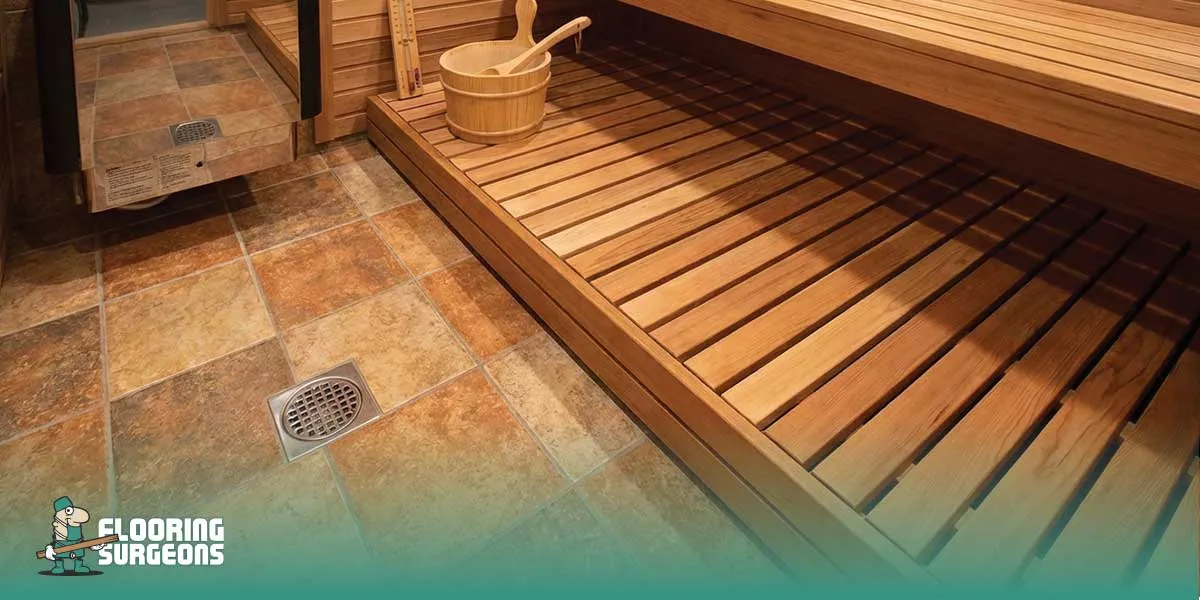
The best floor for a sauna is a tiled or sealed concrete floor with proper insulation and drainage underneath, or a raised wooden floor system made from low-toxicity, heat-stable wood such as thermally treated timber or cedar.
These options consistently perform best because they tolerate high heat, constant moisture, and regular water exposure without becoming slippery, unsafe, or structurally unstable over time.
For most modern saunas—primarily indoor or frequently used ones—non-slip ceramic or porcelain tiles over an insulated concrete base are the most reliable and lowest-maintenance choice. In contrast, raised wooden floors are preferred when comfort underfoot, warmth, and a traditional sauna feel matter more, provided the wood is non-toxic and ventilated adequately from below.
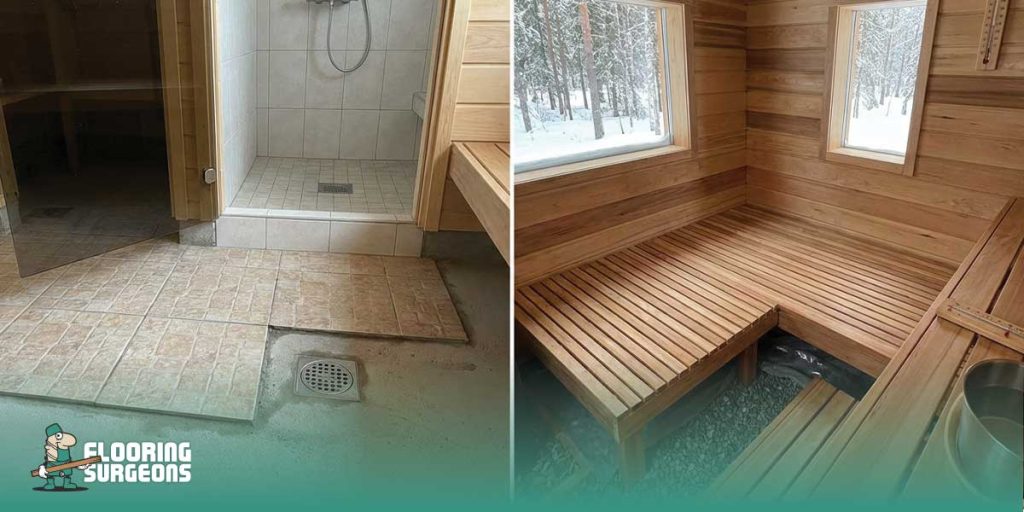
There is no universal solution that fits every sauna. The best floor depends on indoor vs outdoor use, moisture management, insulation strategy, and long-term durability expectations. The sections below explain why these flooring types work, when they fail, and how to choose the right option for your specific sauna setup.
Table of contents
What Is the Best Floor Material for a Sauna?
In a sauna environment, flooring materials are pushed far beyond normal residential conditions. Constant heat, steam, splashed water, and rapid temperature changes quickly expose weak materials. The best sauna floor materials are those that remain dimensionally stable, safe to walk on, and chemically inert under these conditions. Hard, non-absorbent surfaces such as ceramic or porcelain tile perform well because they do not swell, soften, or degrade when exposed to heat and moisture. When installed over a properly insulated base, they maintain surface stability while allowing water to drain and evaporate efficiently. This makes them exceptionally reliable for saunas that are used frequently or cleaned with water.
Wooden floors can also work in a sauna, but only when airflow and material selection are handled correctly. A raised floor system prevents trapped moisture, while heat-stable, low-resin woods reduce the risk of odour release or surface degradation. Without ventilation underneath, even suitable wood types can fail prematurely.
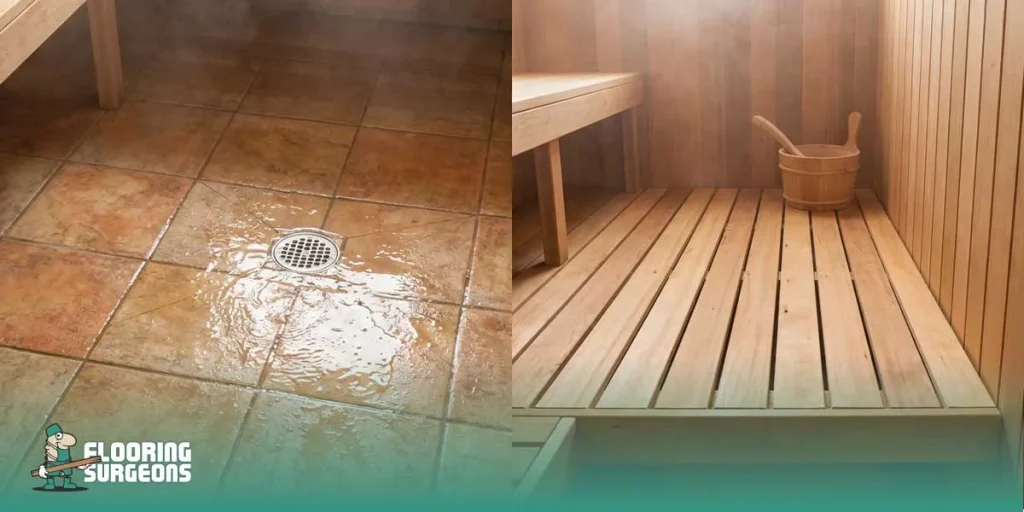
Materials that trap moisture, rely on adhesives, or soften under heat consistently underperform in sauna conditions. Over time, these materials become slippery, unhygienic, or structurally compromised, which is why flooring choice in a sauna is less about comfort or style and more about environmental resistance and long-term reliability. Understanding how each material behaves under heat and moisture is essential before choosing the right floor. The sections that follow examine these behaviours in detail and explain where each option succeeds or fails.
Sauna Flooring Materials Compared (Pros, Cons & Use Cases)
Choosing a sauna floor is not about looks or comfort alone. Each material behaves very differently under heat, moisture, and repeated water exposure. The comparison below shows which materials actually work in real sauna conditions, and where each one makes sense.
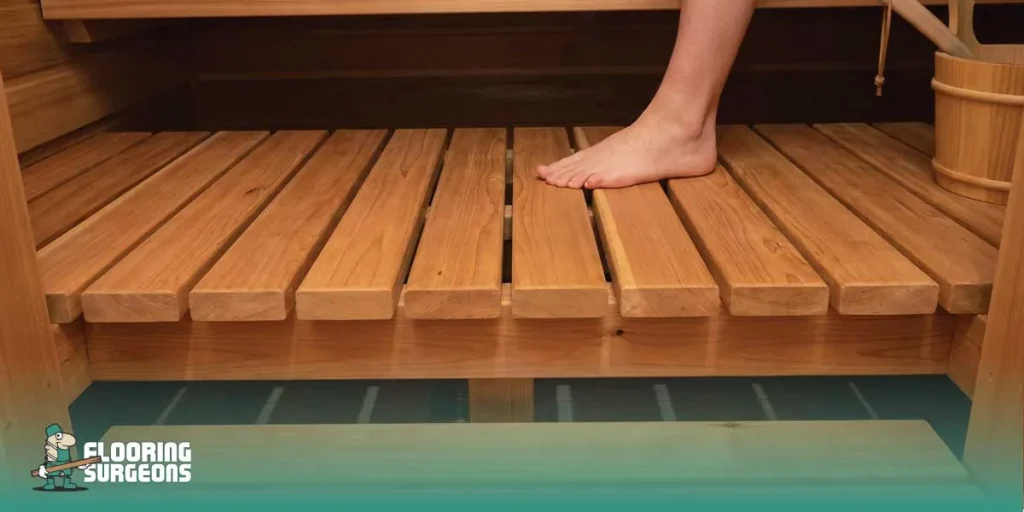
Wood Sauna Floors (Cedar, Thermostated Wood, Hemlock)
Wood floors are best suited for saunas where warmth underfoot and a traditional feel are priorities. They stay comfortable to walk on and reduce the “cold shock” associated with hard surfaces. However, wood only performs well when it is low-resin, untreated, and adequately ventilated from below. Without airflow, moisture becomes trapped and leads to rot or odour. Unlike engineered wood flooring, which is designed for stable indoor conditions, sauna floors must handle extreme heat and constant moisture without relying on layered cores or adhesives.
Best use case:
Indoor saunas with a raised floor system and controlled moisture levels.
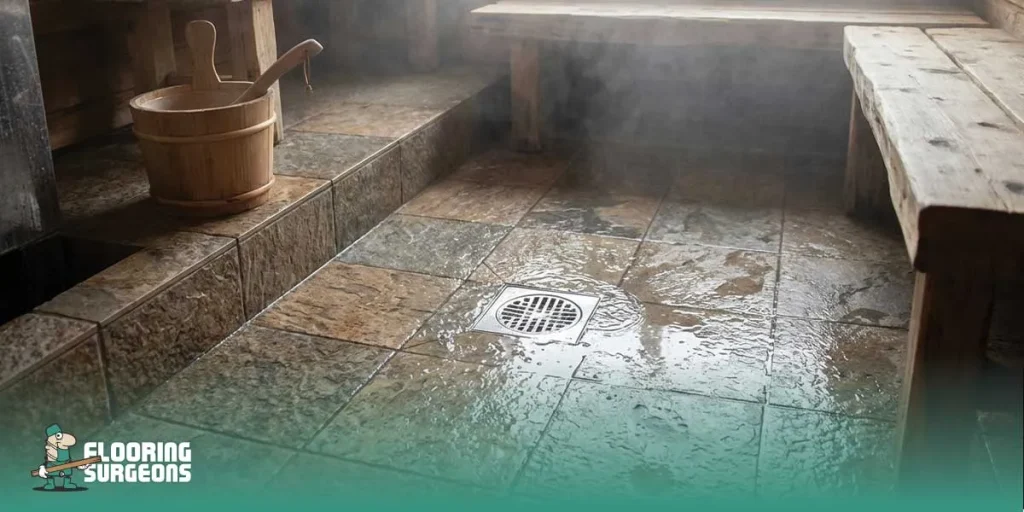
Tile & Stone Flooring in Saunas
Tile and stone floors offer the highest durability and lowest maintenance. They are unaffected by heat, do not absorb moisture, and are easy to clean. The main downside is comfort—these surfaces feel colder and harder unless insulation is installed underneath. Slip resistance is critical, so textured or matte finishes are essential.
Best use case:
High-use indoor saunas, commercial setups, or homeowners prioritising longevity and hygiene.
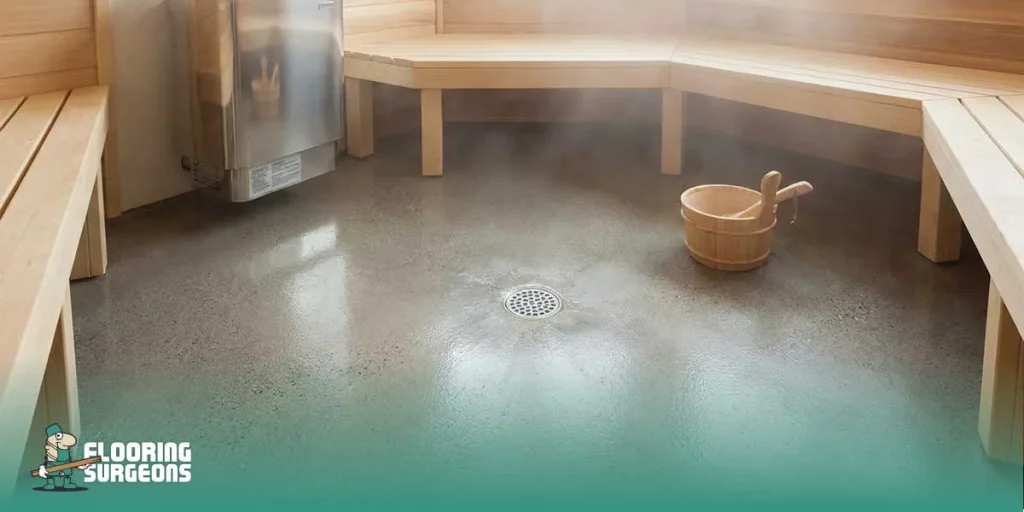
Concrete Sauna Floors – Is It a Good Idea?
Concrete floors can work well in a sauna, but only when properly insulated and sealed. Bare concrete is cold, uncomfortable, and prone to heat loss. Insulated concrete, on the other hand, is highly durable and handles moisture better than most materials. Surface treatment determines whether it is safe or slippery.
Best use case:
Outdoor saunas or modern indoor saunas with sound insulation and drainage design.
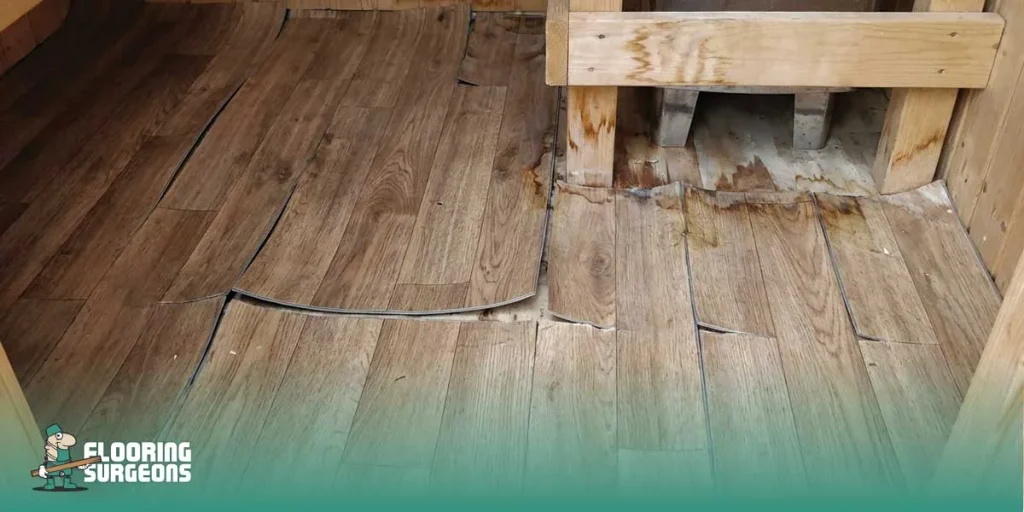
Vinyl, Laminate & Synthetic Floors (Why They Fail)
Synthetic flooring materials are not suitable for saunas. Heat causes them to soften, warp, or release chemicals, while moisture breaks down adhesives and internal layers. Over time, these floors become slippery, unhygienic, and unsafe.
Best use case:
None. These materials should always be avoided in sauna environments.
Quick Comparison Table: Sauna Flooring Materials
| Flooring Material | Heat Resistance | Moisture Handling | Comfort Underfoot | Maintenance | Best Use Case |
| Wood (Cedar, Thermo-treated) | Good | Moderate (needs airflow) | High | Medium | Indoor saunas with raised floors |
| Tile / Stone | Excellent | Excellent | Low–Medium | Low | High-use indoor or commercial saunas |
| Insulated Concrete | Excellent | Excellent | Low | Low | Outdoor saunas or modern builds |
| Vinyl / Laminate | Poor | Poor | Medium (short-term) | High | Not suitable |
What Is the Least Toxic Wood for a Sauna?
The least toxic wood for a sauna is thermally treated wood, Western Red Cedar, and Hemlock. These woods perform best in high-heat environments because they contain low natural resin, release minimal VOCs when heated, and do not rely on chemical treatments. This makes them safer to breathe around and more stable over long-term sauna use. Toxicity in a sauna is not about whether wood is “natural” or not. It depends on how the wood reacts to heat, what gases it releases, and whether moisture causes it to break down or smell over time.
Why Low-VOC and Resin-Free Woods Matter
In a sauna, wood is constantly exposed to temperatures that can exceed normal indoor conditions. Woods with high resin content or chemical treatments can release strong odours, irritants, or harmful compounds when heated. Over time, this affects air quality and user comfort. Low-VOC, resin-poor woods remain stable under heat. They do not sweat sap, produce harsh smells, or degrade quickly. This is especially important in enclosed sauna spaces where ventilation is limited and exposure is repeated.
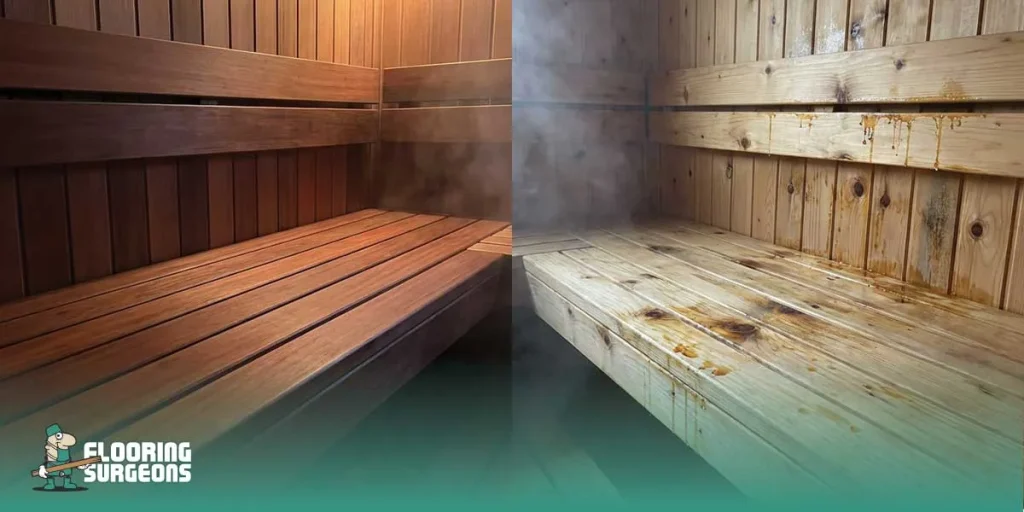
Woods to Avoid in High-Heat Environments
Some common construction woods perform poorly and should not be used in saunas. Resin-heavy softwoods can leak sap, while treated or engineered woods may release chemicals or adhesives when heated. These issues worsen with time and frequent sauna use. Avoiding the wrong wood is just as important as choosing the right one, especially for benches, flooring, and any surface that heats up directly.
Sauna Wood Toxicity Comparison Table
| Wood Type | VOC Risk | Resin Content | Heat Stability | Suitable for Saunas |
| Thermo-treated wood | Very Low | Very Low | Excellent | Yes |
| Western Red Cedar | Low | Low | Excellent | Yes |
| Hemlock | Very Low | Very Low | Good | Yes |
| Pine / Spruce | Medium–High | High | Poor | No |
| Pressure-treated wood | High | N/A | Poor | No |
| Engineered or glued wood | High | N/A | Poor | No |
Can a Sauna Floor Be Concrete?
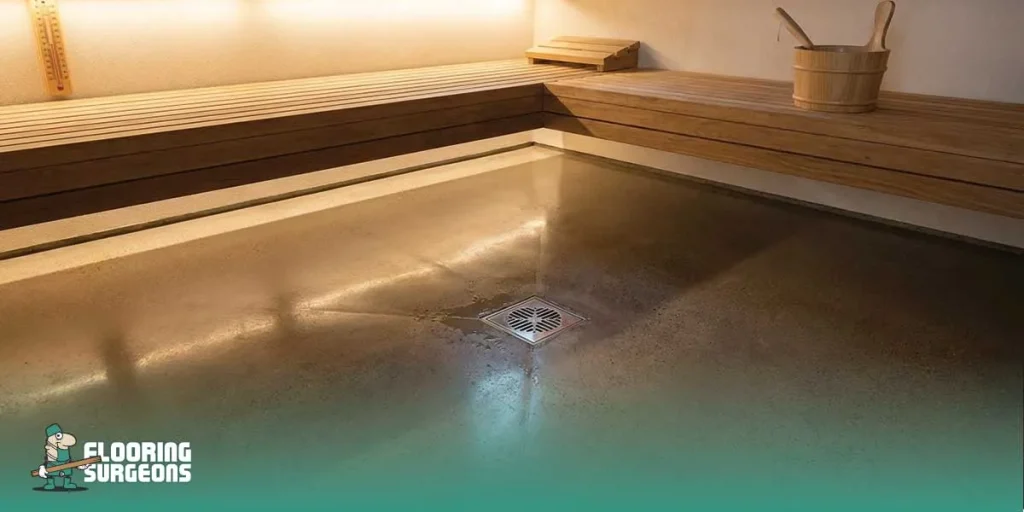
Yes, a sauna floor can be concrete, but only when it is insulated, sealed, and designed for moisture control. Bare concrete performs poorly in saunas because it absorbs cold, pulls heat out of the space, and becomes uncomfortable and inefficient over time. When concrete fails in a sauna, the problem is almost never the material itself—it is poor insulation, surface treatment, or drainage design.
When concrete works and when it fails depends on these factors:
- Concrete works when it is thermally insulated from below to prevent heat loss and cold shock.
- It performs well when the surface is sealed or tiled to reduce moisture absorption.
- Concrete fails when used bare or uninsulated, causing cold floors and energy inefficiency.
- Poor slope or drainage leads to standing water, surface damage, and hygiene issues.
Cold shock, moisture, and long-term cracking are the main risks to manage:
- Uninsulated concrete feels cold underfoot, especially in winter or outdoor saunas.
- Repeated heating and cooling cycles can cause micro-cracks if expansion is not accounted for.
- Moisture penetration accelerates cracking and surface deterioration when sealing is inadequate.
Concrete is a durable option for saunas, but it is not a shortcut solution. Without insulation, sealing, and drainage, it creates more problems than it solves. With proper construction, it becomes one of the most stable long-term flooring options, especially for outdoor or modern sauna designs.
Indoor vs Outdoor Sauna Flooring: What Changes and Why They Matter
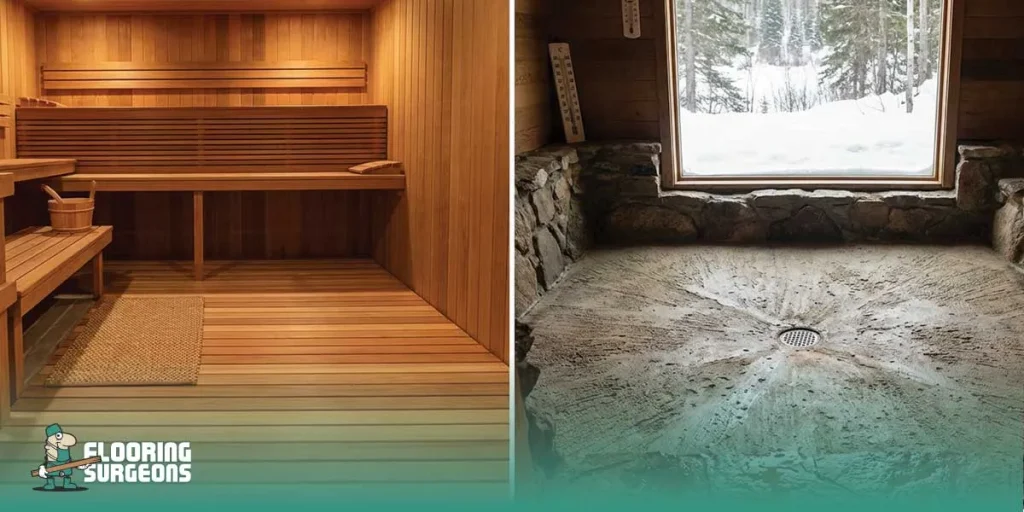
The main difference between indoor and outdoor sauna flooring is the exposure level. Indoor saunas deal mostly with heat and controlled moisture, while outdoor saunas face temperature swings, ground moisture, and weather-related stress. Flooring that works indoors can fail quickly outdoors if these differences are ignored. Outdoor saunas, in particular, benefit from the same material logic used in moisture-resistant flooring, where constant exposure to humidity and temperature changes is expected.
What changes indoors:
- Heat is stable and predictable
- Moisture is easier to control
- Comfort underfoot matters more.
- Wood and tile both perform well when installed correctly.
What changes outdoors:
- Floors must handle cold, rain, and ground moisture
- Insulation becomes critical to prevent heat loss.
- Concrete and tile outperform wood long-term.
- Drainage and vapour barriers are non-negotiable.
Ignoring this distinction leads to warped floors, cold surfaces, and premature material failure—especially in outdoor builds.
Sauna Floor Safety: Slip Resistance, Drainage & Hygiene
Sauna floors are regularly wet, hot, and walked on barefoot. Safety failures here usually come from slippery surfaces and trapped moisture, not from heat itself. This is why sauna floors often follow the same principles used in wet room flooring, where slip resistance, drainage, and moisture control are critical for long-term safety and hygiene.
Key safety factors to get right:
- Use textured or matte finishes on tile and concrete to reduce slipping
- Avoid polished stone or smooth sealed surfaces.
- Design floors with a slight slope to guide water toward a drain
- Ensure surfaces can be cleaned easily to prevent bacteria and odour buildup.
A floor that looks good but becomes slippery when wet is unsafe, regardless of material quality.
Subfloor Preparation & Vapour Barriers for Sauna Floors
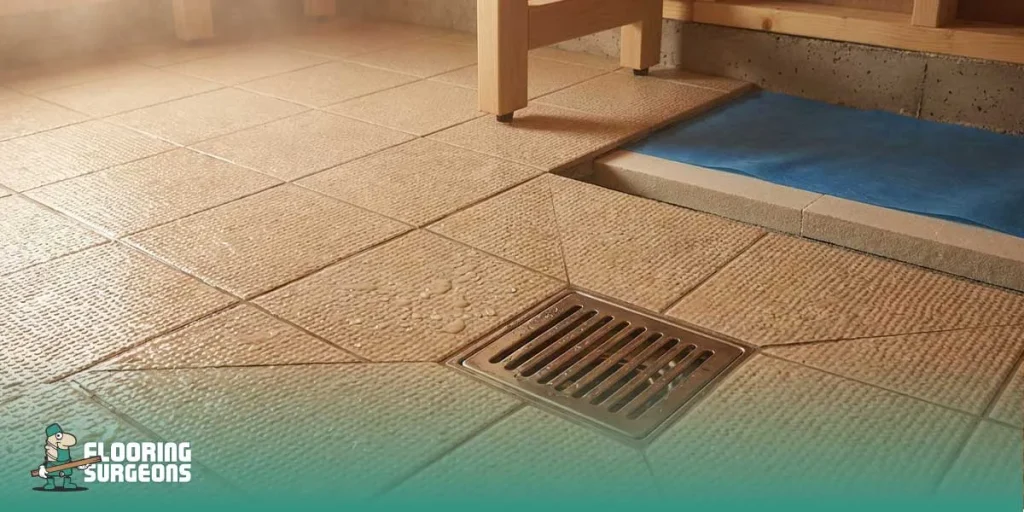
Most sauna floor problems start below the visible surface. A strong flooring material cannot compensate for poor subfloor preparation.
What proper subfloor design includes:
- Thermal insulation to prevent heat loss and cold shock
- A vapour barrier to stop ground moisture from rising into the floor
- Separation between wood elements and concrete to prevent rot
- Adequate airflow beneath raised floors
Skipping these steps leads to cold floors, trapped moisture, mould risk, and structural damage—even when high-quality materials are used.
Final Recommendation: Choosing the Best Floor for Your Sauna Setup
The best floor for your sauna depends on how the space is used, where it is located, and how well moisture and heat are managed. For most indoor saunas, a non-slip tile or sealed concrete floor over proper insulation offers the best balance of durability, hygiene, and long-term performance. This setup handles heat and water reliably and requires minimal maintenance over time. When comfort and warmth underfoot are a priority, a raised wooden floor made from low-toxicity, heat-stable wood is a solid alternative, provided ventilation and moisture control are handled correctly.
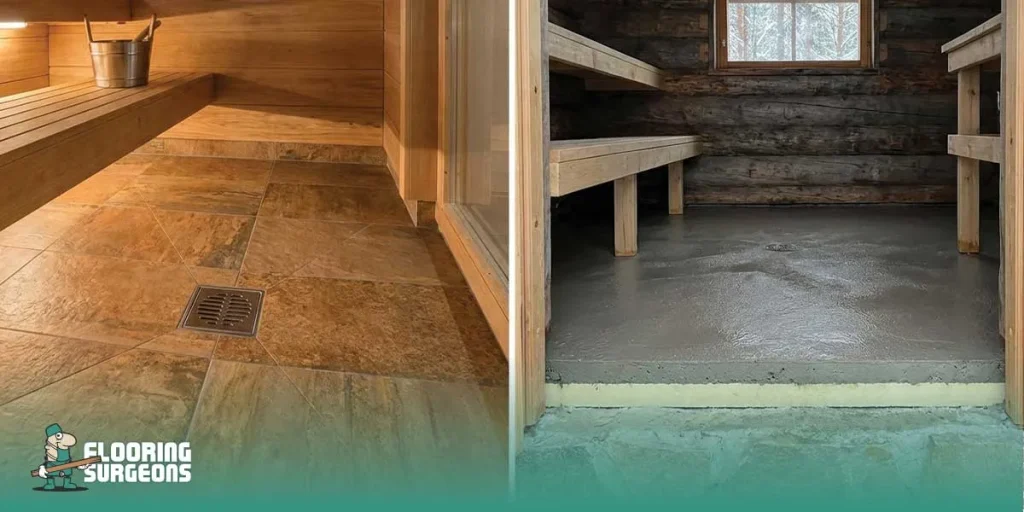
Outdoor saunas place far greater stress on flooring materials, making insulated concrete or tiled surfaces the most dependable choice. These materials resist temperature swings, ground moisture, and long-term structural movement better than wood. Regardless of material, the success of any sauna floor depends less on appearance and more on subfloor preparation, insulation, drainage, and surface safety. Choosing a floor that matches your sauna’s environment and usage patterns ensures better comfort, higher energy efficiency, and fewer problems over time. At Flooring Surgeons, flooring decisions are approached from a performance-first perspective, focusing on how materials behave in demanding environments rather than how they look in a showroom.

Haniye Ayanmanesh
As an expert writer for Flooring Surgeons, I combine technical SEO knowledge with a practical understanding of flooring, producing content that helps users make confident decisions while supporting long-term organic growth.