


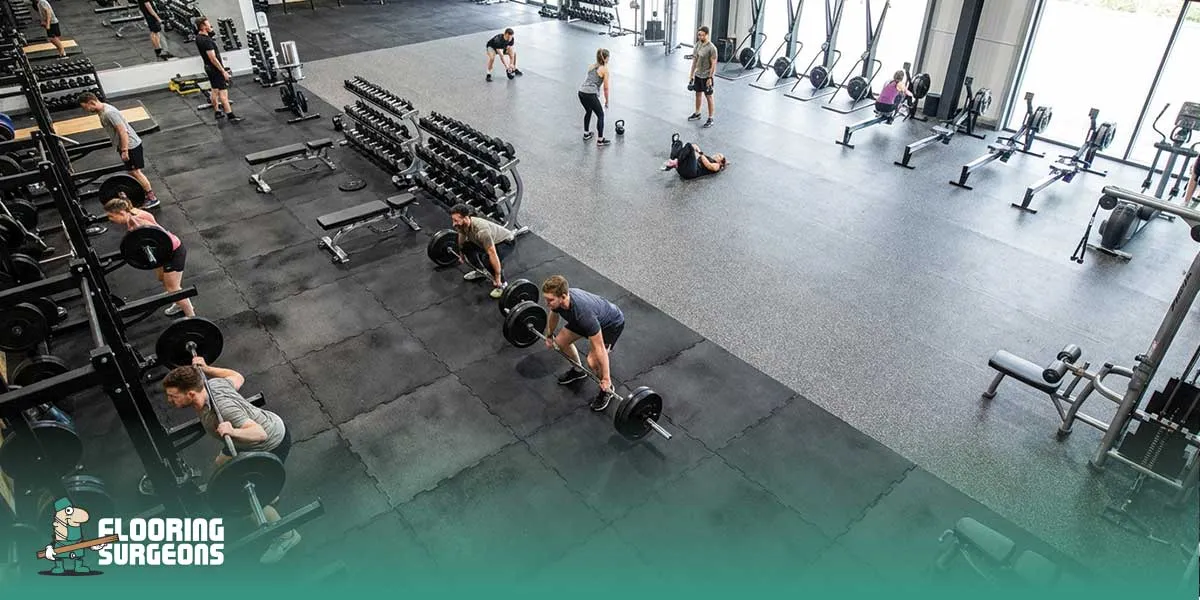
The best flooring for a gym is rubber flooring, specifically rubber rolls or interlocking rubber tiles, because it absorbs impact, protects joints, reduces noise, and handles sweat and heavy equipment without damage. For most home gyms and commercial gyms alike, rubber flooring offers the best balance of safety, durability, hygiene, and performance.
That said, there is no single option that works equally well for every gym. The right flooring depends on how the gym is used. Heavy weightlifting requires thicker, denser flooring to protect both the floor and equipment. Cardio-focused gyms prioritise shock absorption and noise reduction. Functional training and HIIT demand stable, non-slip surfaces, while budget and space constraints can change what makes sense for a home gym versus a commercial facility.
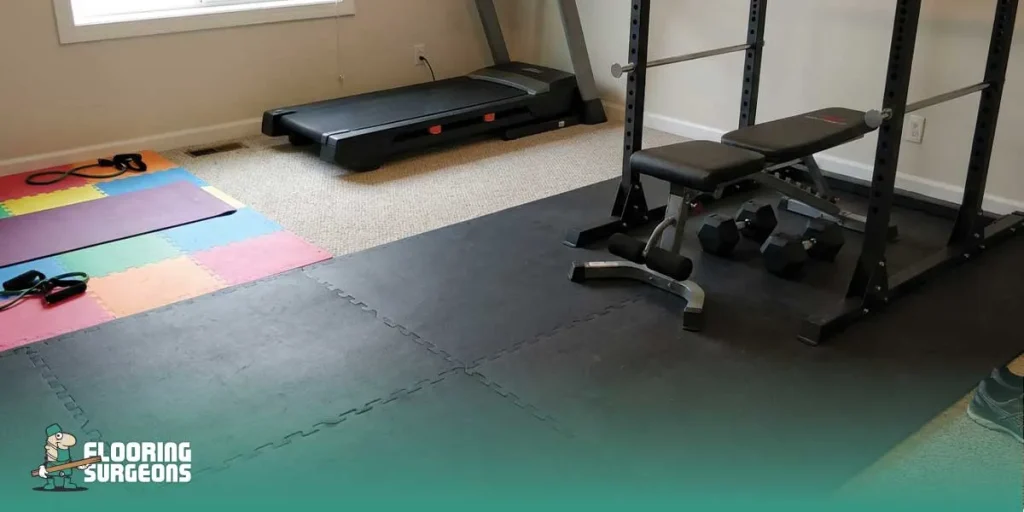
This guide explains which gym flooring materials actually perform well, when alternatives like foam, carpet, or hard floors make sense, and where they fail. If you only needed the short answer, rubber flooring is your safest choice. If you want to choose the right floor for your specific workout type, space, and long-term use, the sections below break it down clearly and without unnecessary detail.
Table of contents
Gym Flooring Materials Compared (Pros, Cons & Best Use Cases)
Choosing gym flooring is less about appearance and more about how you train, how much impact the floor takes, and how durable it needs to be. Below is a clear, no-nonsense comparison to help you make a confident choice.
Rubber Gym Flooring (Mats, Rolls & Tiles)
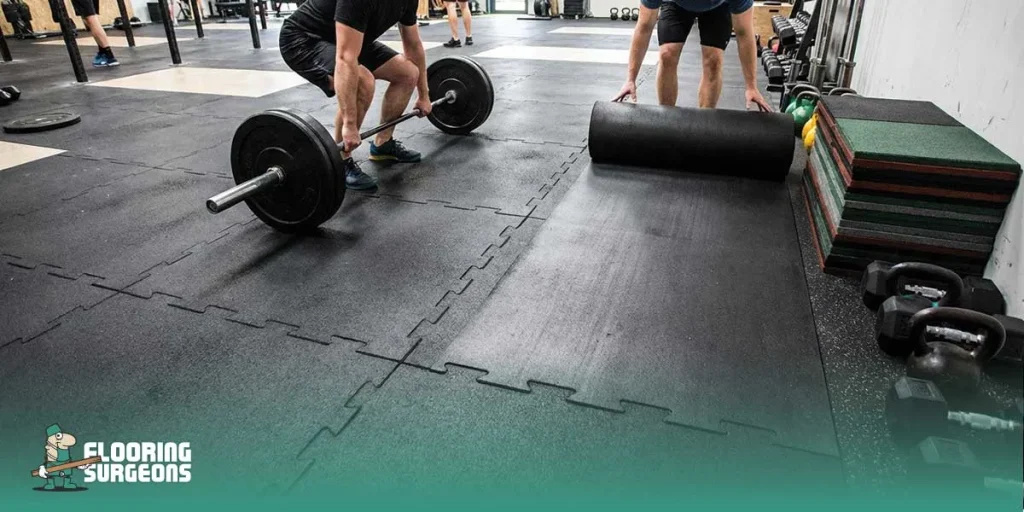
If you want the safest all-round option, rubber flooring is the best choice. It absorbs impact, protects joints, reduces noise, and handles sweat and heavy equipment without breaking down.
- Best for: weightlifting, HIIT, CrossFit, home and commercial gyms
- Key point: heavier weights require thicker, denser rubber
If you’re unsure what to choose, rubber is the option you’re least likely to regret.
Foam Gym Flooring (When It Works and When It Doesn’t)
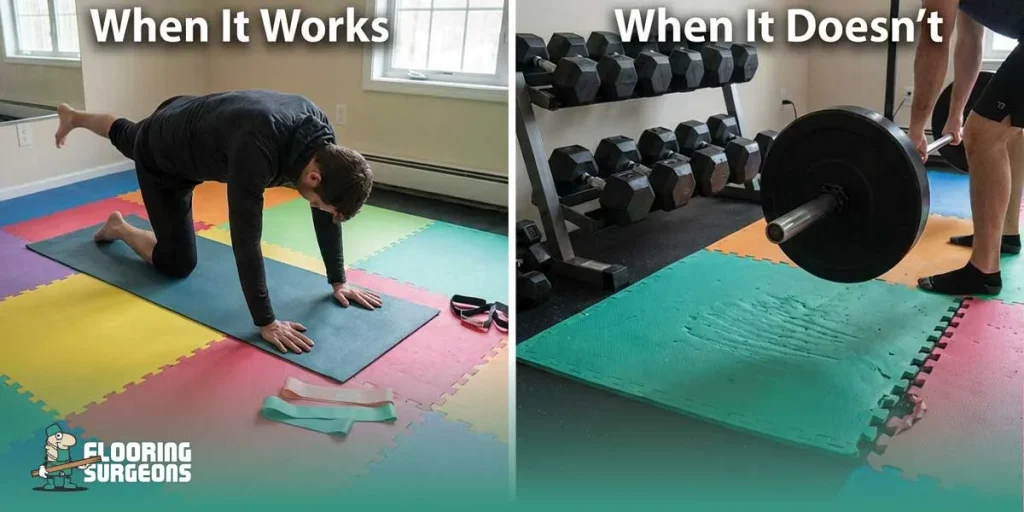
Foam flooring feels soft and comfortable, but it’s designed for low-impact training only. It compresses easily and does not handle heavy loads well.
- Best for: yoga, Pilates, stretching, bodyweight exercises. For low-impact training like stretching and mobility work, similar principles apply to yoga studio flooring, where comfort, grip, and joint protection matter more than heavy load resistance.
- Not suitable for: free weights, machines, or high-impact workouts
Foam works when training is light. For anything more intense, it becomes a weak point.
Carpet & Carpet Tiles in Gyms
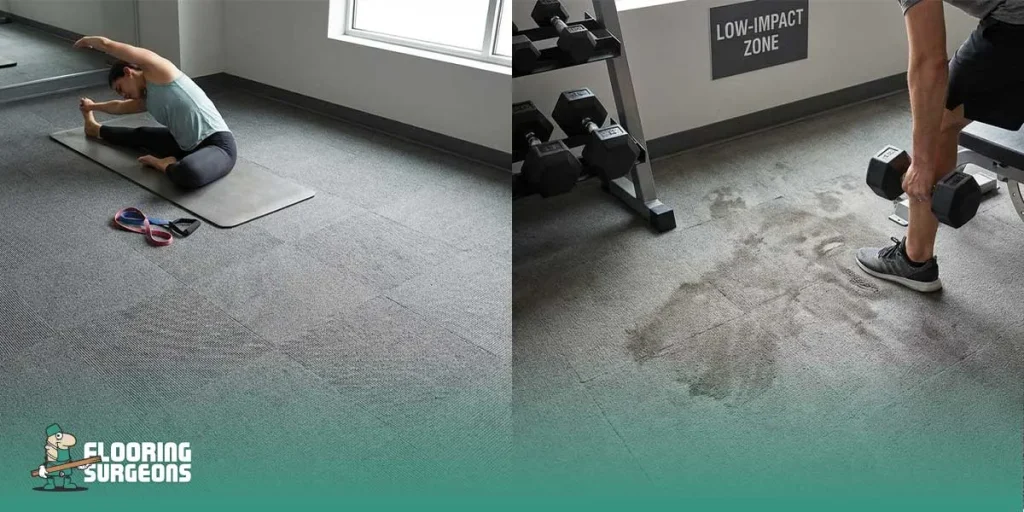
Carpet is chosen for comfort and noise reduction, not performance. While it may feel pleasant, it struggles with hygiene and durability.
- Best for: very light training or low-noise spaces
- Main issue: absorbs sweat, traps odours, difficult to clean
For serious training or long-term use, carpet is rarely a good idea.
Hard Floors (Concrete, Vinyl, Wood) – Are They Ever a Good Idea?
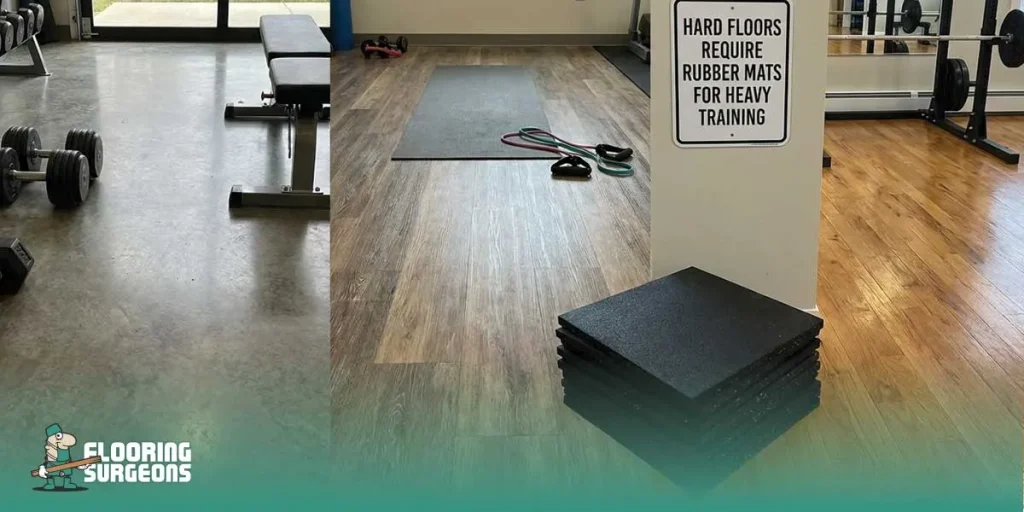
At Flooring Surgeons, gym flooring recommendations are based on performance, safety, and long-term use rather than appearance alone. Hard floors on their own are not gym-friendly. They transfer impact directly to joints and increase injury risk. Unlike luxury vinyl flooring, which is designed for residential comfort, gym flooring must handle repeated impact, heavy equipment, and moisture without breaking down.
- Concrete: acceptable only with rubber flooring on top
- Vinyl and wood: unsuitable for real training loads
If your space has a hard floor, always add proper gym flooring on top.
Quick Comparison Table
| Flooring Type | Shock Absorption | Slip Resistance | Durability | Best For |
| Rubber | High | High | Very High | Most gyms, weights, HIIT |
| Foam | High (light use) | Medium | Low | Yoga, stretching |
| Carpet | Low | Medium | Low | Very light training |
| Hard floors | Very Low | Low–Medium | High (structure only) | Only with rubber overlay |
Are Gym Floors Better with Rolls or Tiles?
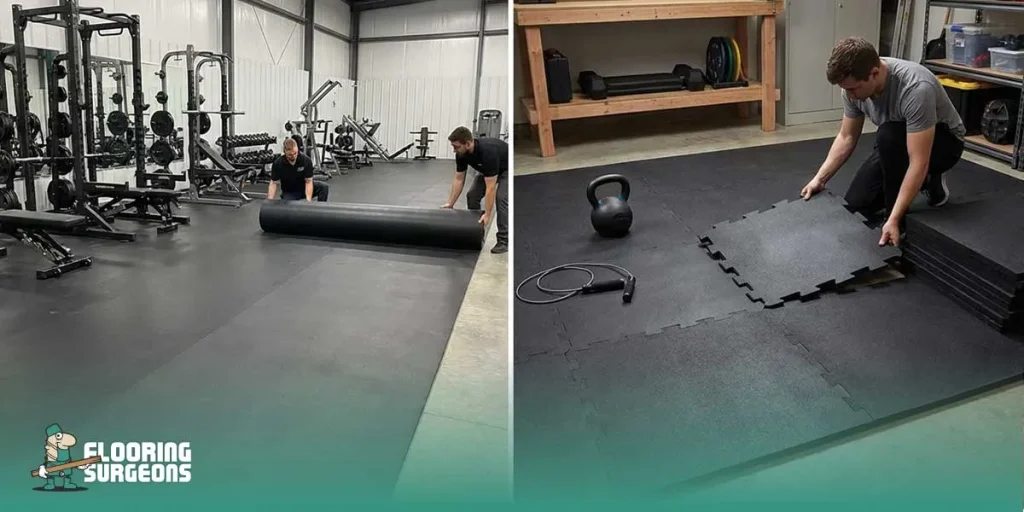
For most gyms, rubber rolls are the better choice, especially for medium to large spaces. Rolls create a seamless surface, which means better stability under equipment, fewer weak points, and easier cleaning. They also reduce the risk of edges lifting over time.
Rubber tiles make more sense when flexibility matters. They are easier to install, replace, and transport, which is useful for home gyms, rental spaces, or small rooms. The trade-off is that seams can shift slightly under heavy use if not installed properly.
In short:
- Choose rolls for permanence, heavy training, and a cleaner finish
- Choose tiles for convenience, modularity, and smaller gyms
If the gym will stay in place and see serious use, rolls usually win.
Is Rubber or Foam Better for Gym Floors?
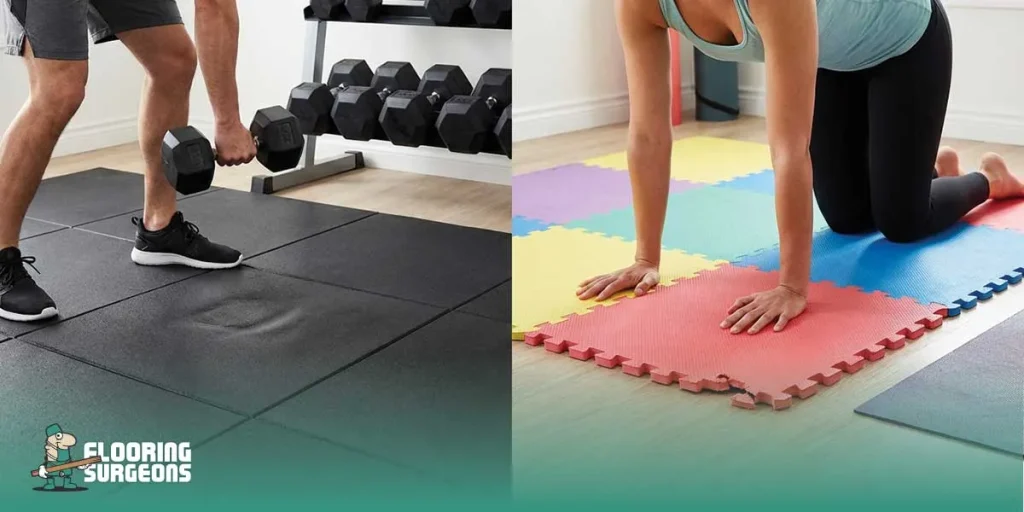
Rubber flooring is better for most gyms. It is denser, more durable, and designed to handle impact from weights, machines, and high-intensity workouts. Rubber protects joints without collapsing under load and holds up well over time.
Foam flooring is only suitable for low-impact training. It feels soft and comfortable, but it compresses easily and wears out quickly under weight or repetitive stress.
The decision is simple:
- Use rubber for weight training, HIIT, CrossFit, and mixed workouts
- Use foam only for yoga, Pilates, stretching, or bodyweight exercises
If there’s any chance your training will become more intense over time, rubber is the safer long-term choice.
Choosing Gym Flooring Based on Workout Type
Not all workouts stress the floor in the same way. The safest and most effective gym flooring depends on how impact is applied, how equipment is used, and how often the space is used.
Weightlifting & Free Weights
Weightlifting places a high, concentrated impact on the floor, especially during deadlifts and dropped weights. Flooring must absorb shock without compressing too much or shifting under load. Rubber flooring is the most reliable option here. Dense rubber protects joints, equipment, and the subfloor while staying stable under heavy weight. Thicker rubber is especially important in free-weight zones to reduce noise, vibration, and long-term floor damage.
Cardio & Machines
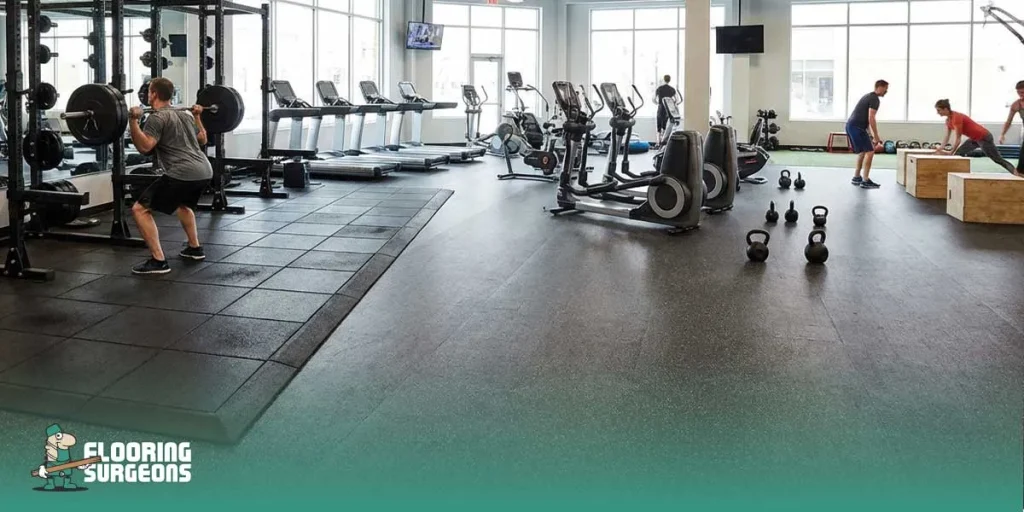
Cardio equipment applies repetitive, even pressure rather than sudden impact. Noise reduction and surface stability matter more than extreme shock absorption. Rubber flooring works well for treadmills, bikes, and rowing machines because it reduces vibration and prevents equipment movement. Thinner rubber is usually sufficient, as the load is spread across a wider surface and weights are rarely dropped.
HIIT, CrossFit & Functional Training
Functional training combines movement, jumping, weights, and floor contact. This creates varied stress that requires both stability and impact protection. Rubber flooring again offers the best balance. It provides grip for fast movements, absorbs shock from jumps and lifts, and remains stable during dynamic exercises. Foam may feel softer, but lacks the durability and support needed for repeated high-intensity sessions.
Quick takeaway
- Heavy lifting demands dense, thick rubber
- Cardio benefits from stable, vibration-reducing surfaces
- HIIT and functional training need grip, durability, and shock absorption
Choosing flooring based on workout type prevents injuries, reduces wear, and keeps the gym functional long term.
How Thick Should Gym Flooring Be for Weights?
The correct thickness for gym flooring depends on how heavy the weights are and how they are used. Thicker flooring absorbs more impact, protects the subfloor, and reduces noise, while flooring that is too thin breaks down quickly and transfers force into the structure below. For light to moderate weight training, such as dumbbells, kettlebells, and machines where weights are not dropped, 8–10 mm rubber flooring is usually sufficient. It provides enough shock absorption without feeling unstable underfoot.
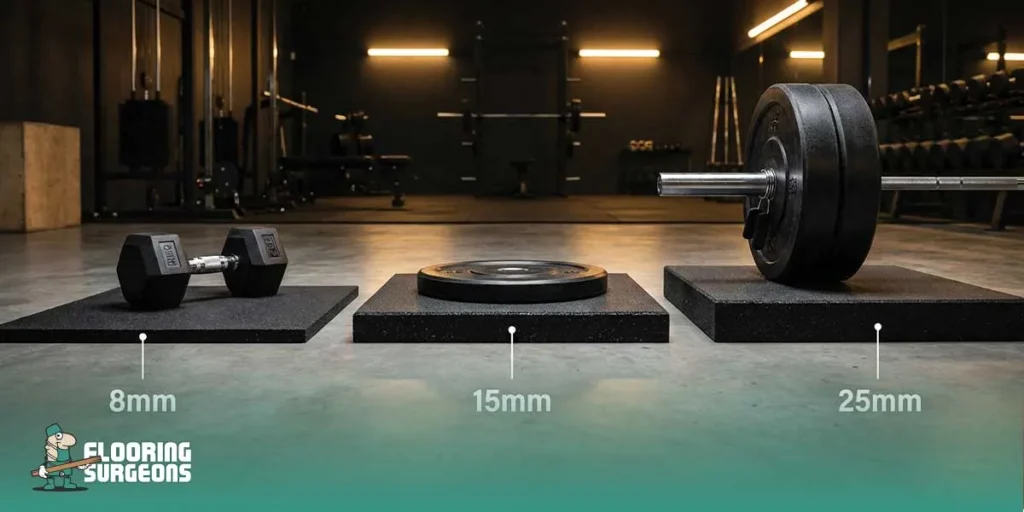
For free weights and regular barbell training, especially where weights may be dropped occasionally, 12–15 mm rubber flooring is a safer choice. This thickness protects joints and flooring while maintaining surface stability.For heavy lifting, Olympic lifts, or deadlift zones, 20 mm rubber flooring or thicker is strongly recommended. Thinner flooring cannot absorb repeated high-impact drops and will wear out quickly or damage the subfloor. A common mistake is choosing flooring based on comfort alone. Gym flooring should be thick enough to handle worst-case impact, not just average use. When in doubt, going slightly thicker is usually the smarter long-term decision.
Is It Better to Workout on Carpet or Hard Floor?
In most cases, neither carpet nor bare hard floors are ideal for workouts. Each has drawbacks that affect safety, performance, and long-term comfort.
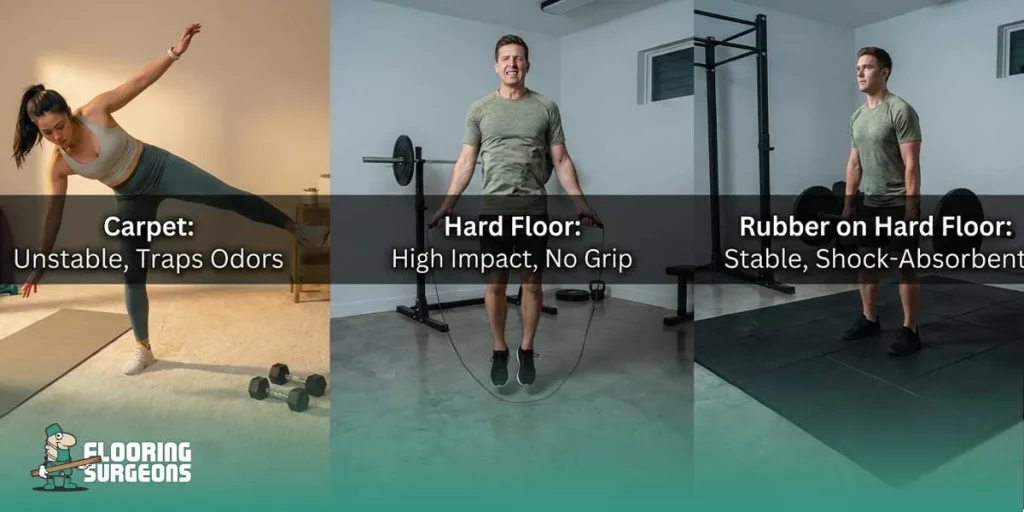
Carpet feels softer, but it absorbs sweat, traps odours, and is difficult to keep hygienic. It also lacks stability under load, which makes balance harder during strength training and increases wear over time. For anything beyond very light, low-impact exercise, carpet quickly becomes a problem. Hard floors like concrete, tile, or wood provide stability but offer no impact absorption. This transfers force directly to joints and increases injury risk during jumping, lifting, or repetitive movements. They can also be slippery when wet and noisy under equipment. The better option is neither on its own, but a proper gym surface placed on top. Rubber flooring over a hard subfloor combines stability with shock absorption, while improving grip and hygiene. If you have carpeted space, removing the carpet or covering it with dense gym mats is usually the safer choice.
Bottom line:
- Carpet is unsuitable for serious training
- Bare hard floors are unsafe for impact
- Rubber flooring on a solid base is the most reliable solution
This approach protects your joints, your floor, and your workouts over time.
What Is the Healthiest Gym Flooring? (VOCs, Impact & Joint Safety)
The healthiest gym flooring is one that protects your joints, maintains clean air quality, and stays stable under repeated use. Health in a gym environment is not just about comfort—it comes down to how the floor handles impact, off-gassing, and long-term exposure during regular training. Choosing the right gym surface plays a major role in flooring and joint health, especially in spaces where impact and repetition are part of daily training.
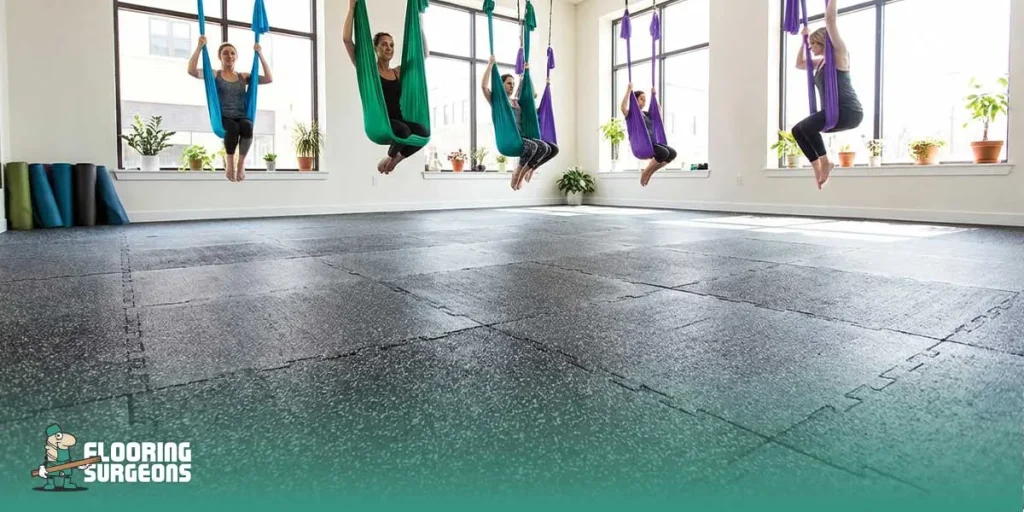
From a physical standpoint, flooring must absorb shock without collapsing. Surfaces that are too hard transfer force directly into the knees, hips, and lower back, while overly soft materials reduce stability and increase strain during lifts and fast movements. Dense rubber flooring provides the best balance by reducing impact while keeping the surface firm and predictable.
Air quality is the second critical factor. Some gym flooring materials release volatile organic compounds (VOCs), especially when new or exposed to heat and friction. In enclosed gym spaces, this can cause irritation, headaches, or discomfort over time. Flooring designed specifically for gyms is typically low-VOC and more stable than general-purpose materials. In enclosed gyms, air quality becomes just as important as impact absorption, which is why allergy-friendly flooring matters in spaces with sweat, friction, and limited ventilation.
Key health factors to look for in gym flooring:
- Low-VOC or certified materials to minimise off-gassing and maintain indoor air quality
- Dense shock absorption to protect joints without sacrificing stability
- Slip resistance to reduce the risk of falls during sweating or fast movements
- Non-porous surfaces that resist sweat, bacteria, and odours
- Durability under load to prevent breakdown that can affect posture and balance
In practice, high-quality rubber flooring checks all of these boxes better than foam, carpet, or bare hard floors. It supports joint health, stays hygienic, and avoids the air-quality issues associated with cheaper synthetic materials.
Choosing healthy gym flooring is a long-term decision. The right surface reduces injury risk, improves comfort, and creates a cleaner training environment every time you work out.
Noise, Vibration & Apartment-Friendly Gym Flooring
Noise and vibration are the biggest challenges when training in apartments or shared buildings. Dropped weights, jumping movements, and machine vibration travel through floors far more than most people expect, often causing complaints or structural stress. The goal is to absorb impact before it reaches the building, not just soften the surface you stand on.
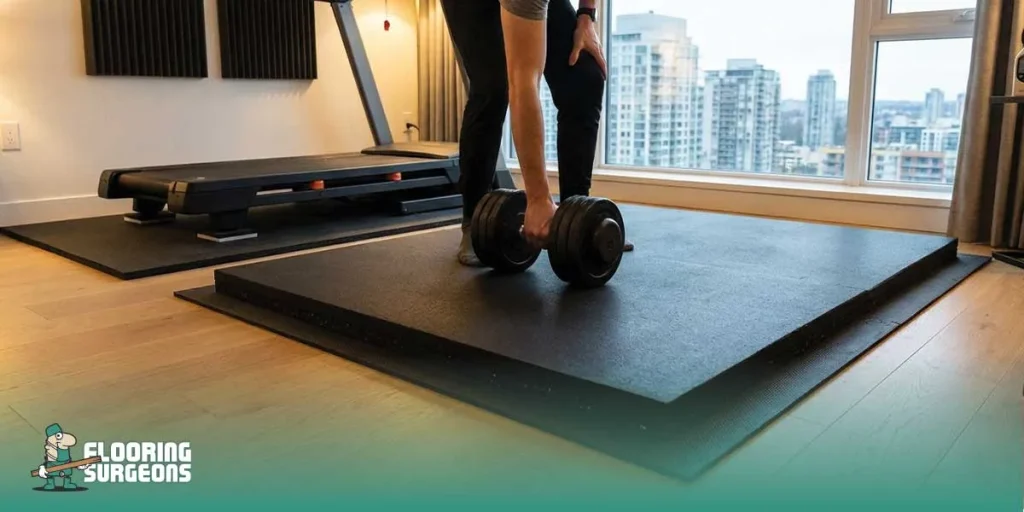
Rubber flooring is the most apartment-friendly option because it reduces both impact noise and vibration transfer. Thicker, denser rubber performs better, especially under free weights and cardio machines. In sensitive environments, combining rubber flooring with vibration-dampening underlay or lifting platforms significantly improves results. Hard floors without protection amplify sound, while foam compresses too easily and fails to control vibration under load. If you train in an apartment, flooring should prioritise mass, density, and stability, not softness alone. Quiet training comes from stopping energy at the source, not masking it after the fact.
Final Recommendation: Choosing the Right Gym Flooring for Your Space
If you want one clear answer, rubber flooring is the best choice for most gyms, whether at home or in commercial settings. It offers the strongest combination of joint protection, durability, hygiene, noise reduction, and long-term performance. For light, low-impact workouts, foam can work, but it has clear limits. Carpet and bare hard floors introduce more problems than they solve.
The right decision ultimately depends on how you train, how heavy your equipment is, and where the gym is located. Weight training requires thicker, denser flooring. Cardio and functional training benefit from stability and grip. Apartment gyms need extra focus on noise and vibration control. When these factors are matched correctly, gym flooring becomes something you never have to think about again—and that’s exactly how it should be. Choosing gym flooring is not about trends or appearance. It’s about protecting your body, your equipment, and the space around you so you can train consistently and confidently over time. At Flooring Surgeons, gym flooring recommendations are based on performance, safety, and long-term use rather than appearance alone.

Haniye Ayanmanesh
As an expert writer for Flooring Surgeons, I combine technical SEO knowledge with a practical understanding of flooring, producing content that helps users make confident decisions while supporting long-term organic growth.