

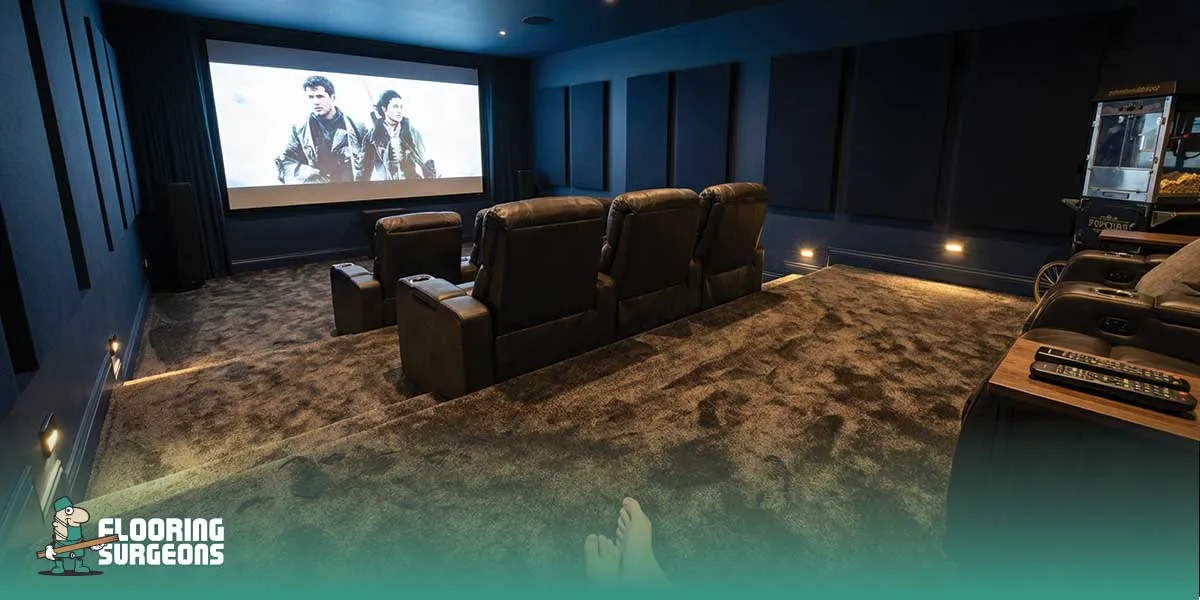
The best flooring for a theatre room is carpet, particularly a dense, low-pile carpet with quality underlay, because it absorbs sound, reduces echo, minimises footstep noise, and enhances overall audio immersion. Carpet also improves comfort in dark, seated environments and prevents unwanted light reflection that can distract from the screen. For most dedicated home theatre rooms, carpet offers the best balance of sound performance, comfort, and visual immersion.
That said, not every theatre room is the same. A fully dedicated cinema room has very different needs from a multi-purpose media room or a space in an apartment. Some homeowners prefer hard floors like vinyl or hardwood for aesthetics or maintenance reasons—but those choices come with acoustic trade-offs that must be managed carefully with rugs, underlay, or acoustic treatments.
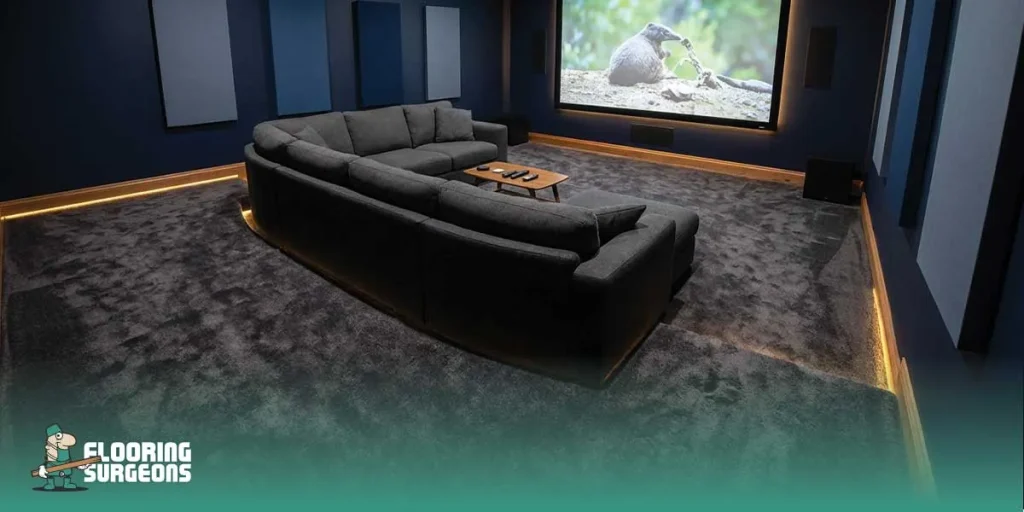
This guide explains which theatre room flooring options actually work, how each material affects sound quality and vibration, and when alternatives to carpet make sense. If you only needed the short answer, carpet is your safest and most immersive choice. If you want to understand why that is—and how to choose the right option for your specific room setup—the sections below break it down clearly, without unnecessary technical noise.
Table of contents
Theatre Room Flooring Materials Compared (Pros, Cons & Performance)
In a theatre room, flooring directly affects sound clarity, bass control, visual immersion, and overall comfort. The right choice isn’t about what looks good—it’s about what improves the cinematic experience and what quietly ruins it. Below is a performance-based comparison designed to help you decide with confidence.
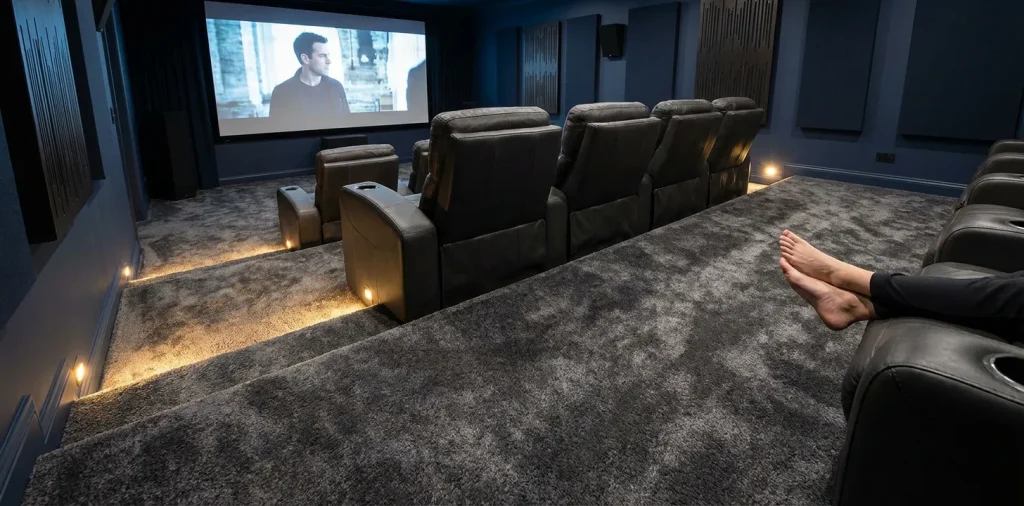
Carpet Flooring (Low-Pile, Dense Carpet + Quality Underlay)
Real-world performance: Best overall for sound and immersion. Carpet is the only flooring option that actively absorbs sound reflections, reduces footstep noise, and prevents light bounce from the floor. This is why professional cinemas rely on it.
Strengths
- Absorbs mid and high frequencies (clearer dialogue)
- Eliminates footfall noise and movement distractions
- Prevents light reflection from the screen
- Improves seating comfort in long viewing sessions
Limitations
- Requires more maintenance than hard floors
Verdict:
For a dedicated theatre room, carpet delivers the best sound control, visual focus, and immersion—no other option performs as consistently well.
Luxury Vinyl & Hybrid Flooring
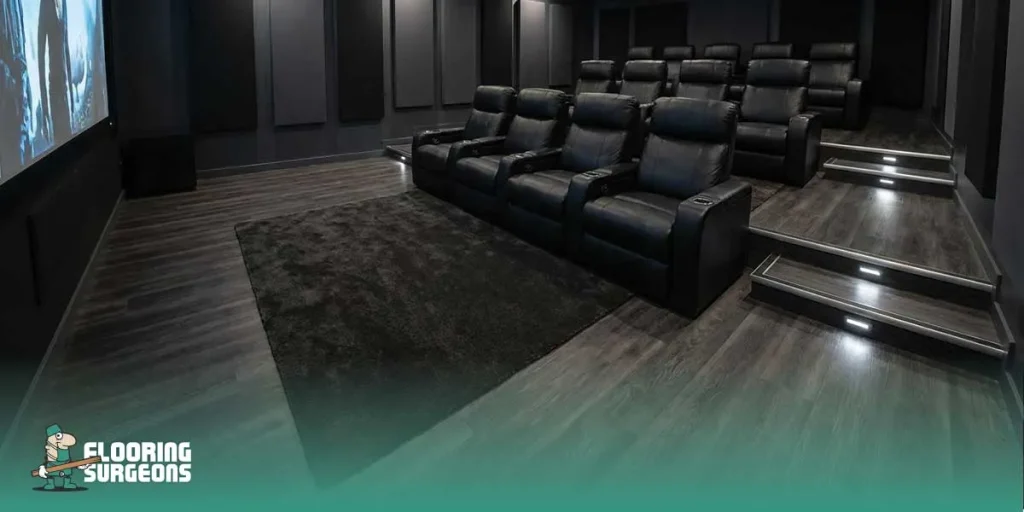
Real-world performance: Visually appealing, acoustically reflective. Vinyl and hybrid floors are often chosen for aesthetics and easy cleaning, but they naturally reflect sound and light. Without additional acoustic treatment, they reduce audio clarity and immersion. Unlike luxury vinyl flooring, which prioritises durability and easy maintenance, theatre rooms require flooring that actively absorbs sound rather than reflecting it.
Strengths
- Easy to clean and maintain
- Modern appearance
Weaknesses
- Reflects sound, increasing echo
- Reflects light, reducing screen contrast
- Requires rugs, underlay, or acoustic panels to compensate
Verdict:
Suitable for multi-purpose media rooms, but not ideal for a dedicated theatre unless acoustic corrections are added.
Hardwood & Laminate Flooring
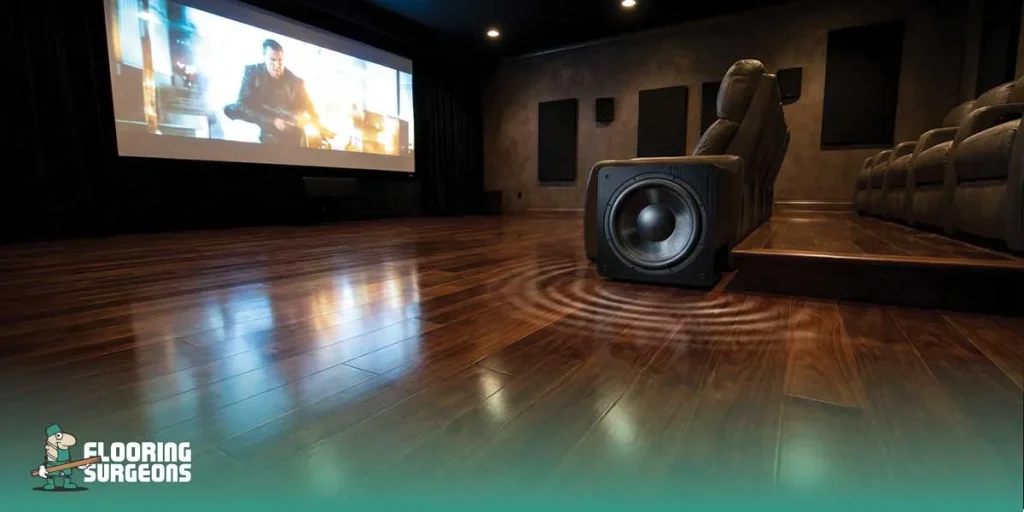
Real-world performance: Worst option for theatre rooms. Hardwood and laminate amplify sound reflections, increase echo, and transmit bass vibration. They work against everything a theatre room needs.
Strengths
- Premium appearance
Weaknesses
- Poor sound absorption
- Strong light reflection
- Bass vibration transfer through the structure
- Requires expensive acoustic fixes
Verdict:
If cinematic sound quality matters, hardwood and laminate should be avoided.
Performance Comparison (What Actually Matters)
| Flooring Type | Sound Absorption | Light Reflection | Footstep Noise | Immersion Level |
| Carpet | Excellent | Very Low | Very Low | ⭐⭐⭐⭐⭐ |
| Vinyl / Hybrid | Low–Medium | Medium | Medium | ⭐⭐⭐ |
| Hardwood / Laminate | Poor | High | High | ⭐⭐ |
Clear takeaway (No ambiguity)
- If sound quality and immersion are your priority → Carpet
- If the room must be flexible and visually modern → Vinyl with acoustic treatment
- If you want a true theatre experience → Eliminate hardwood and laminate
The next sections explain:
- Which carpet type performs best in theatre rooms
- How flooring affects sound absorption vs reflection
- When hard floors can work without ruining the experience
What Is the Best Carpet for a Theatre Room?
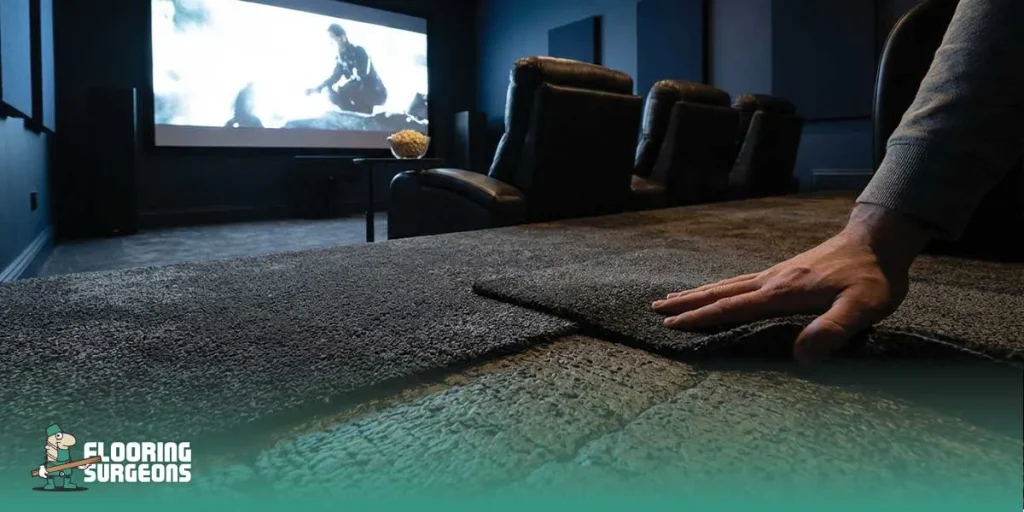
The best carpet for a theatre room is a dense, low-pile carpet paired with a high-quality acoustic underlay. This combination absorbs sound reflections, reduces footstep noise, and prevents light bounce—three things that directly improve audio clarity and visual immersion. Here’s what actually matters when choosing the right carpet:
- Pile height:
Go low-pile, not thick shag. Low-pile carpets absorb sound without creating a soft, unstable surface or trapping excessive dust. - Density (face weight):
Higher density is more important than softness. A dense carpet absorbs mid-to-high frequencies more effectively, improving dialogue clarity. - Material:
Nylon or solution-dyed synthetic fibres perform best. They’re durable, resist crushing, and handle foot traffic better than wool in dedicated media rooms. - Colour and finish:
Dark, matte colours (charcoal, deep grey, navy, black) prevent light reflection from the screen, keeping contrast high and distractions low. - Underlay (non-negotiable):
A thick acoustic underlay is just as important as the carpet itself. It absorbs impact noise, reduces bass vibration transfer, and improves overall sound control.
What to avoid
- High-pile or plush carpets (look soft, perform worse acoustically)
- Light or reflective colours
- Thin or low-quality underlay
Bottom line
If you want a true cinema experience at home, choose a low-pile, high-density carpet with proper acoustic underlay. It’s the most effective flooring setup for sound absorption, visual focus, and long viewing comfort—and it’s why professional cinemas rely on this exact approach.
Is Carpet or Hardwood Better for Home Theatres?
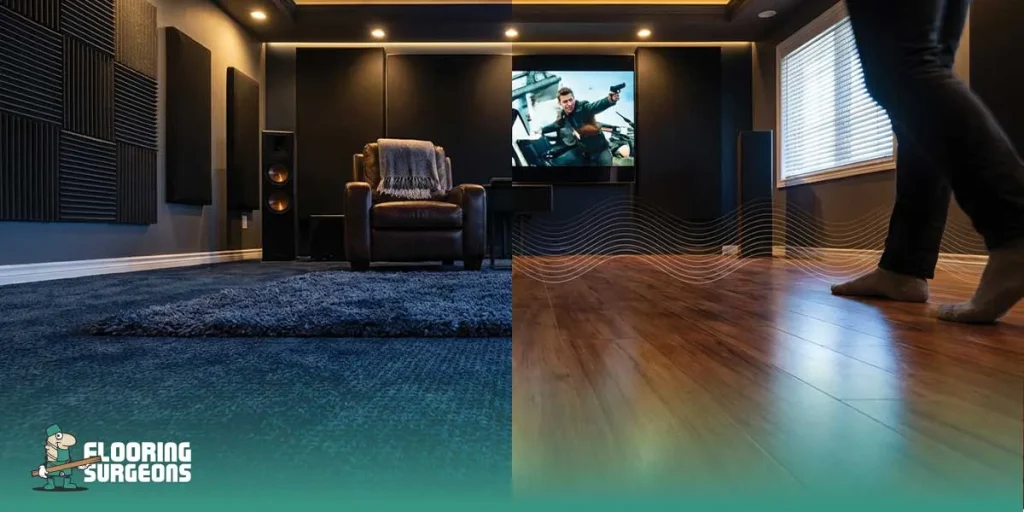
When it comes to home theatre flooring, the choice between carpet and hardwood isn’t just about looks—it’s about how sound behaves in the room.
Carpet: Best for Sound & Immersion
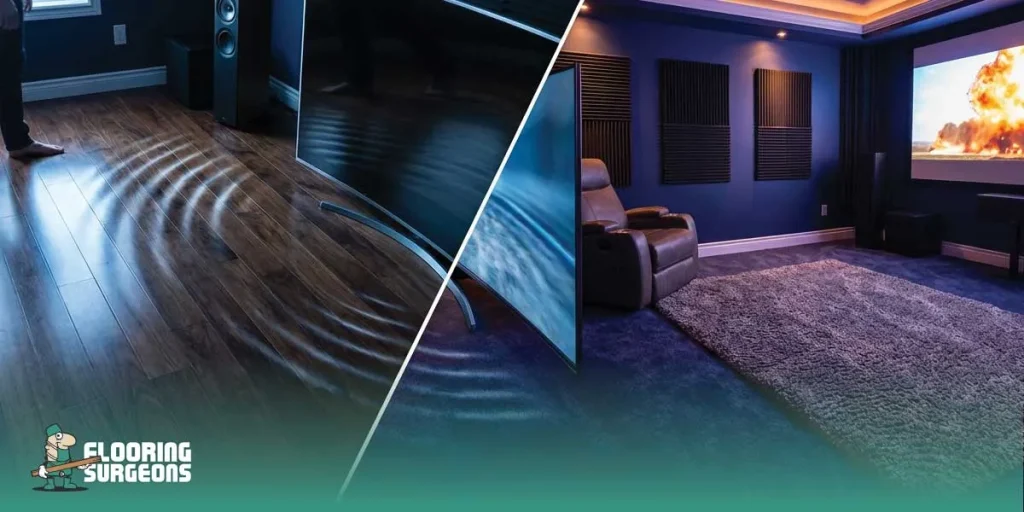
Carpet wins in almost every performance category that matters for a theatre room. Its porous surface absorbs echoes, reduces footstep noise, and helps keep dialogue clear and music tight. With carpet, you hear more of what’s meant to be heard and less of the room’s natural reverberation.
Why carpet is typically better:
- Significantly reduces sound reflections
- Minimises impact and footstep noise
- Compliments acoustic treatments naturally
- Enhances visual immersion by reducing light bounce
Hardwood: Stylish but Acoustically Challenged
Hardwood floors look elegant, but in a theatre environment, they act like mirrors for sound—reflecting noise and echoing it back into the room. This can make dialogue muddy and bass less controlled. Without substantial acoustic treatment (rugs, underlays, wall panels), hardwood works against the goal of a dedicated theatre.
Hardwood limitations:
- Strong sound reflection
- Increased ambient echo
- Higher footstep noise
- Harder to control bass energy without add-on treatments
The Practical Middle Ground
If hardwood is a must for aesthetic reasons, it cannot be used alone. It needs:
- Thick area rugs
- Acoustic underlay
- Wall and ceiling acoustic panels
Only with these can hardwood be brought closer to carpet’s performance—but even then, it rarely matches it fully.
For pure theatre performance:
Carpet is almost always the better choice for home theatres.
Hardwood can work, but only with careful acoustic compensation.
How Flooring Affects Sound Quality in a Theatre Room
Flooring plays a much bigger role in sound quality than most people realise. In a theatre room, sound doesn’t just travel from the speakers to your ears—it also hits the floor first, then reflects, vibrates, or gets absorbed. The way your flooring handles that interaction directly affects dialogue clarity, bass control, and overall immersion.
Soft, absorbent surfaces like carpet reduce sound reflection. This is one of the main reasons soundproofing with carpet is so effective in theatre rooms, where echo control and clarity matter more than visual style. They prevent mid and high frequencies from bouncing back into the room, which is why dialogue sounds clearer and less harsh in carpeted theatre rooms. Hard surfaces such as hardwood, laminate, or vinyl do the opposite: they reflect sound waves back toward the listener, increasing echo and smearing detail. This reflection doesn’t make the system louder—it makes it less precise and more fatiguing over time.
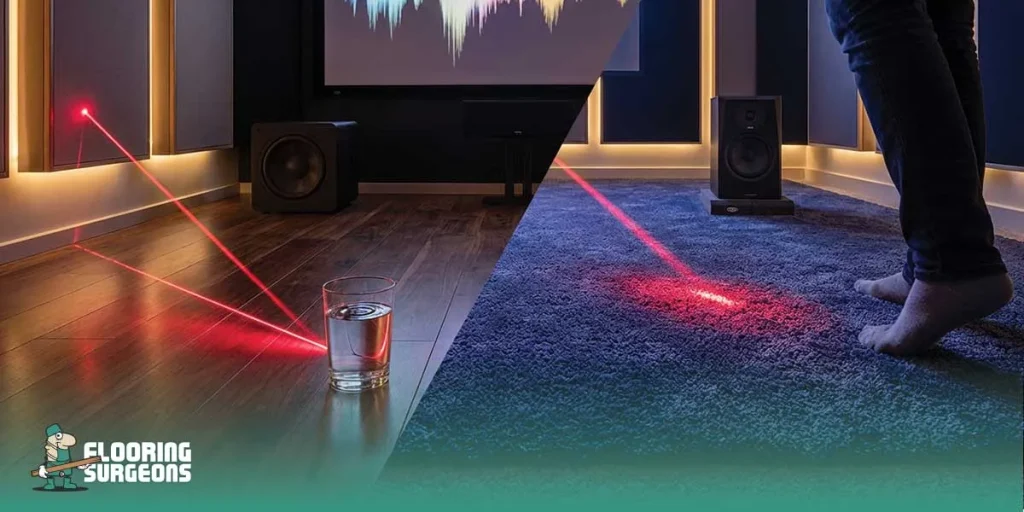
Bass behaves differently but is equally important. Low frequencies from subwoofers create vibration and structural energy, not just audible sound. Hard floors transmit this energy through the building, causing rattles, booming bass, and sound leakage into other rooms. Carpet combined with a quality underlay helps decouple the subwoofer’s energy from the structure, tightening bass response and reducing vibration transfer. This leads to cleaner, more controlled low-end performance without the need to turn the volume down. In short, flooring determines whether your theatre room sounds controlled and cinematic or loud but unfocused. Absorptive flooring improves clarity and comfort, while reflective flooring demands extra acoustic treatment to compensate. That’s why flooring choice is one of the most cost-effective ways to improve sound quality before investing in more speakers or electronics
Theatre Room Flooring for Apartments vs Houses
The right flooring choice changes depending on whether your theatre room is in an apartment or a detached house, mainly because of how sound and vibration travel beyond the room itself. Many theatre rooms are built below ground level, and the same moisture and acoustic considerations found in basement flooring apply here as well. In apartments, the biggest challenge is sound transmission to neighbours—especially bass and impact noise. Flooring must focus on vibration control and isolation, not just in-room sound quality. Carpet with a thick acoustic underlay performs best because it absorbs footsteps, reduces bass vibration transfer through the structure, and limits sound leakage to floors below. Hard floors, even with rugs, tend to transmit low-frequency energy and are more likely to cause complaints.
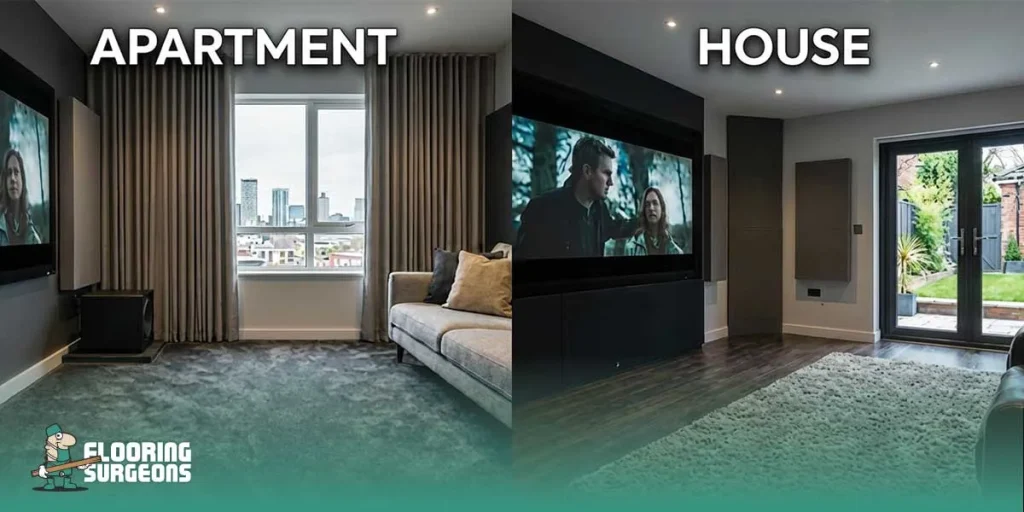
In houses, you have more flexibility. Since sound leakage is less critical, the focus shifts to in-room performance and comfort. Carpet still delivers the best cinematic experience, but vinyl or hybrid flooring can work in multi-purpose spaces if combined with rugs and acoustic treatment. Hardwood remains the least suitable option unless aesthetics outweigh performance and additional acoustic measures are added.
In short:
- Apartments require flooring that controls vibration and impact noise
- Houses allow more flexibility, but carpet still performs best for immersion
- The closer you are to neighbours, the more important soft, absorbent flooring becomes
Final Recommendation: Choosing the Right Flooring for Your Theatre Room
If your goal is a true home cinema experience, carpet is the best flooring choice for a theatre room. A dense, low-pile carpet paired with a quality acoustic underlay provides the best combination of sound absorption, vibration control, visual immersion, and comfort. It improves dialogue clarity, tightens bass, eliminates footstep noise, and prevents distracting light reflections—all with minimal additional treatment. Choosing the right materials from the start is part of future-proof flooring, especially in theatre rooms where acoustic upgrades later can be costly.

Hard floors like vinyl or hardwood can work in multi-purpose media rooms, but they require extra rugs, underlay, and acoustic panels to approach the performance that carpet delivers naturally. In apartments, these compromises often aren’t worth the risk of noise transfer. In houses, they may be acceptable if flexibility or aesthetics are priorities. Ultimately, the best flooring is the one that supports how the room is used. For dedicated theatre rooms focused on sound quality and immersion, carpet isn’t just the popular choice—it’s the most technically effective one. Choosing the right flooring at the start saves money on acoustic fixes later and ensures your theatre room sounds as good as it looks for years to come. At Flooring Surgeons, theatre room flooring recommendations focus on sound performance and immersion—not just visual appeal.

Haniye Ayanmanesh
As an expert writer for Flooring Surgeons, I combine technical SEO knowledge with a practical understanding of flooring, producing content that helps users make confident decisions while supporting long-term organic growth.