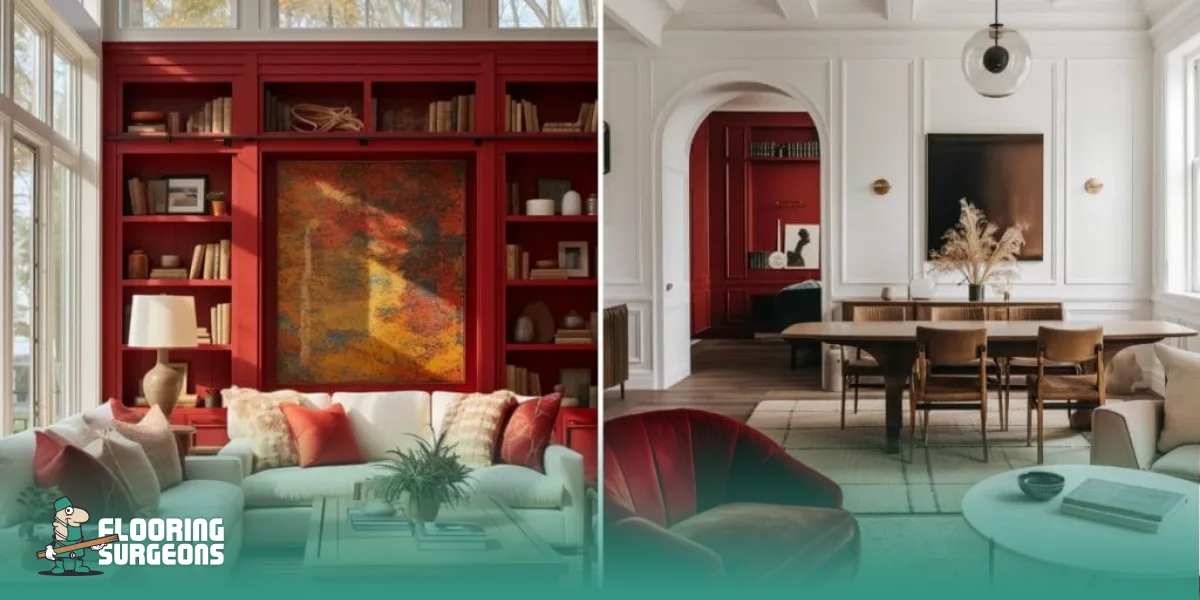


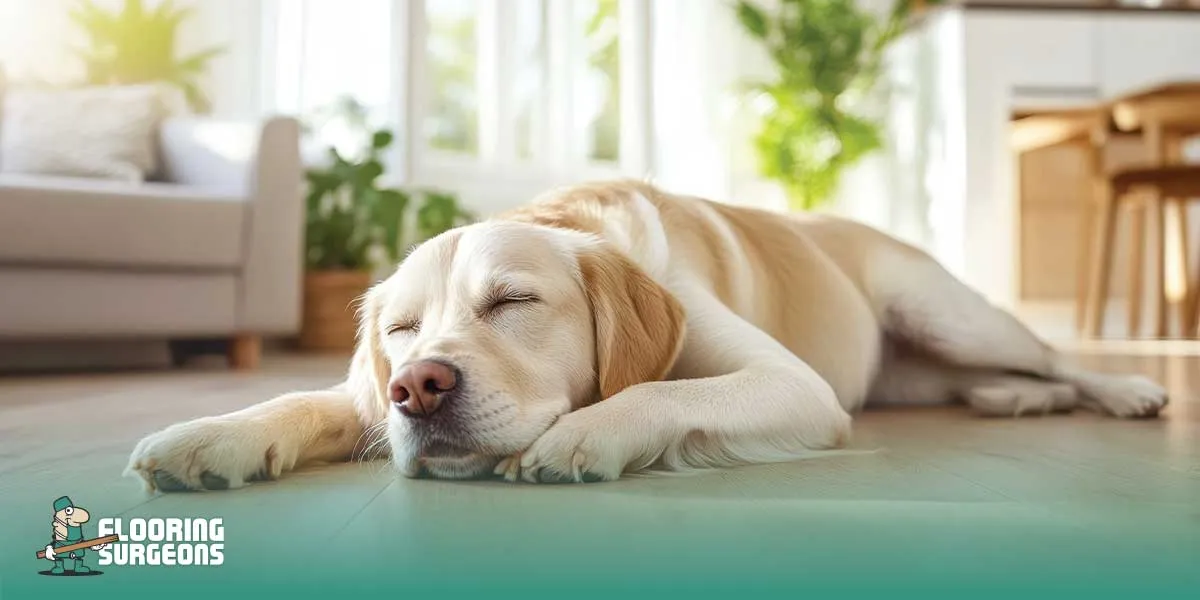
If you have pets, you know how quickly your floors can show evidence of their presence: muddy paw prints, scratches, and even accidental pet accidents. The best flooring for pets is the kind of flooring that has a hard surface, is scratch‑resistant, waterproof, easy to clean, and comfortable underfoot. It doesn’t matter if you have a hyperactive puppy, a giant dog who enjoys running indoors, or a curious cat that has a habit of clawing anything in sight; the right choice of flooring will protect your home while keeping your furry friends comfortable and safe.
From waterproof luxury vinyl flooring that resists spills and stains, to laminate built for busy households, to tile that is durable and elegant, and to engineered wood that combines elegance with practicality, there are many great options. Especially if you’re dealing with a pup, you’ll want the best flooring for dogs that pee (or the best flooring for dogs who pee), something waterproof and easy to wipe clean. This guide will help you find the best flooring for pets, designed to handle the real life of a pet family, including paws, claws, everyday chaos, and more.
Table of contents
Key Factors for Choosing the Best Pet-Friendly Flooring
To pick the best flooring for pets, you must first understand what makes a surface truly pet-friendly, so you can make the right decision. There are many factors to keep in mind when picking a flooring:
durability, comfort, safety, and the ease of cleaning it after muddy paws or little accidents. The flooring you choose for your home should be able to handle a large or small pet pack living in your home, so whether you have a cat, a dog, or a pack of pets in your home, you want to choose something that will maintain your home’s style and ease of upkeep while handling the chaos of everyday life.
Let’s break down the essential features that make a floor genuinely pet-proof.
Scratch-Resistant Flooring for Dogs and Cats
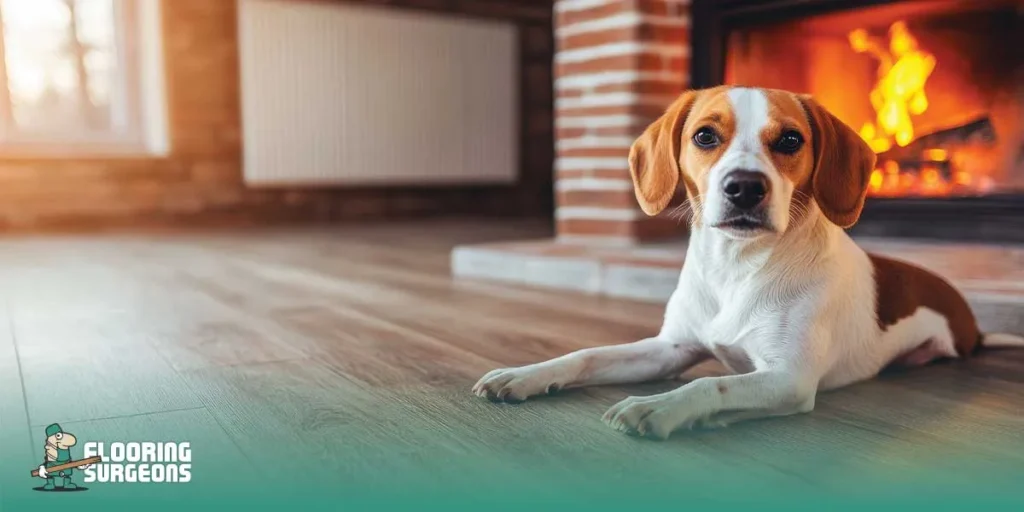
There is no denying that claws, zoomies, and daily play time can quickly wear down delicate flooring. To avoid scratches on your floors, choose a scratch-resistant flooring material. This is especially true if you have large dogs or energetic breeds in your home.
It is important to choose flooring with a strong wear layer that resists abrasion and nail marks. There are several excellent examples available, such as luxury vinyl, tiles, and high-quality laminate floors, which combine the hardness of the surface with protective coatings that prevent scratches without compromising style.
It is recommended that you choose a textured or matte finish if you have a lot of pets, or if you have more than one pet that enjoys running, so you can hide light marks while still maintaining a beautiful appearance for years to come.
Waterproof and Stain-Resistant Flooring for Pets Who Pee
Despite a well-trained dog’s best efforts, accidents can still happen. If your pets occasionally urinate indoors, ensure your home’s flooring is waterproof and stain-resistant in case they do so occasionally. This is especially important if you have cats or dogs that occasionally do this.
It is important to note that vinyl flooring is one of the most popular waterproof flooring options for pets, as it prevents moisture from soaking into the surface and making the floor slippery. In addition to their odour- and stain-resistant properties, these products are easy to clean and do not leave a mess at the end of the day.
It can be helpful to choose a floor with tight seams or a click-lock system that prevents liquids from seeping beneath the floor, in case you have a persistent water problem. However, it is essential to keep in mind that, as long as the materials are adequately maintained, they will remain fresh, hygienic, and pet-safe for many years to come.
To ensure a comfortable and safe environment for both you and your pets, choosing the best flooring for pets is an important consideration.
Easy-to-Clean and Low-Maintenance Pet Flooring
It is the norm for pet owners to have to deal with muddy paws, shed fur, and unexpected spills daily. There are many reasons why you should get easy-to-clean, pet-friendly flooring that will simplify your routine and make cleaning easier.
When you have smooth, non-porous surfaces like vinyl, laminate, or engineered wood, you can sweep and mop with ease. It is advisable to choose flooring that does not collect dirt and pet hair, such as carpets with deep textured patterns.
Using a gentle, non-toxic cleaning product will protect your floors from scratches and stains and extend their lifespan. You can use these products to keep your surfaces clean without exposing your home to harsh chemicals.
There is no doubt that a quick and straightforward way to clean a floor will make your floors look great – and you will be able to spend more time with your pet.
Comfortable and Slip-Resistant Flooring for Dogs and Cats
It goes without saying that the comfort and safety of your pet is just as important to them as the durability of the item. There is no doubt that a stiff or glossy floor can be a slippery place for paws, especially for older dogs or small animals just learning to walk and struggling to stay on their feet. As a safeguard, ensure pets have safe flooring that provides traction and is cushioned to allow them to move freely.
If you choose textured vinyl flooring, cork-backed laminate flooring, or engineered wood flooring with soft underlays, you can reduce the risk of slips and injuries by adding warmth to the undersurface. As a result, it can be beneficial to use rugs and runners in areas subject to heavy traffic, not only for their increased traction but also for providing your pet with a cosy place to rest when they need a break from the action.
It is essential to choose flooring that is slip-resistant, cushioned, and safe to ensure the comfort, confidence, and injury prevention of your furry companions.
Affordable Flooring Options for Pet Owners
There is no need to spend a lot of money to find flooring that delivers the performance you are looking for. Pet flooring options range widely in price and materials, so you can find the right solution for your pet that is affordable, durable, and looks great.
For pet owners on a budget, laminate and luxury vinyl flooring remain the most affordable options, offering scratch and water resistance at a fraction of the price of hardwood flooring while maintaining a well-maintained appearance. The benefits of using these lights are that they are long-lasting, easy to install, and can be customised with hundreds of realistic finishes to create a look that is perfect for your home.
In some cases, a pet owner looking for good value and peace of mind will discover that investing in a mid-range-quality floor is a better decision than buying cheap materials that will wear out soon after installation. If you make the right choice, you won’t need to replace it for years, even with paws, claws, and lots of playtime every day.
Top Pet-Friendly Flooring Types Compared
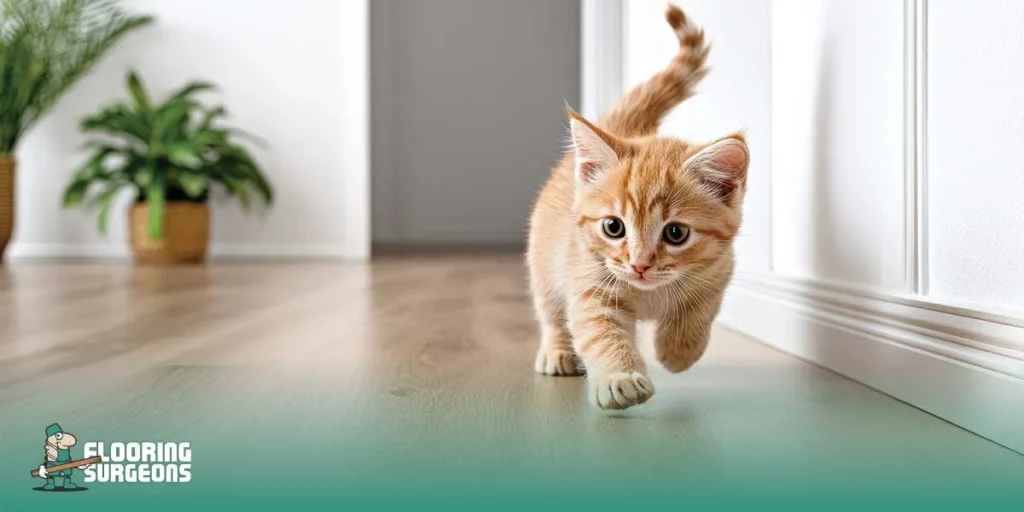
It’s all about finding the right balance between strength and comfort when choosing pet-friendly flooring. It should be durable enough to withstand claw scratches and spills, while also being warm and comfortable for daily household use. There is no doubt that, no matter how many cats you have or how energetic your Labradors are, your floors are likely to sustain scratches, muddy paws, and accidental spills.
To choose the best flooring option for pet owners, let’s examine the most durable, comfortable, and easy-to-clean options available. Let’s compare each one’s strengths, weaknesses, and ideal use cases to decide which is best suited to your pet’s environment.
Luxury Vinyl Flooring | The Best Waterproof Flooring for Pets
The performance of luxury vinyl flooring (LVT) is among the best in the industry, offering excellent value and durability. Not only is it considered one of the best waterproof floorings for pets because of its resistance to water, but it is also thought to handle almost anything a dog or cat can throw at it.
The vinyl floor consists of three layers: the top layer is scratch-resistant, the core layer is waterproof, and the bottom layer is soft, providing warmth and cushioning. Therefore, they are not only resistant to spills and accidents but also gentle under your pet’s paws, making them ideal for homes where pets enjoy running, napping, and sometimes zooming around.
The advantage of vinyl is that it does not swell or warp when wet like natural wood. It is therefore possible to simply wipe the water bowl clean if your puppy has an accident or your cat decides the water bowl is a toy, without worrying about staining or odour retention. Compared to traditional LVT, modern LVT features anti-slip textures that make it safer and more comfortable for older pets with joint or mobility issues.
How does this benefit differ from others? As far as sound is concerned, vinyl flooring is remarkably quiet underfoot – no clicking claws are heard echoing through the hallway. Moreover, since it comes in a wide variety of styles (oak, stone, marble, herringbone, etc. ), it can be seamlessly incorporated into any home’s aesthetic.
There are hundreds of styles in Flooring Surgeons Luxury Vinyl Flooring Collection, so you won’t have to compromise style for stress. Each design is engineered to withstand the rigours of real pet life while remaining attractive for many years to come.
Laminate Flooring | Durable, Affordable, and Pet Friendly
When it comes to laminate flooring for pets, it strikes the perfect balance between style, strength, and affordability. It’s one of the best floorings for dogs in the house because it combines the aesthetic appeal of wood with impressive scratch resistance at a fraction of the price of real wood.
The top layer of laminate is designed to repel claw marks, stains, light moisture, and other elements that can damage the surface. If you’re looking for a floor that can endure everything from the daily sprints of a cat to the tail chasing of a large dog, laminate with AC4 or AC5 ratings is an excellent option. However, pet owners often overlook an important detail: traction. For puppies or older pets, laminate can be slippery, especially when wet.
The solution? Pairing it with a rubber underlay or placing rugs in key areas such as hallways and entranceways will increase durability. With this simple addition, pets can move confidently without skidding — a necessity for dogs who like to greet you at full speed.
Laminate flooring is also easy to maintain. It’s non-porous, meaning it won’t trap pet hair and can be easily cleaned with a damp microfiber mop. The surface is resistant to fading and UV damage, making it perfect for rooms where pets like to nap in the sun.
If you’re in search of the best wood flooring for pets, laminate flooring might be the right choice, offering the look of wood with added practicality.
Tile Flooring for Pets | The Ultimate in Durability
When it comes to tile flooring for pets, particularly ceramic or porcelain tiles, durability is unmatched. This makes tiles one of the best floorings for pets who urinate since they are waterproof and scratch-resistant, ideal for families with large or active dogs.
Tile floors handle pet messes effortlessly — no staining, no odour absorption, no swelling. They are also very comfortable underfoot, making them a great choice for pets, especially larger breeds like Huskies or German Shepherds, who prefer tiled surfaces during hot months as they help regulate body temperature.
However, a common downside to ceramic tiles is that they can feel too cold in the winter. The solution? Underfloor heating. This will turn the cold, hard surface into a warm, welcoming space — perfect for pets who love comfort. Additionally, choosing matte or textured tiles helps prevent slips, especially for older dogs with weaker joints.
For those searching for the best type of flooring for pets, tile offers the added benefit of low maintenance and timeless durability. A lesser-known trick among installers is to choose tiles with narrow grout lines and dark grout colours. This keeps your floor looking new, even if your cat misses the litter box.
Engineered Wood Flooring | Natural Look and Pet-Safe Elegance
Engineered wood flooring for pets is an excellent option for those who appreciate the charm of natural wood but want something more durable. It combines the virtues of authenticity with the practicality of engineered wood flooring.
Because engineered wood is laminated, it can absorb more moisture than solid wood, thanks to its hardwood top layer bonded to multiple layers of plywood. As a result, you will be able to worry less about the warping and expansion of your carpet after your pet brings in wet paws from outside.
You can make your furniture pet-safe by choosing versions with UV-cured or lacquered finishes, which make it more resistant to scratches and spills while still retaining that organic, warm texture that synthetic materials cannot provide. Furthermore, matte finishes also go a long way towards hiding minor scuffs and scratches better than glossy ones.
There is one fact most pet owners do not know: if you choose a wood species like maple, oak, or hickory, you’ll get a product that resists denting better than one made from softer woods like pine. It is recommended that you use it with a leather-backed underlay to absorb sound and promote joint comfort, especially if you have a large dog in the house.
In addition to adding elegance to the room, engineered wood floors are hypoallergenic, easy to keep clean, and a great way to improve indoor air quality. Check out the Engineered Wood Flooring Collection if you’re looking for long-lasting, premium-quality designs.
Carpet Flooring | Soft but High-Maintenance for Pets
Carpet flooring offers good flooring for pets because it’s soft, warm, and quiet, perfect for small dogs or older pets who like lounging. However, it requires frequent maintenance. Carpets can trap fur, stains, and odours, which can be challenging for homes with pets prone to accidents or heavy shedding.
If you’re wondering what the best floors for dogs are, consider opting for low-pile, stain-resistant nylon or wool blends. These are durable, easy to clean, and don’t trap allergens as easily. Adding a waterproof underlay can help protect carpets from moisture, spills, and stains.
Although carpet may not be the best waterproof flooring for pets, it still remains a solid choice for pet owners seeking comfort, as long as regular care is maintained.
Quick Comparison of Good Flooring Options for Pets
| Flooring Type | Best For | Pros | Cons |
| Luxury Vinyl (LVT) | Most pets & busy homes | Waterproof, quiet, cushioned, scratch-resistant, stylish | Can dent under heavy furniture |
| Laminate | Active pets on a budget | Scratch-resistant, affordable, and easy to clean | It can be slippery if not paired with an underlay |
| Tile (Ceramic/Porcelain) | Messy pets & warm climates | 100% waterproof, ultra-durable, easy to sanitise | Hard & cold without rugs/heating |
| Engineered Wood | Calm pets & elegant homes | Genuine wood warmth, hypoallergenic, sealed finishes | Sensitive to standing moisture |
| Carpet | Small/older pets | Soft, warm, noise-reducing | Traps fur & odours, high maintenance |
If your home has both dogs and cats, a mixed-material strategy can be brilliant: vinyl or laminate in high-traffic zones, engineered wood in living areas, and soft carpet runners in sleeping spots. This layered approach keeps the home practical and cosy for the whole family.
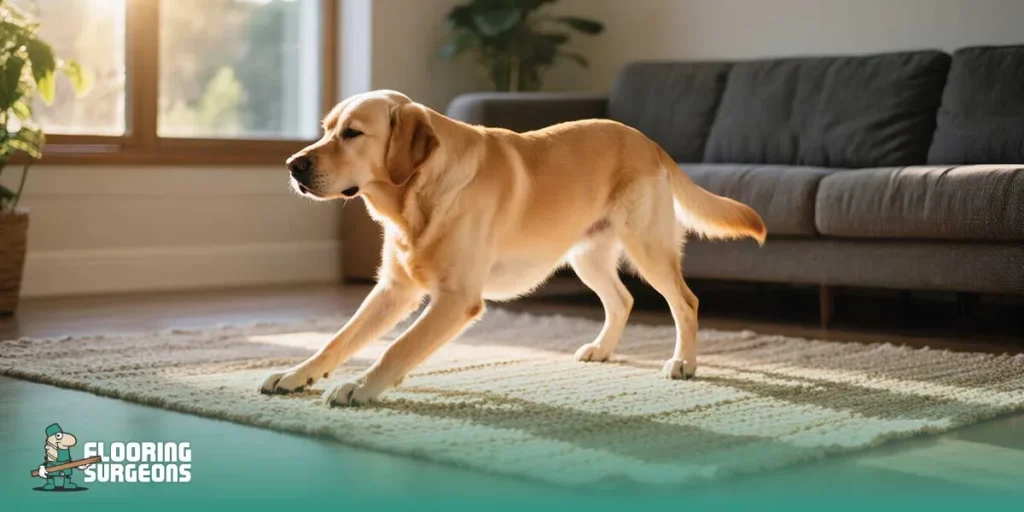
Best Flooring for Different Types of Pets and Homes
Not all pets (or homes) are the same, and neither are their flooring needs. The best flooring for pets should fit your animal’s behaviour, size, and daily habits. A calm cat might need a smooth, scratch-resistant surface, while a large, energetic dog needs durability and traction. Let’s explore how to choose the right type of flooring based on your pet’s lifestyle, size, and personality so both your home and your furry friends stay happy for years to come.
Best Flooring for Dogs That Pee and Accident-Prone Pets
Accidents are part of life, especially with puppies in training, rescue dogs adjusting to a new home, or senior pets losing bladder control. That’s where waterproof flooring for dogs becomes your best friend.
The best flooring for dogs that pee combines moisture resistance, odour protection, and quick-clean convenience. Top choices include:
- Luxury Vinyl Flooring (LVT): 100% waterproof, with a tight click-lock system that prevents urine or spills from seeping into seams. It’s also odour-resistant and can be disinfected easily without damaging the finish.
- Porcelain or Ceramic Tile: The ultimate solution for frequent messes, completely impervious to liquids. Just clean with a mild detergent, and you’re done.
- Sealed Laminate Flooring: For those who prefer a wood aesthetic, modern water-sealed laminates (AC4–AC5 rated) offer excellent resistance to splashes and pet accidents, provided spills are cleaned promptly.
Hygiene Tip (Pro-Level):
Most pet owners focus on cleaning up after accidents, but few consider preventive maintenance. Apply a pH-neutral floor protector spray every few weeks; it creates an invisible barrier against bacteria and odour build-up. Pair this with washable mats near feeding or litter areas to localise potential messes.
Best Flooring for Cats That Scratch or Pee
Cats are elegant, independent, and occasionally destructive. Between sharp claws, territorial marking, and surprise “accidents,” choosing the best flooring for cats that pee (or scratch) is crucial.
Go for smooth, sealed surfaces that resist both scratches and absorption:
- Luxury Vinyl Flooring (LVT or SPC): Its tight seal prevents urine penetration, making odour removal effortless. The slightly cushioned surface absorbs impact from jumps, keeping noise low, ideal for apartment living.
- High-Pressure Laminate (HPL): For households with active cats, look for laminates with anti-scratch coatings. A matte or embossed finish helps hide light claw marks.
- Porcelain Tile: Perfect for multi-cat homes, hygienic, noise-resistant, and easy to sanitise.
Unique Expert Tip:
Cats often scratch where textures change (like the edge between carpet and hard floor). To stop this, install smooth transition strips or cover those areas with rugs sprayed with cat-deterring scents such as citrus or eucalyptus. This protects the flooring and redirects scratching to cat trees instead.
Best Flooring for Large and Active Dogs
Big dogs mean significant impact. Breeds like Labradors, Shepherds, and Rottweilers put far more stress on floors than smaller pets, so you’ll need dense, scratch-resistant materials that handle weight, movement, and occasional chaos.
The best flooring for large dogs includes:
- Rigid Core Vinyl (SPC/LVT): With a heavy-duty wear layer (≥0.5mm), it resists claws and dents while offering sound absorption and comfort underfoot.
- High-Density Laminate Flooring: Choose laminate with an AC5 durability rating designed for commercial traffic; it easily withstands pet nails and rough play.
- Textured Tiles: Perfect for homes with multiple large dogs; they provide traction and eliminate the “slip and slide” issue common on smooth surfaces.
Underlay Pro Tip:
A strong flooring base matters as much as the surface itself. Pair heavy-duty laminate or vinyl with a rubber or cork underlay to absorb impact, reduce joint strain for large dogs, and minimise noise from heavy steps. See our guide to underlay types for detailed recommendations.
Best Flooring for Multi-Pet Households
Managing a home with multiple pets, whether it’s two dogs, three cats, or a mix of both, demands flooring that’s durable, easy to clean, and resistant to everything. The best flooring for multiple pets blends practicality and comfort.
Top performers include:
- Luxury Vinyl Flooring (LVT): Resists scratches, spills, and heavy foot traffic without losing its shine. Its layered structure reduces noise between floors, a blessing if you live in an apartment or townhouse.
- Ceramic Tile: Long-lasting and odour-proof. Ideal for homes where cleaning needs to be quick and frequent.
- Hybrid Flooring (Vinyl + Laminate Core): Offers the best of both worlds, vinyl’s waterproof nature with laminate’s warmth and appearance.
In multi-pet homes, noise reduction is often overlooked. Pets running or playing can amplify sound throughout the room. Installing an acoustic underlay beneath vinyl or laminate dramatically reduces echo and vibration, improving comfort for both pets and owners.
For more design inspiration, read our guide: What Colour Floor Goes With Brown Walls?
Best Flooring for Homes with Puppies or Older Pets
The flooring that works for a young, healthy dog may not suit a puppy learning balance or a senior pet with stiff joints. The ideal soft flooring for pets prioritises cushioning, warmth, and traction.
Here’s what works best:
- Cork Flooring: Naturally soft, warm, and slip-resistant, perfect for puppies or arthritic pets. It’s also eco-friendly and sound-absorbing.
- Luxury Vinyl with Cork Backing: Combines waterproof protection with a softer step; it’s easier on joints and provides insulation against cold subfloors.
- Textured Rubber Flooring: Often used in veterinary clinics, this type helps prevent slipping while providing older dogs with a stable, shock-absorbent surface.
Enhance any hard floor with a foam or cork-based underlay. Not only does it improve insulation and traction, but it also cushions impact, making life easier for puppies still finding their footing and older pets who need gentle support.
Learn more about comfort-enhancing underlays in our detailed guide to different types of underlay.
In Short:
- For accidents → Go waterproof (Vinyl or Tile).
- For scratchers → Go dense and textured (Laminate or Vinyl).
- For big dogs → Choose rigid-core floors with strong underlay.
- For multi-pet homes, prioritise noise control.
- For seniors & puppies → Add warmth and cushioning.
Because when it comes to pet-friendly flooring, there’s no one-size-fits-all; the best floor is the one that keeps tails wagging, claws quiet, and cleaning stress-free.
Maintenance and Care for Pet-Friendly Floors
Even the most durable, pet-friendly flooring needs consistent care to stay beautiful and long-lasting. Proper maintenance not only extends your floor’s lifespan but also keeps your home hygienic and comfortable for both you and your pets. Below are expert-approved tips from daily cleaning routines to advanced protection hacks to help you keep your floors looking as good as new, no matter how many paws cross them every day.
Daily and Weekly Cleaning Routines for Pet Floors
When it comes to cleaning pet flooring, frequency and technique matter more than fancy tools. Pet fur, paw prints, and the occasional drool spot can accumulate faster than you expect, especially on lighter floors.
Daily care tips:
- Sweep or vacuum once a day using a pet-friendly vacuum with a HEPA filter to capture hair, dander, and fine dust. HEPA filters prevent allergens from circulating back into the air, something most pet owners underestimate.
- Microfiber mopping is your best friend. A slightly damp microfiber mop traps fine dust and neutralises odours without scratching your flooring surface.
- Keep a paw-cleaning station near entryways. A simple mat or towel by the door can reduce 80% of the dirt pets track inside.
Weekly deep-cleaning essentials:
- Use pH-balanced, pet-safe cleaning solutions, never harsh detergents or bleach. These can degrade protective coatings and release VOCs that harm pets’ respiratory health.
- For luxury vinyl or laminate, choose cleaners formulated explicitly for sealed surfaces, such as those from specialized Flooring Cleaning & Care Products.
Mix a few drops of pet-safe essential oils (such as lavender or lemongrass) into your mop water once a week. Not only does it leave a fresh scent, but it naturally repels fleas and mites, something even many professionals forget to mention.
How to Protect Floors from Pet Scratches and Spills
One of the biggest challenges in maintaining pet flooring is keeping it free from scratches and stains. Prevention is far easier and cheaper than restoration.
Here’s how to protect flooring from pets effectively:
- Trim nails regularly: This simple habit can reduce surface scratches by up to 70%. For larger dogs, consider nail caps if trimming isn’t possible.
- Use rugs and runners in high-traffic zones: Hallways, under food bowls, and near couches are the most vulnerable spots. Opt for washable rugs with non-slip backing.
- Furniture pads are non-negotiable. Pets often dash under tables or bump into chairs. Felt pads prevent friction damage over time.
- Protective sealants: Reapply a clear floor sealant once every 18–24 months (especially on laminate or engineered wood). It reinforces resistance against claws, drool, and water.
Install a mat underneath feeding areas that’s slightly larger than your pet’s bowl radius. This catches spills and prevents moisture seepage, a surprisingly common cause of edge swelling in laminate floors.
For added convenience, you can explore our recommended product here:
https://www.flooringsurgeons.co.uk/product/woca-cleaning-spray-mop-for-wood-laminate-vinyl-flooring/
Dealing with Pet Accidents on Flooring
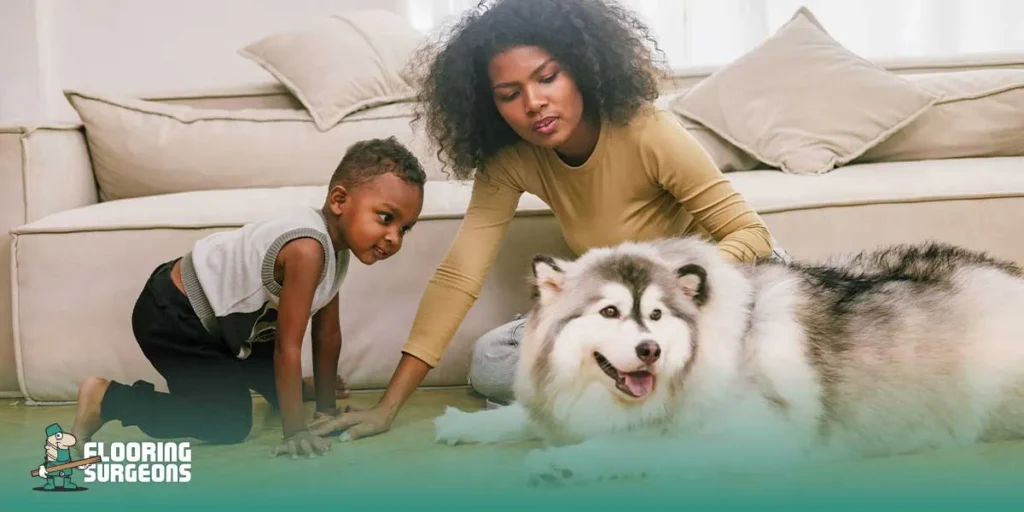
Accidents happen; it’s how you handle them that determines whether your floor survives spotless or ends up stained and smelly. When dealing with pet messes, speed and technique are everything.
Step-by-step guide to remove pet urine stains:
- Blot immediately, don’t rub, rubbing spreads moisture and pushes urine deeper into seams.
- Apply an enzyme-based cleaner to neutralise ammonia compounds that cause odour. Regular household cleaners just mask smells, but enzymes break down organic residue completely.
- Let the solution sit for 10–15 minutes, then gently mop with a damp microfiber cloth.
- Finish by drying the area with a fan or towel to prevent moisture from seeping into joints.
For porous materials like grout or hardwood, an additional waterproof floor sealant is recommended. It forms an invisible film that prevents liquids from penetrating deeper layers, especially useful if you have recurring accidents caused by puppies or elderly pets.
Warning:
Never use vinegar or steam mops on pet urine stains. Vinegar can reactivate odours over time, and steam mops can “bake” the smell into the surface, especially on laminate or vinyl with embossed textures.
Pro-Level Maintenance Tip:
Rotate your cleaning products every few months. Pets adapt to scents, and using the same formula constantly can reduce its effectiveness in controlling odours. The Flooring Surgeons Cleaning & Care Products range includes neutral, enzyme, and antibacterial options ideal for this rotation strategy.
Final Care Checklist for Pet Owners
- Vacuum daily → Pet fur builds up even when it’s not visible.
- Mop weekly → Use microfiber + pH-neutral, pet-safe cleaner.
- Trim nails → Prevent micro-scratches before they happen.
- Protect high-traffic areas: rugs, pads, and mats are essential.
- Act fast after accidents → Use enzyme cleaners, never bleach.
- Reseal annually → Boost stain and scratch resistance long-term.
Expert Insights | Flooring Specialists and Pet Owners’ Advice
According to the Flooring Surgeons’ installation and design team, the best type of flooring for pets is one that strikes a balance between hygiene, durability, and comfort, but the “perfect” choice varies by household. Every pet behaves differently, and understanding that behaviour is the real secret to a floor that lasts.
“We’ve installed floors in homes with everything from one rescue cat to three massive Labradors,” says one of our senior fitters. “Families with large dogs almost always choose LVT it’s waterproof, tough, and surprisingly warm underfoot. They love that it handles muddy paws and playtime chaos without a single scratch.”
Vinyl’s ability to resist odours, stains, and scratches makes it a go-to for most pet owners. Yet our experts note a growing demand for engineered wood among clients who want a natural aesthetic without sacrificing resilience, especially when paired with a durable finish and high-quality underlay.
Another frequent customer insight? Noise control. Multi-pet homes often struggle with echo and vibration, particularly when dogs run through hallways. Using acoustic underlays beneath vinyl or laminate not only reduces noise but also helps pets feel calmer, an often-overlooked psychological benefit.
Real-world examples highlight how different homes prioritise different needs:
- The “Double Labrador” Family – Opted for Luxury Vinyl Flooring with cork underlay; no scratches after 2 years, even with daily walks and indoor play.
- The “Quiet Cat Household” – Installed high-pressure laminate with matte finish to reduce paw noise and hide minor claw marks.
- The “Multi-Pet Farmhouse” – Mixed materials: vinyl in entryways, engineered oak in living rooms. Perfect blend of style and practicality.
The consensus from both experts and customers is clear: the best flooring for dogs in the house or any pet, really, isn’t about a single material, but about combining the right surface with smart maintenance and thoughtful design choices.
Conclusion | Choosing the Best Flooring for Your Pets
Ultimately, the best flooring for pets depends on more than just your décor; it also needs to suit your pet’s lifestyle, size, and habits. For example, the best floors for pets who urinate should be waterproof and easy to clean. Big dogs need scratch-resistant, dense flooring like LVT or laminate. Cats thrive on smooth, sealed surfaces that don’t trap odours or fur. Multi-pet households should prioritize waterproof, low-maintenance options, while homes with older pets might need soft, anti-slip flooring for comfort.
When deciding what is the best flooring for pets, the key is not just durability, but harmony. The right floor creates a space where both pets and people can live comfortably, without worry. Choosing wisely means fewer scratches, easier cleaning, and a beautiful space, no matter how many paws run across it.
“Flooring Surgeons helped us find a floor that survived puppy training and still looks brand-new,” says Emily, a customer with two golden retrievers. “We wanted something waterproof but warm their team recommended vinyl with cork backing, and it was perfect.”
For those searching for the best hardwood flooring for pets or other pet-friendly options, there are a range of durable, waterproof, and easy-to-maintain floors designed to make your home beautiful and pet-friendly.

Darya
Darya is a contributor at Flooring Surgeons, sharing insights and expertise through published articles.