



Having laminate flooring in a flat is not always permitted, and in many cases, it has nothing to do with style or cost. The real issues are noise transmission, building regulations, and what your lease or management company allows. The short answer is this: sometimes yes, sometimes no, and it depends entirely on the building’s structure and the conditions attached to it. The real issues with laminate flooring in flats are noise transmission, building regulations, and what your lease or management company allows.
This article explains the real risks and requirements, so before you spend money or fall out with neighbours, you know exactly whether laminate flooring is a safe option for your flat.
Quick Decision Summary
| Factor to Check | Low Risk Situation | Higher Risk Situation | Why It Matters |
| Subfloor type | Concrete slab | Timber subfloor | Timber structures transmit impact noise far more easily than concrete. |
| Flat position | Ground floor or no residential unit below | Flat above another living space | Impact noise affects neighbours below most directly. |
| Building type | Purpose-built modern flat | Older or converted building | Converted buildings often lack proper sound separation. |
| Lease restrictions | Hard flooring allowed with conditions | Carpet required or consent missing | Lease terms can override personal choice entirely. |
| Acoustic underlay | Designed for impact noise reduction | Standard or basic underlay | Underlay choice directly affects footfall noise complaints. |
| History of noise complaints | No known issues | Previous or ongoing complaints | Past complaints increase enforcement risk. |
| Management approach | Rarely enforces noise rules | Actively responds to complaints | Enforcement determines real-world consequences. |
| Risk tolerance | Comfortable addressing issues if needed | Wants zero chance of disputes | Even compliant installs can lead to objections. |
For impartial guidance on flooring choices in flats, Flooring Surgeons provides advice based on real installation experience rather than sales-led recommendations.
Table of contents
Is Laminate Flooring Always Permitted in a Flat?
The honest answer to whether you can have laminate flooring in a flat is not a straightforward yes or no. In some apartments, laminate flooring is acceptable when specific conditions are met, particularly around sound insulation and building structure. In others, it can be unsuitable or explicitly restricted, even if the flooring itself is high quality. The deciding factor is rarely the laminate material; it is the level of impact noise created when people walk across the floor and how that sound travels to neighbouring flats below.

Why Laminate Flooring Can Be a Problem in Flats?
Laminate flooring itself is not the core issue in most flats. The real problem lies in how sound behaves inside multi-storey buildings and how specific floor constructions amplify that sound. Flats are far more sensitive to noise transfer than houses, especially when flooring choices are made without considering what sits beneath the surface.
Impact Noise vs Airborne Noise
Not all noise travels through buildings in the same way. In flats, the most common source of complaints is impact noise rather than airborne noise. Impact noise comes from physical contact with the floor, such as footsteps, chairs moving, or objects being dropped. This type of sound travels directly through the structure of the building and is easily transmitted to the flat below. Laminate flooring, when installed without sufficient acoustic control, tends to amplify this effect.
Airborne noise, such as voices or music, behaves differently and is usually better controlled by walls and ceilings. This is why a flat may seem quiet to the person living in it, while neighbours below experience regular disturbance. Flats are more sensitive than houses because there is no buffer space beneath the floor. Every step is shared with someone else.

Timber Subfloors vs Concrete Slabs
The type of subfloor beneath a laminate installation plays a critical role in how noise travels. Older flats and converted buildings often have timber subfloors. These structures naturally flex and resonate, which increases vibration and sound transfer. When laminate flooring is laid on top of timber without proper acoustic separation, impact noise can multiply rather than reduce.
By contrast, concrete slabs are denser and more stable. They absorb vibration more effectively and reduce the spread of impact noise between floors. This is why laminate flooring is generally less problematic in modern purpose-built flats with concrete construction, while older conversions carry a much higher risk of complaints and restrictions.
What Lease Agreements and Building Rules Usually Say
In many flats, the deciding factor is not what flooring you prefer, but what your lease allows and what the building expects residents to comply with. Even if laminate is technically possible, the paperwork and building rules can restrict it, especially where noise complaints are common. This is why the first step is constantly checking the lease and any building regulations before you plan an installation.
Leasehold Restrictions You Must Check
Leasehold flats often include clauses that limit hard flooring or set clear conditions for it. The most common restrictions fall into three areas. Some leases require carpet in certain rooms, typically living rooms and bedrooms, because carpet reduces impact noise by default. Others allow hard flooring only if you meet a sound insulation requirement, which usually means you must achieve a specific level of impact sound reduction rather than simply adding any underlay. In stricter cases, the lease may require written consent from the freeholder before changing floor finishes, and doing the work without consent can create problems later when you sell or if a dispute arises.

Management Companies and Noise Policies
Separate from the lease itself, many buildings have management companies or resident management rules that focus on day-to-day noise control. These rules often sit under “house rules” or building regulations shared with residents. The key point is that enforcement is usually complaint-driven. If neighbours below report repeated impact noise, the building may require action regardless of whether the flooring looks professionally installed. In some buildings, management will ask for evidence that you met the necessary acoustic standard. In others, they may instruct you to change the floor covering or add further sound control if complaints continue. In practice, what matters is not theory but whether the building has a track record of enforcing noise policies when issues arise.
When Laminate Flooring Is Usually Allowed in a Flat
Laminate flooring is typically acceptable in flats only when specific conditions reduce the risk of impact noise affecting other residents. These situations are less about preference and more about whether sound transmission is realistically controlled. In lower-risk situations, factors such as the AC rating of laminate flooring can play a supporting role alongside proper sound insulation.
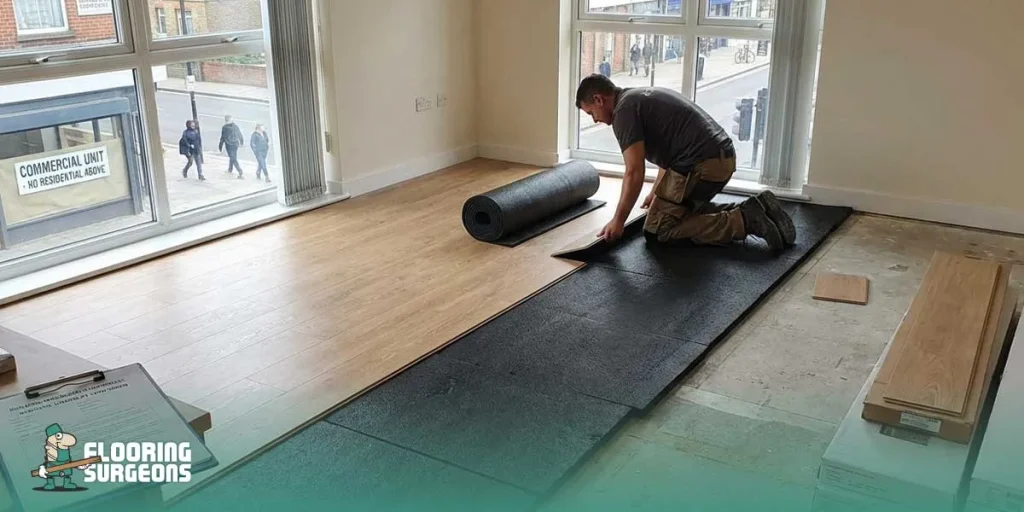
- Effective acoustic underlay is in place. Standard underlay is often designed for comfort or minor sound absorption, not for limiting impact noise between floors. In flats, the underlay must be capable of significantly reducing footfall noise rather than simply softening the feel underfoot.
- The flat is on the ground floor. Where there is no residential unit below, the risk of impact noise complaints drops considerably. This is one of the most common scenarios where laminate flooring is permitted without additional restrictions.
- The building has a concrete slab structure. Concrete subfloors are heavier and more stable, which helps limit vibration and sound transfer compared to timber constructions.
- There is no living space beneath the room being floored. Areas above basements, garages, or commercial units typically pose fewer noise issues than rooms above another flat.
- Lease conditions explicitly allow hard flooring when acoustic standards are met. In these cases, approval is usually conditional on demonstrating adequate sound insulation rather than the flooring type itself.
- In some lower-risk situations, water-resistant laminate flooring for flats is considered more suitable due to its construction and stability.
When Laminate Flooring Is a Bad Idea (Even If It’s Allowed)
Even where leases or building rules technically permit laminate flooring, there are situations where installing it is still likely to cause problems. These scenarios tend to lead to noise complaints, ongoing disputes, or costly changes later on. Some owners assume they can fix problems cosmetically, but altering laminate flooring later rarely solves underlying noise or compliance issues.

- Converted buildings with timber floors. Older conversions often rely on timber structures that flex and resonate. In these buildings, impact noise travels easily, and residents below are more likely to notice and report footfall sounds. Many complaints arise not because rules were broken, but because the building itself cannot absorb vibration effectively.
- Flats with a history of noise complaints. If a building already has a pattern of neighbour disputes over sound, laminate flooring increases the risk of being drawn into an ongoing issue, regardless of installation quality.
- Thin or low-quality laminate systems. Thinner boards and poorly manufactured products tend to amplify vibration, creating a hollow or sharp sound underfoot that carries through the structure.
- Insufficient separation between the flooring and subfloor. Where there is little or no acoustic isolation, impact noise is transmitted directly into the building fabric.
- Situations where future enforcement is likely. Even if laminate is allowed today, management companies may act if complaints arise, leaving you responsible for modifications or replacement.
Common Mistakes Flat Owners Make
- Assuming price is the main risk. Many flat owners focus on choosing a cheaper flooring option, without realising that noise transmission and lease restrictions matter far more than upfront cost. On the other hand, many owners only realise the consequences later, when they face removal costs and the challenges of disposing of laminate flooring after a dispute or complaint.
- Prioritising appearance over practicality. A laminate that looks good in a showroom can behave very differently in a flat, especially when sound control is ignored.
- Checking the lease after installation. Discovering restrictions once the flooring is already fitted often leads to disputes, forced changes, or problems when selling the flat.
- Underestimating the importance of the underlay. Treating underlay as a minor add-on rather than a critical part of sound control is one of the most common reasons laminate flooring causes complaints in flats.
What to Check Before You Decide
Before committing to laminate flooring in a flat, these are the key points that should be reviewed carefully. Missing any one of them can turn a permitted installation into a long-term problem. Simpler formats such as straight plank laminate flooring tend to behave more predictably than decorative patterns in flat environments.
- The type of subfloor construction. Timber floors and concrete slabs behave very differently when it comes to sound transfer, and this directly affects whether laminate is suitable.
- Your lease terms. Restrictions on hard flooring, sound insulation requirements, or the need for written consent can override personal preference.
- The quality and purpose of the underlay. Underlay must be capable of reducing impact noise, not just improving comfort underfoot.
- The position of the flat within the building. Ground-floor flats or spaces without residential units below carry significantly lower risk.
- Your tolerance for potential complaints. Even compliant installations can attract objections if noise becomes noticeable to neighbours.

Haniye Ayanmanesh
As an expert writer for Flooring Surgeons, I combine technical SEO knowledge with a practical understanding of flooring, producing content that helps users make confident decisions while supporting long-term organic growth.