


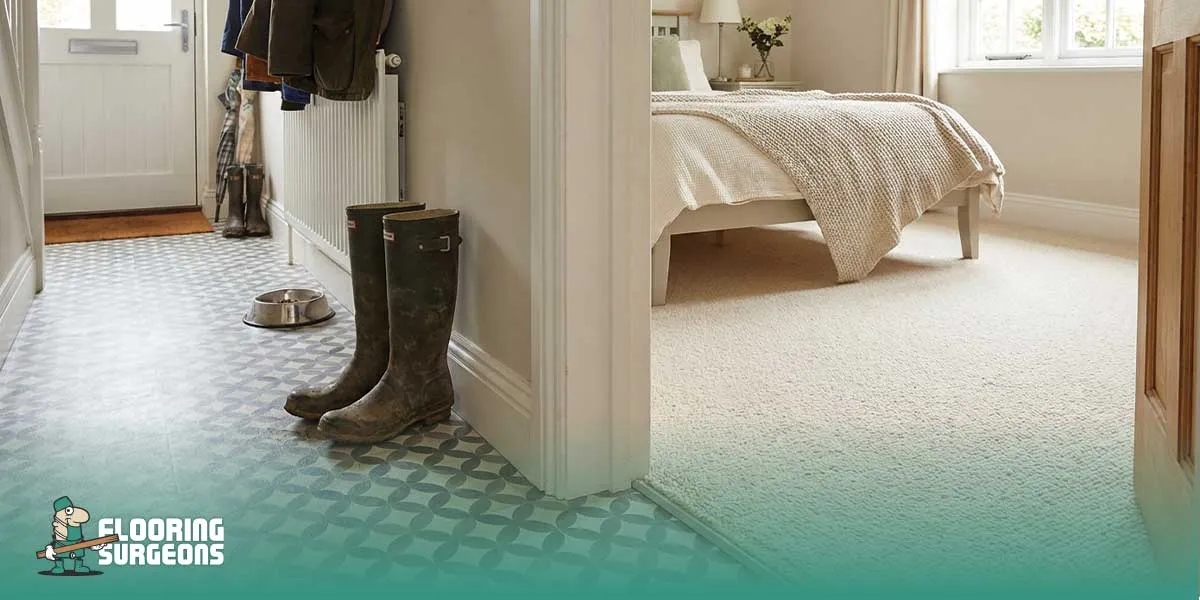
Choosing between carpet and vinyl flooring sounds simple, but most people want a clear answer. So here it is. Vinyl flooring is better for durability, cleaning and busy rooms. Carpet is better for warmth, softness and comfort underfoot. If you want something challenging that handles spills, pets and daily foot traffic, vinyl usually wins. If you want a cosy feel in bedrooms or quieter spaces, carpet is the better match.
That covers the quick version, but the right choice depends on how you live and what each room needs. Homes across the UK vary a lot. Some deal with cold floors on the ground level. Others need something easy to clean because of children or pets. Many people want a warm surface upstairs, but a hard-wearing one for kitchens and hallways. The small details are what make vinyl or carpet the more intelligent choice for your home.
In this guide, you will see how both materials compare across seven key areas so you can decide with confidence. If all you want is the quick answer, you already have it. If you want to understand which option genuinely suits your lifestyle, the rest of this page walks you through the parts that matter.
Table of contents
Carpet vs Vinyl Flooring: The Short Answer
If you want the quick difference between carpet and vinyl flooring without reading the whole guide, here is the simple breakdown. Carpet is chosen for comfort, warmth and noise control, especially in bedrooms, nurseries and relaxed living spaces. Vinyl is chosen for practicality. It deals better with spills, scratches, pets and heavy foot traffic, which makes it suitable for kitchens, hallways and busy family areas.
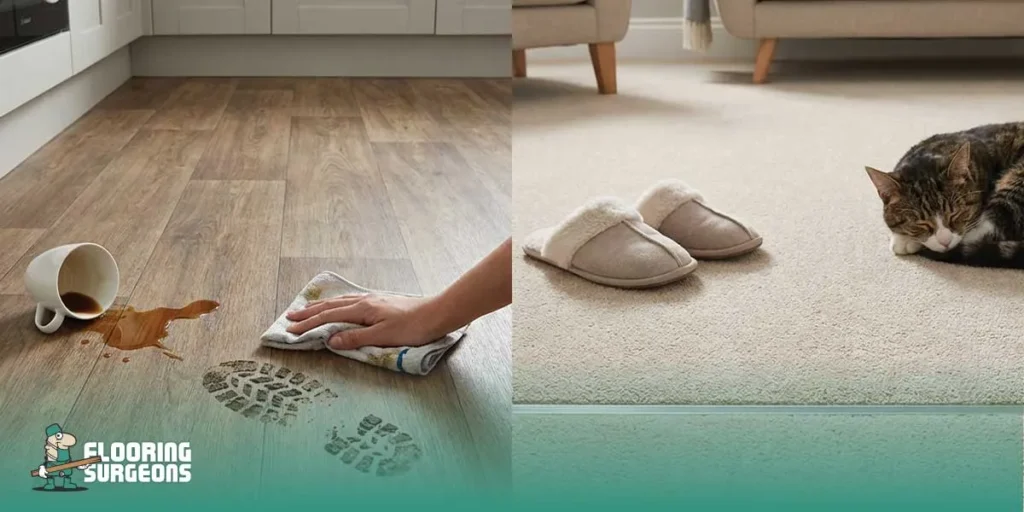
Carpet improves the feel of a room. Vinyl enhances the maintenance of a room. The carpet is quieter. Vinyl lasts longer. The carpet needs more cleaning. Vinyl handles mess with little effort. Most UK households end up choosing based on lifestyle rather than looks: if the room needs to stay clean with minimum effort, vinyl works better. If the room needs to feel soft and cosy, carpet is the easier choice.
Durability and Lifespan: Which Lasts Longer, Vinyl or Carpet
If you are comparing long-term performance, the question most people ask is which lasts longer, vinyl or carpet. In almost every case, vinyl wins. A good wear layer protects it from scratches, stains, pet claws and daily traffic. In busy households, vinyl flooring can look fresh for ten to twenty years with basic care.
Carpet has a shorter lifespan because fibres flatten and absorb dirt over time. Even high-quality carpet needs regular deep cleaning, and most carpets last around seven to ten years before they start looking tired. Homes with pets or children see this even sooner.

For rooms with heavy foot traffic, dropped drinks or muddy shoes, vinyl gives you far more durability. Carpet still works well in quieter rooms, but it cannot match vinyl for long-term strength. If you’re also comparing how vinyl behaves during fitting and long-term use, our guide on installing vinyl flooring explains what makes it more stable in busy UK homes.
Maintenance and Cleaning: What to Expect with Carpet and Vinyl
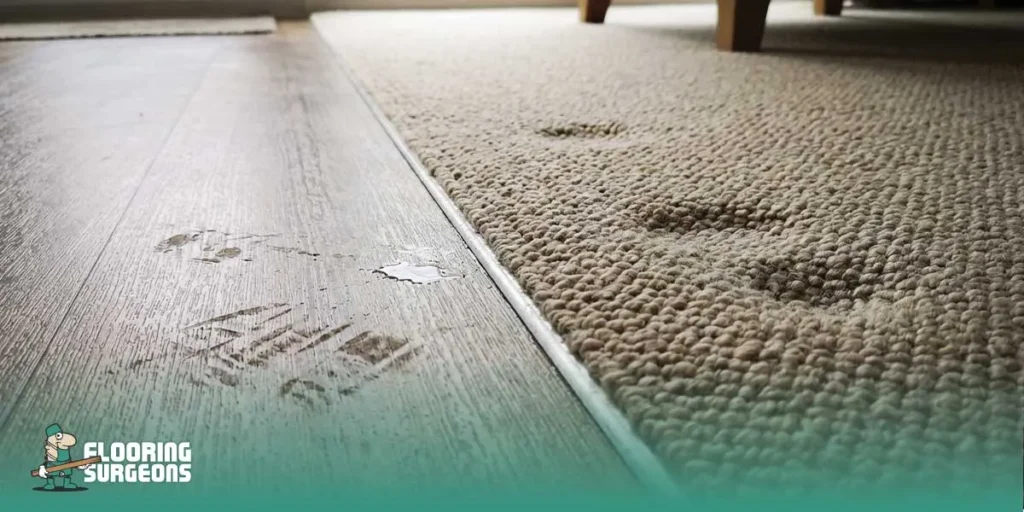
Vinyl flooring is known for easy cleaning routines, which is one of the main reasons families choose it. Spills wipe away quickly, and the surface does not stain easily. A simple sweep and occasional mop are usually enough. The natural stain resistance makes vinyl ideal for kitchens, playrooms and dining areas.

The carpet needs more attention. Vacuuming removes surface dirt, but fibres trap dust and smells that build up over time. Most carpets need deep cleaning once or twice a year to stay fresh. Stains are harder to remove, especially in lighter colours. If you prefer low-maintenance rooms, vinyl clearly offers the simpler routine. Carpet still works beautifully in calm spaces, but it demands a little more effort to keep it looking clean.
Comfort, Warmth and Noise: Which Feels Better Underfoot
If comfort is the main priority, carpet comes out on top. It offers natural carpet warmth, softness underfoot and excellent noise absorption, which is why so many UK homeowners prefer it for bedrooms and living rooms. It feels cosy in winter and gives rooms a gentle, quiet atmosphere.

Vinyl flooring feels firmer and slightly cooler. You can pair it with an underlay for a softer feel, but it will never fully match the plush comfort of carpet. That said, vinyl still works well in living rooms if you want a modern look, and rugs can add warmth without losing practicality. For peaceful, comfortable rooms, carpet feels friendlier. For busy, high-traffic rooms, vinyl wins for strength and cleaning. If you want to see the designs and textures available today, explore our luxury vinyl flooring options for a clearer idea of what fits your room.
Carpet vs Vinyl Flooring Cost Breakdown (Materials and Installation)
If you are comparing vinyl vs carpet cost, the price gap depends on quality and installation. Carpet is usually cheaper upfront, especially in synthetic ranges. Vinyl can cost slightly more, but installation is often quicker, and long-term care is easier.
| Item | Carpet (Material Cost per m²) | Vinyl Flooring (Material Cost per m²) | Installation Cost (UK Average per m²) |
| Budget Range | £6 to £12 | £10 to £18 | Carpet: £4 to £6 Vinyl: £8 to £12 |
| Mid Range | £14 to £25 | £20 to £32 | Carpet: £5 to £7 Vinyl: £10 to £14 |
| Premium Range | £28 to £45 (wool and deep pile) | £35 to £60 (LVT and rigid core) | Carpet: £6 to £8 Vinyl: £12 to £18 |
| Typical Total Cost for a Small Room (12 m²) | £120 to £360 materials plus fitting | £210 to £720 materials plus fitting | Depends on subfloor work |
In many UK homes, carpet is the budget-friendly choice for large areas, while vinyl becomes cost-effective for rooms where spills, pets or frequent cleaning are expected. Both materials offer wide price ranges, so the real difference comes from the room you are upgrading and how much use it gets.
Installation Differences Between Carpet and Vinyl Flooring
Carpet and vinyl are installed very differently. Carpet needs stretching, trimming and fitting grips around the edges, which makes professional installation more common. Vinyl is more DIY friendly, especially modern click vinyl that locks together without glue.
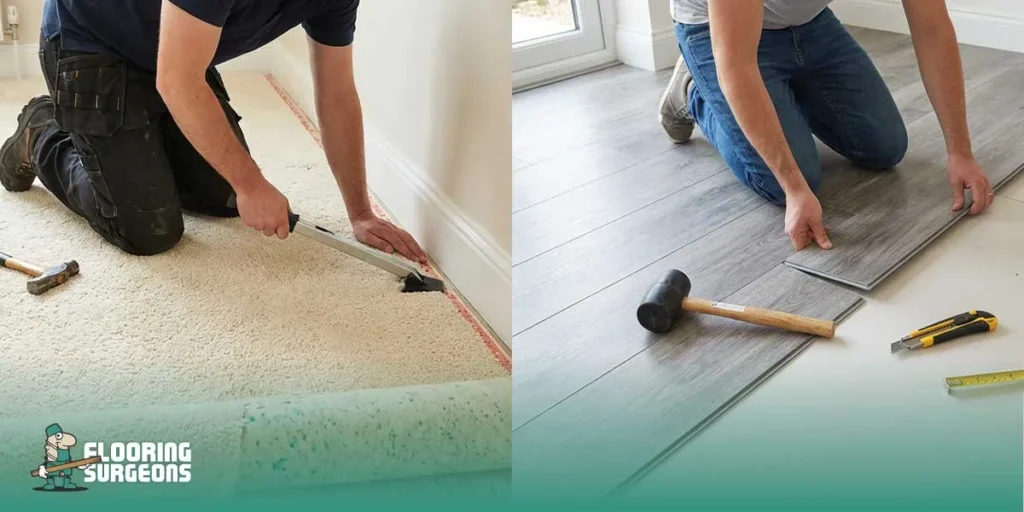
Carpet always needs an underlay to feel soft and stay in place. Vinyl may not need an underlay depending on the type, though many homeowners still add it for comfort and sound improvement. Sheet vinyl can be tricky to cut neatly, while click vinyl is the easiest option for DIY. If you want a simple installation with minimal tools, vinyl is the easier choice. Carpet takes longer but delivers a softer result.
Health, Allergy and Air Quality: Carpet vs Vinyl for Cleaner Homes
A common question is whether carpet or vinyl is healthier, and the answer depends on your household. Carpet fibres trap dust, pollen and pet dander, which can be an issue for families with allergies. Dust mites also settle easily in older carpet, making deep cleaning necessary.
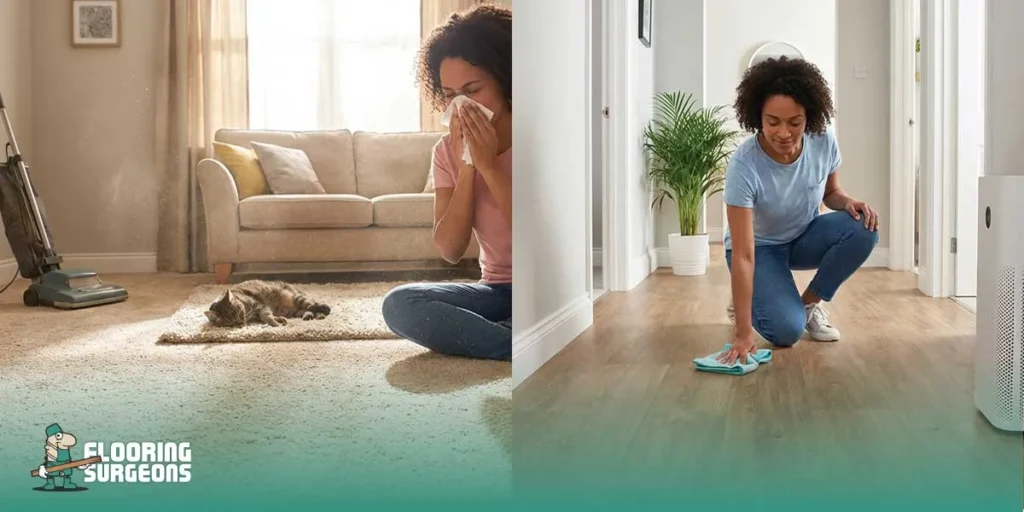
Vinyl flooring does not trap dust. It is simple to wipe clean and works well for allergy-sensitive homes. If you choose low-VOC vinyl, indoor air quality remains stable, too. For families with asthma, pets or frequent allergies, vinyl is often the cleaner long-term choice. Carpet still works well in bedrooms if you vacuum regularly, but vinyl performs better for homes that need easy allergy control.
Where Each Option Works Best (Room by Room Guide)
If you want the practical difference between carpet and vinyl flooring, the easiest way to decide is by looking at each room and what it needs. Bedrooms benefit most from carpet because it feels soft, warm and quiet when you get out of bed. Living rooms also suit carpet when you want a cosy feel and stronger noise control, especially in homes with open-plan layouts.
Kitchens lean heavily toward vinyl. It handles spills, moisture and cleaning far better than carpet. Hallways take a lot of foot traffic, shoes, grit and pets, so vinyl is the safer option there as well. It resists wear from daily movement and keeps its shape much longer.
Flats have mixed needs. Many people use carpet in bedrooms and living spaces to keep noise levels down, and vinyl in kitchens and corridors for easy care. If you have pets or allergies, vinyl is usually the cleaner choice in most rooms.
Think of it as matching the floor to the room’s daily demands. Where comfort matters, carpet wins. Where cleaning, moisture and durability matter, vinyl stays ahead.

Final Advice: How to Choose Between Carpet and Vinyl
When you compare carpet vs vinyl flooring, the best pick comes down to the balance between comfort and practicality. If the room needs warmth, softness and sound absorption, carpet feels better. If you want something challenging, simple to clean and ready for a busy family life, vinyl is the safer choice.
Look at how each room is used, who lives in the home, and how often the space needs cleaning. Bedrooms and living rooms usually suit carpet. Kitchens, hallways, and high-traffic areas work better with vinyl.
If you want help matching the right product to your home, layout and lifestyle, you can get personalised guidance from a team that knows these materials well. For personalised help choosing the right floor, visit Flooring Surgeons.

Haniye Ayanmanesh
As an expert writer for Flooring Surgeons, I combine technical SEO knowledge with a practical understanding of flooring, producing content that helps users make confident decisions while supporting long-term organic growth.