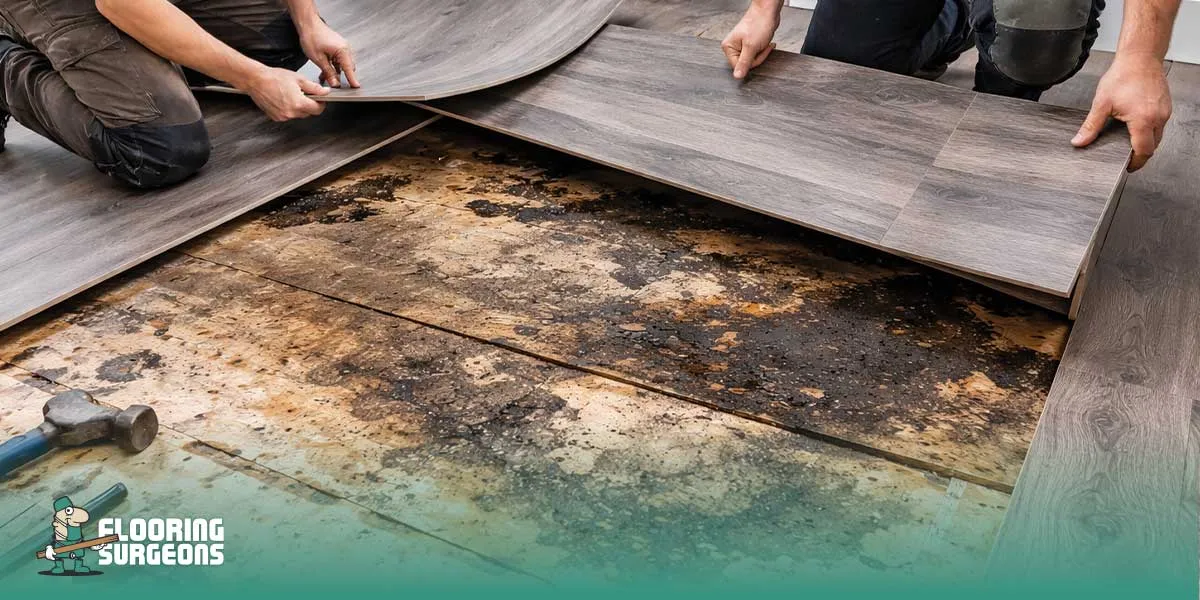



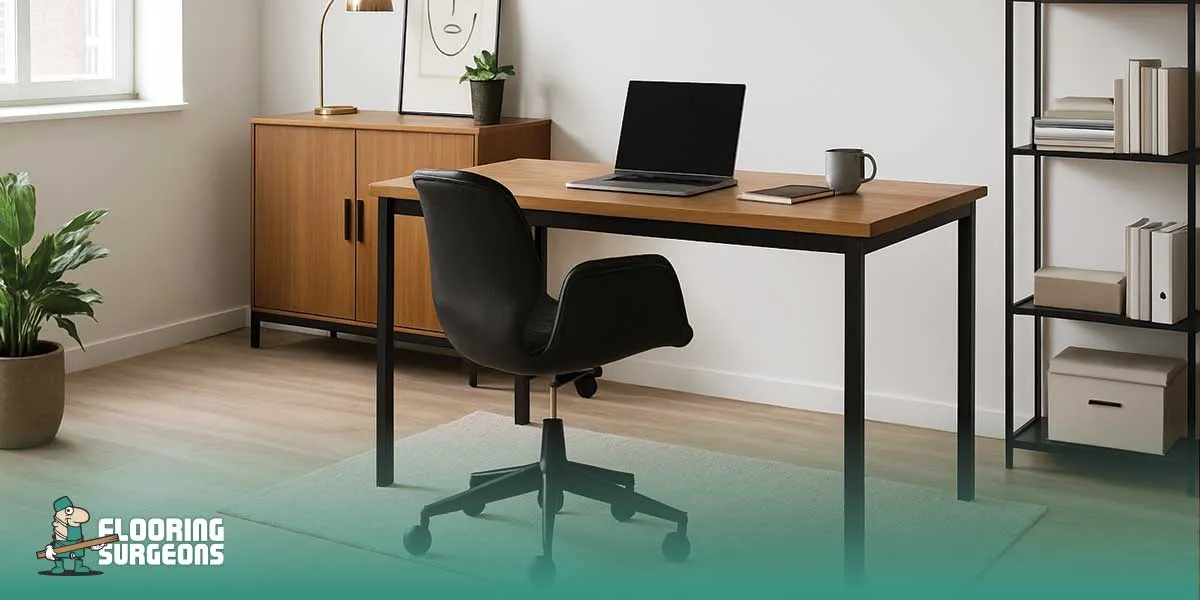
Creating a professional-looking home office starts with one decision most people overlook: choosing the right flooring. The truth is that the best home office flooring options aren’t just about style — they shape how focused you feel, how clean the space stays, and how well your work environment performs day after day. Suppose you’re searching for creative home office flooring ideas or trying to understand which materials actually support a productive setup. In that case, this guide gives you a clear, practical starting point without overwhelming you with unnecessary details.
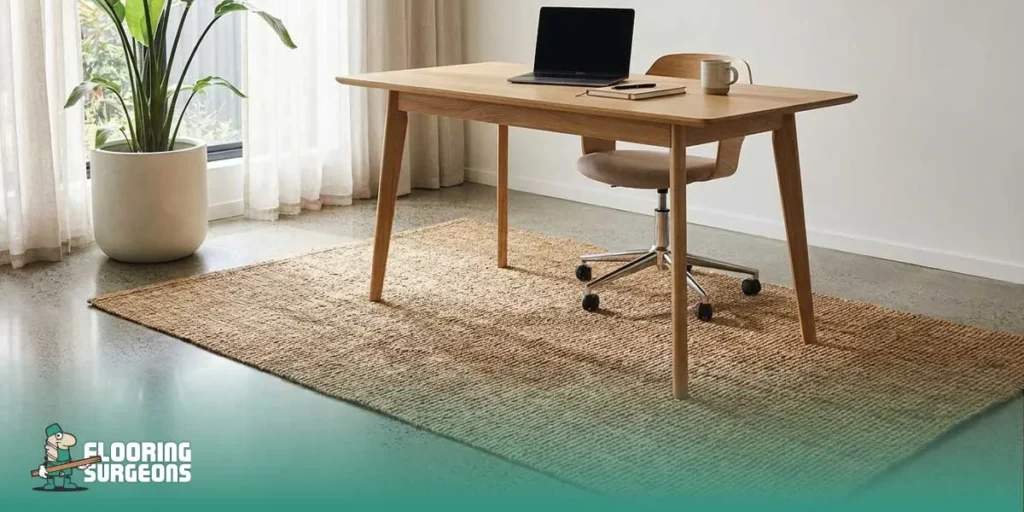
This article was created for people who want a workspace that feels intentional, modern and efficient, but don’t have time to sift through vague recommendations. You’ll learn exactly what makes a flooring choice truly professional, how different materials affect acoustics and comfort during extended work hours, and which options deliver the strongest balance between design and durability. Every idea here is chosen to help you make confident decisions; not just aesthetically, but functionally, so your home office works as hard as you do.
Table of contents
What Makes a Home Office Flooring “Professional”?
A professional home office floor is one that supports focus, stability and long work hours without demanding constant upkeep. The most effective options share four simple qualities. First, they offer stability and durability, meaning the surface doesn’t dent, shift or show wear when furniture moves or when you spend long hours at your desk. Second, they provide acoustic comfort — a professional workspace shouldn’t echo footsteps or amplify noise, especially during calls or meetings. Third, the flooring should deliver visual professionalism, giving the room a clean, organised, and intentional look that reflects how you work. And finally, it must allow for easy cleaning, because a productive office is one you can maintain effortlessly, even on your busiest days. When these criteria come together, the floor stops being “just a surface”. It becomes part of what makes the space feel truly work-ready — especially when you’re comparing options to understand the best type of flooring for your home office.
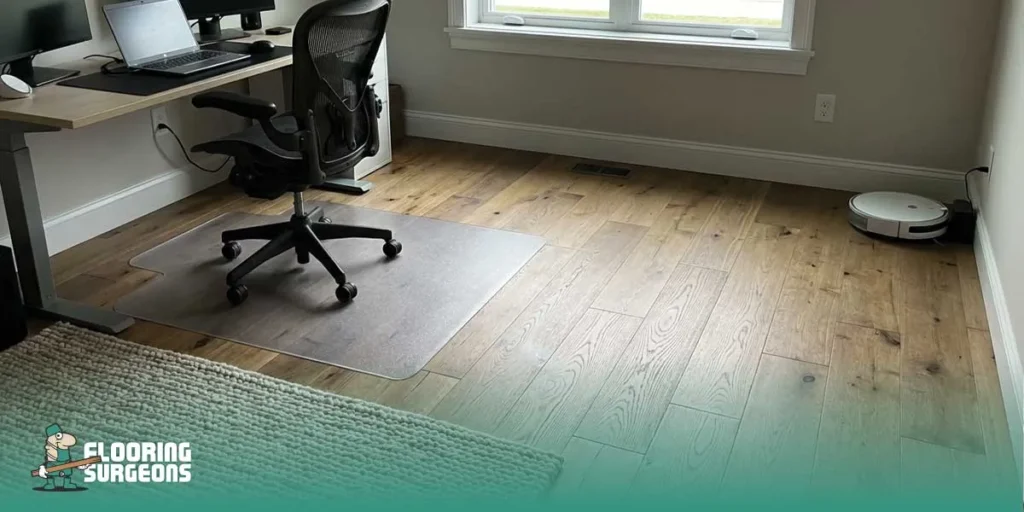
Best Home Office Flooring Options
Choosing the right flooring for your home office isn’t about trends — it’s about finding a surface that genuinely improves how you work every day. Each of the options below solves a different set of real-world problems: noise, comfort, professionalism, budget, or the need for a clean, modern backdrop during long hours at your desk. This isn’t theory; it’s a practical breakdown designed to help you decide quickly and confidently which flooring will actually support the way you work.
LVT & Vinyl Planks — Modern, Low-Maintenance, Professional Finish
LVT and vinyl planks are the most versatile and work-friendly options for modern home offices. They give you a clean, contemporary look on camera — ideal for video calls — while staying incredibly low-maintenance for those who work long hours and don’t want to spend time cleaning. Their smooth surface resists scuffs from office chairs, castor wheels and foot traffic, and they perform especially well in small office setups where every inch of space needs to stay polished and organised.
For writers, freelancers, remote workers, and anyone who relies on a clutter-free environment to stay focused, Luxury Vinyl Flooring offers a balance that few materials match: stable underfoot, quiet enough for calls, and visually tidy with no need for constant upkeep.
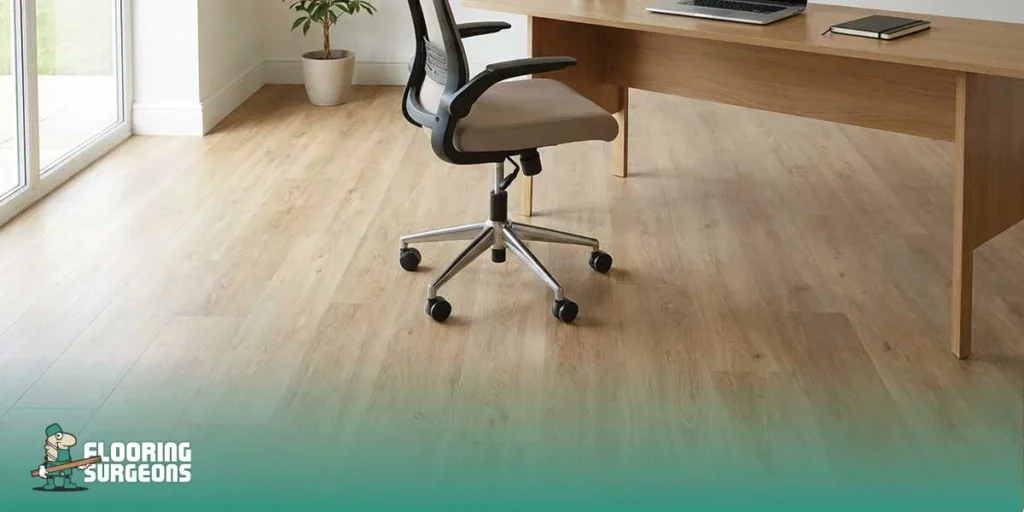
Laminate Flooring — Stylish & Affordable for Creative Setups
Laminate flooring is perfect for home office users who want a stylish backdrop without overspending. Its scratch-resistant surface handles multi-purpose rooms well — whether your office doubles as a guest room, a small studio or a content-creation space.
The range of colours and textures makes it easy to match your interior style, and the clean, matte finishes look professional in photos, videos, or Zoom backgrounds. Suppose you’re building a workspace that needs to look polished but still stay budget-friendly. In that case, laminate delivers a reliable middle ground: modern aesthetics, good durability and a price that makes upgrading your office feel stress-free.
Engineered Wood — Premium Aesthetic for Executive Home Offices
For consultants, designers, executives or anyone whose home office plays a direct role in shaping client perception, engineered wood is the most effective way to elevate the entire environment. It brings warmth, prestige and visual authenticity that no synthetic material fully replicates — and unlike solid hardwood, engineered wood flooring stays stable under temperature changes and daily office use.
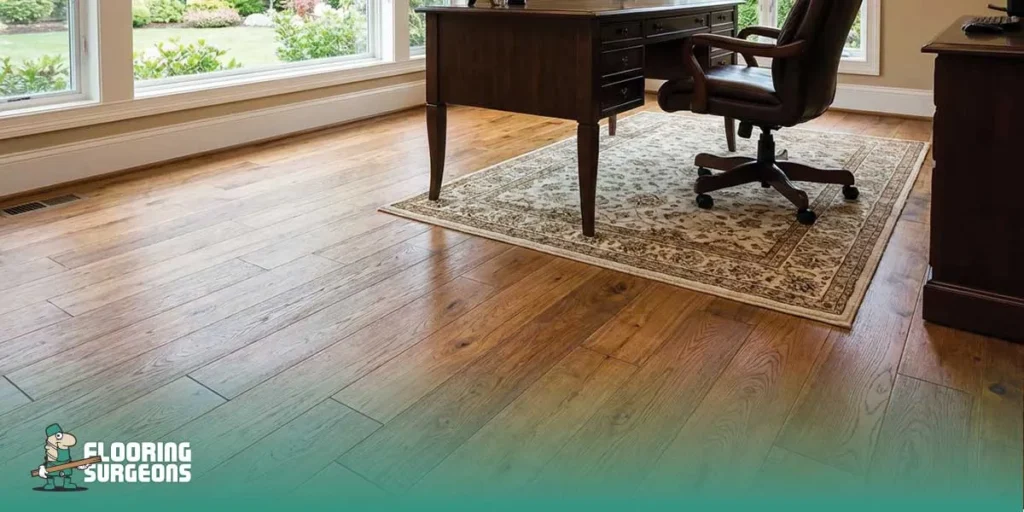
The result is a workspace that feels intentional, sophisticated and comfortable to spend long hours in. Whether you’re hosting clients on video or simply want a space that reflects your professional identity, engineered wood is the premium option that reinforces your brand and work style without compromising on practicality.
Carpet Tiles — Acoustic Comfort for Long Work Hours
For those who spend most of their day typing, taking calls or running virtual meetings, carpet tiles instantly transform the home office into a quieter, more comfortable space. They absorb sound better than any other flooring type, reducing echo and background noise — an advantage your competitors don’t list, but your daily routine will feel immediately.
Carpet tiles are also warmer and softer underfoot, making them ideal for long working hours where physical comfort matters as much as productivity. And because they’re modular, any tile that becomes worn or stained can be replaced individually, keeping the office looking fresh without a complete renovation.
Creative Home Office Flooring Ideas That Boost Productivity
Creating a productive home office isn’t just about choosing a material you like — it’s about shaping a space that naturally supports focus, clarity and long work hours. The ideas below are intentionally practical, easy to apply and designed to help your flooring work with you, not against you.
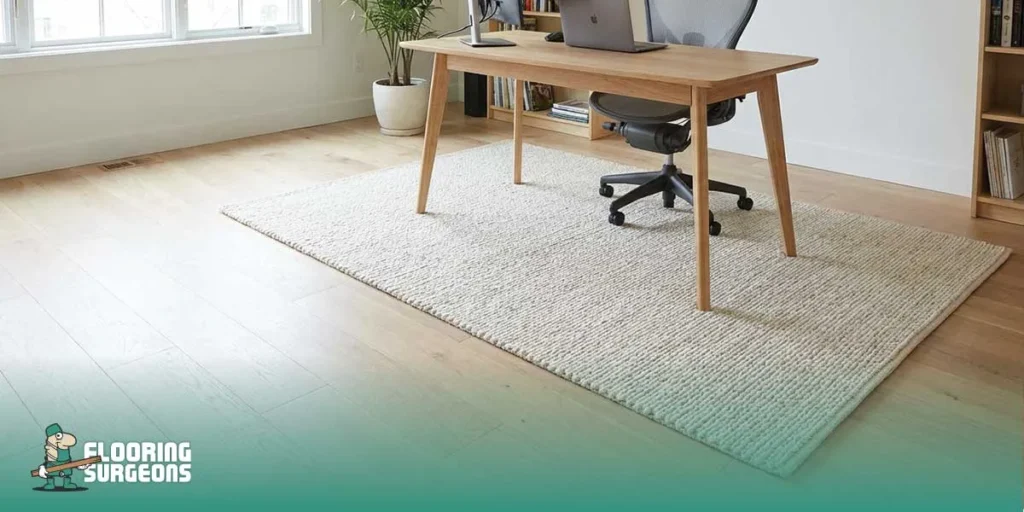
- Mix Wood + Rug Zones for Visual Focus
If you want a clearer focus throughout the day, one of the simplest tricks is to create visual zones. Pairing a wood-look floor with a small area rug instantly defines your “work zone,” giving your mind a subtle cue that this is where concentration happens.
The hard flooring keeps the room looking clean and professional, while the rug adds warmth and helps anchor your desk area. This approach works exceptionally well in multi-purpose rooms where you need a mental and visual boundary between work and everyday home life.
- Use Light-Tone Floors to Increase Natural Brightness
If your office feels small or doesn’t get enough daylight, choosing light-tone flooring is one of the fastest ways to brighten the entire space. Light colours — like pale oak, soft grey or beige — bounce natural light around the room, making it feel larger, fresher and more energising.
This isn’t just aesthetic. A brighter workspace reduces visual fatigue and helps maintain steady energy levels during long work sessions. For anyone who spends hours behind a laptop, this simple change can make a noticeable difference in daily productivity.
- Patterned Floors for Creative Studios & Designers
If your work relies on creativity — design, content creation, illustration or photography — patterned flooring can stimulate visual interest without becoming distracting. Subtle geometric patterns, herringbone layouts or modern textured designs add movement and personality to the room. Instead of cluttering your space, the correct pattern actually supports creative flow. Many studios use this technique to keep the environment inspiring while still maintaining a professional feel.
Smart Home Office Flooring Ideas for Small or Multi-Purpose Spaces
Designing a home office in a small or multi-purpose room requires flooring that visually opens the space and complements the furniture. Low-seam or wide-plank flooring helps create a cleaner, more spacious look by avoiding the visual clutter that breaks up the room. When the floor blends naturally with your desk, shelving or storage colours, the entire layout feels more intentional and less cramped — even if the room has to serve more than one function throughout the day.
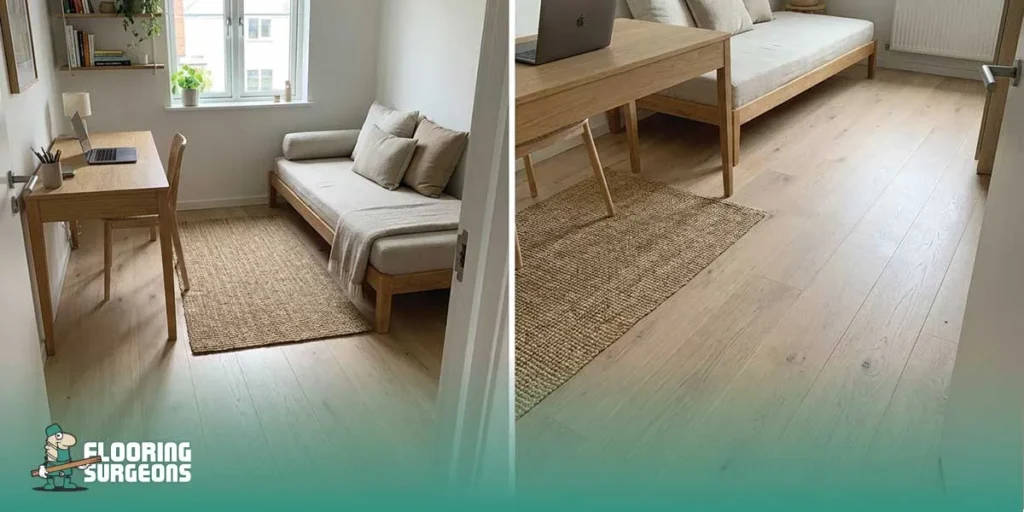
Texture also plays a major role in compact spaces. Choosing smooth or lightly textured surfaces prevents the room from feeling busy, while adding a soft rug or a subtle grain pattern can provide warmth without overwhelming the eye. These small adjustments help you stay focused and organised by reducing visual noise, especially in shared or multi-use environments.
Smart Flooring Principles for Small or Multi-Purpose Offices
| Design Goal | Flooring Approach | Why It Works |
| Make the room feel larger | Low-seam / wide-plank flooring | Reduces visual breaks, creates an open, continuous look |
| Keep the space uncluttered | Flooring tones that blend with furniture | Unifies the room and minimises visual noise |
| Add warmth without crowding | Light texture or small area rug | Creates comfort and focus without shrinking the space |
| Maximise flexibility | Neutral, adaptable flooring colours | Works with multiple furniture arrangements in a shared room |
Real Home Office Examples — What Works Best in Different Setups
A modern creative studio often works best with LVT flooring paired with a patterned rug. The LVT keeps the space durable, easy to clean and visually consistent on camera, while the patterned rug defines the main work zone and adds the kind of energy designers, artists and creators rely on. This combination supports long creative sessions without making the room feel cluttered or heavy.
A corporate-style home office, especially for consultants or managers, benefits most from engineered wood. Its stable, premium appearance reinforces a professional tone during meetings, and the material’s natural warmth helps the room feel more established and focused. This setup works particularly well for people who host video calls or need a workspace that reflects authority and structure.
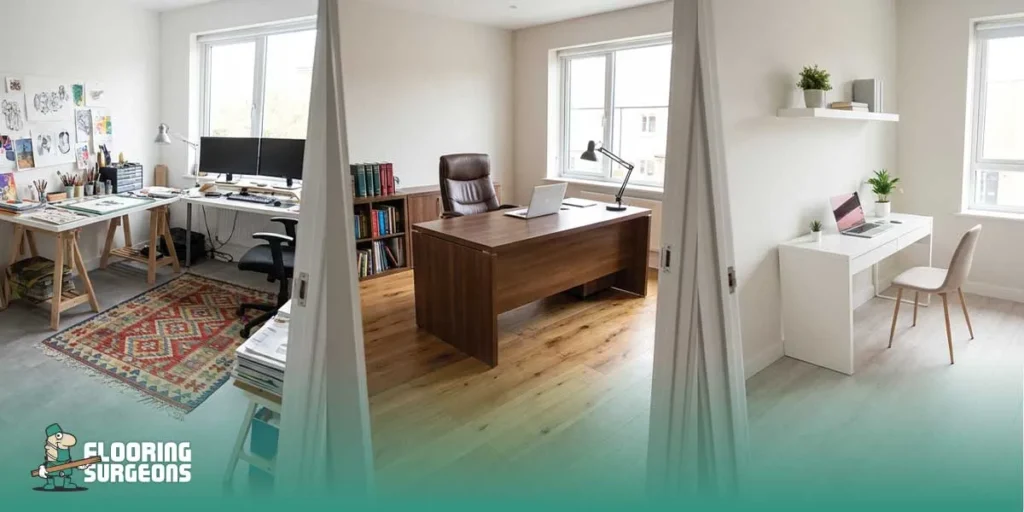
A small apartment office has different needs, which is why laminate flooring paired with a minimalist layout performs exceptionally well. The laminate keeps the budget in check while making the room look polished, and its light-reflective surface helps maximise brightness in compact spaces. Paired with clean, minimal furniture, the overall setup stays organised and functional without overwhelming the room.
Final Recommendation — Which Flooring Delivers the Best Professional Look?
If you want a flooring option that performs well in nearly every home office setup, LVT is the strongest all-rounder — modern, durable, quiet underfoot and easy to maintain. For those who prioritise a polished, executive aesthetic, engineered wood consistently delivers the most professional, high-end look, especially for client-facing work or frequent video calls. If budget is your primary concern, laminate offers the best balance of style and affordability without compromising day-to-day practicality. And for anyone who needs maximum quiet — writers, call-heavy roles, shared apartments — carpet tiles offer the best acoustic performance. With these clear distinctions, choosing the right flooring becomes straightforward, no matter how your home office is set up.
For more practical guidance and real-world comparisons, you can also explore resources from Flooring Surgeons, which offer helpful insights for choosing the right material confidently.

Haniye Ayanmanesh
As an expert writer for Flooring Surgeons, I combine technical SEO knowledge with a practical understanding of flooring, producing content that helps users make confident decisions while supporting long-term organic growth.