

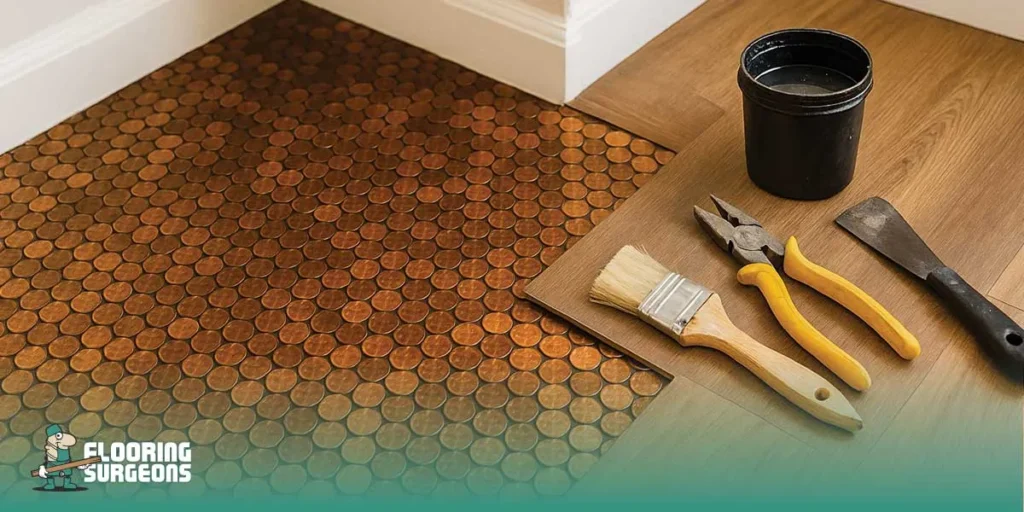
Penny floors are one of those rare design choices that instantly give a room personality. Whether you’re refreshing a narrow hallway, updating a bathroom, or adding a feature section to a kitchen or bar area, this style delivers warmth, texture, and a handcrafted charm. The subtle shine of copper coins, the natural variation in their patina, and the mosaic-style layout all work together to create a look that feels thoughtful and unique.
Although penny flooring appears simple at first glance, achieving a smooth, long-lasting finish requires choosing the correct layout, preparing a stable base, and properly sealing the surface. In this guide, you’ll find design ideas that work beautifully in real homes—from clean, classic layouts to modern gradients and mixed-metal patterns. The goal is to help you pick a style that not only suits your taste but also elevates the character of your space.
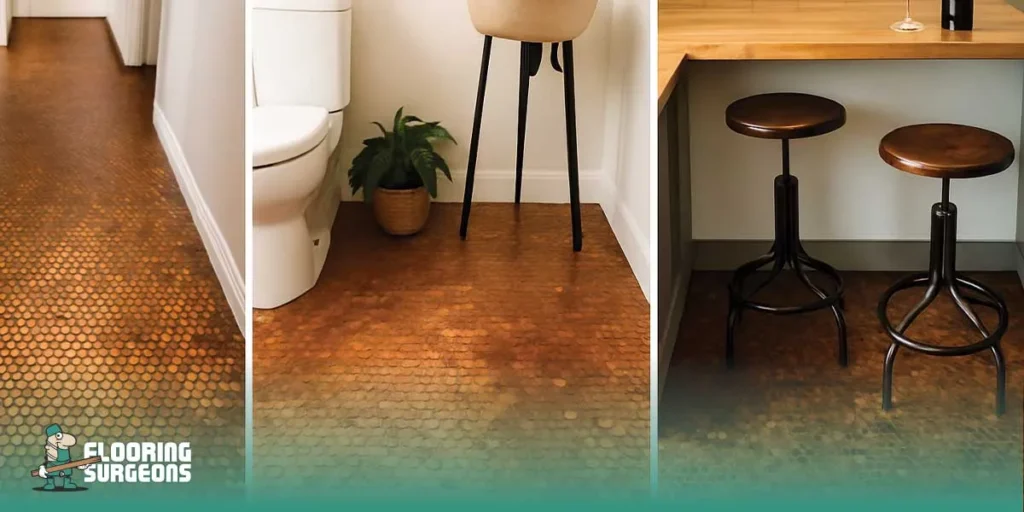
No matter whether you prefer rustic interiors, industrial details, or a more contemporary look, penny floors can add depth and visual interest without overwhelming the room. Let’s explore how everyday coins can turn into a surface that feels artistic, durable, and surprisingly elegant.
Table of contents
Why Penny Floors Are a Smart and Stylish Choice
Penny floors may look playful, but they’re also practical. They suit a wide variety of rooms, adapt to different interior styles, and provide a durable surface once sealed. Whether you’re planning a small feature area or a full-room installation, here’s why many homeowners and designers keep returning to this creative flooring idea:
A Versatile Look That Suits Different Styles
One of the biggest strengths of a penny floor is its ability to blend in—or stand out—depending on how you design it. The warm copper tones and soft colour variations work beautifully with rustic and vintage interiors, while mixed-metal layouts fit seamlessly into industrial or modern spaces. This design flexibility is what makes penny floors such an appealing option for creative renovations.
Surprisingly Durable With the Right Sealant
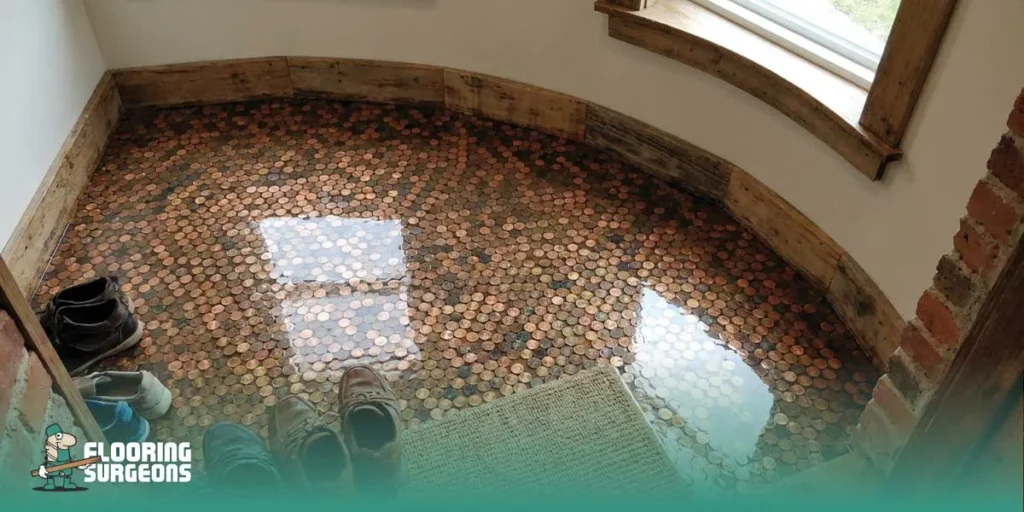
When sealed with a high-quality resin or epoxy, a penny floor becomes smooth, resilient, and resistant to spills and everyday wear. The protective coating not only locks the coins in place but also adds a glass-like finish that’s ideal for busy areas like entryways and kitchens. It’s a practical surface that performs well while still looking decorative.
Ideal for Small Areas and Statement Corners
Because pennies are small, they allow you to work precisely in tight or irregular spaces. You can create curved borders, graphic patterns, or gradients in areas where traditional tiles may not fit as neatly. Powder rooms, laundry corners, small entry halls, and accent sections under furniture all benefit from this kind of detailed, space-efficient design.
A Cost-Effective Alternative to Premium Tiles
If you love the look of designer tiles but don’t want to commit to the price, penny flooring offers a clever middle ground. The materials aren’t costly, and you can achieve a bespoke, high-end finish without overspending—especially if you install it in a compact area. Even with the cost of adhesive and sealant, this remains one of the more budget-friendly ways to create a standout floor.
Strong, Durable, and Protected With the Right Sealant
When sealed with a high-quality resin or epoxy, a penny floor becomes smooth, resilient, and resistant to spills and everyday wear. The protective coating not only locks the coins in place but also adds a glass-like finish that’s ideal for busy areas like entryways and kitchens.
For homeowners looking for long-lasting materials for high-traffic areas, LVT flooring is another reliable option that offers excellent durability and easy maintenance.
Creative Penny Floor Design Ideas to Transform Your Space
Each penny acts like a miniature tile, which opens the door to countless layout possibilities. Whether you want a subtle design or something bold and expressive, the pattern you choose will set the tone of the room. Here are some of the most popular and visually striking ideas:
Classic Single-Tone Layout
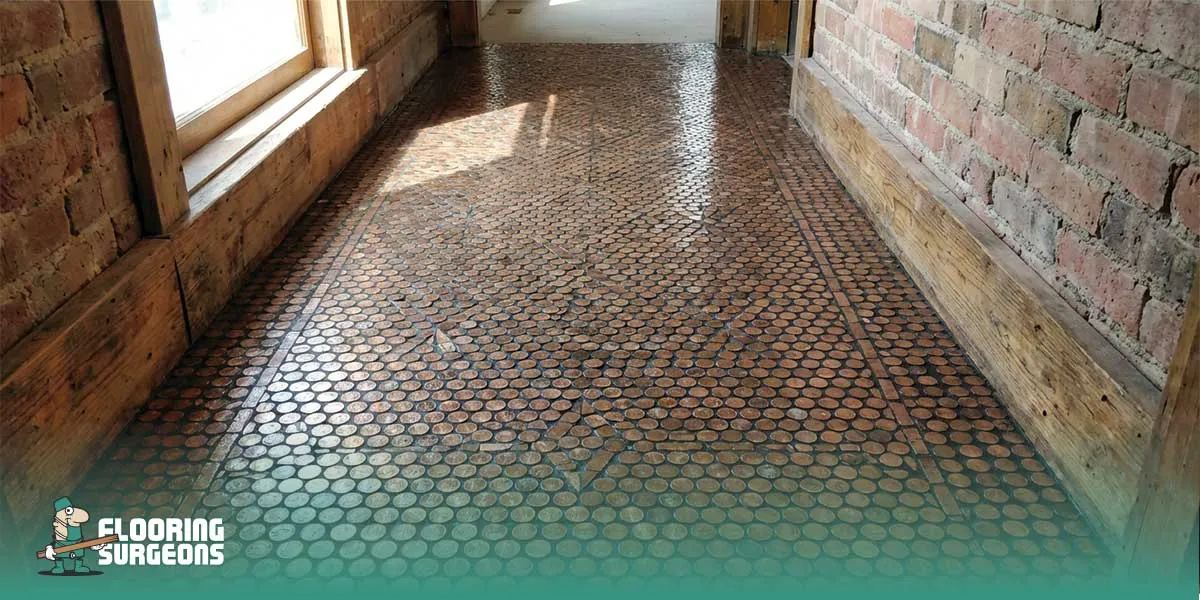
This is the traditional approach: coins facing the same direction, arranged in a clean, continuous pattern. The result is tidy, cohesive, and ideal for bathrooms, hallways, and other smaller rooms. Once sealed, it almost looks like a copper sheet with a soft texture running underneath.
Best for: minimalist or traditional interiors.
Gradient and Ombre Designs
Gradient penny floors use the natural colour variations in coins to create soft transitions from light to dark. This adds movement and makes the room feel more dynamic without overwhelming the space. Gradients can run horizontally, vertically, or radiate from the centre of the room.
Best for: modern homes, artistic spaces, eye-catching entryways.
Mixed Metallic Combinations
If you want a little shine, mixing copper with silver washers, aged bronze coins, or gold-toned pieces creates a surface that catches the light beautifully. This style works particularly well in kitchens, bars, or entertainment areas.
Best for: high-impact, light-filled spaces.
Geometric Layouts
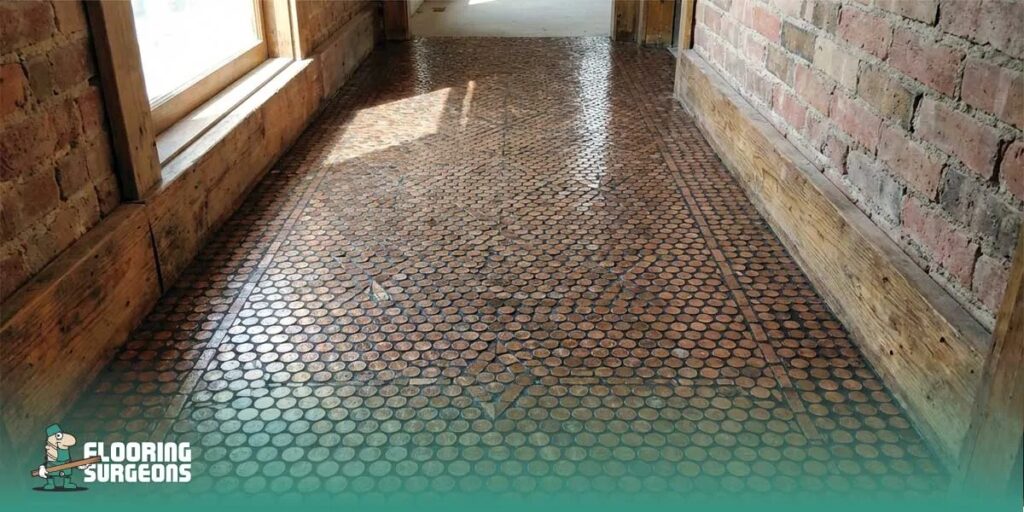
By guiding the direction of the coins, you can mimic geometric patterns such as herringbone, chevron, or hexagon-inspired arrangements. These designs introduce structure and a more contemporary feel while still keeping the handcrafted charm.
Best for: hallways, modern bathrooms, and sleek interiors.
Custom Mosaic Art
For homeowners who enjoy creativity, penny mosaic art is the most personalised option. You can outline shapes, initials, waves, spirals, or abstract pieces using coins in different shades. Many people turn this into a signature feature in entry halls or small corners.
Best for: personalised spaces, studios, or custom renovation projects.
Organic, Randomised Patterns
Allowing the natural patina of the coins to fall where it may creates a relaxed, rustic look. This style feels unpolished in a good way and works beautifully in cottages, older homes, or industrial-style flats.
Best for: rustic themes and vintage-inspired interiors.
Framed Borders
Borders help define the layout and give the floor a more finished appearance. Using darker or lighter coins to frame the main design adds structure and makes the installation look more intentional.
Best for: bathrooms, hallway transitions, small feature sections.
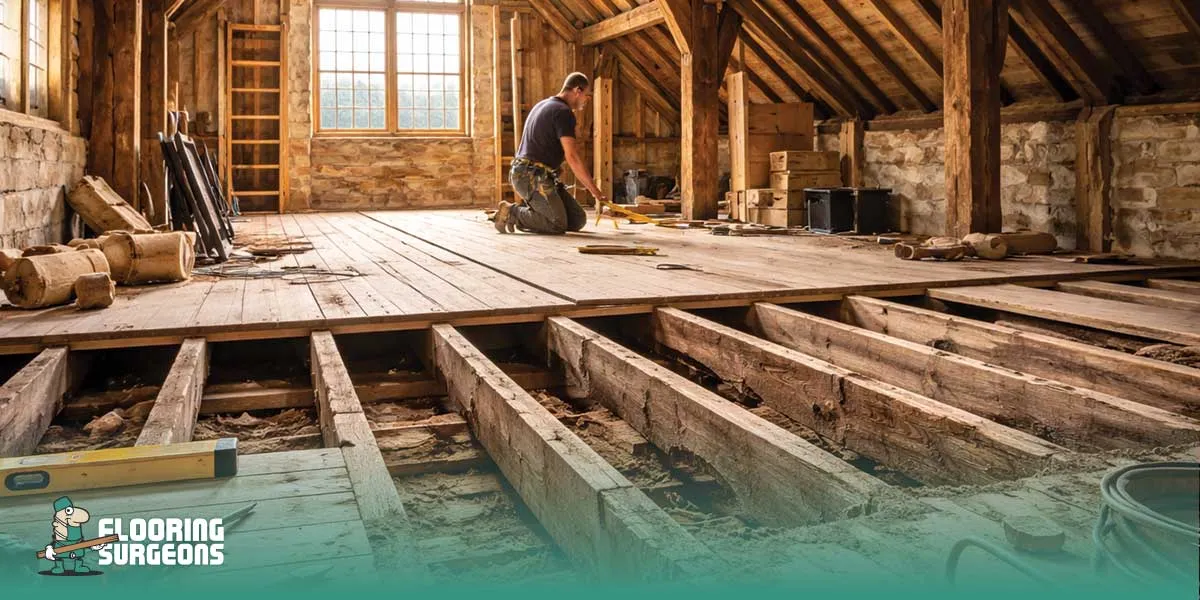
Before deciding where to install this type of decorative surface, make sure the subfloor is smooth and stable. If you’re dealing with uneven areas, our guide on what to do if the subfloor is damaged can help.
Best Places to Use Penny Floor Designs in Your Home
Many homeowners choose penny floors in areas where they want a more artistic, handcrafted look. At Flooring Surgeons, we often see them used in spaces that benefit from extra warmth and texture. Penny floors shine the most when used in areas where you want texture and visual interest. Because the coins reflect light and create a soft metallic glow, they naturally draw attention and make even small rooms feel thoughtfully designed.
Bathrooms — Still the Most Popular Choice
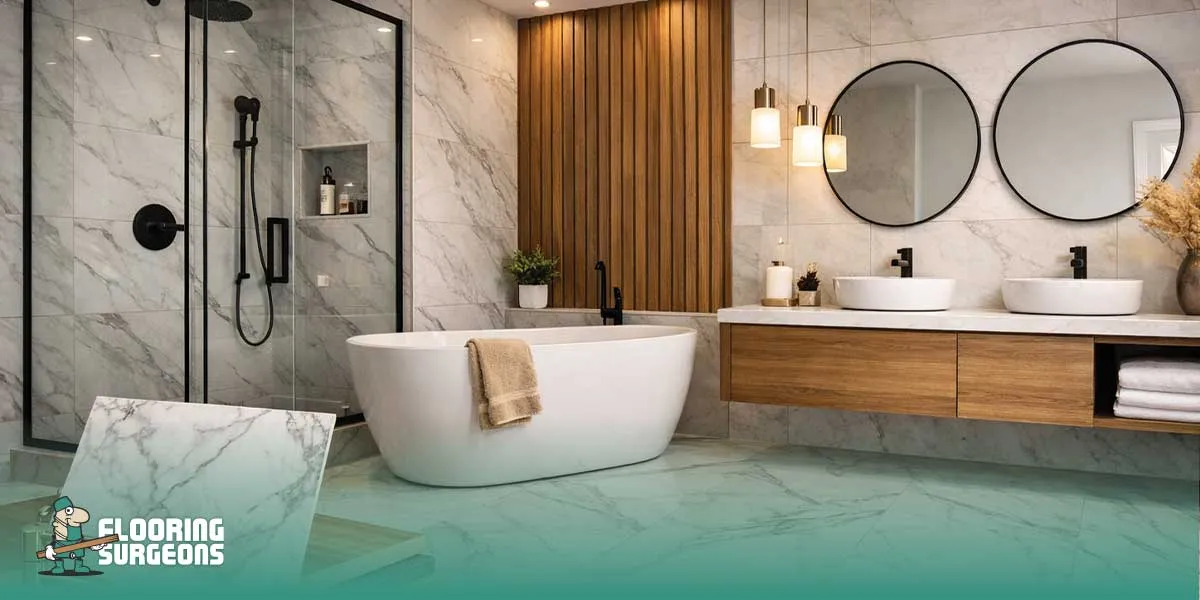
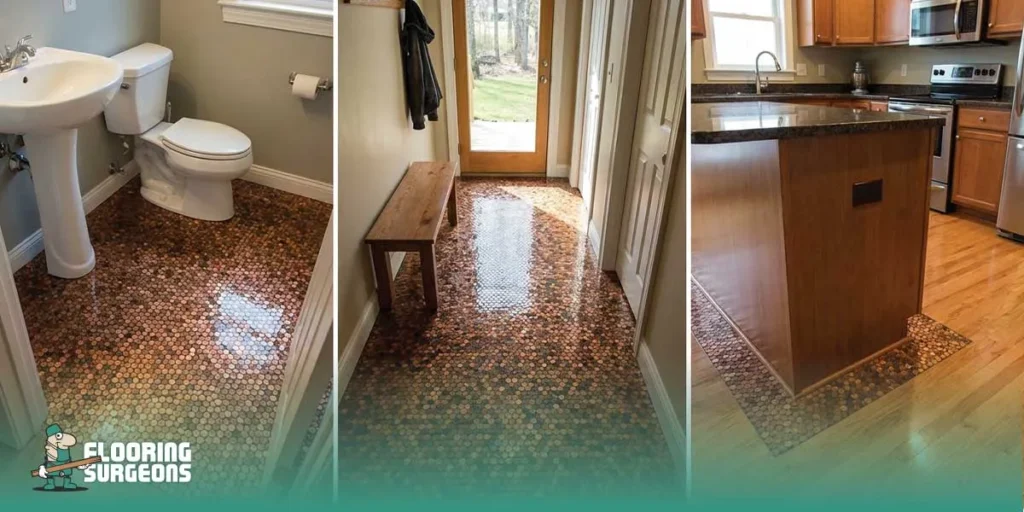
Bathrooms and powder rooms are ideal for penny floors because their compact size lets the pattern stand out without overwhelming the space. Once sealed properly, the surface becomes smooth, water-resistant, and more distinctive than standard tiles.
Entryways — A Strong First Impression
Hallways and entryways benefit enormously from penny floors. The mix of textures and tones makes the space feel inviting the moment someone steps inside. It’s an effortless way to elevate a small, often-overlooked area.
Kitchens and Utility Spaces
Penny floors work beautifully around kitchen islands or prep areas, where a little visual contrast can help define the layout. The sealed surface handles foot traffic well and adds a warm, reflective finish that brightens the room.
Accent Corners and Decorative Zones
If a full-room installation feels like too much, a smaller accent area still delivers impact without covering the entire floor. A reading nook, bar-cart corner, or seating area can become a stylish feature with just a few square metres of penny flooring.
Final Tips for Designing a Penny Floor, You’ll Love
A penny floor is more than a creative DIY project—it’s a design feature that adds character to your room. Take time planning your pattern, test a small section before committing, and use a high-quality sealant to protect the finish. Starting with a compact area, such as an entry nook or bathroom corner, helps you understand the process without feeling overwhelmed.
If you’re exploring materials for a wider renovation, options like laminate flooring or LVT flooring also pair nicely with penny floor accents. Both offer durability and style while keeping maintenance simple.
With thoughtful planning and the right materials, a penny floor becomes a long-lasting feature that feels personal, warm, and unmistakably unique.

Haniye Ayanmanesh
As an expert writer for Flooring Surgeons, I combine technical SEO knowledge with a practical understanding of flooring, producing content that helps users make confident decisions while supporting long-term organic growth.