

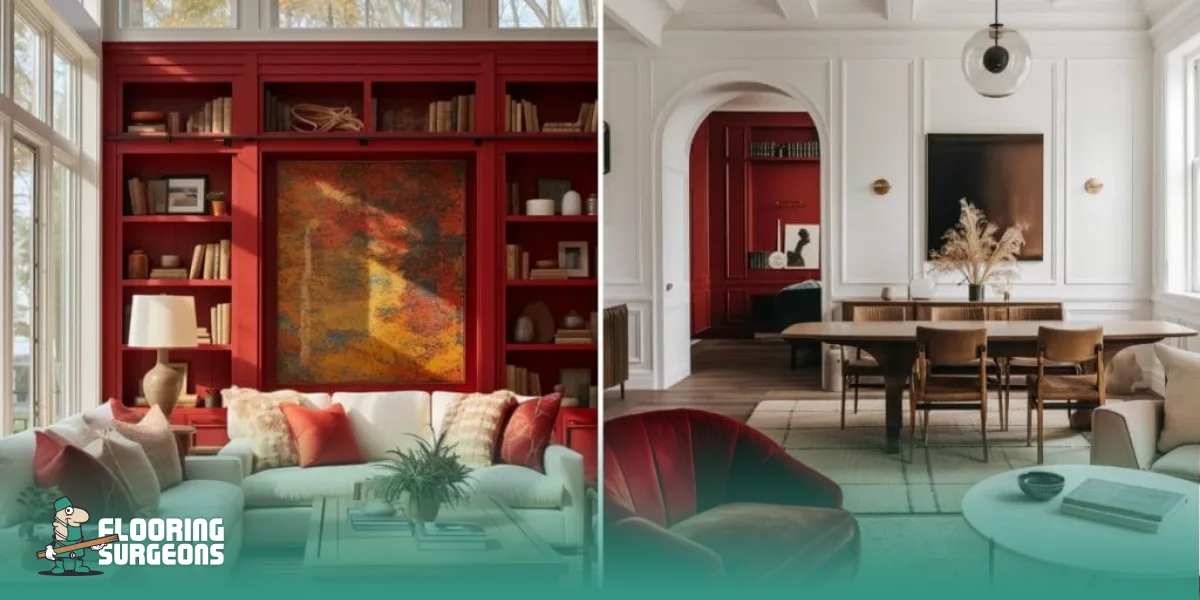
Scared of decorating with red? You’re not alone. Red’s bold, no question, and while it adds warmth and energy, it can also feel like a lot—especially if you’re worried it’ll clash with your floors or just take over the whole room. But here’s the thing: you don’t need to ditch red entirely. The trick is to pair it with softer shades and pick flooring that balances everything out. When your wall colors and floors actually work together, the space feels put-together and calm, not chaotic. Let’s look at some easy ways to decorate with red, plus softer color combos and flooring options that keep things welcoming and relaxed, not overwhelming.
Table of contents
Why Decorating with Red Feels Risky in Interior Design
Red grabs your attention right away—it’s bold, dramatic, and hard to ignore. That’s why a lot of people get nervous about using it at home. Too much red can crank up the energy so much that a room stops feeling cozy, especially in places where you just want to kick back. The real trick is getting the balance right. If you skip the soft neutrals, skip the gentle fabrics, or forget about how the floor works with the walls, red can go from stylish to straight-up overwhelming in no time.
And it’s not just about how much red you use. The shade matters, too. Some reds feel warm and earthy, others come off as bright or even a little cold—and if you pick the wrong one, it’ll clash with everything else. But once you understand how these undertones work, red doesn’t have to be scary. You can use it to make a space feel polished and inviting, not just loud.
Softer Shades That Make Red Easier to Use
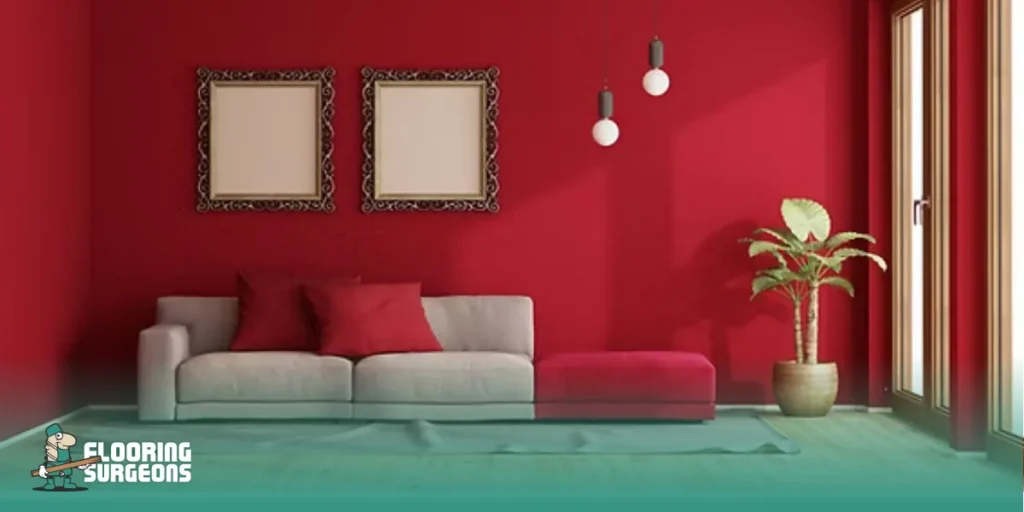
When you pair red with soft shades for home decor, something changes. Suddenly, red doesn’t shout for attention—it just fits. The space feels warmer, more pulled-together, and easier on the eyes.
- Think warm neutrals like beige or taupe. They dial down the boldness and set an easy, welcoming mood.
- Blush and dusty rose bring some of red’s warmth, but they do it quietly, with a bit of elegance.
- Sage or other muted greens add that earthy contrast that makes everything feel steady and relaxed.
- And if you want things to look breezy and modern, go for soft greys or delicate pastels—they brighten things up and keep it fresh.
When you mix these shades with the right floors and furniture, the whole place looks thoughtful, not over-the-top. For more real-life tips on pulling this off in different rooms, check out How to Match Flooring Colours with Wall Colours and Furniture.
Choosing Flooring Colours That Balance Red Tones
Flooring color quietly shapes how red comes across in a room. The right shade can soften red’s punch, make things feel warmer, or bring in just enough contrast so the space feels balanced, not too much. Instead of zeroing in on wall color alone, think about how red accents play with the floor—they really do set the whole mood.
- Go with lighter floors and you’ll notice natural light bouncing around, taking the edge off bold reds and making the whole space feel bigger and more relaxed.
- Darker floors add a sense of depth and richness. Suddenly, red feels richer and more refined, not overwhelming.
- If you lean into warm wood tones, you’ll boost red’s cozy side. The space feels welcoming, like you want to settle in and stay awhile.
On the other hand, cool or neutral floors help calm things down. They balance the boldness of red and keep the overall look clean and modern.
Soft Colors That Go with Red and the Best Flooring to Match
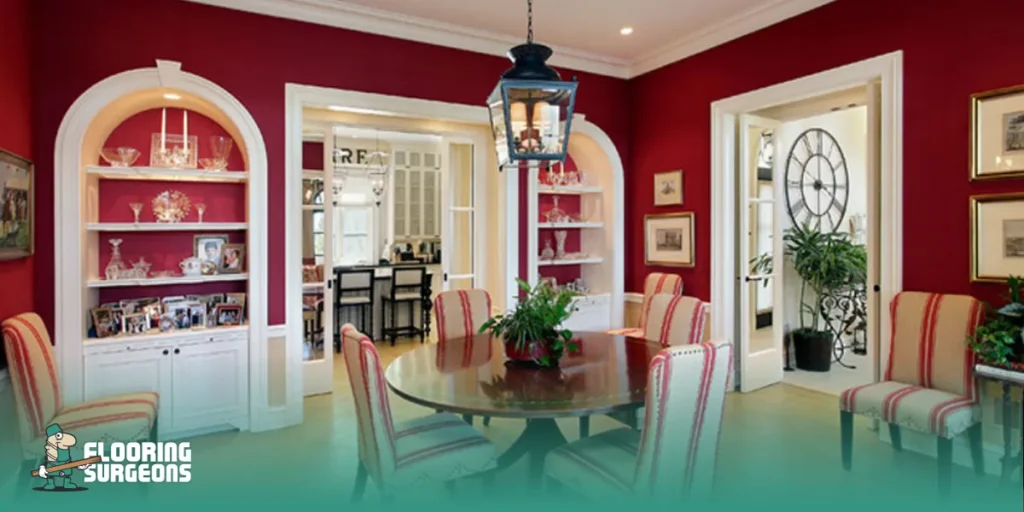
It’s so much easier to pick the right colors when you actually see how they work together. Pair gentle wall shades with floors that play along, and suddenly, red accents don’t overpower the room—they just fit right in. Here’s a quick guide to the best wall colours for wood floors, helping you create a space that feels warm, cohesive, and beautifully balanced rather than busy.
| Soft Shade | Ideal Flooring Type | Overall Effect |
| Beige or taupe | Engineered wood | Warm, balanced, inviting |
| Blush pink | Light laminate | Soft, airy, elegant |
| Sage green | Natural wood look | Calm, grounded contrast |
| Cool grey | Luxury vinyl | Clean, modern, subtle |
Warm Neutrals with Engineered Wood Flooring
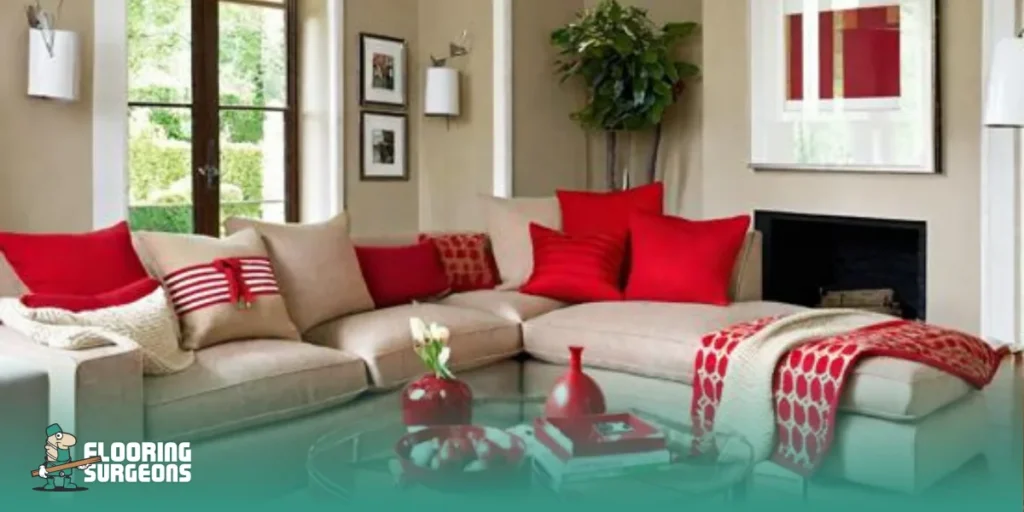
Warm, neutral colors like beige and taupe just click with natural wood flooring. They share those cozy undertones, so everything flows together—walls, floors, the whole vibe. Toss in a few red accents, and nothing feels out of place or too harsh. Rooms done up like this feel inviting, classic, and easy to settle into. If you go for engineered wood flooring with a gentle grain, you lean even more into that warmth and seamless look.
Blush Tones with Light Laminate Flooring
Blush and soft rose shades bring a gentle warmth—kind of like red, but softer and easier on the eyes. When you match these colors with light laminate flooring, rooms instantly feel brighter and more spacious. It’s a great trick if you’re dealing with a small or dark space. Light flooring bounces sunlight around, so even bold colors look softer and less overwhelming. Plus, lighter laminate isn’t just about looks—it’s practical, too, and stands up to daily life without fuss.
Muted Greens with Natural Wood-Look Floors
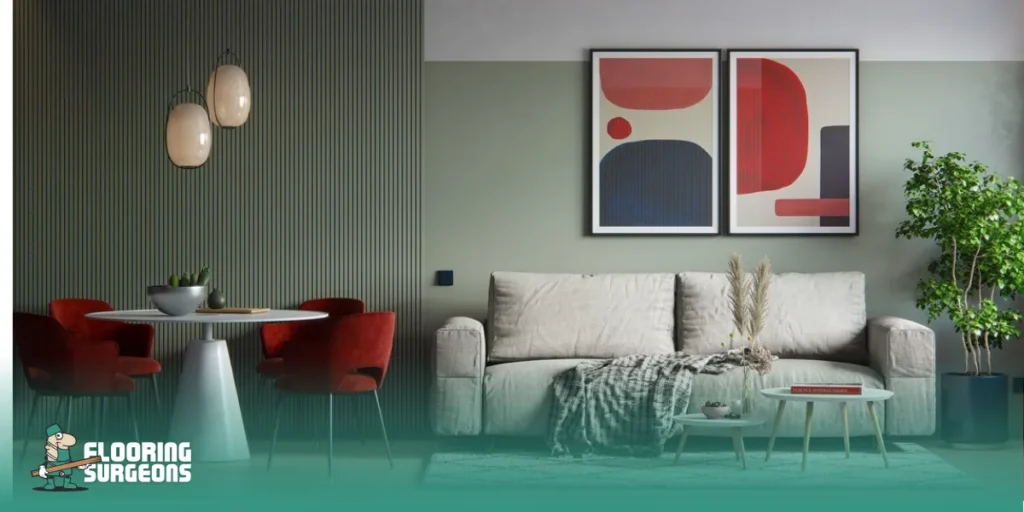
Muted greens, especially sage, bring a gentle contrast that keeps red from taking over the room. Since these shades come straight from nature, they work perfectly with wood-look floors and natural textures. You end up with a calm, grounded space where color feels balanced and relaxed, not overwhelming. This mix really shines in living rooms or any spot where you want things to feel peaceful and cozy.
Cool Greys with Luxury Vinyl Flooring
Cool grey shades provide a clean, modern counterpoint to the warmth of red. This contrast keeps interiors feeling controlled and contemporary, especially in open-plan rooms where balance is essential. Smooth, understated surfaces also help decorative elements stand out without overwhelming the eye. Incorporating Luxury Vinyl Flooring in refined grey or neutral tones can strengthen this modern aesthetic while offering durability suited to busy households.
How to Keep Red from Taking Over Your Space
Red can really bring a room to life, but it packs a punch—so you want to use it thoughtfully. Where you put it, how the light hits it, and what other colors you have nearby all change the way it feels. Even little choices make a big difference.
- Try using red as an accent instead of splashing it all over your walls. This way, you get that cozy warmth without the color stealing the whole show.
- Let in as much natural light as you can. Add mirrors or glossy surfaces, too. These help soften red’s intensity and keep the space feeling airy instead of boxed in.
- Mix in warm neutrals or earthy tones. These shades ground the interior color palette, making everything feel more relaxed and inviting.
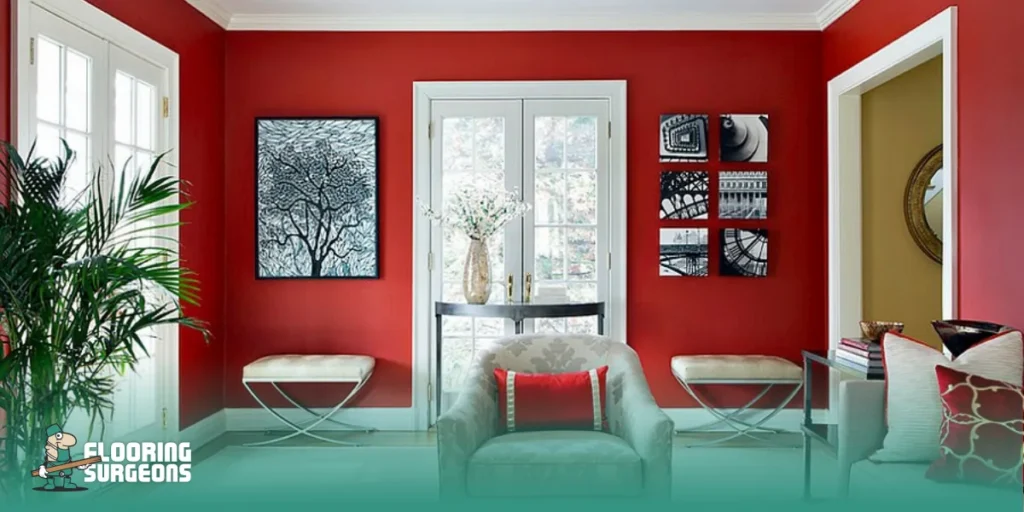
- If you’ve gone for bold red walls, balance things out with calm, understated flooring. This gives your eyes a place to rest and keeps the whole look steady.
It really comes down to how colors play off each other. When you’re working with strong tones like red, pay attention to what’s around them. Want more tips on wall and floor color combinations? Check out “What Colour Floor Goes With Brown Walls?”—it’s packed with ideas that actually work in real homes.
Conclusion: Creating a Calm Interior with Confident Colour
Decorating with red doesn’t have to feel risky. When softened with balanced shades and supported by carefully chosen flooring tones, this bold colour can bring warmth, character, and elegance into a home without overwhelming it. Focusing on harmony between walls, floors, and furnishings allows every element to work together, creating interiors that feel both expressive and comfortable for everyday living.
At Flooring Surgeons, we believe that exceptional interiors start from the floor up, where precision craftsmanship meets thoughtful design to create spaces that feel both striking and effortlessly livable.

Ana.Soltanpoor
I’m an SEO Specialist with a strong background in content management and organic search. I build data-driven content strategies by aligning user intent, search behavior, and SEO best practices to ensure every piece of content delivers clarity, relevance, and measurable organic performance.