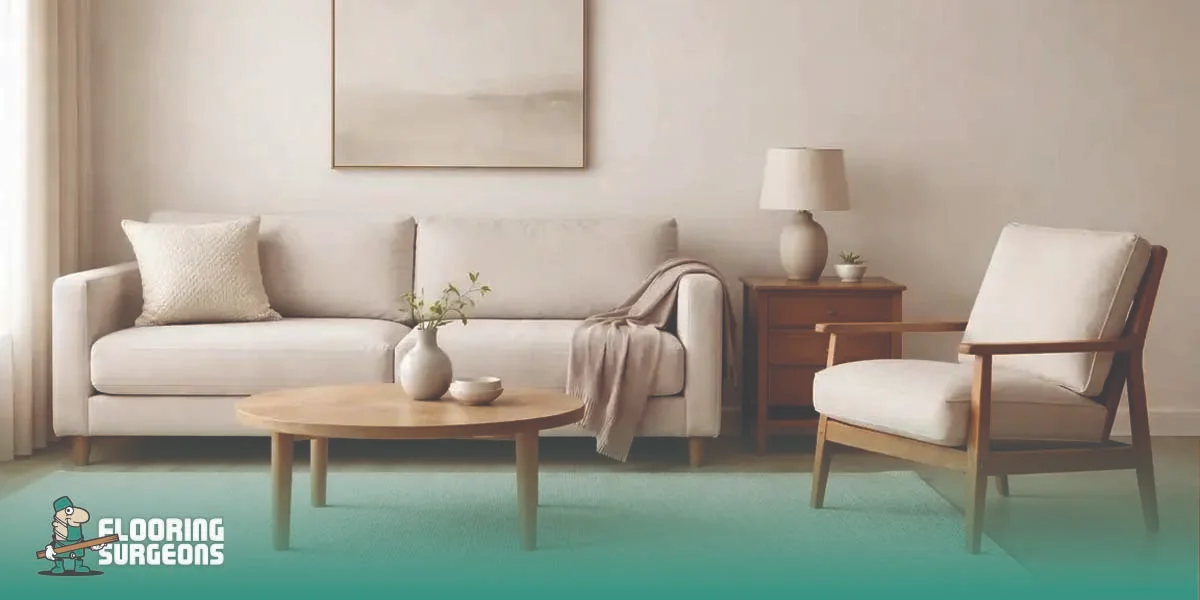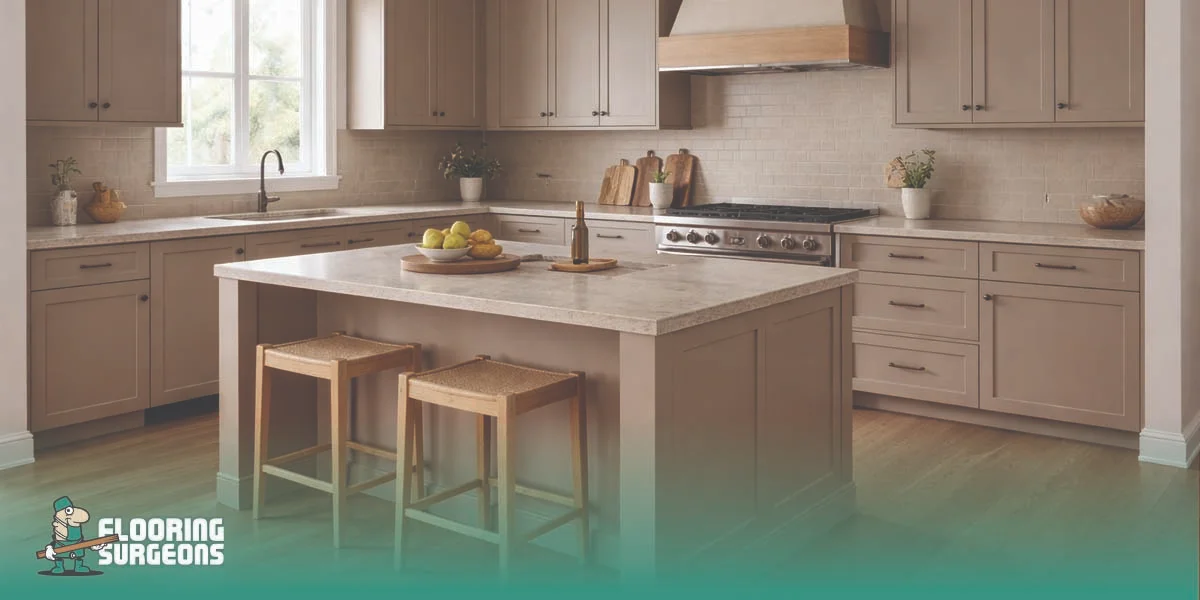


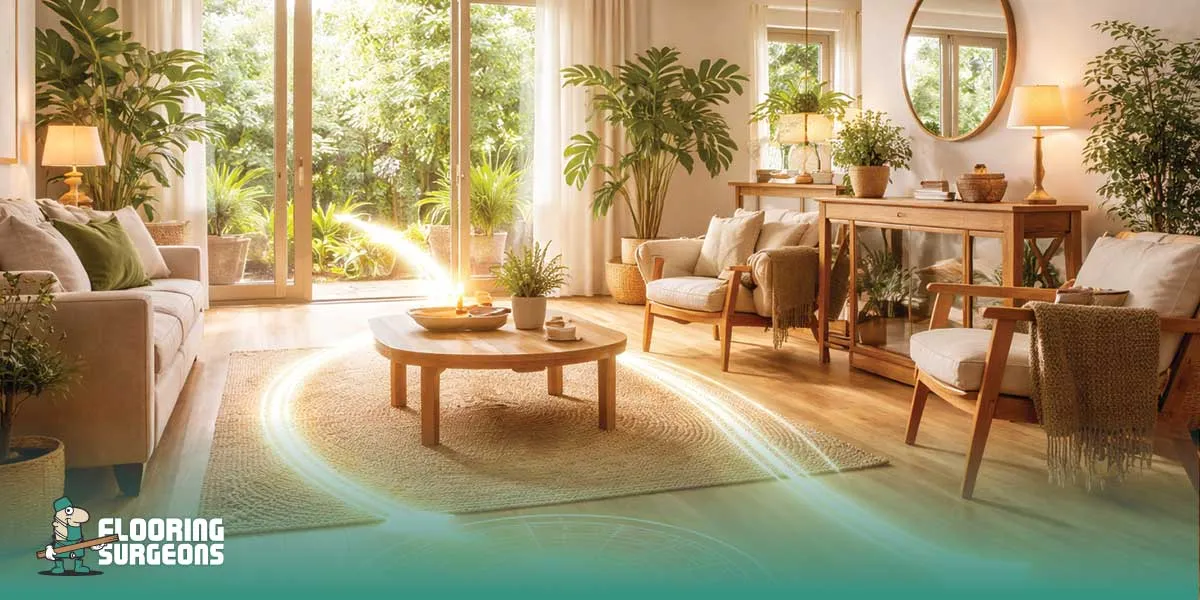
Feng Shui is an ancient Chinese design philosophy that focuses on creating balance and harmony within living spaces. Rather than simply arranging furniture or decorating rooms, Feng Shui looks at how energy, known as Chi, moves through a home and how that movement affects comfort, mood, and well-being.
When the layout of a home supports natural energy flow, spaces tend to feel calmer, brighter, and more inviting. This is why Feng Shui design considers every physical element in a room, from furniture placement to the materials used throughout the space.
One element that is often overlooked in Feng Shui discussions is the flooring itself. Because floors connect every room and guide how people move through a home, they play a major role in shaping energy flow and grounding the overall atmosphere of the space.
Table of contents
What Is Feng Shui in Interior Design?
Feng Shui in interior design is the practice of arranging spaces in a way that supports balanced energy flow throughout a home. The concept comes from traditional Chinese philosophy and is based on the idea that the environment around us influences our well-being, mood, and daily life.
At the center of Feng Shui is the movement of Chi, the life force energy believed to circulate through living spaces. When this energy flows smoothly, without obstacles, clutter, or harsh transitions, a home tends to feel more comfortable, calm, and supportive.
Interior designers often apply Feng Shui principles through spatial layout, natural materials, balanced proportions, and thoughtful surface choices that help guide energy through each room.
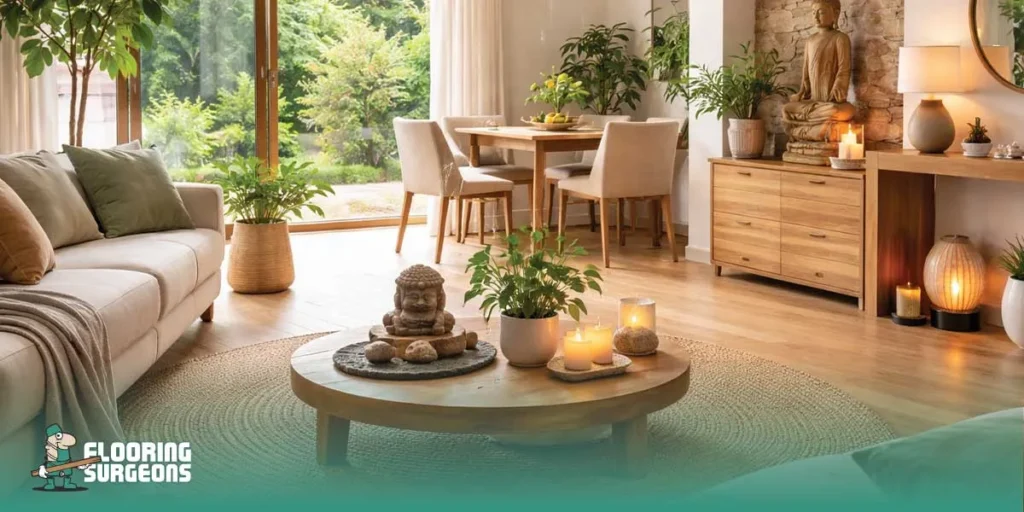
Core Feng Shui Principles for Designing a Harmonious Home
- Balance of the Five Elements
A fundamental idea in Feng Shui is the balance of the five natural elements: wood, fire, earth, metal, and water. Each element represents different forms of energy that influence the atmosphere of a space. When these elements are thoughtfully incorporated into a home through materials, colors, and shapes, they help create a balanced and supportive environment.
- Clear Energy Flow
Energy should move naturally through a home without sharp interruptions. Important factors that support smooth energy movement include:
- Uncluttered pathways between rooms
- Open spatial transitions
- Balanced furniture placement
- Consistent materials throughout connected spaces
When energy flows smoothly, rooms tend to feel calmer, brighter, and more comfortable.
- Natural Materials and Grounding Surfaces
Natural materials are highly valued in Feng Shui because they help connect interior spaces to the natural world. Surfaces made from wood, stone, bamboo, or other organic materials tend to create a grounded and calming atmosphere. Because flooring is the largest continuous surface in a home, choosing natural flooring materials can significantly influence how stable and balanced a space feels.
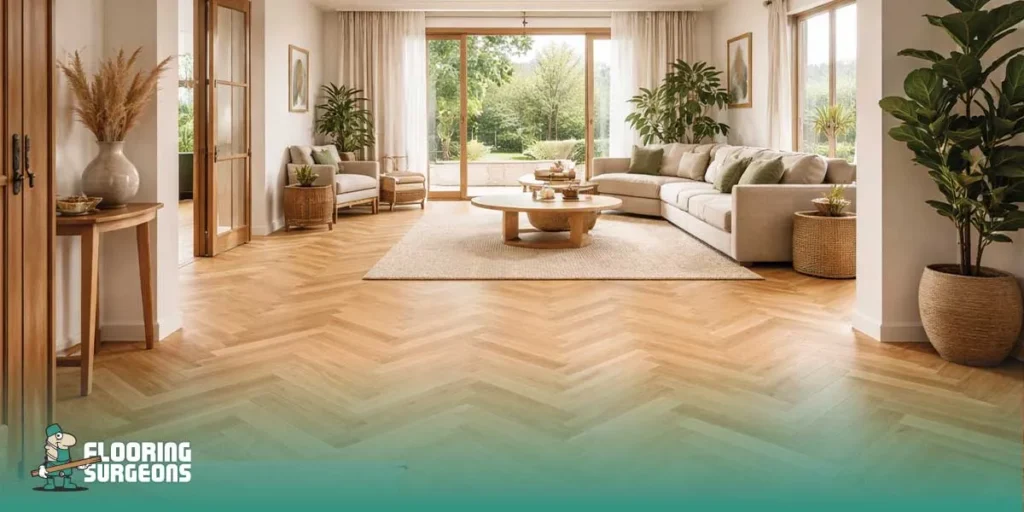
Why Flooring Plays a Key Role in Feng Shui
While Feng Shui is often associated with furniture placement or decorative elements, the flooring of a home plays an important role in shaping how energy moves through a space. Floors form the physical foundation of interior design, linking rooms together and guiding natural movement throughout the home.
Because flooring spans large areas, it strongly influences the visual flow and overall stability of a space.
Key ways flooring affects Feng Shui include:
- Visual continuity
Consistent flooring materials between connected spaces help energy move smoothly from room to room. - Material energy
Natural materials such as wood, bamboo, and stone create a warmer and more grounded atmosphere compared to synthetic surfaces. - Texture and comfort
Flooring texture contributes to the physical and emotional comfort of a space, reinforcing a sense of balance and stability.
Best Flooring Materials According to Feng Shui
| Flooring Material | Feng Shui Element | Energy Impact | Best Rooms |
| Hardwood | Wood | Warm, growth energy | Living room |
| Stone | Earth | Stability and grounding | Entryway |
| Bamboo | Wood | Flexible, balanced energy | Bedroom |
| Ceramic Tile | Earth | Neutral grounding energy | Kitchen |
Natural flooring materials are generally favored in Feng Shui because they reflect elements found in nature and help create a balanced atmosphere within the home. Wood-based flooring such as hardwood or bamboo introduces warmth and growth energy, especially when using engineered wood flooring designed for natural interior balance, while stone and ceramic surfaces provide stability and grounding in areas that experience frequent movement. Selecting flooring materials that suit the function of each room helps maintain harmony and smooth energy flow throughout the entire home.
How Flooring Layout Influences Energy Flow
- Direction of Floorboards
The direction of flooring boards or tiles can subtly guide how people move through a space. Patterned layouts such as chevron or herringbone parquet flooring patterns that guide visual movement can naturally lead the eye toward key areas of the room while supporting smoother circulation of energy.
- Avoid Broken Visual Patterns
Frequent changes in flooring patterns or materials can interrupt the natural flow of energy between rooms. In interior design, floor patterns influence visual flow and can subtly guide how people experience movement from one space to another.
- Open Flooring Transitions
Transitions between rooms should feel smooth rather than abrupt. Consistent flooring across open spaces — or subtle transitions between different materials — helps preserve the sense of openness that Feng Shui design aims to achieve. Smooth transitions encourage natural movement while maintaining balance between different areas of the home.
Feng Shui Tips for Different Rooms
- Living Room
The living room is one of the most important spaces in Feng Shui because it serves as the central gathering area of the home. The goal is to create a welcoming and balanced environment where energy can circulate comfortably.
- Choose natural wood flooring to introduce warmth and support the wood element associated with growth and vitality, such as solid wood flooring that enhances natural energy in living spaces.
- Arrange furniture in a balanced layout that encourages conversation and leaves clear pathways for movement.
- Avoid placing large furniture pieces where they block natural light or interrupt the flow between seating areas.
- Bedroom
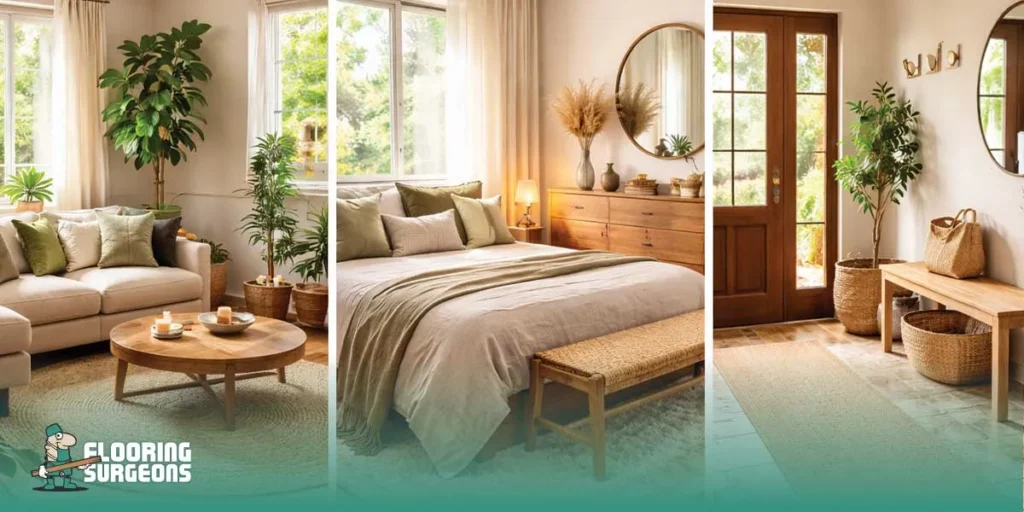
In Feng Shui, the bedroom should feel calm, stable, and supportive of rest. Materials and textures play an important role in shaping this atmosphere.
- Use warm flooring textures such as hardwood, bamboo, or layered rugs to create a comfortable and grounded environment.
- Select natural materials that feel soft and calming rather than overly glossy or artificial.
- Maintain a balanced layout that keeps the space uncluttered and allows energy to move gently throughout the room.
- Entryway
The entryway is often described in Feng Shui as the “mouth of Chi,” meaning it is where energy first enters the home. Because of this, the materials used in this space should feel stable and welcoming.
- Choose durable, grounding materials such as natural stone or tile that represent the earth element.
- Keep the entry area open and well organized so energy can flow easily into the rest of the home.
- Avoid abrupt flooring changes right at the entrance, as smoother transitions help guide energy naturally into adjacent rooms.
Common Feng Shui Mistakes in Interior Design
Certain design choices can disrupt the natural balance Feng Shui aims to create. Avoiding these common mistakes helps maintain a harmonious environment throughout the home.
- Cluttered spaces that block movement and restrict the natural flow of energy.
- Sharp layout transitions between rooms that create visual and energetic disruption.
- Overuse of artificial materials that lack the warmth and grounding qualities of natural surfaces.
- Cold or overly reflective flooring surfaces that make spaces feel unwelcoming or unbalanced.
When interior elements work together in a cohesive way, energy can circulate more freely and rooms tend to feel more comfortable and connected.
How to Choose Flooring That Supports Feng Shui Energy
Selecting flooring with Feng Shui in mind involves more than simply choosing a color or style. The materials, texture, and layout of flooring all influence how energy moves through a home. Natural materials are often preferred because they bring a sense of authenticity and balance to interior spaces.Natural materials are often preferred because they bring a sense of authenticity and balance to interior spaces. Flooring options such as hardwood, bamboo, and natural stone tend to create a grounded atmosphere, and understanding the benefits of engineered wood flooring can help homeowners choose a material that offers both natural beauty and practical performance.
Warm textures also play an important role. Surfaces that feel comfortable underfoot contribute to a sense of stability and relaxation, particularly in spaces like bedrooms and living rooms where comfort is essential.
Seamless flooring layouts can further support balanced energy flow. Maintaining consistent materials between connected rooms helps prevent visual fragmentation and allows movement through the home to feel more natural. Sustainability can also align with Feng Shui principles. Eco-friendly materials, responsibly sourced wood, and long-lasting flooring choices reflect a deeper respect for the natural environment.
Because flooring influences both the visual flow and structural balance of a home, thoughtful planning or guidance from experienced flooring professionals can help ensure that material choices support both design goals and overall harmony. Because flooring influences both the visual flow and structural balance of a home, thoughtful planning or guidance from experienced flooring professionals can help ensure that material choices support both design goals and overall harmony. Specialists such as Flooring Surgeons often help homeowners select flooring solutions that combine aesthetic design with long-term durability.
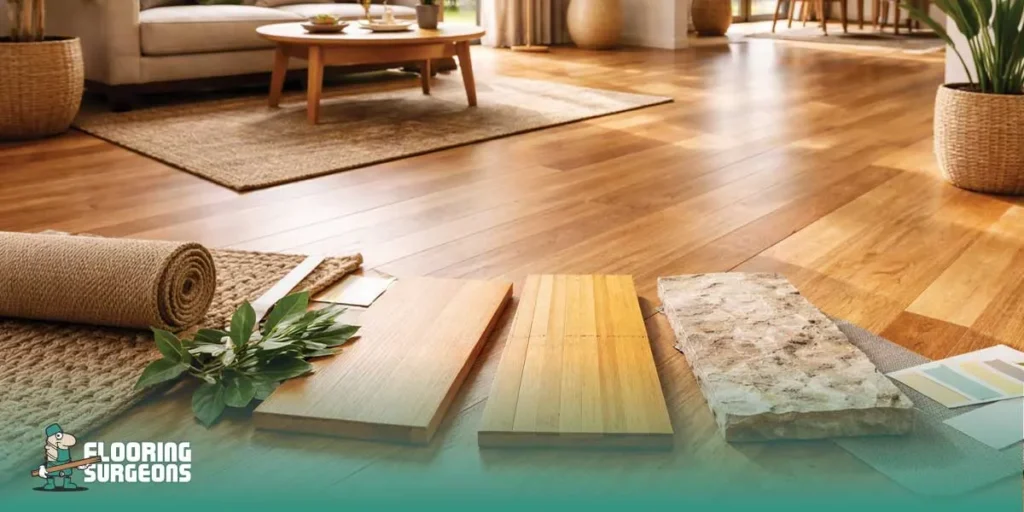
Creating a Feng Shui Home Starts from the Ground Up
A harmonious home is built on thoughtful design choices that support balance, comfort, and natural energy flow. While furniture placement and decorative elements play a role, the surfaces that connect every room often have the greatest impact. Flooring shapes how people move through a home and influences how stable or welcoming a space feels. Materials such as wood, bamboo, or natural stone bring warmth and grounding qualities that align naturally with Feng Shui principles.
By choosing materials carefully and maintaining consistent flooring layouts throughout connected spaces, it becomes easier to create an environment where energy flows smoothly and rooms feel balanced.
Designing with Feng Shui in mind ultimately begins from the ground up. When flooring materials and layout support harmony, the entire home benefits from a calmer, more comfortable atmosphere.

Haniye Ayanmanesh
As an expert writer for Flooring Surgeons, I combine technical SEO knowledge with a practical understanding of flooring, producing content that helps users make confident decisions while supporting long-term organic growth.