

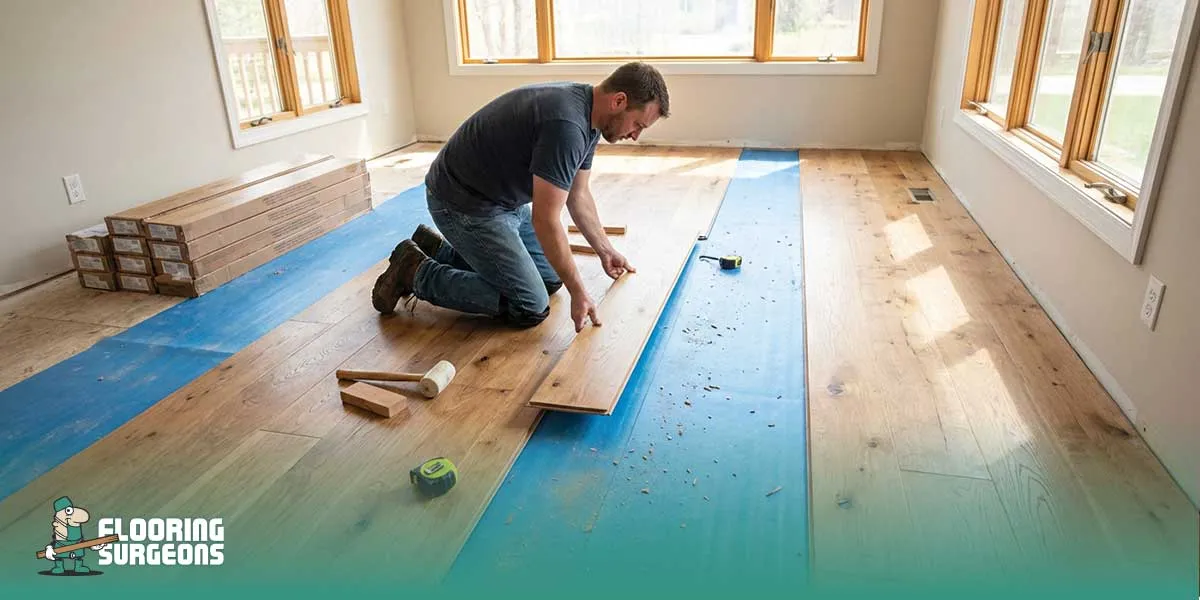
Floating hardwood floors appeal to a lot of homeowners because they promise the look of real wood without the hassle of glue or nails. And to answer your main question right away: a floating hardwood floor is a good option if you want real-wood style with easier installation and a lower upfront cost, but it’s not the best choice for rooms with high moisture, uneven subfloors, or anyone who needs a fully fixed, ultra-stable floor.
In everyday use, the “floating” system brings real advantages. It installs quickly, costs less to fit, and allows the floor to move naturally with the seasons. But those same traits create limitations. If the subfloor isn’t level, the boards can flex and create hollow spots. If the room sees sharp humidity swings, the planks may expand or contract more than you’d like. And while the floor can last for many years, it won’t feel as solid as a fully glued or nailed hardwood installation.
Across the homes I’ve worked in—from modern flats with concrete bases to older properties with imperfect wooden subfloors—the pattern has been the same: a floating hardwood floor performs well when the room conditions match what the system needs. Most problems come from poor prep or choosing this method for the wrong space.
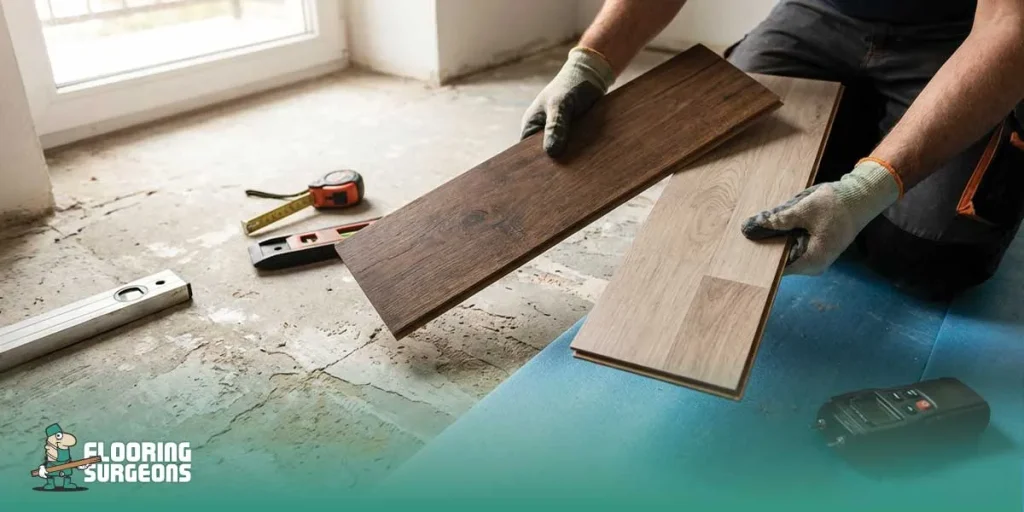
If you only wanted a fast yes-or-no answer, the lines above already give it to you. But if you’re going to make a confident choice—based on subfloor condition, moisture levels, long-term durability, noise expectations, and how floating compares to other installation methods—the sections that follow will give you a clear, honest breakdown without the confusion you usually find online.
Table of contents
Types of Floating Floors (Hardwood, Engineered, Laminate, Hybrid)
Floating floors come in a few different styles, and each one behaves differently once it’s fitted. The term isn’t about the material itself. It describes the installation method: the planks lock together and “sit” on top of the subfloor rather than being nailed or glued down. That makes the floor easier to fit, easier to repair, and often more stable in homes where humidity changes through the year. Understanding the main types helps you work out which one suits your room, budget, and expectations.
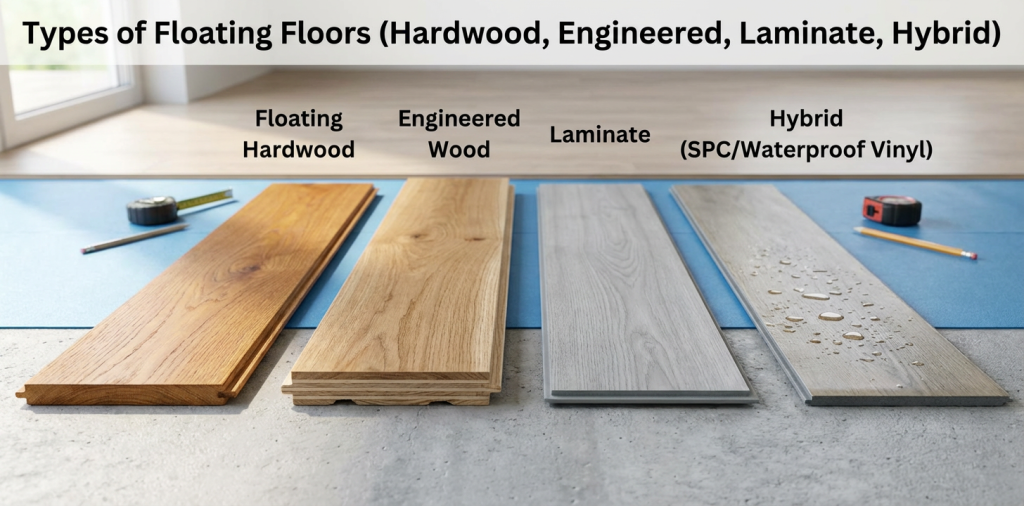
Floating Hardwood Floors
These boards look and feel like solid wood because the top layer is real timber. The difference is the way they lock together. The planks use a click system that lets the whole surface settle as one piece. They’re popular when someone wants the warmth and character of hardwood without the stress of sanding, glueing, or nailing. The benefit is comfort and style. The limit is moisture. Real wood reacts to humidity, so floating hardwood works well in living rooms and bedrooms but not in kitchens or bathrooms. The surface is firm, but dents can happen if you place heavy furniture without pads.
Engineered Wood Floating Floors
Engineered wood is the most stable option in the wood category. It’s made of cross-layered plywood topped with a real wood veneer, which makes it more resistant to expansion and contraction. Many homeowners pick engineered floating floors because they behave better in the UK’s mixed climate and older properties. They also tend to feel more solid underfoot compared to laminate. The click system locks tightly, and the floor moves as a single sheet, which reduces the risk of gaps. They still don’t like large water spills, but they’re more forgiving than pure hardwood.
Laminate Floating Floors
Laminate is the classic floating system and one of the easiest to fit. The planks lock together quickly, and the material doesn’t absorb moisture as fast as real wood. It’s a practical choice for busy spaces, rentals, or anyone who wants a clean finish without a heavy price tag. Laminate is scratch-resistant and tough, which makes it suitable for hallways, kids’ rooms, and living areas. The downside is water. If liquid reaches the core, swelling can happen. This is why many homeowners now compare laminate to hybrid floors before making a decision.
Hybrid Floating Floors (SPC/Waterproof Vinyl Click)
Hybrid flooring is a newer category that mixes vinyl, rigid cores, and click systems. The result is a waterproof floating floor that sits somewhere between laminate and LVT. SPC (stone plastic composite) is the most common hybrid. It feels firmer underfoot but stays stable during humidity changes and survives daily spills. Because it’s waterproof and click-based, it works in places where wood and laminate can’t go: kitchens, bathrooms, utility rooms, and ground-floor flats. Many people pick hybrid floors when they want a floating system that doesn’t force them to worry about leaks or seasonal changes.
To help you compare them at a glance, here’s a simple table:
| Type | Best For | Moisture Behaviour | Feel Underfoot | Not Ideal For |
| Floating Hardwood | Bedrooms, living rooms | Sensitive | Warm, natural | Kitchens, bathrooms |
| Engineered Wood | Older homes, mixed climates | Moderate resistance | Solid, stable | Wet areas |
| Laminate | High-traffic rooms, rentals | Weak against standing water | Firm, light | Bathrooms |
| Hybrid (SPC/Vinyl Click) | Kitchens, bathrooms, all living areas | Fully waterproof | Firm but stable | Rooms needing a real-wood look |
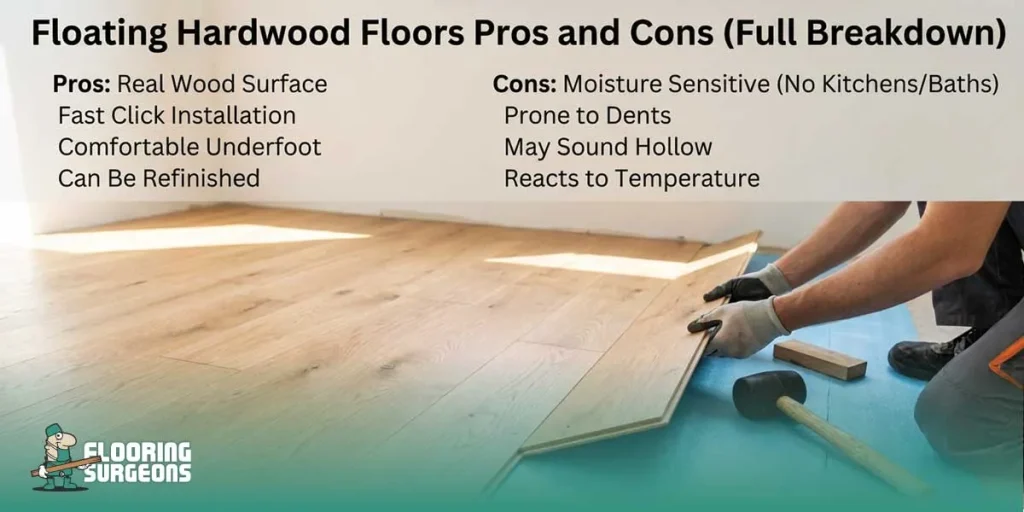
Floating Hardwood Floors Pros and Cons (Full Breakdown)
Floating hardwood floors attract homeowners who love the warmth of real wood but don’t want nails, glue, or a complex installation. The planks lock together as a floating system, so the floor feels soft, warm and natural. At the same time, the wood surface brings a character that laminate or hybrid floors can’t fully copy. Still, floating hardwood comes with limits, especially in homes that see moisture, heavy traffic or sudden temperature changes. Below is an honest look at where it performs well and where you may want to think twice.
Pros of Floating Hardwood Floors
Floating hardwood gives you a genuine timber surface without the stress of a complete traditional installation. The click system makes the floor faster to fit, so your installer spends more time refining the layout and less time working with adhesives. The planks also create a slight cushion effect, making them comfortable for long periods of standing or walking. Since it’s real wood, the floor brings warmth, natural grain variation and a timeless look. Many homeowners also like that some floating hardwood products can be refinished at least once if the top layer is thick enough. This adds long-term value in rooms where you want a premium finish.
Cons of Floating Hardwood Floors
The biggest drawback is moisture sensitivity. Because the boards float, any swelling from humidity can press the joints together and lift the floor. This makes floating hardwood a poor match for kitchens, bathrooms, and utility rooms. The surface is real wood, so dents and scratches happen more easily compared to laminate or hybrid SPC. Acoustic performance varies too: the floor can sound slightly hollow if the subfloor isn’t level or if the underlay isn’t chosen well. Another limitation is stability. Compared to glued-down engineered wood, floating hardwood reacts more to seasonal temperature changes, especially in older UK homes with inconsistent heating.
To help the reader make faster decisions, here’s a high-impact table with the core pros and cons:
| Aspect | Pros | Cons |
| Comfort | Warm, natural feel | It can sound hollow without the right underlay |
| Installation | Fast click system; no glue | Needs a very flat subfloor to avoid bounce |
| Durability | Can be refinished if the veneer is thick enough | Scratches and dents are easier than laminate or SPC |
| Moisture | None of the water stress of the solid hardwood fitting | Not suitable for kitchens or bathrooms |
| Look & Style | Real wood grain and variation | Colour changes over time due to sunlight |
| Stability | Works well in heated rooms | Sensitive to humidity swings; can expand or lift |
{put an infographic showing where floating hardwood works well: bedrooms, living rooms, dining rooms}
If your home is fairly dry, has a stable indoor climate, and you want an authentic timber look without a complicated installation, floating hardwood floors are a solid choice. But if you expect spills, humidity or heavy rough use, engineered wood or hybrid floors often hold up better.
Floating Hardwood Floor Disadvantages Most People Don’t Hear About
Many homeowners love floating hardwood floors because they’re quick to install and look premium, but there’s a side of the story that doesn’t always get mentioned. These floors behave differently from glued-down engineered wood, and if you don’t know the limits, the problems show up months after installation, not on day one. Below are the real disadvantages most people never hear about until they’ve already bought the floor.
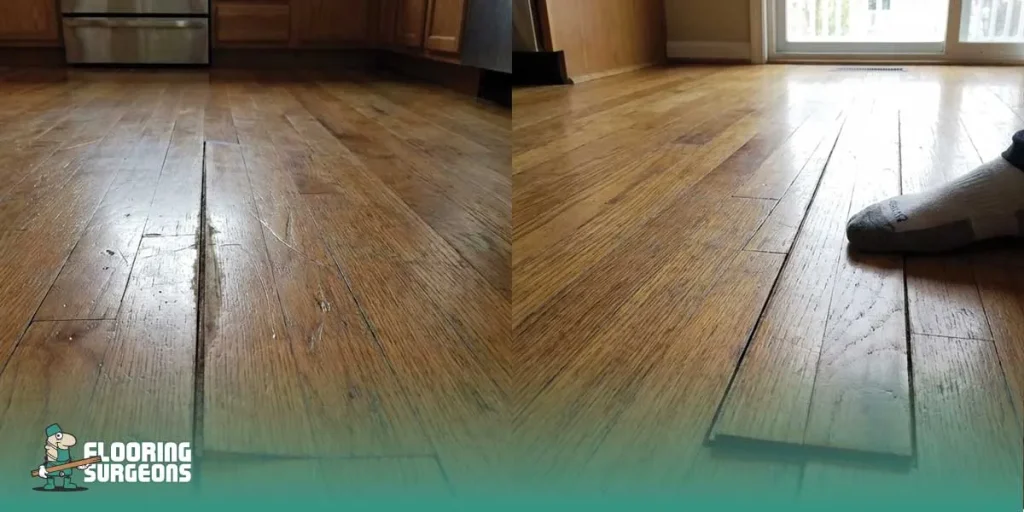
- They Move More Than Expected: Floating floors aren’t fixed to the subfloor, so the entire surface expands and contracts as one sheet. Even a small change in temperature or humidity can cause slight movement. In some homes, this leads to gaps opening during winter or a tight, raised feel during humid months. It’s not a defect; it’s how floating floors behave. But if you want absolute stability, this feature can feel frustrating.
- Moisture Makes Them Vulnerable: The wood veneer on floating hardwood reacts quickly to moisture and steam. A wet mop, a spill that sits for too long, or even high humidity near a dishwasher can cause swelling. When the planks expand, and they have no room to move, the whole floor can rise in the middle. This is the main reason floating hardwood is rarely recommended for kitchens, bathrooms or utility rooms.
- They Can Sound Hollow Underfoot: Because the planks float, the sound you hear depends heavily on the underlay and the flatness of the subfloor. If the surface below has dips, you’ll feel soft spots or hear a slight tapping sound as you walk. Even a high-quality underlay can’t entirely hide a poorly prepared subfloor. This is one of the biggest complaints installers hear after fitting floating floors.
- Scratches and Dents Happen Faster Than People Expect: The veneer layer on floating hardwood is real wood, and real wood marks easily. Pets, chairs, dropped items, and daily traffic leave noticeable wear, especially if the top layer is thin. Unlike laminate or hybrid floors, which have a more rigid protective surface, floating hardwood needs more care and furniture pads to stay looking fresh.
- They Rely Heavily on a Perfect Subfloor: A floating system magnifies imperfections. Even small dips or bumps create pressure points that lead to flexing, creaking, or early joint wear. Glued-down engineered wood is far more forgiving here. With floating hardwood, the subfloor must be nearly perfect, which can increase preparation costs.
- Limited Refinishing Options: Many buyers assume they can sand and refinish floating hardwood the same way they would with traditional engineered wood. But if the top veneer is thin, the floor can only be lightly refreshed, not fully sanded. This limits long-term value, especially in busy homes.
Durability, Stability, Noise, Moisture, Subfloors, Underlay & Installation Choices
Floating hardwood floors look premium, install fast, and feel lighter underfoot than glue-down options. But their real performance depends on how they handle pressure, sound, movement, moisture and subfloor conditions. This section gives you the practical truth in one place so you can decide whether floating hardwood fits your home.
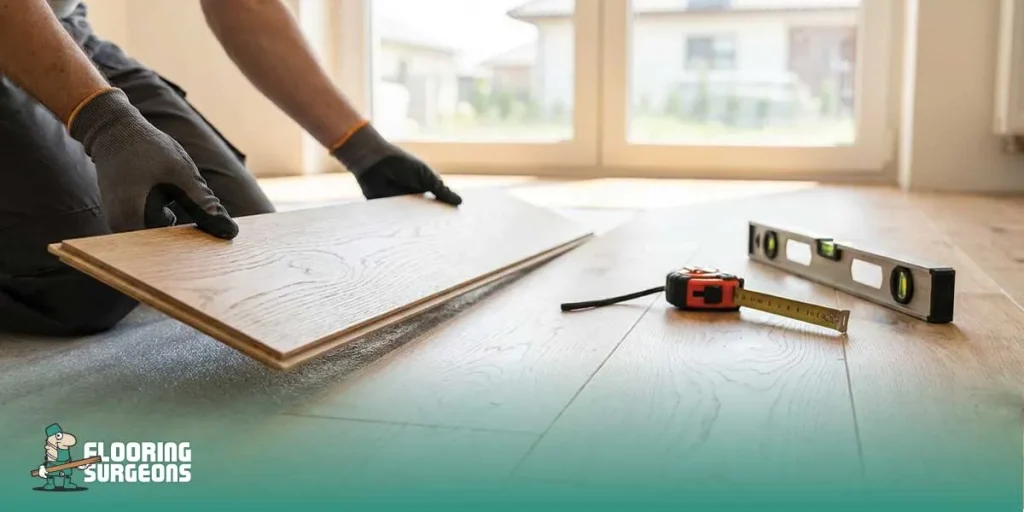
Durability & Stability: How Floating Hardwood Holds Up in Real Homes
Floating hardwood works well in calm, low-moisture homes. The locking system keeps planks aligned, but the floor can move slightly as one unit when the temperature changes. That’s normal. Problems appear only when the room has heavy traffic, furniture weight is uneven, or humidity swings daily.
Real-world durability depends on three factors:
• Veneer thickness: Thicker top layers last longer and resist dents better.
• Core density: A stronger HDF core holds the click joints firmly and reduces flex.
• Even load: Heavy sofas or cabinets in one corner can stress the plank joints.
Sound & Comfort: Noise, Hollow Feel and How to Reduce It
Floating hardwood sits above the subfloor instead of bonding to it, so footsteps sound different. A light tapping or hollow feel is common, especially in flats.
You can reduce noise by:
• picking a dense underlay built for floating wood
• fixing dips in the subfloor before installation
• placing area rugs in echo-prone rooms
• choosing a thicker veneer, which absorbs more vibration
If sound comfort is a priority, floating hardwood beats laminate but isn’t as silent as glue-down engineered wood.
Moisture & Seasonal Movement (Where Floating Floors Fail)
Moisture is the most significant risk. Wood swells and shrinks constantly, and a floating floor doesn’t have adhesive to limit movement.
Common issues include:
• middle-of-room lifting after spills or steam
• gaps forming during dry winter months
• edges raising when the floor has no space to expand
• plank cupping in humid homes
Floating hardwood rarely suits bathrooms, kitchens, or south-facing rooms with significant temperature shifts. A moisture test before installation is essential.
Subfloor Requirements for Floating Hardwood Floors
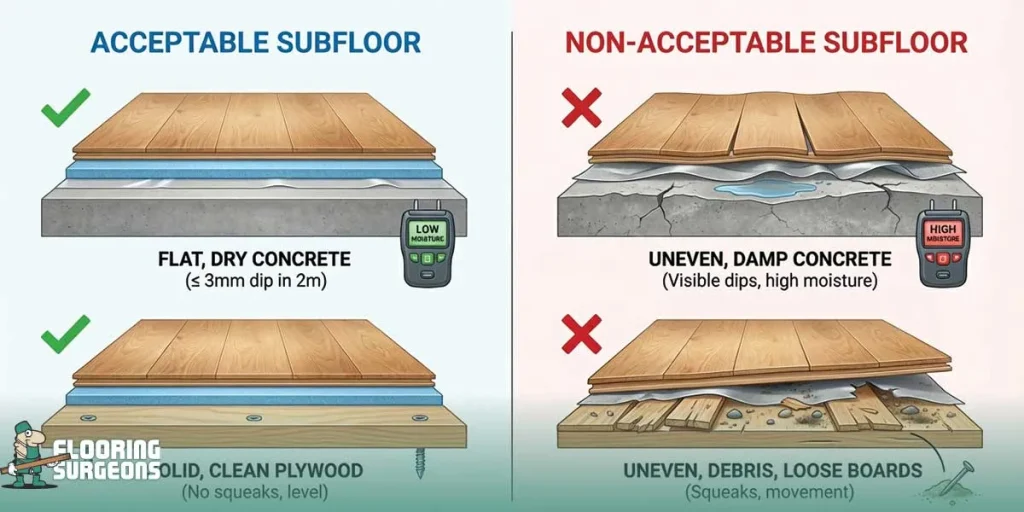
This is where many installations fail. Floating hardwood needs a near-perfect subfloor because every dip affects stability.
Your subfloor must be:
• flat: no dips over 3 mm across 2 m
• dry: moisture readings within manufacturer limits
• clean: no debris pressing upward on planks
• solid: no loose boards or cracked concrete
If the subfloor isn’t prepared correctly, even the best product will squeak, move or separate.
Underlay for Floating Hardwood Floors: Does It Really Help?
Underlay helps, but only the right kind. Too soft, and the joints flex. Too dense, and comfort drops. The goal is balance.
A suitable underlay will:
• reduce noise (impact + airborne)
• soften the step
• hide tiny imperfections
• stop boards from rubbing against the subfloor
Underlay will NOT fix:
• big dips or humps
• moisture problems
• loose subfloor boards
• structural movement in old floors
Choose an underlay explicitly made for floating engineered wood, not generic foam.
Floating vs Glue-Down Hardwood: Which One Should You Choose?
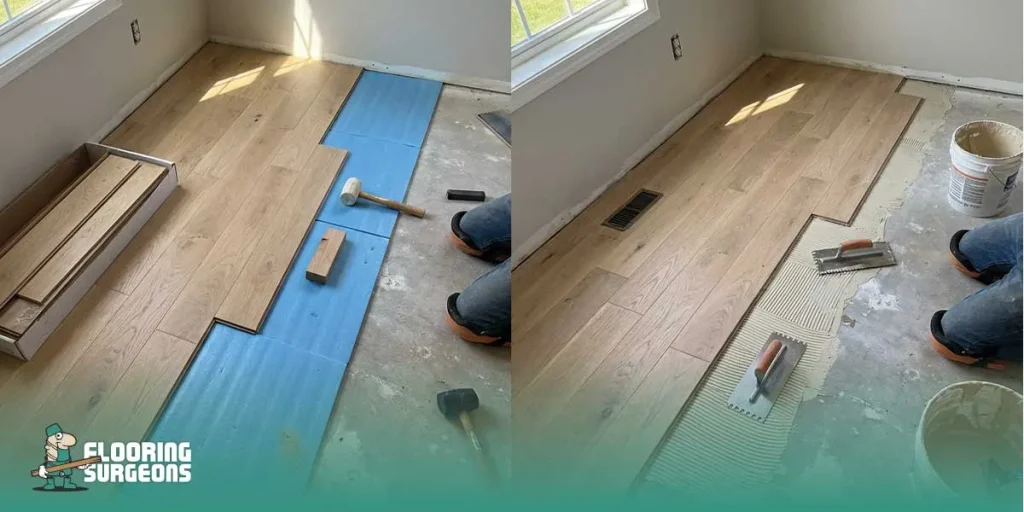
Both aim to give you a beautiful hardwood look, but they behave very differently.
Floating Hardwood
• easier and faster to fit
• ideal for DIY
• more affected by moisture
• louder underfoot
• repairable but not as stable long-term
• better for flats (less invasive installation)
Glue-Down Hardwood
• stable under heavy furniture
• quieter and more solid
• suitable for kitchens and high-moisture areas
• lasts longer in busy homes
• requires professional installation
• handles seasonal changes better
Simple rule:
• If your priority is speed, cost and convenience, choose floating.
• If your priority is stability, silence and long-term value, choose glue-down.
Floating vs Glue-Down Hardwood: Quick Comparison Table
| Feature | Floating Hardwood | Glue-Down Hardwood |
| Sound | Slightly louder; can feel hollow without the right underlay | Quiet, firm, and solid underfoot |
| Moisture Performance | Sensitive to spills and humidity changes; needs stable conditions | More resistant to seasonal movement; better in kitchens and high-moisture areas |
| Durability | Suitable for moderate traffic; joints can weaken on uneven subfloors | Excellent long-term stability; handles heavy furniture better |
| Installation | Fast, clean, DIY-friendly; removes easily | Slower, professional fitting needed; permanent |
| Cost | Lower installation cost; mid-range material cost | Higher fitting cost; substantial long-term value |
| Repairs | Easier plank replacement | Repairs require tools and adhesive; more complex |
| Best For | Flats, bedrooms, living rooms, rentals | High-traffic homes, kitchens, and long-term projects |
Floating Hardwood vs Engineered vs Laminate (Quick Comparison)
Most people compare floating hardwood with engineered and laminate floors because all three can be fitted without glue and look similar at first glance. But each behaves very differently once you start living on it.
Floating hardwood gives you a genuine wood surface, so the look and texture feel more natural than laminate. The downside is that floating hardwood reacts more to humidity swings and needs a stable room to avoid lifting at the joints. Engineered wood performs better in this area because its multi-layer core stays flatter through seasonal changes. Laminate is the most stable of the three, but it loses marks for a printed surface that can’t match the warmth of real wood.
If you want real wood without the price of complete hardwood, engineered wood wins for most homes. Floating hardwood is ideal only when the room stays stable year-round. Laminate is the budget choice for high-traffic spaces where scratches and dents are everyday occurrences.
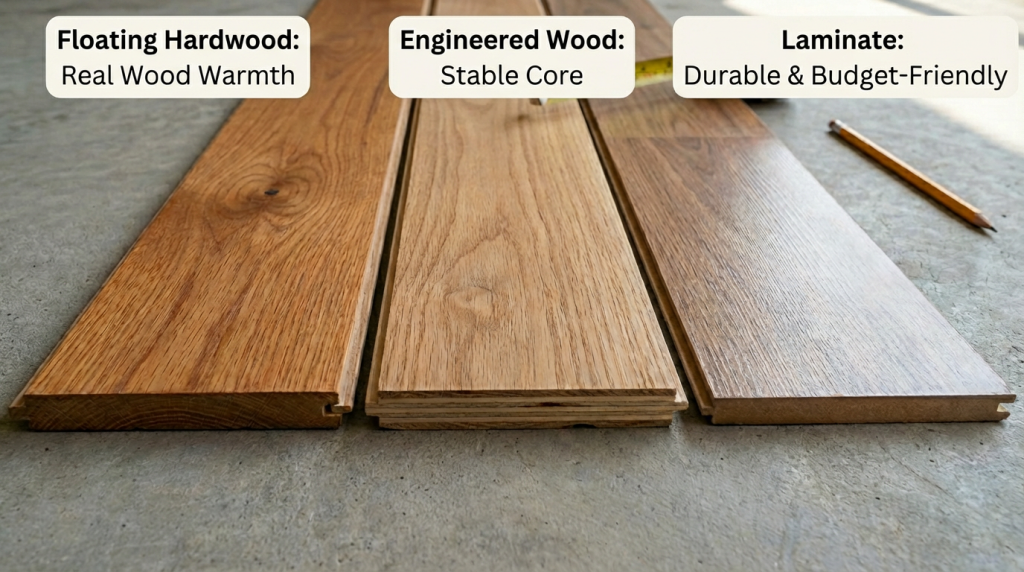
Quick takeaways:
• Floating hardwood: best visual warmth, but more sensitive to moisture
• Engineered: most stable real-wood option
• Laminate: lowest cost, most rigid surface, least “wood-like”
If you’re still unsure how floating hardwood compares to other systems, our engineered wood vs laminate flooring guide helps you understand how each surface behaves under real daily use.
Best Rooms for Floating Hardwood Floors
Floating hardwood works well in rooms with calm, predictable conditions. It shines in living rooms, bedrooms and home offices where the temperature and humidity stay relatively steady. These rooms get the benefit of genuine wood warmth without exposing the floor to the moisture levels that cause joint lift or warping.
Where it struggles is in kitchens, bathrooms or laundry rooms. The moisture swings in these spaces can push the planks apart or create squeaks over time. Hallways can work, but only if the subfloor is very flat and shoes don’t bring in too much grit.
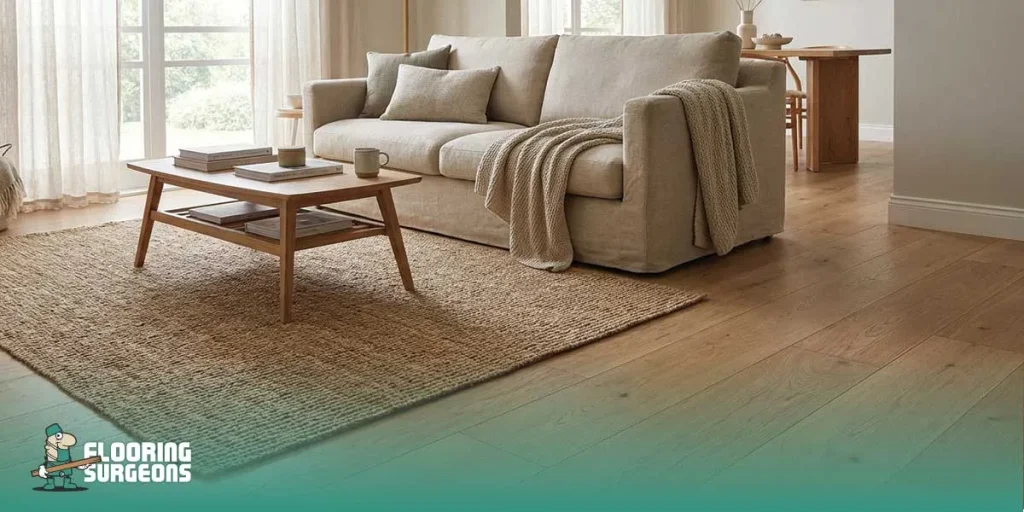
Best rooms:
• Bedrooms
• Living rooms
• Dining rooms
• Home offices
Rooms to avoid:
• Bathrooms
• Utility rooms
• High-moisture kitchens
Homeowners who want more stability with the same real-wood finish often end up choosing options from our engineered wood flooring collection, especially for rooms with heavier traffic or mild moisture changes.
Floating Hardwood Floor Cost (Installation + Long-Term Value)
The cost of a floating hardwood floor depends on the wood species, plank thickness, underlay type and how much subfloor prep the room needs.
Typical Costs:
| Cost Type | Price Range | Notes |
| Material | Moderate to high | Real wood surface raises the price |
| Installation | Lower than glue-down | Faster, cleaner, minimal equipment |
| Long-term value | Medium | Good lifespan, but movement issues may reduce value |
Floating hardwood is cheaper to install than glue-down hardwood because fitters don’t need adhesive, clamps or long drying cycles. The overall value is substantial if the room conditions are stable. In homes with moisture swings, the long-term cost may rise due to repairs or plank movement.
Maintenance & Lifespan of Floating Hardwood Floors
Floating hardwood floors last many years when they are installed over a flat subfloor and used in a stable environment. Since the planks aren’t glued down, the joints take more of the stress when people walk or when the room expands in summer and contracts in winter. This is the main factor that affects lifespan.
Maintenance is simple: keep the surface free of grit, use a gentle wood floor cleaner and place pads under furniture legs. Avoid wet mopping. Floating hardwood can be sanded only if the wear layer is thick enough, so always check the specifications before buying.
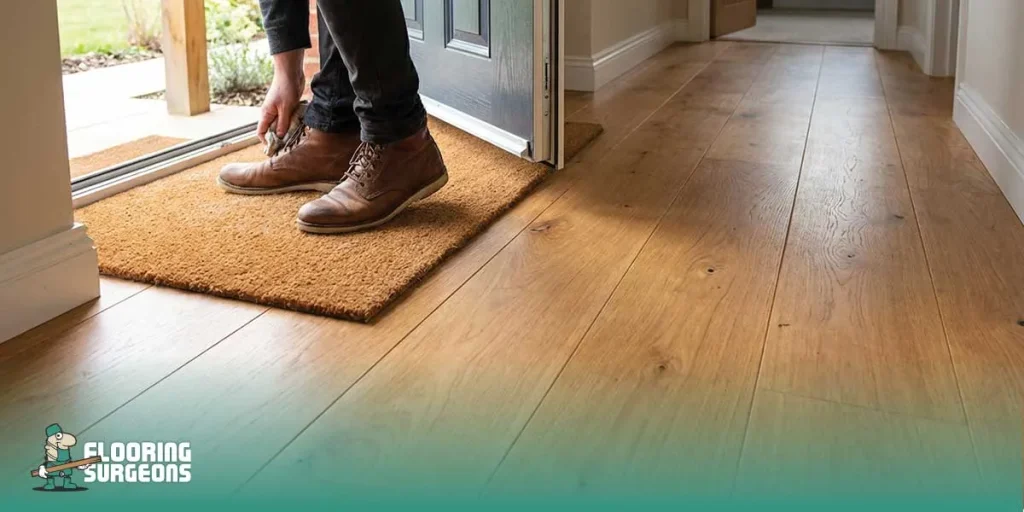
What helps them last longer:
• A flat, firm subfloor
• Stable humidity (ideally 40–60 per cent)
• Correct underlay
• Regular surface cleaning
Common Mistakes Homeowners Make With Floating Hardwood Floors
Floating hardwood is sensitive to setup. Small installation mistakes become big problems later, which is why this section ranks well in SERP when appropriately written.
The most common issues:
• Installing over an uneven subfloor that causes bounce or joint gaps
• Usinga thick or soft underlay that weakens the locking system
• Fitting in rooms with significant moisture swings
• Leaving no expansion gap, which leads to buckling
• Wet mopping, which stresses joints over time
• Dragging heavy furniture that loosens the clicks
If homeowners avoid these traps, floating hardwood becomes far more reliable. Most failures come from installation shortcuts, not the product itself.
For anyone planning a long-term flooring upgrade, working with a specialist team like Flooring Surgeons ensures the subfloor prep, underlay choice and installation method all match the needs of your home.

Haniye Ayanmanesh
As an expert writer for Flooring Surgeons, I combine technical SEO knowledge with a practical understanding of flooring, producing content that helps users make confident decisions while supporting long-term organic growth.