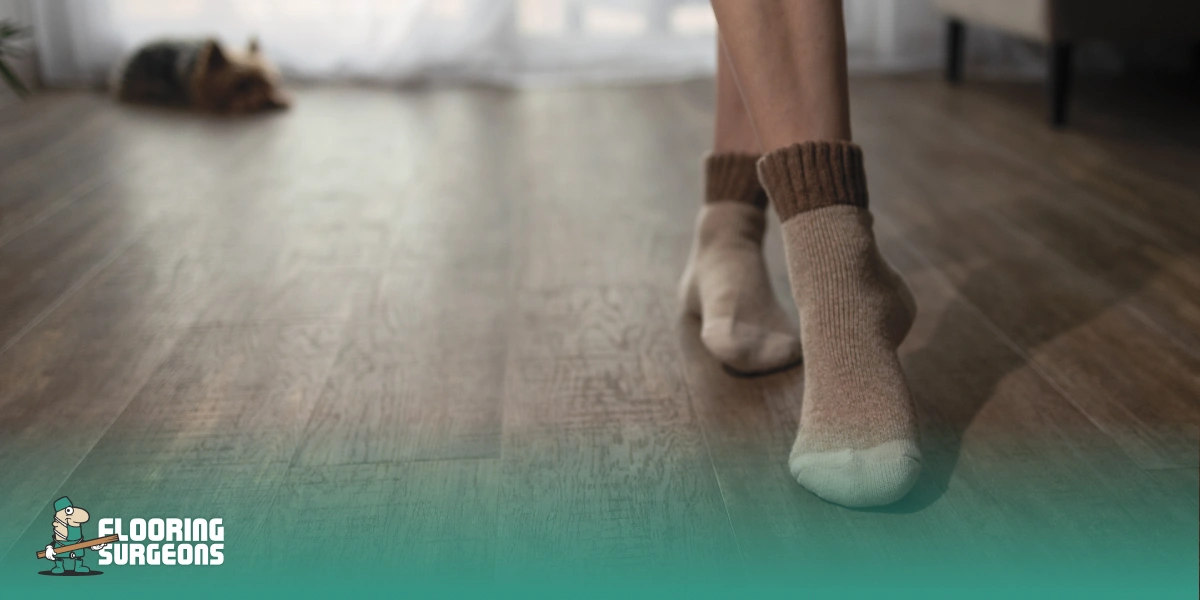



Flooring determines furniture placement by shaping how your brain reads direction, balance, and movement within a space. The pattern of the floor, the direction of planks, contrast levels, and even texture create invisible visual cues that guide where sofas, tables, and chairs feel “right” to place. Most layout decisions are not random. They are subconscious responses to spatial signals coming from the floor.
When flooring runs in a certain direction, it subtly encourages furniture to align with it. When a pattern creates a focal point, seating tends to orient around it. Strong contrast or defined material changes can create invisible zones that separate living and dining areas without walls. Your brain seeks visual stability, so it positions furniture where the flooring feels anchored, balanced, and predictable.
Environmental psychology explains this through the principle of perceptual consistency. The brain prefers unified directional flow. If the flooring runs horizontally, placing a sofa diagonally may create subconscious friction. If planks guide the eye toward a wall, furniture often follows that direction without deliberate planning. Most people believe they arrange furniture purely on preference. In reality, flooring often sets the invisible rules first.
Table of contents
The Hidden Psychology Behind Flooring and Furniture Placement
Flooring and furniture placement are connected through spatial psychology. The brain constantly looks for stability, alignment, and predictability in a room. When it detects directional lines, contrast boundaries, or repeated patterns, it interprets them as structural cues. These cues subtly influence where furniture feels balanced and visually “correct.”
This happens because humans are wired to reduce visual tension. When furniture aligns with flooring lines or follows pattern orientation, the room feels coherent. When it fights against those cues, the space feels slightly uncomfortable, even if you cannot explain why.
Environmental psychology explains this through perceptual consistency. The brain prefers unified directional flow. If the flooring runs horizontally, placing a sofa diagonally may create subconscious friction. If planks guide the eye toward a wall, furniture often follows that direction without deliberate planning. Most people believe they are arranging furniture based purely on preference. In reality, flooring often sets the invisible rules first.
How Floor Patterns Guide Eye Movement
Floor patterns strongly influence eye movement. Whether it is herringbone, chevron, wide planks, or tile grids, the pattern creates visual motion. The eye naturally follows lines, repetition, and contrast. When a pattern directs the gaze to a particular point, furniture tends to gather along that visual pathway. This is why seating is often oriented toward the dominant direction of the flooring rather than opposing it. Herringbone creates directional flow toward corners or walls and often shifts the visual centre of gravity within a space. This is why it frequently reshapes furniture alignment in subtle ways. If you want to see how strongly pattern orientation shapes layout dynamics, explore our herringbone flooring collection to observe how directional flooring influences movement perception.
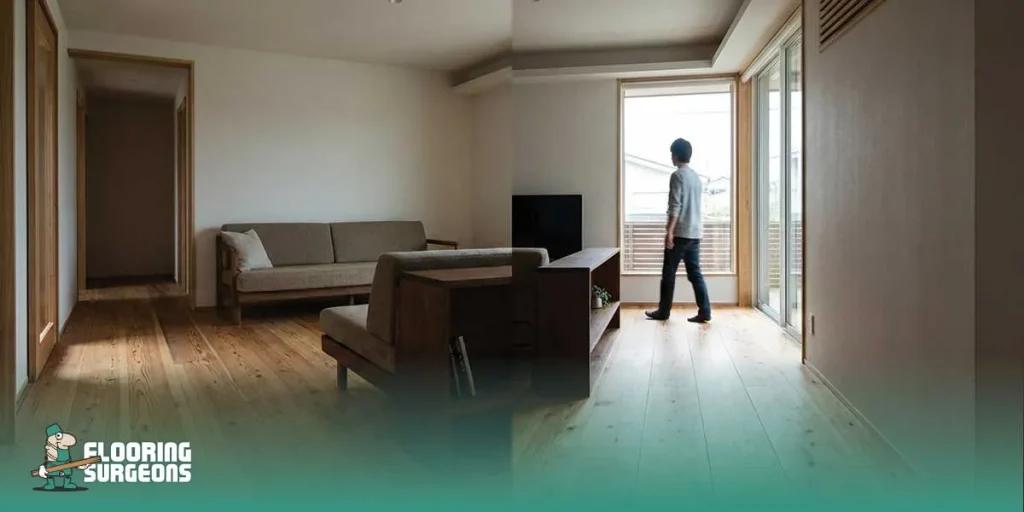
Floor patterns strongly influence eye movement. Whether it is herringbone, chevron, wide planks, or tile grids, the pattern creates visual motion. The eye naturally follows lines, repetition, and contrast. If you want a deeper explanation of how visual pathways shape perception, you can explore how floor patterns control eye movement in a room to understand how subtle pattern direction influences spatial hierarchy and layout decisions. Different patterns influence perception differently:
- Linear plank patterns encourage parallel furniture placement
- Diagonal layouts create dynamic movement and shift focal points
- Grid tile patterns promote symmetry
- Herringbone creates directional flow toward corners or walls
Eye movement theory suggests that the first visual path taken across a surface affects how the brain defines spatial hierarchy. Flooring acts as a silent map, guiding circulation patterns and influencing furniture layout decisions.
Direction of Planks and Subconscious Spatial Flow
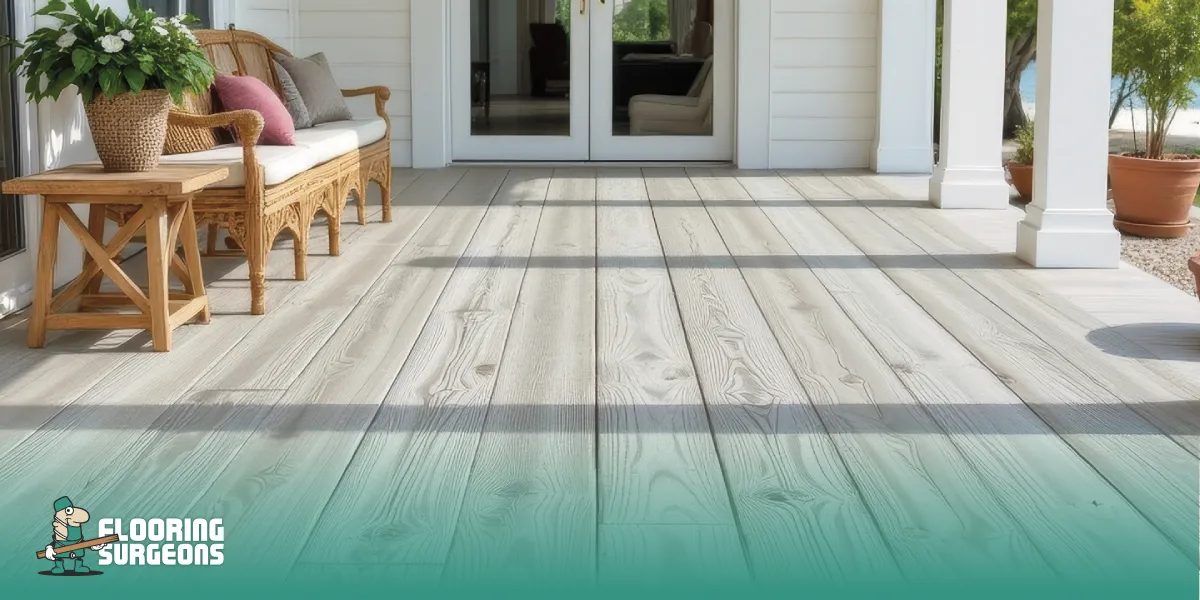
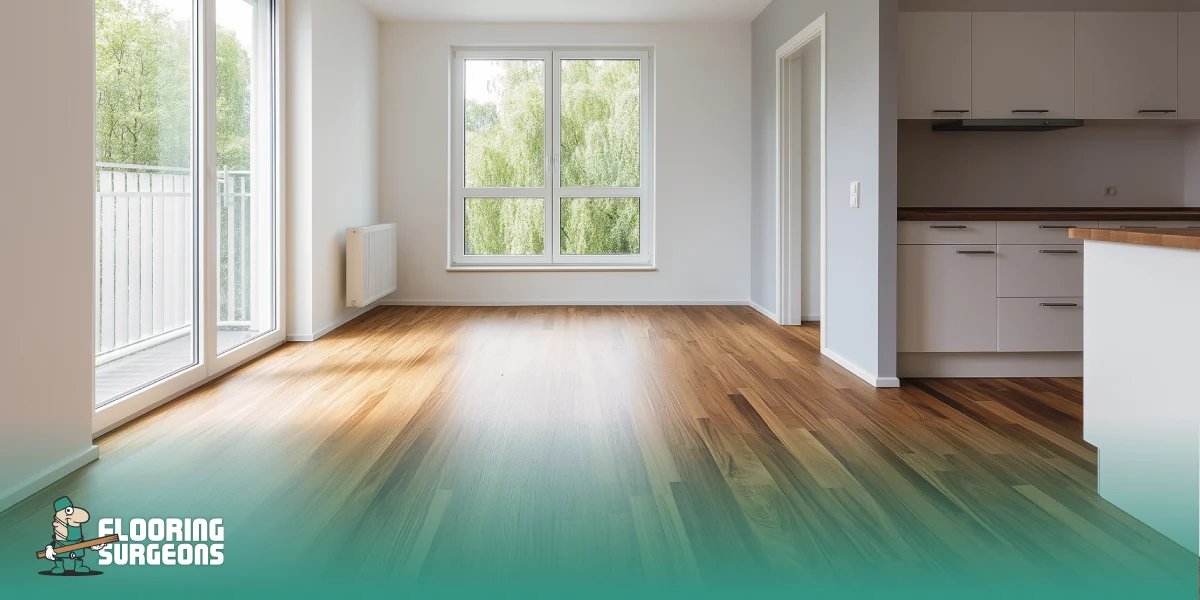
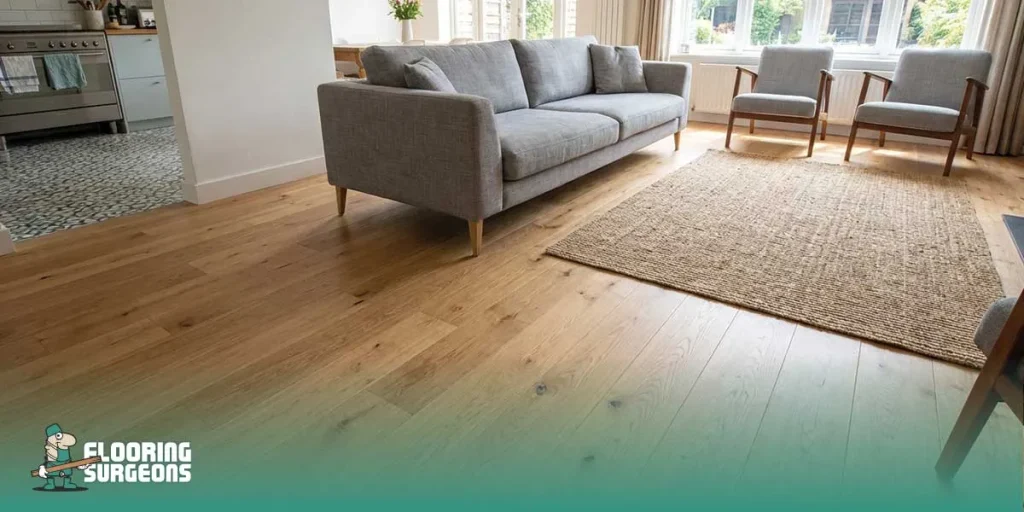
Plank direction is one of the most underestimated design factors. Yet it has a powerful impact on how a room feels and on furniture placement. When planks run lengthwise in a narrow room, they visually elongate the space. Furniture often follows that direction to maintain proportional harmony. When planks run perpendicular to entry points, they can interrupt natural circulation flow, encouraging furniture to create secondary pathways. Subconscious spatial flow is shaped by:
- Line orientation
- Entry direction
- Light direction
- Traffic patterns
If flooring runs toward a window, the eye and body naturally move in that direction. Furniture is then placed to support that perceived movement. This is why flooring direction and furniture placement are rarely independent decisions. Understanding plank direction psychology lets you intentionally control layout rather than react to it afterwards.
Why Furniture Naturally Aligns With Flooring
Visual anchors are points of stability within a room. Flooring often creates the strongest anchor because it covers the largest continuous surface. High-contrast areas, pattern intersections, or material transitions serve as grounding points. The brain uses these anchors to position heavier objects, such as sofas and tables. Furniture gravitates toward zones that feel visually supported.
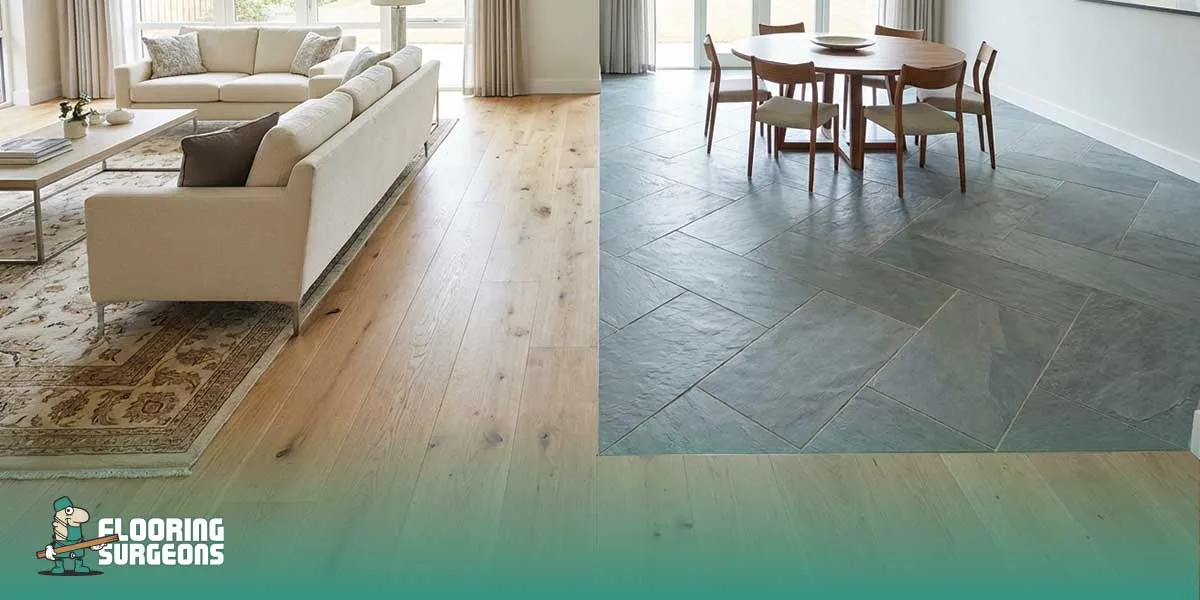
For example, when flooring changes between two materials in an open-plan space, furniture typically aligns along that boundary. Even without walls, the material shift defines territory.
This happens because of visual gravity. Larger patterns or darker tones feel heavier, and furniture subconsciously seeks balance around them. When furniture floats without anchor alignment, the room feels unstable. Flooring does not just sit beneath furniture. It quietly dictates spatial hierarchy, alignment, and balance long before you consciously arrange the room.
Zoning and Boundary Illusions Created by Flooring
Flooring can create invisible boundaries without building walls. When materials change, patterns shift, or plank direction rotates, the brain interprets those transitions as spatial divisions. This is known as boundary illusion. For example, a subtle change from wide planks to a herringbone insert can visually separate a dining zone from a living area. Even without partitions, furniture placement adjusts automatically to these visual cues.
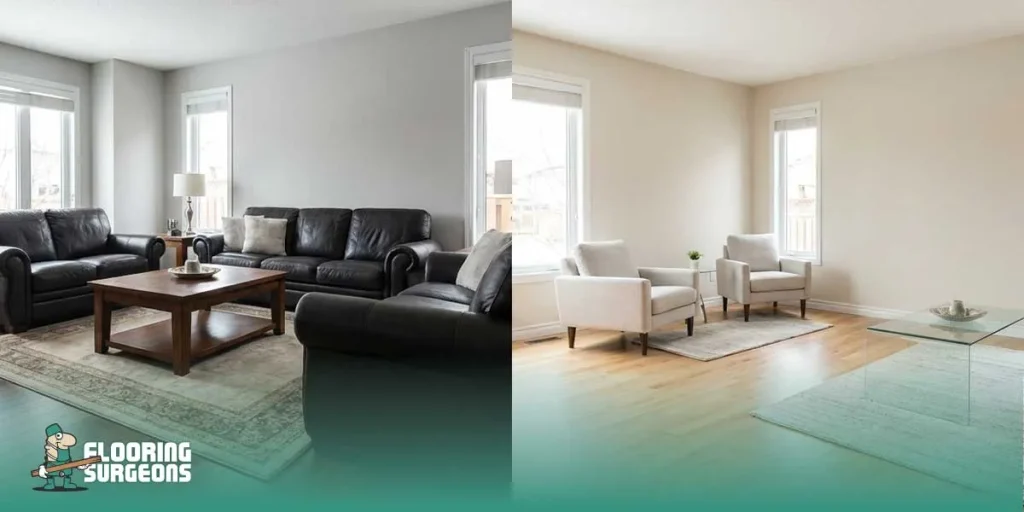
Zoning through flooring works because the brain seeks territorial clarity. When the floor defines a zone, furniture aligns within it instead of floating randomly. This is why flooring and furniture placement are often subconsciously synchronised. Proper zoning reduces spatial confusion and improves layout coherence, especially in multi-functional spaces.
How Contrast and Colour Temperature Influence Layout Decisions
Contrast influences perceived weight and stability. Dark flooring creates a sense of grounding, while light flooring increases openness. Furniture placement often responds to this perceived balance. When flooring is high-contrast against the walls, the room gains a strong visual base. Heavier furniture tends to feel more stable in these environments. In very light spaces, furniture may need stronger anchoring elements such as rugs to avoid appearing disconnected.
Colour temperature also plays a role. Warm-toned floors encourage clustered, intimate arrangements. Cooler tones promote more open and linear layouts. These subtle effects influence how we position seating, tables, and storage without conscious calculation. Contrast and colour temperature shape emotional tone, and emotional tone influences spatial behaviour.
Scale, Proportion, and Visual Gravity
Visual gravity refers to the perceived weight of surfaces within a room. Flooring, being the largest continuous plane, carries significant visual gravity. Wide planks feel heavier than narrow ones. Dark tones feel denser than pale finishes. Large-scale patterns demand proportional furniture. When flooring has strong visual gravity, furniture subconsciously adjusts to balance it. Oversized sofas often feel appropriate on wide plank floors. Delicate furniture may feel unstable on bold patterned surfaces. Scale and proportion interact constantly with flooring:
- Large patterns require substantial furniture pieces
- Small repetitive tiles pair better with compact arrangements
- High visual weight floors demand strong anchoring elements
Understanding visual gravity allows intentional control of furniture layout rather than accidental imbalance.
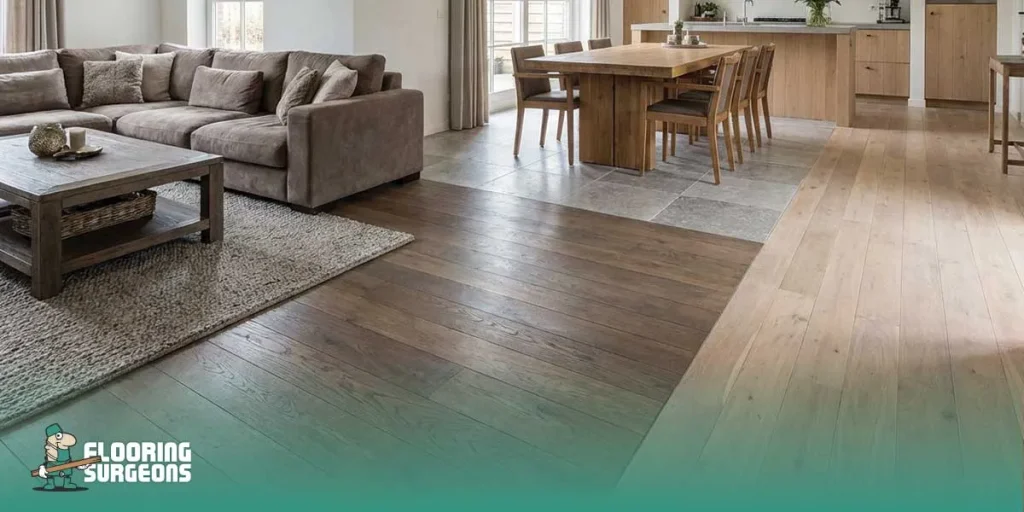
Open Plan Spaces: How Flooring Defines Invisible Rooms
In open plan layouts, flooring becomes the primary organising tool. Without walls, the floor defines functional territories. Plank direction changes can subtly separate a kitchen from a living zone. Area-specific patterns can signal different activities. Even consistent flooring can guide layout by aligning circulation paths. Open plan design relies heavily on flooring and furniture placement synergy. When the flooring flow supports traffic direction, furniture reinforces it. When flooring ignores circulation logic, furniture placement feels forced. Invisible rooms emerge from visual continuity and spatial rhythm rather than physical partitions.
Texture Dominance and Material Hierarchy
Texture dominance refers to which surface visually leads the space. In many rooms, flooring is the dominant texture because it spans the entire base plane. Rough-textured wood demands softer upholstery to balance it. Smooth, polished surfaces may require tactile contrast in furniture fabrics. When material hierarchy is misaligned, furniture can appear visually disconnected. Material hierarchy works like this:
- Dominant texture sets the emotional tone
- Secondary textures support balance
- Accent textures create focus
If the flooring is highly expressive, furniture placement tends to become simpler. If the flooring is minimal, furniture may carry more visual complexity. Most competitors ignore this relationship entirely, yet it strongly affects spatial harmony.
Gestalt Principles in Flooring and Layout Perception
Gestalt psychology explains how humans perceive patterns and organisation. Several Gestalt principles directly apply to flooring and furniture placement.
- Principle of continuity: The eye follows lines. Flooring direction encourages furniture alignment.
- Principle of similarity: Repeated floor elements promote symmetrical arrangements.
- Principle of proximity: Furniture groups tend to form within visually defined zones.
- Principle of closure: Even partial boundaries created by flooring patterns feel complete to the brain.
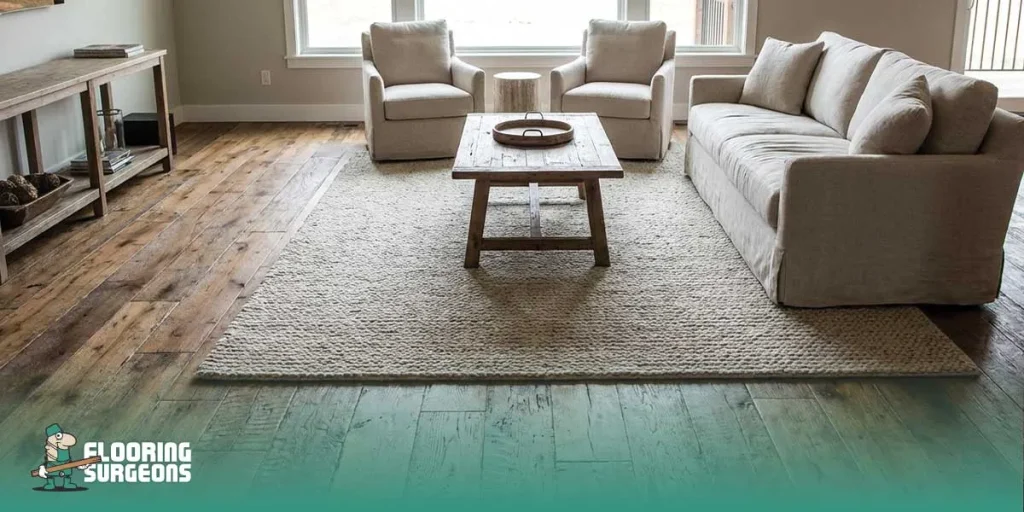
These psychological principles explain why flooring influences layout without conscious planning. The brain seeks cohesion and organises furniture accordingly.
Common Furniture Placement Mistakes Caused by Flooring
Many layout problems originate from ignoring flooring cues. Common mistakes include:
- Placing furniture diagonally against the strong plank direction
- Ignoring the traffic flow suggested by the flooring
- Using small furniture on large-scale patterned floors
- Failing to anchor seating in high-contrast spaces
- Creating zones that fight against material transitions
When flooring and furniture placement conflict, the room feels subtly uncomfortable even if measurements are correct.
How to Use Flooring Intentionally to Control Layout
Instead of reacting to flooring, you can use it strategically. To guide furniture placement intentionally:
- Align plank direction with primary movement paths
- Use pattern shifts to define zones
- Adjust colour contrast to anchor key pieces
- Match furniture scale to floor pattern scale
- Use rugs to soften excessive visual gravity
When flooring is planned with layout in mind, furniture placement becomes intuitive rather than corrective.
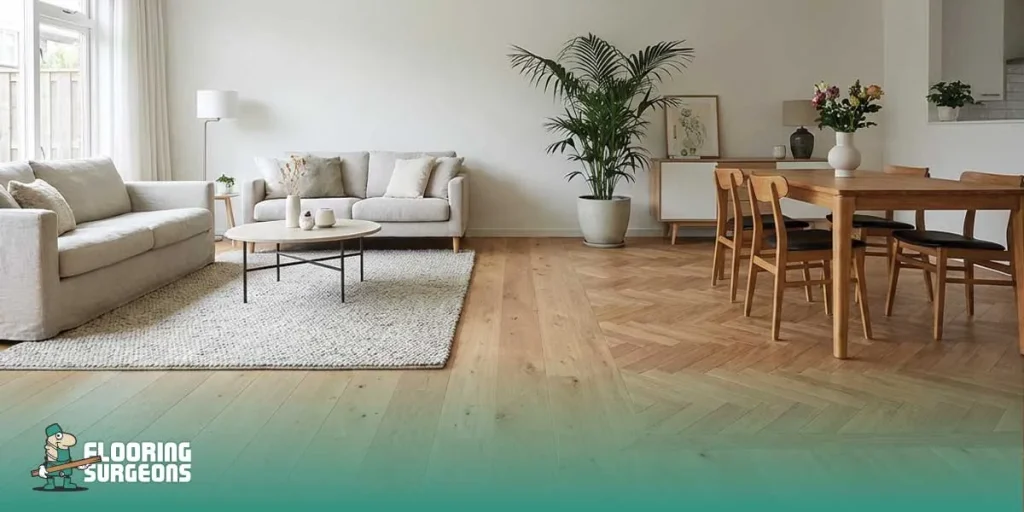
Real Examples of Flooring-Led Layout
These examples show how flooring determines furniture placement through spatial psychology rather than decorative preference. Once you understand how visual flow, pattern direction, and material hierarchy shape layout decisions, you can design with intention instead of trial and error. To see how different materials and styles influence spatial balance, discover more flooring styles and layout ideas across our collections at Flooring Surgeons.
- Before: A narrow living room with planks running across the short width. Furniture felt cramped, and circulation was awkward.
- After: Plank direction aligned lengthwise with the longest wall. Seating was arranged parallel to the new flow. The room appeared longer and more balanced.

Haniye Ayanmanesh
As an expert writer for Flooring Surgeons, I combine technical SEO knowledge with a practical understanding of flooring, producing content that helps users make confident decisions while supporting long-term organic growth.