


For most buy-to-let properties in the UK, vinyl flooring is the safest and most practical choice for landlords, because it combines low maintenance, moisture resistance, and predictable performance across repeated tenancies. That single fact answers the core question most landlords have at the start. The reason it matters is that flooring in a rental property is not a design preference. It is a risky decision.
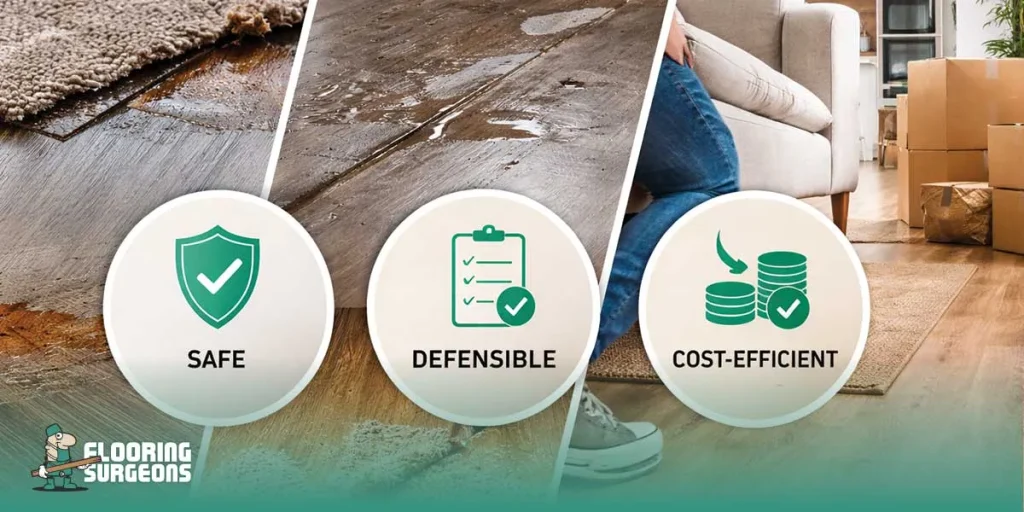
The right flooring must meet three non-negotiable conditions. It must remain safe under everyday use, be defensible if a dispute or inspection arises, and stay cost-efficient over multiple tenant cycles. Flooring that looks good but scratches easily, reacts poorly to moisture, or needs frequent repairs often fails this test, even if it feels like a premium option at installation.
In practical terms, landlords should prioritise materials that tolerate foot traffic, cleaning, furniture movement, and tenant turnover without constant intervention. This is why many aesthetic-led choices struggle in buy-to-let settings. They increase maintenance, complaints, or downtime between tenancies. By contrast, materials that perform consistently under rental conditions reduce both risk and management effort.
This guide explains what flooring requirements really mean for UK buy-to-let properties from a landlord’s decision-making perspective. It breaks down how different flooring types perform in real rental scenarios, where common mistakes occur, and how to balance safety, durability, and long-term value so you can choose flooring that works across tenancies, not just on day one.
Table of contents
What “Flooring Requirements” Mean for Buy-to-Let Properties
In a buy-to-let property, flooring requirements are not about preference or comfort. They are about what a landlord is expected to provide to reduce risk and meet ongoing responsibilities. This is where buy-to-let differs fundamentally from owner-occupied homes. In an owner-occupied property, the homeowner accepts personal risk. If a floor scratches easily or needs frequent care, that choice affects only them. In a buy-to-let property, the landlord carries responsibility for tenant safety, ongoing usability, and avoidable disputes. Flooring must perform consistently across multiple tenancies, not just look good on day one.

From a landlord’s perspective, flooring requirements mean choosing materials that minimise accident risk, withstand repeated use, and hold up under inspection at the end of a tenancy. The focus shifts from style to obligation, risk exposure, and long-term accountability. Any flooring choice that increases complaints, repairs, or liability is a requirement failure, even if it appears acceptable at first glance.
Legal and Safety Responsibilities Landlords Must Consider
In buy-to-let properties, flooring is part of your safety responsibility, not a cosmetic detail. The question is simple. If something goes wrong, can this floor choice be reasonably defended as safe and appropriate for a rental property? If the answer is unclear, the risk is already too high. From a landlord’s perspective, choosing materials that align with UK flooring standards reduces the risk of disputes and makes safety decisions easier to defend if issues arise.
Safety Risks Linked to Inappropriate Flooring
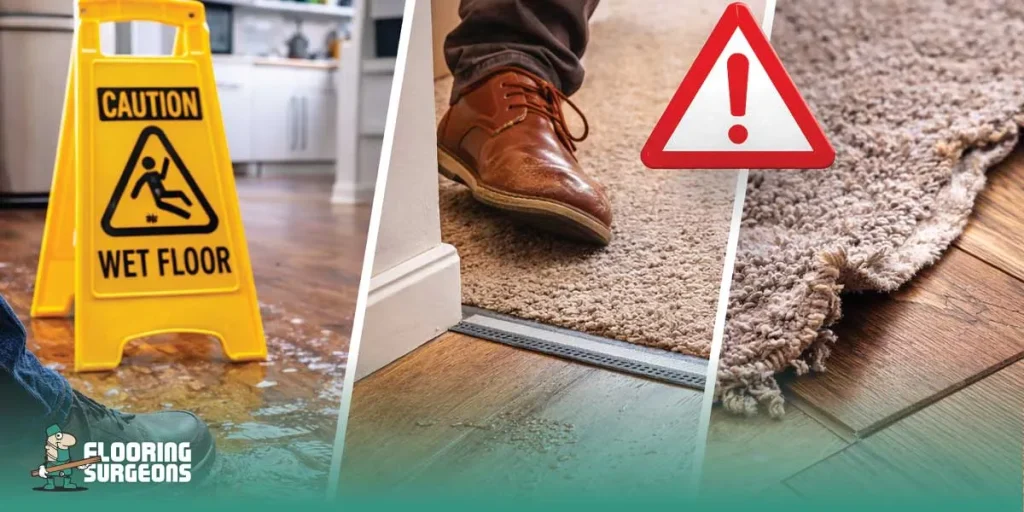
Specific flooring issues repeatedly cause problems in rental properties. These are not rare edge cases. They are familiar and predictable.
- Slip hazards
Very smooth or glossy floors can become dangerous when wet. This matters most in kitchens, bathrooms, entrances, and hallways. In rental homes, you cannot rely on tenants to always clean spills immediately or use the proper footwear. Flooring must stay safe under normal everyday use, not ideal conditions.
- Uneven transitions
Minor height differences between rooms often happen when different flooring types are combined. Poorly planned thresholds can create trip risks, especially over time, as floors settle or wear unevenly. These issues are easy to miss during installation but hard to justify later if an accident happens.
- Loose edges and lifting areas
Carpet edges, laminate joints, and vinyl seams are under constant stress in rental properties. Furniture movement, frequent cleaning, and general wear can cause edges to lift or curl. Once visible, this becomes a known hazard that requires action, not something that can be ignored until the next tenancy.
Landlord Duty of Care in Rental Properties
As a landlord, your responsibility is not to react after a problem appears. It is to choose flooring that is unlikely to become a problem in the first place. You are expected to consider how flooring performs over time, not just how it looks at installation. Materials that damage easily, become slippery, or require frequent repairs increase your exposure to complaints, inspections, and disputes. In simple terms, flooring that stays safe, stable, and low maintenance makes it easier to meet your duty of care throughout the tenancy.
Durability and Wear-and-Tear Expectations in Rental Properties
In buy-to-let properties, durability matters more during tenant changeovers than during everyday living. In rental properties, flooring is exposed to conditions that are very different from those in owner-occupied homes. The key difference is the frequency of use by other people. Flooring must cope with constant movement, varied habits, and repeated changeovers without becoming a recurring repair issue. Landlords should evaluate durability based on how flooring performs over time, not how it looks when first installed. Over time, problems linked to flooring expansion and shrinkage often appear around joints and edges, especially in rental properties where floors are exposed to repeated stress during tenant changeovers.

- High foot traffic
Rental properties experience heavier and less predictable foot traffic. Entrances, hallways, kitchens, and living areas are used intensively every day. Flooring in these zones needs to resist surface wear, scuffs, and impact without showing damage quickly. Materials that mark easily may still be usable, but they often require cosmetic repairs between tenancies. - Tenant turnover
Every change of tenant increases stress on the floor. Furniture is moved, heavy items are dragged, and cleaning becomes more aggressive. These moments cause more damage than day-to-day living. Flooring that survives everyday use but degrades during move-in and move-out periods becomes expensive over multiple tenancies. - Lifespan versus repair cost
Durability is not just about how long flooring lasts. It is about how often it needs attention. Some materials have a shorter lifespan but are cheap and easy to replace in sections. Others last longer but are costly or difficult to repair once damaged.
For example, laminate flooring in busy rental flats often shows edge swelling or joint damage within a few years, especially near kitchens and entrances. Repairing small areas is rarely practical, so partial damage can lead to complete replacement. In contrast, well-installed vinyl flooring may not last forever, but it tolerates traffic, moisture, and cleaning with fewer visible issues, reducing repair costs between tenancies. For landlords, the most durable option is the one that minimises disruption, repair decisions, and repeat spending, not necessarily the one with the most extended advertised lifespan.
Cost vs Long-Term Value When Choosing Flooring for Buy-to-Let
When landlords assess flooring costs, the biggest mistake is focusing only on the initial spend. In buy-to-let properties, value is created or lost over time. The real question is not how cheap the flooring is to install, but how it behaves across multiple tenancies.
Why Cheap Flooring Often Costs More Over Time
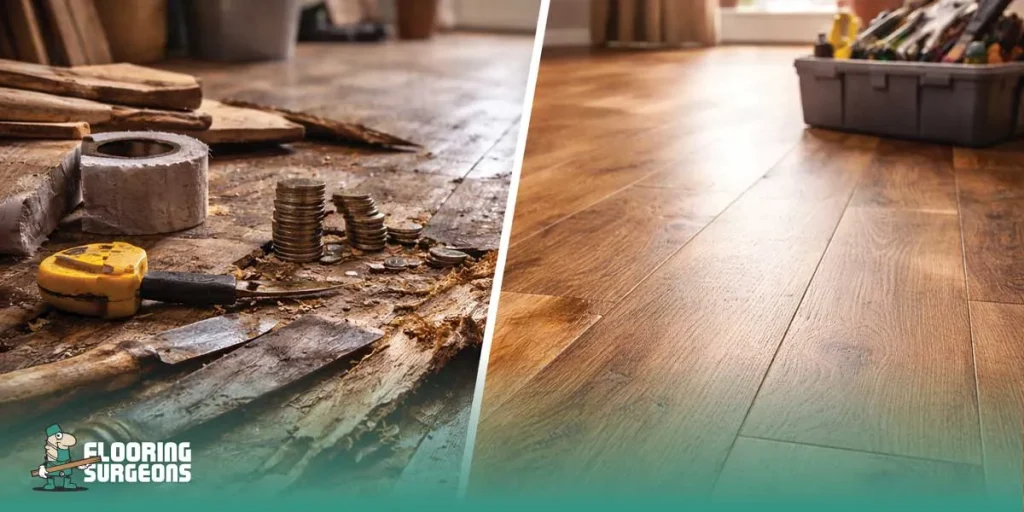
Low-cost flooring often looks acceptable at installation, but rental conditions expose its weaknesses quickly. Frequent foot traffic, furniture movement, and repeated cleaning accelerate wear. When damage appears early, landlords are forced into repairs or replacements sooner than expected.
Another hidden cost is decision fatigue. Flooring that constantly needs patching, inspections, or discussions with tenants consumes time and creates friction at the end of each tenancy. Even if the material itself is inexpensive, the repeated disruption reduces its real value.
Maintenance and Replacement Cycles Landlords Should Expect
Long-term value depends on how predictable the flooring performance is. Landlords benefit most from materials that age consistently and fail gradually, rather than suddenly becoming unusable.
Below is a simplified comparison landlords can scan quickly when weighing cost against long-term value:
| Flooring Behaviour | Short-Term Cost Impact | Long-Term Value Impact |
| Marks easily but stays functional | Low upfront concern | Higher cosmetic repairs between tenancies |
| Difficult to repair once damaged | Appears durable initially | Full replacement is often required |
| Handles moisture and cleaning well | Slightly higher planning effort | Fewer disputes and downtime |
| Requires frequent inspections | Low initial attention | Ongoing time and management cost |
From an ROI perspective, flooring that reduces replacement frequency, tenant complaints, and turnaround delays delivers more substantial long-term value, even if it is not the cheapest option at the start. For buy-to-let properties, stability and predictability matter more than initial savings.
Wood Flooring Requirements for Buy-to-Let Properties in the UK
Wood flooring is often attractive to landlords, but in buy-to-let properties, it comes with clear risk factors that must be understood before choosing it. While visually appealing, wood flooring introduces higher maintenance and moisture-related risks that landlords need to factor into long-term rental decisions.
Moisture sensitivity
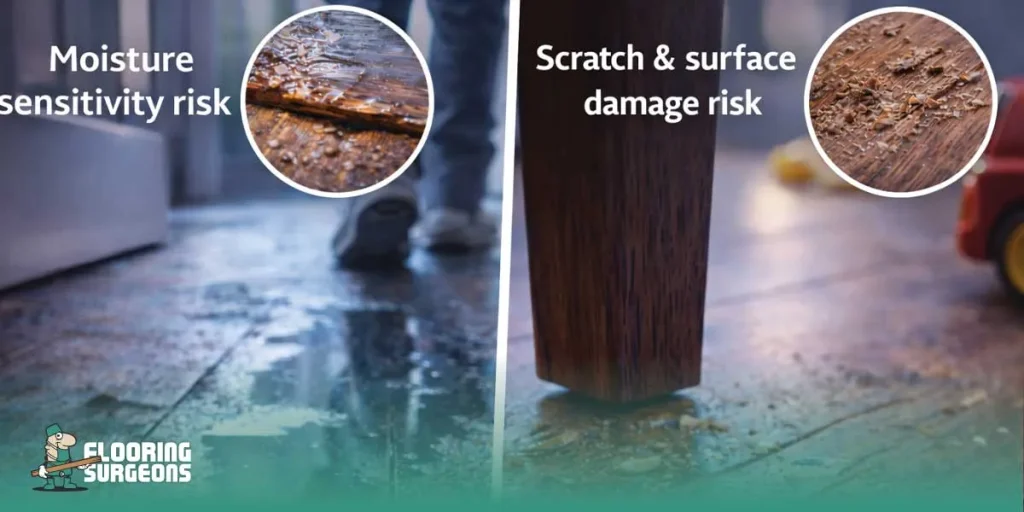
Wood flooring reacts poorly to moisture. In rental properties, spills, damp shoes, mopping, and humidity changes are normal. Even small amounts of moisture can cause swelling, warping, or staining over time. This risk is highest in kitchens, hallways, and ground-floor flats. Unlike some other materials, early moisture damage is often permanent.
Scratch and surface damage risk
Wood surfaces mark easily under rental conditions. Furniture movement, grit from outside, and frequent cleaning can leave visible scratches. While minor marks may be acceptable as wear and tear, more serious damage quickly affects appearance and may require sanding or replacement, which is disruptive between tenancies.
Suitability verdict for landlords
Wood flooring is not a default safe choice for buy-to-let properties.
It may be suitable only if:
- The property has low tenant turnover
- Moisture-prone areas are avoided.
- The finish is hard-wearing and professionally maintained.
- The landlord accepts a higher maintenance responsibility.
For most buy-to-let situations, especially high-turnover or family rentals, wood flooring increases maintenance effort and risk. From a compliance and cost-control perspective, it is usually a conditional choice, not a practical standard solution.
Laminate Flooring Requirements for Rental Properties
Laminate flooring can work in some rental properties, but it is not a low-risk option in high-turnover or moisture-prone homes. In some controlled situations, laminate flooring can still work in rental properties, but only in low-traffic areas away from moisture-prone zones.
Edge swelling risk
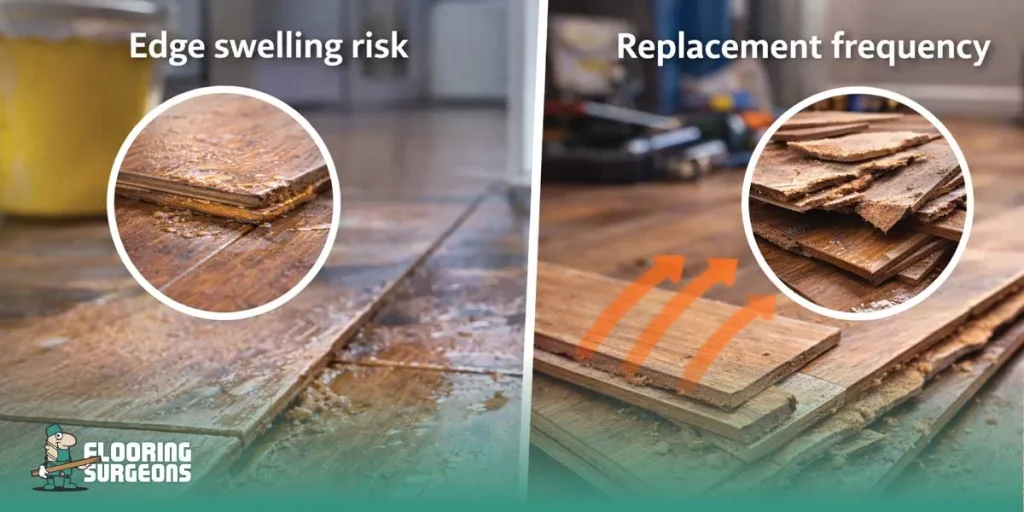
Laminate flooring is particularly vulnerable at the edges. In rental properties, water from cleaning, spills, or wet shoes often reaches joints. Once moisture enters, edges can swell and lift. This damage is usually permanent and spreads beyond the initial area, especially in kitchens and entrances.
Replacement frequency
Laminate does not fail slowly. It often looks fine until a small problem appears, then it requires complete replacement rather than local repair. In busy rental properties, this can happen sooner than expected, making laminate costly over multiple tenancies despite its initial appeal.
When laminate works
- Low-traffic rooms such as bedrooms
- Properties with careful tenant profiles
- Areas away from moisture and entrances
When the laminate does not work
- High-turnover rentals
- Open-plan kitchens or hallways
- Homes where fast, frequent cleaning is needed
For landlords prioritising predictability and minimal disruption, laminate flooring is a conditional choice, suitable only in controlled situations rather than as a whole-property solution.
Vinyl Flooring Requirements for Buy-to-Let Properties
Yes. Vinyl flooring is generally the lowest-risk and most compliant option for buy-to-let properties in the UK, especially where safety, moisture control, and easy maintenance matter. For most landlords, vinyl flooring provides the most predictable balance between safety, moisture resistance, and low ongoing maintenance in buy-to-let properties.
Slip-Resistant Vinyl Flooring for Rental Safety
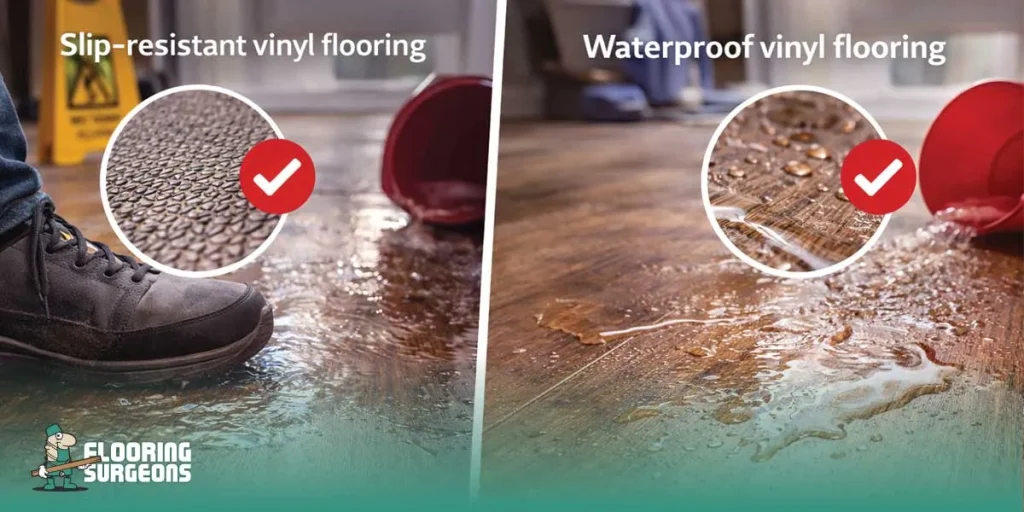
One of the main reasons vinyl performs well in rentals is slip resistance. Quality vinyl maintains grip even when wet, which is critical in kitchens, bathrooms, hallways, and entry points. This reduces accident risk without relying on tenants to manage spills perfectly.
Waterproof Flooring Performance in Buy-to-Let Homes
Vinyl flooring is highly resistant to water. It does not absorb moisture or swell at joints, which protects both the surface and the subfloor. In rental properties where frequent cleaning and occasional spills are unavoidable, this stability significantly reduces long-term damage.
Why Councils and Letting Agents Prefer Vinyl Flooring
Vinyl is widely accepted by councils and letting agents because it is easy to assess, simple to clean, and predictable over time. It creates fewer disputes at the end of a tenancy and requires less ongoing intervention from landlords. For properties with regular tenant turnover, vinyl flooring aligns well with safety expectations and practical management needs.
Flooring Choices That Reduce Tenant Turnover and Void Periods
Flooring that is easy to clean, visually neutral, and complaint-resistant helps keep tenants longer and shortens re-letting time. Tenants are more likely to renew or leave a property in good condition when the floor does not feel fragile or demanding. From a management perspective, fewer complaints and faster turnaround directly reduce void periods.

Ease of cleaning
Floors that tolerate regular mopping and quick spot cleaning have lower friction during everyday use and end-of-tenancy cleans. This reduces delays between tenants.
Visual neutrality
Neutral colours and simple finishes appeal to a broader range of tenants. They photograph better for listings and age more gracefully, which speeds up re-marketing.
Fewer complaints
Stable flooring that does not mark, lift, or stain easily generates fewer maintenance requests. Fewer issues mean smoother tenancies and less churn.
Decision guide for landlords
| Factor | What to choose | Why it helps |
| Cleaning effort | Low-maintenance surfaces | Faster end-of-tenancy turnaround |
| Appearance | Neutral tones, simple finishes | Broader tenant appeal |
| Performance | Stable under daily use | Fewer complaints and disputes |
Choosing flooring with these traits supports longer tenancies and quicker re-lets without adding management burden.
Common Flooring Mistakes Landlords Make in Buy-to-Let Properties
Most flooring problems in buy-to-let properties are not caused by bad tenants. They are caused by poor upfront decisions. Below are the most common mistakes that repeatedly lead to higher costs, complaints, and avoidable void periods. In many cases, recurring maintenance issues are early signs of a wrong flooring choice, even if the material initially looked suitable at installation.
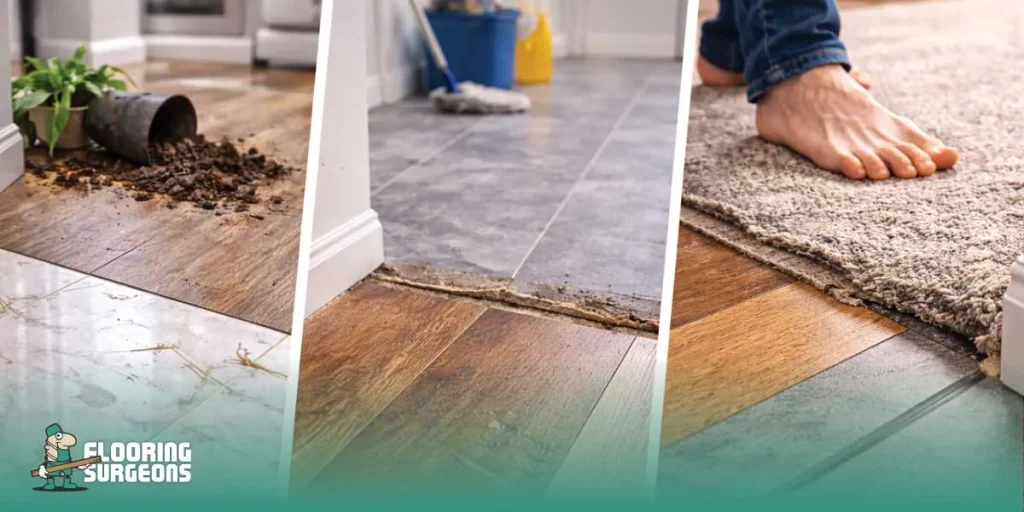
- Choosing style over durability
Many landlords select flooring because it looks premium at installation. Under rental conditions, visually attractive materials often scratch, mark, or degrade quickly. When appearance declines early, the floor becomes a recurring maintenance issue rather than an asset. - Mixing flooring types without a plan
Using multiple flooring materials across small areas creates weak points. Poorly planned joins increase wear, complicate cleaning, and raise trip risk. Over time, transitions become the first areas to fail and the hardest to justify during inspections. - Ignoring transition safety
Minor height differences between rooms are often underestimated. Uneven thresholds, loose trims, or poorly finished edges increase accident risk and attract complaints. Once flagged, these issues require immediate fixes, often between tenancies.
Avoiding these mistakes starts with prioritising predictability, safety, and long-term performance over short-term visual impact.
When to Repair vs Replace Flooring in Rental Properties
For landlords, the repair or replace decision should be fast and practical, not emotional.
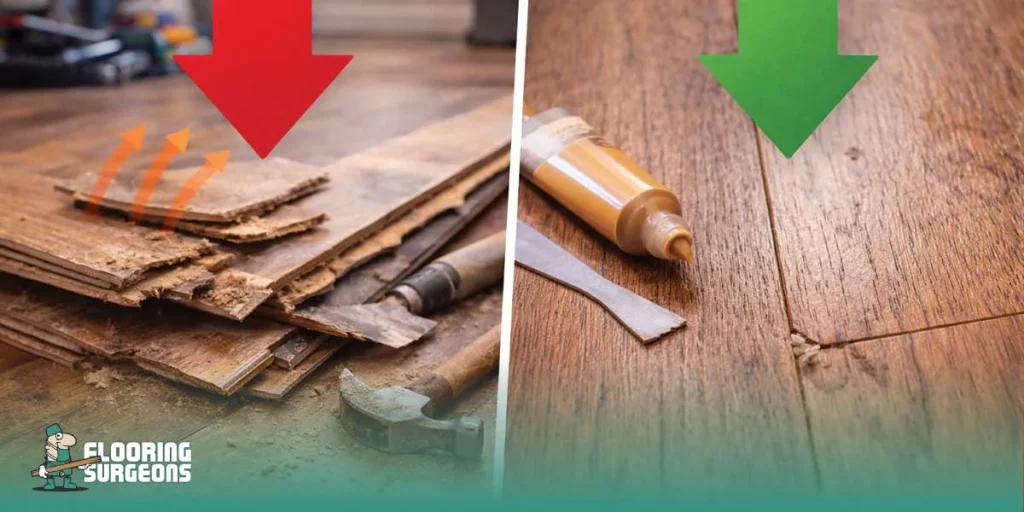
Repair the flooring when:
- Damage is limited to a small, contained area
- The issue is cosmetic and does not affect safety.
- The fix can be completed quickly between tenancies.
- The surrounding flooring is still in good condition.
Replace the flooring when:
- Damage appears across multiple areas or rooms
- Edges are lifting, joints are failing, or moisture is involved.
- Repeated repairs have already been carried out.
- The floor negatively affects tenant perception during viewings.
Timing matters:
- Replacement is most efficient during vacancy periods
- Mid-tenancy work increases disruption and complaints.
- A complete replacement before re-letting often shortens void periods.
For buy-to-let properties, replacement is usually the more intelligent choice once repairs stop being simple, predictable, and contained.
Final Considerations Before Choosing Flooring for a Buy-to-Let Property
So what should you choose as a landlord? Flooring decisions for buy-to-let properties should be guided by risk reduction, durability, and long-term value, not appearance.
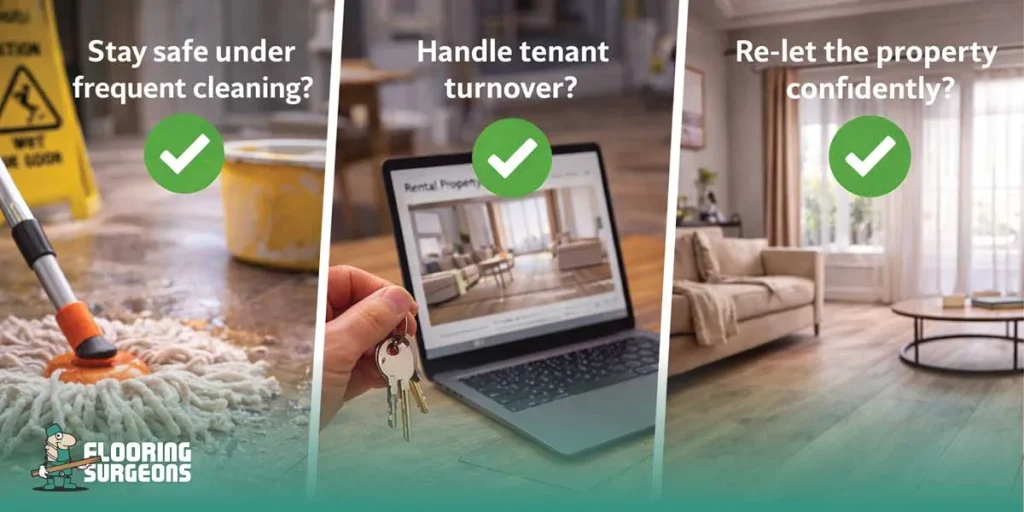
Before committing, sense-check your choice against these points:
- Will it stay safe under everyday use and frequent cleaning?
- Can it handle tenant turnover without repeated repairs?
- Does it help you re-let the property quickly and confidently?
If a flooring option increases maintenance, complaints, or uncertainty, it is rarely the right fit for a rental property. For landlords who want practical guidance rather than guesswork, Flooring Surgeons work with rental conditions in mind, helping you choose flooring that performs reliably across tenancies without unnecessary risk.
Key Takeaways for Buy-to-Let Landlords
- Choose flooring that stays safe and stable across multiple tenancies, not just at installation.
- Prioritise materials that minimise repairs, complaints, and downtime between tenants.
- In most cases, vinyl flooring offers the lowest risk and most predictable performance for rental properties.

Haniye Ayanmanesh
As an expert writer for Flooring Surgeons, I combine technical SEO knowledge with a practical understanding of flooring, producing content that helps users make confident decisions while supporting long-term organic growth.