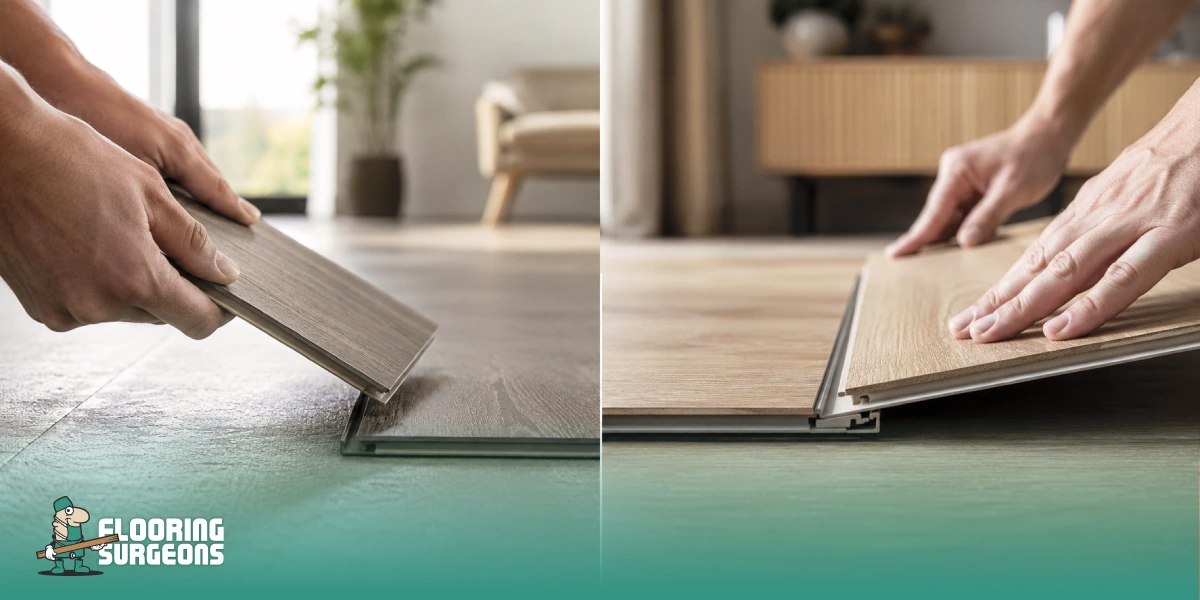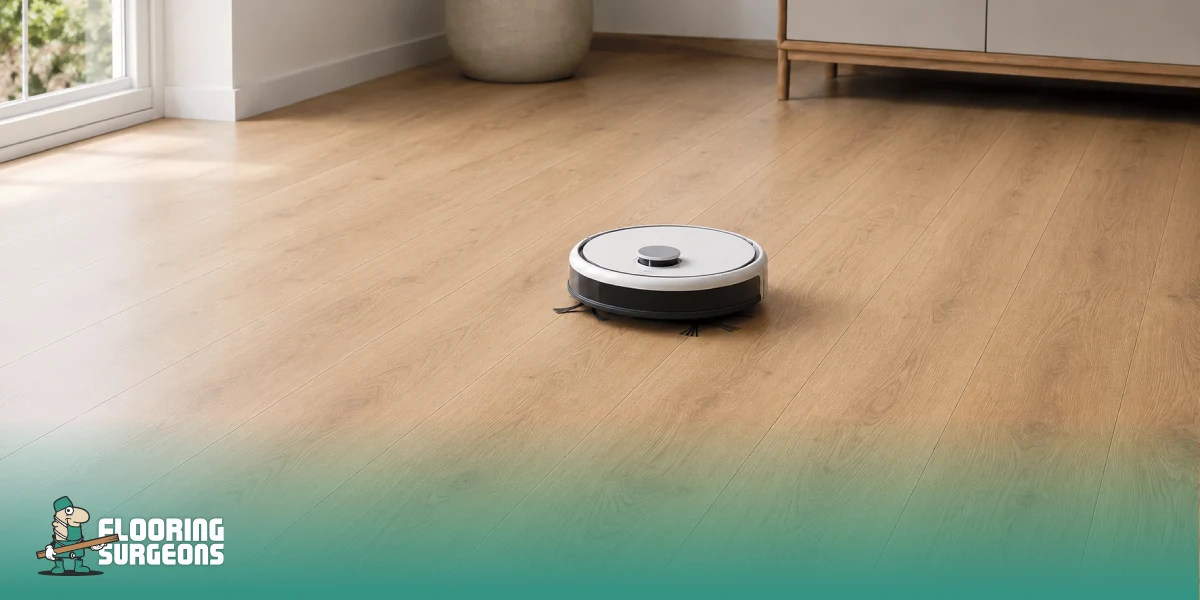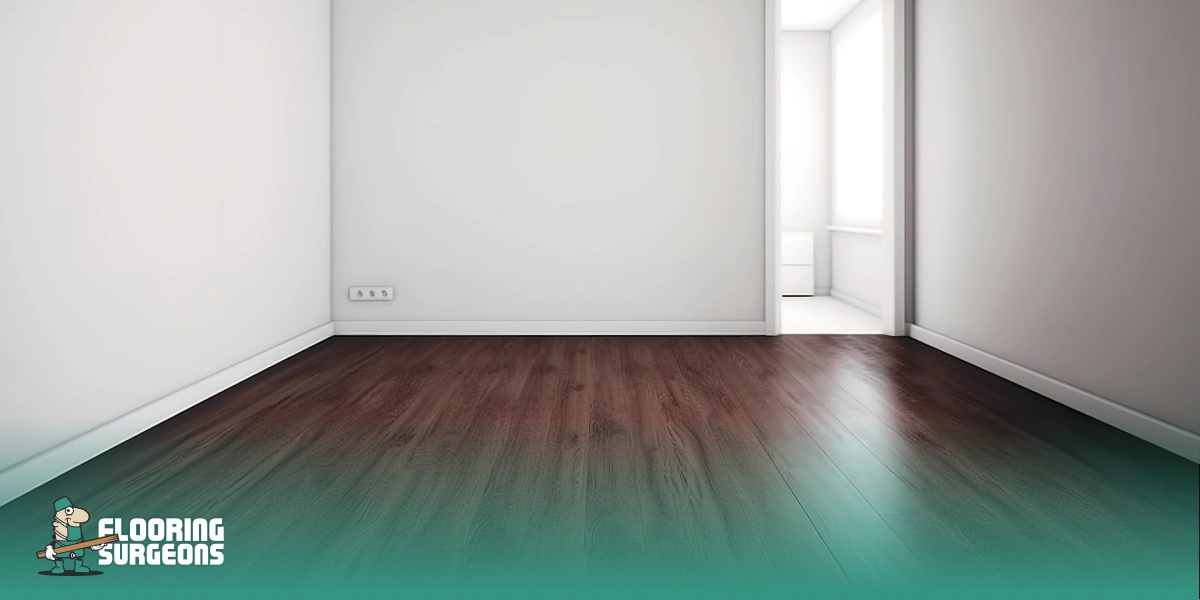
Rooms can feel dark for reasons other than poor lighting. They can be missing a window to bring in natural light. Basements, interior bathrooms, hallways, and remodelled spaces all suffer from this issue. And while most try to lighten up these rooms with brighter bulbs or mirrors, few consider the floor.
Rooms can feel dark. Not because they’re lit poorly, but because they lack windows to let in daylight. Basements, bathrooms, hallways, and conversions suffer badly. We grab brighter bulbs or mirrors to combat it. Few consider how flooring affects light levels.
The flooring you choose has a direct impact on how light moves through a room. Pale tones reflect it upward. Glossy finishes bounce it across the space. The right material can make a windowless room feel noticeably brighter, without touching a single light fitting.
This guide explores flooring for rooms without natural light and how it can dramatically improve brightness.
Table of contents
Why Flooring Matters in Windowless Spaces
Most people don’t realise how much their floor affects a room’s brightness. The floor is one of the largest uninterrupted surfaces in any space. It either absorbs light or reflects it back.
When it comes to picking the best flooring for dark rooms or rooms that lack light, there are two things you need to know. Those two things are LRV and reflectivity. On a scale of 0-100, with 0 being black, which absorbs all light and 100 being white, which reflects all light. The higher the LRV, the more light will be reflected from the floor.
In a windowless room with low-LRV flooring, artificial light hits the floor and is absorbed. The room feels closed in, even with decent overhead lighting. Switch to a high-LRV floor. The same light gets reflected back into space. Walls look brighter. Ceilings feel higher. The whole room opens up. It’s not about adding more light. It’s about using the light you already have more efficiently.
What LRV Means for Your Flooring Choice
| Flooring Type | Typical LRV Range | Light Reflection |
| White tile or laminate | 70–85 | Excellent |
| Light maple or ash hardwood | 55–70 | Very good |
| Pale luxury vinyl (LVP) | 50–65 | Good |
| Medium oak or beige tile | 30–45 | Moderate |
| Dark walnut or espresso | 10–20 | Poor |
For spaces without windows, such as basements, bathrooms, or hallways, look for flooring with an LRV above 50. An LRV below 30 will make the room feel smaller and darker, regardless of how many light fixtures you add.
Best Flooring for Rooms Without Natural Light
Flooring materials do not treat light equally. Some bounce it right back. While others absorb it completely. Let’s take a look at what really works for rooms without natural light.
Light-Colored Hardwood Flooring
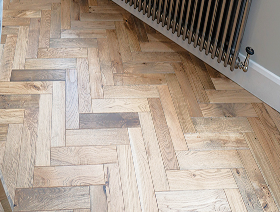
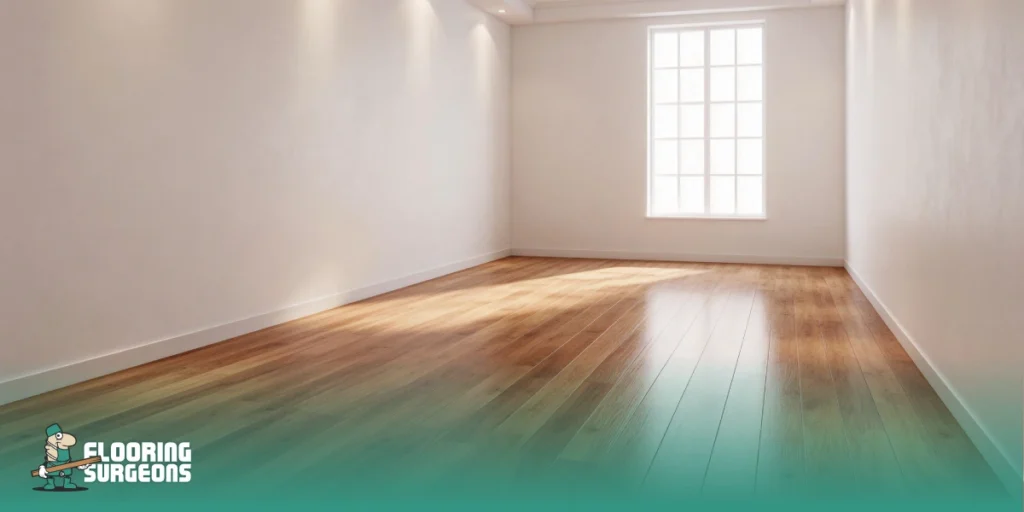
Pale hardwood is one of the best options for light-reflecting flooring. Maple, ash, and birch are all at the high end of the LRV scale; most species will fall between 55 and 70, so they reflect plenty of light into your space.
- Maple: As the brightest hardwood, maple offers a clean tone that borders on white, making it a suitable option for basement floors or interior hallways.
- Ash: Ash features more grain than maple, providing additional texture without the deeper tones associated with walnut.
- Birch: Birch has a slightly darker colour than ash, falling right in the middle of these two.
Finishing is important as well. Satin or semi-gloss will reflect more light than flat, but won’t highlight every little scuff the way high-gloss will. For the brightest tone possible, choose the lightest wood colour you can tolerate, then finish it with something that has SOME sheen.
High-Gloss Laminate Flooring
High-gloss laminate is one of the best ways to make a room feel brighter without adding additional lighting. Because of these advantages, high-gloss laminate flooring becomes a good option for windowless bathrooms, laundry rooms, or any room where you want as much light reflected as possible without the cost of polished stone. In addition, it’s cheaper than hardwood and usually holds up better to moisture.
However, the trade-off is that dust and footprints show more easily than with a matte finish. In a low-light room, though, this is less noticeable and likely won’t be an issue.
Polished Concrete Floors
Concrete isn’t the first thing that comes to mind when you think of a bright surface, but polished concrete is super reflective, particularly when sealed with a high-gloss finish. It gets so glossy that it becomes almost mirror-like. Concrete is typically a light grey or off-white colour, so it has an LRV of around 50–60.
This is especially nice for basements. Concrete floors already exist as a subfloor there. So, polishing your concrete can be less expensive than covering it with something else. It’s also a hard, sealed surface, so light bounces off it rather than getting absorbed by carpet or unfinished wood.
Light Luxury Vinyl Plank (LVP)
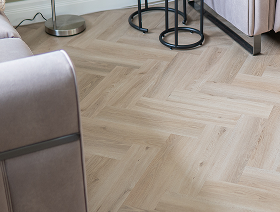
Luxury vinyl has come a long way. The newer products look convincing, and the light-coloured versions have LRVs that rival those of hardwood. In addition to their appealing appearance, they offer practical benefits in various spaces.
One reason LVP is especially useful in windowless spaces is its waterproofing. For example, if you have a basement bathroom or a windowless laundry room, you can achieve a bright, reflective floor without worrying about water damage.
Additionally, it’s more cushy underfoot than tile or concrete. This makes LVP more comfortable to stand on in rooms where a lot of time is spent, such as kitchens or utility rooms.
White or Cream Tile Flooring
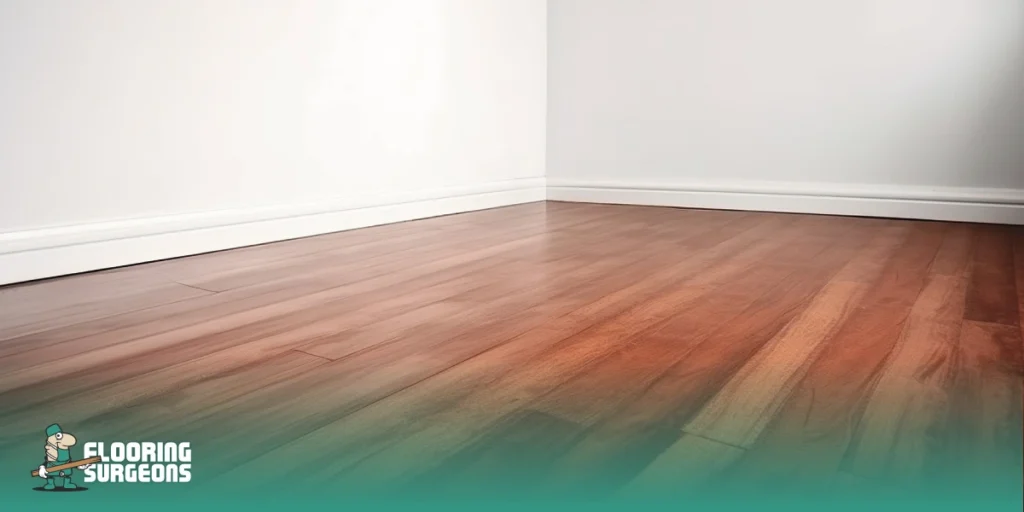
Tile in white or cream is about as reflective as flooring gets. Large-format tiles work best because there are fewer grout lines to break up the surface. And grout colour matters more than most people think, dark grout will cut the brightness even if the tile itself is pale.
Choose white or light grey grout to make the floor feel airy and unified. Porcelain tile works well because it’s hard-wearing and the colour is internal, so chips are less noticeable.
Tile is ideal for bathrooms, hallways and basements, any space where you need durable flooring that also brightens the space.
Best Flooring Colours for Dark Rooms and Windowless Interiors
The colour of your floor plays the biggest role in how much light it reflects. Choose poorly, and no amount of material will save your space.
Colours That Work
White, cream, and light grey are some of the most effective bright flooring options for windowless interiors. Cream is almost as effective but feels warmer.
Pale wood tones are bright without feeling cold. They range from 55 to 70 LRV, providing enough brightness to make a difference in a windowless room.
If you’re torn between two colours, always pick the lighter option. Moving even a few shades lighter can increase the LRV by 10 or 15 points.
Colors to Avoid
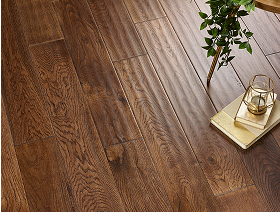
Dark browns and blacks are the worst choice for windowless rooms. Espresso, walnut, and dark oak all have LRVs below 20; they absorb rather than reflect light.
Middle values aren’t much brighter, either. For example, honey oak and medium greys register at 30-45 LRV. While these are not as dark as espresso or walnut, they are still dark enough to lower the LRV of your space and not light enough to make much difference. Therefore, for spaces without windows, skip anything darker than beige.
Glossy vs Matte Flooring for Brightening a Room
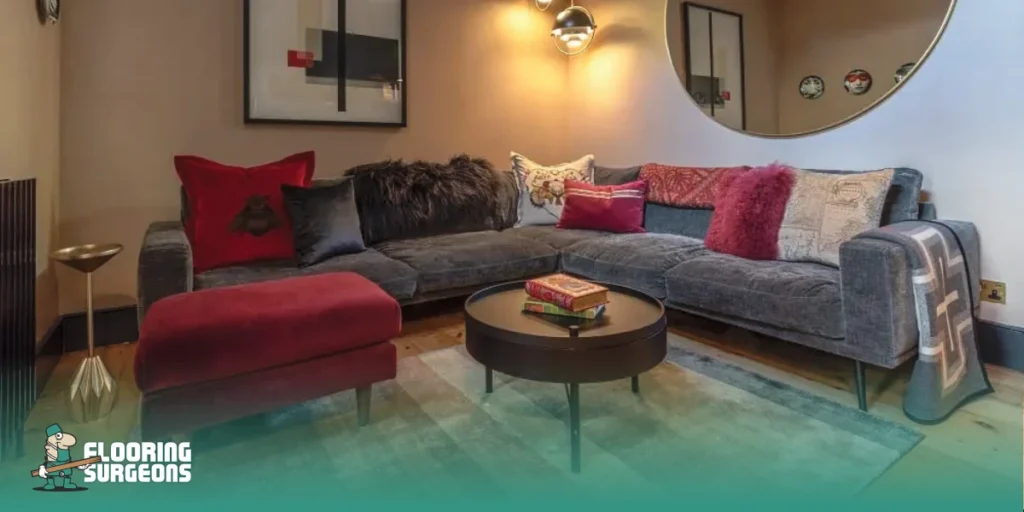
The sheen affects how light reflects nearly as much as colour. High gloss reflects light directly. The space appears brighter, but every scratch and fingerprint is noticeable. More maintenance is required. Matte finishes diffuse light. They conceal blemishes beautifully, but they won’t maximise brightness.
Satin or semi-gloss falls somewhere in the middle. It’s more reflective than matte and more forgiving than high-gloss. For most rooms without windows, it’s the happy medium.
| Finish Type | Light Reflection | Maintenance | Best For |
| High-gloss | Excellent | High | Bathrooms, small rooms |
| Semi-gloss / Satin | Very good | Moderate | Hallways, basements |
| Matte | Low to moderate | Low | High-traffic areas |
Glossy floors always feel brighter, even with only a slight colour difference.
Design Tips for Flooring for Rooms Without Natural Light
The right flooring gets you most of the way there. But a few simple design choices can push a windowless room from decent to genuinely bright.
- Strategic Lighting Placement: Artificial light has to work twice as hard when there’s no surface to reflect off. Angle floor lamps and recessed lighting downward towards the floor (not straight up at the ceiling). A light-colored, glossy floor will reflect that light and help illuminate the room.
- Mirror and Reflective Decor: Mirrors don’t generate light; they redirect it. By hanging a large mirror on the wall opposite your light source, you’ll bounce the artificial light into the floor space you’ve paired it with, doubling your brightness.
- Wall Colours That Work With Light Flooring: A pale floor and a dark wall cancel each other out. For maximum effect on light floors, stay in the same tone family; whites, off-whites, and light neutrals are your friends.
Best Flooring for Windowless Rooms by Space Type
Choosing flooring for windowless rooms requires different strategies based on moisture levels, room size, and usage. Here’s what works best by room type.
Basement Flooring for Light
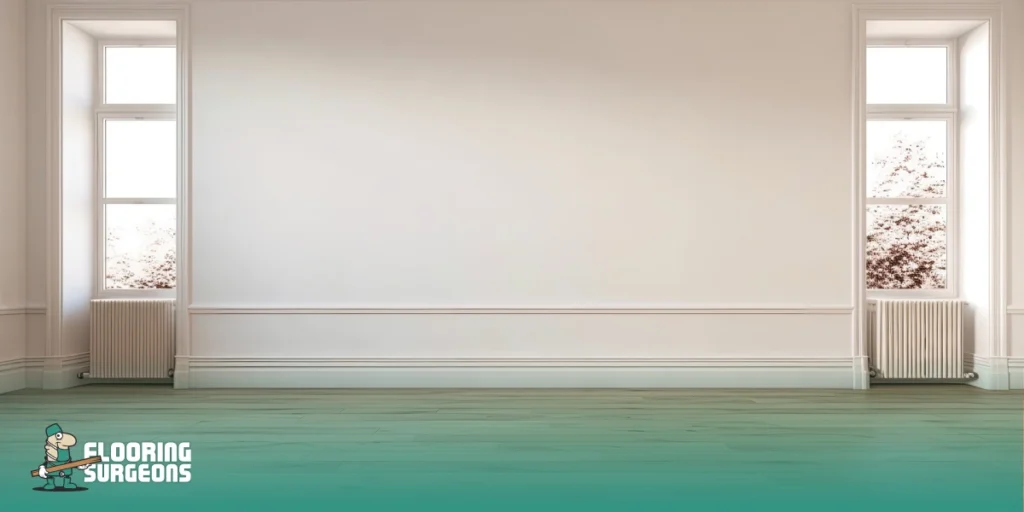
Basements are by far the most prevalent windowless rooms, and they have additional considerations. One durable option if you’re starting from scratch is polished concrete. It’s highly reflective and handles moisture well.
Hardwood-like LVP is water-resistant. It’s also low-profile (consider your ceiling height) and available in light colours that bounce light well.
Do not get carpet. No matter how light in colour, carpet absorbs more light than hardwood floors and retains moisture.
Floors in lighter hues not only brighten a room but also create a more open feel. Bouncier light? See our blog post on 10 Tips to Make a Small Room Look Bigger Through Your Flooring.
Windowless Bathroom Flooring
Basic white or cream large-format tiles are preferred for windowless bathrooms. Large tiles have fewer grout lines, giving the floor a cleaner, more mirror-like finish. Use light-coloured grout – dark grout lines on white tiles act like a grid, fragmenting the floor and decreasing brightness.
Similarly, light luxury vinyl flooring is another good choice. It’s waterproof, softer than tile, and comes in light colours that suit small, enclosed spaces.
Interior Hallways and Closets
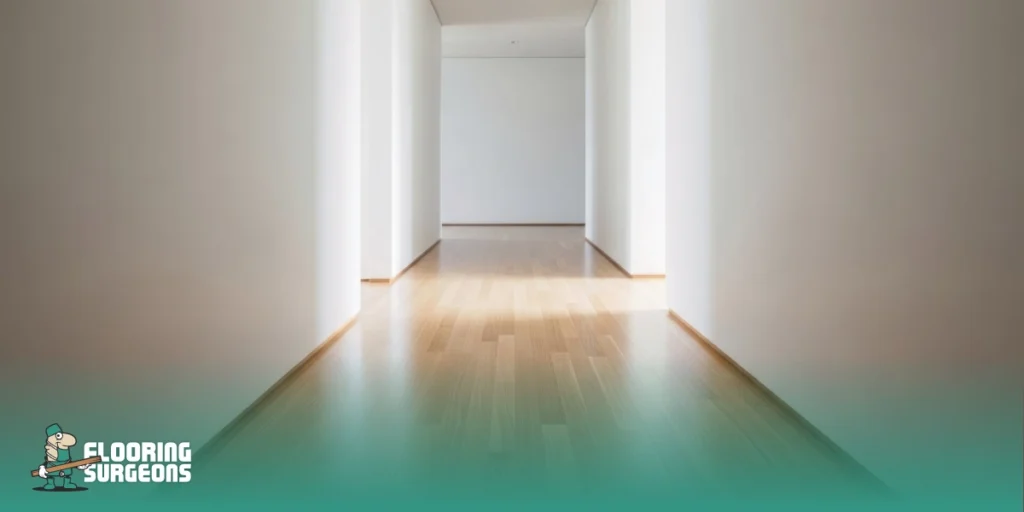
These are spaces you might not think about at first, but you can still take advantage of these principles. Light laminate flooring is great for hallways because its long length means that the reflective surface can bounce light further down the hallway.
Closets don’t need reflective flooring so much as reflective walls and good lighting, but a light floor colour will still help make the space feel a little less box-y.
Conclusion: Choosing the Best Flooring to Brighten Dark Rooms
Flooring won’t replace natural light, but the right choice can brighten a windowless room. Opt for light-coloured flooring with high LRVs and glossy finishes, and pair them with good lighting and walls to create a more open, inviting space.
Ready to transform your space? Take the next step and browse our light-enhancing flooring collection today. Let us help you find the perfect option to add warmth and brightness to your room. Contact us at Flooring Surgeons for expert guidance and make your vision a reality!

Ana.Soltanpoor
I’m an SEO Specialist with a strong background in content management and organic search. I build data-driven content strategies by aligning user intent, search behavior, and SEO best practices to ensure every piece of content delivers clarity, relevance, and measurable organic performance.