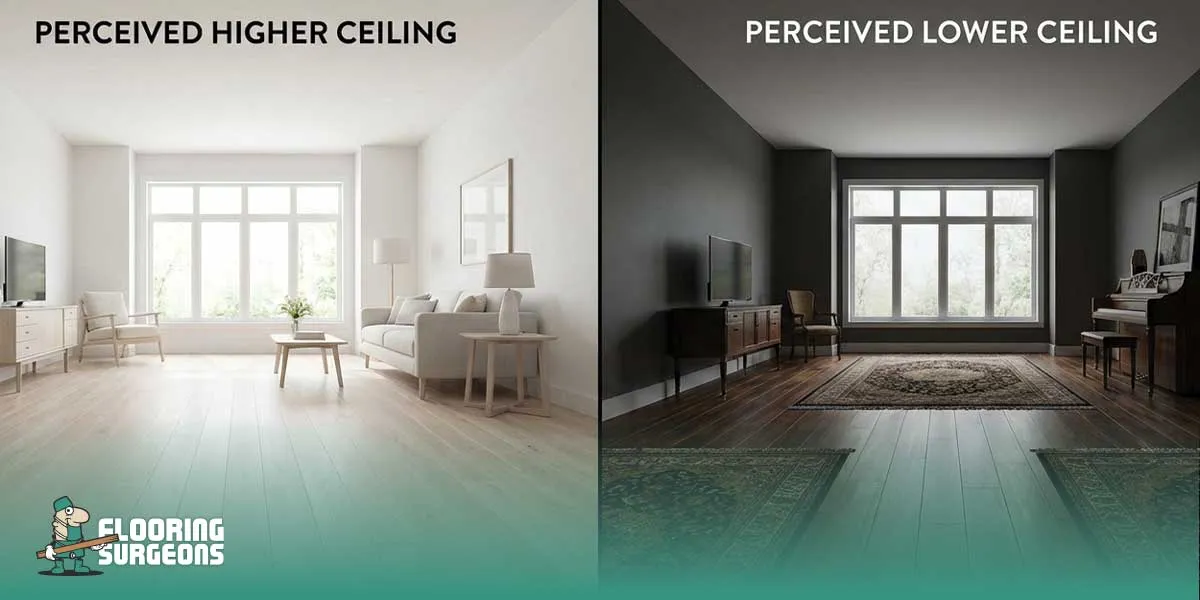



An eye movement patterns example can be seen the moment you step into a well-designed room: your eyes don’t wander randomly. They follow lines, pause at details, and move toward focal points without you realizing why. One of the strongest tools behind this effect is the floor. Floor patterns quietly guide how a space is read, how large it feels, and where attention naturally flows.
In interior design, flooring is not just a surface to walk on. It is a visual map. Directional layouts like herringbone and chevron influence how the eye travels across a room, shaping perception long before furniture or décor is noticed.
Table of contents
Understanding Eye Movement in Interior Spaces
To design floors that guide attention, we first need to understand eye movement patterns meaning in a spatial context. Human vision is directional by nature. The brain searches for order, alignment, and repetition. When it finds them, the eye follows.
In a room, the eye typically:
- Moves along strong lines
- Slows down where patterns are complex
- Speeds up across large, continuous surfaces
Floor patterns work directly with these behaviors. Because the floor occupies the largest uninterrupted visual plane, its pattern often sets the visual rhythm for the entire space. This naturally leads us to how flooring affects perception beyond simple aesthetics, a principle emphasized by Flooring Surgeons.
How Flooring Shapes Spatial Perception
How Flooring Impacts Spatial Perception is one of the most overlooked topics in residential and commercial design. A floor pattern can make a narrow room feel longer, a small room feel wider, or an open-plan space feel organized without walls.
Directional flooring patterns act like visual arrows. When planks or tiles run in a consistent direction, the eye follows that path automatically. When patterns shift or intersect, the eye slows down and reassesses the space.
This is where patterned layouts such as herringbone become especially powerful, especially when combined with Chevron Engineered Flooring.
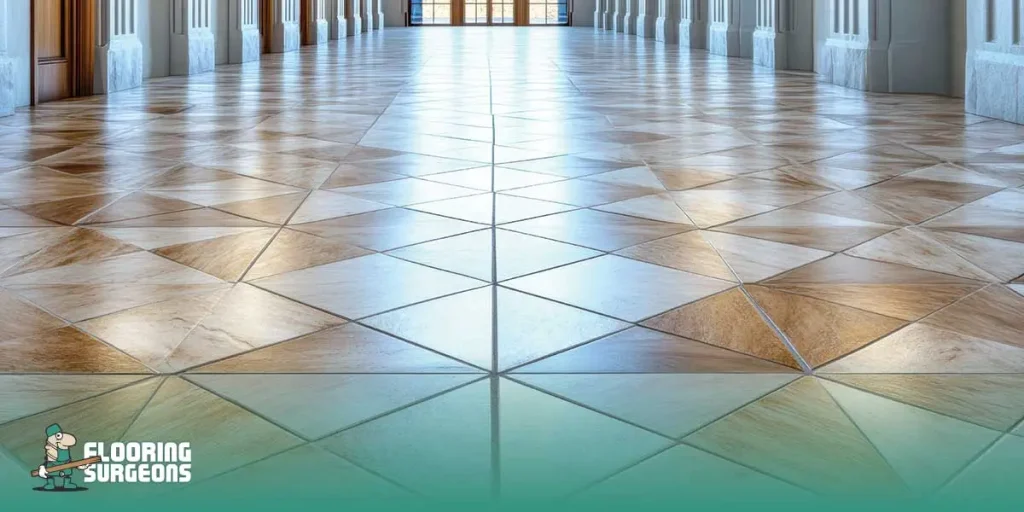
Why Directional Patterns Control Visual Flow
Unlike straight plank layouts, herringbone and chevron patterns introduce controlled movement. Their repeating angles pull the eye forward while still offering rhythm and balance.
A well-installed herringbone laminate flooring layout creates a subtle zigzag path. The eye moves along this path instinctively, making rooms feel deeper and more dynamic without visual chaos.
Chevron patterns work slightly differently. With precise V-shaped alignment, Chevron Engineered Flooring produces a cleaner, more directional flow. The eye moves smoothly from one point to another, which is ideal for guiding attention toward windows, fireplaces, or feature walls. Both patterns are highly effective when the goal is intentional eye movement rather than passive flooring.
Floor Pattern Impact at a Glance
Below is a practical comparison showing how different flooring patterns influence eye movement and room perception:
| Floor Pattern Type | Eye Movement Effect | Spatial Result | Best Use Case |
| Straight Planks | Fast, linear flow | The room feels longer | Hallways, narrow rooms |
| Herringbone | Rhythmic, guided movement | Added depth and interest | Living rooms, bedrooms |
| Chevron | Strong directional pull | Clean visual focus | Feature spaces |
| Large Tiles | Smooth, uninterrupted flow | Open, calm feel | Modern interiors |
| Small Tiles | Slower eye movement | Visual texture | Accent areas |
This comparison makes it clear why patterned flooring is more than a style choice; it’s a perception tool.

The Aesthetic Impact of Tile and Pattern Choice
The impact of tile flooring patterns on room aesthetics goes far beyond color or material. Pattern scale, direction, and repetition decide whether a space feels calm, energetic, formal, or relaxed.
Herringbone patterns add movement without overwhelming the eye because their repetition is predictable. This predictability keeps the space visually engaging but comfortable over time.
In contrast, overly complex or mismatched patterns can interrupt eye flow, making rooms feel busy or smaller than they are. The key is balance: enough detail to guide the eye, but enough order to keep the space readable. This balance is exactly what experienced flooring specialists focus on when designing layouts.
Flooring as a Functional Design Tool
At Flooring Surgeons, flooring is approached as both a visual and functional element. Pattern choice is aligned with room purpose, natural light direction, and how people move through the space daily.
For example, in bedrooms, eye movement should feel calm and unforced. Directional patterns that gently guide vision rather than stop it abruptly help create this effect. This is also why flooring discussions often overlap with broader comfort questions, such as does sleeping on the floor improve sleep quality, where surface feel and visual calm both play a role in rest. Flooring choices subtly support how spaces are used, not just how they look.
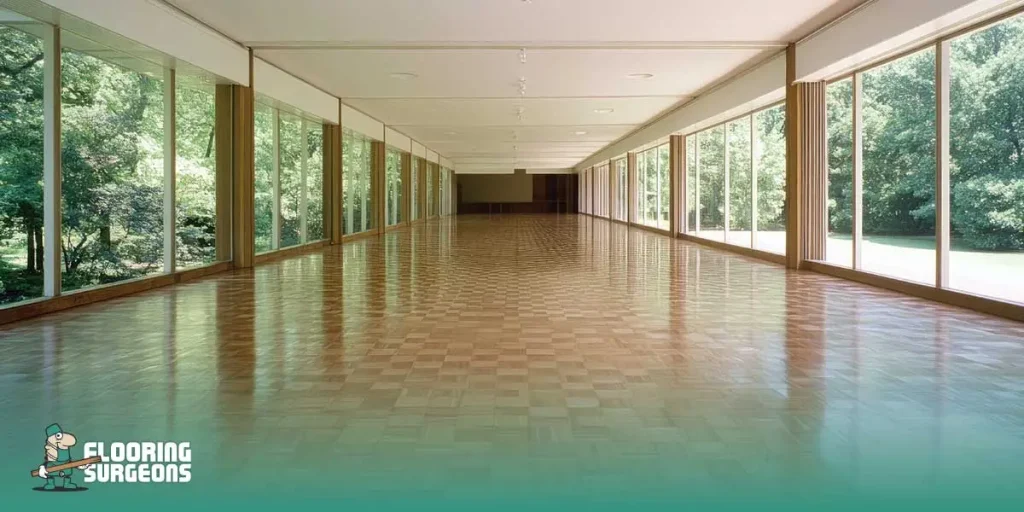
Choosing the Right Pattern for Eye Control
When selecting a floor pattern, consider these practical questions:
- Where do you want the eye to go first?
- Should the space feel longer, wider, or more grounded?
- Is the room for movement, focus, or relaxation?
Herringbone works best when you want movement with sophistication. Chevron is ideal when clarity and direction matter most. Straight layouts suit minimal spaces where the architecture itself should lead the eye. The most successful interiors use flooring patterns intentionally, not decoratively.
Conclusion
Floor patterns are silent guides. They control how the eye moves, where attention rests, and how space is understood. When used correctly, especially with directional designs like herringbone and chevron, flooring becomes one of the most powerful tools in interior design.
By understanding visual behavior and choosing patterns with purpose, you don’t just install a floor; you shape the experience of the room itself.

Mina Asgari
I’m an SEO Specialist and Content Strategist focused on sustainable business growth. I design data-driven content strategies by deeply analyzing user intent, search behavior, and SEO best practices, ensuring every piece of content serves a clear purpose for both users and search engines.