



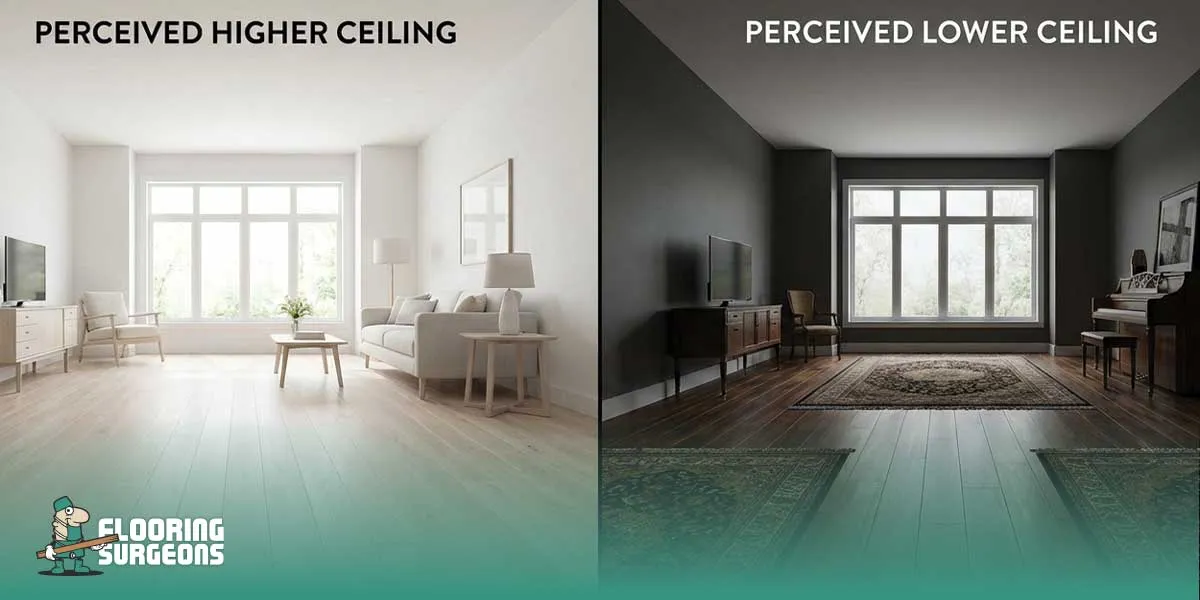
Flooring can make a ceiling feel higher or lower by influencing how the eye perceives brightness, contrast, and visual weight in a space. In rooms with 8 ft (2.4 m) ceilings, lighter floors, low contrast between the floor and walls, lengthwise plank installation, and a soft satin finish generally make the room feel taller. Dark or heavily patterned floors can visually compress height, especially in small apartments with limited natural light. In real homes, the same ceiling height can feel very different once the floor tone, finish, and layout are installed, which is why we look at flooring as a perception tool, not just a surface.
Table of contents
Why Flooring Colour Has the Strongest Impact on Ceiling Perception
Flooring colour has the biggest influence on how tall a room feels because it defines the visual “base” of the space. The heavier and darker the base looks, the more compressed the vertical dimension can feel, especially in homes with 8-foot ceilings. If you want the reasoning behind why light flooring can make a room appear taller while dark floors feel heavier, see our guide on the psychology behind light flooring and dark floors. Small details like sheen level, plank direction, and where transitions land often matter more than people expect once the room is lived in day-to-day.
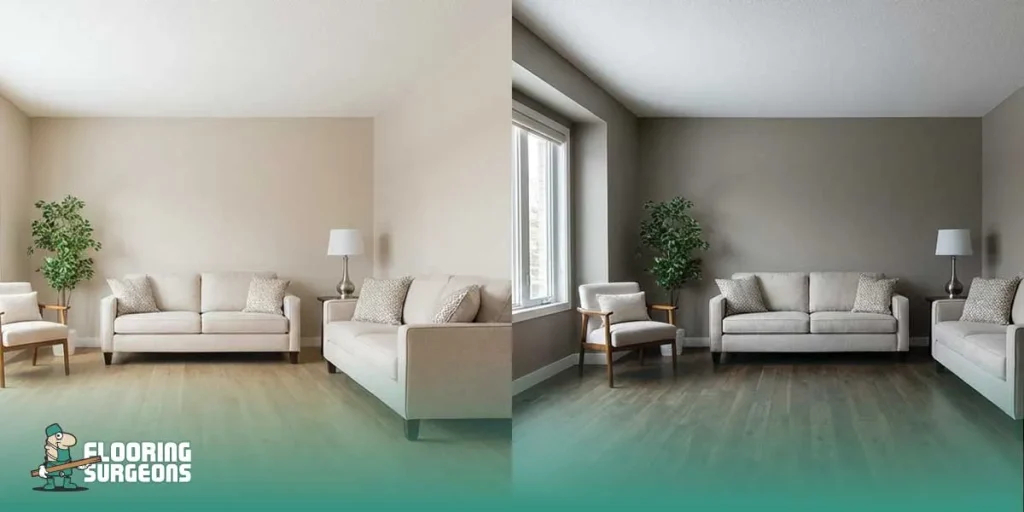
Light Flooring and Vertical Perception
Light flooring reflects more light and reduces visual weight at the bottom of the room. This helps the room appear taller and more open.
If you are working with low ceilings, especially 8 ft (2.4 m):
- Choose light oak, natural maple, soft beige, or warm greige tones. Neutral tones are often the safest option for low ceilings, but they can still shift the mood of a room, which is why it helps to understand why neutral floors do not always read neutral.
- Keep the contrast between the floor and the walls minimal
- Use continuous flooring across connected areas
In real apartment settings with limited natural light, light flooring for low ceilings is often the safest way to support a ceiling height illusion without structural changes.
Why Dark Floors Add Visual Weight
Dark floors are elegant, but they add density and visual gravity. When paired with bright white walls, they create a strong horizontal break at the base of the room. That contrast can make a ceiling feel lower than it actually is.
This does not mean dark floors are wrong. They simply require balance:
- Avoid extreme contrast between floor and wall colour
- Use mid-tone walls instead of stark white
- Keep baseboards close in tone to the wall
From a professional flooring perspective, material also matters. Many homeowners compare hardwood flooring options with modern luxury vinyl when trying to control room perception. Both can work, but tone selection and finish choice are what determine whether the space feels taller or heavier.
Quick Reference: Light vs Dark Flooring
Flooring Tone | Effect on Room Perception
Light flooring | Makes the room appear taller and more open
Medium neutral | Balanced, depends on wall contrast
Dark floors | Add visual weight, may lower perceived height
When clients ask about the best flooring for 8-foot ceilings, colour choice is usually the first and most powerful adjustment we evaluate before discussing layout or finish.
Does Plank Direction Change How Tall a Room Feels?
Yes. Plank direction affects how the eye travels through a space. Since the eye naturally follows long lines, installation layout directly influences flooring and room perception. This is the same principle we cover in detail when we explain how floor patterns guide eye movement in different room shapes. When clients ask which way flooring should run, we usually start from the main sightline and doorway view because that is what drives eye movement through the space. If you are deciding layout before installation day, this breakdown on which way wood flooring should run in your room can help you choose based on your floor plan.
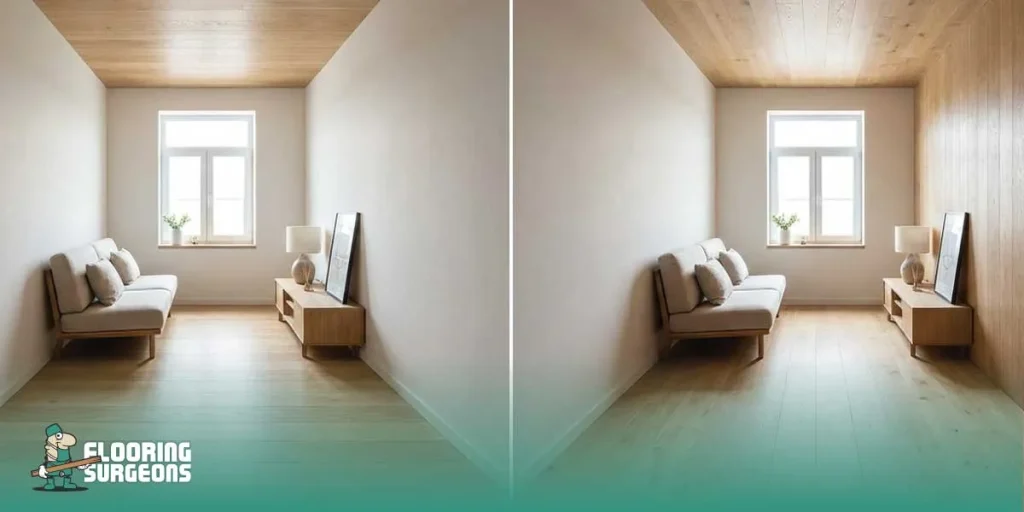
Lengthwise Installation
Running planks along the longest wall or main sightline encourages forward visual movement. That extended line reduces visual interruption and helps the room appear taller and larger.
This approach is especially effective in:
- Small apartments
- Narrow living rooms
- Open-plan areas with low ceilings
Lengthwise installation is often one of the simplest design decisions that supports a visual height illusion without increasing renovation costs.
Diagonal Layouts
Diagonal flooring can make a room feel wider by directing the eye toward the corners. In some cases, this added spaciousness supports the feeling of height.
However:
- Busy wood grain combined with diagonal lines can create visual noise
- Strong patterns may draw attention downward instead of upward
For low ceilings, subtle patterns work better when installed diagonally.
When Width Direction Makes Ceilings Feel Lower
Installing planks across the narrow dimension of a room can emphasise width over height. Repeated cross lines highlight the room’s shorter measurement, which may visually compress vertical space. This does not automatically make the width installation wrong. In large open areas, it can effectively unify zones. But in rooms with 8-foot ceilings, the layout should be chosen carefully to avoid reinforcing horizontal boundaries.
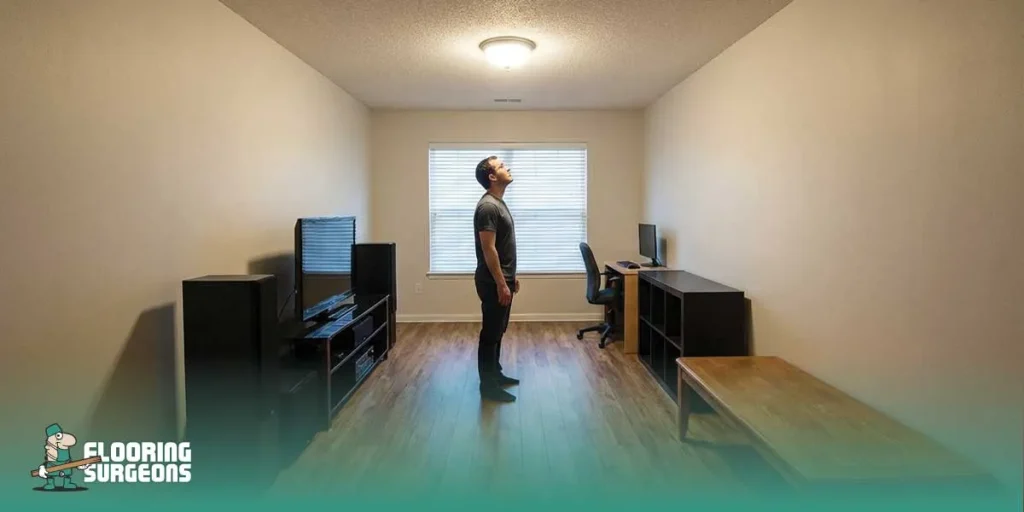
For Flooring Surgeons, plank direction is not just an installation detail. It is a structural design tool. When combined with the right flooring colour and controlled contrast, layout decisions can significantly influence how tall a room feels without modifying the ceiling itself. If the project is laminate, the same layout logic applies, and this guide on choosing the best laminate direction walks through common room scenarios
Glossy vs Matte Flooring — Which Enhances Height?
Reflective surfaces can help a room with low ceilings feel taller because they bounce light upward and reduce the “heavy” look at floor level. But the finish has to match the room’s natural light and the amount of visual texture in the space. High gloss can look great in photos, but in everyday use, it can highlight glare, dust, and reflections that make low ceilings feel busier rather than taller.
- Matte floors hide imperfections and feel calm, but they absorb more light, so the ceiling height illusion can be weaker in darker apartments.
- Satin or low gloss is often the sweet spot for making a room appear taller without looking shiny or showing every footprint. If you are comparing real-world sheen and maintenance, our notes on oiled vs lacquered finishes and how they reflect light can make the choice clearer.
- High gloss can work in minimal spaces, but in real homes, it can become distracting because it highlights glare, dust, and reflections that pull attention downward instead of lifting the room visually.
Natural light matters a lot. If the room has limited sunlight, a subtle reflective finish helps more. If the room already gets strong daylight, too much gloss can create hotspots that feel busy and reduce the clean vertical feel you want.
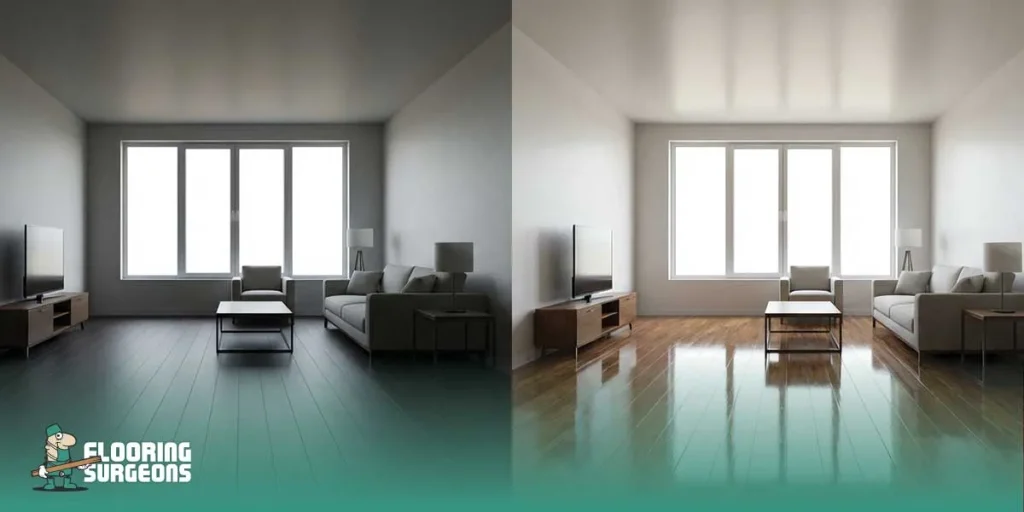
From a Flooring Surgeons point of view, finish selection is not only “style”. It is a performance choice, too. The right sheen level can improve room perception while also balancing maintenance, durability, and day-to-day wear.
The Relationship Between Flooring, Walls, and Ceiling Colour
Flooring rarely fixes low ceilings alone. The strongest results occur when floor, wall, and ceiling are treated as a single visual system, so the eye moves upward smoothly without abrupt stops.
Key principles that consistently make ceilings feel higher:
- Low contrast transitions: keep the floor-to-wall transition soft, not extreme
- Seamless colour flow: walls that are slightly lighter than the floor often feel taller than bright white walls over dark floors
- Baseboard contrast control: baseboards that strongly contrast with walls create a bold horizontal line that can lower perceived height. Because skirting creates a strong horizontal break, it helps to use skirting boards that do not visually cut the wall when ceilings are low.
- Continuous flooring across rooms: fewer breaks mean fewer visual “stops”, so the space reads taller and more open
This is where professional planning helps. Flooring Surgeons typically recommend choosing flooring with the wall palette already in mind, not as a separate decision, especially when the home has 8 ft to 9 ft ceilings, and you want every detail to support a taller look.
Quick Decision Table: Floor, Wall, and Trim Choices for Low Ceilings
| Design Choice | What It Does to Height Perception | Best Practice for 8 ft Ceilings | Common Mistakes to Avoid |
| Light flooring | Reduces visual weight, helps the room appear taller | Light oak, pale natural tones, soft neutrals | Overly cool light tones that clash with warm walls |
| Dark floors | Adds visual weight, can compress height if contrast is strong | Use mid-tone walls and controlled trim contrast | Dark floor with bright white walls and dark trim |
| Wall colour vs floor | Sets the “vertical flow” | Walls slightly lighter thanthe floor for smoother lift | High contrast wall colours that create hard edges |
| Ceiling color | Defines the perceived ceiling plane | Clean white or very light tone | Matching the ceiling to dark walls in low rooms |
| Baseboard contrast | Creates a strong horizontal boundary | Baseboards close to the wall colour | Thick, dark, high-contrast baseboards |
| Floor continuity | Improves openness and room perception | Same flooring across connected spaces | Frequent transitions at every doorway |
Mistakes That Make Ceilings Look Lower
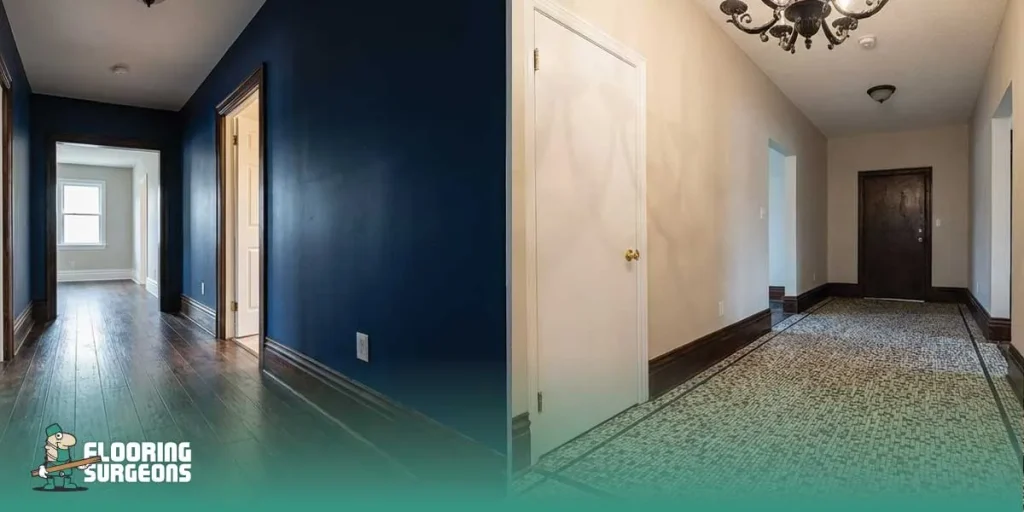
This is where many homeowners lose the height effect, even after investing in good materials. Most issues are not about the product; they are about contrast, pattern scale, and unnecessary visual breaks.
- Dark flooring plus high contrast walls: creates a strong visual base that makes the ceiling feel closer
- Busy small tile patterns: too many repeats and edges pull the eye down and make the room feel shorter. Plank width changes how busy the floor looks, and narrow vs wide planks and visual scale is an easy way to avoid making low ceilings feel more cramped.
- Frequent flooring transitions: switching materials or colours, room-to-room breaks the flow and reduces the ceiling height illusion. Frequent changes break visual flow, which is why keeping flooring consistent across rooms often makes a home feel taller and calmer.
- Heavy grout lines: strong grout contrast adds a grid effect that visually lowers the room, especially in small spaces
- Thick contrasting baseboards: oversized, dark, or sharply contrasting trim creates a bold horizontal line that cuts the wall height
If you want the room to appear taller, the practical goal is simple: fewer hard lines, less visual noise, and a lighter visual base. That is exactly why Flooring Surgeons focuses not only on installation quality, but also on helping clients avoid layout and finishing choices that accidentally make low ceilings feel even lower.
Best Flooring Choices for 8–9 Foot Ceilings
There is rarely a single best choice for every room, but there are consistent rules that improve room perception across typical 8 ft to 9 ft ceilings. Ceilings between 8 and 9 feet require careful flooring decisions. The wrong contrast, layout, or finish can make the space feel compressed. The right combination can significantly improve room perception without changing the structure.
Scenario-Based Flooring Guide
| Scenario | Recommended Flooring Strategy | Why It Helps Ceiling Perception | What to Avoid |
| Small apartment | Light to medium neutral planks, lengthwise installation, continuous flooring | Reduces visual weight and avoids horizontal breaks that make the room appear shorter | Dark floors with bright white walls, multiple flooring changes |
| Low natural light | Light oak or warm neutrals, satin finish for subtle reflectivity | Enhances upward light bounce and supports ceiling height illusion | Deep espresso tones, heavy matte finishes that absorb light |
| Open-plan living area | Same flooring across zones, consistent plank direction | Creates uninterrupted visual flow and improves flooring and room perception | Changing direction between areas, visible material transitions |
| Modern interior style | Medium natural wood tones, clean grain, low contrast trim | Maintains vertical balance without a heavy base contrast | Extreme black and white contrast in 8 ft ceiling rooms |
| Minimalist design | Uniform light planks, subtle texture, seamless transitions | Keeps the visual base calm, so the eye moves upward freely | Busy patterns, strong tonal variation, thick contrasting baseboards |
This structured approach makes flooring a strategic design tool rather than just a surface choice. When clients ask about the best flooring for 8-foot ceilings, the answer depends on context — light conditions, layout, and contrast control all work together.
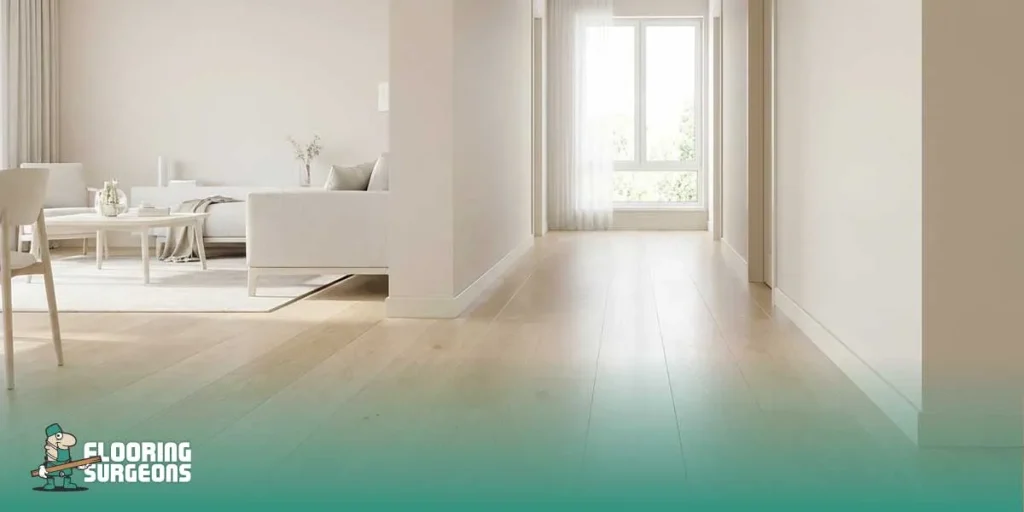
If You Want Ceilings to Look Taller, Follow These 5 Principles
- Choose light-to-medium-neutral flooring to reduce visual weight.
- Keep contrast between floor, walls, and trim low and controlled.
- Install planks along the room’s longest visual line.
- Use a satin or subtle reflective finish in low-light spaces.
- Maintain flooring continuity across connected areas whenever possible.
When these principles are applied together, flooring becomes a powerful design tool. With the right material, layout, and finish, even standard 8-foot ceilings can feel noticeably taller and more open without structural renovation.

Haniye Ayanmanesh
As an expert writer for Flooring Surgeons, I combine technical SEO knowledge with a practical understanding of flooring, producing content that helps users make confident decisions while supporting long-term organic growth.