

Choosing the right flooring for kids play areas directly determines how children move, play, and interact with space on a daily basis. The floor is the surface children touch the most, making it a key factor in physical development, behavior, and learning. Soft, supportive flooring encourages crawling, sitting, and active play, while unsafe or uncomfortable surfaces can limit movement and reduce confidence. Flooring also affects how children perceive space through texture, sound, and visual cues, shaping both sensory and cognitive experiences. By understanding how flooring affects child behavior and supports children and flooring interaction, parents, designers, and educators can create spaces that are safer, more engaging, and better suited to healthy child development.
Table of contents
Why Flooring Matters in Children’s Daily Experiences
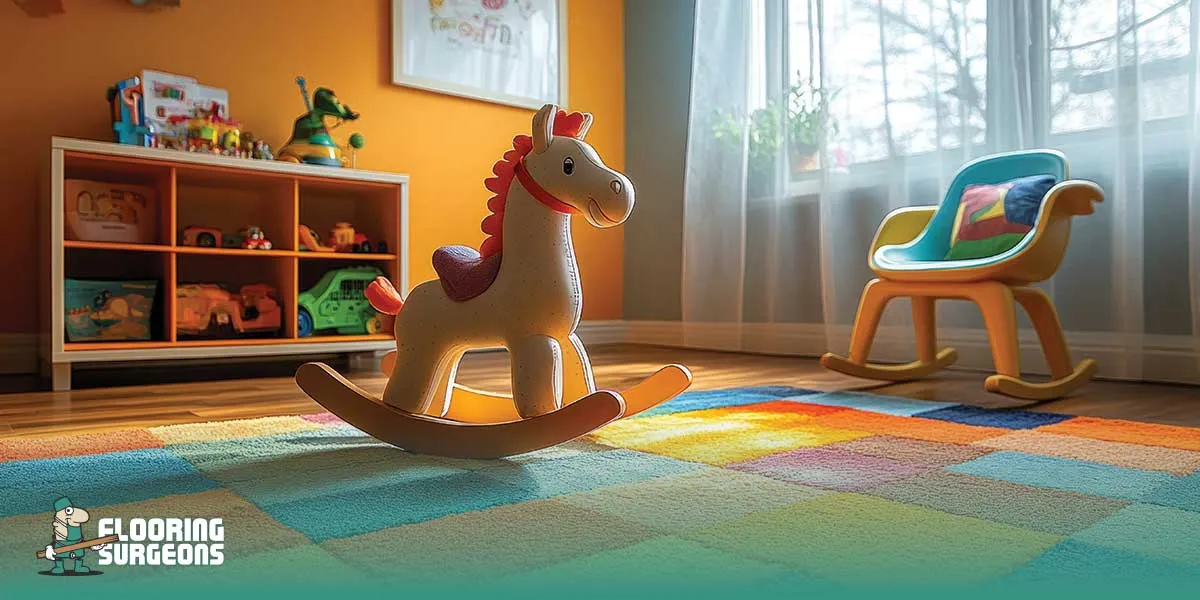
Children experience spaces differently from adults. They spend more time on the floor, touch it constantly, and use it as a base for play and learning. The texture, firmness, and warmth of a floor influence whether a child feels safe or hesitant in a space.
When flooring feels inviting, children are more likely to sit, move freely, and stay engaged for longer periods. This early comfort creates a strong foundation for exploration and interaction, which naturally leads into how movement develops.
How Flooring Supports Movement and Physical Confidence
The surface children move on directly affects balance, coordination, and physical confidence. Soft or cushioned floors encourage active play, while overly hard or slippery surfaces can limit movement and increase caution.
This is a key reason why understanding the impact of flooring on child development is essential. Floors that absorb shock and provide grip help children build motor skills through safe trial and error. As physical confidence grows, children become more open to sensory and cognitive engagement with their environment.
To create a safer and more supportive space for children’s growth, choosing the right flooring solution—such as Laminate Flooring can play an important role.
Sensory and Cognitive Interaction With Flooring
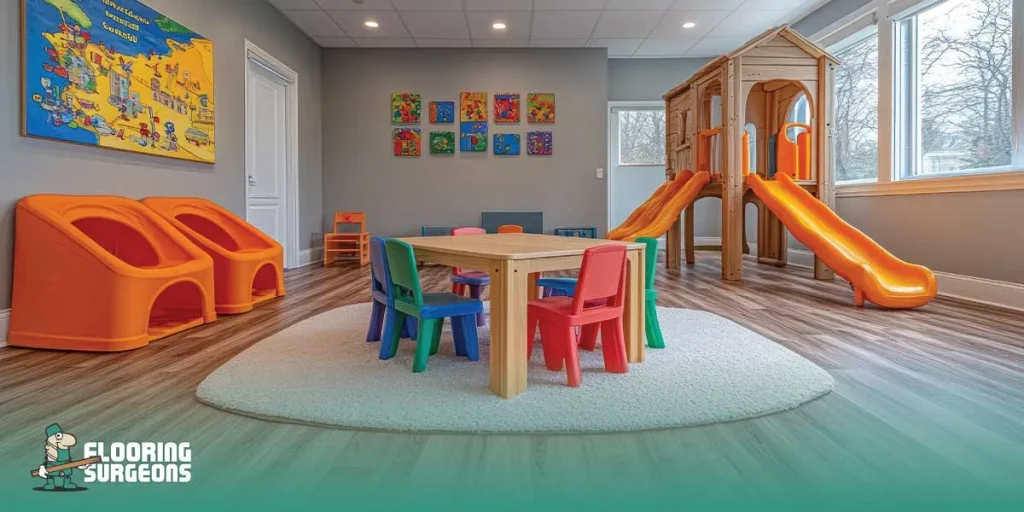
Flooring contributes to learning in subtle but powerful ways. Colors guide movement. Textures stimulate touch. Acoustic properties influence focus and calmness.
Sensory-friendly materials help children process their surroundings more effectively. This is especially important in early learning environments, where flooring can either support concentration or create distraction. Recognizing how flooring affects child behavior allows spaces to be designed for both play and learning without conflict.
To clarify how different flooring types influence children, the table below offers a practical comparison.
Flooring Types and Their Impact on Children
| Flooring Type | Comfort & Safety | Sensory Impact | Best Use Case |
| Vinyl | Cushioned and slip-resistant | Moderate sensory feedback | Playrooms and schools |
| Laminate | Firm and durable | Low sensory input | Bedrooms and quiet areas |
| Rubber | High shock absorption | Strong tactile feedback | Active play zones |
| Carpet | Warm and soft | High comfort, low noise | Reading and rest areas |
Choosing the Best Flooring for Children’s Spaces
Selecting the best flooring for children spaces requires balancing safety, durability, and sensory comfort. Materials should support movement without overwhelming the senses and remain easy to maintain over time.
Options like Luxury Vinyl Flooring offer durability and cushioning, making them ideal for active environments. Laminate flooring works well in calmer areas where stability and easy cleaning matter most. Flooring choices should always align with how children will actually use the space.
As needs change with age, flooring should adapt to support new behaviors and activities.
Flooring Choices for Different Stages of Childhood
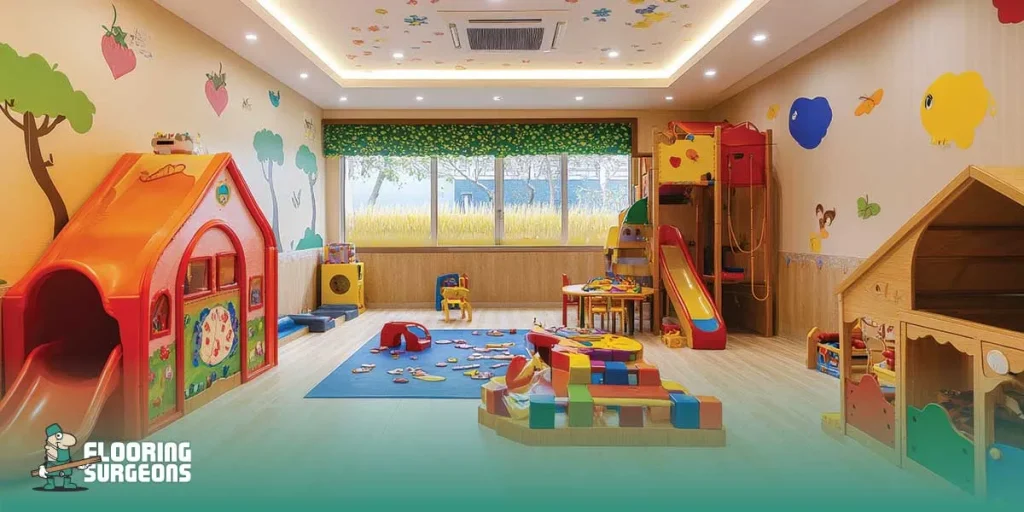
Children’s interaction with space evolves quickly. Babies need soft, safe surfaces, while older children require durable floors that support active play. Resources such as Best Flooring For a Baby’s Room help guide early decisions, while long-term planning ensures consistency as children grow.
Designing flexible spaces with adaptable flooring helps maintain comfort and usability over time without frequent replacements.
A Thoughtful Approach to Child-Centered Flooring
At Flooring Surgeons, flooring is viewed as part of the child’s experience, not just a finishing material. By understanding how children interact with space, flooring decisions become intentional, supportive, and development-focused.
When flooring aligns with movement, sensory needs, and safety, spaces become places where children feel confident, curious, and ready to engage.

Mina Asgari
I’m an SEO Specialist and Content Strategist focused on sustainable business growth. I design data-driven content strategies by deeply analyzing user intent, search behavior, and SEO best practices, ensuring every piece of content serves a clear purpose for both users and search engines.