

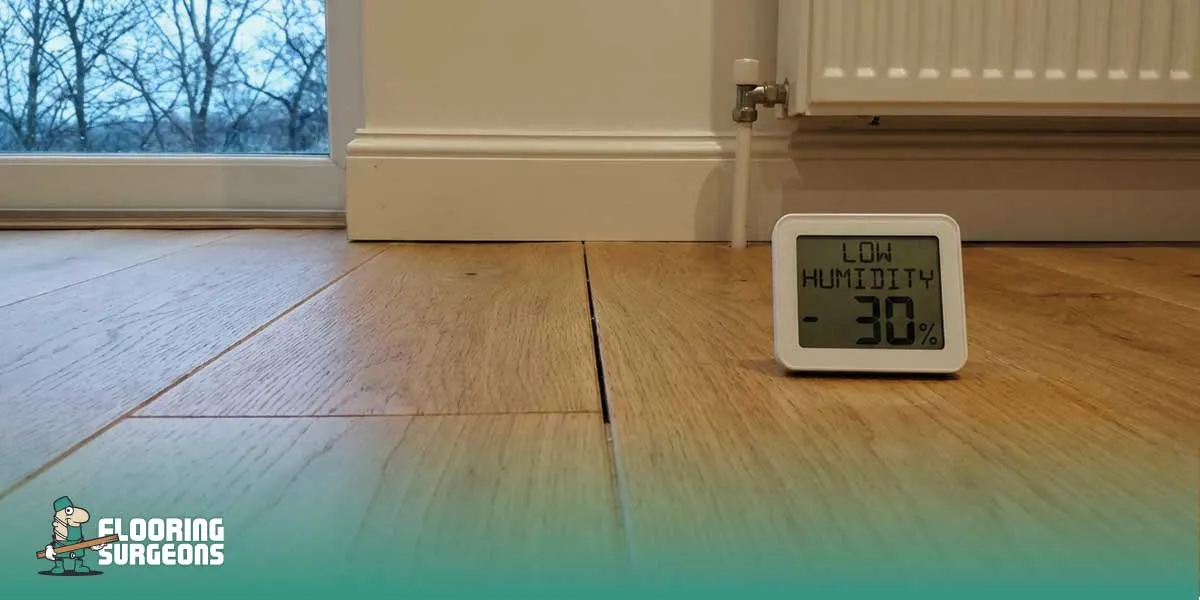
Seasonal expansion and shrinkage in flooring is normal and does not mean the floor is failing. Most flooring materials naturally expand during warmer and more humid seasons and shrink when indoor air becomes colder and drier. This movement is a response to changes in humidity, not an automatic sign of damage, poor quality, or incorrect product choice.
What often causes confusion is timing. Gaps that appear in winter or tighter boards in summer lead many homeowners to assume something has gone wrong. In reality, this is usually the floor reacting to seasonal conditions rather than breaking down. When flooring is installed correctly, with proper expansion gaps and enough time to acclimate, it is designed to tolerate this movement safely.
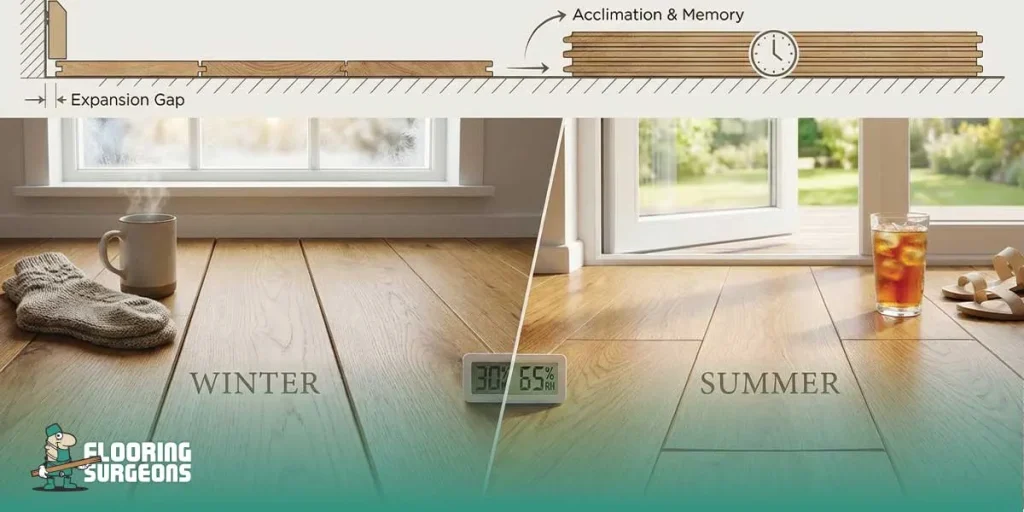
Another critical point is that flooring does not adjust instantly. It has a climate memory, meaning it responds gradually as indoor conditions change. Problems are more likely when installation is rushed, expansion tolerance is ignored, or indoor humidity swings too aggressively. Understanding this behaviour helps you know when movement is normal, when it is seasonal, and when it may actually signal an installation issue. The sections below explain how and why flooring moves throughout the year, and how to respond correctly instead of assuming the worst.
Table of contents
What Seasonal Expansion and Shrinkage in Flooring Really Means
Seasonal expansion and shrinkage are not random movements. It is a predictable physical response to how flooring materials interact with moisture in the air over time. Understanding this behaviour helps you recognise patterns instead of reacting to every visible change as a fault.
Why do floors naturally move throughout the year?
Flooring materials are not sealed systems. Even after installation, they continue to exchange moisture with their environment. When indoor air becomes more humid, flooring absorbs moisture and expands. When the air dries out, moisture is released and the floor contracts. This cycle repeats every year, regardless of how well the floor is made.
What matters is not whether a floor moves, but whether it has enough tolerance to move safely. Floors that are installed with proper spacing and moisture planning are designed to accommodate this seasonal behaviour without damage.
Key idea:
- Flooring reacts to indoor air conditions, not calendar dates
- Movement follows humidity trends, not sudden temperature changes.
- Seasonal change is gradual, not immediate.
Expansion vs Shrinkage explained simply.
Expansion and shrinkage are opposite responses to the same trigger. Expansion occurs when flooring takes in moisture and grows slightly. Shrinkage happens when moisture leaves the material, and it contracts. Neither is a defect on its own. The problem starts only when movement is restricted or exaggerated. Floors that are tightly installed, poorly acclimated, or exposed to extreme indoor swings cannot adapt smoothly. In those cases, normal movement turns into visible issues.
Simple distinction:
- Expansion needs space to happen safely
- Shrinkage needs flexibility in joints and edges.
- Damage appears when movement is blocked, not when it occurs
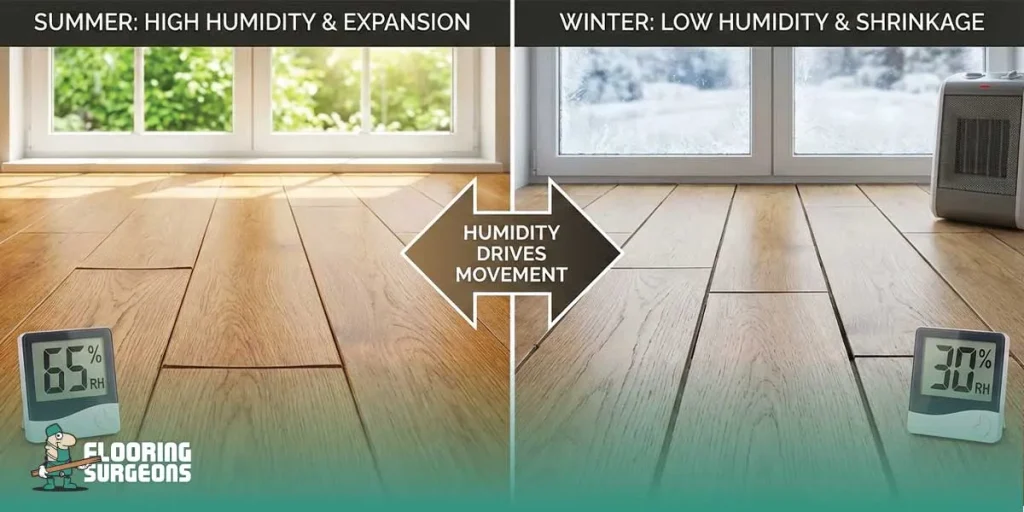
How Temperature and Humidity Affect Flooring Movement
Flooring movement is influenced far more by humidity than by temperature itself. While temperature changes are noticeable, they mainly matter because they affect indoor moisture levels. Flooring reacts to the amount of moisture in the air, not simply to how warm or cold a room feels.
Key points to understand:
- Humidity causes flooring materials to absorb or release moisture, which leads to expansion or shrinkage
- Temperature only becomes a factor when it changes indoor humidity levels.
- Dry indoor air, common in winter, increases shrinkage and visible gaps.
- Higher humidity, common in summer, increases expansion and tighter boards.
Indoor climate changes play a significant role because flooring lives inside, not outdoors. Heating systems, ventilation habits, and insulation quality all influence how stable indoor humidity remains throughout the year. Floors exposed to frequent humidity swings move more, even if the outdoor climate is relatively stable. The most important takeaway is that flooring responds to the consistency of indoor conditions, not short-term weather changes. Stable humidity leads to controlled movement, while fluctuating indoor air causes exaggerated seasonal reactions.
How Different Flooring Types React to Seasonal Changes
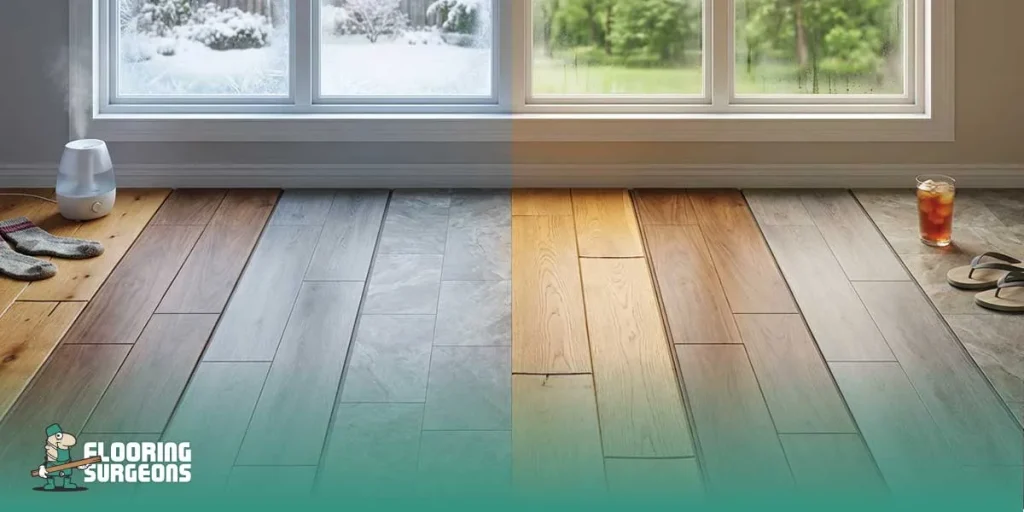
Different flooring materials do not react to seasonal expansion and shrinkage in the same way. The key difference lies in how much each material absorbs or resists moisture, and how much tolerance it has for natural movement. Understanding this prevents incorrect comparisons and unrealistic expectations.
Hardwood and engineered wood
Solid hardwood is the most sensitive to seasonal change because it is a natural material that absorbs and releases moisture easily. Expansion and shrinkage are normal, especially across wider boards. Engineered wood is more stable because its layered construction limits movement, but it does not eliminate it completely.
Practical implications:
- Hardwood shows seasonal gaps and tightening more clearly
- Engineered wood moves less but still requires expansion space.
- Installation tolerance is critical for both
For homeowners concerned about seasonal movement, engineered wood flooring often offers a more balanced response to humidity changes than solid wood.
Laminate flooring
Laminate flooring reacts less to humidity than natural wood, but is still affected by moisture through its core. Seasonal movement is usually more controlled, but poor expansion gaps or moisture exposure can quickly cause issues such as lifting or separation.
Practical implications:
- Seasonal movement is usually subtle
- Moisture protection and expansion gaps are essential.
- Problems often come from installation errors, not material limits.
Luxury vinyl and rigid core floors
Luxury vinyl and rigid core floors are the most dimensionally stable. They are far less affected by humidity changes, making seasonal movement minimal. However, they are not immune to problems if installed without proper spacing or exposed to extreme temperature changes.
Practical implications:
- Minimal expansion and shrinkage
- Best suited for environments with fluctuating conditions
- Still requires correct installation tolerances.
Why do some floors move more than others?
The amount a floor moves depends on three factors: material composition, moisture sensitivity, and installation tolerance. Natural materials move more because they interact directly with humidity. Composite and synthetic materials are engineered to resist that interaction. In most cases, visible problems occur not because a floor moves, but because it was not allowed to move.
Seasonal Movement Comparison Table
| Flooring Type | Reaction to Humidity | Level of Seasonal Movement | Risk If Installed Incorrectly |
| Solid hardwood | High | High | Very high |
| Engineered wood | Medium | Moderate | High |
| Laminate flooring | Low to medium | Low to moderate | Moderate |
| Luxury vinyl / rigid core | Very low | Minimal | Low to moderate |
Seasonal Flooring Changes Room by Room and Season by Season
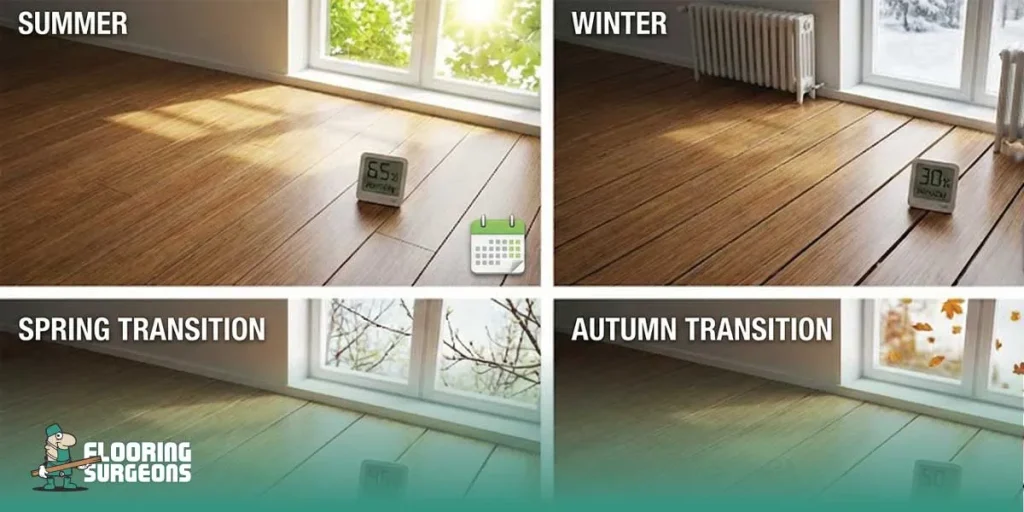
Seasonal flooring movement follows predictable patterns that change with indoor conditions and room usage. Understanding these patterns helps you recognise what is normal in each season and why some rooms show changes more clearly than others.
What happens to floors in summer
In summer, higher indoor humidity causes flooring to absorb moisture and expand. This effect is most potent in rooms that receive more sunlight or have limited ventilation.
Typical summer behaviour:
- Boards feel tighter with reduced gaps
- Expansion pressure increases near walls and fixed objects.
- Poor ventilation can exaggerate movement.
What happens to floors in winter
Winter heating dries indoor air, causing flooring to release moisture and shrink. This often makes movement more visible, even though it is usually harmless.
Typical winter behaviour:
- Small gaps appear between boards
- Floors may feel slightly looser underfoot.
- Movement is more noticeable in centrally heated rooms.
Why are spring and autumn transition periods
Spring and autumn are adjustment phases rather than problem periods. Flooring gradually adapts as indoor humidity shifts from one extreme to the other.
Key characteristics:
- Movement stabilises rather than reverses instantly
- Floors respond slowly, not overnight.
- Temporary changes usually settle without intervention.
Seasonal Flooring Behaviour Table
| Season | Indoor Condition | Typical Floor Reaction | Most Affected Rooms |
| Summer | Higher humidity | Expansion and tighter boards | Sunlit rooms, kitchens |
| Winter | Dry heated air | Shrinkage and visible gaps | Living rooms, bedrooms |
| Spring | Rising humidity | Gradual adjustment | Most rooms evenly |
| Autumn | Falling humidity | Slow contraction | Less ventilated areas |
Normal Seasonal Movement vs Signs of a Real Flooring Problem
Not all visible changes in flooring mean something is wrong. In fact, most seasonal movement is harmless and expected. Small gaps that appear during dry months, boards feeling tighter in humid periods, or slight changes in how the floor sits are usually normal responses to indoor climate shifts. These changes appear gradually and often improve on their own as conditions stabilise.
Real problems look and behave differently. Damage usually appears suddenly, worsens quickly, or remains visible regardless of the season. When flooring is not given enough space to move, natural expansion turns into pressure, and that pressure has to go somewhere. This is when buckling, lifting, or cracking begins. Shrinkage-related issues become a concern when gaps grow unevenly, wide, or remain long after humidity levels return to normal. Small gaps that appear during winter are often seasonal, but understanding when and how to fix gaps in hardwood floors helps avoid unnecessary repairs.
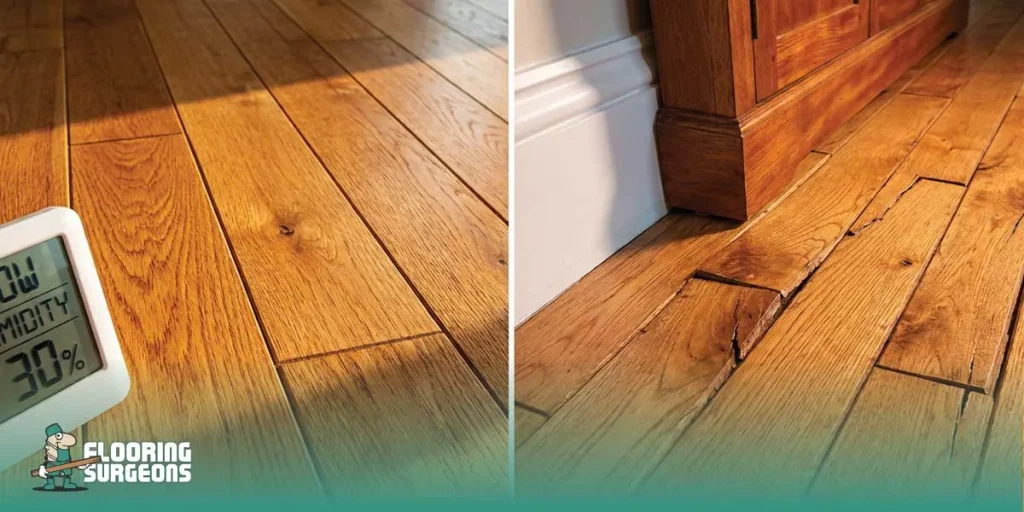
The most common reason seasonal movement turns into damage is not the material, but the installation. Floors that are installed too tightly, without proper expansion gaps, or without enough acclimation time, cannot respond smoothly to seasonal change. Instead of moving gently, they resist movement until stress builds up.
Typical warning signs include:
- Sudden lifting or buckling rather than gradual movement
- Gaps that continue to widen instead of stabilising
- Floor movement worsens regardless of the season.
- Noise, tension, or visible stress near walls and fixed points
Many issues are made worse by everyday habits. Overheating rooms in winter, poor ventilation, blocking expansion gaps with heavy furniture, or reacting too quickly with repairs often intensify a problem rather than solving it. In most cases, the more thoughtful response is observation and indoor climate control, not immediate intervention.
The key difference is simple. Normal seasonal movement follows a pattern and settles over time. Real flooring problems escalate, spread, and ignore the seasons altogether.
How to Minimise Seasonal Flooring Issues in Everyday Living
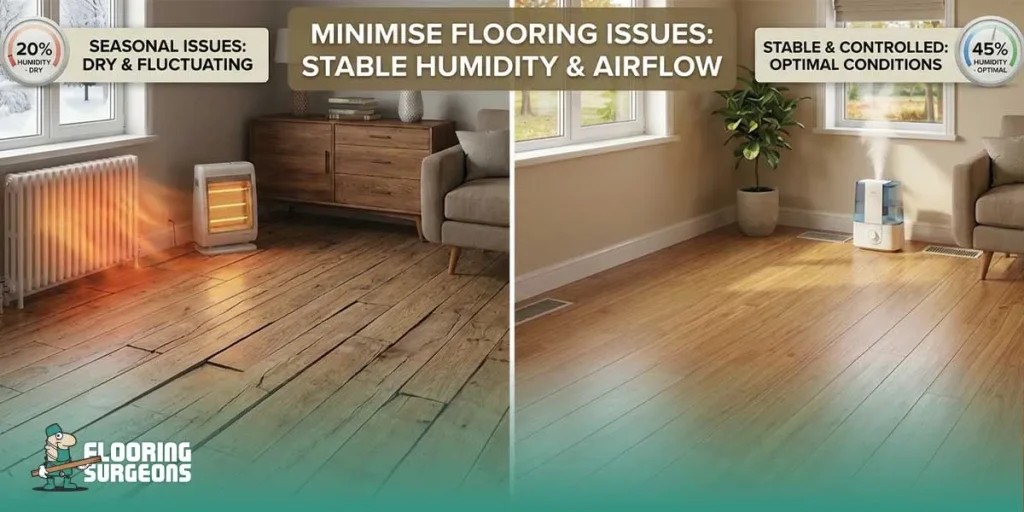
Most seasonal flooring issues are not solved by repairs, but by managing the indoor environment consistently. Small, steady habits make a much bigger difference than reactive fixes.
Managing indoor humidity
- Keep indoor humidity within a stable mid-range rather than letting it swing seasonally.
- Use humidifiers in winter and dehumidifiers in summer when needed.
- Avoid extreme dryness or prolonged damp conditions.
Heating and ventilation habits
- Heat rooms gradually instead of sudden temperature increases
- Allow consistent airflow, especially in rooms with direct sunlight or limited ventilation.
- Avoid blocking vents or airflow paths near the flooring edges
Simple steps homeowners often overlook
- Do not cover expansion gaps with heavy furniture or tight fittings.
- Allow flooring time to settle after seasonal changes before reacting.
- Monitor problem areas instead of assuming the entire floor is failing.
The goal is not to stop flooring movement, but to keep it controlled. Floors that experience stable indoor conditions move gently and predictably. Floors exposed to constant environmental swings are the ones that develop visible and unnecessary issues.
Final Thoughts on Seasonal Flooring Movement
Seasonal flooring movement is not a defect. Movement is not failure. Floors are living systems that respond to their environment, and some level of expansion and shrinkage is part of normal behaviour. Many problems are misdiagnosed. Blame the season, not the floor. Changes in humidity and indoor climate are usually responsible for visible movement, not poor materials or manufacturing faults. Where issues do arise, installation is often the deciding factor. Installation tolerance matters. Floors that are rushed, tightly fitted, or poorly acclimated are far less able to handle seasonal change than those installed with care and foresight.
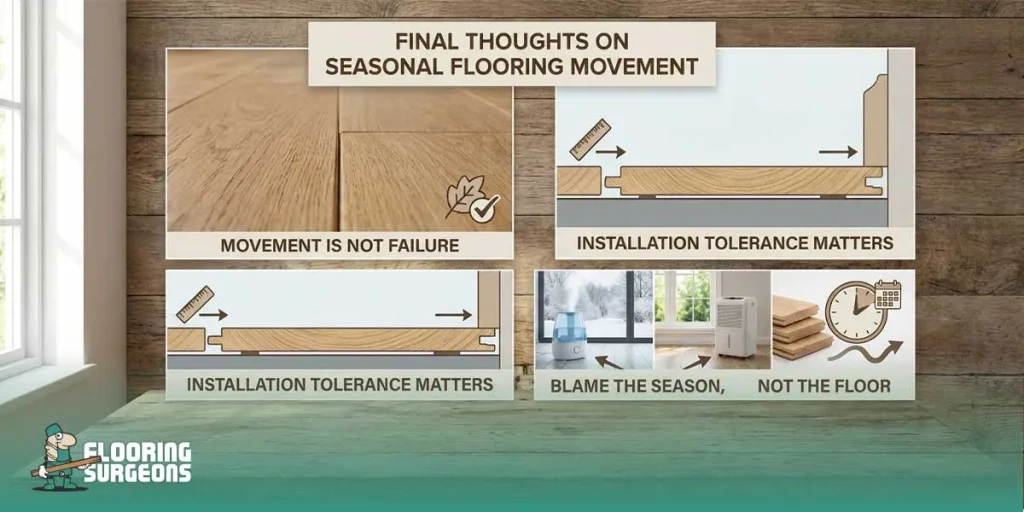
It is also important to remember that floors do not respond instantly. Flooring has a climate memory. It adjusts gradually as conditions change, not overnight. Reacting too quickly often causes more harm than allowing time for natural stabilisation. The most reliable approach is simple. Understand what normal movement looks like, maintain a stable indoor environment, and judge changes over time rather than in isolation. When flooring is allowed to behave as intended, seasonal movement becomes manageable, predictable, and rarely a real problem. For guidance based on real installations and long-term performance, resources from Flooring Surgeons can help clarify what seasonal movement is normal and what requires attention.

Haniye Ayanmanesh
As an expert writer for Flooring Surgeons, I combine technical SEO knowledge with a practical understanding of flooring, producing content that helps users make confident decisions while supporting long-term organic growth.