

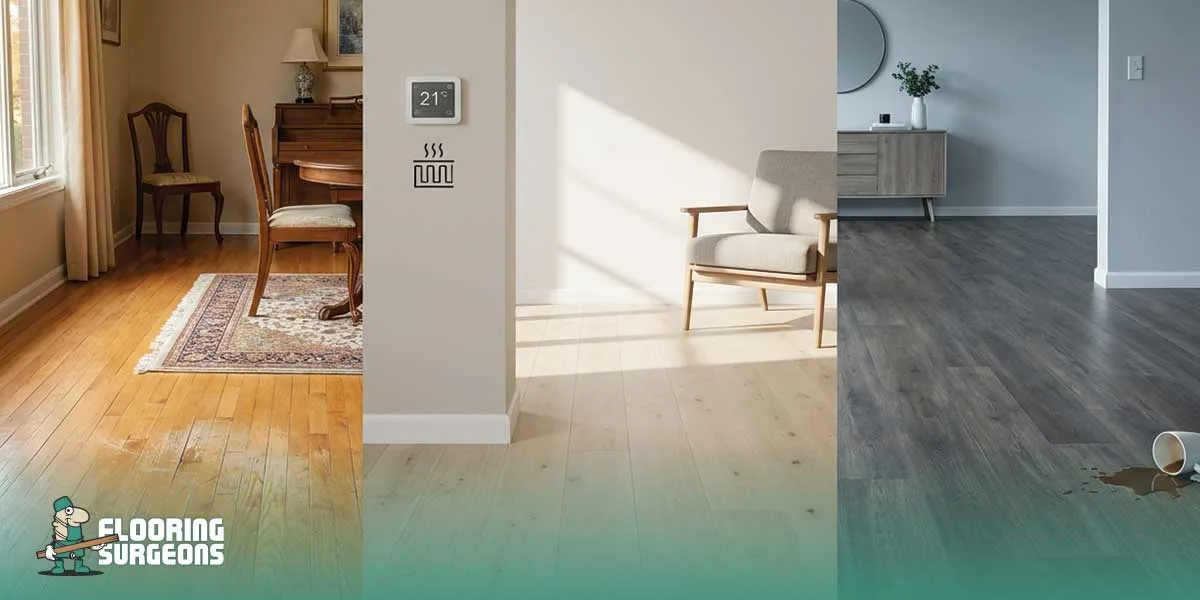
If you want a clear answer straight away, here it is: Wooden flooring can last anywhere from 10 to over 50 years, but only when the right type is chosen for the right conditions. In real homes, longevity depends far more on floor type, stability, installation quality, and daily use than on the material name alone.
Solid wood flooring can last for decades in stable, well-controlled environments, but it is also the most sensitive to moisture, temperature changes, and movement. Engineered wood flooring typically offers a more predictable and reliable lifespan in modern homes because it is designed to handle seasonal changes, underfloor heating, and everyday wear more effectively. Laminate and wood-effect alternatives usually last less time, but they can outperform real wood in specific situations where durability and low maintenance matter more than refinishing potential.
This is where many homeowners get misled. Lifespan figures are often quoted under ideal conditions that rarely exist in real houses. The question is not how long wooden flooring can last in theory, but how long it will last in your home, with your heating system, foot traffic, and maintenance habits.

In this guide, we break down how long different types of wooden flooring actually last in real living conditions. You will see what shortens or extends lifespan, which options age well over time, and how to choose a floor that still performs years down the line, not just in the first few months after installation.
Table of contents
Lifespan of Different Types of Wooden Flooring
To understand how material, structure, and construction affect durability and lifespan, it helps to see the different types of wooden flooring explained in our guide on flooring options. Before looking at numbers, one thing needs to be clear. The lifespan of wooden flooring is not defined by how long the material can exist, but by how reliably it performs in everyday living conditions. Below is a realistic comparison based on typical homes, not ideal environments. This difference in performance becomes clearer when you understand the solid vs engineered wood differences in structure and stability.
Quick Comparison Table: Wooden Flooring Lifespan in Real Homes
| Flooring Type | Typical Lifespan (Real Homes) | What Shortens Its Life | What Helps It Last |
| Solid wood flooring | 25–50+ years (only in stable conditions) | Moisture changes, underfloor heating, and poor subfloors | Stable humidity, professional installation, and regular maintenance |
| Engineered wood flooring | 20–40 years | Thin wear layer, poor installation | Correct specification, stable core, quality finish |
| Laminate flooring | 10–20 years | Water exposure, surface damage | Dry environments, moderate foot traffic |
This table reflects how these floors perform in real homes, not how long they could last under perfect conditions.
How long does solid wood flooring last
Solid wood flooring has the longest theoretical lifespan because it can be sanded and refinished multiple times. In homes with consistent humidity, no underfloor heating, and well-prepared subfloors, it can last several decades. However, this longevity is highly conditional. Solid boards expand and contract significantly with changes in temperature and moisture. In many modern homes, especially those with open-plan layouts or heating systems that fluctuate seasonally, this movement shortens lifespan by causing gaps, cupping, or warping.
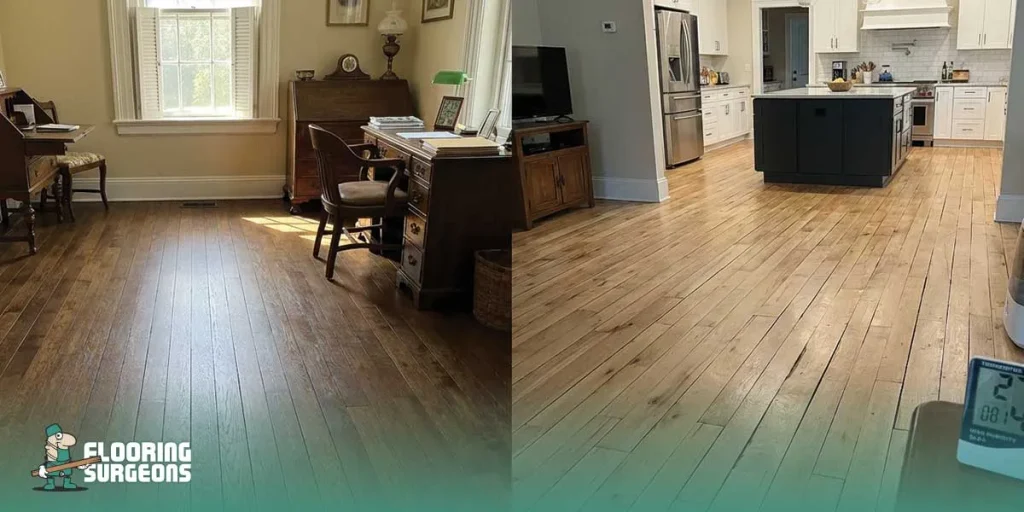
In practice, solid wood lasts longest only when the environment is controlled. Without that control, its lifespan becomes unpredictable rather than impressive.
How long does engineered wood flooring last
Engineered wood flooring offers a more predictable lifespan in modern homes. Its layered construction reduces movement, making it better suited to seasonal changes, underfloor heating, and everyday use. While it cannot always be refinished as many times as solid wood, this limitation is often outweighed by its stability. In real conditions, fewer structural problems mean fewer early failures, repairs, or replacements.
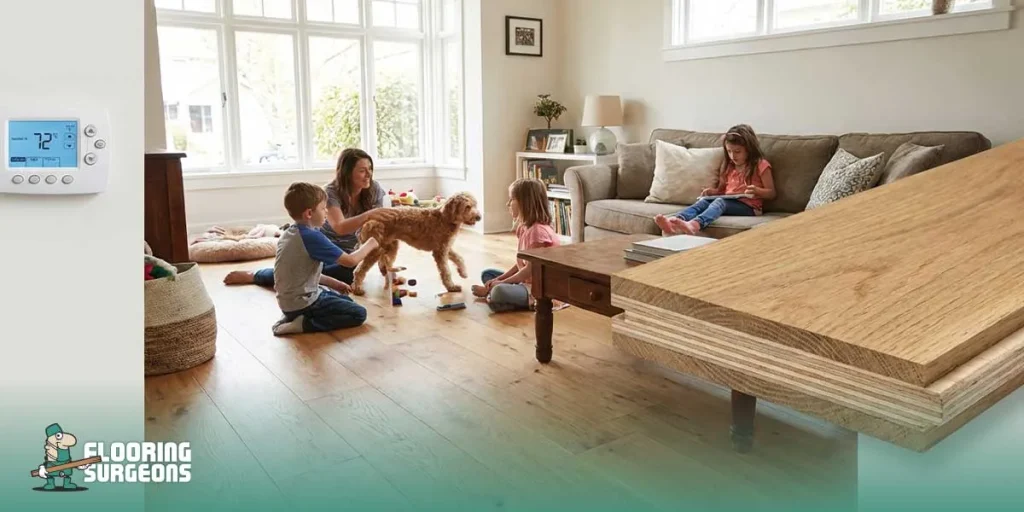
For most households, engineered wood delivers a long, reliable service life that aligns more closely with how homes are actually lived in, rather than how floors are expected to behave in theory.
How long does laminate flooring last
Laminate flooring has a shorter lifespan because it cannot be refinished. Once the surface layer is damaged or worn, replacement is the only option. That said, laminate can perform well in dry, low-risk environments where moisture exposure is limited and expectations are realistic. In these situations, it may last longer than poorly specified real wood flooring.
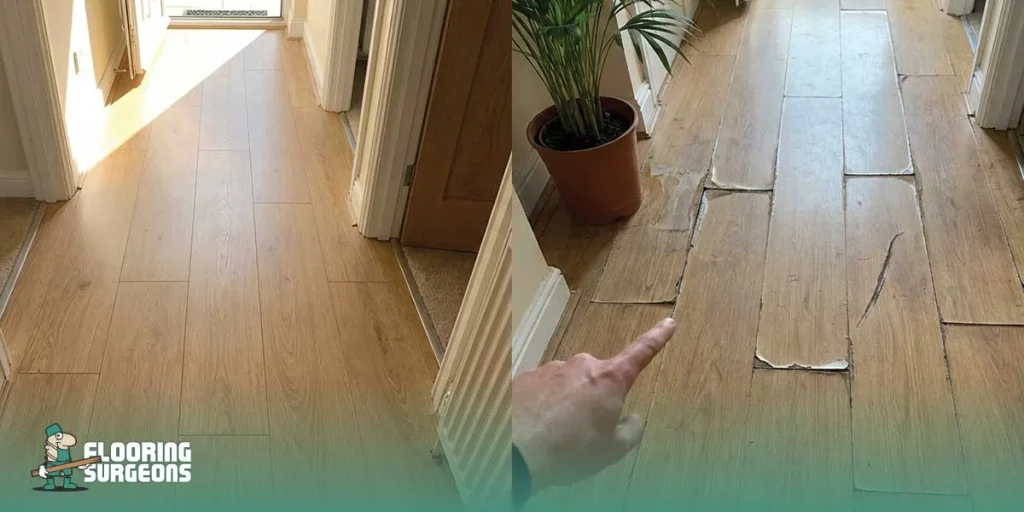
Laminate longevity depends less on maintenance and more on avoiding damage. It is durable up to a point, but once that point is passed, the lifespan ends abruptly rather than gradually.
What this comparison really shows
The longest-lasting wooden floor is not always the one with the highest theoretical lifespan. It is the one that remains stable, resists everyday stress, and matches the conditions of the home it is installed in. Solid wood can last the longest, but only when conditions allow it. Engineered wood often lasts longer in practice because it fails less frequently. Laminate lasts the least, but it can still be a sensible option when durability and low maintenance matter more than long-term refinishing. This distinction is critical when choosing flooring based on real-life performance rather than marketing claims.
What Really Affects How Long Wooden Flooring Lasts
The lifespan of wooden flooring is rarely shortened by the material alone. In most cases, floors fail early because one or more practical conditions were overlooked during selection or installation. These factors apply across all types of wooden flooring and explain why the same product can last decades in one home and struggle in another.
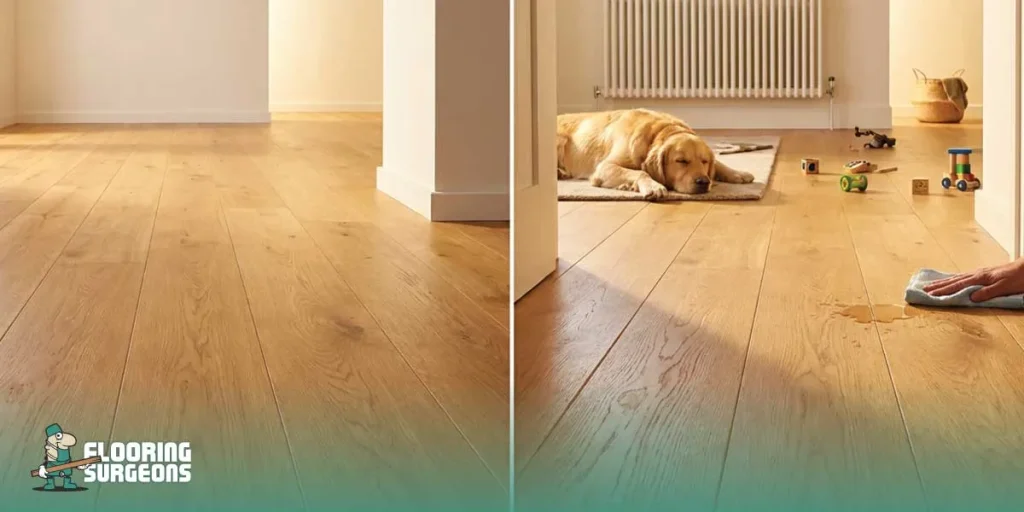
The most important factors that actually determine how long wooden flooring lasts are:
- Subfloor condition and moisture levels
Uneven or damp subfloors create stress across the boards from day one. Excess moisture leads to expansion, movement, and long-term instability, while poor subfloor preparation increases noise, wear, and structural failure regardless of flooring type. - Foot traffic and how the room is used
A floor in a quiet bedroom ages very differently from one in a hallway or open-plan living space. Heavy foot traffic, pets, and frequent furniture movement accelerate surface wear and expose weak points in both material and installation. - Installation quality
Even high-quality flooring can fail prematurely if expansion gaps, fixing methods, or adhesive systems are incorrect. Poor installation often shortens lifespan more than daily use ever will. - Maintenance expectations versus reality
Some flooring types demand regular care, humidity control, or refinishing to reach their expected lifespan. When real-life maintenance falls short of those expectations, longevity drops quickly. - Climate, heating systems, and seasonal change
In UK homes, central heating, underfloor heating, and seasonal humidity shifts place constant stress on wooden floors. Flooring that cannot accommodate these changes tends to move, gap, or degrade faster over time.
Taken together, these factors explain why lifespan estimates vary so widely and why choosing flooring based on material alone often leads to disappointment. Longevity is not about the label on the product, but about how well the floor fits the conditions it will live in every day.
Which Type of Wooden Flooring Lasts the Longest for Your Situation?
Longevity is situational. The flooring type that lasts the longest is not universal; it is the one that best matches how the home is lived in, heated, and maintained. Below are the most reliable long-term choices based on real usage scenarios.

- For family homes
Best long-term choice: Engineered wood flooring
Family homes introduce constant movement, variable humidity, and daily wear from children, pets, and furniture. Engineered wood lasts longest in these conditions because its layered construction reduces expansion and contraction while still offering a real wood surface. It absorbs everyday stress more evenly, which prevents early structural issues that shorten lifespan.
Why this works:
Stability matters more than refinishing potential in active homes. A floor that moves less lasts longer in practice, even if it can be sanded fewer times.
- For buy-to-let properties
Best long-term choice: Engineered wood or high-quality laminate (depending on budget and turnover)
In rental properties, longevity is defined by resistance to misuse, ease of repair, and predictable performance across multiple tenants. Engineered wood offers durability with resale appeal, while laminate can last longer overall if replacement cost and tenant damage are the primary concerns.

Why this works:
The longest-lasting floor in rentals is the one that minimises intervention. Floors that demand careful maintenance or climate control rarely survive multiple tenancies intact.
- For underfloor heating
Best long-term choice: Engineered wood flooring (correctly specified)
Underfloor heating accelerates expansion and contraction cycles. Solid wood struggles in these conditions and often fails early. Engineered wood is designed to accommodate temperature changes more evenly, which significantly extends its usable lifespan when paired with proper acclimation and installation.
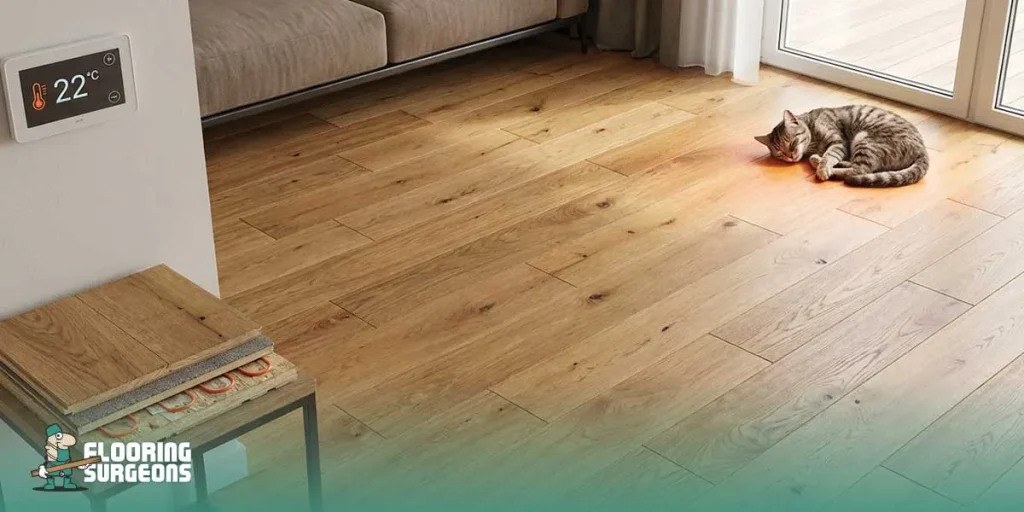
Why this works:
Longevity here is about compatibility. Flooring that resists thermal stress will always outlast materials that fight against it.
- For low-maintenance living
Best long-term choice: Laminate or wood-effect alternatives
If minimal upkeep is the priority, longevity should be measured by how long the floor remains acceptable without intervention. Laminate cannot be refinished, but it also does not demand sanding, oiling, or humidity management. In stable, dry environments, it often outlasts poorly maintained real wood.
Why this works:
A floor that fits your maintenance habits will always last longer than one that relies on care you realistically will not provide.
The wooden flooring that lasts the longest is not the one with the highest theoretical lifespan, but the one that best matches the way the home is used. Stability, compatibility, and realistic maintenance expectations consistently matter more than tradition or material prestige. Choosing with this framework avoids early failure and long-term regret.
Does Maintenance Really Extend the Life of Wooden Flooring?
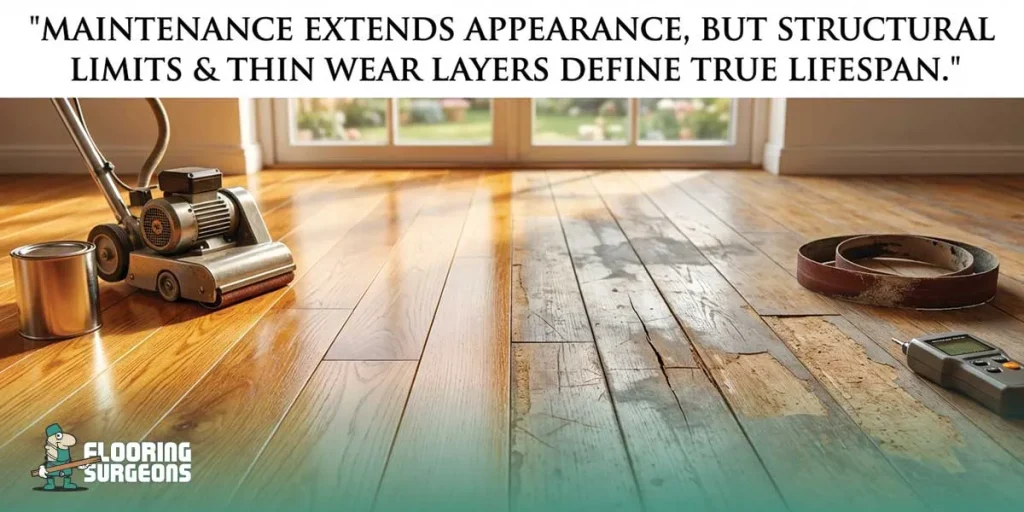
Maintenance can extend the life of wooden flooring, but only within precise limits. It preserves appearance and delays surface wear, but it does not fix structural problems or poor material choices. Understanding where maintenance helps and where it stops mattering prevents wasted time and money.
- The reality of sanding
Sanding extends lifespan only when there is enough material to work with and when the floor is structurally stable. It improves surface appearance, not underlying movement, moisture damage, or installation faults. Once those issues appear, sanding becomes cosmetic rather than corrective. - Limits of refinishing
Refinishing is not unlimited. Solid wood can be refinished several times, while engineered wood depends on the wear layer thickness. Each refinish removes material, and once that layer is gone, the floor cannot be renewed further. Refinishing delays replacement, but it does not make a floor last forever. - When maintenance stops being worth it
Maintenance loses value when costs approach replacement or when problems return shortly after refinishing. Repeated sanding on unstable floors often shortens lifespan rather than extending it. At this point, replacement is usually the more durable long-term decision.
Maintenance supports longevity, but it cannot compensate for poor compatibility with the home or unrealistic expectations. Floors last longest when maintenance aligns with the floor’s design and the way the space is actually used.
Is Longer-Lasting Wooden Flooring Always a Better Value?
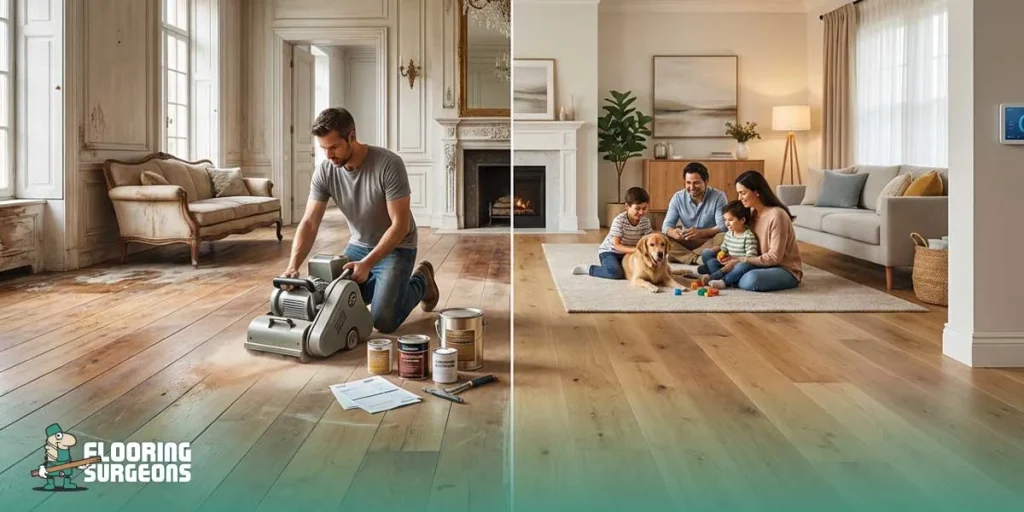
A longer lifespan does not automatically mean better value. Real value comes from how much a floor costs over its usable life, not how long it could theoretically last under perfect conditions.
- Upfront cost
Floors with the most extended theoretical lifespan usually have the highest initial cost. Solid wood, for example, demands a significant upfront investment, even before installation and environmental preparation are considered. - Long-term cost
Ongoing costs often determine real value. Maintenance, sanding, refinishing, climate control, and repairs add up over time. A floor that lasts slightly less but requires minimal intervention can cost far less overall. - Replacement cycles
Some floors last longer because they are repaired repeatedly, not because they remain trouble-free. Others are replaced once, but only after many years of stable use. In many homes, fewer problems over a shorter cycle deliver better value than constant upkeep over decades.
The best value flooring is not the one that lasts the longest in theory, but the one that delivers the most reliable performance for the least total cost over its lifetime.
Common Myths About Wooden Flooring Lifespan
Misunderstandings about wooden flooring longevity often lead to poor decisions. These myths appear repeatedly in real homes and almost always result in disappointment.
- “Solid wood lasts forever”
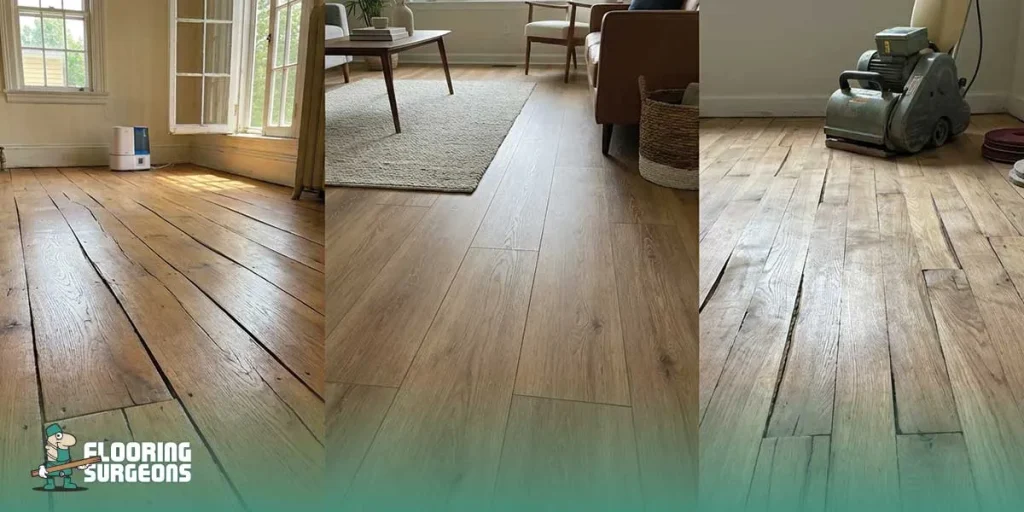
Solid wood can last a very long time, but only in stable, carefully controlled environments. In homes with fluctuating humidity, underfloor heating, or open-plan layouts, solid wood often fails earlier than expected. - “Laminate flooring is always short-term”
Laminate does not last forever, but in dry, low-risk environments, it can outperform poorly chosen real wood. Longevity depends on suitability, not material prestige. - “Sanding fixes everything”
Sanding improves appearance, not structure. If a floor moves, cups, or reacts badly to moisture, sanding does not solve the underlying problem. Repeated sanding can even shorten the lifespan when structural issues remain.
Longevity is not about labels or assumptions. It is about compatibility between the flooring, the home, and how the space is actually used.
How to Choose Wooden Flooring That You Won’t Regret in 10 Years
Choosing wooden flooring is not about finding the longest-lasting material on paper. It is about selecting the option that will still perform well under your home’s real conditions years from now. Most long-term regrets come from overestimating how stable a home environment is or underestimating how demanding certain flooring types can be. The safest way to avoid regret is to prioritise predictability over potential. Floors that move less, tolerate seasonal change, and align with realistic maintenance habits consistently outperform more “premium” options that rely on ideal conditions. Stability, correct installation, and compatibility with heating systems matter far more than theoretical lifespan or tradition.

At Flooring Surgeons, we see the same pattern repeatedly. Floors that fail early are rarely poor-quality products. They are usually the result of choosing a flooring type that does not match how the home is actually used. When flooring is selected based on real conditions rather than assumptions, longevity stops being uncertain and becomes predictable. If you want a floor you will not regret in ten years, choose the option that remains stable, manageable, and suited to your lifestyle, not the one that simply sounds like it should last the longest.

Haniye Ayanmanesh
As an expert writer for Flooring Surgeons, I combine technical SEO knowledge with a practical understanding of flooring, producing content that helps users make confident decisions while supporting long-term organic growth.