

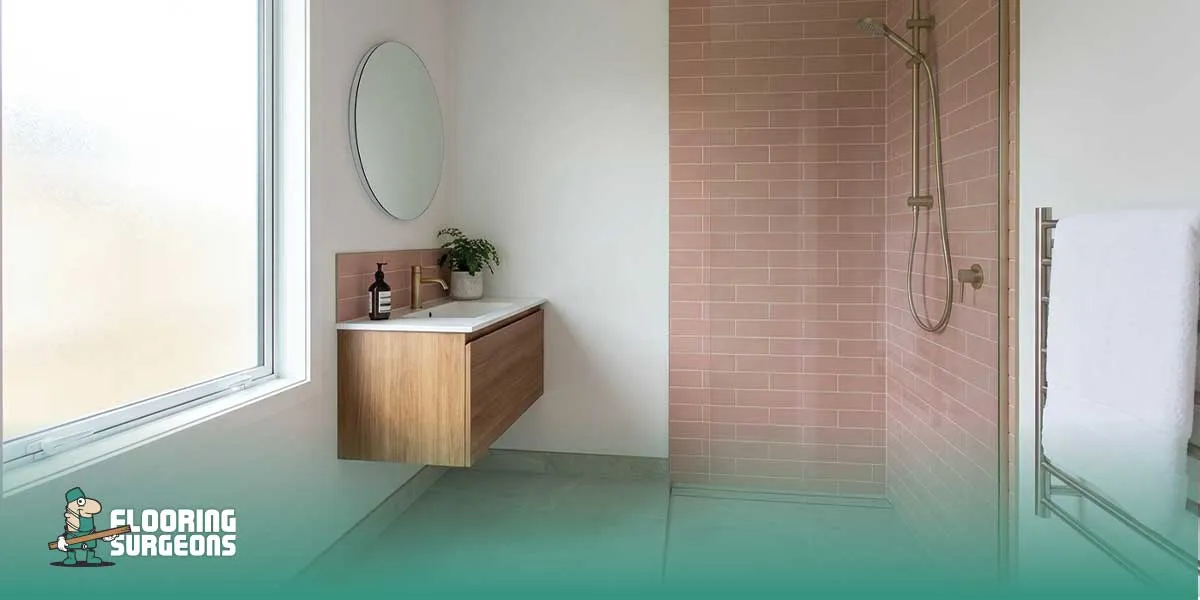
Pink tile bathrooms don’t fail because pink is a bad choice. They fail because everything around the tile is doing too much. When pink tile is treated as a feature rather than a theme, it can feel soft, modern, and surprisingly timeless.
The key is understanding what pink tile needs to work. Light matters more than colour. Flooring matters more than accessories. And issues of restraint, more than trend-led styling. This isn’t about covering a bathroom in blush tones. It’s about letting the tile breathe while the rest of the space quietly supports it.
In this guide, you’ll learn how to decorate a bathroom with pink tile in a way that feels balanced and intentional. From colour pairings and flooring choices to lighting and common mistakes, each section is designed to help you see what actually works before you commit — especially in real UK bathrooms where space and light are limited.
Table of contents
What Makes Pink Tile Work in a Bathroom?
Pink tile only works when it’s treated as a feature, not a theme. Bathrooms that feel stylish and balanced use pink with intention, while bathrooms that feel dated usually make pink the loudest element in the room.
The difference comes down to control. Successful pink tile bathrooms share three things. First, the shade of pink is softened rather than sugary. Dusty pinks, blush tones, and muted rose colours age far better than bright or bubblegum pinks, especially under everyday lighting. These softer shades reflect light gently instead of overpowering the space.
Second, the finish and placement of the tile matter more than people expect. Matte or lightly textured pink tiles feel calmer and more modern than high-gloss finishes. Pink also works best when it’s limited to one main surface, such as a feature wall or shower area, instead of wrapping the entire room. This creates contrast and gives the eye somewhere to rest.
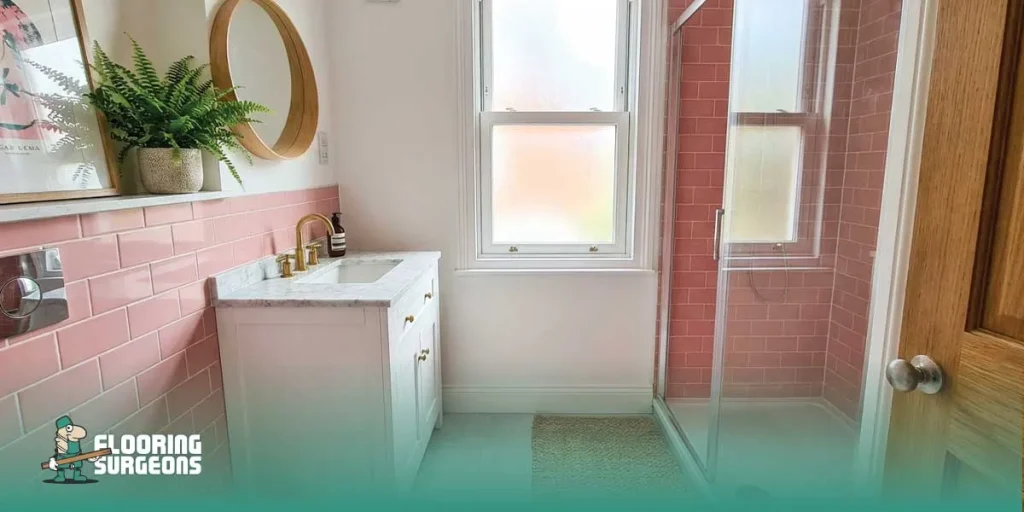
Finally, the pink tile needs quiet surroundings to work correctly. Neutral walls, simple flooring, and restrained accessories allow the colour to stand out without feeling overwhelming. When too many elements compete for attention, the pink tile quickly shifts from elegant to chaotic. Pink tile works best when it’s balanced with calm, neutral elements, similar to how designers approach neutral colour balance in modern interiors.
In short, decorating a bathroom with pink tile isn’t about adding more colour. It’s about knowing when to stop. The most successful spaces let pink do just enough, while everything else supports it quietly in the background.
Start With the Tile — Shade, Finish & Placement Matter
Pink bathrooms succeed or fail at the tile stage. Before thinking about fittings or décor, you need to get three tile decisions right: shade, finish, and where the pink actually goes.
Shade sets the mood.
The most timeless pink bathroom tile ideas use muted tones. Blush, dusty rose, and soft clay pinks feel calm and grown-up under natural and artificial light. Brighter or sugary pinks can look playful online, but in real bathrooms, they often feel loud, dated, or tiring over time. If you want a pink tile bathroom that still feels refined, lean toward blush rather than bold.
Finish controls the atmosphere.
Matte and satin finishes absorb light and soften the colour, which is why they’re common in modern blush pink tile bathroom designs. Glossy pink tiles reflect light sharply and can exaggerate the colour, especially in small bathrooms. Gloss can work, but usually only in small doses or with very pale shades.
Placement creates balance.
Pink works best when it’s used with restraint. Feature walls, shower enclosures, or half-height tiling give pink a clear role without overwhelming the space. Wrapping the entire bathroom in pink tile removes contrast and often makes the room feel smaller and visually busy. One firm pink surface paired with neutral walls or flooring almost always looks more considered.
If you’re unsure, a simple rule helps:
Choose a softer shade, a calmer finish, and limit pink to one central zone. That combination is what turns pink tile from a risky choice into a confident design statement.
Pink Tile Walls vs Floors — What Actually Looks Better?
When decorating with pink tile, the most significant visual decision is where the pink should live. Walls and floors create very different effects, and choosing the wrong one is often why pink bathrooms feel awkward rather than stylish.
Pink tile on the walls feels intentional and controlled.
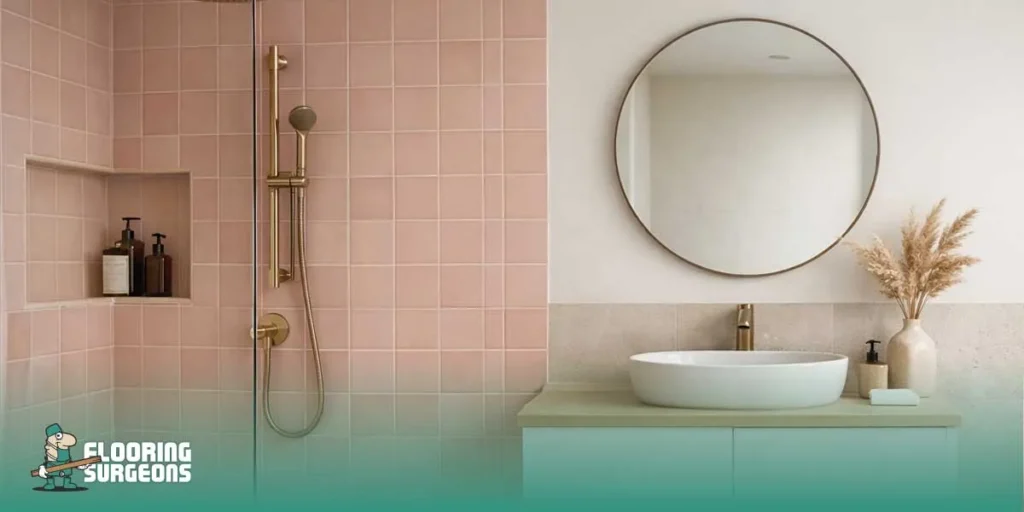
Using a pink tile wall allows the colour to act as a feature rather than a complete takeover. It draws the eye upward, adds warmth, and works well behind vanities, inside showers, or on a single statement wall. This approach gives you flexibility to balance pink with neutral flooring, fittings, and paint, which keeps the bathroom feeling fresh rather than overwhelming.
Pink tile on floors is bolder and more challenging to get right.
A pink bathroom floor tile makes an immediate statement, but it also anchors the entire space visually. In smaller bathrooms, this can make the room feel darker or more closed in, especially if the pink shade is intense or the lighting is limited. Pink floors work best when the walls are kept very light and straightforward, and the tile itself is subtle rather than saturated.
Scale and lighting change the result.
Natural light favours pink walls, as it softens the colour and keeps it from feeling heavy. Artificial lighting reflects more strongly off floors, which can intensify pink tones in ways that feel less predictable. That’s why many successful designs place pink where it’s seen but not constantly underfoot.
A practical guideline designers often follow:
If you want elegance and flexibility, put pink on the walls. If you want drama and are confident with restraint elsewhere, pink flooring can work—but it leaves far less room for error.
Best Colour Pairings for Pink Tile Bathrooms
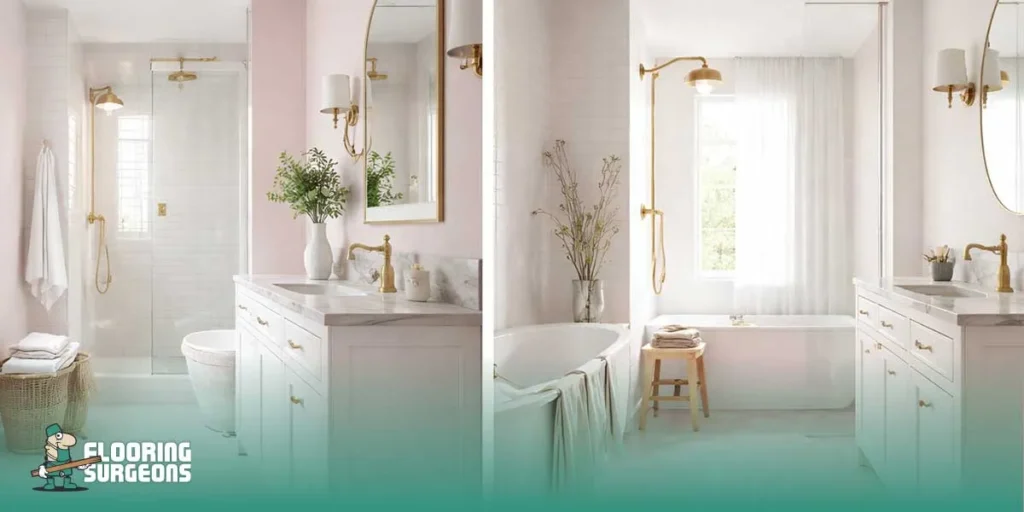
Pink tile rarely works on its own. What makes it feel stylish rather than dated is the colour it’s paired with. This is where many bathrooms either click instantly or feel slightly “off” without the homeowner knowing why. Instead of long explanations, this section works best as a visual + decision guide, the same way designers actually choose palettes.
The Most Reliable Pink Tile Colour Combinations (What Each One Does)
| Pink Tile Pairing | Overall Feel | When It Works Best | What to Watch Out For |
| Pink + White | Clean, bright, timeless | Small bathrooms, low light, modern or Scandinavian styles | Too much white can feel flat if the pink is very pale |
| Pink + Black | Bold, graphic, high-contrast | Contemporary bathrooms, strong lighting, confident styling | Needs balance—too much black feels harsh |
| Pink + Green | Calm, natural, slightly spa-like | Vintage pink tiles, botanical or mid-century looks | Choose muted greens; bright green clashes fast |
How Designers Actually Choose the Right Pairing
The trick isn’t asking “what colours go with pink,” but what role pink is playing in your bathroom.
If pink is soft and subtle (blush, dusty pink):
White and pale neutrals keep it elegant and light.
If pink is warm or saturated:
Black or charcoal grounds it and stops it from feeling sweet.
If pink feels retro or earthy:
Green works because it mirrors natural tones and softens the space visually.
One Rule That Prevents Most Mistakes
Only one colour should lead. Pink can be the feature, or it can support another colour, but it shouldn’t fight for attention with everything else in the room. That’s why the most successful pink bathroom colour ideas use pink confidently, then let the pairing colour do the stabilising work.
Flooring Choices That Balance Pink Tile (Often Ignored)
This is where most pink tile bathrooms either feel beautifully designed or slightly wrong, even if no one can explain why. Walls get all the attention, but flooring is what decides whether pink tile feels grown-up or gimmicky. Choosing the right bathroom flooring options for wet areas is what stops pink tile from feeling overwhelming and helps the bathroom feel intentional rather than busy.
Why Flooring Matters More Than Wall Colour with Pink Tile
Pink is visually active. It reflects light, shifts tone depending on warmth, and draws the eye instantly. If the floor competes with it, the space feels busy. If the floor grounds it, the bathroom suddenly feels intentional and calm. Good flooring doesn’t “match” pink. It balances it.
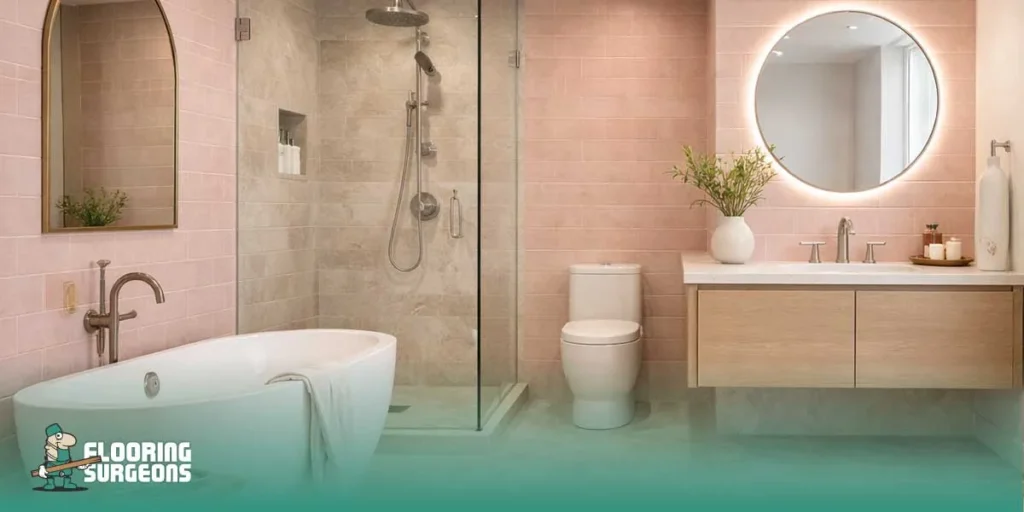
Stone-Look Flooring: The Safest, Most Hotel-Like Choice
Stone-effect floors (porcelain or ceramic) are one of the most reliable options with pink wall tiles.
Why they work:
- They add visual weight without colour noise
- They tone down Pink’s warmth
- They feel timeless rather than trend-led
Soft limestone shades, warm greys, or pale travertine looks pair exceptionally well with blush or dusty pink tiles. This combination is common in boutique hotels because it feels relaxed, not styled to death.
Use this when:
- Pink tiles are on the walls
- The bathroom is small or medium
- You want a calm, high-end feel
Avoid overly dark stone unless the space has intense natural or layered lighting.
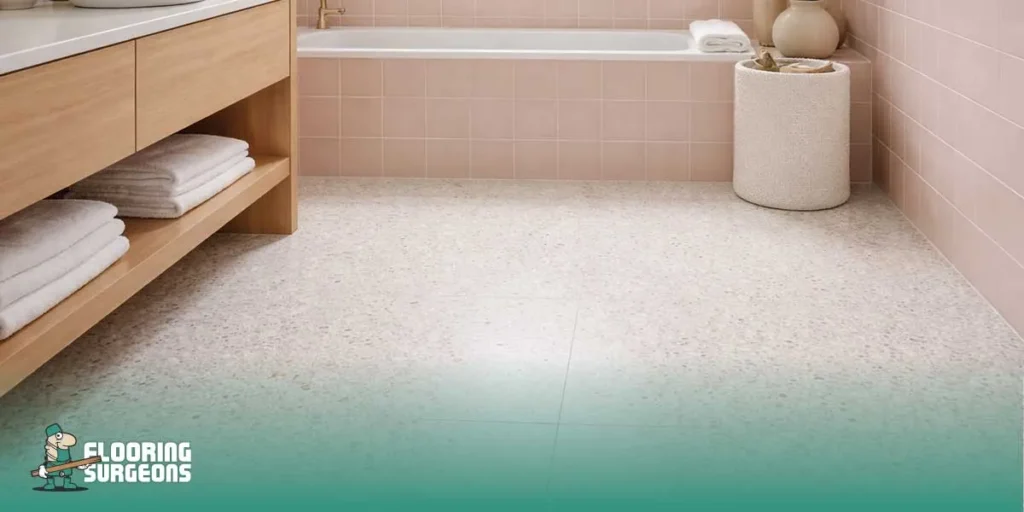
Terrazzo Floors: Controlled Contrast That Feels Designed
Terrazzo works with pink tile when it’s done with restraint. The key is scale and colour discipline.
A terrazzo floor with:
- Small aggregate
- White, beige, or soft grey base
- Minimal colour flecks
creates interest without stealing focus from the pink tile.
This works best when:
- Pink tile is plain, not patterned
- You want texture without heaviness
- The bathroom needs personality, but not colour overload
The mistake people make is choosing terrazzo with large, colourful chips. That turns the floor into competition, not support.
Neutral Tile Floors That Don’t Kill the Mood
Plain neutral floors still work, but only if they have depth.
Flat white floors tend to wash pink out. Instead, look for:
Warm greige tiles
Subtle veining
Matt finishes absorbing the light.
These keep the bathroom feeling soft and cohesive rather than clinical.
What to Avoid (This Is Where Bathrooms Go Wrong)
Highly patterned floors with pink walls
Cool blue-grey tiles that fight pink’s warmth
Glossy floors that reflect pink too aggressively
Trying to “match” pink instead of grounding it
Pink already makes a statement. Flooring should steady it, not echo it.
Quick Decision Guide:
If pink tile is the star → choose a quiet, textured floor
If pink tile is bold → choose a heavier, neutral floor
If pink tile is soft → choose warmth, not contrast
Most successful pink tile bathroom floor ideas feel almost boring on their own. That’s precisely why they work once the walls are in place.
How to Modernise an Existing Pink Tile Bathroom
A pink tile bathroom doesn’t need ripping out to feel modern. In fact, most dated pink bathrooms look old because of what surrounds the tile, not the tile itself. The fastest upgrades focus on contrast, finish, and restraint.
- Start by Removing What Dates It (Not the Tile)
In older pink bathrooms, the tile is usually paired with the wrong supporting elements. Before adding anything new, look at what’s making the space feel stuck in the past.
Common culprits:
- Glossy chrome everywhere
- Yellowed grout or silicone
- Heavy floral patterns or borders
- Warm white plastics that clash with pink
Updating these alone can shift the room from retro to intentional.
- Swap Fixtures to Reset the Era Instantly
Fixtures do more to modernise a pink tile bathroom than paint ever will.
The most reliable upgrades:
- Matte black taps and shower fittings for contrast
- Brushed brass for a softer, boutique look
- Minimal, squared profiles instead of rounded styles
Pink tile reads far more modern when paired with clean-lined, contemporary fixtures. This is one of the easiest wins in any modern pink tile bathroom update.
- Change the Grout, Change the Tile
You don’t need new tiles to change how the pink tile looks.
Grout colour matters more than most people expect:
- Fresh white grout sharpens and cleans up blush or pale pink
- Warm grey grout tones down brighter pink tiles
- Avoid beige or yellow-toned grout, which ages the space fast
Re-grouting alone often makes an old bathroom feel newly finished.
- Update the Floor to Ground the Space
If the walls are staying pink, the floor should do the heavy lifting. Many older bathrooms fail here.
The most effective updates:
- Stone-look porcelain floors
- Soft terrazzo with fine aggregate
- Large-format neutral tiles with minimal grout lines
This step is often what turns an “updated bathroom” into one that actually feels modern.
- Replace Lighting to Change the Mood
Lighting is usually wrong in dated pink bathrooms. Too cool, too harsh, or poorly placed.
To modernise the feel:
- Use warm LED lighting
- Add wall lights or backlit mirrors
- Avoid central, exposed ceiling lights where possible
Pink tile looks intentional under warm, layered lighting and unforgiving under cold white light.
- Keep Everything Else Quiet
The biggest mistake when updating pink tile bathrooms is overcompensating. Pink already brings personality.
To keep the update clean:
- Limit accessories
- Stick to one metal finish
- Choose simple mirrors and storage
Modern bathrooms feel edited, not decorated.
If you want a fast reality check:
- Have you changed the fixtures?
- Does the grout look fresh and intentional?
- Does the flooring calm the pink, not compete?
- Is the lighting warm and controlled?
If the answer is yes, you’ve already done most of what’s needed to update a pink bathroom tile space without demolition. Pink tile doesn’t need to be hidden or replaced to feel current. When the surrounding choices are correct, it stops feeling old and starts feeling confident.
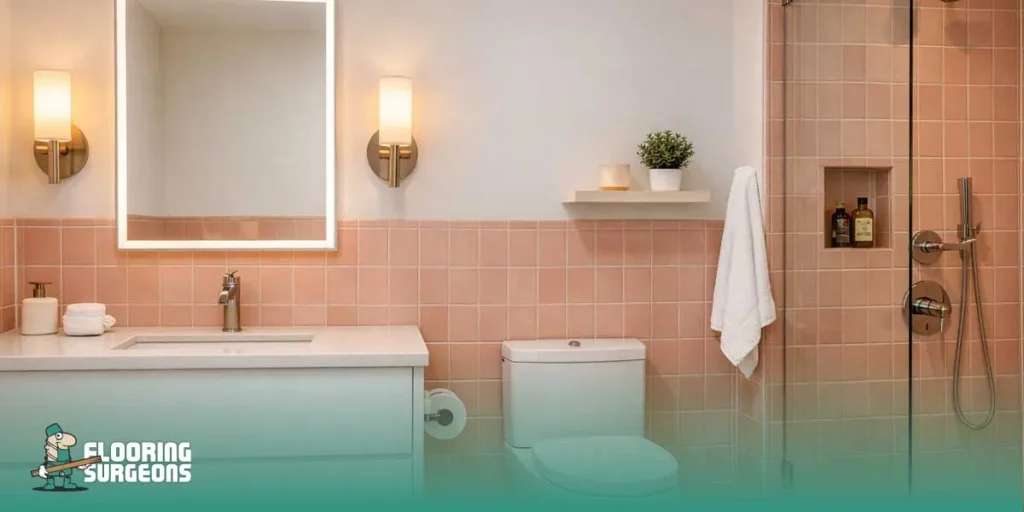
Common Mistakes That Make Pink Tile Look Dated
Pink tile almost never looks dated on its own. It seems dated when it’s paired with the wrong choices around it. These are the mistakes designers and installers see again and again in dated pink tile bathrooms.
- Overdecorating to “Fight” the Pink
The most significant error is trying to distract from the tile. Too many patterns, colours, or accessories make pink feel chaotic instead of intentional—pink works best when it’s allowed to breathe.
- Mixing the Wrong Pink Tones
Not all pink tiles play well together. Combining blush, dusty rose, and peachy pink in one space often creates a mismatched look. When pink tiles don’t share the same undertone, the bathroom feels unplanned.
- Using Warm Whites and Yellowed Finishes
Creamy whites, ivory plastics, and yellowed grout age pink tile instantly. They push the bathroom straight into retro territory. This is one of the most common pink bathroom mistakes in older homes.
- Shiny Chrome Everywhere
Highly reflective chrome fittings paired with pink tile often exaggerate the “vintage” feel. It’s not wrong by default, but in most cases, it reinforces an outdated look rather than softening it.
- Busy Floors That Compete With the Walls
Patterned or heavily veined floors fight with pink tile instead of grounding it. When both the walls and floor demand attention, the room loses balance.
- Cold, Harsh Lighting
Cool white lighting makes pink tile look flat or artificial. This is a subtle issue, but it’s one of the fastest ways to make a bathroom feel off, even after updates. If a pink tile bathroom feels old, it’s usually because of two or three of these choices combined, not because pink tile itself is the problem.
Final Styling Tips That Make Pink Tile Feel Intentional
Once the big decisions are right, styling is about restraint. The goal is to make the pink tile feel deliberate, not like something you’re trying to work around. At Flooring Surgeons, we see this balance work best when flooring is treated as part of the design story, not just a practical afterthought.
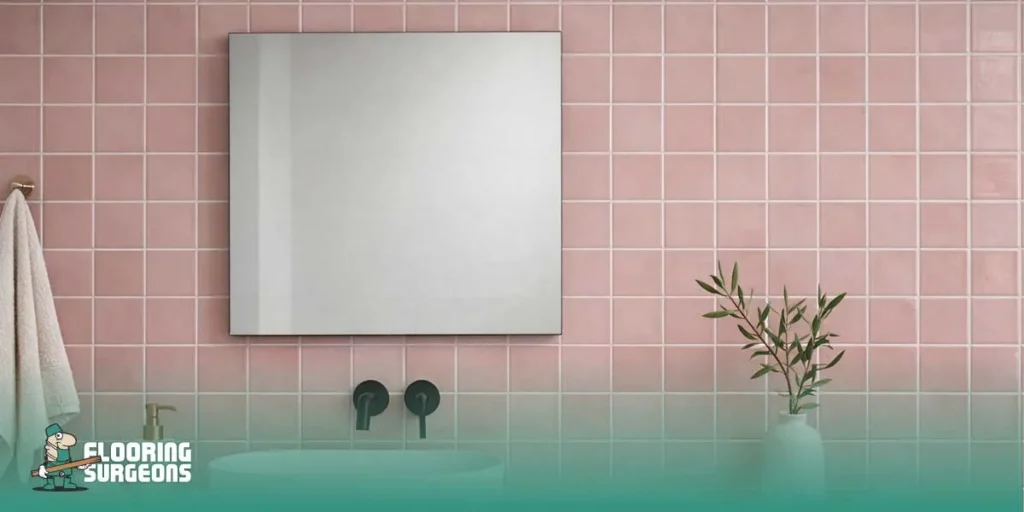
- Let the Tile Be the Feature
Pink tile already carries visual weight. Keep accessories minimal so the tile reads as a design choice, not background noise. Fewer items, better impact.
- Choose One Accent Finish and Stick to It
Whether it’s matte black, brushed brass, or soft chrome, commit to one metal finish. Consistency is what makes pink bathroom decor feel considered instead of pieced together.
- Keep Vanity Styling Calm and Balanced
A clean vanity surface does more for the room than decorative clutter. Think symmetry, simple containers, and negative space. Pink tile looks more luxurious when it isn’t competing with objects.
- Use Texture Instead of More Colour
If the room needs depth, add it through texture. Ribbed glass, stone accessories, soft towels, or natural wood elements complement pink without overwhelming it.
- Edit Ruthlessly
Before calling the room finished, remove one or two items. Pink tile bathrooms almost always look better after the final edit.
- One Simple Rule That Always Works
If something doesn’t make the pink tile look better, it doesn’t belong in the room. When styled with intention, pink tile feels confident, modern, and surprisingly timeless. The difference isn’t trend-driven. It’s about balance, clarity, and knowing when to stop.

Haniye Ayanmanesh
As an expert writer for Flooring Surgeons, I combine technical SEO knowledge with a practical understanding of flooring, producing content that helps users make confident decisions while supporting long-term organic growth.