

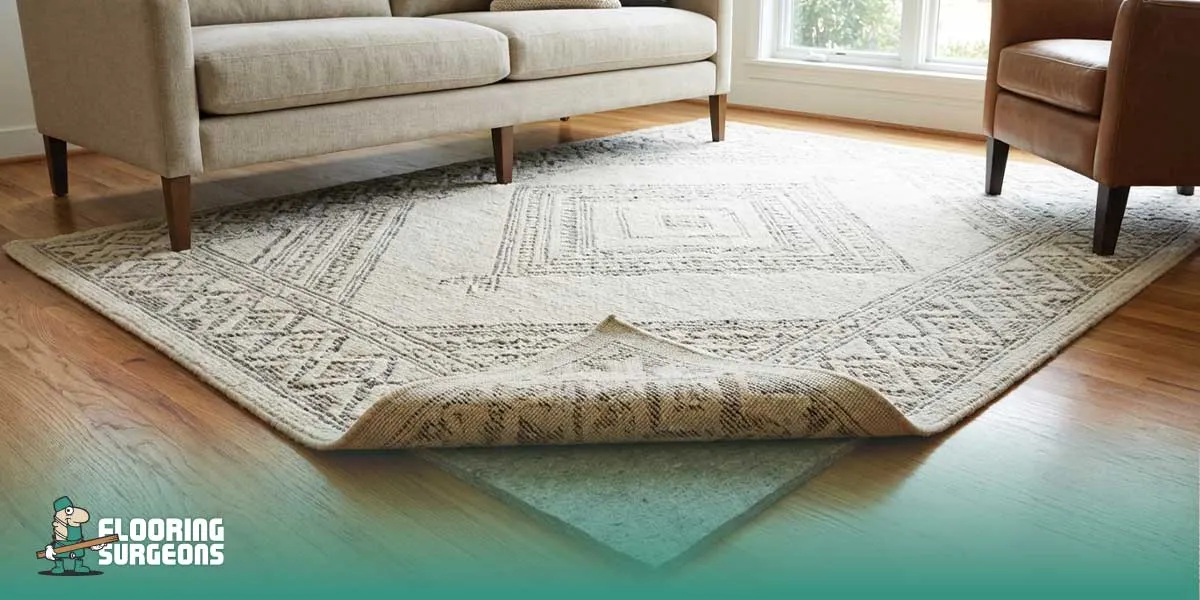
Yes, you can decorate hardwood floors with rugs—and when done correctly, rugs actually protect the floor, define spaces, and improve comfort without hiding the beauty of the wood. The key is choosing the right rug size, using a floor-safe rug pad, and placing the rug in a way that works with both the room layout and the hardwood finish. When rugs are chosen or placed incorrectly, they can trap moisture, cause discolouration, or scratch the surface—especially on finished or Engineered Hardwood Flooring.
The most important rules are simple:
- Rugs should anchor furniture, not float randomly.
- Every rug on hardwood should use a non-damaging rug pad.
- Materials, backing, and placement matter more than style alone.
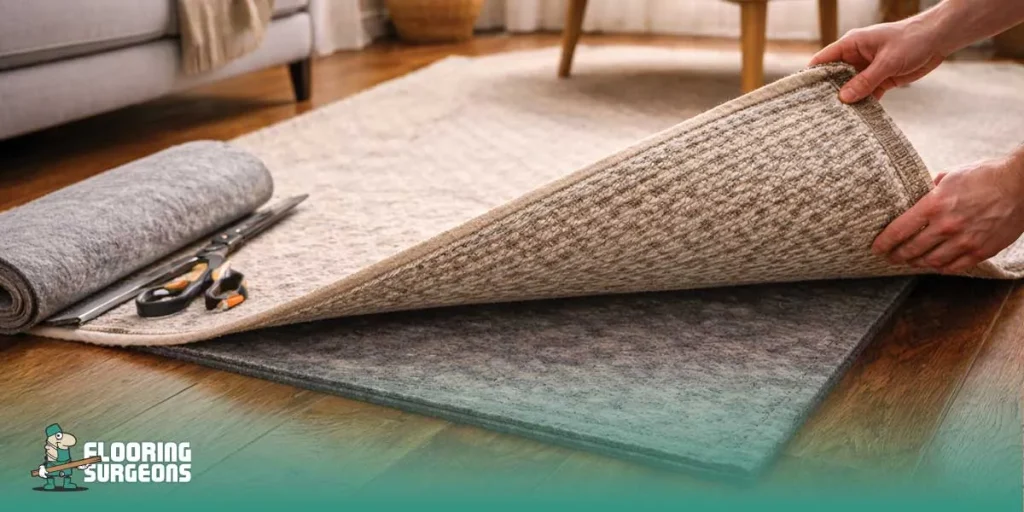
When rugs are chosen or placed incorrectly, they can trap moisture, cause discolouration, or scratch the surface—especially on finished or engineered hardwood floors. That’s why decorating with rugs isn’t just about looks; it’s about balancing style, protection, and long-term floor health.
In this guide, you’ll find clear, practical advice on how to decorate with rugs on hardwood floors—what works, what to avoid, and how to adapt your choices based on room type, floor finish, and everyday use. If you want quick reassurance, you already have it. If you’re going to get it right without damaging your floors, the sections below break everything down step by step.
Table of contents
Can You Put Rugs on Hardwood Floors?
Yes, rugs can be used on hardwood floors—and when chosen and placed correctly, they often protect the wood rather than harm it. Rugs help reduce surface wear, absorb impact in high-traffic areas, and define spaces without covering the floor entirely. However, the benefits depend on using the right materials, proper placement, and a floor-safe rug pad. Without those basics, rugs can do more damage than good. Understanding when rugs help—and when they don’t—is the key to decorating hardwood floors safely.
When Rugs Help Protect Wood Floors
Rugs are beneficial when they’re used to control wear in high-traffic areas like living rooms, hallways, and under furniture legs. An appropriately sized carpet paired with a non-damaging rug pad prevents scratches, reduces friction, and keeps dirt from grinding into the finish. This is especially helpful on finished hardwood floors where surface wear shows quickly. When rugs are breathable and lifted slightly by a pad, they protect the floor without trapping moisture.
When Rugs Can Actually Cause Damage?
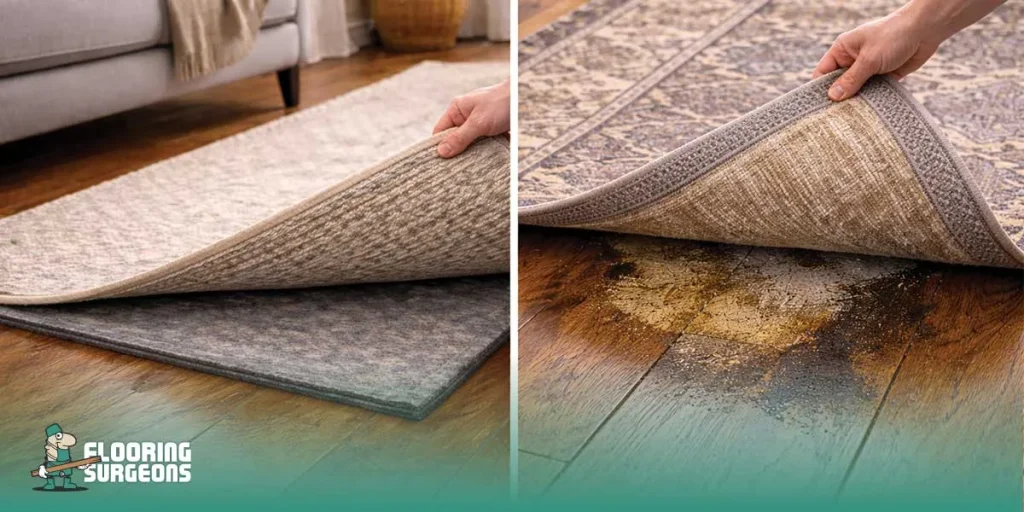
Rugs can cause problems when they trap moisture, use rubber or latex backing, or sit directly on the wood without a pad. These issues can lead to discolouration, finish breakdown, or even warping over time. Heavy rugs that aren’t rotated can also create uneven ageing, leaving visible outlines when removed. In these cases, the carpet doesn’t protect the floor—it accelerates damage.
Choosing the Right Rug Size for Hardwood Floors
Choosing the right rug size is less about decoration and more about balance. A rug that’s too small looks disconnected, while one that’s too large hides the hardwood you’re trying to showcase. The goal is to anchor furniture while leaving enough exposed wood to keep the room light and intentional.
Living Room Rug Placement on Hardwood Floors
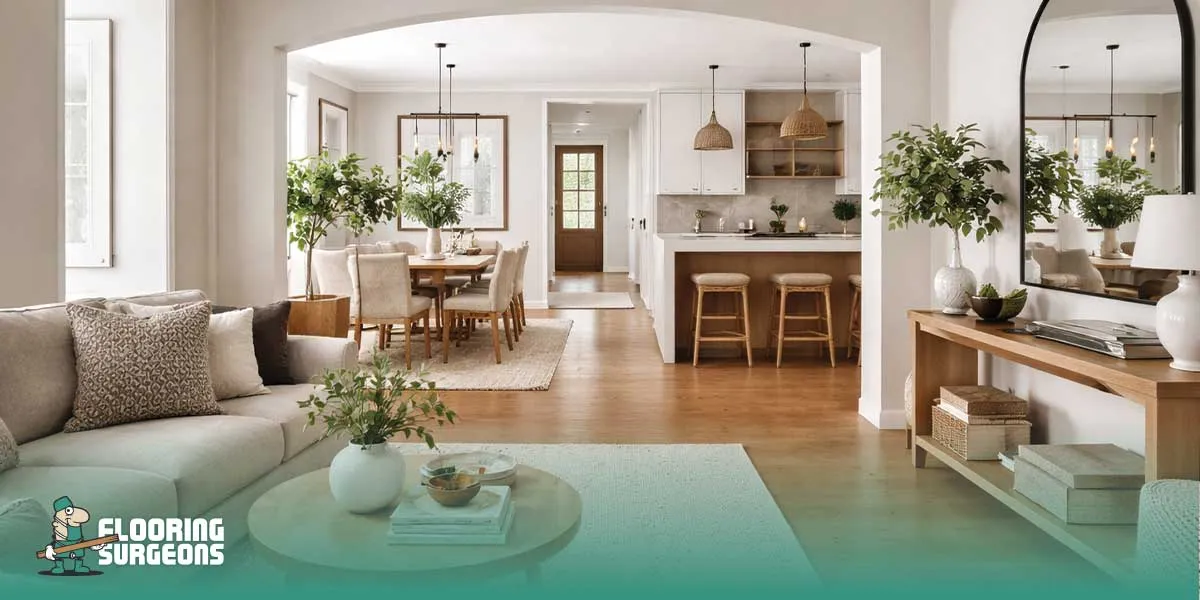
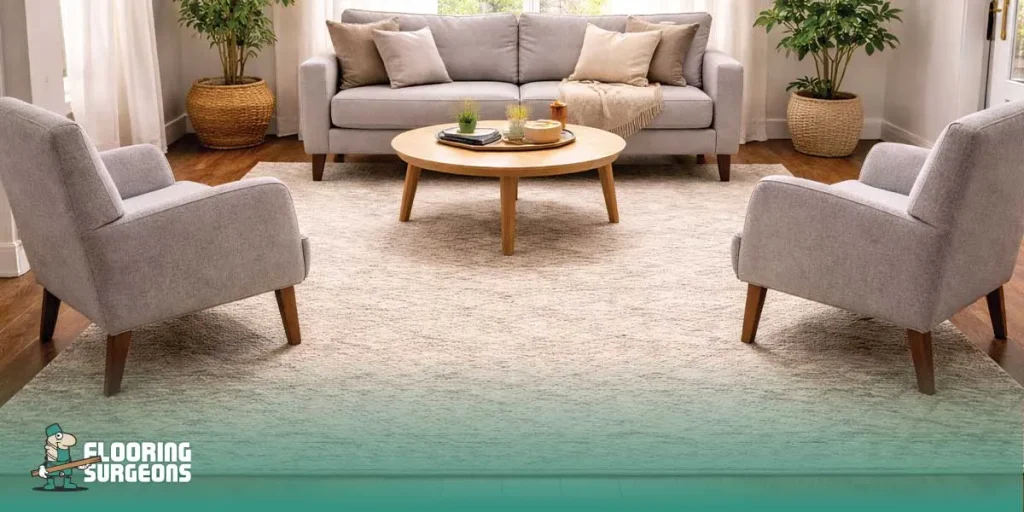
In living rooms, rugs should connect furniture, not float in the middle of the space. Ideally, the carpet sits under the front legs of sofas and chairs, creating a defined seating zone without covering the entire floor. Small rugs placed only under coffee tables are one of the most common mistakes—they break visual flow and make the room feel smaller.
Bedroom and Dining Room Rug Sizing Tips
In bedrooms, rugs work best when they extend beyond the bed on both sides, providing comfort where you step most. For dining rooms, the carpet must be large enough that chairs stay on the rug even when pulled out. Anything smaller leads to instability and unnecessary wear on both the carpet and the floor.
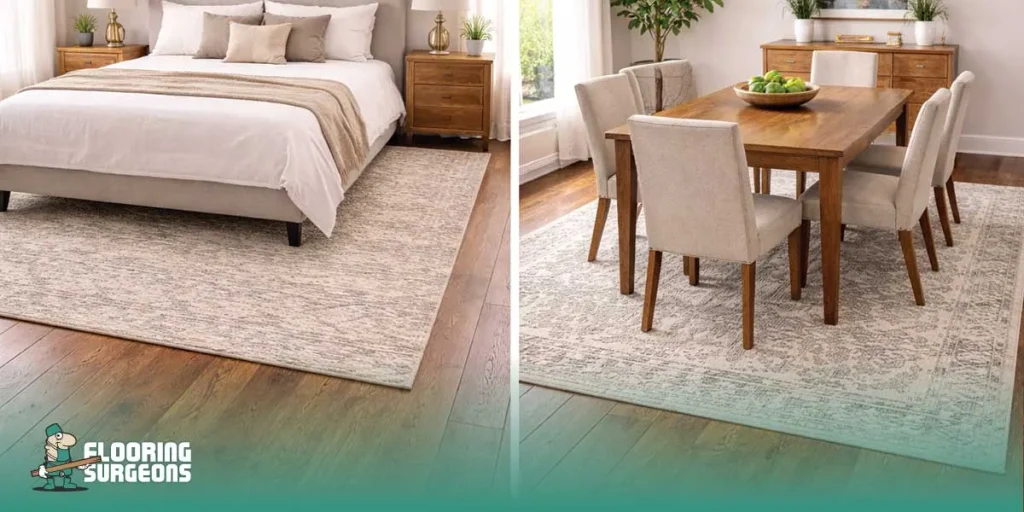
Quick Rug Size Guide for Hardwood Floors
| Room | Recommended Rug Placement | Common Mistake |
| Living Room | Front legs of all seating are on the rug | Rug only under the coffee table |
| Bedroom | Rug extends past the sides and the foot of the bed | The rug is too small under the bed |
| Dining Room | Rug larger than table + chairs | Chairs catching rug edges |
How to Place Rugs on Hardwood Floors Correctly
Correct rug placement on hardwood floors is about structure, not decoration. Rugs should work with the furniture layout to define zones while still allowing the wood to remain visible. Whether you centre a rug or anchor it under furniture depends on room size, traffic flow, and how much hardwood you want to show. Layering rugs can also work—but only when it’s done intentionally and without overwhelming the floor.
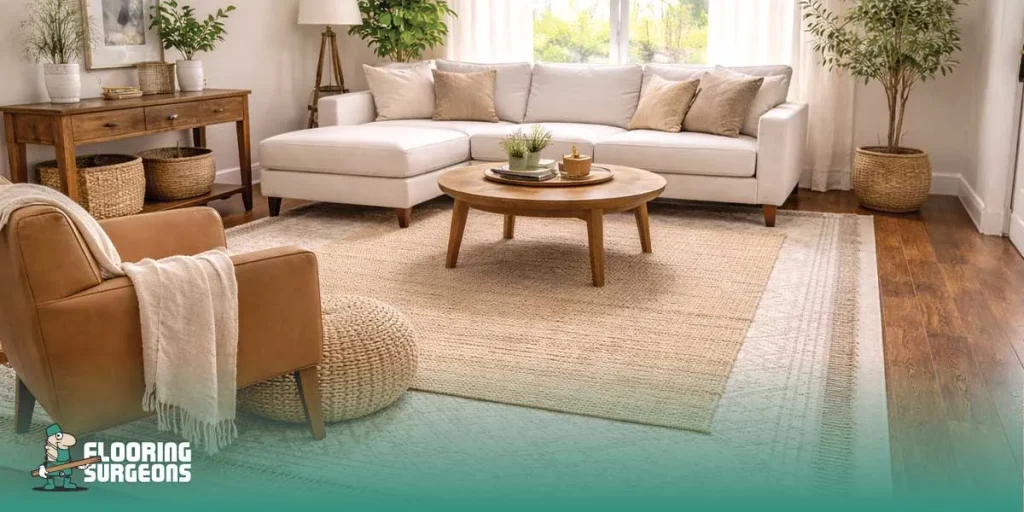
Key placement rules to follow:
- Anchor rugs under furniture whenever possible instead of centring them in empty space
- Keep at least 20–30 cm of visible hardwood around the rug edges to avoid a boxed-in look
. - Layer rugs only when the base rug is neutral and flat, allowing the wood to frame the space
- Avoid overlapping rugs in high-traffic areas where edges can curl or trap dir.t
- Rotate rugs occasionally to prevent uneven fading or wear on the hardwood finish.
Best Rug Pads for Hardwood Floors (Very Important)
The right rug pad protects hardwood floors; the wrong one can permanently damage them. For finished wood floors, breathability and non-reactive materials matter more than grip alone. Felt pads are generally the safest option because they cushion the rug without trapping moisture or reacting with the floor finish. Rubber and latex pads, while good for preventing slip, can discolour finishes, leave residue, or trap moisture—especially when placed directly on sealed or glossy hardwood. The safest approach is choosing a pad that balances light grip with airflow and avoids direct rubber contact with the wood.
Rug Pad Comparison for Hardwood Floors
| Rug Pad Type | Safe for Hardwood Floors? | Why |
| Felt (natural or synthetic) | Yes | Breathable, non-reactive, protects finish |
| Felt + rubber (rubber on rug side) | Conditional | Safe only if the rubber doesn’t touch the floor |
| Natural rubber or latex | No | Can discolour or damage finishes |
| PVC or vinyl pads | No | Traps moisture, reacts with sealants |
| No rug pad | No | Increases friction, scratches, and uneven wear |
Matching Rugs With Hardwood Floors (Colour, Finish, and Floor Type)
Matching rugs with hardwood floors works best when colour contrast، surface finish، and floor construction are considered. Light rugs tend to open up spaces with dark hardwood, while darker or patterned rugs can ground lighter floors—as long as they don’t fight the wood grain. At the same time, solid and engineered hardwood floors behave differently under rugs, which affects both styling and long-term floor health. The goal is to enhance the wood’s character without hiding it or creating uneven wear. At the same time, solid and engineered hardwood floors behave differently under rugs, which affects both styling and long-term floor health. Understanding the cons of engineered hardwood flooring helps explain why breathable rug pads and regular rotation are especially important for these floors.
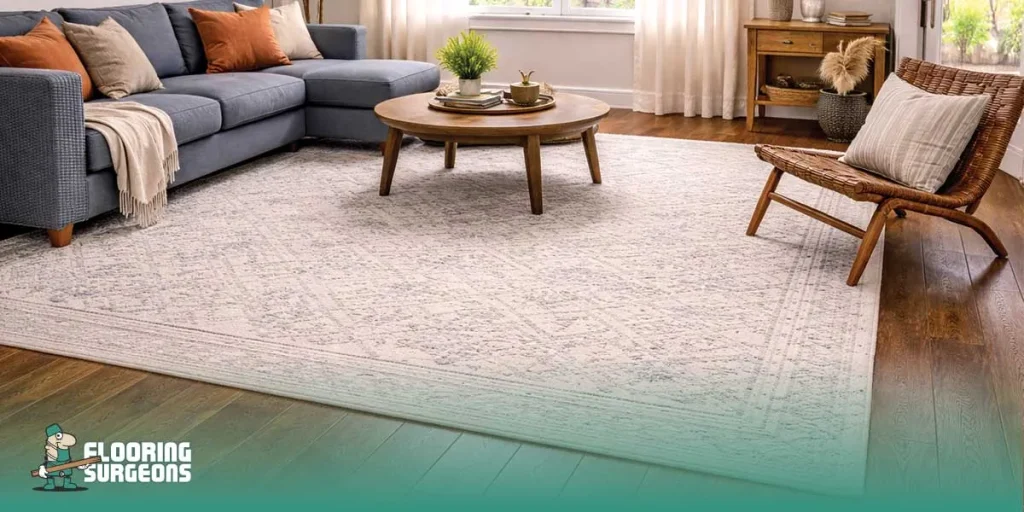
Key guidelines to follow:
- Use lighter rugs on dark hardwood floors to create contrast and keep the space from feeling heavy
- Let natural wood grain stand out by choosing simple patterns or low-contrast designs.
- Avoid overly busy rugs on highly grained or glossy floors—they compete visually.
- On solid hardwood floors, rotate rugs regularly to prevent uneven ageing and colour changes.
- On engineered hardwood floors, always use breathable rug pads to avoid moisture buildup.
- Matte or satin finishes are more forgiving with patterned rugs than high-gloss finishes.
- In high-traffic areas, prioritise durability and protection over bold styling choices.
Rug Styling Tips for High-Traffic Homes
High-traffic homes need rugs that do more than look good. In busy spaces, the right rug choice reduces wear on hardwood floors, improves safety, and makes daily use more practical—without constant adjustment or damage.
Homes With Pets and Children
In homes with pets and children, rugs should prioritise stability, durability, and easy maintenance. Slipping, curling edges, and trapped dirt cause more damage here than foot traffic alone.
- Choose low-pile or flat weave rugs that don’t trap hair, crumbs, or moisture.
- Always use a secure, floor-safe rug pad to prevent sliding and bunching.
- Avoid fringe and thick borders that can lift, tear, or become trip hazards.
- Rotate rugs regularly to prevent uneven wear and fading on the hardwood.
Well-chosen rugs protect the floor while standing up to daily movement, play, and cleaning.
Entryways and Hallways With Hardwood Floors
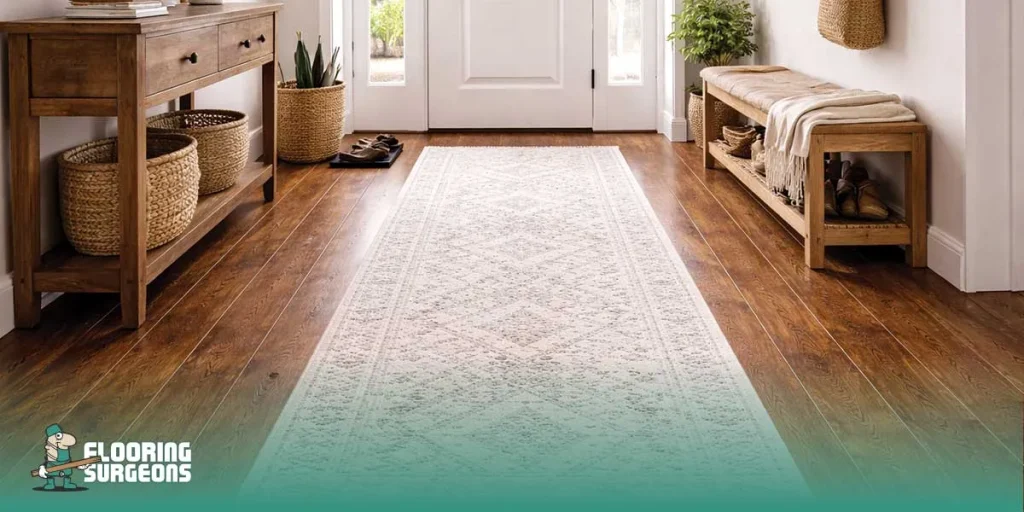
Entryways and hallways concentrate dirt, grit, and moisture—the biggest enemies of hardwood floors. Rugs here should act as a buffer, not a decorative afterthought.
- Use runner rugs that fit the full width of the hallway, not narrow strips.
- Select materials designed for heavy use and frequent cleaning.
- Ensure the rug lies completely flat with no raised edges.
- Keep some exposed hardwood visible to avoid trapping moisture underneath.
In these areas, a properly placed rug isn’t just styling—it’s essential floor protection.
How to Maintain Hardwood Floors Under Rugs Long-Term
Maintaining hardwood floors under rugs is about consistency, not constant adjustment. Even the best rug setup can cause issues if it’s left unchecked over time. Regular rotation prevents uneven fading, occasional lifting allows the floor to breathe, and using the right rug pad avoids long-term finish damage. Simple habits—like cleaning beneath rugs periodically and monitoring humidity levels—go a long way in preserving both the wood and its appearance. When rugs and floors are treated as a system rather than separate elements, hardwood floors stay protected, balanced, and visually consistent for years. When rugs and floors are treated as a system rather than separate elements, hardwood floors stay protected, balanced, and visually consistent for years. If you’re unsure about the best setup for your space, our flooring specialists can help you make the right choice.

Haniye Ayanmanesh
As an expert writer for Flooring Surgeons, I combine technical SEO knowledge with a practical understanding of flooring, producing content that helps users make confident decisions while supporting long-term organic growth.