

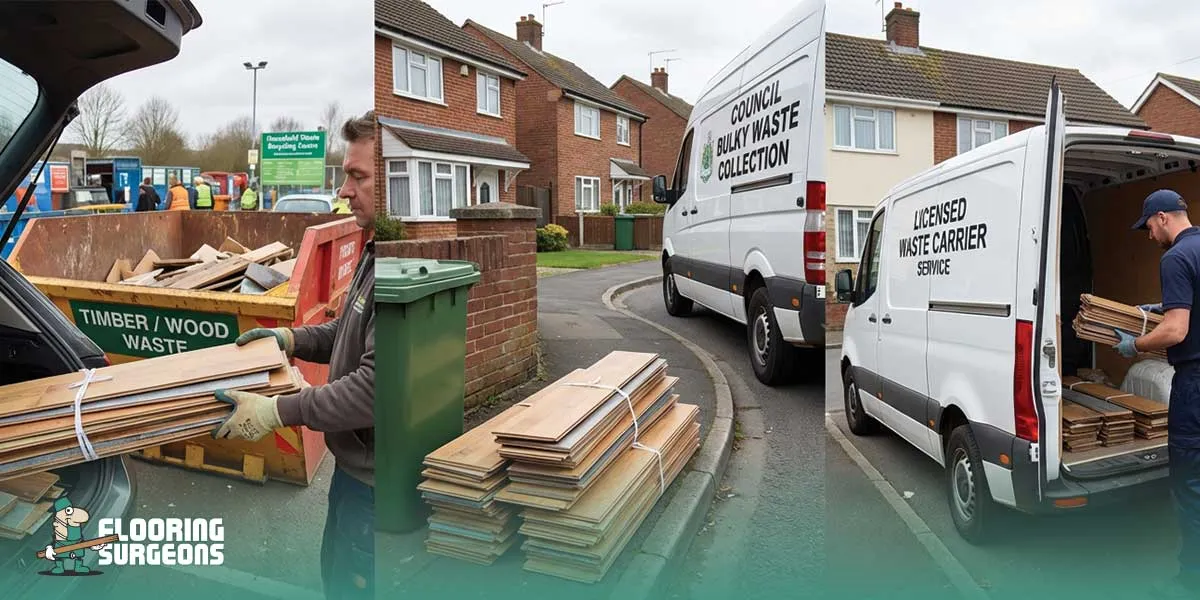
If you are looking for a clear answer straight away, here it is: you cannot dispose of laminate flooring in your household bin in the UK. Laminate flooring is usually classed as construction or DIY waste, which means it must be taken to a Household Waste Recycling Centre (HWRC), collected through a council bulky waste service, or removed by a licensed waste carrier. In most cases, laminate flooring cannot be recycled because it is made from compressed wood fibres and resins that recycling centres do not accept.
Where people get caught out is assuming laminate flooring is treated like wood or general household waste. It is not. Disposal rules can vary slightly by local council, and disposing of laminate flooring incorrectly can lead to fly-tipping fines or penalties, even if the waste comes from your own home. The right option depends on how much flooring you are getting rid of, what your local council allows, and whether cost, convenience, or legality is your priority.
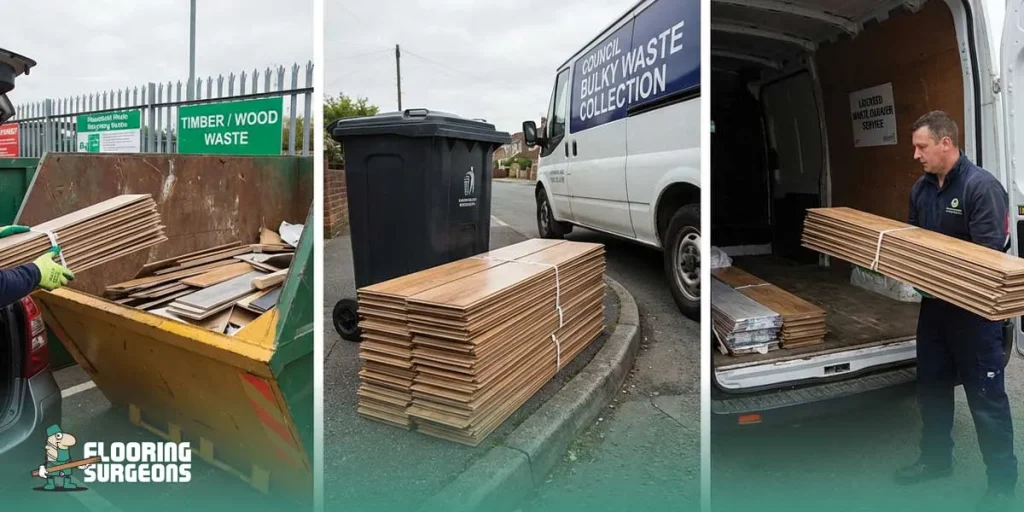
If you want to make sure you dispose of laminate flooring legally, cheaply, and without hassle, the rest of this guide breaks down your exact options, what councils typically accept, when skip hire makes sense, and how to avoid common (and costly) mistakes.
Table of contents
Can You Dispose of Laminate Flooring in Household Waste in the UK?
No, you cannot dispose of laminate flooring in your household waste bin in the UK. Laminate flooring is classed as DIY or construction waste, not general household waste, which means it is not permitted in wheelie bins or standard council rubbish collections. Unlike natural wood, laminate flooring is a composite material that requires specific disposal methods under UK council waste rules.
The reason is simple but often misunderstood. Laminate flooring is made from compressed wood fibres (usually MDF or HDF) bonded with resins and protective coatings. This combination makes it unsuitable for regular household waste streams and, in most cases, unacceptable for standard recycling. Because of this, councils treat laminate flooring in the same category as other renovation materials, such as underlay, trims, and adhesives.

Putting laminate flooring into your household bin can result in the waste being rejected, extra collection charges, or, in some cases, penalties linked to improper waste disposal. Even if the flooring comes from your own home, responsibility still sits with the homeowner or tenant to dispose of it correctly. Instead, laminate flooring must be taken to a Household Waste Recycling Centre (HWRC), collected through an approved council bulky waste service, or removed by a licensed waste carrier, depending on the quantity and your local council rules. These options ensure the waste is handled legally and reduce the risk of fines associated with fly-tipping or incorrect disposal.
Is Laminate Flooring Classed as Household or Construction Waste in the UK?
In the UK, laminate flooring is generally classed as construction or DIY waste, not household waste. Most local councils treat removed laminate flooring in the same category as other renovation materials, such as underlay, skirting offcuts, and adhesive residues. Even though the flooring comes from inside your home, the moment it is removed as part of a repair, replacement, or refurbishment, it is no longer considered regular household rubbish.
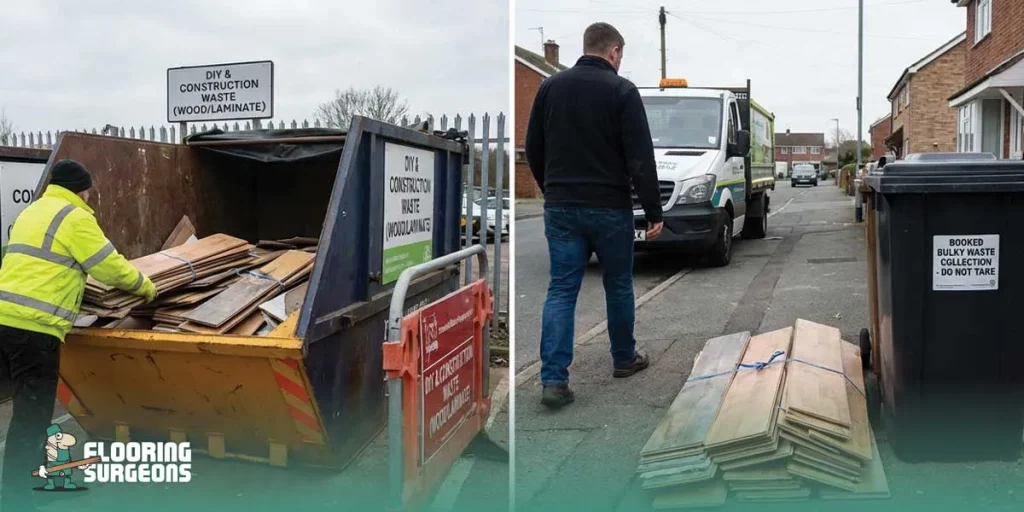
How Councils Interpret Laminate Flooring Waste
Council waste policies are not written randomly, and laminate flooring ticks several boxes that place it outside household waste streams:
- It is generated by DIY or renovation work, not day-to-day living
- It is bulky and rigid, making it unsuitable for standard collections.
- It is made from bonded wood fibres and resins, which councils do not process through household waste systems.
Because of this, most councils only accept laminate flooring at Household Waste Recycling Centres (HWRCs) or through paid bulky waste services, and some may restrict the quantity you can dispose of at one time.
Why This Classification Matters
This distinction is not just technical; it has real consequences for how you dispose of laminate flooring.
If you treat laminate flooring as household waste and put it in your wheelie bin, the waste may be refused, left uncollected, or flagged for follow-up. In more serious cases, incorrect disposal can be linked to fly-tipping investigations, where responsibility falls on the homeowner or tenant who produced the waste.
Understanding that laminate flooring is classed as construction or DIY waste helps you:
- Choose the correct legal disposal route
- Avoid unexpected charges or rejected collections.
- Reduce the risk of fines linked to improper waste disposal.
- Dispose of renovation waste in line with local council rules.
This is why checking your council’s specific guidance before disposing of laminate flooring is essential — slight differences in policy can affect what is accepted, how much you can dispose of, and whether a fee applies.
Can Laminate Flooring Be Recycled in the UK?
In most cases, laminate flooring cannot be recycled in the UK. The majority of recycling centres do not accept laminate flooring because it is made from bonded wood fibres combined with resins, plastics, and protective coatings. This mixed composition makes it unsuitable for standard wood or household recycling streams.
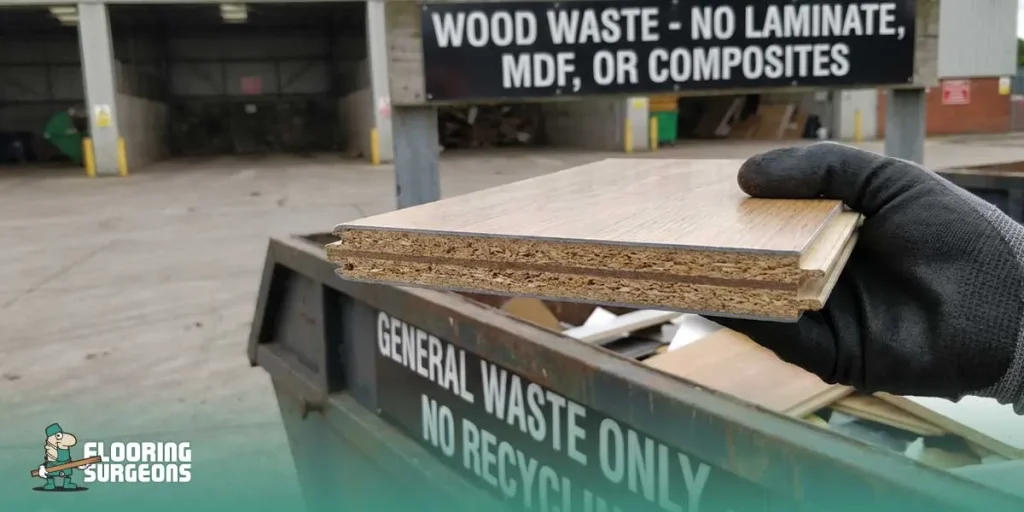
Many homeowners assume laminate flooring can be recycled like natural wood, but this is one of the most common disposal mistakes. Laminate flooring is a composite product, and most councils classify it as non-recyclable DIY waste. Many disposal issues start when homeowners misunderstand the difference between engineered wood vs laminate flooring, especially when assuming both materials can be treated the same at the end of their lifespan.
Why Most Recycling Centres Do Not Accept Laminate Flooring
There are several practical reasons why recycling centres reject laminate flooring:
- Laminate flooring contains MDF or HDF bonded with chemical resins, which cannot be separated easily
- The surface layers include melamine and plastic coatings that contaminate wood recycling processes.
- Most facilities are not equipped to process composite flooring materials.
- Accepting laminate flooring increases processing costs without an environmental benefit.
Because of this, laminate flooring is usually directed to landfill or energy recovery rather than material recycling, even when taken to a Household Waste Recycling Centre.
Exceptions and Local Variations
While recycling laminate flooring is uncommon, limited exceptions may exist depending on your local council. Some councils accept laminate flooring in specific waste categories at HWRCs, often with quantity limits or additional charges. These cases are the exception, not the rule.
Local rules may vary based on:
- Council waste contracts and facilities
- Whether the laminate flooring is mixed with other materials
- The volume of flooring being disposed of
For this reason, it is always recommended to check your council’s waste guidance before assuming laminate flooring can be recycled. What is accepted in one area may be refused in another, even within the same region.
Legal Ways to Dispose of Laminate Flooring in the UK
If you want to dispose of laminate flooring legally and without risk, these are the options that UK councils and waste regulations actually allow. Each option suits a different situation, so choosing the right one matters.
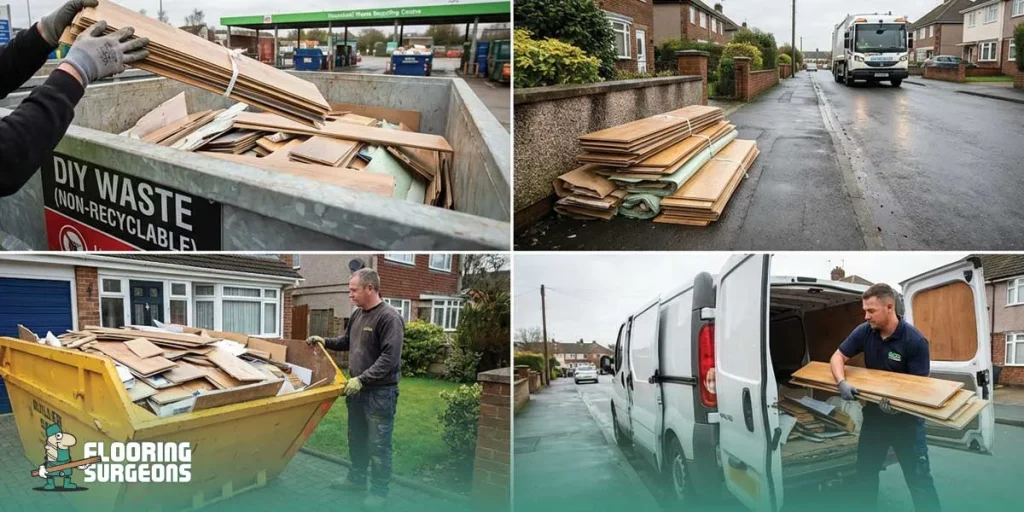
- Take it to a Household Waste Recycling Centre (HWRC)
This is the most common and safest option for small to medium amounts of laminate flooring. Most HWRCs accept laminate flooring as DIY or construction waste, not as a recyclable material. Some centres may limit the quantity or require you to separate the laminate from the underlay and trims. Always check your local council website before you go, as rules can vary and some centres charge for DIY waste. - Use your council’s bulky waste collection service.
Many councils offer bulky waste collection for renovation materials, including laminate flooring. This is usually a paid service and often requires advance booking. Not all councils accept laminate flooring through this route, and some have restrictions on weight or volume. This option suits homeowners who cannot transport the waste themselves. - Hire a skip for larger amounts of flooring.
Skip hire makes sense if you are removing laminate flooring from multiple rooms or an entire property. Laminate flooring can be heavy, especially when stacked, so skip size matters. A skip is legal and practical, but it is rarely the cheapest option for small DIY jobs. You may also need a permit if the skip is placed on a public road. - Use a licensed waste carrier.
A licensed waste carrier is often the easiest option if you want the flooring removed quickly with minimal effort. This is especially useful for mixed waste, including laminate, underlay, and trims. Always check that the carrier is licensed, as homeowners can still be held responsible if waste is dumped illegally. This option reduces risk but usually costs more than council-run services.
Which Disposal Option Is Best for You? (Quick Comparison)
Before choosing how to dispose of laminate flooring, it helps to be clear about how much flooring you are getting rid of, how easily you can transport it, and how much effort you want to put in. There is no single best option for everyone. A method that works well for a small DIY job can be impractical or unnecessarily expensive for a complete renovation. The quick comparison below helps you decide at a glance which disposal option best fits your situation, based on cost, effort, and legality. You do not need to read the entire guide to use this table. If you want a fast, safe decision, this is the section to focus on.
| Disposal option | Small DIY job (one room) | Complete renovation (whole house) | Cost | Effort | Legality |
| Household Waste Recycling Centre (HWRC) | Very suitable | Limited by volume | Low to free (depends on council) | Medium (you transport it) | Fully legal |
| Council bulky waste collection | Depends on the council | Usually not ideal | Medium | Low | Fully legal |
| Skip hire | Overkill | Best option | High | Low | Fully legal |
| Licensed waste carrier | Sometimes worth it | Very suitable | Medium to high | Very low | Fully legal (if licensed) |
If you are only removing laminate flooring from one room, taking it to a recycling centre is usually the cheapest and safest choice. If you are clearing multiple rooms or an entire property, skip hire or a licensed waste carrier makes more sense. If you cannot transport the waste yourself, council collection or a licensed carrier is the practical option.
Key Things to Keep in Mind
- Cost usually goes up as effort goes down.
- Small jobs rarely justify skip hire.
- Legality depends on following council rules and using licensed services.
- The wrong option can lead to rejected waste or extra charges.
This comparison helps you choose the fastest legal route based on how much flooring you are disposing of and how much effort you want to put in.
What Happens If You Dispose of Laminate Flooring Incorrectly?
Disposing of laminate flooring the wrong way in the UK can lead to real consequences, even if the waste comes from your own home. Incorrect disposal is just one of several common flooring mistakes homeowners regret, especially after a renovation or rushed flooring decision.
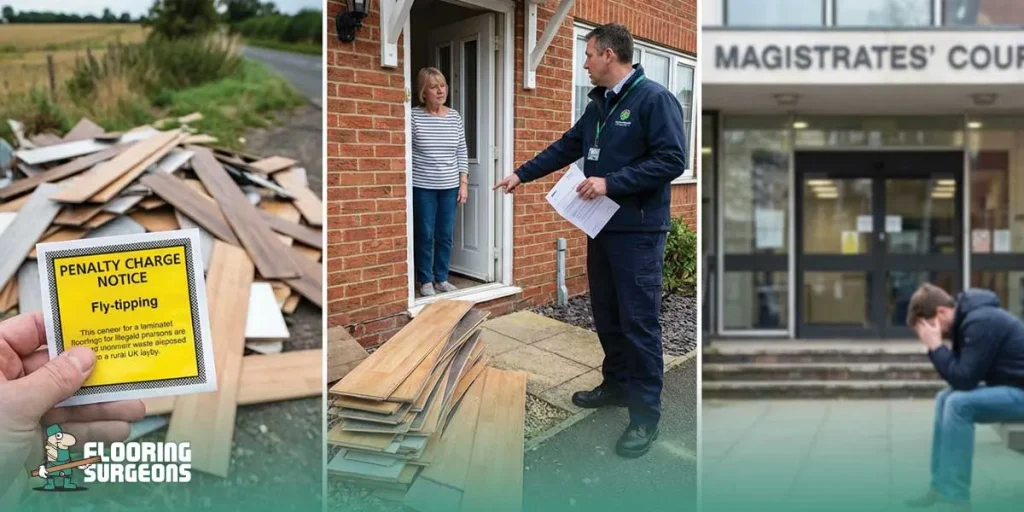
- Fly-tipping fines
If laminate flooring is dumped illegally or passed to an unlicensed carrier, it can be classed as fly-tipping. Fines can run into thousands of pounds, and councils do not accept “I didn’t know” as a defence. - Homeowner responsibility
You remain legally responsible for your waste until it is disposed of correctly. If your laminate flooring is found dumped, you can still be fined, even if someone else removed it for you. - Real UK penalties
Penalties can include fixed fines, formal warnings, or prosecution in severe cases. Using council-approved services or licensed waste carriers is the only way to protect yourself fully.
In short, the wrong disposal choice can cost far more than doing it properly in the first place. In many cases, laminate flooring is removed because homeowners begin to notice early warning signs, such as durability or maintenance issues, which are often clear signs that you chose the wrong flooring for the space.
How Much Laminate Flooring Are You Disposing Of?
The amount of laminate flooring you are removing has a direct impact on which disposal option makes sense. Use the scenarios below to identify your situation quickly.
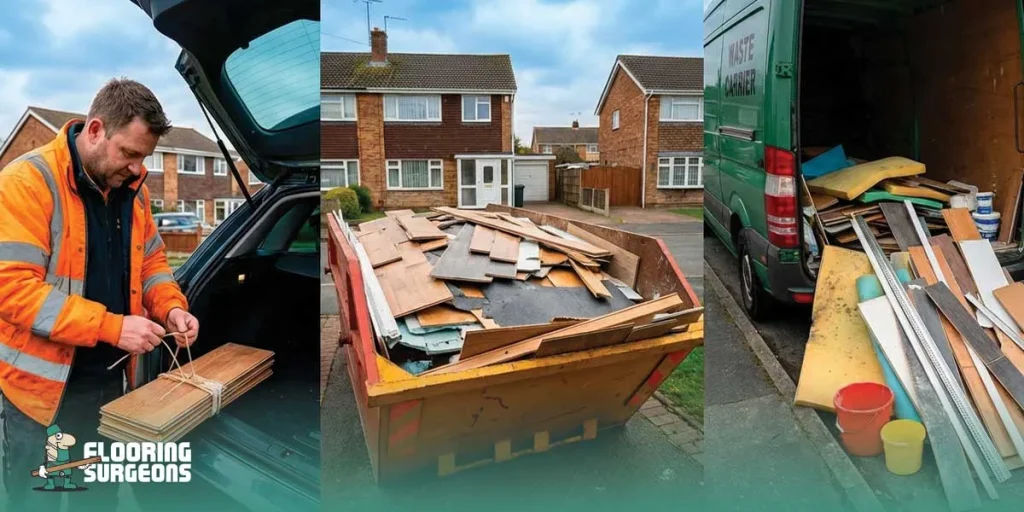
Small Room or Partial Replacement
If you are removing laminate flooring from one room or a small area, the simplest option is to take it to a Household Waste Recycling Centre. This works well if you can transport the flooring yourself and the volume is within council limits. Skip hire is rarely worth it for this size of job.
Whole-House Laminate Removal
If laminate flooring is being removed from multiple rooms or an entire property, the volume adds up quickly. In this case, skip hire or a licensed waste carrier is the most practical and legal solution. Trying to dispose of large quantities through household routes often leads to rejected waste or extra charges.
Mixed Waste (Underlay, Trims, Adhesive)
If your laminate flooring is mixed with underlay, trims, or adhesive residues, disposal becomes more restrictive. Mixed waste is rarely accepted through standard council collections. A licensed waste carrier or skip is usually the safest choice, as it avoids sorting issues and reduces the risk of refusal.
Do Disposal Rules Vary by Council in the UK?
Yes. Laminate flooring disposal rules do vary by council, and those differences matter. While laminate flooring is generally treated as DIY or construction waste across the UK, what is accepted, where it is received, and whether you pay can change depending on location. Disposal rules are even more important for tenants, as changing flooring in a rented property can involve additional responsibilities around waste removal and landlord approval.
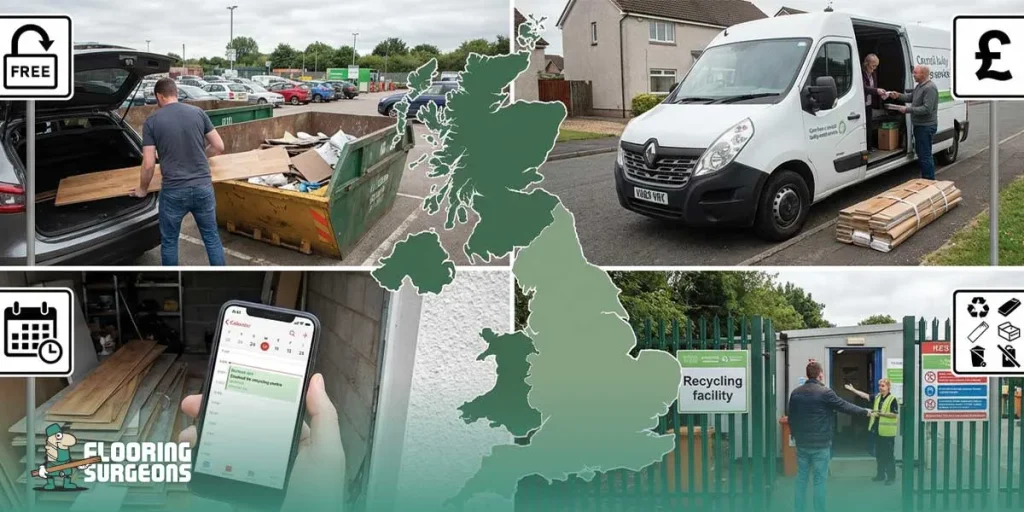
England
Most councils in England require laminate flooring to be taken to a Household Waste Recycling Centre or booked through a paid bulky waste collection. Some councils allow limited DIY waste for free, while others charge by weight or visit. Quantity limits are standard.
Scotland
Scottish councils follow similar rules, but DIY waste charges are more common. For example, in cities like Glasgow, laminate flooring is typically accepted at recycling centres as construction waste, not household waste, and limits or fees may apply depending on volume.
Wales
In Wales, laminate flooring is usually classed as DIY waste and must be taken to approved sites. Some councils require residents to book HWRC visits in advance, and acceptance rules can be stricter for mixed waste.
Northern Ireland
Disposal rules are often more controlled, with laminate flooring accepted at specific recycling centres only. Advance checks are essential, as acceptance and charges vary more widely between councils.
Bottom line: always check your local council’s waste guidance before disposal. Assuming rules are the same everywhere is one of the most common reasons waste gets refused or charged unexpectedly. Guides like this are written based on real-world renovation and removal experience from flooring specialists such as Flooring Surgeons, where disposal issues are one of the most common homeowner concerns.

Haniye Ayanmanesh
As an expert writer for Flooring Surgeons, I combine technical SEO knowledge with a practical understanding of flooring, producing content that helps users make confident decisions while supporting long-term organic growth.