



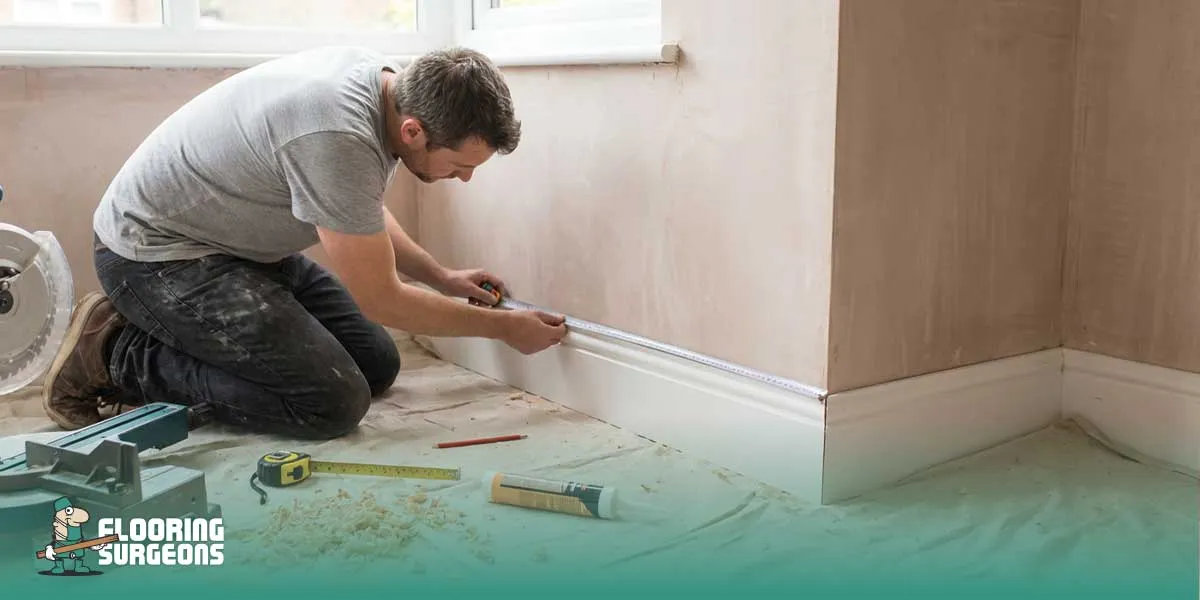
Skirting boards are a small detail that makes a big difference. They hide uneven wall edges, protect your plaster, and give any room a clean, finished look. The good news? Learning how to install skirting boards is far easier than most people think. With the right tools, accurate measurements, and a little patience, you can achieve a professional-looking result—even if this is your first DIY project.
In this guide, you’ll learn exactly how to fit skirting boards the right way. We cover everything from preparing your walls and choosing between adhesive or nails, to cutting perfect mitre joints and finishing the edges neatly. The steps are written in a simple, DIY-friendly tone suitable for UK homes, whether you’re working with MDF skirting, timber boards, or decorative profiles.
Before we start the installation process, it’s essential to understand what you’ll need and how to prepare your space properly. Good preparation always leads to cleaner corners, tighter joints, and a smooth final finish.
Table of contents
What You Need Before Installing Skirting Boards
Before you start fitting your skirting boards, take a moment to prepare your space correctly. Good preparation ensures tighter joints, straighter lines, and a clean professional result. This stage also helps you avoid the most common DIY mistakes, such as poor measurements, uneven surfaces, or choosing the wrong fixing method. If you’re renovating the room fully, you may also find our guide on how to install laminate flooring helpful, especially when preparing subfloors for new skirting boards.
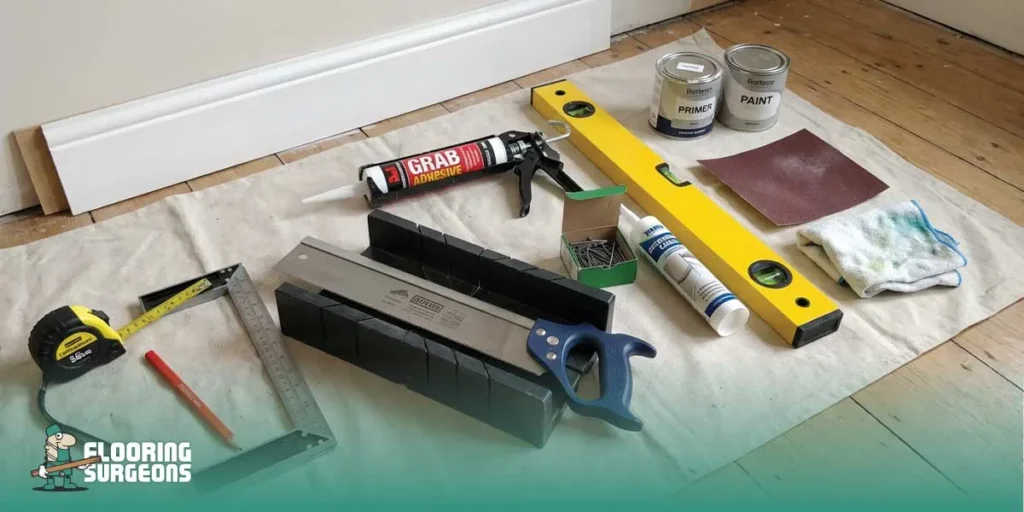
Tools and Materials Checklist
Having the right tools ready makes the installation smoother and faster. Here’s what you’ll need:
- Tape measure
- Pencil and marking square
- Mitre saw or mitre box with a fine-tooth handsaw.
- Grab adhesive (strong, instant-grab recommended)
- Nails or a nail gun (optional)
- Spirit level
- Caulk or decorator’s filler
- Sandpaper (fine grit, 120–180)
- Cleaning cloth
- Primer and paint (if the boards need finishing)
Tip:
If you’re installing MDF skirting boards, keep the cut ends dry and clean. MDF absorbs moisture easily, which can affect both adhesion and overall finish.
Measuring and Preparing Your Walls
Accurate measuring is the foundation of a well-fitted skirting board. Take your time here—it will save you from having to re-cut boards later.
How to prepare your walls:
- Measure each wall section twice to get exact lengths.
- Mark the back of each board to match its position and corner direction.
- Lightly sand rough paint edges, lumps, or old adhesive.
- Check for high or uneven spots on the wall surface and fill them with decorator’s filler.
- Vacuum or wipe down the skirting line to remove dust and debris.
Smooth, clean walls help the skirting sit flush and prevent visible gaps.
Choosing Adhesive or Nails — Which Method Should You Use?
Your fixing method depends on the wall type and the weight of your skirting boards.
Use adhesive if:
- Your walls are plasterboard
- You want a clean, no-hole finish.
- You’re installing lightweight MDF skirting.
- You prefer a more straightforward, DIY-friendly method. If you’re updating both your skirting and flooring, exploring the laminate flooring collection can help you choose a finish that complements the room perfectly.
Use nails if:
- Your walls are masonry (brick, concrete, block)
- The skirting boards are solid timber or extra tall.
- You need maximum strength and long-term hold
How to Fit Skirting Boards Step by Step
Once your tools are ready and the walls are clean and measured, you can begin fitting the skirting boards. The installation process follows a simple, logical sequence, and taking your time at each stage ensures a smooth, professional finish that looks like an experienced tradesperson did it.
Step 1 — Remove Old Skirting and Prepare the Area
If your walls already have skirting, remove it carefully using a pry bar or scraper, working slowly along the length of the board to avoid damaging the plaster. Once the old skirting is off, inspect the wall thoroughly. Any leftover adhesive, loose plaster, or uneven sections should be cleaned, sanded or filled so the new board can sit flush without gaps. A clean, level surface at this stage prevents alignment issues later.
Step 2 — Measure the Wall and Transfer the Lengths to the Boards
Accurate measurements are essential. Measure each wall and transfer the exact measurements onto the back of each skirting board. Mark the direction of the corners so you know whether you need an internal or an external mitre. It’s essential to work slowly and double-check your markings because even a small mistake becomes evident once the board is fixed in place. Keeping your measurements organised ensures every section fits neatly without forcing adjustments.
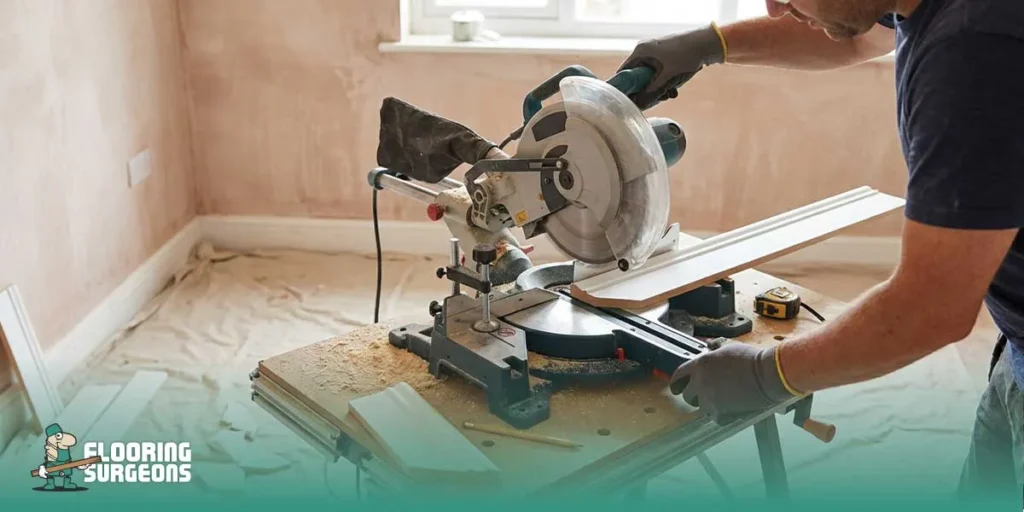
Step 3 — Cut the Boards and Create Mitre Joints
Mitre cuts give the skirting boards their clean corner finish. Use a mitre saw or mitre box to cut precisely at forty-five degrees. Internal corners require cuts angled towards the wall, while external corners need cuts angled away from it. Always test-fit the corner before installing it. If the joint feels slightly open or uneven, make a very light adjustment with the saw or sand the edge to achieve a tight, clean joint. Well-cut mitres are one of the strongest indicators of a professional installation.
Step 4 — Apply Adhesive or Fixing Method
Once your cuts are ready, apply the chosen fixing method. For homes with plasterboard walls, a strong grab adhesive is usually the cleanest and most effective approach. Apply an even line of adhesive along the back of the board, then press the skirting firmly against the wall and hold it for a few seconds to allow the glue to bond. For masonry walls or heavier timber skirting, you may prefer to use finishing nails or a nail gun. Many professional installers combine both methods: adhesive for complete contact and a few small nails to hold the board in place while the adhesive cures.
Step 5 — Position and Secure the Skirting Boards
Start with the longest wall in the room. Position the board carefully, aligning the bottom edge with the floor and sliding it slightly if needed until it sits perfectly straight. Use a spirit level to confirm everything is aligned both horizontally and vertically. Once the board is in position, apply pressure along the length to ensure intense contact. When joining two boards on a long wall, make sure the joint sits tightly without a visible gap. Proper alignment at this stage determines the overall finish of the room.
Step 6 — Fill Gaps, Smooth the Edges and Prepare for Painting
After the boards are fixed, inspect the entire length for small gaps or visible edges. Use the decorator’s caulk or wood filler to fill any gaps where the skirting meets the wall or between two joining boards. Smooth the filler with your finger or a small tool, then allow it to dry thoroughly. Lightly sand any rough spots to achieve a clean surface. If you plan to paint the boards, wipe away any dust, apply primer if required, and finish with your chosen paint. This final stage transforms the installation from simply “attached to the wall” into a clean, professional-looking finish.
Common Skirting Board Installation Mistakes to Avoid
Even though skirting board installation is a relatively simple DIY task, a few minor mistakes can make the final result look uneven, messy or unprofessional. Understanding these mistakes before you begin saves you time, materials, and frustration. Most issues stem from poor preparation, rushed cutting, or the omission of small details that make a big difference to the finished look.
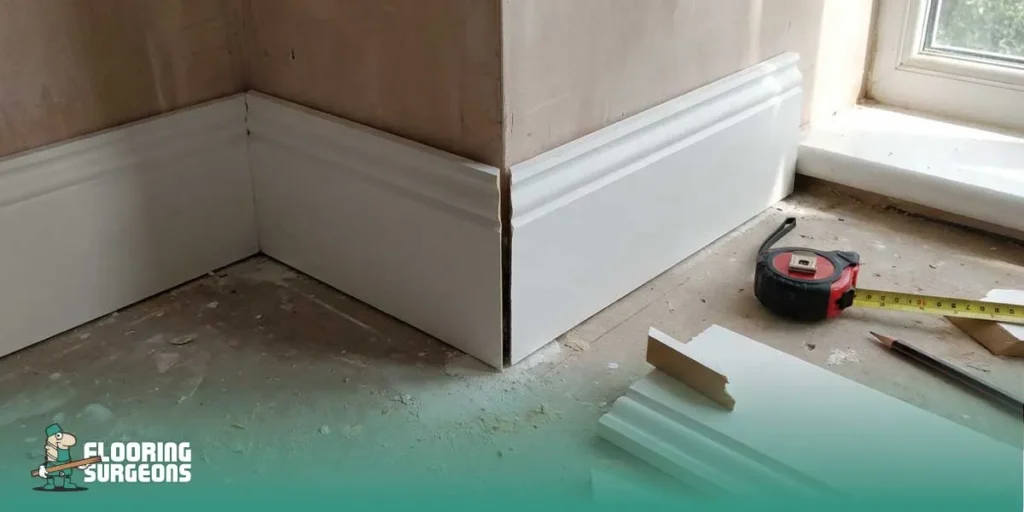
Rushing the Measuring and Cutting Stage
The most common issue appears long before the skirting reaches the wall. Many people take quick measurements or assume corner angles are perfect ninety degrees, which leads to gaps, open joints, or boards that don’t sit correctly. Accurate measuring and slow, controlled mitre cuts create the tight joints that define a clean installation. Skipping this stage or taking a “close enough” approach guarantees uneven corners and unnecessary re-cutting.
Fixing Boards to Uneven or Dirty Walls
Another frequent mistake is installing skirting on walls that haven’t been cleaned, levelled or prepared. Even a thin layer of dust or dried paint drips can stop the skirting from sitting flush. When the board is fixed against an uneven surface, it shows immediately, often creating small shadows along the top edge. Taking a few minutes to smooth rough patches or remove debris ensures the board connects firmly to the wall without unwanted gaps.
Using Too Much Adhesive or the Wrong Type
Choosing the wrong adhesive—or using too much—can create problems during and after installation. Excess adhesive spills out from behind the board and is difficult to remove cleanly once it begins to set. Likewise, a weak or unsuitable adhesive may cause the skirting to loosen over time. A high-quality grab adhesive, designed specifically for wood and MDF, provides a strong, reliable bond without mess. If you’re fixing skirting to masonry walls, relying solely on adhesive often isn’t enough; reinforcing with nails or screws prevents future movement.
Neglecting to Test-Fit Mitre Joints Before Securing Them
Many DIYers secure the board too early, only to discover that the mitre joint doesn’t align properly. Once adhesive or nails are applied, correcting the angle becomes difficult and may damage the board. Always hold the two jointed pieces together first and check the fit in position. Adjusting a cut by even one millimetre can completely change how neatly the corner closes. Test-fitting prevents the most visible—and the most frustrating—issues.
Forgetting to Use Caulk or Leaving Gaps Unfinished
Skipping the finishing stage is another mistake that reduces the overall quality of the installation. Even perfectly installed skirting will have micro-gaps along the wall or in the corners. Without caulk or filler, these small gaps make the skirting look rushed and incomplete. A smooth, even run of decorator’s caulk seals these lines, hides imperfections, and gives the entire room a polished, cohesive appearance. This step is quick but essential for a professional result.
Installing Skirting Boards on Plasterboard vs Masonry Walls
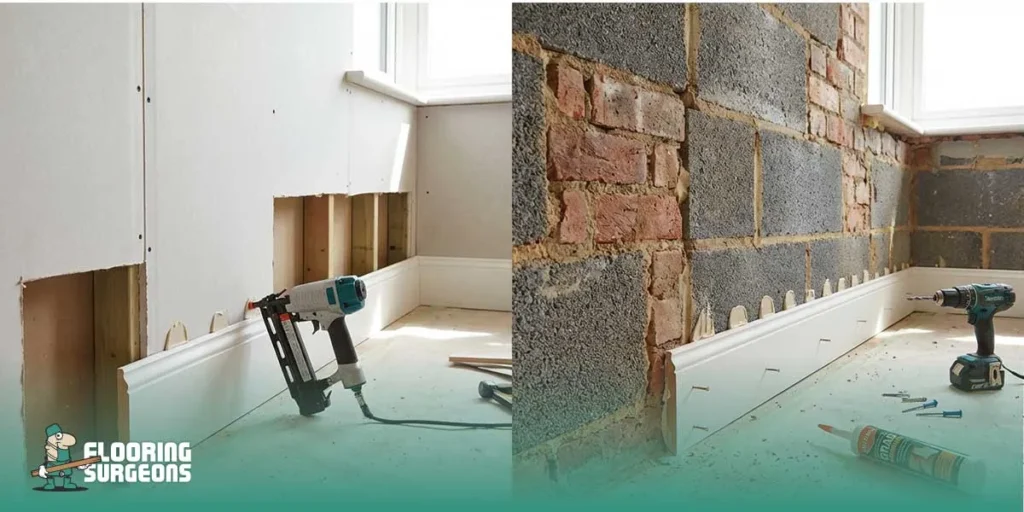
Different wall types require different installation approaches. A method that works well on a plasterboard partition may struggle to secure a heavy skirting board on a solid masonry wall. Understanding these differences before you begin prevents loose boards, poor adhesion and gaps that appear over time. The goal is simple: match the fixing method to the wall’s strength and behaviour so your skirting stays firmly in place for years.
Fitting Skirting Boards on Plasterboard Walls
Plasterboard walls are lightweight and slightly flexible, so they don’t hold traditional nails or screws as securely as masonry walls. Because of this, the most reliable approach is to use a high-quality grab adhesive as the primary fixing method. When applied evenly across the back of the board, the adhesive helps the skirting sit flat and maintain complete contact along the entire length of the wall. It also eliminates the need for visible fixings, giving you a cleaner, more seamless finish.
If the plasterboard has any dips or uneven patches, it’s essential to smooth them out beforehand. A slight hollow behind the board weakens adhesion and increases the likelihood of movement later. Some installers add a few light pins or brad nails just to support the skirting while the adhesive cures, but this should only be done with care so the plasterboard surface does not crack. Once the adhesive sets, the board holds firmly without the need for heavy fixings.
Fitting Skirting Boards on Masonry Walls
Masonry walls behave very differently. Brick and block surfaces are strong and stable but often uneven, so adhesive alone isn’t always enough—especially when installing tall or solid timber skirting boards. In most UK homes with solid walls, the recommended method is to combine a strong adhesive with mechanical fixings. After applying adhesive to ensure complete contact, secure the skirting using finishing nails, screws with wall plugs, or a masonry nail gun. This creates a long-lasting hold that won’t shift with temperature or building movement.
Before fixing the boards, check the wall for lumps, ridges or old plaster spots that might stop the skirting from sitting flat. Masonry walls often have imperfections that aren’t obvious until the board is in position. Levelling or packing small gaps prevents shadows and uneven lines later. When working with screws, drilling pilot holes through the skirting helps keep the board aligned and reduces the risk of splitting, especially with natural timber.
Choosing the Right Method for Your Home
Most homeowners don’t think about wall structure when planning skirting installation, but it’s one of the most critical factors in achieving a stable, attractive finish. Plasterboard walls benefit from a clean adhesive-based method because the surface can’t support heavy fixings. Masonry walls, on the other hand, demand a stronger approach that combines adhesive with nails or screws for a secure hold. Matching your method to the wall type not only prevents future movement but also ensures the skirting sits smoothly, fits tightly into the corners and stays aligned over time.
Final Tips for a Clean, Successful Skirting Board Installation
A well-fitted skirting board always comes down to three things: careful preparation, accurate cutting and taking the time to finish the small details. Even if the installation is straightforward, the difference between an amateur result and a professional one is often found in the small, quiet steps rather than the visible ones.
One of the simplest ways to improve your final finish is to check each piece of skirting in position before fixing it. Holding the board against the wall, checking the alignment, and making minor adjustments early prevents gaps, open mitre joints, or uneven edging. This check takes only a few seconds but saves a lot of rework later.
Another helpful tip is to move slowly around corners. Corners are always the areas people notice first because they naturally draw the eye. If your mitre joint looks tight, sits flush against the wall and follows the line of the room, the entire installation instantly feels more polished.
Finally, remember that freshly fitted skirting benefits from a little settling time. Once the adhesive has fully cured and any small gaps have been filled and smoothed, a light coat of paint or varnish ties everything together and gives the room a clean, finished look. Taking your time at this stage ensures your work not only looks good now but also stays neat and stable in the long term.
If you’re planning a full renovation or looking for quality flooring options to match your new skirting boards, our team at Flooring Surgeons offers a wide range of styles suitable for UK homes.

Haniye Ayanmanesh
As an expert writer for Flooring Surgeons, I combine technical SEO knowledge with a practical understanding of flooring, producing content that helps users make confident decisions while supporting long-term organic growth.