

How to install parquet flooring sounds like a big project, so here’s the simple answer most UK homeowners want right away: you lay parquet by preparing a flat, clean subfloor, choosing a pattern, marking a centre line, fixing the blocks in place with either adhesive or a floating system, then sanding and finishing the surface for a smooth, even look. That’s the whole process in plain words. If your subfloor is concrete, you glue it. If it’s plywood, you can choose either option. And if you’re planning a herringbone design, you start from the centre line to keep the room balanced.
That gives you the quick version, but parquet needs more care than standard click-laminate. Small things like acclimatising the blocks, fixing dips in the subfloor, or choosing the right adhesive can be the difference between a floor that stays tight for years and one that starts shifting after a few months. I’ve seen both outcomes in homes from Leeds to South London, and the smoother jobs always came from a clear plan before laying the first block.
This guide walks you through each step in a simple, homeowner-friendly way. If you’re comparing styles before you start, you can check our engineered wood flooring collection to see which colours and patterns fit best with parquet layouts. You’ll see how to prepare the room, how to set out the pattern so the lines stay straight, how to choose between glue-down and floating installation, and what sanding and finishing actually involve. We’ll also look at costs, timing and the common issues people run into with parquet, so you can avoid them before they happen.
If you’re fitting parquet for the first time, think of this as your map. It answers the big question upfront, then gives you the details only if you want them.
Table of contents
What You Need Before Installing Parquet Flooring (Tools, Adhesives and Patterns)
Before you install parquet flooring, you need three things sorted: the right tools, the right adhesive, and a clear pattern plan. These are the parts that decide whether the blocks sit tight, stay straight, and lock together cleanly once the job starts.
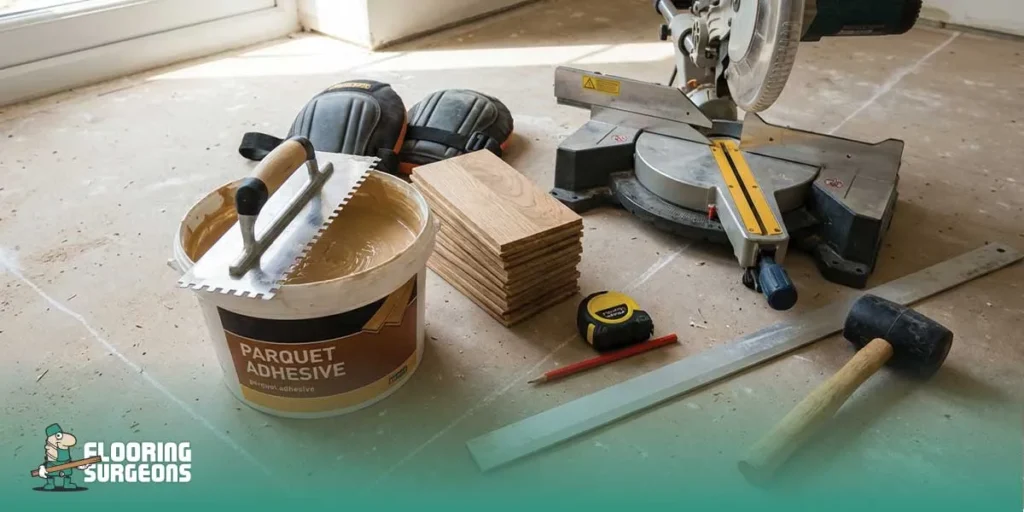
For tools, you only need a small but solid kit: a tape measure, a pencil, a straight edge, a mitre saw with a fine-toothed blade (for cleaner cuts), knee pads, and a rubber mallet. A notched trowel is essential if you’re using adhesive. If you’re sanding the floor after installation, you’ll also need access to a floor sander. Use a drum sander for large areas and an edge sander for corners and borders. You can hire these from most UK tool shops for a day or a weekend.
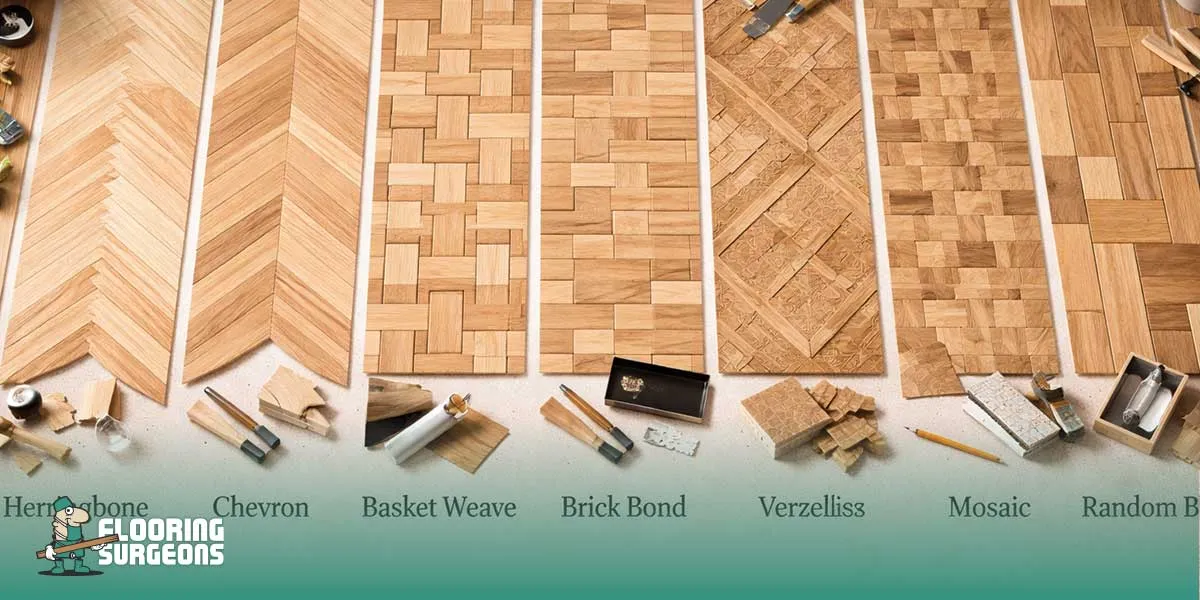
For adhesive, stick to parquet-compatible wood adhesive or a flexible flooring adhesive approved for engineered blocks. Glue that’s too rigid can crack as the room moves with seasonal changes. Many UK fitters prefer flexible adhesives in areas like Manchester, Leeds, or the Midlands, where homes often experience mild expansion in timber floors. It’s also important to apply the adhesive evenly and not too thickly to avoid air pockets. For patterns, herringbone is the most common layout and the easiest to set out once you mark a centre line. Other options like chevron or brick patterns work too, but herringbone gives the cleanest look and hides minor subfloor flaws better than straight patterns. Before you start, sketch the pattern, mark the first row, and check how the blocks will sit along the walls. Measure for any small gaps along the edges to ensure proper alignment.
If you’re doing this as a DIY project, the main difference from professional work is precision. Pros use laser lines and cut blocks faster, but the actual tools are almost the same. What matters most is taking time to plan the layout before placing the first block.
| Tool/Material | Purpose | Details |
| Tape Measure | Measuring the room | Used to measure room dimensions and plan the layout. |
| Pencil | Marking measurements | For marking where cuts will be made and ensuring accurate placement of blocks. |
| Straight Edge | Ensuring straight lines | Helps to draw precise straight lines for pattern alignment. |
| Mitre Saw with Fine-Toothed Blade | Cutting the blocks | For cleaner, more accurate cuts, especially for corner and border cuts. Use a fine-toothed blade. |
| Knee Pads | Protecting your knees during installation | Provides comfort during long installation periods, especially when kneeling for precision work. |
| Rubber Mallet | Tapping the blocks into place | Ensures blocks fit together tightly without damaging the surface. |
| Notched Trowel | Applying adhesive | Essential for applying the adhesive evenly for glue-down installations. |
| Floor Sander (Drum and Edge) | Sanding the floor after installation | Drum sander for large areas and edge sander for borders. Can be rented from tool shops. |
| Parquet-Compatible Wood Adhesive | Bonding the parquet to the subfloor | Use parquet-compatible adhesive or flexible flooring adhesive to prevent cracks due to seasonal movement. |
| Flexible Flooring Adhesive | Allowing expansion | Preferred in areas with seasonal temperature fluctuations. Ensures movement flexibility. |
| Herringbone, Chevron, Brick Pattern | Choosing your layout pattern | Herringbone is the most common for its aesthetic and ability to hide subfloor flaws. Chevron and brick patterns are options for variety. |
| Laser Line (for precision) | Precision during layout | Helps ensure the first line is perfectly straight for accurate pattern alignment. |
How to Prepare the Subfloor for Parquet Installation (Concrete vs Plywood)
Preparing the subfloor is the step that decides how smooth your parquet flooring will sit. If the base is flat, dry and stable, the blocks lock together properly and stay tight for years. If it isn’t, gaps, movement and hollow spots appear no matter how good the parquet itself is. Here’s how to get both common subfloor types ready before you start fitting.
Preparing Parquet for Concrete Subfloors
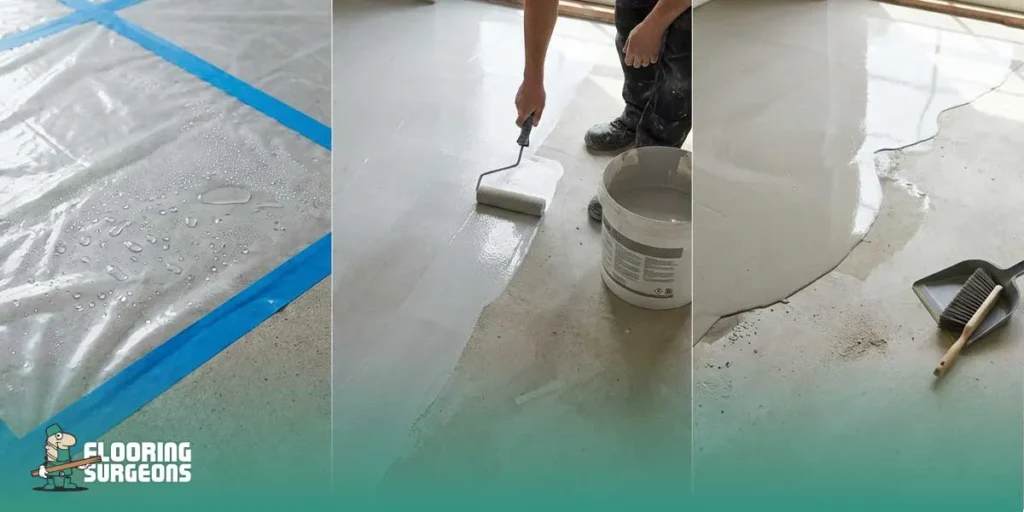
If you want to install parquet flooring on concrete, you must begin with one check: is the surface dry and clean? Concrete holds moisture for a long time, even when it looks hard and solid, so always test it first. A taped plastic sheet left overnight is enough to show if moisture is rising. If any condensation appears, the concrete needs more drying time or a moisture solution.
A DPM layer is essential for concrete. It prevents moisture from reaching the parquet blocks and protects the adhesive from weakening. You can use a liquid-applied DPM or choose a DPM-compatible adhesive if the brand allows it. Homes with older slabs, basements or ground-floor rooms especially benefit from this layer.
The concrete must be level, too. Any dips or raised spots make the pattern twist over time. Use a levelling compound if you notice uneven patches. Once the slab is dry, level and sealed, sweep away dust so the adhesive bonds properly. A clean, stable concrete base makes parquet installation much easier and reduces the risk of future movement.
Preparing Parquet for Plywood Subfloors
If you plan to install parquet flooring on plywood, the goal is stability. Start by securing every loose board. Any slight movement in the base will transfer straight into the parquet pattern. Use screws rather than nails, and cover the whole surface in a tight grid so the plywood feels solid underfoot.
Next, fill gaps and seams. Small openings between boards can create dips that cause the parquet blocks to shift out of line. Use wood filler or a suitable patching compound, then sand the surface lightly so it feels even and smooth.
Check for raised screws or edges, too. Parquet adhesive needs a flat, uniform surface to bond properly, and sharp spots can lift the blocks. A quick hand-sanding removes these imperfections.
Before installation, vacuum the plywood to remove dust. For areas with noticeable flex, adding a thin plywood overlay can help strengthen the base. A well-prepared plywood subfloor holds the pattern firmly and keeps your rows straight, even in busy rooms or older UK homes.
If your plywood base still feels a bit loose or uneven, this guide on fixing squeaky or uneven floors can help you stabilise the surface before you start laying the pattern.
Floating vs Glue-Down: Choosing the Right Method to Install Parquet Flooring
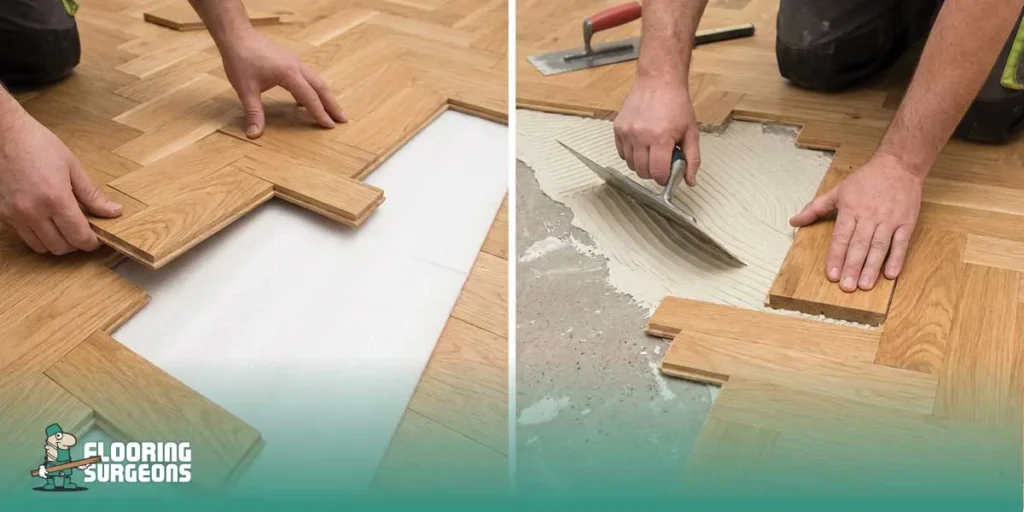
You can install parquet flooring in two ways: as floating parquet flooring or as glue-down parquet flooring. Each method has clear advantages, and the right choice depends on your subfloor, the room and how firm you want the pattern to feel underfoot.
Floating Parquet Flooring
Floating parquet flooring sits on top of an underlay rather than being fixed directly to the subfloor. The most significant advantage is speed. Blocks lock together quickly, you avoid messy adhesives, and you can lift the floor in the future without substantial work. It also offers a slightly softer feel, which many homeowners prefer in bedrooms or upstairs rooms.
The main limitation is movement. Floating parquet reacts more to seasonal changes and can produce small clicks or shifts in busy areas. It also isn’t suitable for uneven subfloors, because the pattern relies on a stable base to stay straight. Most UK fitters avoid floating installation in hallways or large open rooms where foot traffic is heavy.
Glue-Down Parquet Flooring Glue-down
Parquet flooring is the method professionals use when they want maximum stability. Each block bonds to the subfloor through a flexible adhesive, so the pattern stays tight, firm and aligned for decades. This approach works exceptionally well with herringbone or chevron layouts because it prevents drift in long rows.
It’s also quieter underfoot and handles underfloor heating better. The trade-off is time. You need a clean, level subfloor, and installation requires more precision. But if you want the most secure, long-lasting finish, glue-down is the method that delivers it.
Step-by-Step: How to Install Parquet Flooring
Here’s the simple version of how to install parquet flooring from the first line you mark to the final edge piece. These steps help you keep the pattern straight, avoid gaps, and prevent the blocks from drifting out of line once the room settles.
Step 1 — Layout and Pattern Planning
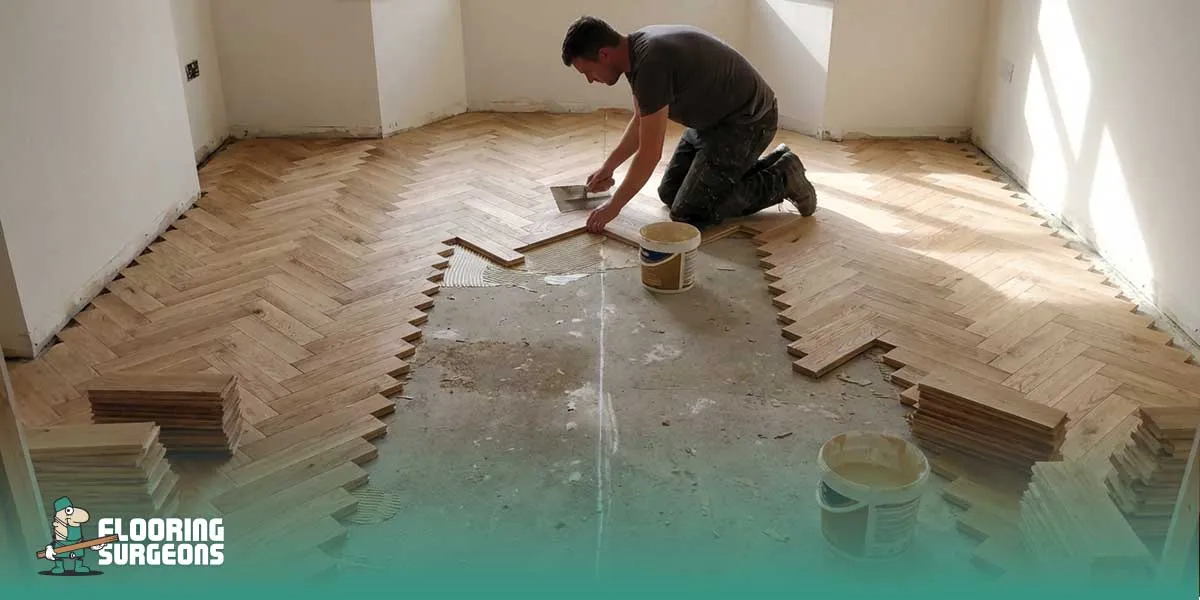
Your first task is to choose and mark your parquet installation pattern. Most people go for herringbone because it’s steady, easy to line up, and hides tiny subfloor flaws. Chevron works well too, but requires tighter cuts and more precision. Start by finding the center of the room and snapping a straight reference line. Use a laser line or chalk line for extra precision, as it helps keep the first row straight. Every block you place will follow that line, so take a moment to check it from both ends. Lay a few dry blocks on the floor without adhesive and see how they fall against the walls. This tells you whether you’ll end up with clean borders or awkward slivers.
Step 2 — Installing the Main Blocks
Now place the adhesive (for glue-down) or underlay (for floating), then begin setting the first rows. Keep the blocks tight. Any small gap at the start will grow larger as the pattern spreads.
Check alignment every few rows by standing back and looking along the pattern. If the lines drift even slightly, nudge the blocks back into position while the adhesive is still workable. A rubber mallet helps settle the blocks without damaging the wood. Light foot pressure isn’t enough. Press each block firmly so it bonds fully. In warm rooms or areas with sunlight, move a little quicker as the adhesive can firm up faster. In high-traffic areas, press down with a heavier tool to ensure a strong bond.
Step 3 — Edges and Tricky Areas
Once the main field is done, move to the borders. Measure each edge block individually rather than repeating the exact measurement across the room. Walls in UK homes rarely sit at a perfect angle, so accurate tracing matters.
Use a mitre saw for sharp cuts around door frames, radiators, and corners. When cutting small pieces, hold the block firmly so it doesn’t chip. If the angle feels awkward, mark it with a scrap piece first, then transfer the line to the real block.
After fitting the final row, wipe away adhesive squeeze-out and check for lips between blocks. Minor sanding after curing can make the edges feel smooth.
Sanding and Finishing After Installing Parquet Flooring
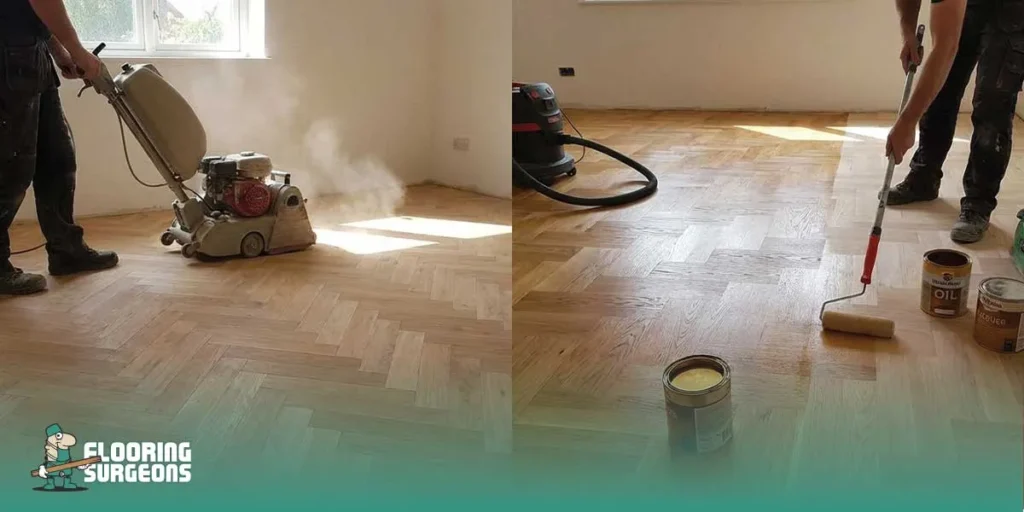
Once your parquet blocks are in place, you only need light sanding and a suitable finish to bring out the colour and protect the surface. This stage is simple but affects how smooth, durable and consistent the floor looks once the room is back in use.
Light Sanding
You don’t need to remove deep layers. Parquet only requires a light pass to level tiny lips between blocks and open the grain for finishing.
- Use a drum sander for the main area and an edge sander for borders.
- Sand in small sections and keep the machine moving to avoid marks.
- Vacuum between each grit so dust doesn’t settle back into the pattern.
- Check high spots with your hand; if you still feel a ridge, give it one more pass.
Finishing Oils or Lacquer
Your finish decides the final look and maintenance level.
- Oils give a warm, natural feel and are easy to refresh later.
- Lacquer creates a more rigid surface that stands up well to wear daily.
- Apply thin, even coats and let each coat dry thoroughly before adding the next.
- In busy UK homes, lacquer often lasts longer, but oiled floors look richer in period properties.
Common Mistakes to Avoid while Sanding:
- Sanding too aggressively and thinning the blocks.
- Leaving dust on the surface before applying the finish.
- Applying thick coats that don’t dry evenly.
- Walking on the floor too soon and leaving marks in the final layer.
Common Mistakes When Installing Parquet Flooring
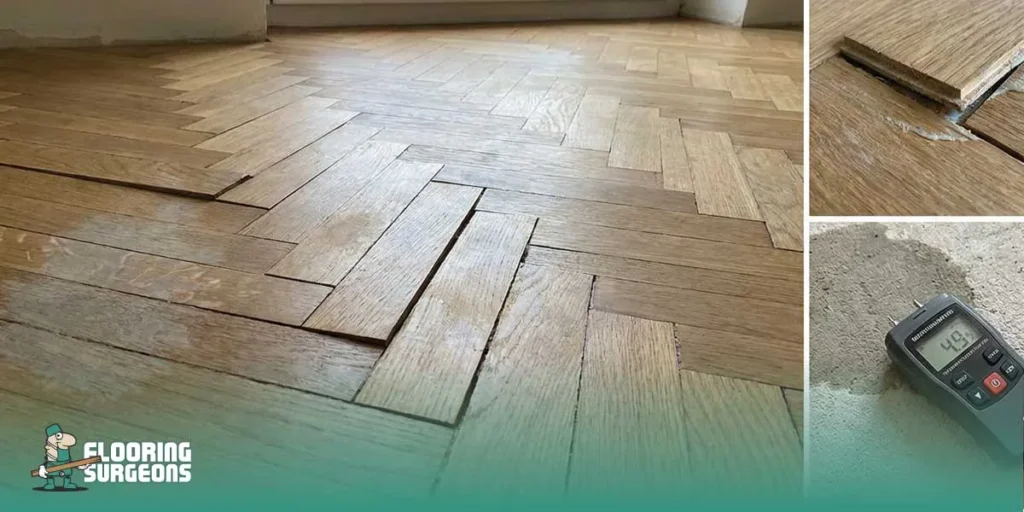
Most problems with parquet flooring start long before the blocks are fully down. A small mistake in the base, the pattern, or the adhesive choice can show up weeks later as gaps, movement, or a pattern that looks slightly “off”. Here are the mistakes that usually cause trouble for DIY installs so that you can avoid them from the start:
- Poor subfloor preparation: If the surface isn’t flat, clean, and solid, the pattern shifts and the blocks never sit tight. This is one of the biggest reasons parquet installs feel uneven or start creaking later. Check for subfloor moisture before beginning installation, as moisture can also affect adhesive performance.
- Skipping a DPM on concrete: Installing parquet flooring on concrete without a moisture barrier is a classic cause of swelling edges, lifting corners, and long-term damage. Ensure that the DPM is properly sealed and extends across the entire subfloor, especially in basements or older homes where moisture may be an issue.
- Using the wrong adhesive or too much/too little: Too much adhesive pushes blocks up and creates uneven spots. Too little reduces grip, leading to loose pieces. Parquet-specific adhesive gives the most reliable hold, but it’s important to use the correct spread rate based on the adhesive manufacturer’s instructions. Use a notched trowel to apply the adhesive evenly and avoid air pockets.
- Losing the alignment of the pattern: Herringbone and similar styles rely on perfect first rows. If the starting line isn’t exact, the whole pattern drifts. Double-check alignment frequently, especially as the rows build. Using a laser line can help ensure precise placement from the start.
- Rushing sanding or finishing: If you sand too aggressively or apply oil/lacquer before the surface is ready, the finish becomes patchy and dull. Ensure each sanding pass is smooth and consistent, and allow time for each coat of finish to dry thoroughly. Apply thin layers of finish rather than thick ones to prevent uneven drying.
Final Advice and When to Choose a Professional
Parquet brings a warm, classic style to any room, but the installation needs accuracy. If you’re working with a simple layout, a solid subfloor and a clear parquet installation pattern, you can often handle the job yourself. Just take your time with the first rows and keep the adhesive work steady. For trickier spaces, uneven subfloors, or large rooms where alignment really matters, hiring a professional is the safer choice. They’ll manage moisture checks, pattern layout and the finishing stages with precision.
If you’re still unsure how to install parquet flooring in your home or you’d like someone to look at your subfloor before you start, a pro can save you time, mistakes and wasted materials. A short assessment usually shows the best route and gives you peace of mind before you begin.
If you’d like tailored help choosing materials or checking your subfloor before you begin, the team at Flooring Surgeons can guide you through the safest installation route.

Haniye Ayanmanesh
As an expert writer for Flooring Surgeons, I combine technical SEO knowledge with a practical understanding of flooring, producing content that helps users make confident decisions while supporting long-term organic growth.