



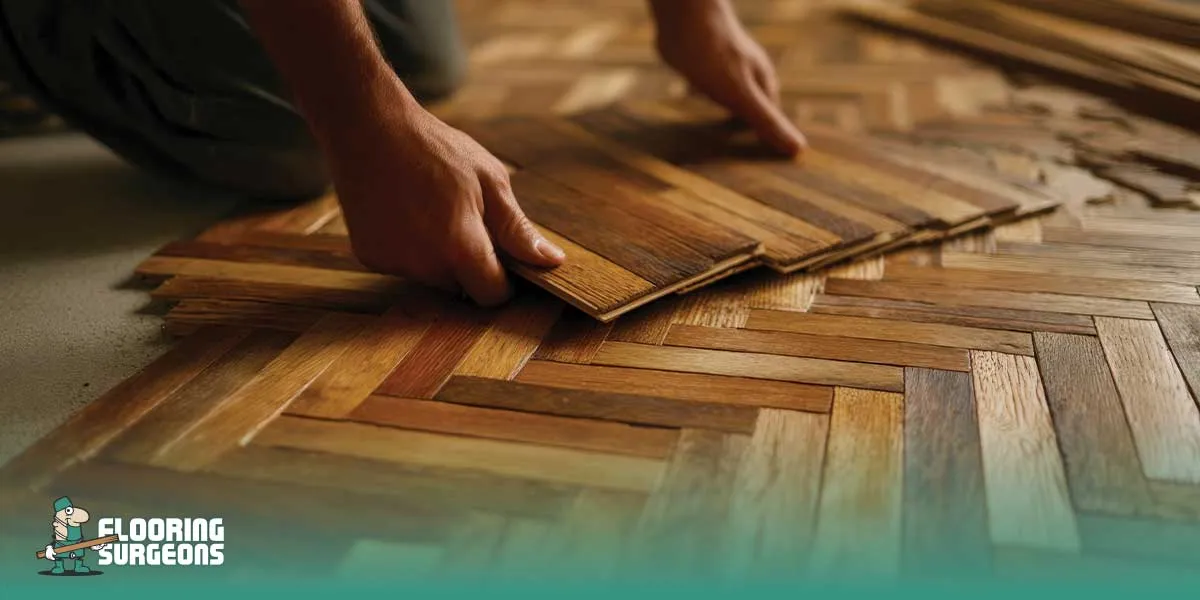
Herringbone flooring has become a symbol of elegance and sophistication, offering a timeless appeal to any space. Whether you’re installing herringbone wood flooring or opting for vinyl or laminate, this pattern adds a unique charm to your interiors. If you’re wondering how to lay herringbone flooring, this step-by-step guide will walk you through everything you need to know—from preparation to installation, and even cost and time considerations.
Table of contents
Tools Needed for Laying Herringbone Flooring
To ensure a successful installation of herringbone flooring, you’ll need a variety of tools. Here is a comprehensive list of essential tools required for both DIY and professional installations:
| Tool | Purpose | Recommended Use |
|---|---|---|
| Tape Measure | To measure the room and planks for accurate cutting and placement. | Measure the room size and ensure precise plank placement. |
| Utility Knife | For cutting vinyl or laminate planks. | Cut planks to fit around edges or obstacles. |
| Mitre Saw / Jigsaw | For cutting wood planks, especially when fitting planks along walls or at odd angles. | Precision cutting of planks for edges and corners. |
| Notched Trowel | For spreading adhesive evenly over the subfloor. | Apply adhesive to the subfloor in a smooth, even layer. |
| Spacers | To maintain consistent gaps between planks for expansion. | Ensure even spacing between planks during installation. |
| Rubber Mallet | To gently tap the planks into place without damaging the surface. | Gently tap planks into place without causing damage. |
| Level | To ensure the subfloor is level and the planks are laid evenly. | Check that the surface is level before installation. |
| Square | To ensure the angles are accurate and the planks align correctly. | Keep lines straight and align planks symmetrically. |
| Adhesive | A high-quality adhesive to bond the planks to the subfloor. | Use an appropriate adhesive based on the flooring material. |
| Skirting Boards / Beading | To cover expansion gaps around the edges of the room after installation. | Install around the perimeter for a clean, finished look. |
| Cleaning Cloth / Mop | For cleaning excess adhesive and dirt from the floor surface. | Clean the surface of any residue after installation. |
| Screws and Drill | For securing any loose floorboards (if needed) or adding extra securing points along the perimeter. | Use to secure loose boards or perimeter if required. |
Preparing Your Space for Herringbone Flooring
Before you begin installing your herringbone flooring, it’s crucial to prepare your space properly for a flawless result:
Clear the Room: Remove all furniture and any existing flooring that might interfere with the installation process.
Acclimate the Flooring: Allow the herringbone wood flooring to acclimate in the room for 48 hours before starting the installation. This helps the wood adjust to the room’s temperature and humidity, preventing expansion or contraction after installation.
Room Conditions: Ensure the room temperature is maintained between 18–22°C with a relative humidity level of 40–60% during acclimation and installation. Sudden fluctuations in temperature or humidity can cause movement in wood flooring after installation.
Check the Subfloor: Ensure the subfloor is clean, dry, and level. If installing over concrete, make sure it’s dry and smooth. For wooden subfloors, check for squeaks or loose boards and correct them before proceeding.
Moisture Testing: For concrete subfloors, moisture content should not exceed 2% CM (or 75% relative humidity when tested with an in-situ probe). For wooden subfloors, moisture content should typically be between 8–12%. Always use a calibrated moisture meter before installation.
Subfloor Tolerance: The subfloor must be level within 3mm over a 2-meter straightedge. Any uneven areas should be corrected using a suitable self-levelling compound before installation. Herringbone patterns are less forgiving than straight plank layouts and will highlight subfloor imperfections.
Damp Proof Membrane (DPM): When installing over concrete, especially on ground floors, a damp proof membrane or moisture barrier may be required if moisture readings are borderline.
Once your space is prepped, you’re ready to move on to the next step.
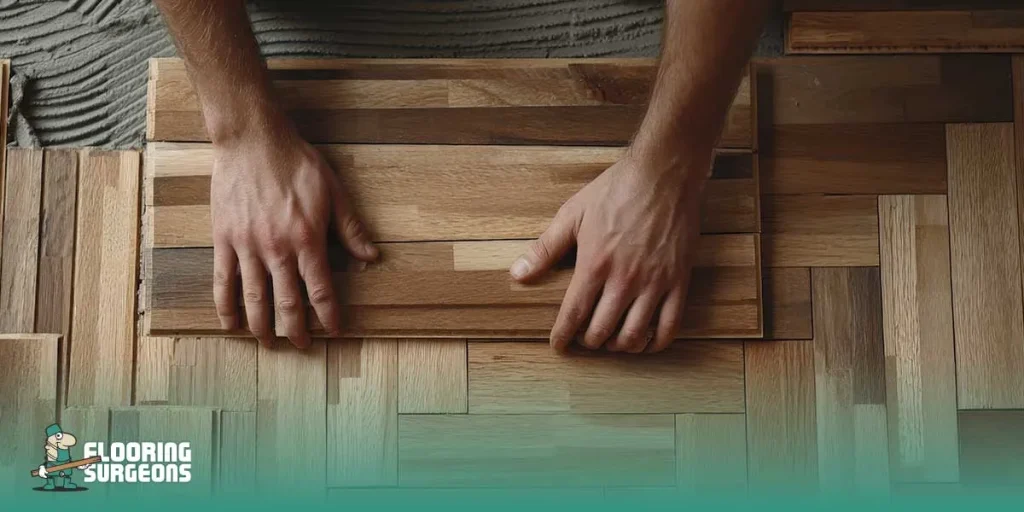
Planning the Layout: Which Way to Lay Herringbone Flooring?
When it comes to how to lay a herringbone pattern, the direction you lay the planks can greatly impact the room’s appearance. Here are some tips:
- Choosing the Right Direction: The most common method is to lay the pattern parallel to the longest wall of the room. This creates a sense of flow and makes the space feel larger.
- Alternative Layout Consideration: In some cases, aligning the herringbone pattern toward the main natural light source or the main entrance of the room can enhance visual impact and symmetry. In hallways, the pattern is often aligned along the direction of travel.
- Symmetry is Key: Mark the center of the room and draw a reference line to guide the placement of your planks. This will help ensure the herringbone pattern is symmetrical and aligned properly.
- Establishing a True Center Line: Use a chalk line and laser level to create a perfectly straight central guideline. Then create a perpendicular 90-degree reference line using a carpenter’s square. Accuracy at this stage is critical—any deviation will multiply across the pattern and become highly visible.
- Creating a Starter Block: Professional installers often create a pre-assembled zig-zag starter block (first “V” section) to ensure the initial angle remains perfectly square. This starter section is aligned with the center line before continuing outward on both sides.
- Consider Borders: Adding a border or design strip around the edges can enhance the overall aesthetic, giving the room a more polished and finished look.
- Planning for Expansion Gaps: When using borders, ensure expansion gaps of 8–12mm are still maintained around the perimeter of the room. These gaps must not be restricted by the border installation.
- Material Allowance: Herringbone installations typically require 8–15% additional material to account for cuts and waste, especially in irregularly shaped rooms. Always calculate this before ordering materials.
With the layout planned, it’s time to move on to the installation phase. If you’re considering an alternative flooring option, don’t forget to check out our guide on How to Install Vinyl Flooring for a stylish and durable option.
Step-by-Step Installation of Herringbone Flooring
Now that your space is prepared, here’s how to lay herringbone wood flooring step by step:
- Dry Lay the First Few Rows: Before gluing anything down, lay out a few rows of the planks without adhesive. This will allow you to check the alignment and make any adjustments if necessary.
- Apply Adhesive: Once satisfied with the dry layout, spread a high-quality adhesive over a small section of the subfloor using a notched trowel. Work in small sections to prevent the adhesive from drying before you can lay the planks.
- Start Laying the Planks: Begin placing the planks along the reference line, pressing them firmly into the adhesive. Be sure to maintain consistent spacing using spacers.
- Continue the Pattern: Work in sections, ensuring that each plank is aligned with the previous one. Keep checking the alignment as you go to maintain a consistent pattern.
- Cutting Planks for the Edges: When you reach the walls, you will need to cut the planks to fit. Use a mitre saw or jigsaw for precise cuts.
Check for Air Bubbles: As you lay each plank, apply uniform pressure to ensure that no air bubbles are trapped underneath, which can affect the overall appearance and adhesion of the floor.

How Much Does It Cost to Lay Herringbone Flooring?
The cost of installing herringbone flooring depends on the material and whether you choose professional installation. Here’s a breakdown of expected costs:
- Wood Flooring: Solid or engineered wood herringbone flooring tends to be on the pricier side, with costs ranging from £25 to £50 per square meter depending on the quality and finish.
- Vinyl and Laminate Flooring: For a more budget-friendly option, cheap herringbone flooring such as vinyl or laminate can cost anywhere from £10 to £25 per square meter.
- Professional Installation: If you opt for professional installation, costs can range between £20 and £40 per square meter, depending on the complexity of the installation and the material chosen.
How Long Does It Take to Lay Herringbone Flooring?
The time it takes to lay herringbone flooring depends on the room size and the type of material:
- DIY Installation: For a room up to 20 square meters, expect to spend around 2-3 days laying the flooring yourself, especially if you are new to the process.
- Professional Installation: A professional team can complete the installation in a shorter time frame, typically within 1–2 days for a similar-sized room.
Final Touches: Cleaning and Protecting Your New Herringbone Floor
Once your herringbone floor is installed, it’s essential to clean and protect it properly:
- Allow the Adhesive to Cure: After installation, avoid walking on the floor for at least 24 hours to let the adhesive fully bond.
- Install Skirting or Beading: To cover the expansion gaps around the edges of the room, install skirting boards or beading for a clean finish.
- Clean the Floor: Use a soft cloth and a pH-neutral cleaner to remove any excess adhesive from the surface.
Helpful Comparison Table for Herringbone Flooring
| Material Type | Cost per Square Meter | Installation Time | Durability | Ease of Installation |
| Engineered Wood | £25 – £50 | 1-3 days | High | Moderate |
| Solid Wood | £30 – £50 | 1-3 days | Very High | Difficult |
| Vinyl Flooring | £10 – £25 | 1-2 days | Medium | Easy |
| Laminate Flooring | £10 – £25 | 1-2 days | Medium | Easy |
Conclusion
Laying herringbone flooring can bring timeless elegance to your home, and with the right preparation, materials, and techniques, you can achieve professional results. Whether you’re opting for how to install herringbone wood flooring or considering a budget-friendly option like vinyl, this step-by-step guide ensures you’ll be well on your way to transforming your space.
If you’re looking for cheap herringbone flooring options or expert installation, visit Flooring Surgeons for a wide range of products and professional services.

Mina Asgari
I’m an SEO Specialist and Content Strategist focused on sustainable business growth. I design data-driven content strategies by deeply analyzing user intent, search behavior, and SEO best practices, ensuring every piece of content serves a clear purpose for both users and search engines.