

If you want a clear answer straight away, here it is: Woodworm in floorboards can usually be treated, but not every case actually needs treatment. The right response depends on whether the infestation is active, how much structural damage exists, and what caused the problem in the first place. Many homeowners panic when they see small holes or fine wood dust in their floorboards and assume the floor is failing. In reality, some woodworm signs are old and inactive, while others indicate a current problem that needs attention. Treating every mark blindly can waste money, while ignoring an active infestation can allow damage to spread.
The most important distinction is this: treatment solves active woodworm, but it does not automatically make floorboards structurally safe. In some cases, treatment alone is enough. In others, repair or replacement is the only sensible option. Moisture levels, subfloor conditions, and the condition of the joists all play a role in deciding which path is appropriate.
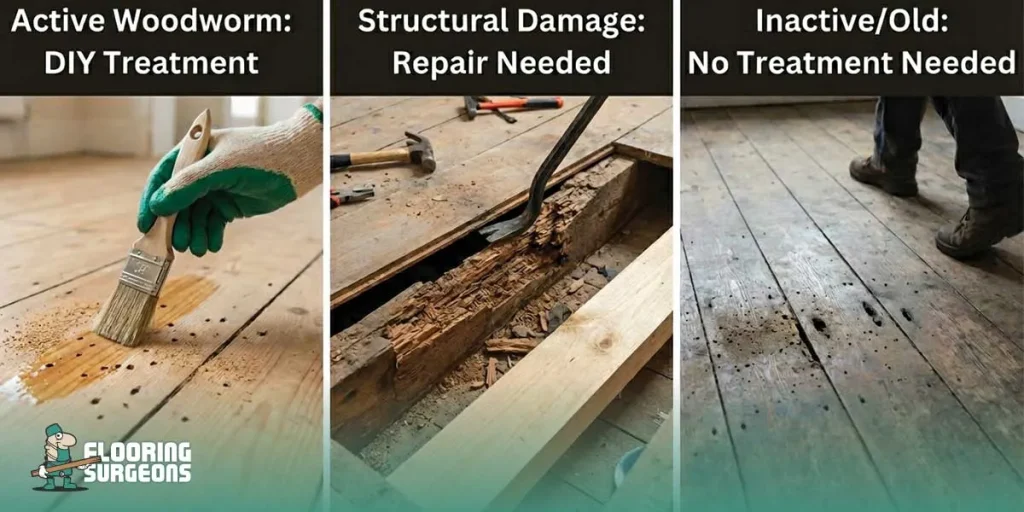
This guide explains how to treat woodworm in floorboards properly, starting with how to tell if woodworm is active or old. You will learn when DIY treatment works, when professional treatment is needed, and when treatment is not worth doing at all. The goal is not to scare you into action, but to help you make the right decision for your home before unnecessary damage or cost occurs.
Table of contents
How to Tell If Woodworm in Floorboards Is Active or Old
Before treating woodworm, diagnosis matters more than action. Many floorboards show signs of historic woodworm that no longer pose a risk. Treating inactive infestation wastes money, while missing an active one allows damage to continue unnoticed. The following checks help you tell the difference with far more accuracy than visual guesswork alone.
Fresh exit holes vs old holes
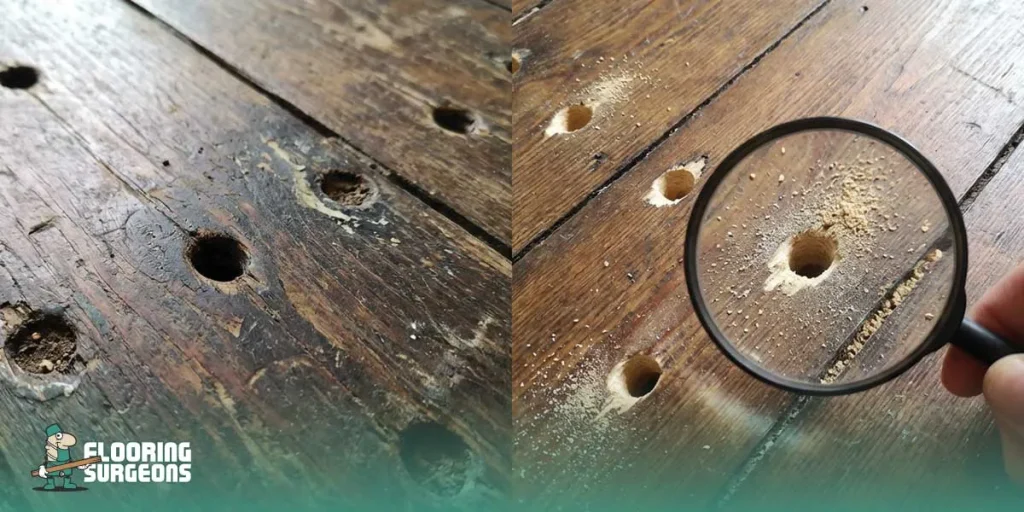
Not all holes mean active woodworm. The age of the exit holes tells an important part of the story.
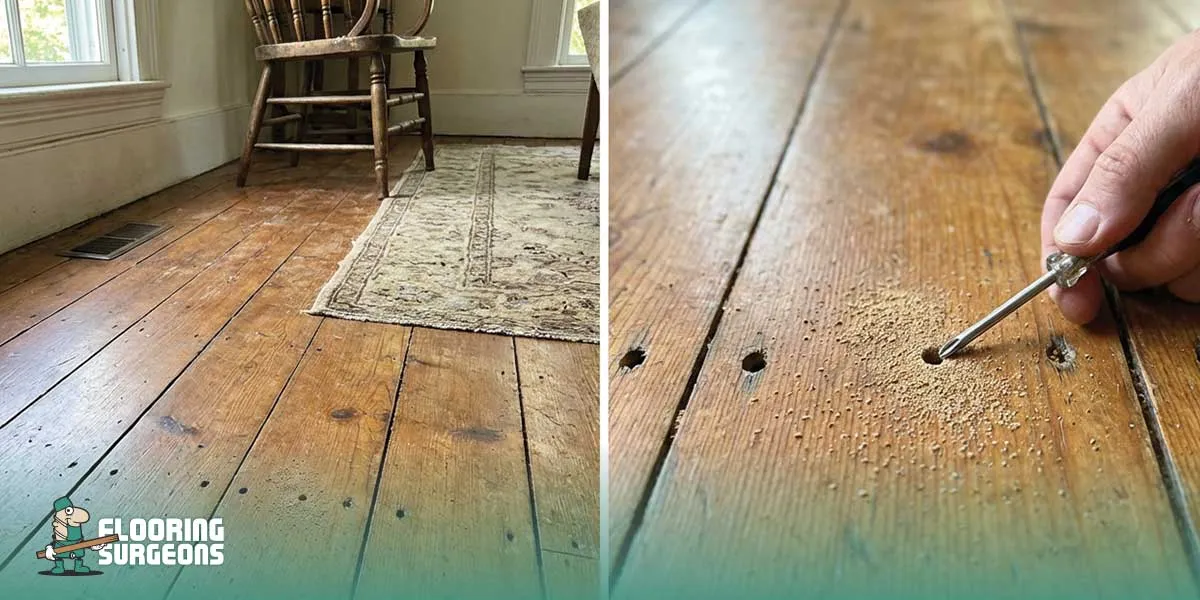
- Fresh exit holes usually have sharp, clean edges and appear lighter in colour than the surrounding wood. They may look newly drilled and sometimes appear in clusters that were not present before.
- Old exit holes tend to have darker edges, rounded wear, or paint and finish inside them. If the floor has been sealed or finished since the holes appeared, this is a strong sign that the infestation is no longer active.
If you notice new holes appearing over time, especially after warm months, this often indicates active woodworm rather than historic damage.
Wood dust (frass): what it really means
Fine powder around floorboards is often mistaken for definitive proof of active woodworm, but context matters.
- Active infestation frass is usually pale, fine, and loose. It appears beneath holes or along board edges and returns after being cleaned away.
- Old frass is compacted, darker, or mixed with household dust. If it does not reappear after cleaning, it is often residue from past activity.
One-off dust without recurrence is rarely a sign of ongoing infestation. Reappearing dust in the same areas is far more concerning.
Structural softness vs surface marks
Surface appearance alone does not reveal structural condition. The real question is whether the timber beneath the surface is compromised. Structural damage risk also depends on the different types of wooden flooring, as softer timbers and untreated boards are far more vulnerable to internal woodworm tunnelling.
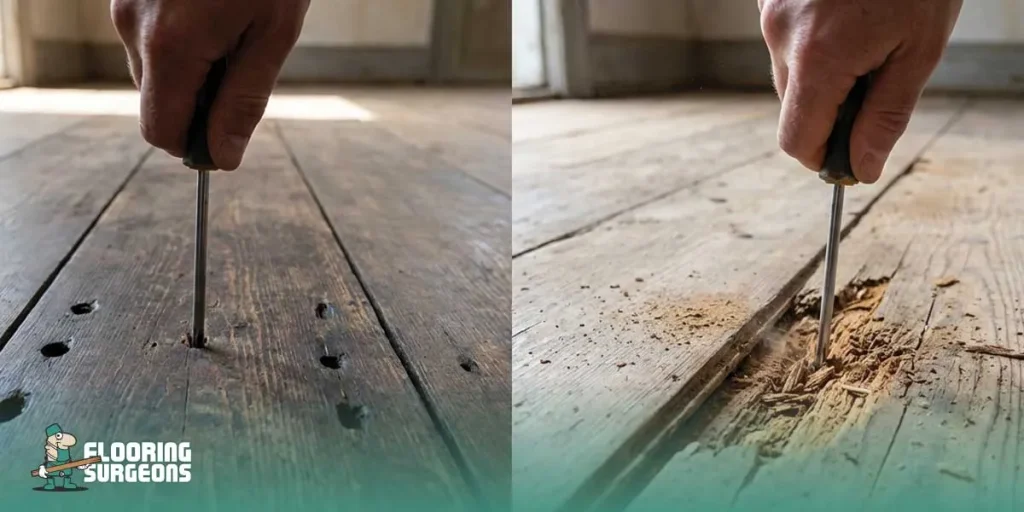
- Surface marks may look alarming, but leave the wood firm when pressed or tapped. Boards feel solid underfoot and do not flex abnormally.
- Structural softness is indicated by spongy areas, excessive flexing, or timber that can be indented with moderate pressure. This suggests internal tunnelling rather than surface damage.
If floorboards feel solid and stable despite visible holes, the infestation may be historic. If softness or movement is present, treatment alone may not be enough and further assessment is needed.
Active woodworm requires treatment. Inactive woodworm often does not. Structural damage changes the decision entirely. Treating without diagnosing whether woodworm is active or old is the most common mistake homeowners make and the main reason unnecessary treatments are carried out. Correct diagnosis prevents wasted money, avoids false reassurance, and ensures floorboards are only treated, repaired, or replaced when it is genuinely necessary.
How to Treat Woodworm in Floorboards Properly
Effective woodworm treatment depends on two things only: whether the infestation is active and how deep the damage goes. Most failed treatments happen because this distinction is ignored.
DIY woodworm treatments (when they work)
DIY treatments work only in specific, limited situations.
They can be effective when:
- The infestation is active but localised
- Damage is surface-level
- The timber is still structurally firm
What actually works:
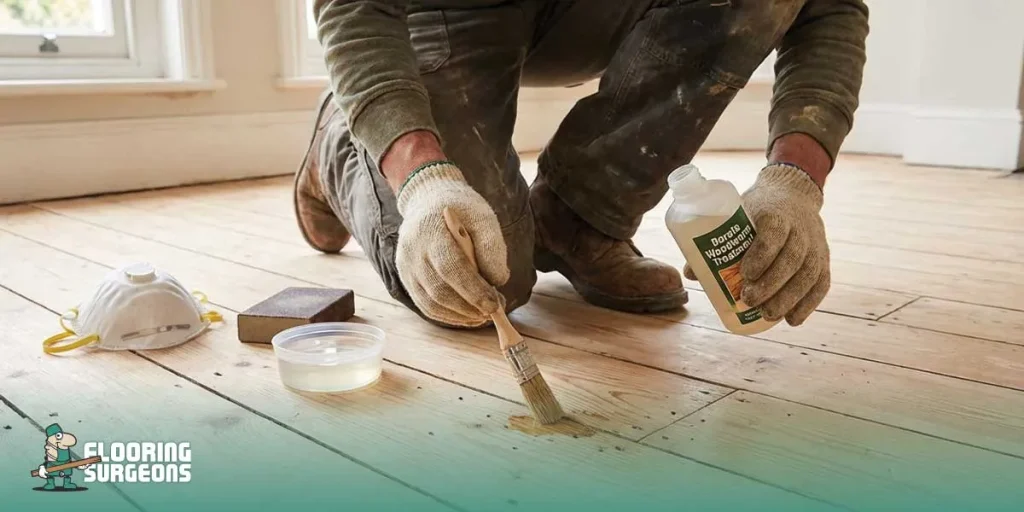
- Borate-based or specialist woodworm insecticides
- Applied directly to bare or sanded timber
- Focused on exit holes, joints, and exposed edges
Key limitation:
- DIY treatments mainly kill larvae near the surface
- They do not reliably reach deep internal tunnels
If new holes or dust appear after treatment, DIY methods are no longer sufficient.
Professional woodworm treatment
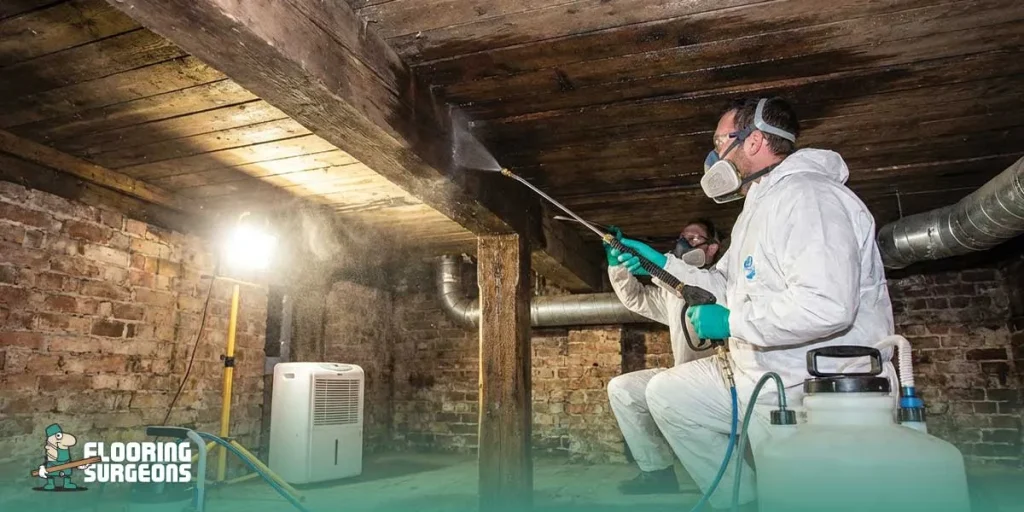
Professional treatment is required when there is a structural risk or ongoing activity.
It is necessary when:
- The infestation is active and widespread
- Floorboards feel soft, weak, or springy
- The timber is part of the structural floor system, not just a surface layer
Why professional treatment works better:
- Deeper chemical penetration
- Access to hidden voids and subfloor areas
- Simultaneous identification of moisture and ventilation issues
Treatment alone is not enough. Moisture sources, poor ventilation, or untreated timber must also be addressed, or reinfestation is likely.
Why surface treatments sometimes fail
Most surface treatments fail for one simple reason: they never reach the larvae.
Common causes of failure:
- Application over-painted, sealed, or finished wood
- Chemicals failing to penetrate internal galleries
- Treating symptoms without fixing moisture conditions
- Misidentifying old, inactive damage as active infestation
Surface treatments may improve appearance, but they do not stop active woodworm if larvae remain alive inside the timber.
Does Woodworm Damage Floorboards Structurally?
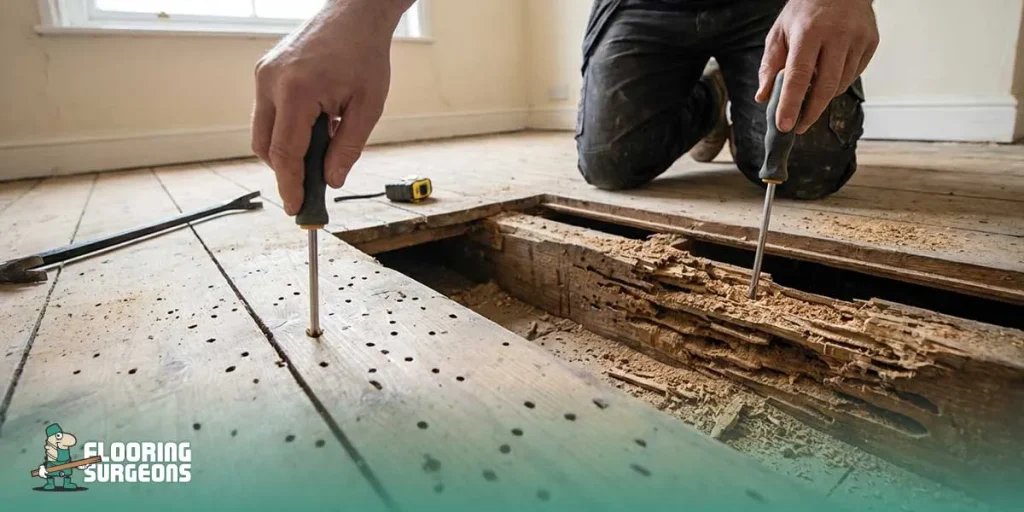
- Floorboards usually remain safe when exit holes are old, no fresh wood dust appears, boards feel firm underfoot, and damage is limited to the surface or edges rather than the full thickness.
- Replacement becomes unavoidable when boards feel soft or spongy, flex excessively under weight, crack when pressure is applied, or show extensive tunnelling across multiple boards or joists.
- Load-bearing risk is highest if woodworm has affected not just the visible floorboards but also the subfloor structure, especially joists, bearers, or suspended timber floors.
- A simple practical check is localised pressure testing: if a screwdriver or firm thumb pressure sinks into the timber, structural integrity is compromised.
- Visual inspection alone is not enough; hidden damage underneath the floorboards can be more severe than what is visible on the surface.
Woodworm does not automatically mean structural failure, but once timber softness or widespread tunnelling is present, replacement is safer than treatment.
How Much Does Woodworm Treatment for Floorboards Cost in the UK?
Before spending money on treatment, homeowners need to understand a hard truth: woodworm cost is not just about treatment price, but about whether that spend actually saves the floor. In many cases, money is wasted treating timber that should have been replaced. In many cases, visible woodworm marks appear on floors that have already demonstrated long-term timber flooring longevity under stable conditions.
Typical UK Costs: Treatment vs Replacement
| Scenario | Typical UK Cost Range | Disruption Level | When It Makes Sense | When It’s a Waste of Money |
| DIY woodworm treatment (sprays/gels) | £20–£80 | Low | Small, isolated, clearly inactive infestations | Active infestations, structural timber, repeated outbreaks |
| Professional woodworm treatment (floorboards only) | £300–£800 | Medium | Confirmed active infestation, boards still structurally sound | When joists or subfloor are affected |
| Professional treatment + monitoring | £600–£1,200 | Medium–High | Larger areas with early-stage damage | Old houses with moisture or ventilation issues |
| Partial floorboard replacement | £500–£1,500 | Medium | Localised damage, the rest of the floor is solid | When infestation is widespread |
| Full floorboard replacement | £1,500–£4,000+ | High | Structural damage or recurring infestations | Rarely wasted if damage is confirmed |
Hidden Costs Homeowners Often Miss
- Repeated treatments when the underlying moisture or ventilation problem is not fixed
- Floor removal and reinstatement costs, even when only treatment was planned
- Damage spreading to joists, turning a £500 treatment into a £3,000 structural repair
- Lost time and disruption, especially in occupied homes
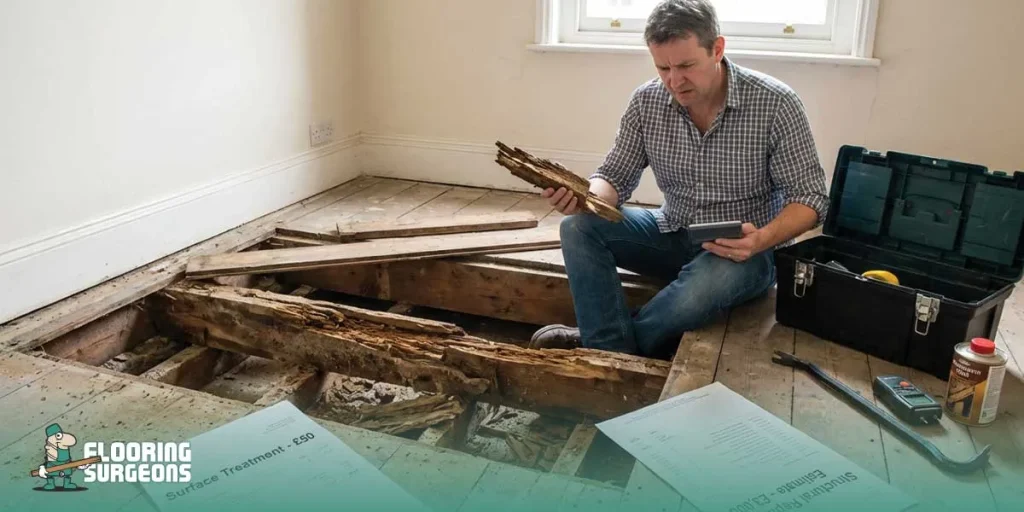
When Treatment Is Usually Wasted Money
- When exit holes are old, but moisture issues remain unresolved
- When timber feels soft or compresses under pressure
- When infestation extends below the floorboards into the joists
- When cosmetic surface treatment is applied without confirming activity
Decision Rule (Simple and Honest)
- Treat when woodworm is active, limited, and timber is still hard and load-safe
- Replace when strength is compromised or damage is widespread
- Investigate first when symptoms are unclear — guessing is what wastes money
The cheapest option upfront is often the most expensive long-term mistake. In the UK, woodworm treatment only delivers value when the floorboards are structurally sound, and the cause of infestation has been adequately addressed.
How to Prevent Woodworm Returning to Floorboards
Woodworm prevention is not about chemicals first. It is about removing the conditions that allow infestation to return. If these basics are ignored, even professional treatment can fail. These preventative measures align closely with UK wood flooring standards, which place strong emphasis on moisture control and adequate subfloor ventilation.
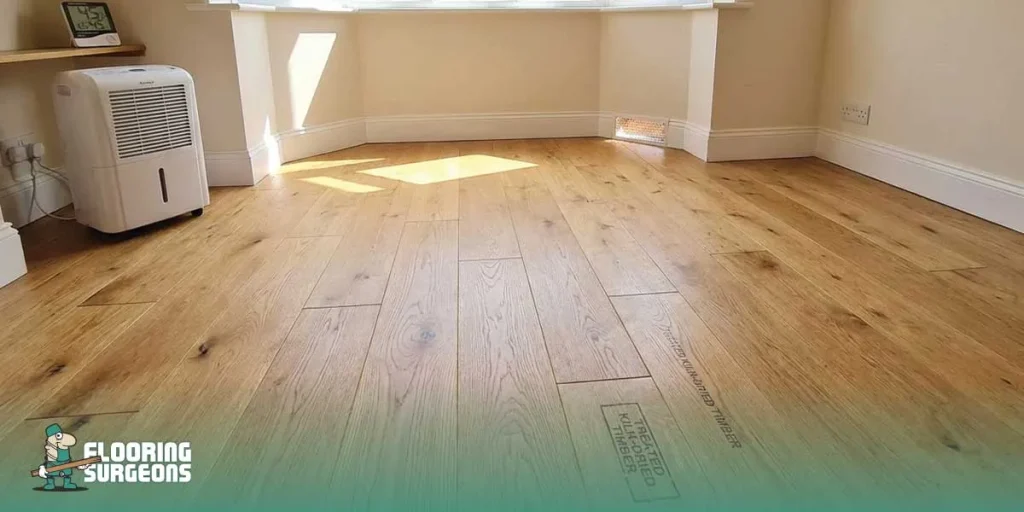
- Control moisture levels
Keep indoor humidity low and stable. Fix leaks, rising damp, and condensation issues. Woodworm thrives in damp timber, not dry, stable floors. - Improve ventilation
Ensure adequate airflow beneath suspended floors and in enclosed spaces. Blocked air bricks and poorly ventilated voids are one of the most common causes of repeat infestation in UK homes. UK building standards also place strong emphasis on ventilation and moisture control in timber floors. - Choose the right timber
When replacing boards, use properly treated, kiln-dried timber. Avoid untreated softwood in vulnerable areas, especially near external walls or ground floors. - Address the cause, not just the symptom
Treating woodworm without fixing moisture or ventilation problems only delays the issue. Prevention works when the environment becomes unsuitable for larvae to survive.
Woodworm does not return to dry, well-ventilated, properly specified floors. Prevention is environmental first, treatment second.
Do You Need to Treat, Repair, or Replace Floorboards with Woodworm?
This is the point where most homeowners make the wrong call, either overreacting and replacing floors unnecessarily or underreacting and allowing structural damage to progress. The correct decision depends on activity, depth of damage, and cause, not on the presence of holes alone. If the woodworm infestation is inactive, meaning there is no fresh frass, no new exit holes, and the timber remains structurally sound, treatment is usually unnecessary. Old woodworm marks are extremely common in UK properties, especially period homes, and often represent historic issues that were resolved decades ago when conditions changed.
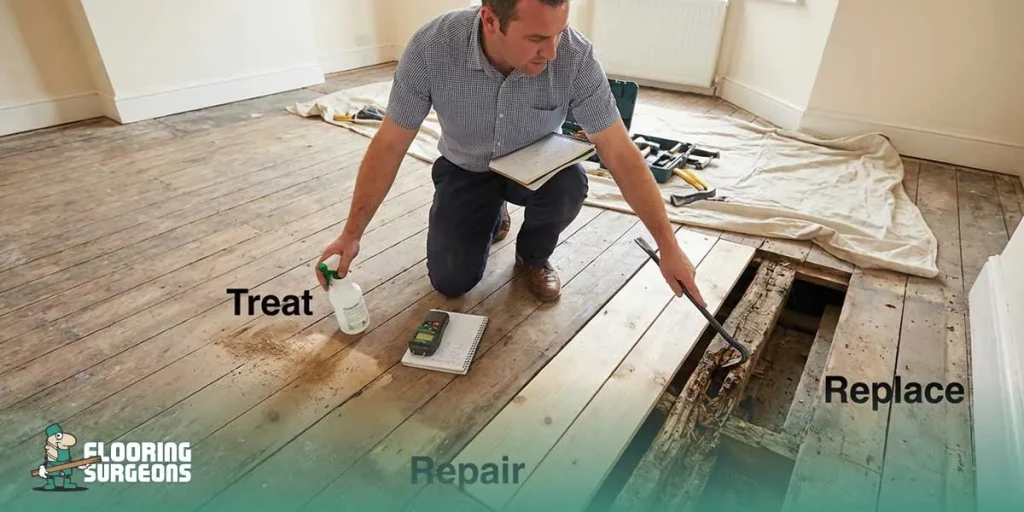
If the infestation is active but limited, with fresh dust present but the boards still firm under load, targeted treatment is the correct response. In these cases, treating the affected boards and addressing moisture or ventilation problems is sufficient. Repair may be needed for individual weakened boards, but full replacement is not justified. If the woodworm is active and structural, meaning boards feel soft, flex under weight, or show internal degradation beyond the surface, replacement becomes unavoidable. Treating severely compromised boards does not restore strength. At this stage, treatment alone is wasted money because the timber can no longer safely perform its function.
At Flooring Surgeons, we see the same pattern repeatedly: floors fail early, not because of poor materials, but because the flooring choice does not match the real conditions of the home. You treat when the structure is intact, repair when damage is localised, and replace only when load-bearing integrity is compromised. Any decision made without confirming activity and depth of damage is guesswork, not a diagnosis.
In these situations, replacing the damaged boards with a more stable option such as engineered wood flooring is often the safest long-term solution for UK homes, especially where moisture or heating fluctuations are present. In many older properties, traditional solid wood flooring is the material most commonly affected by woodworm, particularly where historic moisture issues or poor ventilation have been present.

Haniye Ayanmanesh
As an expert writer for Flooring Surgeons, I combine technical SEO knowledge with a practical understanding of flooring, producing content that helps users make confident decisions while supporting long-term organic growth.