


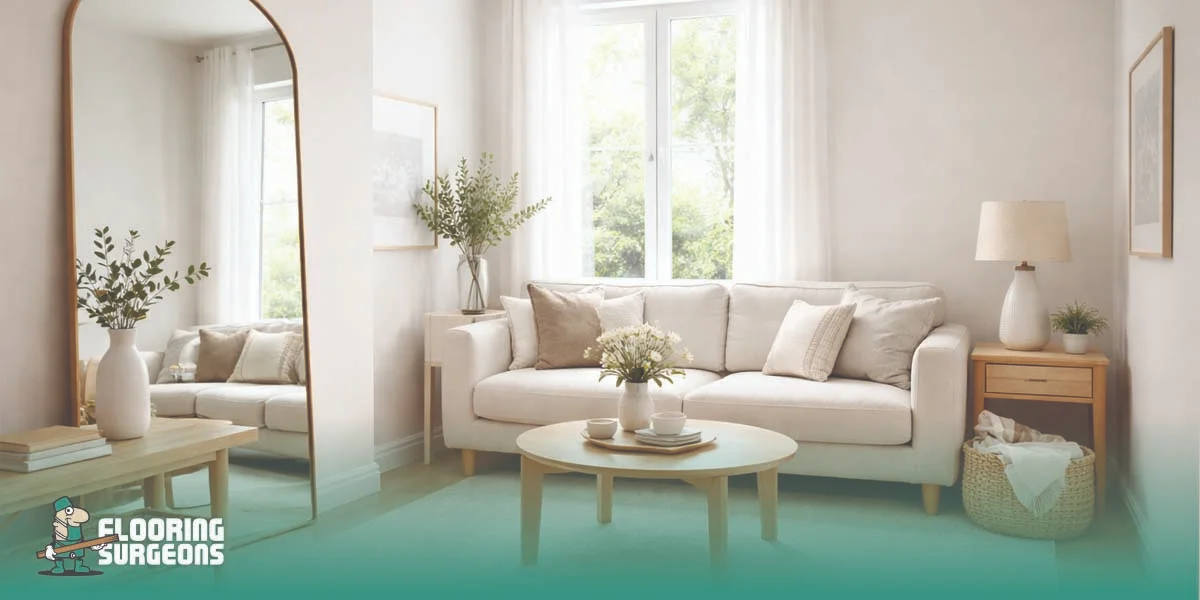
A small room does not always need more furniture or a full redesign to feel better. In many cases, the change starts with what the eye notices first: light, depth, and balance. That is why mirrors are often used in compact interiors. When they are placed well, they can bounce light around the room, soften tight corners, and make the whole space feel more open without losing its style. How to use mirrors to open up small spaces and add elegance comes down to a few practical decisions, including where the mirror goes, what it reflects, and how it fits with the rest of the room. This guide breaks down the placements, styles, and mistakes that matter most.
Table of contents
Why Mirrors Make Small Spaces Feel Bigger
Mirrors help small spaces feel bigger by reflecting natural light, extending sightlines, and adding visual depth. They also add elegance when the size, shape, and placement suit the room rather than overpower it.
Small rooms often feel tighter because the eye stops at walls, corners, and darker areas. A well-placed mirror softens that effect by bringing in more light and making the layout feel more open. Many of the same visual tricks also appear in ideas for making a small room look bigger through your flooring, especially when the goal is to create a lighter and less enclosed feel.
The Best Places to Put Mirrors in Small Rooms
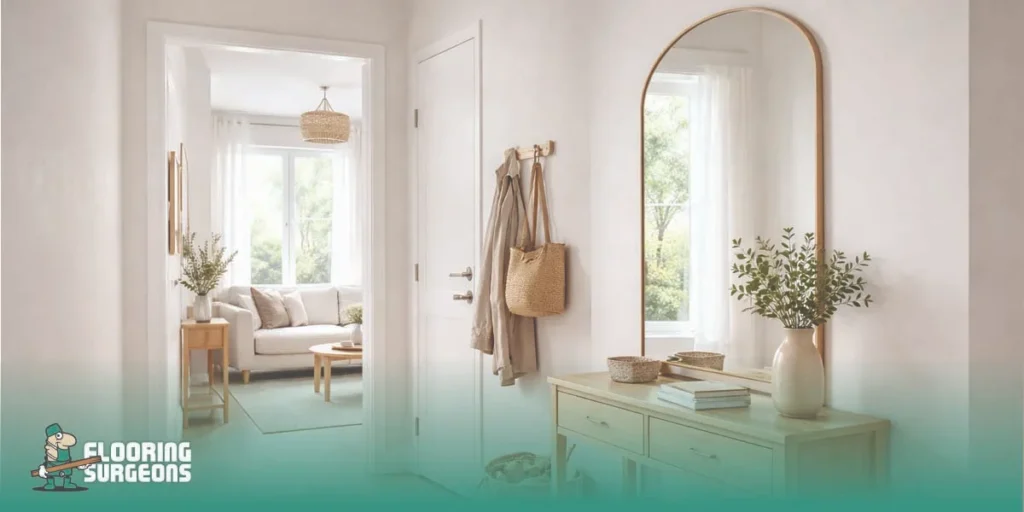
Where you place a mirror matters more than the mirror itself. In small rooms, the best position is usually where it can reflect light, extend the view, or soften a tight corner.
A mirror often works best opposite or near a window, where it can help spread natural light through the room. In narrow spaces, placing one at the end of the layout can add depth and reduce that closed-in feeling. In living areas, a mirror above a console, sideboard, or sofa can make the room feel more balanced without adding visual weight.
The most important detail is what the mirror reflects. A window, a clear wall, or a simple focal point will usually make the space feel brighter and calmer. In tighter transition areas, this effect can work especially well with Laminate Flooring For Hallway to create a cleaner and more continuous look.
Choosing the Right Mirror Size and Shape
The right mirror should match what the room needs most, whether that is more height, more width, or a softer overall look.
- Large mirrors: usually create a stronger sense of depth and make a small room feel more open than several small mirrors.
- Tall mirrors: help draw the eye upward and can make narrow rooms or lower ceilings feel less compressed.
- Wide mirrors: visually stretch the wall and can make a compact area feel broader.
- Round mirrors: soften sharp lines and often suit rooms that need a lighter, more elegant feel.
- Slim frames: tend to look cleaner in small spaces and keep the focus on light and openness.
- Heavy frames: can work as a statement detail, but in tighter rooms they may feel more decorative than spacious.
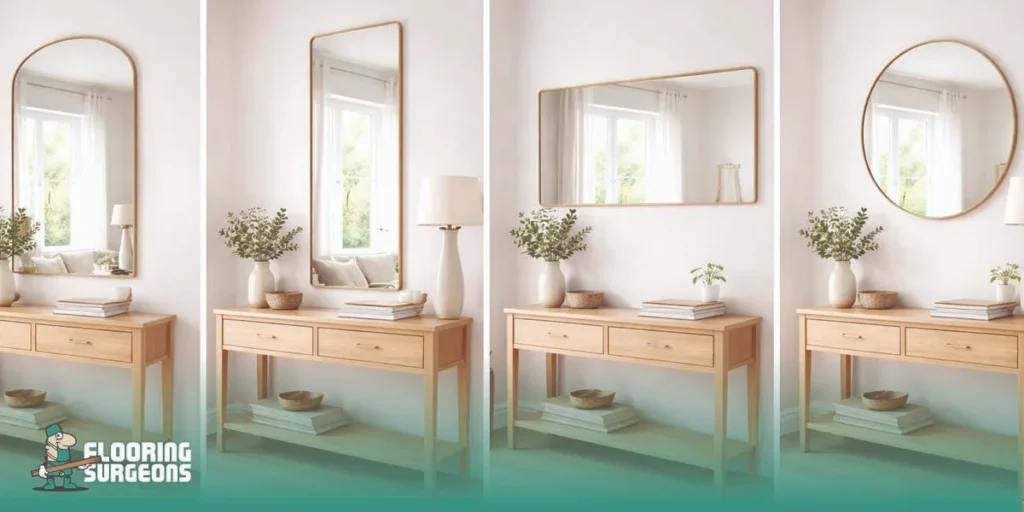
Quick Guide to Mirror Size and Shape
If you are not sure which mirror style fits your room, this quick comparison makes the choice easier.
| Mirror type | Best for | Visual effect | Works best in |
| Large mirror | Making a room feel more open | Adds depth and reflects more light | Living rooms, bedrooms |
| Tall mirror | Drawing the eye upward | Makes the room feel higher | Hallways, bedrooms |
| Wide mirror | Stretching a short wall | Makes the space feel broader | Living rooms, dining areas |
| Round mirror | Softening sharp lines | Adds balance and a lighter feel | Bedrooms, entryways |
| Slim-framed mirror | Keeping the look clean | Feels airy and less heavy | Most small spaces |
How to Add Elegance with Mirrors Without Making the Room Feel Busy
A mirror adds elegance when it feels like part of the room, not an extra detail trying to stand out. In small spaces, one well-placed mirror usually looks better than several smaller ones.
What the mirror reflects matters just as much as how it looks. A clear wall, soft daylight, or a simple focal point can make the room feel calmer and more refined. If the reflection is busy, the whole space can feel more crowded.
It also helps when the rest of the room feels visually connected. In that case, choices around colour and finish matter too, especially when you are matching flooring colours with wall colours and furniture to keep the space balanced.
How to Use Mirrors in Small Living Rooms
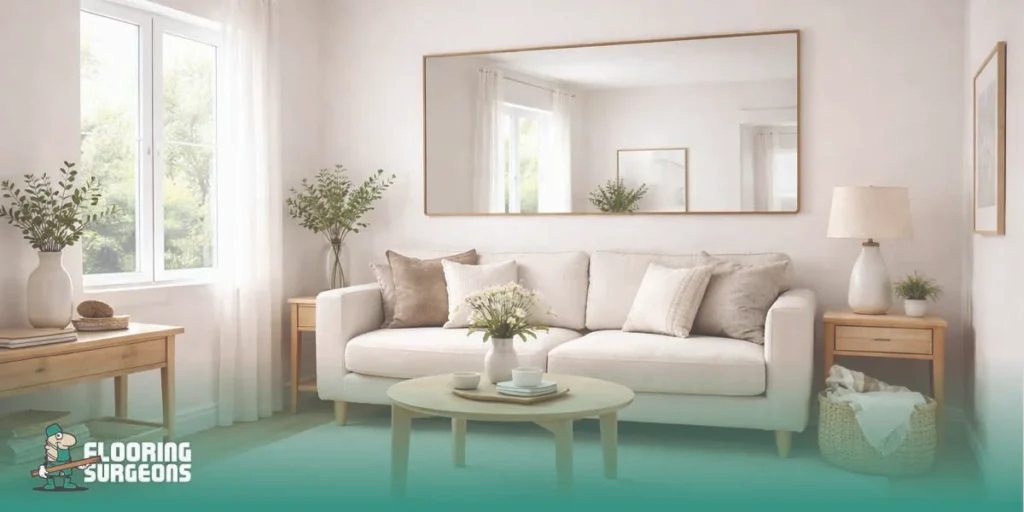
In a small living room, a mirror usually works best where it can pick up light or open part of the layout. Above a sofa, sideboard, or console, it can help the room feel more balanced without adding anything bulky.
A larger mirror often has more impact than several smaller ones, especially if the space already has enough detail. The aim is not to fill an empty wall, but to make the room feel lighter and less enclosed. This usually works best when the rest of the space keeps the same calm direction, including finishes such as Laminate Flooring for Living Room that support a brighter and more open look.
How to Use Mirrors in Narrow Hallways and Entryways
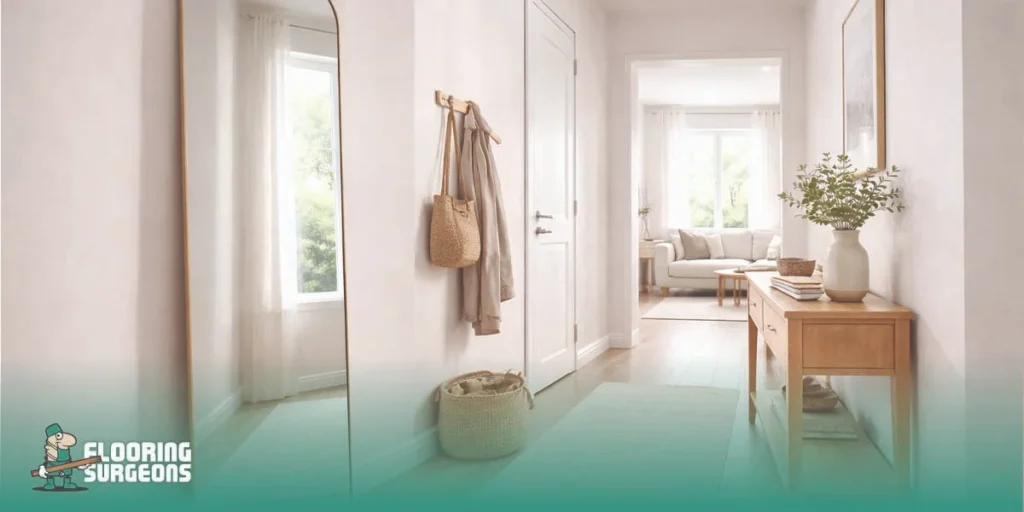
Hallways and entryways are often the parts of the home that feel the most enclosed. A well-placed mirror can make these areas feel longer, lighter, and less boxed in without changing the layout.
Tall mirrors tend to work especially well here because they add height and help the eye move through the space more easily. The effect feels even stronger when the area stays visually simple and the flooring keeps the transition smooth from one part of the home to the next.
Where Mirrors Work Best in Small Bedrooms
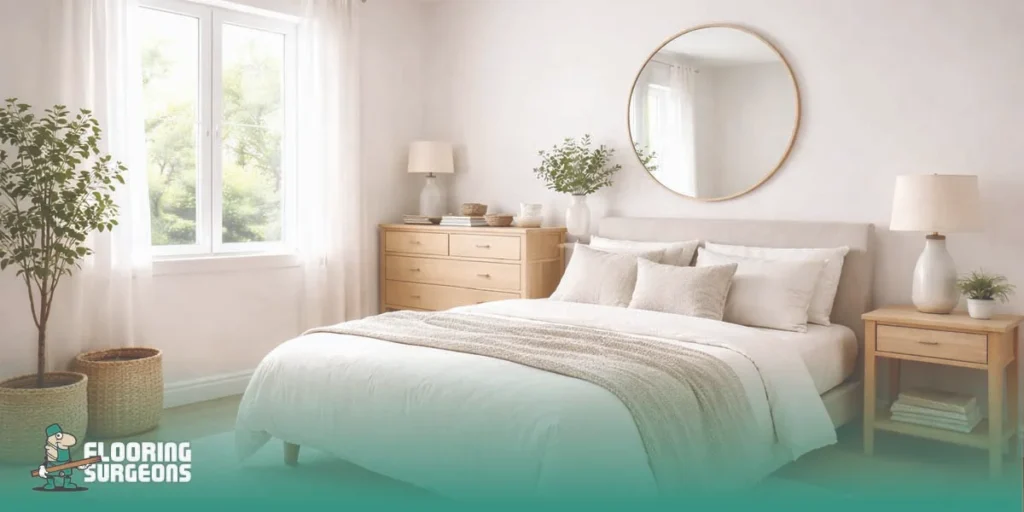
In a small bedroom, mirrors usually work best when they add light without making the space feel restless. A full-length mirror near a wardrobe or a simple mirror above a dresser can help the room feel more open while keeping the look calm.
Here, softness matters more than impact. A mirror should support the room, not dominate it. That often works better when the rest of the space also feels light and settled, especially with finishes like Laminate Flooring For Bedrooms that help create a cleaner and quieter backdrop.
Common Mirror Mistakes in Small Spaces
A mirror can make a small room feel lighter and more open, but the wrong choice can have the opposite effect. One of the most common mistakes is placing a mirror where it reflects clutter, because that makes the space feel busier rather than bigger. Mirrors that are too small can also get lost on the wall and have very little impact. In many cases, one well-placed mirror works better than using several smaller ones across the room.
Final Thoughts on Using Mirrors to Open Up Small Spaces
A well-placed mirror can do a lot in a small room. It can bring in more light, add depth, and make the space feel more polished without adding clutter. The best results usually come from keeping the choice simple and making sure the mirror works with the rest of the room. That same idea matters when choosing surfaces and finishes too, which is why details like flooring often play just as much of a role in the final look, as you can see across Flooring Surgeons.

Ana.Soltanpoor
I’m an SEO Specialist with a strong background in content management and organic search. I build data-driven content strategies by aligning user intent, search behavior, and SEO best practices to ensure every piece of content delivers clarity, relevance, and measurable organic performance.