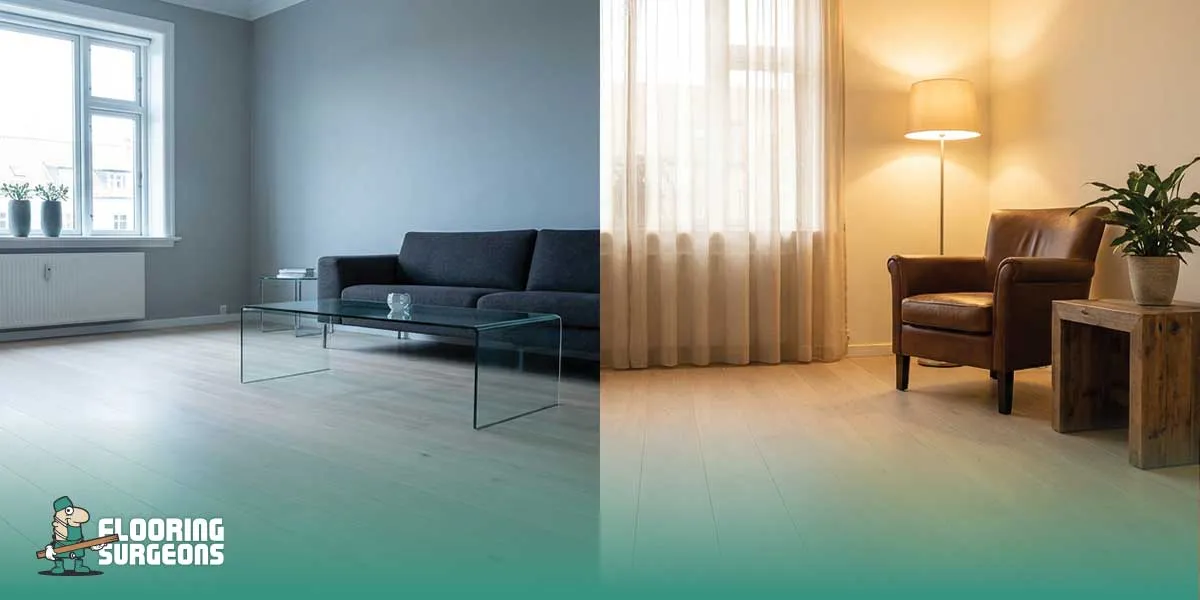



Interior design and interior architecture are not the same; interior design focuses on aesthetics and surface finishes, while interior architecture involves structural changes and spatial planning. The difference becomes critical in renovation projects, where layout modifications, building systems, and flooring decisions must align to avoid costly construction mistakes.
Table of contents
What Is Interior Design?
Interior design is the practice of enhancing the aesthetics and functionality of interior spaces through strategic space styling, material selection, and coordinated surface finishes. It focuses on how a space looks, feels, and flows, from furniture layout and lighting design to decorative flooring choices and finish layers that define the final atmosphere of a room. Unlike structural disciplines, interior design works primarily on visible elements and surface coordination, ensuring that every component, including flooring materials, contributes to a cohesive visual outcome.
Core Responsibilities of an Interior Designer
- Selecting flooring materials such as hardwood, vinyl, tile, and other decorative flooring choices. Design-led projects often lean toward statement patterns like herringbone flooring, where precision subfloor prep and layout planning are non-negotiable.
- Choosing colour palettes that align with the desired mood and architectural context.
- Coordinating finishes across walls, ceilings, and finish layers for visual consistency.
- Enhancing visual flow through intentional furniture layout and space styling.
- Developing lighting design concepts to highlight materials and textures.
- Managing material selection to ensure harmony between surface finishes and furnishings.
What Is Interior Architecture?
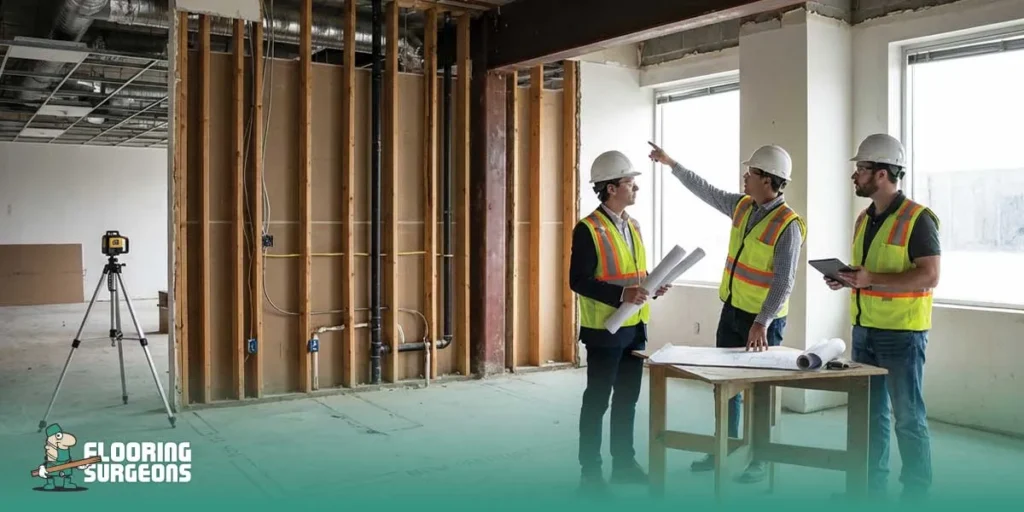
Interior architecture focuses on structural planning and the technical transformation of interior spaces. It involves spatial reconfiguration, compliance with building codes, and modifications that affect the structural integrity of a building, including load-bearing walls, subfloor systems, and floor height levels.
Unlike interior design, interior architecture addresses the underlying framework of a space. Decisions at this level directly impact structural floor support, slab modification requirements, and how underfloor systems integrate with the overall construction.
Core Responsibilities of an Interior Architect
- Modifying structural walls, including load-bearing walls, when permitted
- Adjusting floor height levels to accommodate redesign or structural changes
- Integrating building systems such as HVAC, plumbing, and electrical layouts
- Ensuring code compliance with local building codes and safety regulations
- Designing structural layouts that support spatial reconfiguration
- Planning subfloor reinforcement for new layouts or load redistribution
- Evaluating structural floor support before heavy material installations
- Coordinating slab modification when altering levels or adding features
- Designing around underfloor systems, such as heating or acoustic assemblies
Interior Design vs Interior Architecture (Side-by-Side Comparison)
Understanding the key differences between interior design and interior architecture is essential for accurate renovation planning. While both disciplines shape interior environments, their project scope, structural vs decorative responsibilities, and involvement stages differ significantly, especially when flooring decisions and construction timelines are involved.
| Factor | Interior Design | Interior Architecture |
| Focus | Aesthetics, visual styling, surface finishes | Structure, spatial integrity, construction framework |
| Involvement | Finishing the phase of a project | Early construction phase and structural planning stage |
| Structural Impact | No direct structural modifications | Yes , may alter load-bearing elements and internal framework |
| Project Scope | Decorative enhancements and functional styling | Structural planning, spatial reconfiguration, and compliance |
| Flooring Role | Style selection, decorative flooring choices, surface coordination | Subfloor systems, structural compatibility, floor height levels, load distribution |
| Renovation Planning Impact | Influences the material and finish layers | Determines the feasibility of flooring installation and structural floor support |
Why This Difference Matters in Real Projects
In renovation planning, the distinction becomes critical. Interior design decisions may influence material selection and decorative flooring choices, but interior architecture determines whether the subfloor can support those materials, whether slab modification is required, and whether structural floor support must be reinforced before installation begins. This is where structural vs decorative responsibilities directly intersect with flooring outcomes, a layer of complexity often overlooked in standard comparisons.
How the Difference Impacts Flooring Decisions
Understanding the difference between interior design and interior architecture becomes especially important when flooring installation is involved. During renovation projects, structural planning decisions directly influence subfloor preparation, moisture barriers, acoustic insulation, and overall floor levelling requirements. Overlooking these connections can lead to serious renovation flooring risks, including material failure, uneven surfaces, or long-term structural damage.

When Structural Changes Affect Flooring
Structural modifications often have a hidden impact on flooring systems. Removing walls alters load distribution across the slab or subfloor systems, which may require structural reinforcement before installing materials like engineered hardwood. Changing layouts affects floor transitions, expansion gaps, and continuity between rooms, particularly in open-concept renovations. Additionally, integrating underfloor heating systems impacts material choice, thickness calculations, and compatibility with moisture barriers and acoustic insulation layers. For projects involving underfloor systems and real-world movement, exploring engineered wood flooring options can help you balance performance and aesthetics.
In short, what may appear to be a design update frequently demands technical reassessment beneath the surface.
Why Flooring Should Be Planned Early
- Prevent subfloor damage caused by unassessed structural changes. If moisture damage is a concern, clarify whether you need a damp-proof membrane under your floor before choosing adhesives or engineered materials.
- Avoid height mismatches between rooms after slab modification or floor leveling
- Reduce installation delays linked to late-stage design alterations
- Ensure structural compatibility between flooring materials and load-bearing conditions
For projects involving structural adjustments, professional subfloor preparation becomes critical to long-term durability. You can learn more about proper structural assessment and surface readiness on our Subfloor Preparation page. Moisture control is equally important, especially before installing engineered hardwood or other sensitive materials. Our Moisture Testing Service outlines how improper humidity levels can compromise flooring performance. If you’re planning to install hardwood in a structurally modified space, explore our detailed guide to Hardwood Flooring Installation to understand material compatibility and structural considerations. At Flooring Surgeons, we often work alongside designers and architects to align subfloor preparation, moisture control, and installation sequencing before finishes are locked in.
Common Renovation Mistakes Homeowners Make
Many renovation mistakes happen not because of poor design, but because structural realities and flooring systems are considered too late in the process. When homeowners focus only on aesthetics without evaluating structural conditions, the result can be expensive flooring failures, uneven subfloors, and long-term moisture damage.
The difference between decorative decisions and structural planning becomes very real once installation begins.
- Hiring a designer before structural assessment – Starting with aesthetics before evaluating load-bearing conditions or subfloor integrity can create major compatibility issues later in the project.
- Choosing flooring before subfloor inspection – Selecting materials without checking for uneven subfloors or slab inconsistencies often leads to premature wear, movement, or visible surface defects. Before committing to any flooring installation, it helps to understand how to spot and fix a damaged subfloor so uneven subfloors don’t cause early flooring failures.
- Ignoring moisture testing – Skipping proper moisture testing increases the risk of moisture damage, adhesive failure, and long-term material deterioration.
- Overlooking floor load capacity – Heavy materials such as natural stone or thick engineered hardwood require proper structural floor support; without it, sagging or instability may occur.
- Improper material choice for the environment – Selecting flooring that doesn’t align with underfloor systems, humidity levels, or renovation conditions is one of the most common causes of renovation flooring risks. For budget-led upgrades, laminate flooring for busy homes can work well, if floor levelling and moisture protection are handled correctly.
When these issues surface, fixing them typically costs significantly more than addressing them during the planning phase.
Do You Need an Interior Designer, Interior Architect, or Flooring Specialist?
Choosing the right professional depends on the scope of your renovation and the level of structural involvement. While interior designers and interior architects serve different project functions, flooring decisions often intersect with both, especially when technical installation requirements are involved. A clear renovation consultation at the beginning of the project can prevent costly misalignment later.

Here’s the decision framework:
- Cosmetic update → Interior Designer
If you’re refreshing aesthetics (colour palettes, lighting design, furniture layout, surface finishes), a designer is the right first call, especially when your flooring role is limited to style selection and visual coordination. - Structural renovation → Interior Architect
If your plan includes structural changes (removing walls, changing room layout, altering floor height levels), start with an interior architect so renovation planning is based on structural planning and code constraints, not inspiration. - Full remodel → Interior Architect + Interior Designer + Flooring Specialist
If you’re changing structure and finishes, you’ll need three lanes aligned:
architecture (structure) + design (aesthetics) + flooring (subfloor preparation, moisture barriers, floor levelling).
This is where remodelling contractor coordination and a professional flooring assessment prevent rework.
When flooring is treated as a final decorative step rather than a technical system integrated into renovation planning, projects are far more likely to experience delays, performance issues, or unexpected structural adjustments. A professional flooring assessment early in the planning phase can clarify material feasibility, installation requirements, and structural readiness, helping align designers, architects, and contractors before construction progresses too far.

Haniye Ayanmanesh
As an expert writer for Flooring Surgeons, I combine technical SEO knowledge with a practical understanding of flooring, producing content that helps users make confident decisions while supporting long-term organic growth.