

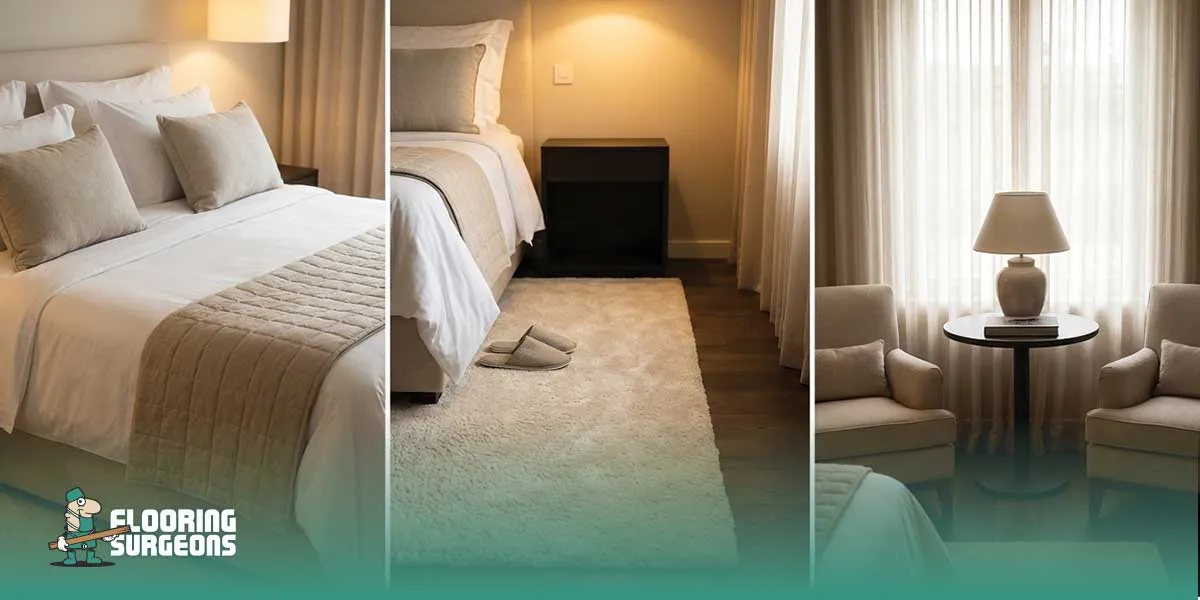
Luxury hotel-style bedroom ideas work best when you build the “hotel feel” in layers: a calm colour palette, soft textures, warm lighting, and a floor that feels quiet and comfortable underfoot. Focus on symmetry, fewer but better accessories, and bedding that looks intentionally layered, not overstyled. If you want a bedroom that feels calm and expensive without overdoing the decor, these cosy bedroom flooring ideas are a good place to start.
In real hotel-style bedrooms, the sense of luxury usually starts from the ground up. Flooring, texture, and lighting work together to create warmth, silence, and balance long before you notice the bedding or accessories. A plush carpet, a soft rug over wood flooring, warm layered lighting, and a restrained colour palette do far more for a luxury hotel bedroom feel than statement furniture ever will.
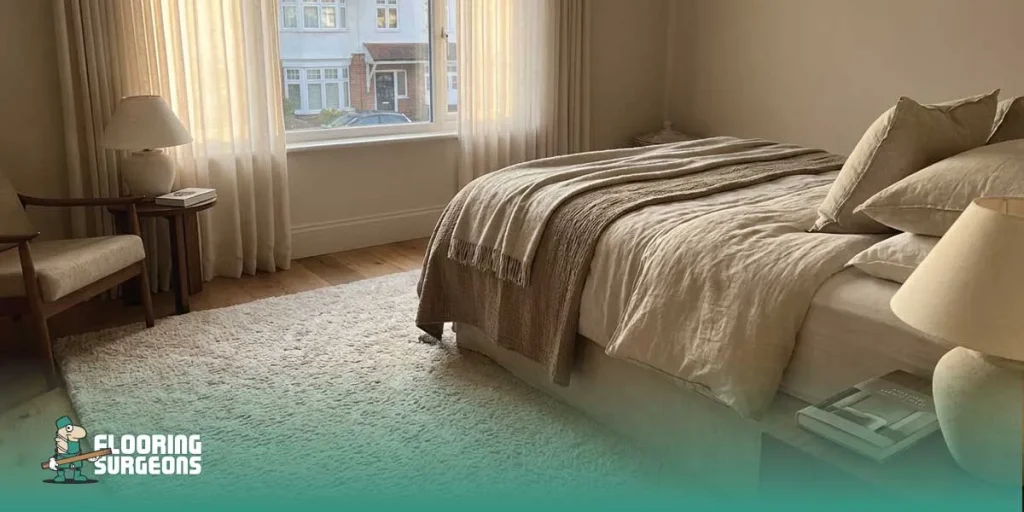
This guide breaks down luxury hotel bedroom ideas the way hotels actually design them, not the way they’re often presented online. You’ll see how flooring choices influence the atmosphere, why some hotel bedrooms feel expensive with minimal decor, and how to recreate that same hotel-style bedroom experience in real UK homes with realistic layouts and light conditions. If you want a bedroom that genuinely feels like a luxury hotel, not just one that looks like it in photos, this is where the difference is made.
Table of contents
What Actually Makes a Bedroom Feel Like a Luxury Hotel?
A luxury hotel-style bedroom doesn’t feel expensive because of one “statement” item. It feels costly because everything works together: the room is quieter, softer, and more intentional. The lighting is warm, the textures are layered, and nothing looks random or cluttered.

The four things hotels get right (and most homes don’t)
1) Layering, not decorating
Hotels don’t rely on lots of decor. They rely on layers: bedding, throws, cushions, and a few high-quality surfaces that feel good up close.
2) Warm, controlled lighting
The “hotel mood” usually comes from warm lamps at both sides of the bed, not bright ceiling light. You want a soft glow that makes colours look richer and hides harsh shadows.
3) Symmetry and breathing space
Even small hotel rooms feel calm because the layout is balanced. Matching lamps, similar bedside tables, and clear space around the bed make the room feel intentional.
4) Floor feel: quiet, soft, and clean-looking
This is where luxury hotel-style bedroom ideas often miss the point. The floor changes the whole experience: how quiet the room feels, how warm it is when you step out of bed, and how “finished” the space looks under warm lighting.
Mini test: if your bedroom feels bright-but-cold, echoey, or visually busy, it’s not a “more decor” problem. It’s usually a lighting, texture, and floor foundation problem.
Start From the Floor — The Foundation of a Hotel-Style Bedroom
If there’s one element that quietly defines whether a bedroom feels like a luxury hotel or just a nicely decorated room, it’s the floor. Before lighting, before bedding, before accessories, the floor sets the emotional baseline of the space. If you love that boutique-hotel look, parquet and herringbone flooring is one of the fastest ways to make a bedroom feel high-end without adding more furniture.

Luxury hotel bedrooms always start from the same principle: the room must feel calm, soft, and acoustically controlled the moment you step inside. Flooring is what delivers that feeling first.
Flooring Sets the Tone the Second You Walk In
In high-end hotels, the first sensory signal is rarely visual. It’s how the room feels underfoot—a quiet step. No echo. No harsh reflection. That immediate softness tells your brain this is a space to slow down.
Hard, exposed floors without balance tend to make bedrooms feel colder and more residential. Hotels avoid that by either using carpet or softening hard floors with large, well-placed rugs. The goal isn’t decoration. It’s emotional control.
Silence Is a Luxury (And Floors Control It)
One of the most significant differences between hotel-style bedrooms and real homes is sound. Hotels design bedrooms to absorb noise, not reflect it. Flooring plays an important role here.

Carpeted floors naturally reduce footstep noise, echo, and vibration. Even in boutique hotels that use wood flooring, you’ll almost always see oversized rugs positioned to break sound paths and soften movement around the bed. This is why bedrooms that look “luxury” online can feel disappointing in real life. The visuals copy the style, but the acoustics are ignored.
Softness Without Looking Heavy
Luxury hotel floors feel soft, but they never look bulky or cluttered. That balance matters. Thick, fluffy carpets aren’t the goal. Dense, refined textures are.
Hotels favour:
- Low to medium pile carpets that feel plush but controlled
- Neutral tones that reflect light softly rather than absorbing it
- Flooring that supports the bed visually instead of competing with it
Softness here is about restraint. The floor should support the room, not dominate it.
Light Reflection Starts at Floor Level
Lighting in hotel bedrooms doesn’t work alone. It relies on how surfaces respond to it. Floors play a quiet but critical role. Highly glossy floors bounce light aggressively and break the calm mood. Very dark floors can absorb too much light and make rooms feel smaller. Luxury hotel bedrooms usually sit in the middle ground: matte or softly finished surfaces that reflect light gently. This is why neutral carpets, engineered wood with soft finishes, or layered rugs work so well. They diffuse light instead of fighting it.
Why This Section Matters for the Rest of the Room
If the floor feels wrong, everything else has to work harder. More cushions. More lighting tricks. More accessories. Hotels don’t do that. They build the proper foundation so the room feels expensive before anything is added. That’s why starting from the floor isn’t a styling choice. It’s a strategy. Get the flooring right, and the rest of the hotel-style bedroom comes together naturally instead of feeling forced.
Carpet vs Wood Flooring in Luxury Hotel Bedrooms (What Hotels Really Use)
When people picture a luxury hotel bedroom, they often imagine either a plush carpeted floor or a sleek wood surface. In reality, hotels don’t choose carpet or wood based on style alone. They choose based on how the room needs to feel, sound, and perform over time. The difference isn’t “carpet vs wood”. It’s how each option is used and why.
- Why 5-Star Hotels Still Use Carpet in Bedrooms
In large, high-end hotels, carpet remains the most common bedroom flooring for a reason. It controls sound, softens movement, and creates an immediate sense of calm the moment guests step inside.
A well-chosen luxury bedroom carpet:
- Absorbs footstep noise and echo
- Feels warm and comfortable first thing in the morning
- Makes large rooms feel quieter and more intimate
- Ages evenly without drawing attention to wear paths
This is why many five-star hotels still carpet entire bedrooms, even when public areas use hard flooring. The goal isn’t decoration. It’s sleep quality, acoustic comfort, and emotional calm.
- Why Boutique Hotels Often Choose Wood Flooring (With a Catch)
Boutique and design-led hotels are more likely to use wood flooring in bedrooms, but almost never in isolation. Wood adds visual sharpness and works well in smaller, curated spaces, especially when the design leans modern or minimalist.
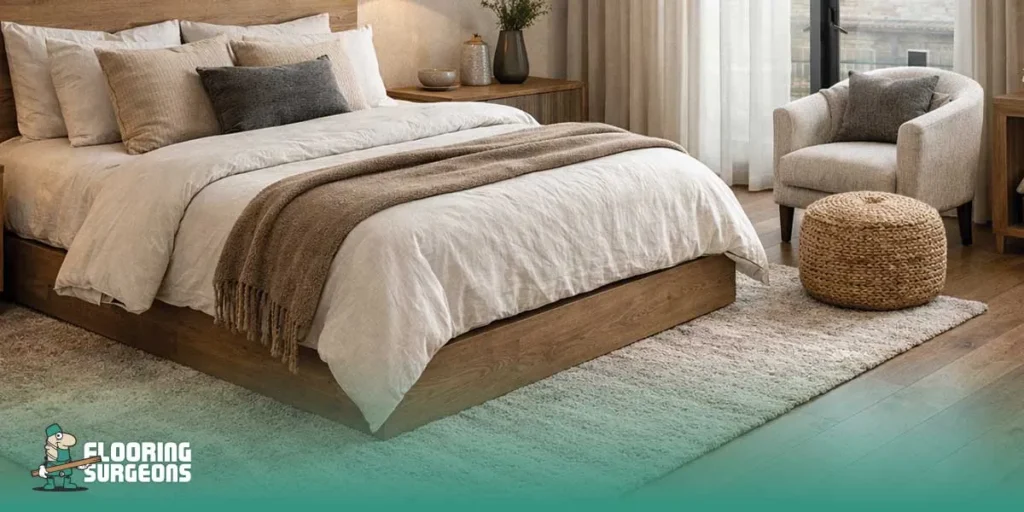
However, there’s always a balancing layer. You’ll typically see:
- Large rugs placed under and around the bed
- Soft textiles to offset sound and hardness
- Matte or lightly finished wood, not high-gloss
Without that balance, wood floors feel cold and noisy very quickly. Hotels know this, which is why exposed bedroom floors without rugs are rare in genuine luxury settings.
- Why Luxury Hotels Use Carpet or Wood Flooring?
Hotels aren’t choosing between carpet and wood based on trends. They’re optimising for three things homeowners often overlook:
Silence
Bedrooms must feel quiet, even in busy buildings. Carpet delivers this naturally. Wood needs help.
Softness underfoot
Luxury bedrooms should feel gentle, not hard, especially around the bed.
Light behaviour
Carpet diffuses light. Wood reflects it. Hotels choose finishes based on room size, lighting design, and desired mood.
This is why there’s no single “right” answer. There’s only the right choice for the feel you’re trying to create.
- Carpet vs Wood Flooring for Hotel-Style Bedrooms at Home
In UK homes, the same logic applies, but space and acoustics matter even more. Smaller rooms amplify noise. Shared walls carry sound. Cold floors feel colder.
Many homeowners aiming for hotel-style bedrooms get better results by:
- Using carpet for a full-room calm and warmth
- Or pairing wood flooring with a large, soft rug that anchors the bed.
Trying to copy hotel visuals without copying hotel logic is where most designs fall apart.
- Do luxury hotels use carpet or wood flooring in bedrooms?
Luxury hotels use both, depending on the experience they want to create. Large five-star hotels often use carpet in bedrooms to reduce noise, add warmth, and improve sleep comfort. Boutique hotels may use wood flooring, but usually soften it with large rugs to control sound and maintain a calm, luxurious feel.
Hotel Bedroom Colour Palettes That Always Feel Expensive
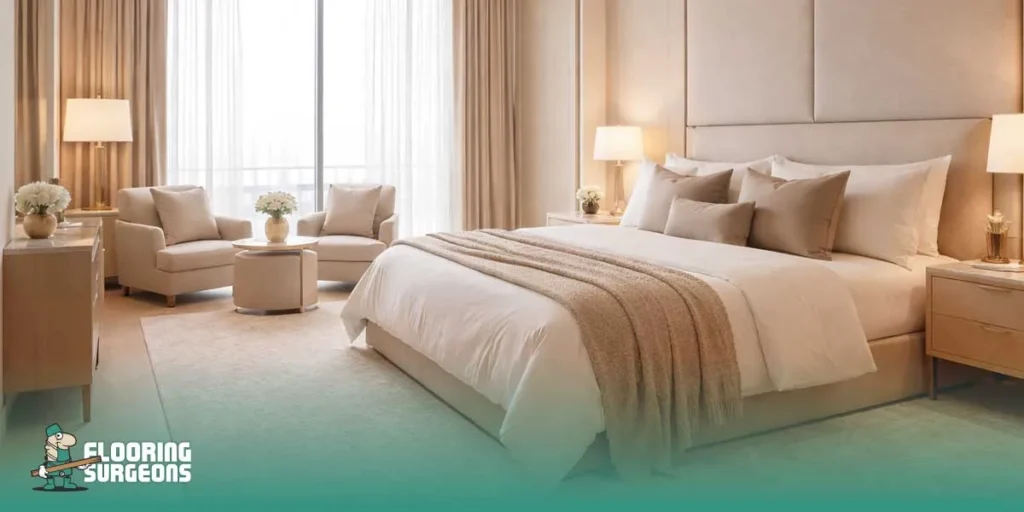
Luxury hotel bedrooms rarely rely on bold colour. They feel expensive because the palette is calm, warm, and tightly controlled. The goal isn’t to impress at first glance, but to create a space that feels balanced, quiet, and timeless the moment you step in. This is why hotel bedroom colour palettes almost always sit within a narrow, neutral range.
Most luxury neutral bedroom ideas used by hotels are built around warm beiges, soft greiges, muted taupes, and layered off-whites. These tones reflect light gently, reduce contrast, and allow textures like carpet, bedding, and curtains to do the heavy lifting visually. Nothing competes. Everything works together.
What makes these palettes work is consistency. Walls, flooring, soft furnishings, and even lighting temperature stay within the same colour family. Hotels avoid sharp whites, cold greys, or high-contrast feature walls because they break the sense of calm and make rooms feel smaller and harsher.
A simple rule hotels follow: If a colour draws attention to itself, it doesn’t belong in the room.
In real homes, the same logic applies. A hotel bedroom colour palette should:
- Use warm neutrals rather than cool or stark tones
- Keep the contrast low between walls, floors, and soft furnishings.
- Let texture create interest instead of colour change.s
This approach is also why neutral palettes pair so well with flooring. Warm-toned carpet adds softness and depth, while light wood flooring with a subtle grain keeps the space grounded without visual noise. Both work, as long as the colour temperature stays consistent. If you want a bedroom to feel hotel-like rather than styled, start by removing colour, not adding it. The more restrained the palette, the more expensive the room feels — even before furniture and accessories are considered.
Layered Bedding — The Visual Centrepiece of Hotel Bedrooms
In luxury hotel bedrooms, the bed isn’t just furniture. It’s the focal point. What creates that instantly recognisable hotel look isn’t a single duvet or an expensive fabric, but how bedding is layered. This is why luxury hotel bedding always looks intentional, calm, and slightly indulgent without feeling overdone. Hotels use layered bedding ideas to add depth and structure while keeping the colour palette simple. Instead of bold patterns, they rely on clean lines, tonal layers, and contrast through texture.
What “Layered” Actually Means in Hotel Bedding
Layering isn’t about adding more items. It’s about stacking them in the correct order, with each layer serving a purpose. Here’s the structure most luxury hotels follow:
| Bedding Layer | Purpose in Hotel Bedrooms | What It Adds Visually |
| Crisp fitted + flat sheet | Clean base layer | Sharpness and freshness |
| High-quality duvet | Main comfort layer | Volume without mess |
| Light quilt or coverlet | Controls shape | Structure and symmetry |
| Throw or runner (folded) | Accent layer | Depth and subtle contrast |
| 2–4 pillows (layered) | Vertical balance | Height and softness |
This approach keeps the bed looking full and inviting, even when colours stay neutral. That’s why luxury hotel bedding almost always avoids loud prints. Texture does the work instead.
Why Hotels Avoid Overstyled Beds
One mistake homeowners make is copying the look without understanding the restraint behind it. Hotels don’t pile on cushions randomly. Every piece has a job. Too many throws or decorative pillows break the calm and make the bed feel cluttered rather than luxurious.
Hotels optimise for:
- Visual balance when the bed is viewed straight-on
- Easy reset by housekeeping
- A bed that looks good from every angle
This is why layered bedding in hotels feels effortless. It’s controlled, not busy.
How Flooring Supports the Bedding Look
This is where flooring quietly matters. Layered bedding only feels luxurious when the rest of the room supports it. Soft carpet enhances the sense of comfort and absorbs sound, while light wood floors with a plush rug echo the same layered logic used on the bed. Floor and bed work together to reinforce calm.
A simple test:
If the bed looks luxurious but the room feels cold, the layers aren’t supported properly.
How do hotels layer bedding to look luxurious?
Hotels layer bedding using crisp sheets, a full duvet, a structured coverlet, and a single throw or runner. Neutral colours, clean lines, and balanced pillow placement create a calm, high-end look without clutter.
This exact formula is what makes layered bedding ideas work so consistently in luxury hotel bedrooms, and why copying the structure matters more than buying expensive items.
Lighting That Instantly Creates a Hotel Atmosphere
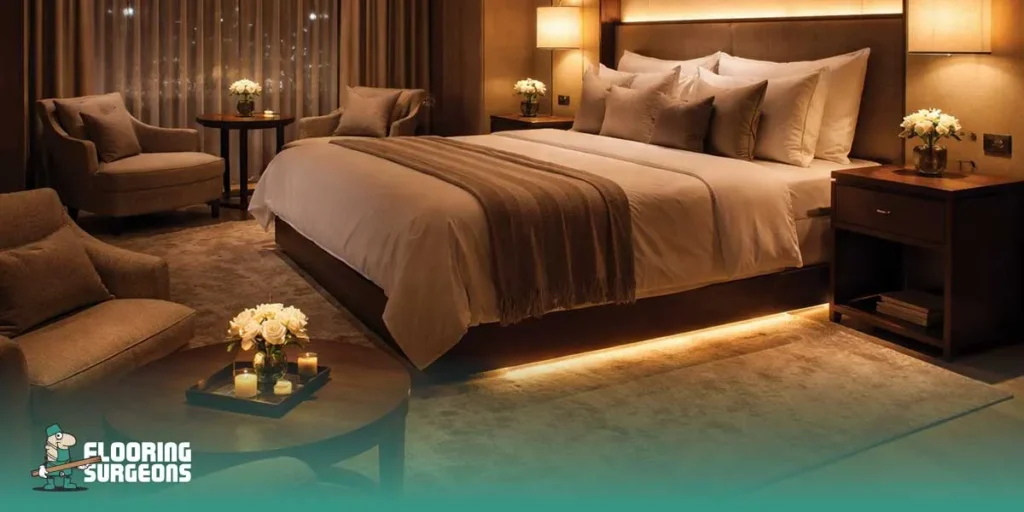
If there’s one element that can make or break hotel-style bedroom lighting, it’s warmth and control. Luxury hotels don’t rely on one bright ceiling light. They build atmosphere through layered, low-level lighting that feels calm the moment you walk in. This is why copying furniture without copying the lighting never works. Luxury bedroom lighting ideas are about how light is placed, not how powerful it is.
- Why Hotel Bedrooms Always Feel Calm at Night
Hotels optimise lighting for rest, not tasks. The goal is to remove harsh contrast and visual noise. Instead of lighting the whole room evenly, they light zones.
What you’ll notice in almost every luxury hotel bedroom:
- No cold white bulbs
- No single dominant light source
- No exposed glare near the bed
Warm light sits low, spreads softly, and never competes with the bed as the focal point.
The Lighting Formula Hotels Actually Use
Most hotel-style bedrooms follow a simple, repeatable structure:
| Lighting Zone | Typical Hotel Choice | Why It Works |
| Bedside | Matching table lamps or wall sconces | Creates symmetry and calm |
| Ambient | Soft ceiling or cove lighting | Gentle background glow |
| Accent | Lamps near chairs or dressers | Adds depth without brightness |
| Control | Multiple switches or dimmers | Adjusts mood instantly |
Symmetry matters here. Two identical bedside lamps instantly signal balance and order, which is why hotel-style bedroom lighting feels so composed.
- Warm Light Beats Bright Light Every Time
Luxury hotels almost always use warm colour temperatures. This softens textures, flatters neutral colours, and makes bedding look richer. Bright or cool lighting does the opposite. It flattens the room and highlights imperfections.
A simple rule used by designers:
If the light makes white bedding look clinical, it’s wrong for a hotel-style bedroom.
- How Lighting Works With Flooring
Lighting doesn’t exist in isolation. It interacts directly with the floor. Carpet absorbs light and sound, making rooms feel quieter and more intimate. Wood floors reflect light, which is why hotels pair them with rugs and warmer bulbs to avoid a cold feel. When lighting and flooring are aligned, the room feels intentional rather than styled.
- How do hotels light bedrooms to feel luxurious?
Hotels use warm, low-level lighting with symmetrical bedside lamps and minimal overhead glare. Layered lighting zones create a calm, balanced atmosphere that feels relaxing rather than bright. This lighting approach is one of the fastest ways to recreate an actual hotel feel at home.
Symmetry, Balance & Spacing — Why Hotel Bedrooms Feel Calm
Luxury hotel bedrooms feel calm long before you notice the furniture. That calm comes from symmetrical bedroom design and deliberate spacing. Hotels design rooms so your eyes don’t have to work. Nothing pulls attention too hard, and nothing feels crowded or accidental. This is one of the most significant differences between a stylish bedroom and an accurate hotel bedroom layout idea that actually feels restful.
Why Symmetry Instantly Signals “Hotel”
In hotel rooms, symmetry isn’t a trend. It’s a psychological shortcut. Two matching bedside tables. Two matching lamps. The bed is perfectly centred. This balance tells your brain that the space is controlled, predictable, and safe to relax in. Homes often break this rule without realising it. One lamp here, a chair there, mismatched furniture pushed where it fits. The room still functions, but it never feels calm in the same way.
Hotels avoid visual decisions. They remove choice from the eye.
Balance Matters More Than Furniture Count
A common mistake is thinking hotel rooms feel spacious because they’re large. Many aren’t. They feel spacious because furniture is balanced, not because there’s less of it.
In a balanced hotel-style bedroom:
- The bed is always the visual anchor
- Furniture is evenly weighted on both sides.
- Nothing blocks the natural walk path.s
- Open floor space is intentional, not leftover.
Spacing around the bed is especially important. Hotels leave breathing room on both sides, even in compact layouts. This keeps the room from feeling tight, even when it isn’t big.
Negative Space Is Part of the Design
Hotels design what they don’t fill just as carefully as what they do. Empty space around furniture lets textures, lighting, and materials stand out. At home, we tend to fill gaps with extras. Benches, baskets, and décor pieces that slowly clutter the layout. Luxury hotel bedrooms resist that urge. Fewer elements, placed with purpose, always feel more expensive than more items competing for attention.
How Flooring Supports Visual Calm
The floor plays a quiet but critical role in balance. Carpet creates visual softness and absorbs sound, which helps the symmetry feel gentle rather than rigid. Wood floors add structure, which is why hotels often soften them with rugs placed precisely under the bed.

When flooring, furniture, and lighting align, the room feels composed without feeling staged. That’s the calm people notice but can’t always explain. The takeaway is simple: hotel bedrooms feel calm because nothing is fighting for attention. Symmetry keeps the eye settled. Balanced spacing keeps the body relaxed. Once those foundations are right, the room almost styles itself.
Luxury Bedroom Textures That Create a Hotel-Style Feel
One of the biggest misconceptions about luxury hotel bedrooms is that they feel expensive because of the furniture. In reality, most of the “luxury” comes from texture. Hotels use materials that feel rich, soft, and layered, even when the furniture itself is simple. This is where many home bedrooms fall short. They focus on statement pieces, but skip the surfaces your eyes and body interact with most.
Why Texture Defines Luxury More Than Furniture
Luxury bedrooms don’t rely on bold shapes or standout furniture. They rely on how the room feels when you walk in, sit down, or lie on the bed. Texture does that work quietly.
Hotel-style bedrooms almost always combine:
- A soft surface underfoot that absorbs sound
- Matt or tactile fabrics that don’t reflect harsh light
- Natural materials that add warmth without visual noise
When these layers are right, even minimal furniture feels intentional and high-end.
Carpet vs Hard Surfaces: The Texture Shift
In many luxury hotels, carpet is used not for decoration, but for experience. It softens footsteps, reduces echo, and creates a calm base that lets other textures shine. Where wood flooring is used, it’s usually balanced with large rugs to avoid a cold or empty feel. This is why luxury bedroom textures almost always start at floor level. The wrong flooring makes everything above it work harder.
Fabrics That Signal “Hotel” Instantly
Hotels avoid shiny, thin, or overly crisp fabrics. Instead, they lean into materials that absorb light and feel calm:
- Linen and cotton blends for bedding
- Velvet or padded headboards for softness
- Thick curtains that frame the room without drawing attention
These materials don’t shout luxury. They suggest it.
The Rule Hotels Never Break
No single texture dominates the room. Everything is balanced. Soft against structured. Matte against subtle sheen. Warm against neutral. At home, mixing too many strong textures or sticking to one flat finish is what breaks the hotel effect. Luxury comes from contrast that’s controlled, not dramatic. When textures are layered properly, furniture fades into the background, and the room feels calm, expensive, and effortless. That’s the hotel feeling most people are chasing, even if they don’t realise it.
Luxury Hotel Style Bedrooms for UK Homes (Realistic, Not Showroom)
Luxury hotel-style bedrooms don’t come from huge rooms or perfect layouts. Most UK homes don’t have either. What they do have is the potential to feel calm, soft, and considered—if the choices are realistic. In real UK bedrooms, space is tighter, ceilings are lower, and natural light isn’t always generous. That’s why copying a showroom setup rarely works. Hotel-style design adapts to the room, instead of fighting it.

- Why Hotel Style Works So Well in UK Bedrooms
Luxury hotels are designed for comfort first. That mindset translates surprisingly well to UK homes, especially in semi-detached houses and smaller bedrooms. Fewer visual distractions, softer finishes, and controlled lighting make rooms feel larger and calmer without changing the footprint.
This is why many of the best luxury bedroom ideas UK homeowners use are actually simple:
- Neutral colours that reflect light gently
- Soft flooring or rugs that reduce echo
- Layered bedding that adds depth without clutter
None of this relies on size. It depends on restraint.
- Small Bedrooms Can Feel More Luxurious, Not Less
Some of the most convincing hotel-style bedroom UK setups work better in compact rooms. When space is limited, symmetry becomes easier, furniture choices are clearer, and the room feels more intentional. Hotels don’t fill every corner. They leave space to breathe. That same approach makes small UK bedrooms feel designed, not crowded.
- Think “Calm First,” Not “Decor First”
What separates a realistic hotel-style bedroom from a staged one is how it feels over time. Calm lighting instead of harsh brightness. Textures instead of bold patterns. Flooring that absorbs sound instead of amplifying it.
When the room feels quiet and comfortable, the luxury reads instantly—even before the details. If a bedroom looks impressive in photos but feels cold, noisy, or busy in real life, hotels wouldn’t use it. UK homes shouldn’t either. The goal isn’t to recreate a suite. It’s to borrow the parts that actually make hotel bedrooms feel effortless and liveable.
Common Mistakes That Ruin the Hotel Look at Home
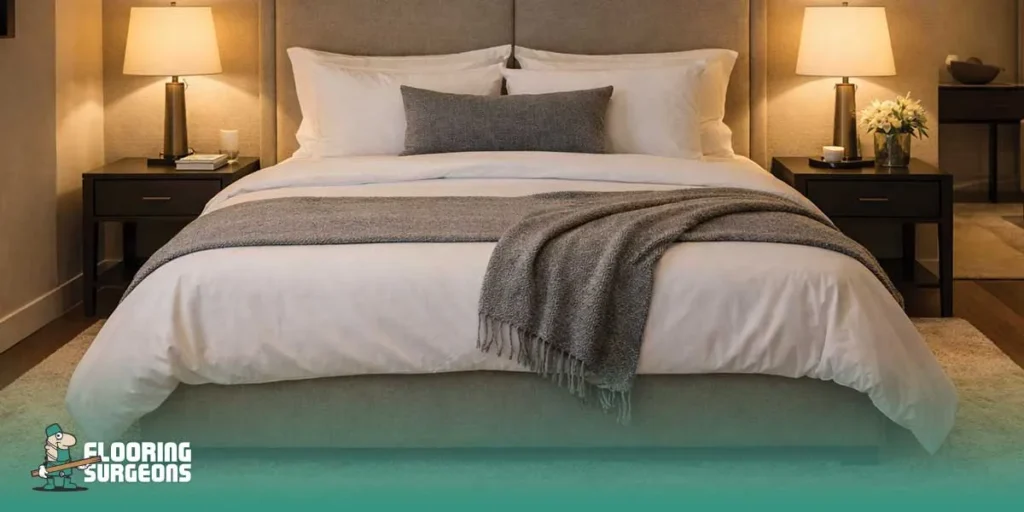
Most hotel bedroom mistakes don’t come from bad taste. They come from trying too hard. Homes fail at the hotel look when they add more rather than edit better. Here’s what consistently breaks the illusion:
- Overdecorating every surface
Hotels leave space. Too many cushions, frames, and accessories create visual noise and instantly remove the calm, luxury feel. - Cold or mismatched lighting
Bright white bulbs, ceiling-only lighting, or mixed colour temperatures flatten the room. Hotels rely on warm, layered light instead. - Ignoring the floor entirely
A bedroom can’t feel luxurious if it’s noisy or cold underfoot. Hard floors without rugs or cheap carpets undermine everything above them. - Too many contrasting colours
Strong contrasts look busy at home. Hotels stick to tight colour palettes so nothing competes for attention. - Furniture that fills every corner
If there’s no breathing room, there’s no hotel feel. Negative space is part of the design, not wasted space.
If a bedroom looks impressive but feels restless, one of these mistakes is almost always the cause.
Final Touches That Make a Bedroom Feel 5-Star
The difference between “nice” and “hotel-level” often comes down to a few deliberate hotel bedroom accessories and finishing choices. Not more items—better ones.
What actually works:
- Matched bedside lamps
Symmetry instantly signals intention. It’s one of the simplest luxury bedroom finishing touches with the most significant impact. - One standout texture, not five
A soft throw, a padded headboard, or a quality rug does more than mixing multiple materials. - Clear, uncluttered bedside tables
One book, one lamp, maybe one tray. Hotels never stack objects, and neither should you. - Bedding that looks layered, not styled
Crisp sheets, a full duvet, and a relaxed throw folded once. Anything more feels staged. - Silence as a design choice
Soft flooring, heavy curtains, and controlled lighting make the room feel expensive without adding anything visible.
If you’re trying to get the hotel look through the floor as well as the styling, Flooring Surgeons can help you choose a finish that stays quiet, comfortable, and easy to live with long-term. The most convincing hotel-style bedrooms don’t announce themselves. They feel calm the moment you walk in. That’s the real 5-star detail—and it’s always intentional restraint, not decoration.

Haniye Ayanmanesh
As an expert writer for Flooring Surgeons, I combine technical SEO knowledge with a practical understanding of flooring, producing content that helps users make confident decisions while supporting long-term organic growth.