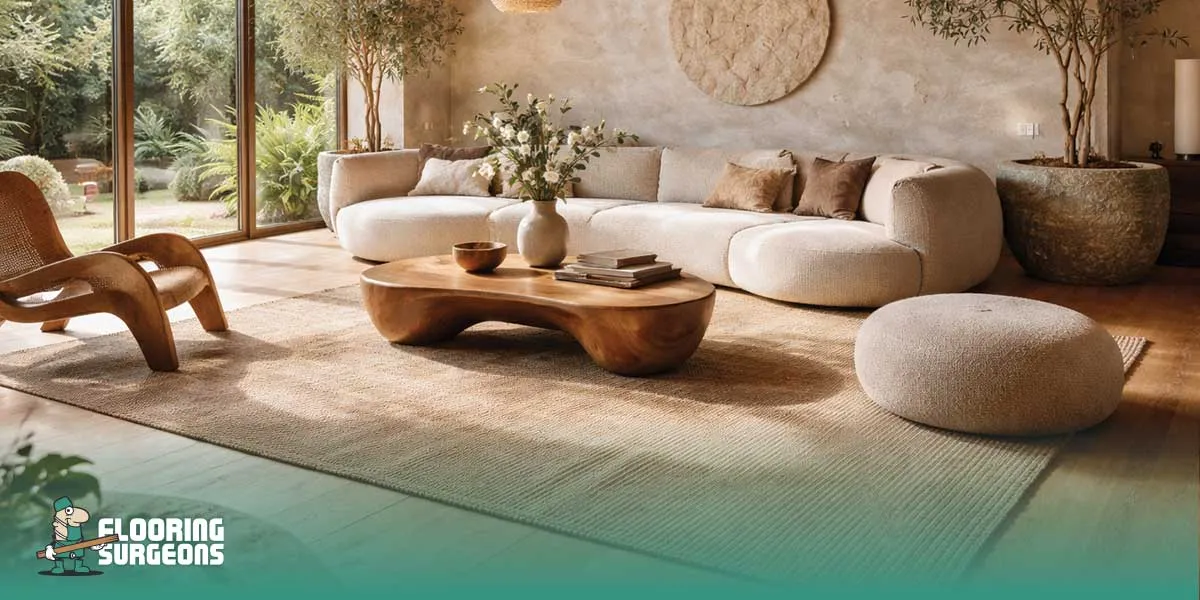




If you are planning a minimalist interior and want a clear answer straight away, here it is. In most minimalist homes, matte or low-sheen wood flooring, wide plank engineered wood, and high-quality wood-effect LVT are the safest and most effective choices. These flooring types support clean lines, reduce visual noise, and age well without drawing attention to themselves.
Minimalist interiors rely on restraint, balance, and continuity. Flooring plays a larger role than most people realise because it covers the biggest uninterrupted surface in the space. When the wrong flooring is used, even a carefully designed minimalist interior can feel cold, flat, or visually unsettled. Gloss finishes, busy grain patterns, strong colour contrasts, or inconsistent flooring between rooms are some of the most common reasons minimalist spaces fail in real homes.
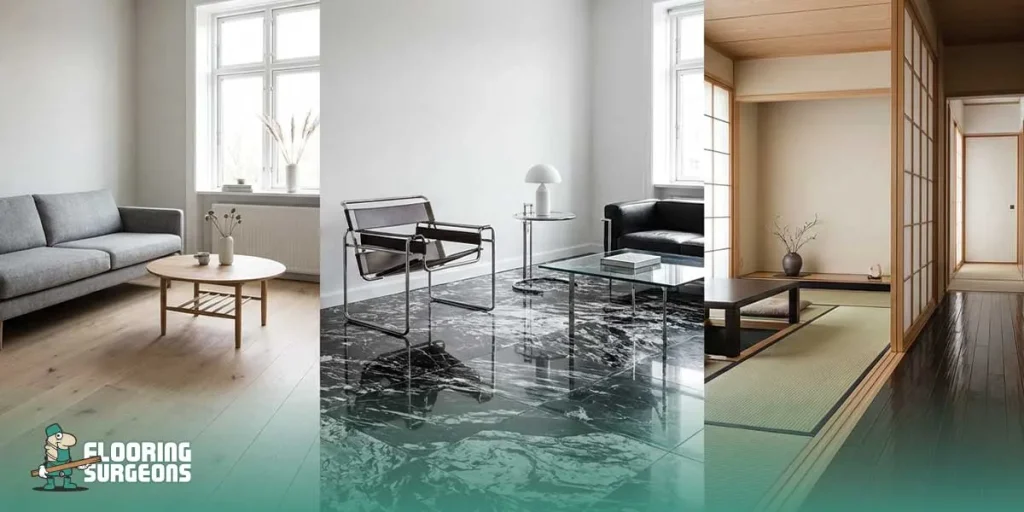
What often gets overlooked is that minimalist interior design is not a single style. Scandinavian, Japanese, warm, modern, and urban minimalist interiors may share a similar simplicity, but they respond very differently to flooring materials, finishes, plank width, and texture. A flooring choice that works perfectly in one minimalist style can quietly undermine another.
This guide breaks down ten types of minimalist interior design from a practical flooring perspective. For each style, we explain which flooring options work best, which choices tend to cause regret, and how to make decisions that suit real UK homes rather than idealised design images. If you want to choose minimalist flooring with confidence, without overthinking or costly mistakes later, this article gives you the clarity to do precisely that.
Table of contents
Why Flooring Matters More Than Furniture in Minimalist Interiors
In minimalist interiors, most visual decisions are intentionally reduced. There is less furniture, fewer colours, and minimal decorative contrast. As a result, flooring becomes the dominant visual surface by default, not by intention. It is the one element that runs continuously through the space and is impossible to ignore once installed.
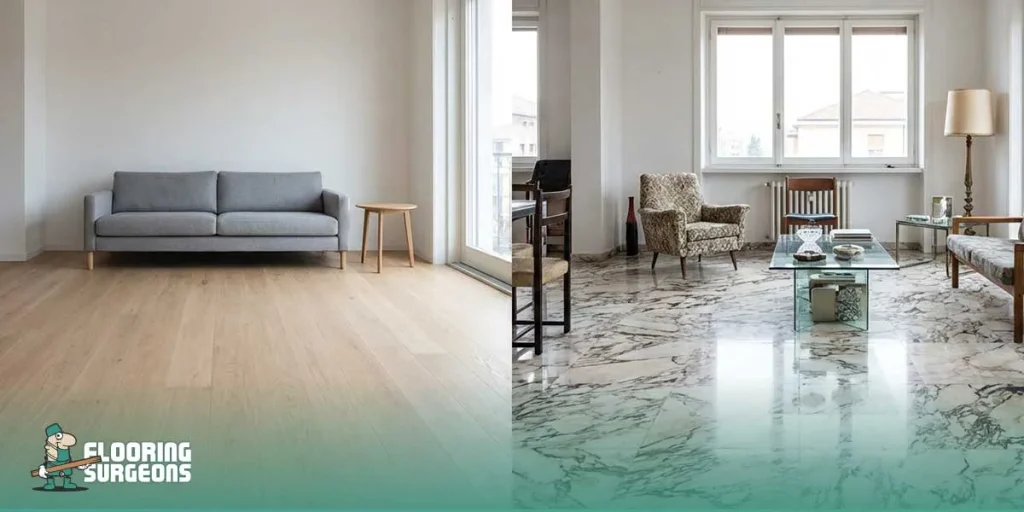
Furniture can be replaced, walls can be repainted, and lighting can be adjusted. Flooring cannot. This is why minimalist interiors amplify both good and bad flooring decisions. A well-chosen floor supports calm, balance, and clarity without drawing attention to itself. A poor flooring choice introduces visual noise that minimalist design cannot hide or compensate for. Minimalist spaces do not fail because they lack furniture or decoration. They fail when the floor disrupts continuity, reflects too much light, or introduces unnecessary texture and contrast.
How Minimalist Flooring Choices Change Space, Light, and Perception
Minimalist flooring decisions affect how large a space feels, how light moves across it, and how cohesive the interior appears as a whole. These effects are structural rather than decorative, which is why they matter more than surface styling.
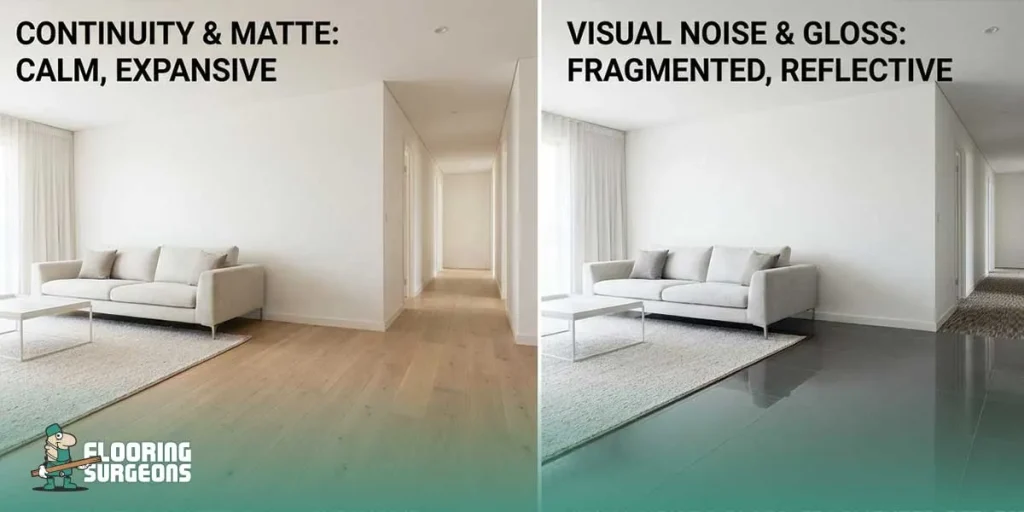
Flooring continuity vs visual noise
Continuity is one of the core principles of successful minimalist interiors. Using a single flooring type across connected spaces reduces visual interruption and allows the interior to feel calmer and more expansive. Frequent changes in flooring, strong plank contrast, or busy patterns break that continuity and introduce visual noise.
In minimalist homes, visual noise does not come from clutter alone. It comes from unnecessary variation. Narrow planks, heavy grain patterns, or abrupt flooring transitions draw the eye downward and fragment the space. Wide planks with restrained grain and consistent tone allow the interior to read as one unified environment. This is especially important in open-plan and small UK homes, where flooring continuity directly influences how spacious the interior feels.
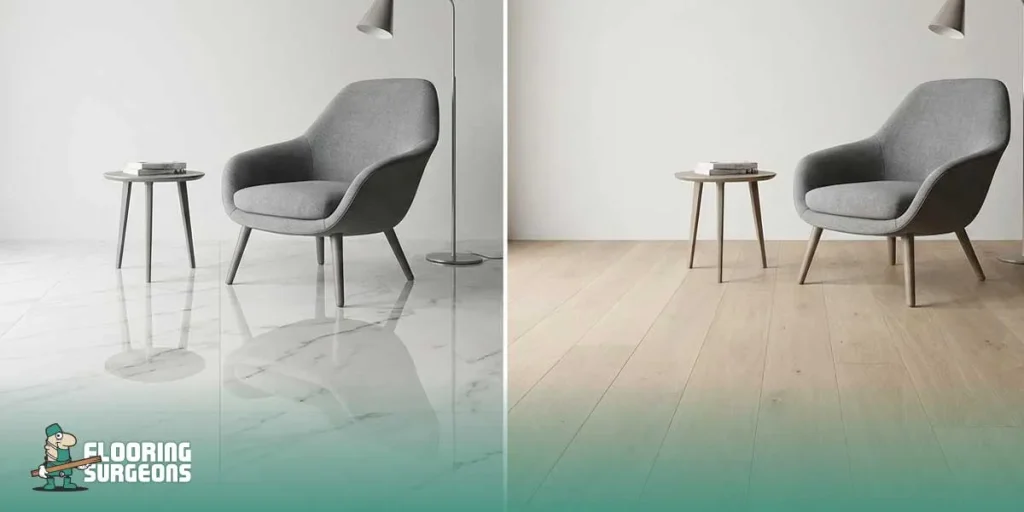
Matte vs gloss finishes in minimalist homes.
Finish choice has a greater impact in minimalist interiors because there are fewer competing surfaces. Gloss and high sheen finishes reflect light unevenly, highlighting movement, imperfections, and changes in lighting throughout the day. In minimalist spaces, this reflection becomes distracting rather than elegant. Matte and low sheen finishes absorb light more evenly. They reduce glare, soften reflections, and help surfaces feel grounded rather than clinical. This is why matte finishes consistently perform better in minimalist homes, regardless of the specific style.
Gloss finishes often appear appealing in showrooms or staged photography, but in lived-in minimalist interiors, they tend to exaggerate wear, highlight inconsistencies, and make spaces feel harsher over time.
Why minimalist interiors fail when the flooring is wrong
Minimalist interiors fail quietly. The space may look fine at first, but over time, it feels uncomfortable, cold, or visually unsettled. In most cases, the issue is not layout or furniture. It is the flooring decision made early on. Common causes of failure include floors that are too reflective, too visually busy, too trend-driven, or inconsistent between rooms. These choices undermine the restraint that minimalism depends on. Instead of fading into the background, the floor competes for attention and forces other elements to compensate.
When the flooring is wrong, minimalist interiors lose their clarity. When the flooring is right, minimalism feels effortless rather than forced. This is why flooring choice is not a finishing detail in minimalist design. It is the foundation that determines whether the space succeeds or slowly becomes a source of regret.
The 10 Types of Minimalist Interiors and Their Flooring Requirements
Minimalist interior styles may share a similar visual simplicity, but they place very different demands on flooring. Light behaviour, texture tolerance, material honesty, and finish durability all change from one minimalist style to another. This is why choosing flooring based on appearance alone often leads to disappointment.
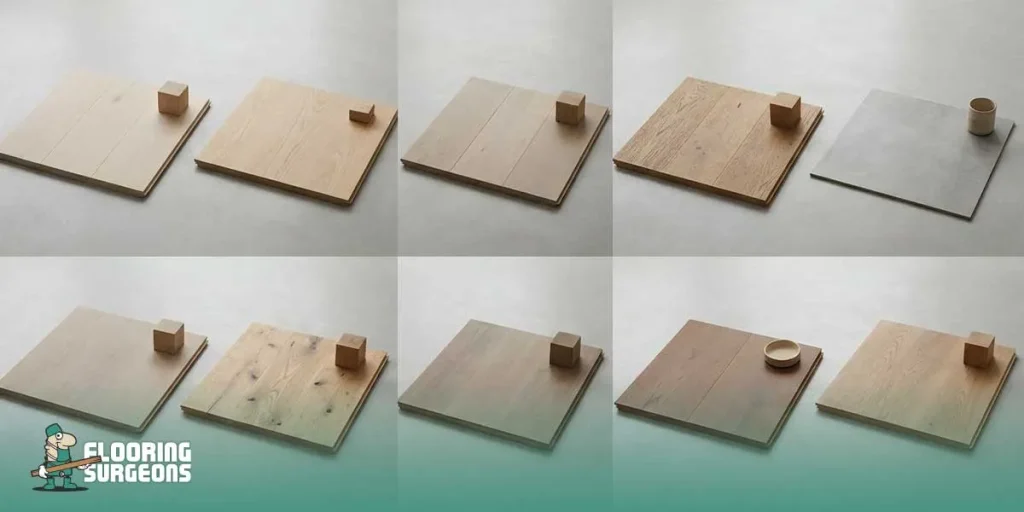
In this section, each minimalist style is analysed through its flooring requirements, not its decorative features. For every type, we outline the flooring option that works best in real homes, explain why it suits that style, and highlight alternative flooring types that can also work when conditions or priorities differ. The goal is not to offer endless choices, but to help you make a confident, low-risk flooring decision that aligns with the way the space is meant to function.
Overview: Minimalist Interior Styles and Flooring Decisions
| Minimalist Style | Best Flooring Choice | Also Suitable Options | Flooring to Avoid |
| Scandinavian | Light-toned matte engineered wood | Wood-effect LVT, natural-look laminate | Gloss, dark stains, busy grain |
| Japanese | Natural oak engineered wood (ultra-matte) | Solid wood, tatami-inspired finishes | High-gloss, heavily processed floors |
| Modern | Wide plank engineered wood (neutral tone) | Polished concrete-look LVT | Narrow planks, strong contrast |
| Warm | Textured matte engineered wood | Brushed oak, soft-grain LVT | Flat greys, glossy finishes |
| Industrial | Concrete-effect LVT or microcement-look flooring | Dark engineered wood | Raw concrete, brittle finishes |
| Soft Contemporary | Neutral matte engineered wood | Natural laminate, subtle LVT | Trend-led colours |
| Natural | Engineered wood with visible grain variation | Solid wood, organic finishes | Over-uniform flooring |
| Urban | Durable matte engineered wood | Commercial-grade LVT | Softwoods, noisy surfaces |
| Luxury | Premium wide plank engineered wood (matte) | Stone-look LVT | High-gloss marble |
| Practical (UK) | Mid-tone matte engineered wood | Wood-effect LVT | Trend-heavy finishes |
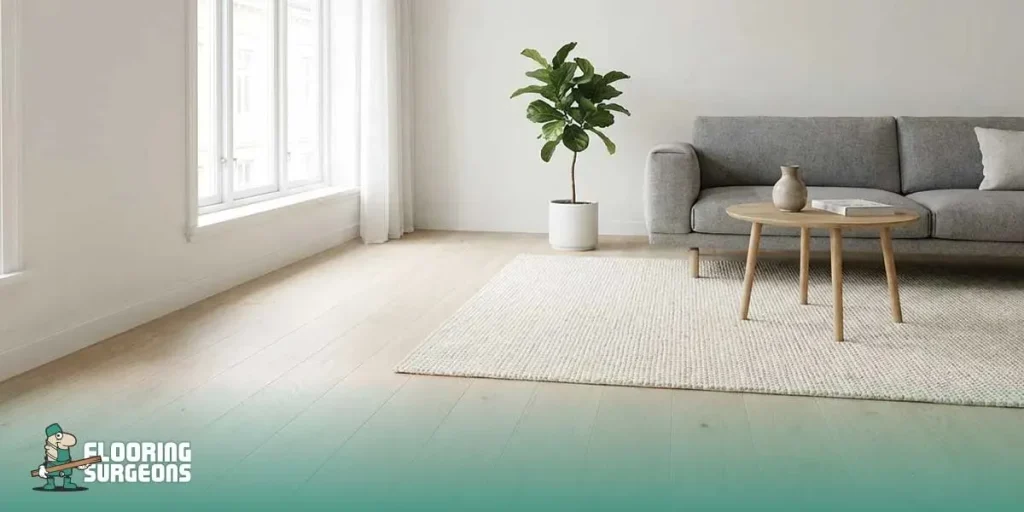
Scandinavian Minimalism
Scandinavian interiors depend on light, warmth, and visual calm. Flooring should quietly support these qualities without drawing attention.
- Primary recommendation: Light-toned matte engineered wood flooring
- Works well because it reflects light evenly and keeps the space open
- Alternatives: wood-effect LVT, natural-look laminate
- Avoid: glossy finishes, dark stains, heavy grain, narrow planks.
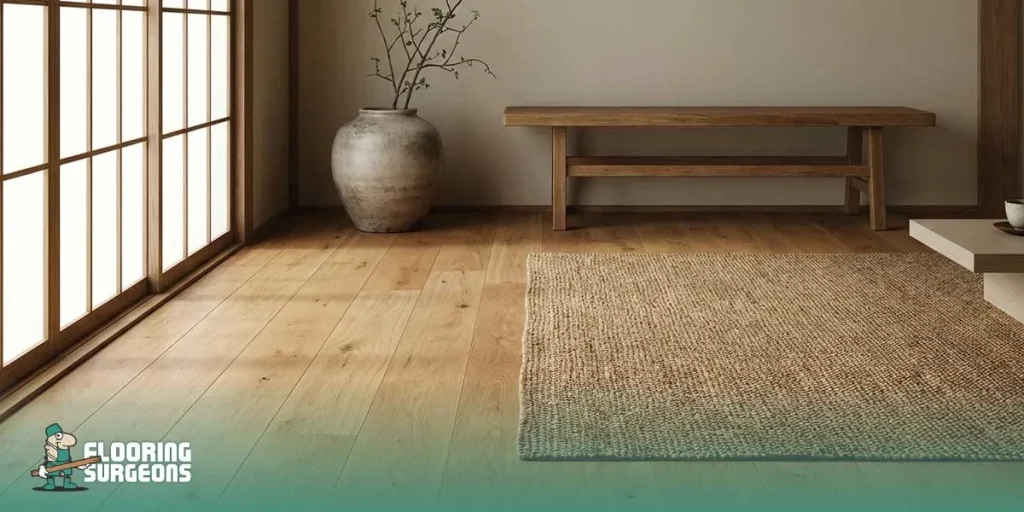
Japanese Minimalism
Japanese minimalism values balance, calm, and material honesty. Flooring must feel natural and understated.
- Primary recommendation: Natural oak engineered wood with an ultra-matte finish
- Preserves softness and avoids glare
- Alternatives: solid wood flooring, subtle natural finishes
- Avoid: polished, lacquered, or highly processed floors.
- UK note: low daylight makes gloss finishes especially disruptive
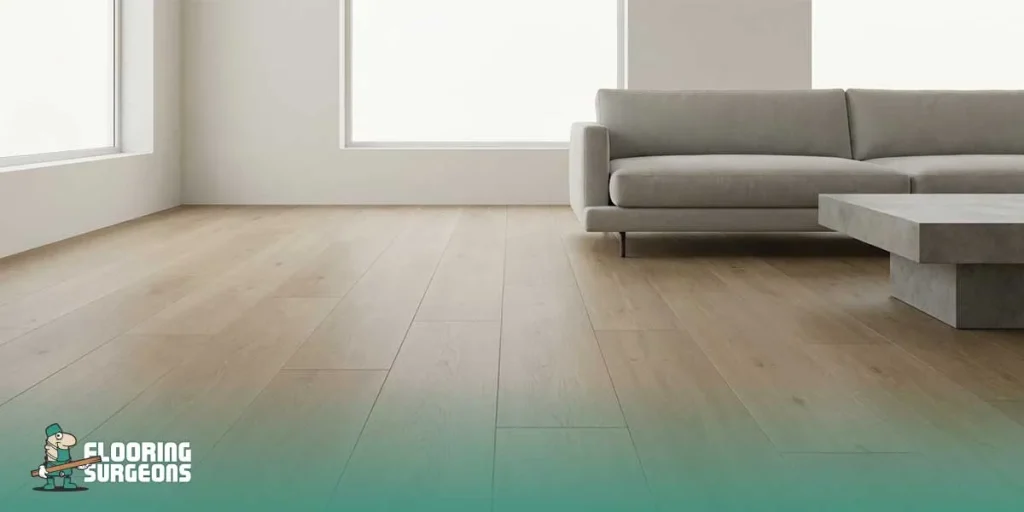
Modern Minimalism
Modern minimalism focuses on clarity and clean geometry. Flooring must be precise but not cold.
- Primary recommendation: Wide plank engineered wood in neutral tones
- Creates structure without harshness
- Alternatives: concrete-look LVT
- Avoid: narrow planks, high-contrast patterns.
- Watch out for overly clinical finishes.
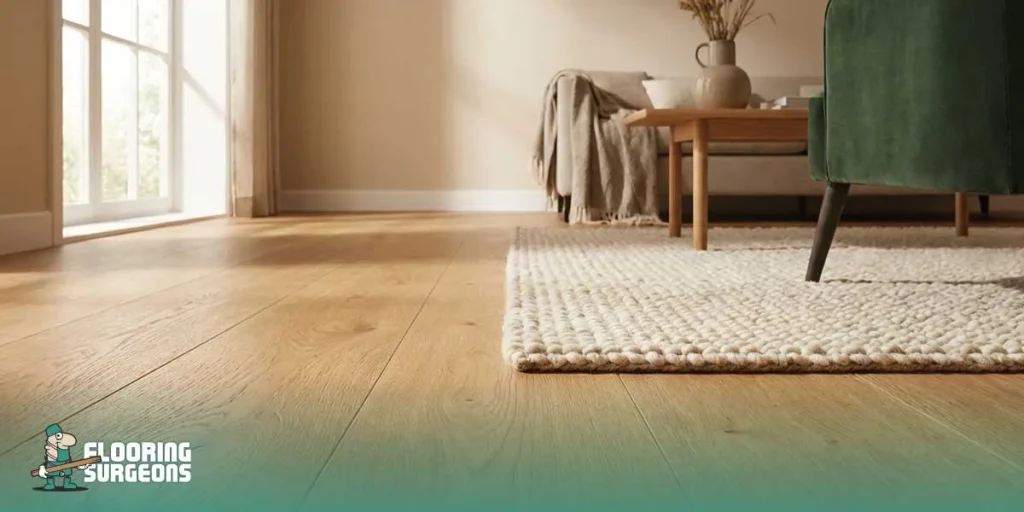
Warm Minimalism
Warm minimalism aims to soften simplicity through texture and tone.
- Primary recommendation: Textured matte engineered wood flooring
- Adds warmth without visual clutter
- Alternatives: brushed oak, soft-grain LVT
- Avoid: flat grey floors, shiny surfaces.
- Balance texture with restraint
Industrial Minimalism
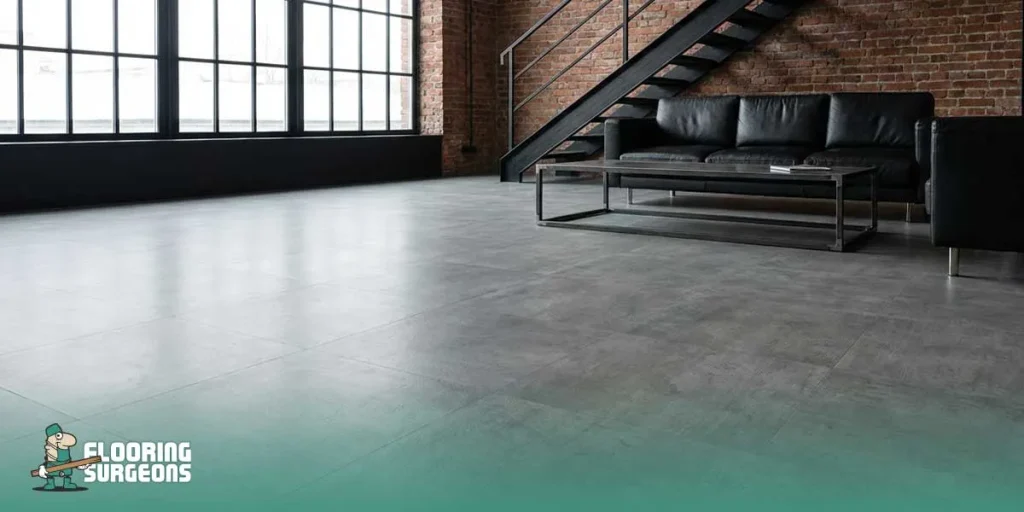
Industrial minimalism combines raw elements with control. Flooring must reference industrial materials without practical drawbacks.
- Primary recommendation: Concrete-effect LVT
- Delivers the look without cracking or coldness
- Alternatives: dark-toned engineered wood flooring
- Avoid: raw concrete floors in UK homes.
- Practical durability matters more than aesthetics here.
Soft Contemporary Minimalism
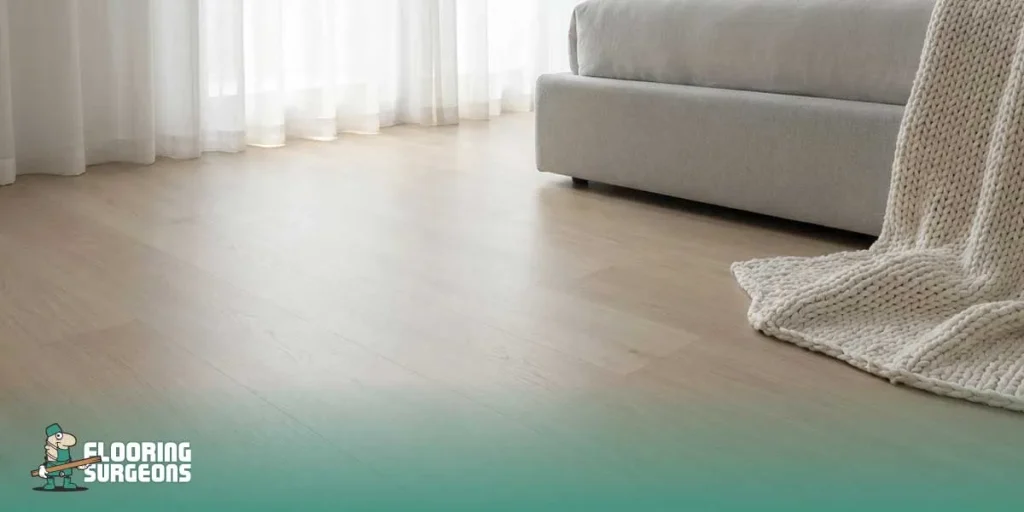
This style prioritises longevity and subtle sophistication.
- Primary recommendation: Neutral matte engineered wood flooring
- Ages well and avoids trend fatigue.
- Alternatives: natural laminate, understated LVT
- Avoid: fashionable colours and finishes.
- Texture should be subtle, not decorative.
Natural Minimalism
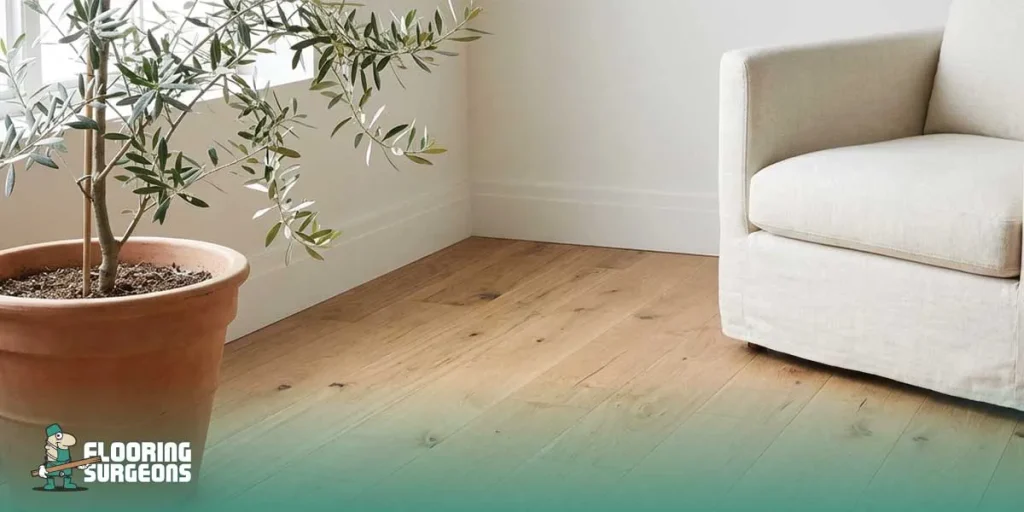
Natural minimalism embraces organic variation and material authenticity.
- Primary recommendation: Engineered wood with visible but restrained grain
- Adds life without disorder
- Alternatives: solid wood flooring
- Avoid: overly uniform or synthetic-looking floors.
- Grain variation should feel intentional.
Urban Minimalism
Urban minimalism is practical and durable, often in high-traffic homes.
- Primary recommendation: Durable matte engineered wood flooring
- Balances simplicity with resilience
- Alternatives: commercial-grade LVT
- Avoid: softwoods and noisy flooring systems.
- Acoustic performance matters
Luxury Minimalism
Luxury minimalism is about refinement, not display.
- Primary recommendation: Premium wide plank engineered wood with a matte finish
- Feels high-end without being showy
- Alternatives: stone-look LVT
- Avoid: high-gloss marble and reflective finishes.
- Longevity outweighs first impressions.
Practical Minimalism (UK Homes)
This approach prioritises flexibility, resale value, and long-term comfort.
- Primary recommendation: Mid-tone matte engineered wood flooring
- Works across multiple minimalist styles
- Alternatives: high-quality wood-effect LVT
- Avoid: extreme tones and trend-heavy finishes.
- Most common regrets come from over-stylised choices.
Can One Flooring Choice Work Across Multiple Minimalist Styles?
Yes, but only under particular conditions. There is no flooring option that works perfectly for every minimalist style, but there are flooring choices that perform reliably across most minimalist interiors when the goal is flexibility rather than purity.
In practice, this matters most for UK homeowners who are not designing around a single rigid aesthetic. Many minimalist homes evolve over time. Furniture changes, layouts adapt, and resale considerations come into play. In these situations, choosing a flooring option that only works for one narrow style often leads to regret. The most versatile option across multiple minimalist styles is mid-tone engineered wood flooring with a matte or low-sheen finish and restrained grain. This type of flooring adapts well to Scandinavian, modern, warm, soft contemporary, and practical minimalist interiors without forcing the space in one direction.
What makes this approach work is balance. The floor does not dominate, but it is not invisible either. It supports light, absorbs texture changes from furniture, and remains visually stable as styles shift. Flooring choices that are too pale, too dark, or too distinctive tend to lock the interior into a single look and reduce long-term flexibility. If your priority is long-term satisfaction rather than stylistic purity, adaptability matters more than making a bold statement at floor level.
The Most Common Flooring Mistakes That Break Minimalist Interiors
Minimalist interiors rarely fail dramatically. They fail quietly through small decisions that compound over time. The following mistakes appear consistently in homes where minimalism feels uncomfortable or unfinished.
- Overly glossy finishes
High-sheen surfaces reflect light unevenly and exaggerate movement, wear, and imperfections. In minimalist interiors, this reflection becomes visual noise rather than sophistication. - Busy grain patterns
Strong contrast, heavy knots, or dramatic grain variation introduce unnecessary movement. Minimalist spaces rely on restraint, and visually active floors undermine that calm. - Inconsistent flooring between spaces
Switching flooring types between connected rooms fragments the interior. Minimalism depends on flow, and broken continuity disrupts both perception and comfort. - Trend-based colour choices
Grey washes, extreme whites, and fashionable tones often age faster than the rest of the interior. When the floor dates, the entire space dates with it.
These mistakes are rarely evident at the point of purchase. They become apparent only after the space is lived in, which is why avoiding them is more important than chasing the latest look.
How to Choose Minimalist Flooring Without Regret
Choosing minimalist flooring is less about style and more about prioritisation. The following principles consistently lead to better long-term outcomes.
What to prioritise
Focus on finishes that are visually quiet and materials that age predictably. Matte or low-sheen surfaces, consistent tones, and moderate grain variation perform best over time. Flooring should support light and space without demanding attention. Continuity is also critical. Using the same flooring across connected areas strengthens the minimalist effect and makes spaces feel larger and calmer.
What to ignore
Ignore showroom lighting and staged photography. Floors that look striking under controlled lighting often behave very differently in real homes. Trend language and design labels are also less important than how the floor responds to daily use, natural light, and wear. Avoid choosing flooring based solely on samples. Always consider how the material behaves across an entire room.
When to seek professional advice
If the space has limited natural light, underfloor heating, structural constraints, or resale considerations, professional guidance becomes valuable. These factors influence flooring performance far more than stylistic preference, and correcting mistakes later is costly.
Minimalist Design Succeeds or Fails at Floor Level
Minimalist interiors are unforgiving by nature. With fewer elements in play, every decision carries more weight, and flooring carries the most. It is the one surface that connects the entire space and cannot be easily corrected once installed. When flooring choices are restrained, consistent, and well considered, minimalist design feels effortless and calm. When they are driven by trends, finishes, or surface-level appeal, the space slowly loses clarity and comfort.
This is something Flooring Surgeons see repeatedly in real homes, minimalist spaces that succeed not because they are sparse, but because the flooring choice was made with long-term behaviour, light, and daily use in mind. Minimalist design does not succeed because there is less in the room. It succeeds because the foundational choices are correct. And in real homes, that foundation starts at floor level.

Haniye Ayanmanesh
As an expert writer for Flooring Surgeons, I combine technical SEO knowledge with a practical understanding of flooring, producing content that helps users make confident decisions while supporting long-term organic growth.