

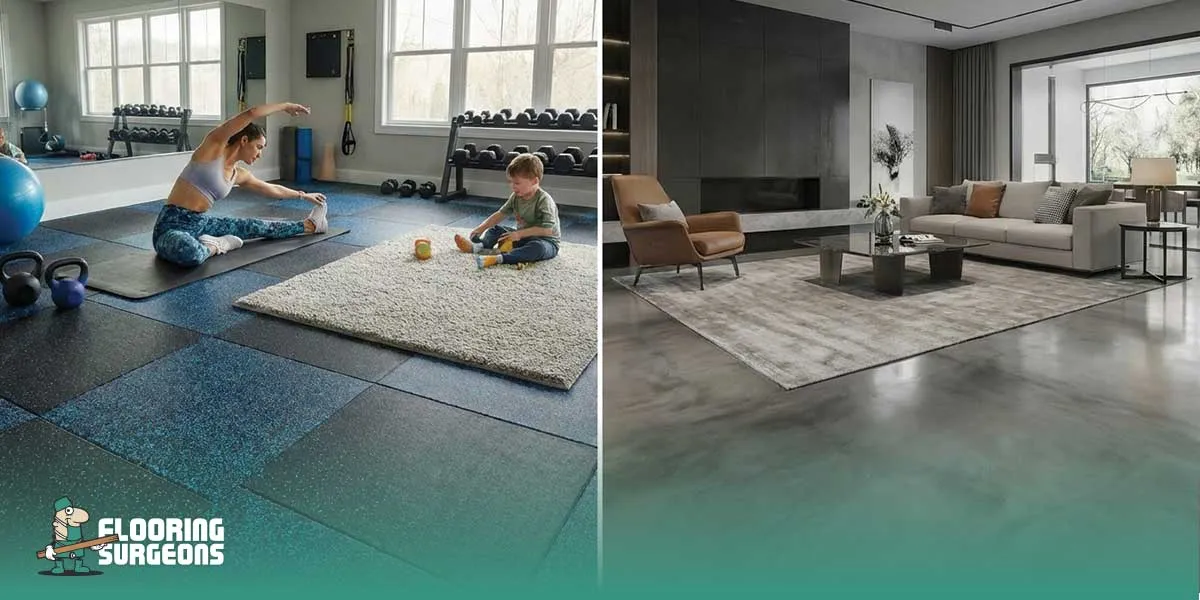
Rubber flooring is gaining popularity because it prioritises safety, comfort, and durability over appearance. In simple terms, rubber flooring is soft underfoot, slip-resistant, highly impact-absorbing, and extremely durable, which makes it ideal for high-traffic and safety-critical spaces. The trade-off is that it can be more expensive upfront and may not suit interiors where visual warmth or decorative style is the main priority.
What makes rubber flooring different from many traditional options is how it performs in real use. It reduces noise, cushions falls, and handles constant foot traffic with minimal wear. That is why it has moved beyond gyms and commercial buildings and is now widely used in classrooms, schools, healthcare spaces, and functional residential areas. Its growing popularity is driven by practicality and risk reduction, not by trend-led design.
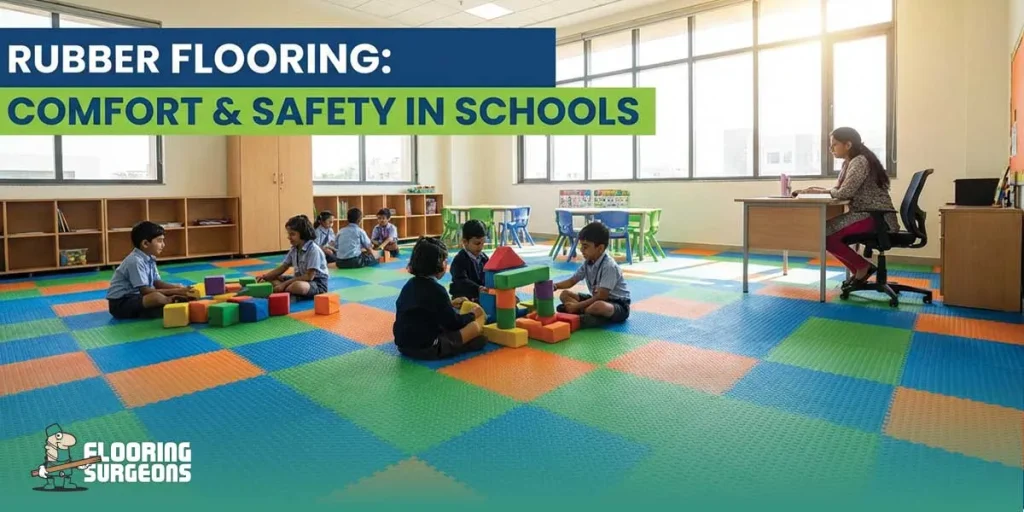
At the same time, rubber flooring is not a universal solution. It has limitations in terms of aesthetics, sensitivity to certain substances, and suitability for all home environments. This guide breaks down the real pros and cons of rubber flooring, explains the different types available, and shows why specific spaces like classrooms are accelerating its adoption. By the end, you will know whether rubber flooring is a wise choice for your space or simply the wrong tool for the job.
Table of contents
What Is Rubber Flooring and How It Has Evolved
Rubber flooring is a resilient floor covering made from natural rubber, synthetic rubber, or recycled rubber compounds. Its core purpose has always been functional performance rather than decoration. What has changed over time is not the idea of rubber flooring, but how it is engineered, manufactured, and positioned for modern spaces.
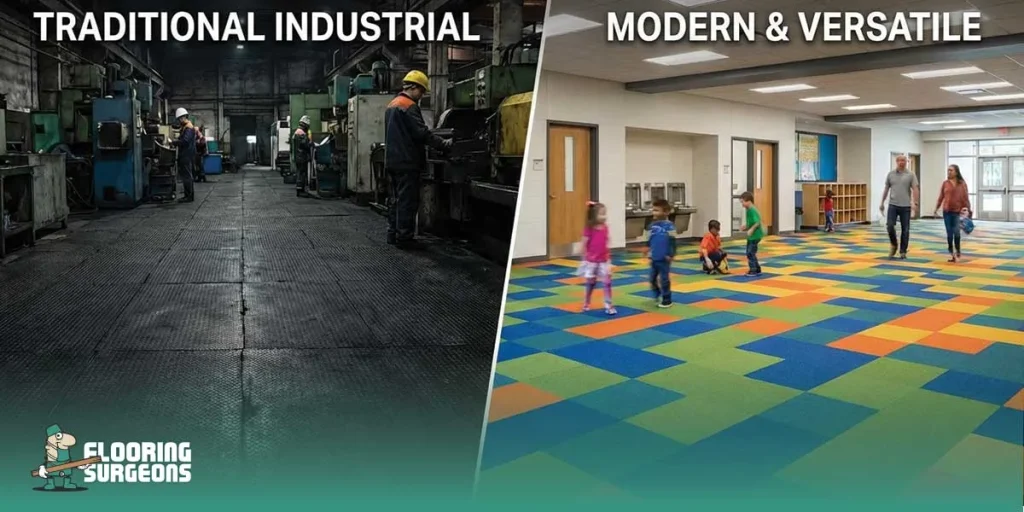
Traditional rubber flooring vs modern rubber flooring
Traditional rubber flooring was designed almost exclusively for industrial and utility settings. It was thick, dark, visually basic, and focused on durability and slip resistance. Design flexibility was limited, and installation options were often rigid. As a result, rubber flooring was seen as practical but unattractive.
Modern rubber flooring is fundamentally different. Advances in manufacturing have improved surface textures, colour ranges, dimensional stability, and installation systems. Today’s rubber floors are thinner, more refined, easier to install, and available in formats that suit schools, healthcare buildings, and controlled residential environments. Performance remains the priority, but usability and visual acceptance have improved significantly.
Why the perception of rubber flooring has changed
The perception shift did not happen because rubber flooring became stylish. It changed because priorities changed. Safety regulations, noise control, injury prevention, and long-term maintenance costs now matter more in many environments than decorative appeal.
Rubber flooring gained acceptance as spaces like classrooms, gyms, and healthcare facilities demanded floors that reduce impact, minimise slips, and withstand constant use without frequent replacement. As these use cases expanded, rubber flooring stopped being viewed as an industrial product and started being recognised as a problem-solving surface.
In short, rubber flooring evolved from a niche industrial solution into a practical flooring system designed for environments where performance, safety, and longevity outweigh visual trends.
Pros of Rubber Flooring in Real World Use
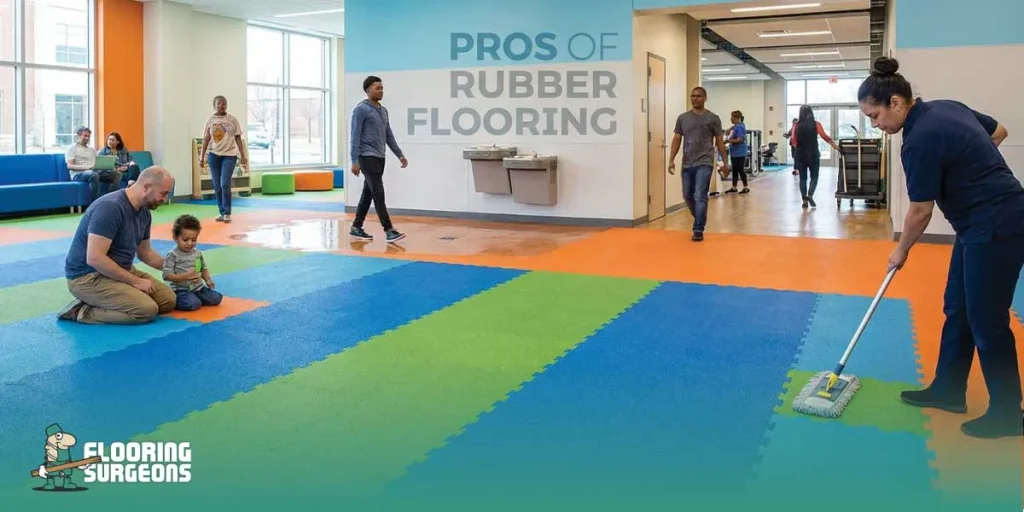
Rubber flooring is chosen for how it performs under pressure, not for how it looks in a showroom. Its advantages become clear in spaces where safety, comfort, and durability matter every day.
Comfort and impact absorption
- Soft underfoot and forgiving during long periods of standing
- Absorbs impact from drops, falls, and heavy foot traffic
- Reduces strain on joints compared to hard flooring
Slip resistance and safety
- Naturally slip-resistant, even in busy environments
- Maintains grip better than many hard surfaces
- Widely used in spaces where fall risk must be minimised.
Durability in high-traffic areas
- Handles constant use without cracking or chipping
- Resists dents from furniture and equipment
- Performs consistently in commercial and institutional settings
Low maintenance and long-term performance
- Easy to clean with minimal specialised products
- Does not require sealing, polishing, or refinishing
- Long service life offsets the higher upfront cost over time.
Cons of Rubber Flooring You Should Know Before Choosing
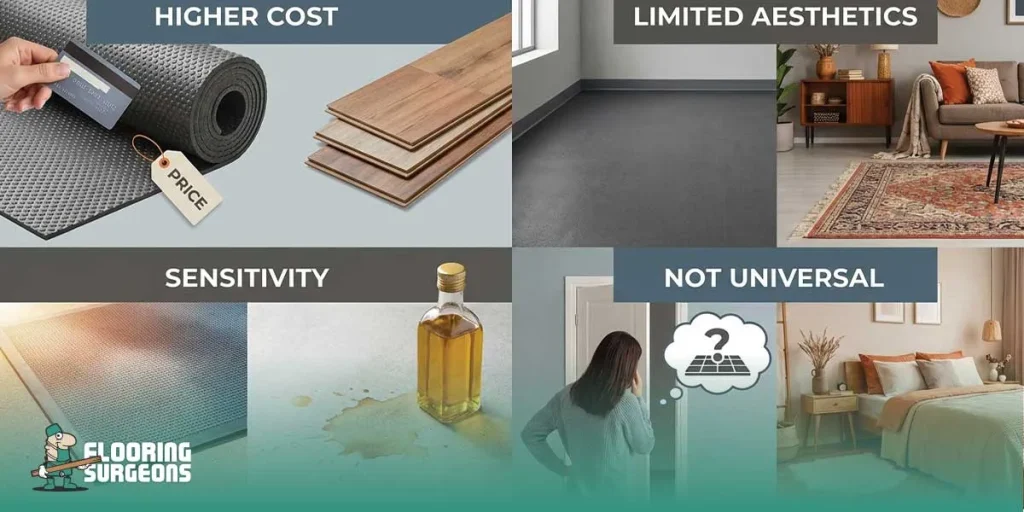
Rubber flooring is not a universal solution. Its drawbacks are real and should be considered carefully before committing.
Initial cost considerations
- Higher upfront cost than many vinyl or laminate options
- Installation can add to the overall budget, depending on the format
Limited aesthetic appeal in some interiors
- Design options are improving, but still functional in tone.
- May not suit decorative or luxury-focused interiors
- Visual warmth is limited compared to wood or stone.
Sensitivity to oils, grease, or sunlight
- Can stain or degrade when exposed to oils or grease
- Prolonged direct sunlight may cause fading or discolouration.
- Requires careful placement in specific environments
Not ideal for every residential space
- Overkill for low-traffic or purely decorative rooms
- May feel too utilitarian in living rooms or bedrooms
- Best suited for functional zones rather than entire homes
Rubber Flooring Pros and Cons Summary Table
| Aspect | Advantages | Limitations |
| Comfort | Cushioned, impact-absorbing | Softer feel is not always desired |
| Safety | High slip resistance | Not visually warm |
| Durability | Excellent in high traffic areas | Higher upfront cost |
| Maintenance | Low effort, long lifespan | Sensitive to oils and sunlight |
| Residential use | Great for functional spaces | Not ideal for all rooms |
Different Types of Rubber Flooring Explained
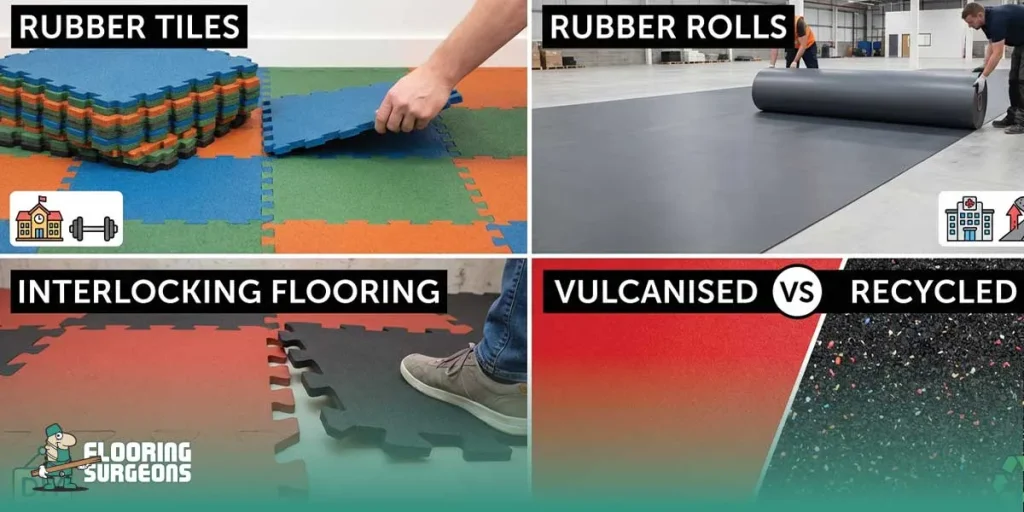
Not all rubber flooring performs the same. The format and rubber composition affect installation, durability, and where each type works best.
Rubber tiles
- Supplied in square or rectangular tiles
- Easy to replace individual sections if damaged
- Suitable for classrooms, gyms, and modular commercial spaces
- Seams can be more visible if the installation is not precise.
Rubber rolls
- Supplied in large continuous sheets
- Fewer seams, creating a smoother and more uniform surface
- Ideal for high-traffic areas where hygiene and continuity matter
- Installation is more complex and less forgiving.
Interlocking rubber flooring
- Designed with puzzle-style edges for quick installation
- Often used in temporary or DIY-friendly environments.
- Easy to remove, move, or replace
- Less suitable for permanent or high-spec installations
Vulcanised vs recycled rubber
- Vulcanised rubber is denser, more stable, and longer-lasting
- Recycled rubber is more affordable and environmentally focused.
- Vulcanised options offer better colour stability and performance.
- Recycled rubber may have more pungent odours and slight texture variation.
Why Rubber Flooring Is Gaining Popularity in Schools and Classrooms
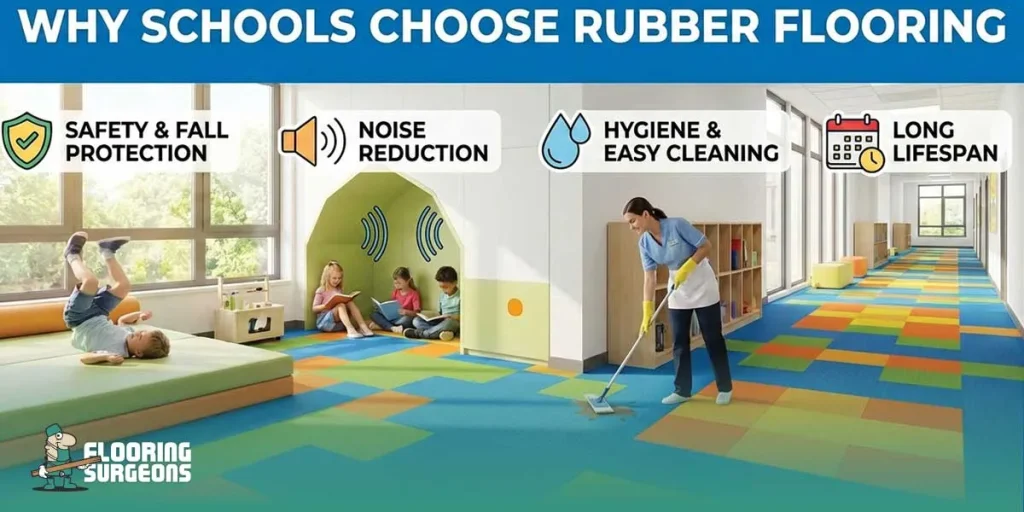
Rubber flooring is becoming a preferred choice in schools and classrooms because it solves everyday problems that traditional flooring struggles with. The focus is not on appearance, but on safety, durability, and long-term practicality in busy learning environments.
Safety and fall protection
- Naturally cushioned surface reduces impact from slips and falls.
- Lower injury risk compared to hard flooring.
- Suitable for classrooms, corridors, and activity areas
- Provides a stable footing for children of different ages
Noise reduction in learning environments
- Absorbs sound from footsteps and moving furniture
- Reduces echo and background noise in classrooms
- Helps create calmer, more focused learning spaces
- Improves overall acoustic comfort without extra treatments
Hygiene and easy cleaning
- Non-porous surface resists moisture and spills.
- Easy to clean with basic maintenance routines
- Does not trap dust, allergens, or bacteria like some soft floors
- Supports hygiene standards in shared educational spaces
Long lifespan under daily use
- Designed to withstand constant foot traffic and wear
- Resists dents, cracks, and surface damage
- Requires fewer repairs or replacements over time
- Lower lifetime cost compared to flooring that needs frequent renewal.
Rubber Flooring vs Other Popular Flooring Options
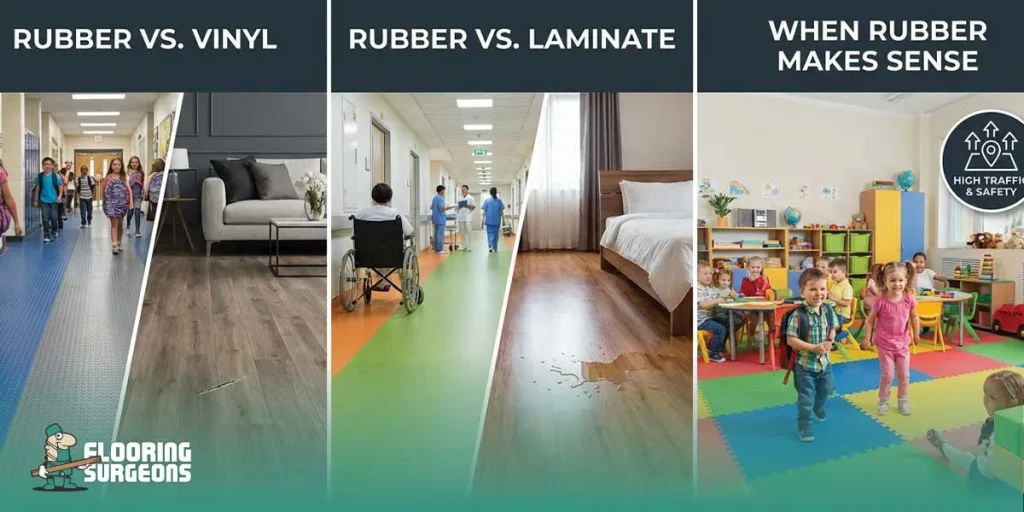
Choosing rubber flooring only makes sense when it clearly outperforms other options for a specific use. Comparing it directly with vinyl and laminate helps clarify where rubber flooring is a wise choice and where it is unnecessary. Unlike wood-based floors that are affected by seasonal flooring movement, rubber flooring remains more dimensionally stable in everyday use.
Rubber flooring vs vinyl flooring
Vinyl flooring is often chosen for its visual versatility and lower upfront cost. It works well in residential and decorative spaces where appearance matters more than impact resistance. Rubber flooring, by contrast, prioritises safety, cushioning, and long-term durability. While vinyl can look more refined, it is more prone to surface damage under heavy use. Rubber flooring performs better in high-traffic environments where slip resistance, noise control, and shock absorption are critical.
Rubber flooring vs laminate flooring
Laminate flooring is designed to replicate the look of wood at a lower cost, making it attractive for living spaces and bedrooms. However, laminate is a rigid surface that offers little impact absorption and is more sensitive to moisture and wear in demanding environments. Rubber flooring does not aim to replicate natural materials. Instead, it provides comfort underfoot, better noise reduction, and superior performance in areas where durability and safety outweigh visual warmth.
When rubber flooring makes more sense
Rubber flooring is the better choice in environments where people move constantly, where falls are a concern, and where floors are exposed to repeated stress. Schools, classrooms, gyms, healthcare spaces, and functional zones benefit most from its properties. In spaces designed primarily for comfort, aesthetics, or residential ambience, vinyl or laminate often makes more sense. Compared to engineered wood flooring, rubber flooring offers better impact absorption and noise reduction in high-traffic environments.
Flooring Comparison Table
| Feature | Rubber Flooring | Vinyl Flooring | Laminate Flooring |
| Comfort underfoot | High | Moderate | Low |
| Impact absorption | Excellent | Limited | Minimal |
| Slip resistance | High | Moderate | Low to moderate |
| Noise reduction | Good | Limited | Poor |
| Durability in heavy use | Very high | Moderate | Low to moderate |
| Visual flexibility | Limited | High | High |
| Best use cases | Schools, gyms, high-traffic areas | Residential, decorative spaces | Living rooms, bedrooms |
Final Thoughts on Rubber Flooring
Rubber flooring is gaining popularity for one apparent reason. Its appeal is driven by safety and performance, not by style. As priorities shift toward risk reduction, durability, and long-term practicality, rubber flooring answers problems that many traditional surfaces cannot. It is essential to understand what rubber flooring is and what it is not. Rubber flooring is chosen to reduce risk, not to impress visually. Its value lies in comfort underfoot, impact absorption, and reliability in demanding environments rather than decorative appeal.
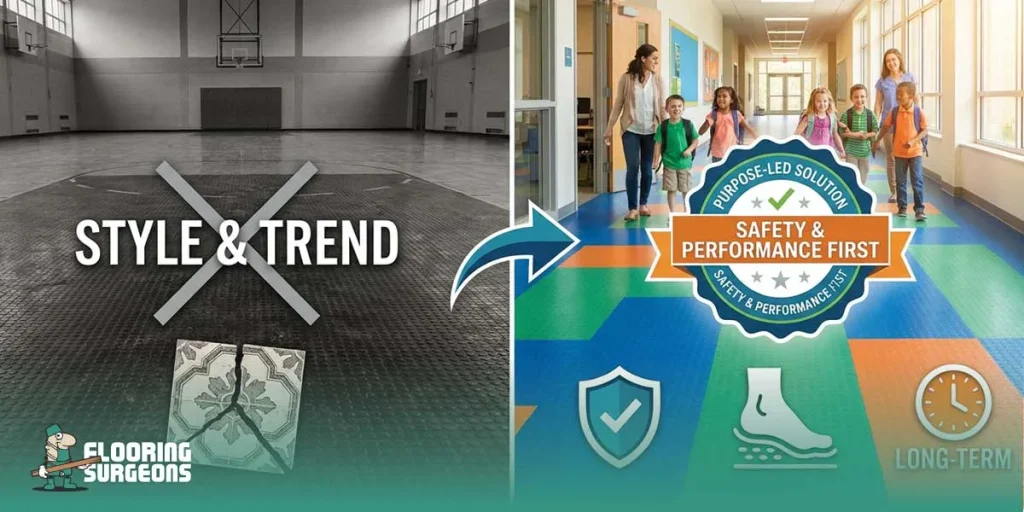
Modern rubber flooring has also moved beyond outdated assumptions. It is no longer limited to gym floors or industrial spaces. Improvements in manufacturing, installation systems, and design flexibility have made it a viable option for schools, healthcare settings, and controlled residential areas. The most significant shift has come from education environments. Classrooms changed the narrative around rubber flooring. When safety, noise control, hygiene, and longevity became non-negotiable, rubber flooring proved its relevance. That success has reshaped how the material is perceived across other sectors.
In short, rubber flooring is not a trend-led choice. It is a purpose-led solution. When safety, durability, and long-term performance matter more than visual warmth, rubber flooring becomes not just a good option, but the right one. At Flooring Surgeons, we see rubber flooring chosen not for style trends, but for safety, durability, and long-term performance.

Haniye Ayanmanesh
As an expert writer for Flooring Surgeons, I combine technical SEO knowledge with a practical understanding of flooring, producing content that helps users make confident decisions while supporting long-term organic growth.