



If you have wooden flooring at home and you’re unsure whether you should keep your shoes on or take them off, the truth is simple: either choice can be right — but only if you understand how each one affects Protecting Your Wooden Flooring. Even everyday shoes can carry fine grit, moisture and pressure that slowly mark the surface, while going barefoot or wearing socks isn’t always risk-free either.
This guide has been created to give you a clear, practical answer: when shoes genuinely harm your floor, when they don’t, and how to protect your wooden floor with small, realistic habits that fit the way you actually live. By the end, you’ll know precisely what makes the most sense for your home, your routine and the type of wooden flooring you have — without guesswork or overthinking.

Table of contents
Why Shoes Matter on Wooden Floors (Real Risks You Should Know)
Walking on wooden flooring with shoes on may feel harmless, but the way footwear interacts with the surface has a direct impact on protecting your wooden flooring. Every step carries weight, pressure and tiny particles from outdoors, all of which quietly affect how well your floor ages. Guidance from specialists such as Flooring Surgeons shows how these small pressures add up over time, helping you make informed choices that genuinely preserve your wooden floors without changing your lifestyle more than necessary.
How Shoes Cause Micro-Scratches and Long-Term Wear
Even the cleanest-looking shoes create friction. The soles — whether rubber, leather or synthetic — have textured patterns that act like fine sandpaper when pressed against wood. Over time, this friction leaves micro-scratches that aren’t visible at first but accumulate into a dull, worn patch, especially in high-traffic areas like hallways and kitchens.
More rigid soles, such as boots, heels, or outdoor trainers, amplify this effect by concentrating pressure on smaller contact points. This repeated impact doesn’t just scratch the surface; it gradually breaks down protective finishes, making the floor more vulnerable to moisture and deeper abrasion. The result is a floor that loses its natural sheen long before its time, even if you clean and maintain it regularly.
Grit, Dirt and Outdoor Particles — The Hidden Enemy of Wood Floors
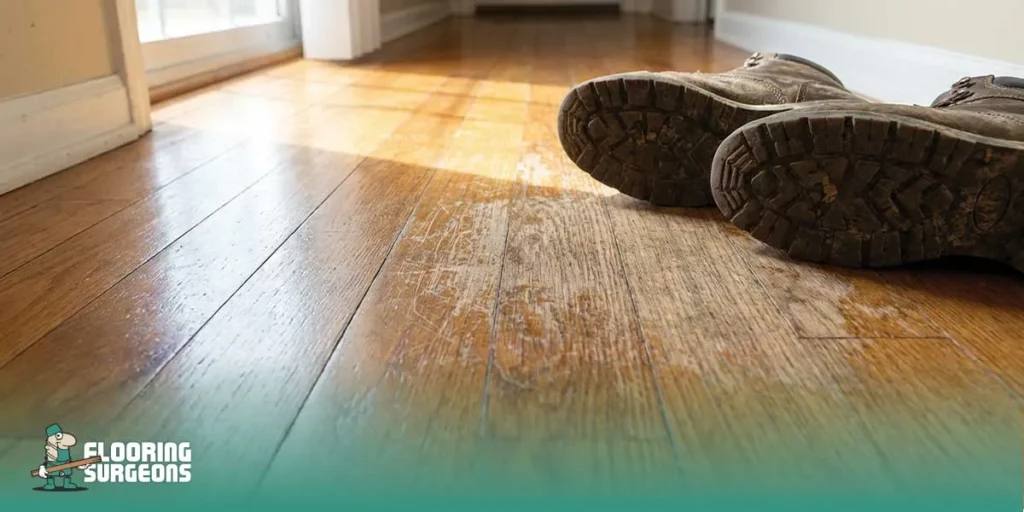
The real damage often comes from what shoes carry in — not the shoes themselves. Outdoor particles such as grit, tiny stones, dust, and road debris can get trapped in footwear tread. When stepped on, these sharp micro-particles are crushed against the wood, leaving scuffs and fine scratches you can’t prevent once they happen. These particles also spread across the surface, meaning even a single walk through the hallway can leave abrasive dust that continues to damage the finish as people move across it. In wet weather, moisture mixed with dirt creates a thin paste that accelerates wear and can seep into small gaps, especially on older floors with worn sealant.
This is precisely why a “quick step indoors” with shoes isn’t as harmless as it seems — the damage is subtle, cumulative and often only noticeable when the finish has already dulled.
Shoes Off vs Shoes On — What’s Actually Better for Protecting Your Wooden Floor?
There isn’t a one-rule-fits-all answer to whether keeping shoes on or taking them off is better for your wooden floor. Both choices can protect the surface — or quietly damage it — depending on how they’re used. The key is understanding when each option makes sense, rather than following a blanket rule that doesn’t reflect how your household actually functions.
When It Makes Sense to Keep Shoes On (Unexpected Situations)
There are times when keeping shoes on is genuinely the safer option. For example, if you’re carrying heavy items, moving furniture, or walking on a slippery floor, going barefoot or wearing socks increases the risk of losing balance and dragging a foot across the wood. That sudden slide can cause deeper scratches than a clean, controlled step with a shoe.
Shoes also make sense when the floor is cold, slightly damp from recent cleaning, or when someone has medical reasons — like a need for extra support or orthopaedic footwear. In these cases, insisting that people remove shoes can actually lead to accidental scuffing or pressure spots as they try to stabilise themselves.
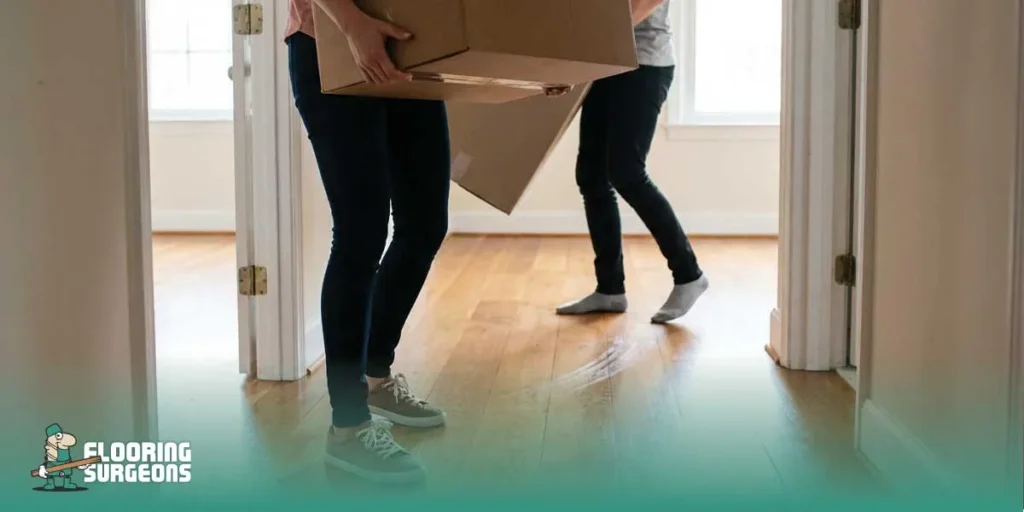
The critical point is that “shoes on” is not automatically harmful; it’s only dangerous when the shoes carry outdoor debris or have hard, sharp or heavily treaded soles. Clean indoor shoes with smooth bottoms can be perfectly safe.
When Removing Shoes Protects Your Wooden Flooring Most
Most everyday situations benefit from going shoeless. Removing shoes stops outdoor grit, moisture and road dust from ever reaching the floor in the first place — which is the single most significant factor in reducing long-term wear. Even a quick walk through the hallway in outdoor footwear can leave tiny debris that continues to scratch the floor long after you’ve forgotten about it.
Shoes with concentrated pressure points, such as heels or work boots, are hazardous because they press down harder on small areas of wood. Removing them immediately prevents microscratches and helps the protective finish last much longer. Families with children, pets or high foot traffic often see the most significant improvement simply from reducing the number of outdoor shoes crossing the threshold.
Choosing “shoes off” for everyday use doesn’t require strict house rules; it just prevents the avoidable, silent wear that happens with regular footwear. It’s an easy habit that significantly extends the life and appearance of any wooden floor.
High-Risk Shoe Types That Quickly Damage Wooden Floors
Some shoes do far more harm to wooden floors than others, simply because of how they distribute weight and how abrasive their soles are. High heels are the most damaging; the narrow heel concentrates your full body weight on a tiny point, creating deep compression marks and scratches with even a single step. Work boots, football boots and outdoor trainers are next on the list — their heavy tread traps grit, small stones and dirt that grind into the surface as you walk.
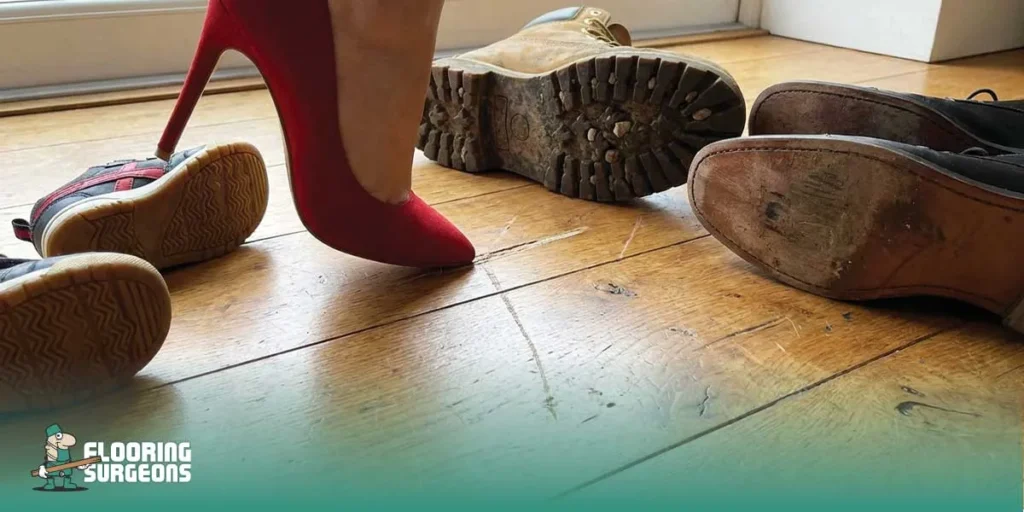
Shoes with rugged, non-flexible soles, such as leather-bottom dress shoes, can also leave visible scuffs, especially on satin or matte finishes. And while children’s shoes may seem light, many have textured rubber patterns that act like sandpaper on high-traffic areas. If you minimise how often these shoe types cross the floor, you significantly reduce everyday wear without changing how your household functions.
How to Protect Your Wooden Floor If Guests Keep Their Shoes On
Sometimes asking guests to remove their shoes isn’t practical — and in some homes, it simply isn’t a cultural norm. The good news is you can still protect the floor effectively by controlling what reaches the surface and where the impact is concentrated. A few simple adjustments make a noticeable difference without making visitors feel uncomfortable.
Smart Entryway Setups to Reduce Dirt and Impact
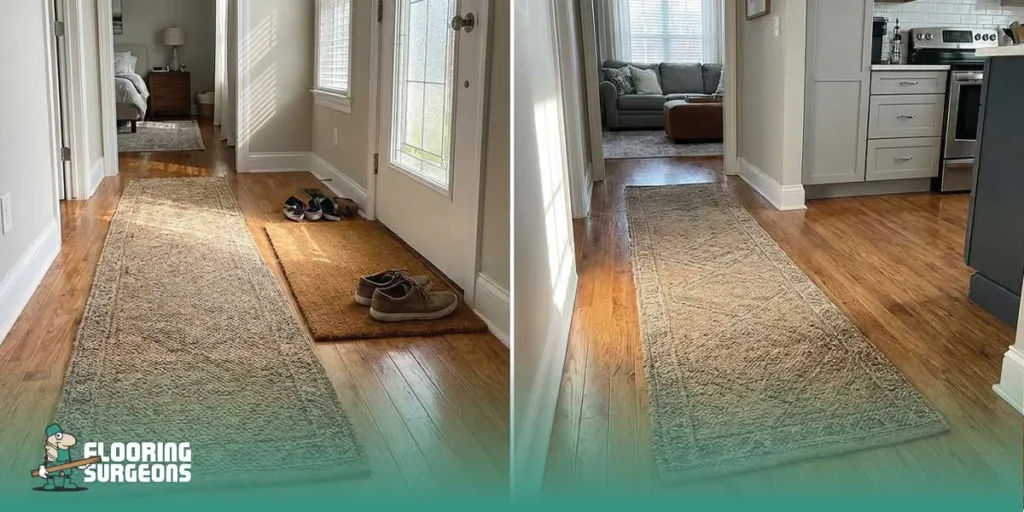
A well-planned entryway does most of the protective work for you. Place a sturdy outdoor mat to knock off the worst of the debris, followed by a high-quality indoor mat that absorbs remaining grit and moisture before anyone steps further inside. Positioning a bench or small landing space encourages guests to pause naturally, reducing the chance of them walking straight into the home with untreated soles.
If the layout allows, create a short “transition zone” — even a metre or two — using wood-friendly mats or tiles. This buffer area catches almost all the dirt that shoes bring in, meaning the wooden floor itself experiences far less abrasion and pressure.
Floor Runners, Mats and Rugs That Actually Work
Long hallway runners and strategically placed rugs protect wooden flooring far more effectively than people expect. Choose low-pile, non-slip designs that sit securely without bunching, and make sure the backing is safe for wood finishes (avoid rubber that can trap moisture or leave marks).
Place runners in high-traffic pathways such as the entrance corridor, between the living room and kitchen, or along any route guests naturally follow. A well-positioned rug absorbs grit, reduces friction from more rigid soles and spreads weight more evenly — all without changing the look or flow of the space. These simple additions often slow down visible wear more than any cleaning routine alone.
Daily Habits to Preserve Your Wooden Floors for Years
Small, consistent habits make the most significant difference in long-term floor care. You don’t need complicated routines or specialist cleaning schedules, just a few simple, everyday actions that quietly preserve your wooden floors and keep the finish looking fresh for longer. And if your flooring is solid wood, understanding the basics of cleaning solid wood floors can also help prevent the minor wear that builds up over time, so your floor ages evenly rather than developing dull patches or scuff-prone areas.
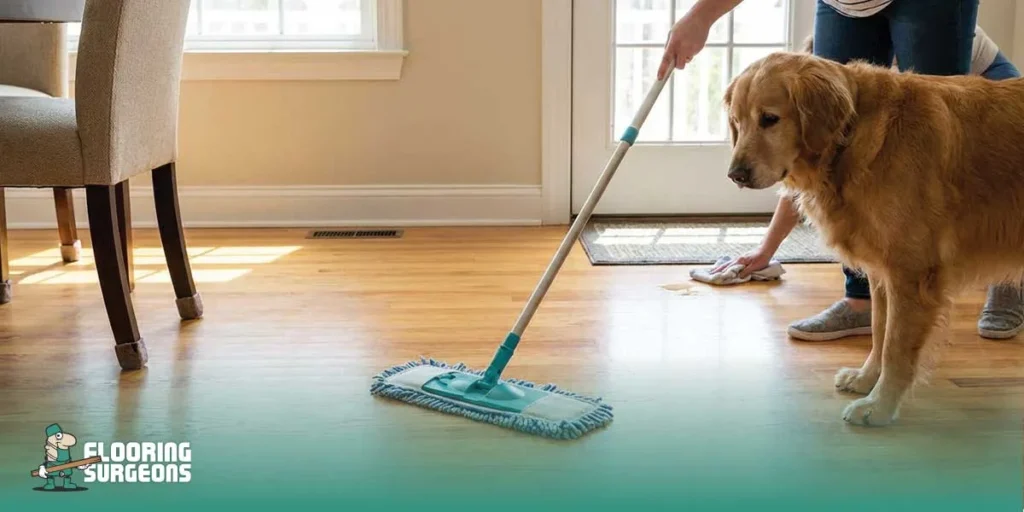
Practical daily habits that genuinely help:
- Wipe up spills immediately to stop moisture from seeping into joints or softening the finish.
- Sweep or vacuum each day lightly to remove grit before it causes fine scratches.
- Use a microfibre cloth or dry mop instead of rough or abrasive tools.
- Keep pet claws trimmed to avoid surface scuffs, especially in high-traffic rooms.
- Place lightweight mats at entry points to keep outdoor dirt from spreading across the floor.
- Avoid dragging chairs or furniture; lift them or use soft felt pads under the legs.
- Let floors dry thoroughly after cleaning to maintain the integrity of the protective seal.
These quick, low-effort habits take only a few minutes but dramatically reduce everyday wear, helping your wooden floor stay smooth, clean and visually consistent for years.
How to Reduce Damage Without Changing Your Lifestyle
Protecting wooden flooring doesn’t mean creating strict house rules or constantly reminding everyone what they can and can’t do. Minor, subtle adjustments often have the most significant impact — and most of them barely change your routine. The aim is to protect the surface in ways that feel natural, not disruptive.
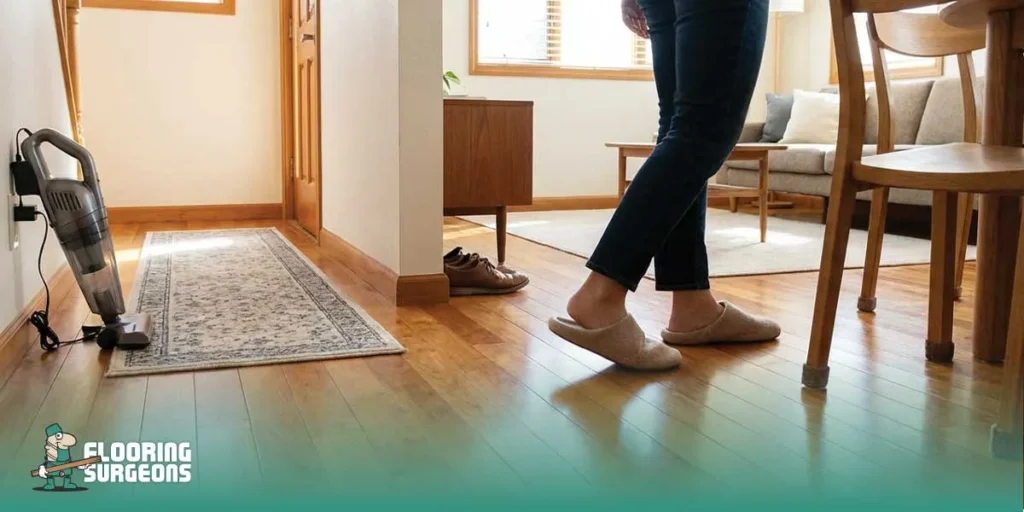
A simple switch to softer indoor footwear, using felt pads under chairs, or placing discreet runners in high-traffic paths all reduce friction without altering how you move around the house. Keeping a small handheld vacuum near the entrance prevents grit from building up, and lifting lightweight furniture rather than sliding it becomes second nature after a few days. And if you’re refining your long-term care routine, looking into the best hardwood floor finish can help you understand how much extra protection a good coating actually adds. These low-effort habits protect the finish and preserve the floor’s appearance, even in busy homes, without asking you to rethink how you live.
Do’s and Don’ts for Protecting Your Wooden Flooring
For readers who skim or want quick clarity, these simple guidelines capture the essentials of keeping wooden floors in good condition without overthinking it.
Do’s
- Keep floors clear of grit with light, frequent cleaning.
- Use protective pads, runners and soft mats in high-traffic areas.
- Wipe moisture immediately to prevent swelling or dull patches.
- Choose smooth, clean indoor shoes if you prefer footwear for home use.
Don’ts
- Don’t walk indoors in outdoor shoes that carry dirt or grit.
- Don’t drag chairs, bags or furniture across the surface.
- Don’t use abrasive cloths or heavy detergents, as they can damage the finish.
- Don’t ignore minor scratches — they spread quickly if left untreated.
Final Decision — Shoes On or Off?
There’s no single rule that works for every household, but the safest everyday choice is simple: limit outdoor shoes and keep the surface free from grit. For most homes, removing shoes prevents most long-term wear, especially in hallways and busy rooms. That said, clean indoor shoes with smooth soles are perfectly safe — and in situations where balance, comfort or safety matters, they may even be the better option. Understanding how each choice affects your floor means you can protect it confidently, without strict rules or lifestyle changes. The goal is a wooden floor that stays beautiful, practical and easy to live with for years.

Haniye Ayanmanesh
As an expert writer for Flooring Surgeons, I combine technical SEO knowledge with a practical understanding of flooring, producing content that helps users make confident decisions while supporting long-term organic growth.