


Yes, in many cases, you can replace your floors without moving out, but only if the project is planned correctly, the right flooring type is chosen, and the work is done in a controlled, room-by-room process. Most homeowners don’t need to leave their house entirely; they just need to understand which rooms can be worked on first, how long each phase takes, and what disruptions are unavoidable.
The biggest mistake people make is assuming floor replacement is an all-or-nothing job. In reality, experienced installers often replace flooring one zone at a time, allowing you to live in unaffected rooms while work is happening elsewhere. Noise, dust, and limited access are temporary — but with the right strategy, they can be managed without turning daily life upside down.
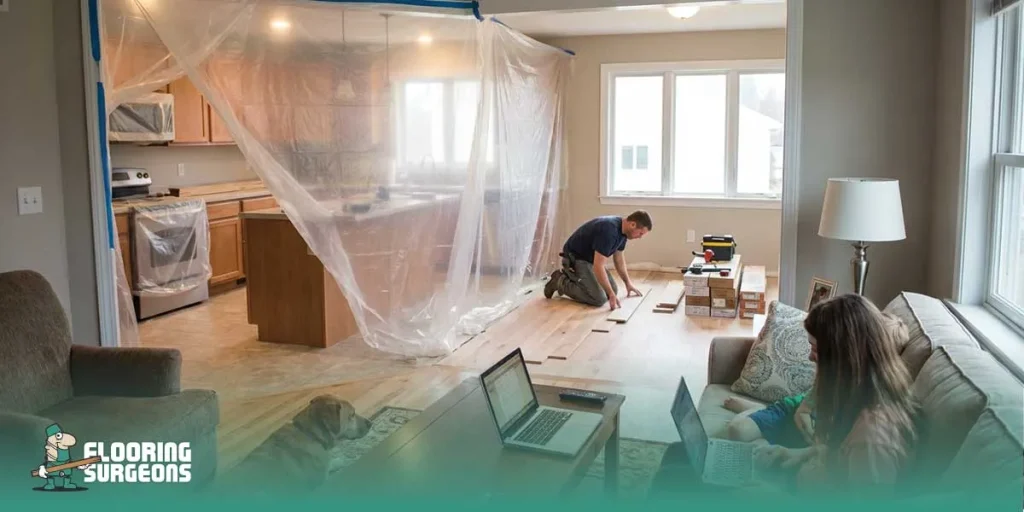
This guide explains exactly when staying in your home is realistic, when it’s risky, and how professionals minimise disruption. You’ll also see room-specific considerations, flooring types that work best for occupied homes, and clear situations where moving out — even briefly — is the more intelligent choice. If you’re deciding whether to stay or go, this article gives you the answer upfront and the details only if you need them.
Table of contents
Is It Possible to Replace Floors Without Moving Out?
Yes — in most cases, you can replace floors without moving out, as long as the work is planned room by room and the flooring type allows staged installation. If you live in the home during the project, installers typically work one room at a time, allowing you to keep essential areas usable. This approach is efficient for vinyl, laminate, and engineered wood, which don’t require long curing times or full-home shutdowns.

However, it’s not always practical. You may need to move out temporarily if:
- The entire home is being done at once
- Structural subfloor repairs are required.
- You’re installing flooring that needs long drying or curing periods (like some hardwood refinishing jobs). You don’t usually need to move out, but success depends on the flooring type, the home layout, and how the project is phased.
What Types of Flooring Can Be Installed While You Still Live at Home?
If you plan to replace floors without moving out, the type of flooring matters more than the brand or design. Some flooring systems allow fast, clean installation in stages, while others create too much dust, noise, or downtime to live around safely.
In short, floating and low-mess flooring options work best. Fully bonded or site-finished floors usually don’t.
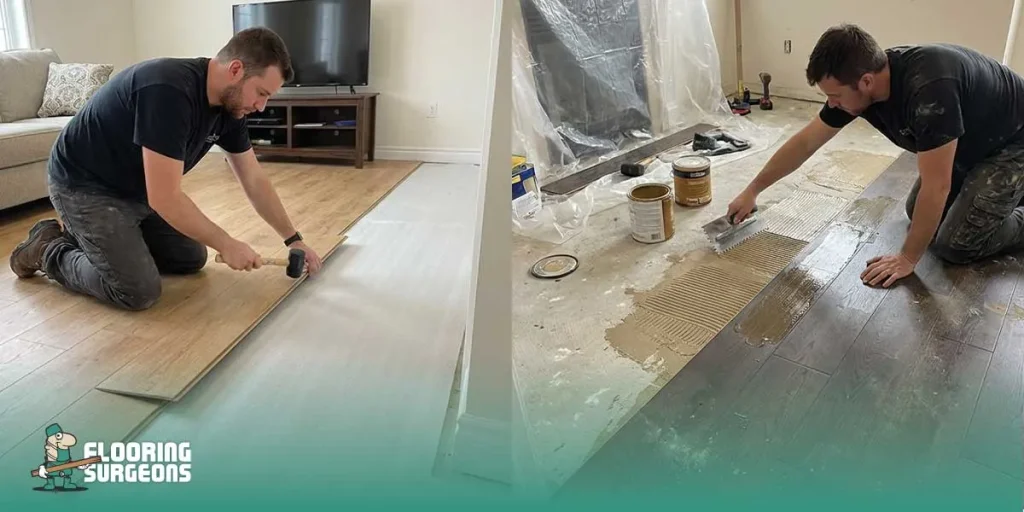
Floating Flooring vs Glued Flooring
Floating flooring is the most practical option when you’re still living at home. These floors lock together and sit above the subfloor without a permanent adhesive.
- Installation is faster and cleaner.
- No strong fumes or long curing times
- Rooms can often be completed one at a time.
- Floors are usually walkable the same day.
Glued flooring, on the other hand, is far more disruptive.
- Adhesives release strong odours
- Drying time limits room access
- Mistakes are harder to fix mid-project
If you’re staying in the house, floating systems are clearly safer and easier to live with.
Vinyl, Laminate, Engineered Wood — Which Is Least Disruptive?
When comparing real-world disruption (noise, dust, downtime), the difference is clear:
- Luxury Vinyl (LVT / SPC):
The least disruptive option. Quiet cutting, minimal dust, waterproof, and usable almost immediately. For most lived-in homes, Luxury Vinyl (LVT) flooring is the least disruptive choice because it installs quickly, creates minimal dust, and you can usually walk on it the same day. - Laminate Flooring:
Slightly noisier during cutting, but still very manageable. Fast installation and no curing time. - Engineered Wood (Floating):
More dust and noise than vinyl or laminate, but still possible to install while living at home if done room by room.
What to avoid: Solid hardwood that requires sanding, finishing, or full-surface glue-down. These almost always require moving out.
How Flooring Can Be Replaced One Room at a Time
Yes—flooring can be replaced one room at a time without forcing you to move out, as long as the project is planned around how you actually live in the space. This approach works best when installers follow a precise sequence, isolate work zones, and maintain safe access to essential areas like bedrooms, bathrooms, and kitchens. Instead of shutting down the whole home, the process moves logically from room to room, keeping disruption controlled and predictable.

Room-by-Room Installation Strategy
A room-by-room strategy means only one area is taken out of use at a time. Furniture is moved locally, not across the entire house, and each room is completed fully before work begins in the next one. This allows you to keep daily routines mostly intact while steadily progressing through the project. In practice, installers usually start with low-traffic rooms, then move toward main living areas once you’re comfortable with the process. This phased approach reduces dust spread, shortens downtime, and avoids the chaos of having multiple unfinished spaces at once.
Temporary Access Planning for Daily Living
Successful in-home flooring replacement depends heavily on temporary access planning. Installers create safe walking paths between rooms, maintain clear routes to bathrooms and exits, and schedule noisy or adhesive-heavy work during limited time windows. For households living on-site, this planning is what makes the difference between a manageable project and a stressful one. When access is planned correctly, you can sleep, work, and move around your home while flooring installation continues—without feeling displaced.
How Long Does Floor Replacement Take If You Don’t Move Out?
In most lived-in homes, floor replacement takes longer than an empty-property install, but the difference is usually measured in days, not weeks. For small flats or homes where work is done one room at a time, replacement can realistically take 2–4 days. Medium to large homes typically take 5–10 working days, depending on flooring type and access planning.
What actually extends the timeline is not the installation itself, but practical constraints: limited working hours, the need to keep walkways usable, furniture shifting, drying or curing times (for glued floors), and coordination around daily routines. Floating floors like vinyl or laminate move faster, while glued or engineered wood slows things slightly due to prep and setting time.
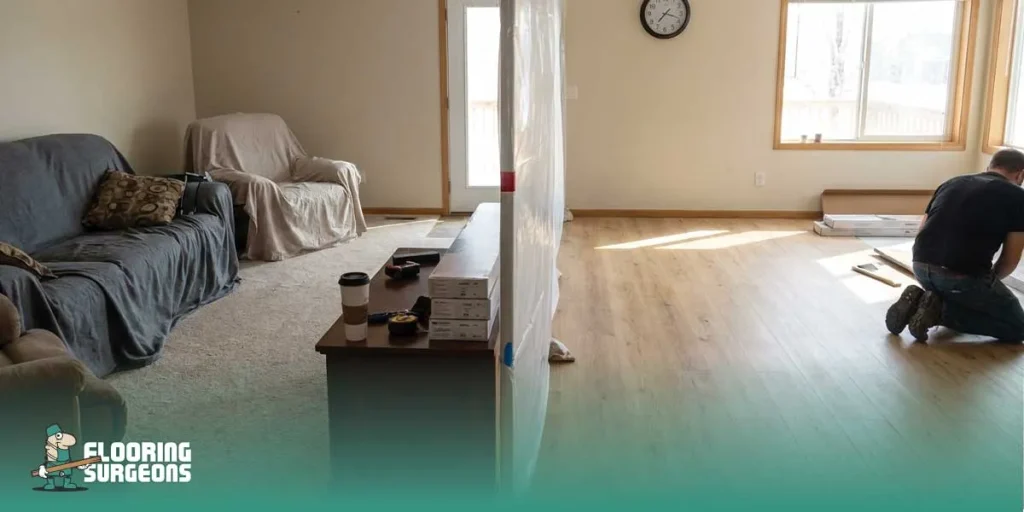
You don’t need to move out—but you do need a controlled, staged plan. Professionals who regularly handle lived-in installations reduce delays by sequencing rooms intelligently, preparing materials in advance, and avoiding unnecessary downtime. This is precisely where experienced installers save both time and disruption, even if the job costs slightly more upfront.
Dust, Noise, and Safety — What to Expect While Living in the House
Replacing floors while still living at home is absolutely manageable, but it’s essential to understand what you’ll realistically deal with day to day. The biggest concerns are dust, noise, and safety, and all three depend heavily on the flooring type, installation method, and how well the work is planned.
Modern flooring installations are far cleaner than people expect. For floating floors like vinyl, laminate, or engineered wood, dust levels are generally low because there is no sanding, cutting is minimal, and most preparation work is done off-site or with dust-controlled tools. Full hardwood refinishing is where dust becomes a real issue — not typical replacement jobs.
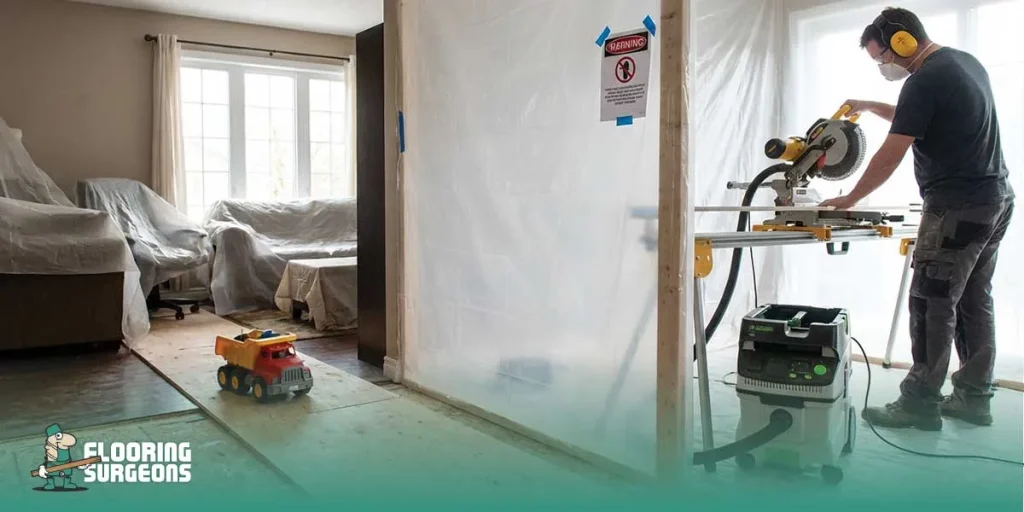
Noise is unavoidable, but it’s predictable and time-limited. Expect intermittent drilling, tapping, and cutting during working hours, not constant disruption all day. Professional installers usually complete the loudest stages early, leaving quieter fitting work later in the day. At Flooring Surgeons, projects like these are planned around real daily living — not idealised installation conditions.
From a safety perspective, living in the home during floor replacement is generally safe for adults, children, and pets as long as access is managed correctly. Installers section off work areas, keep tools contained, and maintain clear walkways. The main risks come from loose materials, exposed subfloors, or wet adhesives — all of which are easily controlled with room-by-room scheduling and temporary barriers.
What to Expect at a Glance
| Factor | What It’s Really Like | How It’s Managed |
| Dust | Low for most modern floors | Dust-controlled cutting, no sanding |
| Noise | Moderate, short bursts | Work is scheduled during the daytime |
| Safety | Generally safe | Work zones are isolated by room |
| Air quality | Minimal impact | Low-VOC materials when needed |
| Daily access | Mostly uninterrupted | Clear walkways planned in advance |
If the job is planned correctly, floor replacement won’t turn your home into a construction site. You’ll notice the work, but it won’t stop, every day, in daily living.
When Replacing Floors Without Moving Out Is NOT a Good Idea
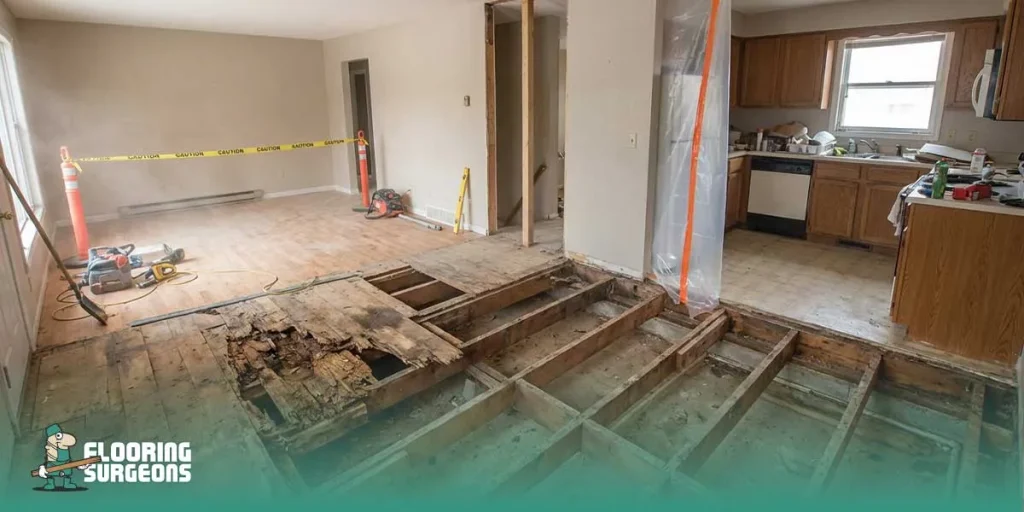
Being honest here builds trust: there are situations where staying in the home during floor replacement is the wrong decision. Pushing through in these cases often costs more time, money, and stress than temporarily moving out.
Here are the clear red flags.
- Structural or subfloor problems
If the project involves damaged joists, rotting subfloor, uneven levels, moisture issues, or squeaking that requires complete subfloor removal, living in the home is not realistic. These repairs are noisy, dusty, and usually expose large open areas that cannot be safely walked on. - Full-house tear-outs done at once
Replacing flooring across the entire home simultaneously leaves no safe, usable space. Even with fast installers, there will be periods where walking paths, kitchens, or bathrooms are inaccessible. - Heavy sanding or site-finished hardwood
Traditional hardwood refinishing involves intense dust, strong fumes, and drying times that make everyday living uncomfortable and, in some cases, unsafe—especially without industrial dust containment. - Homes with infants, pets, or respiratory sensitivities
Even low-dust projects still involve noise, movement, and temporary hazards. If anyone in the home has asthma, allergies, or mobility challenges, staying may introduce unnecessary risk. - When cost savings are marginal
Trying to live in the home can slow installers down, extend timelines, and increase labour costs. In some cases, a short-term move actually reduces total project cost by allowing faster, uninterrupted work.
Replacing floors without moving out works best for controlled, phased projects with stable subfloors. When structural work, large-scale tear-outs, or health risks are involved, moving out—briefly—can be the more intelligent and safer choice.
How to Prepare Your Home Before Floor Replacement (Without Moving Out)
Proper preparation is the single most significant factor in whether replacing floors while staying at home feels controlled or becomes a daily disruption. The goal is not perfection — it is reducing friction between installation work and everyday living.
Before installation starts, preparation must be intentional, structured, and aligned with how the work will actually happen — not how homeowners hope it will happen.
Furniture, Access Paths, and Daily Routines
Furniture should be entirely removed from one defined work zone at a time, not shifted randomly between rooms. This allows installers to work efficiently while keeping the rest of the home functional. Clear access paths must be planned in advance. Installers should be able to move materials, tools, and flooring without passing through active living areas. These paths should be protected to prevent dust spread and surface damage. Daily routines — cooking, sleeping, childcare, pet movement — should be mapped against the installation schedule. If meal prep overlaps with adhesive curing, or sleeping areas overlap with demolition work, frustration is guaranteed. Preparation means anticipating conflicts before they happen, not reacting after.
Many DIY or poorly managed projects fail at this stage. Without a clear plan, noise interrupts work calls, dust reaches bedrooms, installers lose time, and costs rise as schedules stretch.
Working From Home During Floor Installation
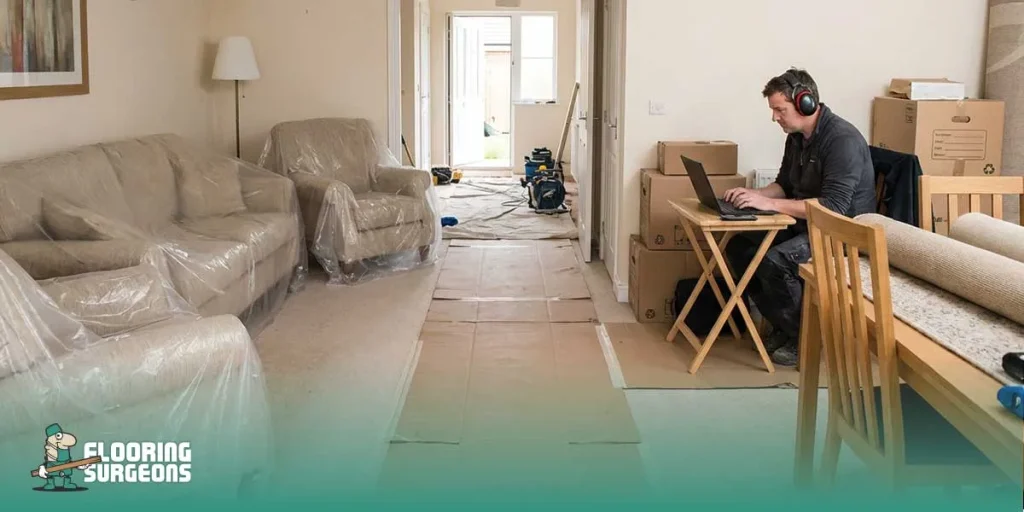
Working from home during floor replacement is possible, but only with realistic expectations. Choose rooms farthest from the active work zone for calls and focused tasks. Expect reduced concentration during cutting, removal, or subfloor prep phases — these are the loudest moments and cannot be entirely avoided. Important meetings should be scheduled outside peak noise hours, and flexibility is essential. A professional installer will provide a clear daily timeline so you can plan your workday instead of reacting to unexpected disruption.
When preparation is done correctly, staying at home during floor replacement becomes manageable rather than chaotic — even for remote workers.
Replacing Floors Without Moving Out — Is It Worth It?
In many cases, yes — but only when the project is planned strategically, replacing floors without moving out can save relocation costs, maintain daily stability, and allow work to progress in stages. However, it is not automatically the cheaper or easier option. The real value comes when disruption is minimised, timelines are controlled, and the flooring type supports phased installation.
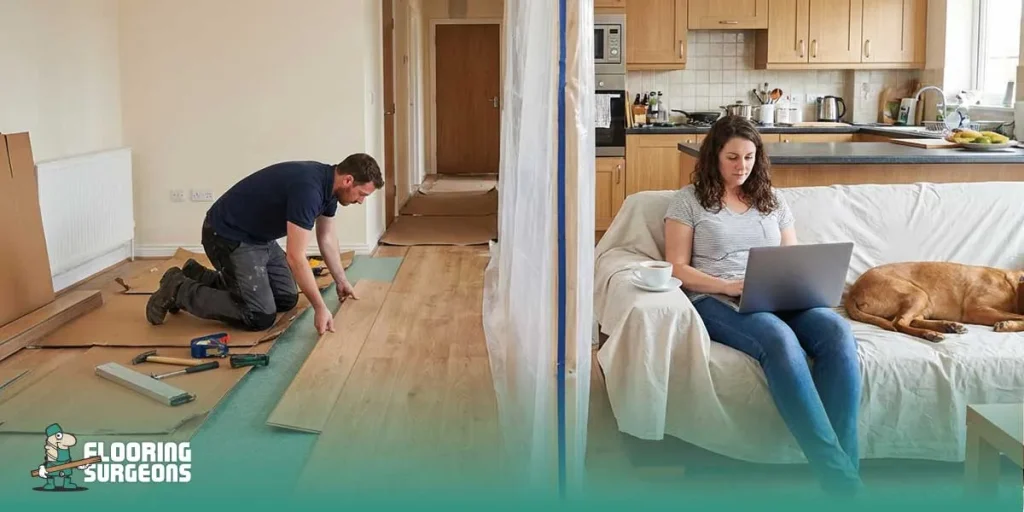
If your home layout allows room-by-room work, your subfloor is in good condition, and your daily routine can adapt temporarily, staying put often makes sense. If not, the stress and delays can outweigh the savings. The deciding factor isn’t just cost — it’s control. When preparation, sequencing, and communication are adequately handled, living in the home during floor replacement is practical. When they aren’t, moving out briefly can actually protect both your time and your budget. If you’re weighing the disruption of staying home during installation, it also helps to understand what flooring adds the most value to a home before making a final decision.

Haniye Ayanmanesh
As an expert writer for Flooring Surgeons, I combine technical SEO knowledge with a practical understanding of flooring, producing content that helps users make confident decisions while supporting long-term organic growth.